
CCUS

Search documents
Bkv Corporation(BKV) - 2025 Q3 - Earnings Call Presentation
2025-11-10 15:00
Company Performance & Strategy - BKV's corporate 1-year decline rate is 99% for all PDP reserves including impact from the Bedrock Acquisition[11] - BKV aims to increase ownership in Power JV to 75%[18] - BKV's assets are aligned with the fastest-growing energy markets in the US[16] - BKV is the largest producer in the Barnett with potential to expand[67] Financial Highlights (Q3 2025) - Combined Adjusted EBITDAX attributable to BKV was $918 million[35] - Total Accrued CAPEX was $796 million, against a guidance of $65-$105 million[35] - Adjusted Free Cash Flow Attributable to BKV was $(106) million[35] - Net Leverage was 132x as of September 30, 2025[35] CCUS Projects - Barnett Zero is operational with a projected annual average injection of 183 ktpy (kilotonnes per year)[148] - Eagle Ford Project is at FID (Final Investment Decision) stage with a projected annual average injection of 90 ktpy[148] - Cotton Cove is at FID stage with a projected annual average injection of 32 ktpy[148]
专访能源基金会首席执行官兼中国区总裁邹骥:中国绿色转型最需弥合的差距是电力系统
2 1 Shi Ji Jing Ji Bao Dao· 2025-10-29 23:06
Core Viewpoint - The global geopolitical landscape is undergoing significant changes, and as China concludes its 14th Five-Year Plan and prepares for the 15th, global climate governance is at a critical juncture, with the upcoming COP30 conference expected to inject new momentum into climate action [1] Group 1: China's Green Transition - The most urgent gap in China's green transition is in the electricity system, particularly the grid's capacity to accommodate renewable energy [1] - The average annual investment demand for green low-carbon initiatives in China is projected to reach approximately 6 trillion RMB over the next decade [1][6] - Key areas for investment should focus on economically viable renewable energy and energy efficiency technologies [1] Group 2: Emission Reduction Targets - China's NDC aims for a 7% to 10% reduction in greenhouse gas emissions by 2035, covering all greenhouse gases, with carbon dioxide being the primary focus [2] - The main pathways for emission reduction include improving energy efficiency and transitioning the energy structure [2] Group 3: Challenges in Renewable Energy Development - The current capacity of China's grid to accommodate wind and solar power is less than 20%, indicating a significant gap in renewable energy integration [3] - The direct obstacle to further renewable energy development is the difficulty in grid connection, which is characterized by stability issues and insufficient flexible resources [3] Group 4: Investment in Electricity Infrastructure - Current annual investment in China's traditional electricity system ranges from 700 billion to 1 trillion RMB, with future investments needing to maintain this scale but shift focus towards enhancing grid capabilities rather than merely expanding coverage [4][5] - New investment directions will emphasize the construction of microgrids and the enhancement of distribution networks to support distributed renewable energy [5] Group 5: Global Climate Governance Challenges - The global climate governance landscape faces challenges due to changes in international order and governance ecology, including diminished political foundations of the UN mechanism and the diversification of governance actors [7] - The inclusion of circular economy in COP30 discussions is seen as a positive signal for global climate governance, emphasizing resource efficiency and reduced carbon emissions [9] Group 6: CCUS Technology Development - Carbon Capture, Utilization, and Storage (CCUS) is identified as a key negative emission technology, with its capture technology being relatively mature, while the storage aspect remains in the research phase [10] - China should prioritize the deployment of renewable energy technologies, energy efficiency improvements, and electric vehicle technologies as the main drivers for emission reductions over the next decade [10]
21专访|邹骥:中国绿色转型最需弥合的差距是电力系统
2 1 Shi Ji Jing Ji Bao Dao· 2025-10-28 12:34
Core Viewpoint - The global geopolitical landscape is undergoing significant changes, and as China concludes its 14th Five-Year Plan and prepares for the 15th, global climate governance is at a critical juncture, with the upcoming COP30 conference expected to inject new momentum into climate action [1] Group 1: China's Green Transition - The most pressing gap in China's green transition is in the electricity system, particularly the grid's capacity to absorb renewable energy [2] - China requires an average annual investment of approximately 6 trillion RMB (about 700 billion USD) over the next decade to support its green low-carbon transition [2][8] - The NDC target for China aims for a 7%-10% reduction in greenhouse gas emissions by 2035, covering all greenhouse gases, with carbon dioxide being the primary focus [3][4] Group 2: Renewable Energy Challenges - The current capacity of China's grid to accommodate wind and solar power is less than 20%, indicating a significant challenge in integrating renewable energy sources [5] - The main obstacle to further renewable energy development is the difficulty in grid connection, which is characterized by stability issues and insufficient flexible resources [5] - Traditional grid structures need to adapt to increasing shares of non-inertia generation sources, requiring innovations in technology and market design [5] Group 3: Investment and Market Dynamics - Current annual investment in China's traditional power system ranges from 700 billion to 1 trillion RMB, with future investments needing to shift focus towards enhancing grid infrastructure and microgrid development [6] - Global clean energy investments are around 2 trillion USD annually, with China accounting for over one-third of this investment [7] - The anticipated investment demand from achieving the target of 3.6 billion kW of wind and solar capacity is projected to be between 4 trillion and 8 trillion RMB annually [8] Group 4: Global Climate Governance Challenges - The global climate governance landscape faces challenges due to changes in international order and governance dynamics, including reduced cooperation among major powers [9][10] - The diversification of governance actors is evident, with increased participation from private enterprises and international capital, moving beyond traditional government funding [10] - Countries, including China, must embrace new industrial revolution outcomes to effectively pursue green low-carbon transitions [10] Group 5: Circular Economy and CCUS - The inclusion of the circular economy in COP30 discussions is a positive signal for global climate governance, emphasizing resource efficiency and reduced carbon emissions [11] - CCUS technology is recognized as a key negative emissions technology, with current focus on renewable energy and energy efficiency technologies for immediate deployment [12]
同兴科技20251027
2025-10-27 15:22
Summary of Tongxin Technology Conference Call Company Overview - **Company**: Tongxin Technology - **Industry**: Environmental Technology and Energy Storage Solutions Financial Performance - **Revenue**: - Total revenue for the first three quarters reached 661 million CNY, a year-on-year increase of 217.88% [2][3] - Q3 revenue was 157 million CNY, a year-on-year increase of 53.43% but a quarter-on-quarter decrease of 29.54% [2][3] - **Net Profit**: - Net profit attributable to shareholders for the first three quarters was 61.98 million CNY, a year-on-year increase of 217.88% [3] - Q3 net profit was 9.49 million CNY, a year-on-year increase of 4,252.3% but a quarter-on-quarter decrease of 75.58% [2][3] - **Cash Flow**: - Operating cash flow for the first three quarters was 22.9 million CNY, a year-on-year increase of 106.58% [2][4] - **Profit Margins**: - Average gross margin for the first three quarters was 25.83%, up 6.7 percentage points year-on-year [2][4] - Q3 gross margin was 21%, up 5.55 percentage points year-on-year but down 13.92% quarter-on-quarter [2][4] - Net profit margin for the first three quarters was 11.16%, up 5.72 percentage points year-on-year [2][4] Business Strategy - **Development Strategy**: - The company has established a "one body, two wings" strategy focusing on flue gas desulfurization, denitrification, and low-temperature SCR catalysts as the core, with CCS and sodium-ion battery cathode materials as the wings [2][10] - **Market Demand**: - There is strong overseas demand for CCS and sodium-ion battery materials, with breakthroughs in sales of absorbents [2][11] Product Development - **Sodium-Ion Batteries**: - Sodium-ion batteries exhibit superior low-temperature performance, maintaining about 90% capacity at -40 degrees Celsius [3][7] - Long-term costs are expected to decrease to around 0.19 CNY per watt-hour, although current costs are still higher than lithium-ion batteries [3][7] - The company is developing a conventional NFPP blade-type 50 Ah cell, currently in the integration testing phase for applications in start-stop batteries and small power systems for two-wheelers [3][16] - **Market Applications**: - Sodium-ion batteries are being tested in various applications, including two-wheelers and energy storage systems, with some companies already beginning to ship products [6][12][13] Collaborations and Partnerships - **Strategic Partnerships**: - Ongoing collaborations with leading companies like Huawei in the energy storage sector, although specific details are not disclosed [8][9] - **Customer Engagement**: - The company is actively engaging with major clients and providing samples for testing, with positive feedback on performance [16][9] Market Outlook - **Future Prospects**: - The sodium-ion battery market is expected to grow, with increasing interest from European markets for safer energy storage solutions [14] - The company is focusing on expanding its production capacity and optimizing supply chain management to reduce costs and improve efficiency [19][20] Key Challenges - **Cost Competitiveness**: - Despite a significant reduction in the prices of positive and negative electrode materials, high electrolyte costs and consistency issues in large-size uniform ions remain challenges [20][21] Conclusion - **Overall Performance**: - Tongxin Technology has shown strong financial growth and is well-positioned in the environmental technology and energy storage markets, with promising developments in sodium-ion battery technology and strategic partnerships driving future growth [2][11][12]

告别“土里刨食”?中国石油开采正上演一场高科技逆袭!
Sou Hu Cai Jing· 2025-10-21 08:21
Industry Overview - The Chinese oil extraction industry, referred to as "oil and gas extraction," is the upstream segment of the energy industry chain, focusing on exploration, development, and production of crude oil and natural gas. It is a foundational and strategic industry for the national economy, directly impacting energy security, industrial production, transportation, and social life [1] - The development of this industry is influenced by international oil prices, national policies, geological resources, and technological levels, characterized by capital intensity, technology intensity, and high risk [1] Market Characteristics - The market is highly concentrated, dominated by the "Big Three" oil companies: China National Petroleum Corporation (CNPC), China Petroleum & Chemical Corporation (Sinopec), and China National Offshore Oil Corporation (CNOOC), which control the majority of domestic oil and gas resources [6] - The industry is strongly policy-driven, with national strategies and guidelines, such as the "14th Five-Year Plan," focusing on energy security and low-carbon transition [6] - High costs and risks are prevalent as the focus shifts from easily extractable conventional resources to unconventional fields like deep-sea and shale oil, leading to increased exploration and development costs [6] - Domestic oil companies' revenues and profits are highly correlated with international oil prices, but domestic price controls and long-term contracts create a lag in performance fluctuations [6] Current Industry Status - In 2023, China's crude oil production reached 209 million tons, a 2.0% year-on-year increase, driven by continued capital investment in key basins [7] - However, domestic production growth lags behind consumption growth, with crude oil imports reaching 564 million tons in 2023, resulting in a dependency rate of approximately 72% [7] - The government is promoting market-oriented reforms in oil and gas exploration, opening certain exploration blocks to private and foreign enterprises [7] Future Trends - The core focus remains on "increasing reserves and production" to ensure energy security, with expectations for the "Big Three" to maintain domestic crude oil production above 200 million tons [13] - Unconventional oil and gas, along with deep-sea resources, are expected to be the main growth areas, with investment and technological breakthroughs being critical for industry development [13] - Digitalization and smart technologies are seen as essential for reducing costs and enhancing efficiency in the face of high operational costs [13] - Major oil companies are transitioning towards integrated and comprehensive energy suppliers, expanding into downstream high-value chemical products and renewable energy sectors [13] Challenges and Opportunities - The industry faces challenges such as resource constraints, high costs of unconventional and deep-sea oil and gas, and long-term pressures from carbon neutrality goals [13] - However, there are opportunities for growth through strong policy support for energy security, potential technological breakthroughs in key areas, and the rising demand for natural gas as a cleaner fossil fuel during the energy transition [13]




核心装备100%国产化 全球最大煤电碳捕集示范工程投运
Yang Shi Xin Wen Ke Hu Duan· 2025-09-26 02:52
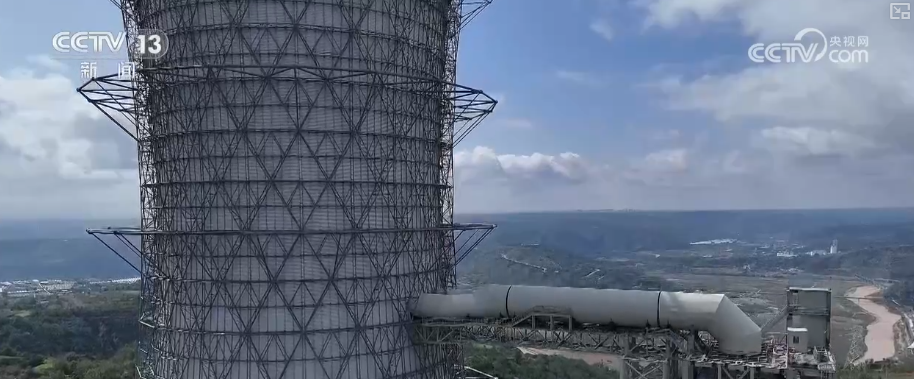
Core Insights - The world's largest coal-fired carbon capture demonstration project at Huaneng Gansu Zhengning Power Plant has successfully completed a 72-hour trial run and is now in commercial operation, marking a historic leap in CCUS technology from "ten-thousand-ton demonstration" to "million-ton industrial application" [1][2] - The project is a significant national technology demonstration and a first batch green low-carbon demonstration project by the National Development and Reform Commission, aimed at capturing CO2 from the flue gas of the power plant [1] Group 1 - The carbon capture rate of the project exceeds 90%, with an annual capacity to capture 1.5 million tons of CO2, equivalent to the annual emissions of 600,000 cars [2] - The captured CO2 has a purity of over 99% and can be compressed to a supercritical state for underground geological storage, as well as applications in enhanced oil recovery, green fuel synthesis, and mineralized building materials [1][2] - The project has achieved breakthroughs in key technologies, including the world's first "dual-tower" composite absorption tower and the largest deep saline aquifer multi-layer storage system in China, setting a new benchmark for low-carbon transformation in the coal power industry [2] Group 2 - CCUS stands for Carbon Capture, Utilization, and Storage, which is a key technology for achieving carbon neutrality in the future [3] - In coal-fired power plants, CO2 is separated from flue gas through a chemical reaction with alkaline absorbents, followed by dehydration, purification, and compression for various applications [3] - The captured CO2 can be utilized in chemical and biological fields, injected underground to enhance oil recovery, or safely stored in underground or marine environments [3]


经济“硬支撑”更稳!多个大国工程智慧与实力兼具 新突破、新纪录成亮点
Yang Shi Wang· 2025-09-25 08:03
Group 1: CCUS Project Overview - The world's largest coal-fired carbon capture demonstration project at Huaneng Gansu Zhengning Power Plant has successfully completed a 72-hour trial run and is now in commercial operation, marking a historic leap in CCUS technology from "ten-thousand-ton demonstration" to "million-ton industrial application" [1][3] - The project is a major national technology demonstration project and one of the first green low-carbon demonstration projects approved by the National Development and Reform Commission, achieving a CO2 capture rate of over 90% with a purity of over 99% [3][5] - The facility can capture 1.5 million tons of CO2 annually, equivalent to the carbon emissions of 600,000 cars in a year, significantly contributing to deep emission reductions in coal-fired power plants and supporting carbon neutrality goals [5][8] Group 2: Technological Innovations - The project has overcome multiple technical bottlenecks in carbon capture, compression, and storage, creating several "global firsts" and "domestic innovations," with 100% of the core equipment being domestically produced [3][5] - Key technological achievements include the world's first "dual-tower integrated" absorption tower and the first domestic eight-stage supercritical CO2 compressor, which set new benchmarks for the coal power industry [3][5] Group 3: Broader Implications - The captured CO2 can be utilized in various applications, including enhanced oil recovery, green fuel synthesis, food processing, and mineralized building materials, thus establishing a complete "capture-utilization-storage" industrial chain [3][5] - The project positions China's CCUS technology at a world-leading level and sets a new standard for low-carbon transformation in the coal power sector [3][5]
服贸会展示能源新未来:园区不断归“零” CCUS与氢能成焦点
Zhong Guo Neng Yuan Wang· 2025-09-17 02:52
Group 1: Event Overview - The 2025 China International Service Trade Fair (CIFTIS) is being held at Shougang Park in Beijing, showcasing innovations in green energy, circular economy, and new materials [1] - The event features a focus on environmental services, with companies presenting cutting-edge technologies and solutions for green low-carbon development [1] Group 2: Key Technologies and Innovations - Solid-state batteries showcased at the event demonstrate stable power supply even after being cut, highlighting advancements in battery safety [6] - BOE's "zero-carbon house" converts sunlight into electricity, representing a revolutionary shift from energy consumption to energy production [1][4] - Huawei's liquid-cooled ultra-fast charging technology aims to address long charging times for electric vehicles, with a charging station capable of delivering "one kilometer per second" [5] Group 3: Major Industry Players - China's major oil companies, including Sinopec, PetroChina, and CNOOC, are transitioning from traditional oil and gas suppliers to comprehensive energy service providers, focusing on hydrogen energy and CCUS technologies [2][3] - Sinopec has showcased its latest achievements in hydrogen energy, CCUS, geothermal, wind and solar green electricity, and biofuels [2] - CNOOC has implemented over 400 energy-saving and low-carbon projects since the 14th Five-Year Plan, achieving energy savings of 1.04 million tons of standard coal and reducing carbon emissions by 3.15 million tons of CO2 equivalent [2] Group 4: Zero-Carbon Solutions - The "Zero-Carbon Park Solution Pavilion" features over ten companies presenting comprehensive zero-carbon solutions, including distributed photovoltaic power systems [7] - Beijing Huamao Center achieved 100% green electricity operation in 2024, reducing carbon emissions by 24,000 tons [8] - The AI-powered waste incineration system presented by Chaoyang Environmental Group addresses long-standing technical challenges in the industry [7] Group 5: Market Trends and Future Outlook - The event reflects a shift from showcasing technologies to facilitating transactions, with green technologies becoming more accessible and tradeable [9] - Companies are transforming green productivity into tradeable and replicable solutions, breaking down technologies into modular components for global buyers [9]
调研速递|绍兴兴欣新材接受华泰柏瑞等5家机构调研,聚焦业绩与项目进展
Xin Lang Cai Jing· 2025-09-03 09:59
Core Viewpoint - The company is experiencing a decline in performance due to falling prices of key raw materials, which has led to a decrease in both revenue and net profit. However, it is implementing strategic projects to ensure long-term stability and competitiveness in the market [2]. Group 1: Performance Decline and Outlook - The company's performance is declining primarily due to the continuous drop in prices of key raw materials, specifically piperazine and ethylenediamine, which has resulted in lower sales prices and a corresponding decrease in revenue [2]. - The company has a project in Anhui with an annual capacity of 8,800 tons of piperazine products, aimed at ensuring stable supply of raw materials when prices rise or supply is short, thus maintaining competitive advantage [2]. Group 2: Investment Projects Progress and Applications - The company has completed trial production of a project with an annual capacity of 10,000 tons of 40% piperazine-1,4-dithiocarbamate, which is now in the market promotion phase, targeting applications in heavy metal pollution treatment [3]. - Another project, producing 2,000 tons of pentamethyldiethylenetriamine, has successfully completed trial production and is now operational, primarily serving the polyurethane foaming agent sector [3]. Group 3: CCUS Project Introduction - The CCUS project focuses on carbon capture, utilization, and storage, aiming to reduce carbon emissions by capturing CO2 produced during industrial processes [4]. - The company is collaborating with Tsinghua University's Environmental College to develop piperazine-based absorbents for carbon capture, leveraging both parties' strengths in environmental technology and engineering applications [4]. Group 4: Guangxi Qinzhuo Ethylenediamine Project Advantages - The company is investing 800 million yuan in a joint venture in Guangxi to establish a subsidiary focused on ethylenediamine production, utilizing a different production method to create high-value amine products [5]. - The location in Qinzhuo is strategic due to proximity to large petrochemical enterprises, which helps reduce raw material procurement and transportation costs, while also facilitating the sale of by-products [5].
兴欣新材(001358) - 2025年9月3日投资者关系活动记录表
2025-09-03 08:56
Group 1: Company Performance - The company is experiencing a decline in operating performance and profits due to falling prices of key raw materials, specifically 68-piperazine and ethylenediamine, leading to a decrease in sales revenue and net profit [2][3] - Despite the decline in revenue, the sales volume of the company's products has remained stable, indicating a leading position in the industry [2] Group 2: Project Updates - The 8,800-ton piperazine series product project in Anhui has officially commenced production, aimed at ensuring stable raw material supply and maintaining competitive advantage [3] - The project for producing 14,000 tons of environmentally friendly solvent products and 5,250 tons of polyurethane foaming agents is progressing as planned, with the sub-project for 10,000 tons of 40% piperazine-1,4-dithiocarbamate potassium salt having completed trial production [3][4] Group 3: CCUS and Environmental Initiatives - The CCUS project focuses on capturing and utilizing carbon dioxide emissions to reduce greenhouse gas emissions and support carbon neutrality goals [4] - The company collaborates with Tsinghua University's Environmental College to develop piperazine-based absorbents for air pollutant and greenhouse gas control [5] Group 4: New Investments - An investment of 800 million yuan has been made to establish a subsidiary in Qinzhou, Guangxi, focusing on the ethylene amine project, which aims to produce high-value amine products using a more efficient production method [5] - The project benefits from proximity to major petrochemical enterprises, reducing raw material procurement costs and enhancing economic efficiency through the sale of by-products [5]