价格战

Search documents
治理汽车业“长账期”问题可探索强化立法
21世纪经济报道· 2025-06-11 23:26
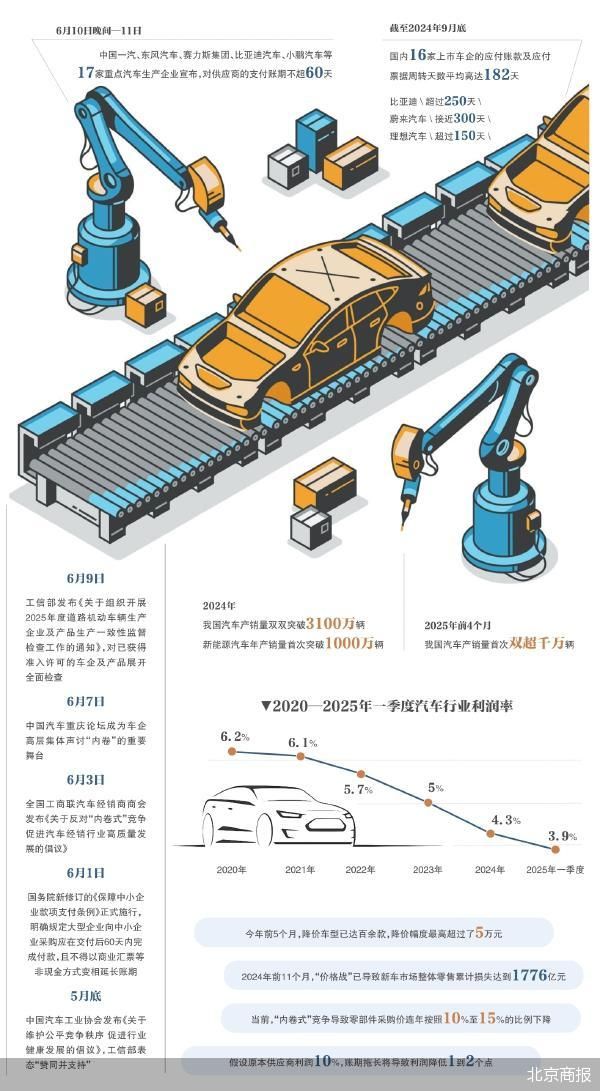
Core Viewpoint - The collective commitment of domestic automotive companies to unify supplier payment terms to within 60 days is a response to the "anti-involution" policy and aims to stabilize the industry while complying with the new regulations effective June 1, 2025 [1][2]. Group 1: Industry Context - The rapid development of China's new energy vehicle (NEV) industry has led to continuous price reductions to compete with fuel vehicles, negatively impacting upstream suppliers who bear the cost of these price cuts [1]. - The average accounts payable turnover days for 16 listed Chinese automotive companies is estimated to be 182 days in 2024, significantly longer than the 60 days maintained by 14 international automotive companies [2]. Group 2: Financial Implications - The profit margin of the Chinese automotive industry is projected to decline from 4.3% in 2024 to 3.9% in Q1 2025, which is below the average level of the manufacturing sector [3]. - Companies with high accounts payable ratios and extended payment terms face increased risks of losses from price competition, which could lead to cash flow issues and impact upstream suppliers [3]. Group 3: Regulatory and Structural Issues - The current self-regulation and corporate commitments lack sufficient effectiveness and enforcement, as some companies may still pressure suppliers to lower prices or absorb costs that should be borne by the automakers [4]. - Long-term solutions to the issue of extended payment terms require legal and systematic approaches, including stricter legislation against delayed payments and better quality regulation of components and materials [4].







剑指“价格战”!车企相继承诺“60天付款”
Qi Lu Wan Bao· 2025-06-11 21:06
Core Viewpoint - The automotive industry is responding to the government's call to address "involution" competition by collectively committing to a payment term of no more than 60 days for suppliers, aiming to stabilize the supply chain and improve financial conditions for upstream partners [2][3][4]. Group 1: Industry Actions - Major automotive companies, including China FAW, Dongfeng Motor, GAC Group, and Seres, announced on June 10 that they would limit supplier payment terms to within 60 days, promoting a more efficient capital circulation mechanism [3][4]. - Following this, companies like BYD, Chery, and Xpeng joined the initiative, with a total of 17 key automotive manufacturers committing to the 60-day payment term by June 11 [4]. - The commitment aligns with the upcoming implementation of the "Regulations on Ensuring Payment to Small and Medium Enterprises," which emphasizes a 60-day payment deadline and aims to improve the business environment [4]. Group 2: Industry Challenges - The automotive sector is facing intense price wars, leading to a significant decline in profitability, with industry profits dropping to 462.3 billion yuan in 2024, down 8% year-on-year, resulting in a profit margin of only 4.3% [5]. - Despite record production and sales exceeding 31 million vehicles in 2023, the profit margin has decreased from 7.8% in 2017 to 4.3% in 2024, indicating a troubling trend of increasing sales but declining profitability [6][5]. - The average accounts receivable collection period for major automotive companies has increased, with the automotive industry facing severe cash flow challenges [6]. Group 3: Supplier Relations - The commitment to a 60-day payment term is expected to alleviate financial pressure on suppliers, enhancing their ability to invest in production and development, thereby stabilizing their operations [9]. - This initiative is anticipated to strengthen the cooperative relationship between suppliers and automotive companies, fostering a more supportive environment for quality products and services [9]. - The move is seen as a significant shift in supply chain management philosophy, promoting a healthier industry ecosystem and limiting the ability of companies to maintain low prices through delayed payments [10][11].
治理汽车业“长账期”问题可探索强化立法
2 1 Shi Ji Jing Ji Bao Dao· 2025-06-11 18:47
Core Viewpoint - The automotive industry in China is collectively committing to standardize supplier payment terms to within 60 days, in response to the "anti-involution" policy and the upcoming "Regulations on Payment of Funds to Small and Medium-sized Enterprises" effective June 1, 2025, aimed at improving the business environment and addressing payment delays to suppliers [1][4]. Group 1: Industry Context - The rapid development of the new energy vehicle sector has led to price wars that have negatively impacted supplier margins, with net profit margins for domestic parts suppliers dropping from 9% in 2015 to 3.8% in Q1 2025 [2]. - The average accounts payable turnover days for 16 listed Chinese car companies is estimated to be 182 days in 2024, significantly longer than the 60 days maintained by 14 international car manufacturers [2][3]. Group 2: Financial Implications - The profit margin for the Chinese automotive industry is projected to decline from 4.3% in 2024 to 3.9% in Q1 2025, which is below the average for the manufacturing sector, indicating a risk of increased losses for more vulnerable companies [3]. - Companies with high accounts payable ratios and extended payment terms face the dilemma of either participating in price competition, risking further profit loss, or abstaining, which could affect sales and cash flow [3]. Group 3: Regulatory and Structural Considerations - The need for stronger legislation to address delayed payments and protect supplier profits is emphasized, alongside the establishment of a reliable execution mechanism to enforce these regulations [4]. - The current commitments from some companies regarding payment terms lack sufficient binding power, as they may be contingent on further price reductions or cost-shifting to suppliers [3].
汽车业“反内卷”第一刀落下
Bei Jing Shang Bao· 2025-06-11 16:40
Core Viewpoint - Multiple Chinese automotive companies have committed to reducing payment terms to suppliers to no more than 60 days, aiming to alleviate financial pressure on suppliers and promote healthier industry practices amid government scrutiny of "involution" in the automotive sector [1][4][6]. Group 1: Industry Response - As of June 10, major automotive companies including China FAW, Dongfeng Motor, and BYD have announced their commitment to a maximum payment term of 60 days for suppliers, with 17 key automotive manufacturers participating in this initiative [4][5]. - The commitment is seen as a proactive measure to maintain a stable market economy and improve the efficiency of the supply chain [4][5]. - Companies like BAIC Group and SAIC Group have gone further by eliminating unreasonable settlement methods, such as commercial acceptance bills, to ease cash flow pressures on smaller suppliers [5][6]. Group 2: Financial Context - The automotive industry is facing declining profit margins, with the profit rate dropping from 7.8% in 2017 to 4.3% in 2024, and further declining to 3.9% in the first quarter of 2025 [6][8]. - Despite record production and sales figures, the industry is experiencing a significant drop in profitability, exacerbated by aggressive pricing strategies and a high average accounts receivable period of 70.3 days [6][9]. - The average payment period for 16 listed automotive companies is reported to be as high as 182 days, with some companies like BYD and NIO exceeding 250 and 300 days respectively [10][11]. Group 3: Market Dynamics - The ongoing "price war" among automotive companies has led to a detrimental cycle affecting the entire supply chain, with suppliers facing increased pressure to lower prices [9][10]. - Industry experts emphasize the need for a shift from price competition to value-based competition, highlighting the risks associated with prioritizing low prices over quality [8][12]. - The government's recent regulatory measures, including the new payment regulations for large enterprises, aim to curb the negative impacts of "involution" and promote a healthier competitive environment [6][12][13]. Group 4: Future Outlook - The automotive industry is encouraged to focus on technological innovation and quality improvement rather than engaging in destructive price competition, as highlighted by industry leaders [14][15]. - The commitment to a 60-day payment term is viewed as a significant step towards restructuring relationships within the supply chain and fostering a more sustainable industry environment [8][12].



建筑涂料行业跟踪解读专家会议
2025-06-11 15:49
Summary of Conference Call on the Coating Industry Industry Overview - The conference focused on the **building coatings industry**, specifically the competitive dynamics between **Nippon Paint** and **Sankeshu** in 2024 and projections for 2025 [1][2][3]. Key Points and Arguments Price Competition and Market Dynamics - In 2024, a **price war** erupted between Nippon Paint and Sankeshu, particularly over products like "Moon White High Coverage Coating," leading to significant price reductions [1][2]. - Nippon Paint's sales volume increased by approximately **30%**, but revenue did not grow, indicating that profit sacrifices did not translate into market share gains [1][2]. - Sankeshu ceased the price war and adjusted its retail structure, increasing retail business share to over **40%**, which improved overall operating profit [1][3]. - Both companies are expected to engage in **price recovery** in 2025 due to the adverse effects of the price war on profitability [1][3]. Pricing Strategies - In 2024, Sankeshu maintained its factory price around **85 RMB** while Nippon Paint reduced prices for mid-to-low-end products to increase market share, with prices dropping to **65 RMB** for its Pro product [4]. - By 2025, Nippon Paint raised prices multiple times due to higher profits from deliveries to Singapore and increased market share for Sankeshu in rural areas [5]. Market Conditions and Challenges - The **ToC (Consumer-to-Business)** segment is shifting towards **ToB (Business-to-Business)** partnerships with large real estate companies, which are pressuring coating companies to lower costs, negatively impacting profit margins [10][14]. - The retail market is gradually recovering, particularly with improvements in second-hand housing sales and increased demand for high-quality residences [11]. Competitive Landscape - In the C-end market, Sankeshu focuses on lower-tier cities while Nippon Paint dominates first and second-tier cities, leading to a **differentiated competition strategy** [12][13]. - Both companies are exploring community store formats to reach consumers more effectively, although success rates remain uncertain [13]. Future Market Trends - The **water-based sand market** is expected to grow significantly, with rural housing renovation needs presenting substantial opportunities for coating companies [24][25]. - The overall market for rural self-built housing is projected to expand, with only Nippon Paint and Sankeshu currently possessing comprehensive competitive capabilities across all product categories [26]. Pricing Logic and Profitability - Nippon Paint's pricing is more transparent, typically at **2 to 2.5 times** the factory price, while Sankeshu's retail prices can reach **2.5 to 3 times** the factory price, indicating different pricing strategies [20][22]. - Both companies face challenges from the **full-package service model**, which requires maintaining high service quality to avoid negative customer feedback [22]. Long-term Outlook - Despite short-term challenges, the long-term outlook for the industry remains positive due to increasing demand for high-quality housing and supportive government policies [15]. - The combined market share of Nippon Paint and Sankeshu is expected to exceed **30%** in the next three years, driven by their scale advantages and cost control capabilities [32]. Additional Important Insights - The **current market for latex paint** is in a recovery phase, with demand still present across various price segments [8]. - The **price reduction trend** is primarily driven by Nippon Paint and Sankeshu's ability to lower costs through economies of scale [31]. - Future price increases are unlikely due to reduced raw material costs and already optimized profit margins [33].

“无序的价格战是歧路” 爱尔眼科屈光业务客单价回升
Zheng Quan Shi Bao Wang· 2025-06-11 15:30
Core Viewpoint - The company emphasizes that chaotic price wars are detrimental to the sustainable development of the medical industry and will harm patient rights [1][2]. Group 1: Company Insights - Aier Eye Hospital has seen a steady recovery in the average price of refractive surgeries since last year, indicating a gradual industry clearing where demand is shifting towards reputable hospitals [1]. - The company plans to launch upgraded surgical techniques in 2024, including All-Laser LASIK and ICLV5 lenses, to meet diverse patient needs [1]. - Aier Eye Hospital's overseas business revenue is projected to account for approximately 12.5% in 2024, reflecting a 1% increase from the previous year, with plans for further expansion in Europe and Southeast Asia [3]. Group 2: Industry Trends - The aging population is driving demand for age-related eye disease treatments, particularly for presbyopia, which is currently under-recognized in China [2]. - The company anticipates significant growth potential in presbyopia treatment, similar to trends observed in developed countries [2]. - The company's profitability is expected to improve as patient volumes increase, benefiting from economies of scale and reduced sales expense ratios [3].

“统补”变“券补”,国补调整引发家电厂商618策略转向
2 1 Shi Ji Jing Ji Bao Dao· 2025-06-11 12:11
Core Insights - The article discusses the impact of the recent adjustments to the national subsidy policy for replacing old appliances during the 618 shopping festival, leading to increased competition in the home appliance market [1][2][3] Group 1: Market Dynamics - The sales data since May indicates a significant drop in average prices for major home appliance categories, particularly in online channels, due to intensified price wars among brands [1][2] - The overall average price decline has been accompanied by a notable increase in consumer preference for energy-efficient and smart products, marking a shift in consumption structure during this year's promotional events [1][4] - The rapid consumption of national subsidy funds, with over 1 trillion yuan in sales and more than 150 billion yuan consumed by the end of May, suggests that regions with higher demand may soon face funding shortages [2][3] Group 2: Policy Adjustments - Several regions have announced temporary suspensions or adjustments to the old-for-new subsidy program, citing exhaustion of available funds [1][2] - The central government has allocated a total of 1,620 billion yuan in subsidy funds, with expectations that 70% of this will be consumed by the end of June due to ongoing promotional activities [2][3] - Future funding allocations may favor regions that demonstrate effective use of the subsidies, potentially leading to higher future allocations for those areas that have exhausted their current funds [3] Group 3: Competitive Landscape - The competition among home appliance manufacturers is intensifying, with many companies adjusting their production and inventory strategies in response to the changing subsidy landscape [1][4] - The price competition is particularly fierce in the low-end product segment, where some products rely heavily on subsidies to maintain profitability [4][5] - The market is witnessing a dual trend of high-end and cost-effective products coexisting, driven by policy incentives favoring green and energy-efficient appliances [4][6] Group 4: Consumer Behavior - Consumer preferences are shifting towards larger, technologically advanced appliances, while demand for budget-friendly small appliances remains strong [6][7] - The disparity in pricing trends between online and offline channels reflects different market positioning, with online platforms focusing on price-sensitive consumers and offline channels emphasizing brand experience [6][7] Group 5: Future Outlook - The upcoming "Golden September and Silver October" sales period may be less robust due to the depletion of subsidy funds and the effects of the 618 festival [8] - Manufacturers are encouraged to enhance inventory turnover and focus on high-margin products to improve profitability amidst market fluctuations [8] - A strategic shift towards product structure upgrades and diversified channel strategies is essential for navigating the anticipated market challenges [8]
汽车业“反内卷”进行时 | 供应商盼来“及时雨”,17家车企承诺“账期不超60天”
Bei Jing Shang Bao· 2025-06-11 11:09
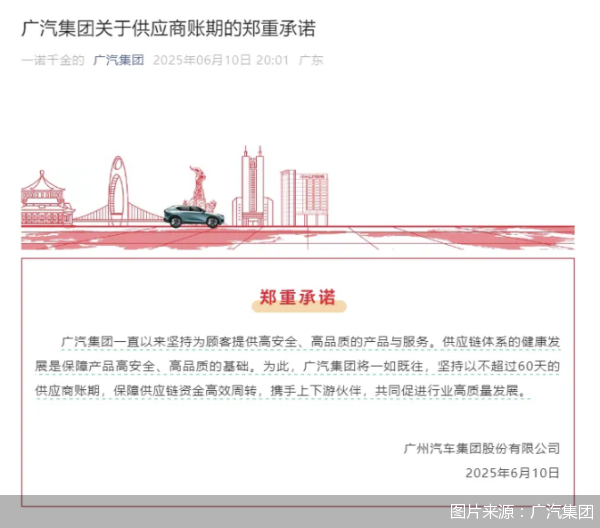
在政府相关部门整治汽车行业"内卷式"竞争背景下,各车企率先从解决供应商账期问题入手"反内卷", 推动上下游关系重构。6月10日晚,中国一汽、东风汽车、广汽集团、赛力斯集团等车企相继宣布,对 供应商的支付账期不超过60天。6月11日,比亚迪汽车、奇瑞汽车、小鹏汽车等多家车企跟进。据统 计,目前共有17家重点汽车生产企业作出相应承诺。在外界看来,政府相关部门与行业协会相继发声, 强化对"价格战"等无序竞争的监管,将推动汽车产业链向高质量的协同转型,而车企的"账期"自律则能 够进一步缓解供应链资金压力。 汽车"链"60天提现 在汽车行业"反内卷"背景下,众多车企开始破除上游供应商痛点。6月10日晚开始,中国一汽、东风汽 车、广汽集团和赛力斯集团相继发声,承诺将供应商支付账期压缩至60天以内,意在通过实际行动维护 市场经济秩序健康稳定。 此后,吉利汽车宣布,将旗下各品牌供应商账期统一压缩至60天以内,进一步提升产业链资金周转效 率,稳定产业链运作,并以行业领军企业身份推动整个行业的健康发展。同样作出承诺的还有长安汽 车,涵盖旗下长安启源、长安凯程、深蓝汽车、阿维塔等品牌,表示将统一执行60天付款账期,以履行 央企社会 ...

68.8%!前5个月中国品牌乘用车市占率创历史新高,新能源车国内销量占比再次突破50%
Mei Ri Jing Ji Xin Wen· 2025-06-11 10:34
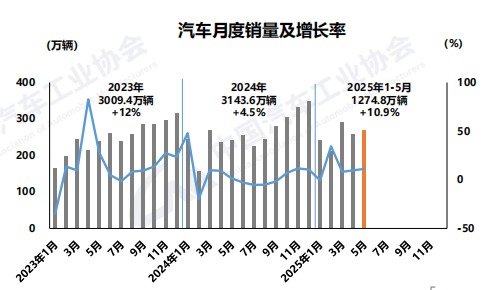
每经记者|李星 每经实习编辑|余婷婷 6月11日,中国汽车工业协会(以下简称中汽协)发布的最新数据显示,5月,我国汽车产销分别完成 264.9万辆和268.6万辆,环比分别增长1.1%和3.7%,同比分别增长11.6%和11.2%。 1月至5月,我国汽车产销分别完成1282.6万辆和1274.8万辆,同比分别增长12.7%和10.9%;产量增速较 1月至4月收窄0.2个百分点,销量增速扩大0.1个百分点。 中国汽车工业协会副秘书长陈士华表示,虽然当前我国汽车行业整体运行呈现稳中向好态势,市场活力 不断释放,但行业盈利水平持续下滑,"增量不增利"的局面未有改善。"以无序'价格战'为主要表现形式 的'内卷式'竞争,是行业效益下降的重要因素。"陈士华指出。 前5个月中国品牌乘用车市占率达68.8% 5月,我国乘用车市场表现活跃,产销分别完成231.3万辆和235.2万辆,环比分别增长2.5%和5.8%,同 比分别增长12.8%和13.3%。"汽车'以旧换新'政策持续显效,内需消费活力加快释放,叠加企业新品密 集上市、多地车展促销活动火热开展等因素,乘用车市场延续良好态势。"陈士华解释称。 1月至5月,我国乘用车产销 ...
零公里二手车,拿捏所有车企
Ge Long Hui· 2025-06-11 10:28
Core Viewpoint - The Chinese automotive market is experiencing severe supply-demand imbalance and negative effects from price wars, leading to distorted business practices among listed car companies [2][4][12]. Group 1: Market Dynamics - The average sales growth rate in China's domestic automotive market over the past three years is only 1.8%, with profit margins continuously declining [4][11]. - The phenomenon of "0-kilometer used cars" has emerged, where new cars are registered and then sold as used cars to alleviate inventory pressure and meet sales targets [6][9]. - The automotive industry is facing a significant overcapacity issue, with many listed companies reporting utilization rates below 50% [13][25]. Group 2: Industry Practices - Some car manufacturers and dealers engage in practices such as "virtual invoicing" to obtain subsidies, contributing to a culture of financial manipulation [6][9]. - The trend of selling "pseudo-used cars" at steep discounts (up to 30% off) is prevalent, indicating a hidden price war within the industry [7][9]. - The competitive landscape has led to a "winner-takes-all" scenario, forcing traditional automakers to downsize and restructure [15][16]. Group 3: Regulatory Response - The Ministry of Commerce has initiated discussions with major car manufacturers regarding the "0-kilometer used car" issue and is working to regulate market practices [4][22]. - There is a call for stricter regulations to address the ongoing price wars and restore healthy competition in the automotive sector [22][26]. - The government is promoting initiatives like the "2025 New Energy Vehicles Going to the Countryside" program to stimulate demand and help manufacturers reduce inventory [26][27]. Group 4: Future Outlook - The automotive industry is expected to undergo a "淘汰赛" (elimination race) in the second half of the year, which may further impact weaker companies [16]. - Despite the challenges, there are potential benefits from government initiatives aimed at boosting sales of new energy vehicles [26]. - The overall production capacity in China may exceed 50 million units, while the global automotive production is around 90 million units, highlighting a significant structural overcapacity [23][25].