循环经济

Search documents
芬兰驻华大使:企业密切关注中国市场机遇
Zhong Guo Xin Wen Wang· 2025-12-05 05:21
Core Insights - Finnish companies are closely monitoring opportunities in the Chinese market due to its vast size, labor advantages, and strong innovation capabilities [1][2] - The recent "Rong-Ou Industrial Dialogue" in Chengdu aims to enhance cooperation between China and Finland in various sectors, including industrial digitalization, circular economy, energy, healthcare, and education [1] - Finland views Chengdu as an important partner for future collaboration, not just as a market, with several Finnish companies already established in the region [2] Group 1 - The Finnish ambassador highlighted that Finland's enterprises are increasingly interested in the Chinese market, which offers significant opportunities for investment and collaboration [1] - The event in Chengdu marks the 75th anniversary of diplomatic relations between China and Finland, focusing on a new partnership framework for 2025-2029 [1] - Recent forums and workshops have been held to discuss topics such as resource conservation and clean energy applications, demonstrating active engagement between the two countries [1] Group 2 - The ambassador's delegation included over 30 Finnish companies, indicating a strong commitment to fostering business relationships in Chengdu [2] - Finnish companies like KONE, Nokia, and others have already created thousands of jobs in Chengdu, showcasing the economic impact of Finnish investments [2] - There is a belief in the potential for new cooperation opportunities beyond existing partnerships, suggesting a positive outlook for future collaborations [2]
净利三连降后,淄博上市纸企拟砸17亿扩产能
Xin Lang Cai Jing· 2025-12-05 04:01
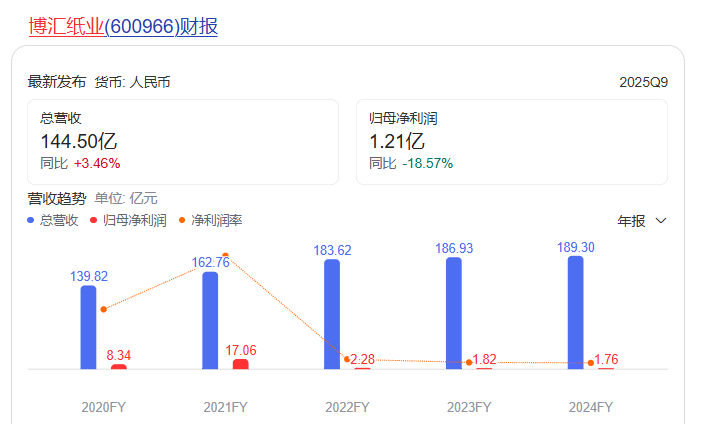
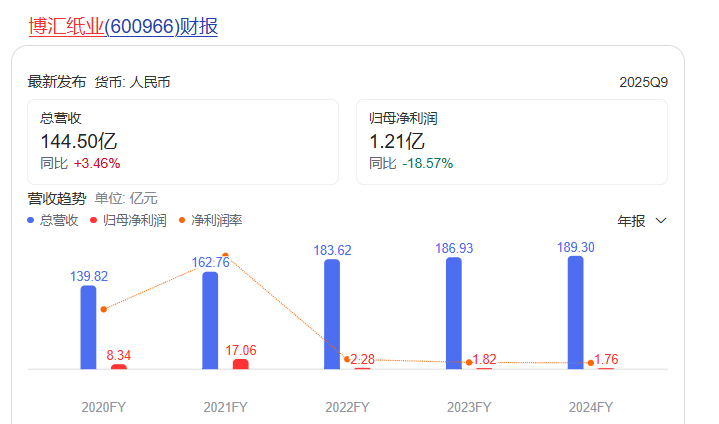
Core Viewpoint - Despite high costs and pressure on profitability in the paper industry, the company Bohui Paper (600966.SH) is increasing its investment by expanding its chemical pulp project, aiming to enhance production capacity significantly [1][2]. Group 1: Investment and Expansion - The company plans to invest 1.701 billion yuan to expand its chemical pulp project, increasing capacity from 95,000 tons to 320,000 tons, representing a 237% increase [1]. - The expansion aims to adjust the existing raw material product structure and improve the diversity of raw materials and products, enhancing cost control and supporting high-end paper products [1][2]. Group 2: Financial Performance - The company's net profit has declined significantly for three consecutive years, projected to drop to 176 million yuan in 2024, while revenue increased by 3.46% in the first three quarters of this year, but net profit fell by 18.57% to 121 million yuan [2]. Group 3: Risk Management and Asset Optimization - To address market price fluctuations, the company will engage in futures and derivatives trading for hedging purposes, with a maximum trading margin and premium of 150 million yuan [5]. - The company is also optimizing its asset structure by selling idle assets for 32.978 million yuan and purchasing new equipment for 46 million yuan to enhance production efficiency and reduce costs [6].


“十五五”低碳转型加速,循环经济、低碳能源、国产替代三条主线大有可为 | 投研报告
Zhong Guo Neng Yuan Wang· 2025-12-05 01:01
Core Viewpoint - The environmental protection industry is expected to improve in operational performance and valuation due to policy incentives and market mechanisms during the "14th Five-Year Plan" period, with a focus on recycling economy, green energy, and domestic substitution [2][5]. Group 1: Industry Performance and Valuation - As of December 1, 2025, the Shenwan (2021) environmental protection industry index has increased by 16.67%, ranking 17th among 31 industries [2][3]. - The overall PE of the environmental protection sector is 35.94X, showing a significant increase compared to the first half of 2024 [2][3]. - In the first three quarters of 2025, the total market value of environmental stocks held by funds reached 5.56 billion, accounting for 0.18% of total holdings, primarily focusing on water treatment, waste incineration power generation, and environmental equipment [2][3]. Group 2: Investment Opportunities - Three main investment lines are identified within the environmental protection sector: 1. The recycling economy is expected to release potential, particularly in the fields of recycled plastics and metals. The goal is to achieve an annual utilization of approximately 4.5 billion tons of solid waste by 2030, with a 45% increase in resource output rates compared to 2020 [2][3]. 2. Under the "dual carbon" goals, green energy is anticipated to contribute significantly. The aim is to reduce greenhouse gas emissions by 7%-10% from peak levels by 2035, with a focus on promoting bio-jet fuel and green methanol [3][4]. 3. Domestic substitution and intelligent upgrades are expected to invigorate the sector, particularly in scientific instruments and sanitation equipment, with a notable increase in demand for new energy sanitation vehicles [4][5]. Group 3: Recommended Companies - For the recycling economy, companies such as Yingke Recycling, High Energy Environment, and Fuchun Environmental are recommended [5]. - In the green energy sector, key recommendations include Xingrong Environment, Hongcheng Environment, and Hanlan Environment, with additional attention to Jiaao Environmental and Wangneng Environment [5]. - For domestic substitution, companies like Xuedilong, Juguang Technology, and Puni Testing are highlighted as having significant investment value [5].
净利三连降后,淄博上市纸企拟砸17亿扩产能!
Sou Hu Cai Jing· 2025-12-05 00:50
Core Viewpoint - The company, Bohui Paper, is expanding its production capacity by planning a new chemical pulp project with an annual output of 320,000 tons, which aims to enhance raw material self-sufficiency and product diversification, ultimately improving cost control and product value [2][3]. Group 1: Project Overview - Bohui Paper plans to invest 1.701 billion yuan in the expansion of its chemical wood pulp production capacity from 95,000 tons to 320,000 tons [2]. - The expansion is not merely an increase in capacity but aims to improve the self-sufficiency of chemical pulp, which constitutes 50%-70% of the total cost of paper production [2][3]. - The project will support the production of high-end paper products, such as food-grade white cardboard and specialty cultural paper, thereby enhancing product value [2]. Group 2: Financial Context - The company's net profit has significantly declined for three consecutive years, projected to drop to 176 million yuan in 2024, despite a 3.46% revenue growth in the first three quarters of the current year [3]. - The net profit for the first three quarters of this year decreased by 18.57% to 121 million yuan [3]. Group 3: Strategic Initiatives - Bohui Paper is implementing a combination of capacity upgrades, asset optimization, and risk management strategies to address industry changes [6]. - The company plans to engage in futures and derivatives trading to hedge against market price fluctuations, with a maximum trading margin and premium of 150 million yuan [6]. - The company is also selling idle assets worth approximately 32.98 million yuan to optimize its asset structure and reduce operational costs [6][7]. - Additionally, Bohui Paper intends to purchase new equipment for upgrading its chemical pulp production process, with a transaction amount not exceeding 46 million yuan [7].
【杨凌】农业科技赋能金米村产业升级
Shan Xi Ri Bao· 2025-12-04 22:42
Core Insights - The article highlights the transformation of Jinmi Village from a single-industry reliance on wood ear mushrooms to a diversified agricultural model, incorporating modern agricultural practices and technology [1][2][5]. Group 1: Industry Transformation - Jinmi Village, known for its wood ear mushroom production, faced challenges due to market volatility and increased competition, prompting a need for diversification [2]. - The introduction of the "Yangling Jinmi Mushroom Fruit and Vegetable Circular Economy Demonstration Park" project, with an investment exceeding 10 million yuan, marks a significant step towards industrial transformation [2][3]. Group 2: Circular Economy and Sustainable Practices - The project emphasizes a circular economy, integrating high-end cherry tomatoes, quality grape cultivation, and ecological mushroom farming, creating a complete ecological cycle [3][4]. - Waste mushroom substrates will be repurposed into organic fertilizers, addressing environmental concerns while reducing production costs, thus forming a resource-product-recycled resource model [4]. Group 3: Employment and Community Development - The project has revitalized local land use and created job opportunities for over 50 villagers, enhancing local employment [5]. - Educational initiatives are being established in collaboration with local universities to develop a skilled workforce, ensuring sustainable growth and knowledge retention within the community [6]. Group 4: Future Vision and Goals - The leadership envisions a shift from "blood transfusion" assistance to "blood-making" strategies, aiming for a prosperous, ecologically sound, and culturally rich community [7]. - Jinmi Village is positioned to become a model for rural revitalization in the Qinba Mountain area, showcasing a successful blend of agricultural innovation and community engagement [7].
惠云钛业(300891) - 300891惠云钛业投资者关系管理信息20251204
2025-12-04 10:04
Group 1: Company Overview - The company focuses on the production of titanium dioxide using the sulfate process, with a total production capacity of 160,000 tons per year [2][3] - The company has maintained stable production operations while dynamically optimizing production plans to balance supply and demand [3] Group 2: Market and Sales Performance - In the first nine months of 2025, the company achieved a revenue of CNY 1.328 billion, showing positive growth despite a declining market price for titanium dioxide [3] - The sales structure includes both domestic and export markets, with a stable core domestic customer base and efforts to expand overseas despite trade barriers [3] Group 3: Profitability Challenges - The company reported a net profit of -CNY 0.11 billion for the first nine months of 2025, with significant pressure on profitability due to declining market prices, increased financial costs, and rising depreciation expenses [3] - Key factors affecting profit include a decrease in titanium dioxide prices, increased interest expenses from convertible bonds, and higher fixed asset depreciation after project completion [3] Group 4: Production and Supply Chain - The company operates two sulfuric acid production lines with annual capacities of 250,000 tons and 200,000 tons, respectively, minimizing reliance on external sulfuric acid suppliers [5] - The company does not plan to use high-titanium slag due to higher costs and has sufficient internal production capabilities to meet its sulfuric acid needs [4][5] Group 5: Customer Demands and Pricing Strategy - The company's titanium dioxide products are primarily used in plastics, with over 60% of customers in the plastic sector, requiring high stability and performance from the products [8] - The pricing strategy is based on market conditions and production costs, allowing the company to maintain a strong pricing power and typically adjust prices monthly [8]
十年三次跃迁:转转重模式构起护城河
36氪· 2025-12-04 10:03
Core Viewpoint - The article emphasizes the importance of "user trust" as a central theme for the company over the past decade and as a key factor for its future growth [2][4]. Group 1: Strategic Transition - In September, the company announced the closure of its C2C marketplace, a significant move given that this model was foundational to its business [3][6]. - The CEO highlighted that this decision, while seemingly self-sabotaging, is a necessary strategic focus, marking a shift from C2C to a C2B2C model [3][4]. - The company has undergone three major identity transformations: entering the second-hand market as an e-commerce platform in 2015, transitioning to a circular economy enterprise by the end of 2022, and now fully embracing the "official verification" model [3][4]. Group 2: User Trust and Market Position - The company has built a reputation as a "heavy industry company" by establishing barriers through quality inspections, on-site recycling, and physical stores [4][19]. - Over the past decade, the company has created a new supply that has increased consumer demand for second-hand goods, particularly among those who were previously hesitant to purchase them [4][34]. - The CEO acknowledged that the C2C experience was inferior to competitors like Xianyu, leading to a fundamental conflict with the company's focus on trust [11][13]. Group 3: Operational Changes and Innovations - The company has shifted its resources away from C2C operations, with the majority of its team now focused on the "official verification" process [9][19]. - The establishment of quality inspection centers and the introduction of on-site recycling services have significantly improved user satisfaction, as evidenced by a rise in NPS scores [20][23]. - The company has successfully integrated its online and offline operations, enhancing efficiency and customer experience [29][32]. Group 4: Future Directions - The company aims to expand its offerings beyond 3C products to include luxury second-hand items, reflecting a shift in consumer demographics and preferences [27][32]. - The integration with Hongbulin has been strategically planned to avoid past mistakes, focusing on building a strong brand identity and enhancing operational efficiency [29][30]. - The company continues to invest in technology and service improvements to enhance user experience and maintain its competitive edge in the second-hand market [42][43].

“十五五”低碳转型加速,循环经济、低碳能源、国产替代三条主线大有可为
Xinda Securities· 2025-12-04 08:10
"十五五"低碳转型加速,循环经济、低碳能源、国产 替代三条主线大有可为 ——环保行业 2026 年策略报告 2025 年 12 月 4 日 | 证券研究报告 | | --- | 行业研究 [Table_ReportType] 行业策略报告 | [Table_StockAndRank] 环保 | | | --- | --- | | 投资评级 | 看好 | | 上次评级 | 看好 | 郭雪 环保公用联席首席分析师 执业编号:S1500525030002 邮 箱:guoxue @cindasc.com 吴柏莹 环保行业分析师 执业编号:S1500524100001 邮 箱:wuboying@cindasc.com 信达证券股份有限公司 CINDA SECURITIES CO.,LTD 北京市西城区宣武门西大街甲127号金隅 大厦B座 邮编:100031 [Table_Title] "十五五"低碳转型加速,循环经济、低碳能源、国产替代 三条主线大有可为 [Table_ReportDate] 2025 年 12 月 4 日 本期内容提要: 请阅读最后一页免责声明及信息披露 http://www.cindasc.com ...
从占有到共享 租赁经济构建消费新逻辑
Bei Jing Qing Nian Bao· 2025-12-04 06:23
Core Viewpoint - A new lifestyle is emerging among young people, focusing on "usage rights" rather than "ownership," reflecting a shift in consumer behavior towards resource efficiency and sustainability [1][2]. Group 1: Shift in Consumer Behavior - Young consumers are increasingly opting for rental services instead of purchasing high-value items, such as professional photography equipment, as renting can significantly reduce costs [1]. - The demand for professional-grade experiences, such as concert equipment rentals, indicates a deeper transformation in consumer values, moving away from mere sufficiency to a pursuit of quality [2]. - This shift is not just a financial strategy but a recognition of the "utilization" principle, allowing access to advanced technology without the burden of ownership [1][2]. Group 2: Environmental and Economic Implications - The rise of the rental economy is linked to technological advancements and a growing awareness of environmental sustainability, promoting a circular economy where resources are reused and life cycles of products are extended [2]. - Renting items like wedding dresses or cameras reduces material and energy consumption, contributing to a more sustainable consumption model [2]. Group 3: Challenges in the Rental Market - The rental market faces challenges such as unclear platform responsibilities, chaotic deposit management, and lack of quality assurance, which could undermine consumer trust if not addressed [3]. - Establishing a clear regulatory framework is essential for ensuring consumer confidence in the rental economy, covering aspects from equipment maintenance to dispute resolution [3]. Group 4: Cultural Shift - The transition from ownership to usage reflects a generational change in values, with younger consumers prioritizing experiences over possessions, contrasting with older generations' focus on security through ownership [3]. - This cultural shift signifies a broader societal transformation, where the habit of renting fosters resource efficiency and redefines consumption patterns [3].
【涨知识】再生资源回收行业常见涉税误区
蓝色柳林财税室· 2025-12-04 01:16
欢迎扫描下方二维码关注: 正解 (1)纳税人在境内收购的再生资源,应按规定 从销售方取得增值税发票 ;适用免税政策的,应按规定 从销售方取得增值税普通发 票 。销售方为依法依规无法申领发票的单位或者从事小额零星经营业务的自然人,应取得销售方开具的收款凭证及收购方内部凭证,或 者税务机关代开的发票。本款所称小额零星经营业务是指自然人从事应税项目经营业务的销售额不超过增值税按次起征点的业务。 (2)纳税人从境外收购的再生资源,应按规定取得 海关进口增值税专用缴款书 ,或者从销售方取得 具有发票性质的收款凭证、相 关税费缴纳凭证 。 上述 "从销售方取得的发票",包括通过 " 反向开票 "方式取得的 增值税发票 。 注意 纳税人应当取得上述发票或凭证而未取得的,该部分再生资源对应产品的销售收入不得适用《财政部 税务总局关于完善资源综合利 用增值税政策的公告》( 财政部 税务总局公告2021年第40号) 的即征即退规定 。 正解 纳税人选择适用简易计税方法,应符合下列条件之一: 01 从事危险废物收集的纳税人 应符合国家《危险废物经营许可证管理办法》的要求,取得危险废物经营许可证。 02 从事报废机动车回收的纳税人 ...