
新能源

Search documents
马年收红包!关注黑马集中营!
Sou Hu Cai Jing· 2026-02-23 14:01
Group 1 - The article highlights four major signals that are expected to support the market as it opens for the Year of the Horse, including continuous policy support, strong consumer recovery, clear industry trends, and favorable external market conditions [4][6][9] - Policy measures are focused on equipment upgrades, consumer goods exchange programs, and significant support for new infrastructure, digital economy, and renewable energy sectors, which are expected to boost economic recovery [4] - Consumer spending has shown remarkable resilience, with record box office revenues during the Spring Festival, a doubling in travel bookings, and a nearly 500% increase in duty-free shopping in Hainan, alongside over 20% growth in dining and accommodation transactions [4] Group 2 - The article notes that the global market has been performing well, with significant gains in indices such as the Hang Seng Index and the Nikkei 225, which rose over 4%, creating a positive environment for the A-share market [6][7] - Commodity markets have also seen increases, with LME copper up 4%, London silver up 3%, and Brent crude oil rising 2.3%, providing support for cyclical sectors [7] Group 3 - The investment strategy for the Year of the Horse emphasizes a cautious approach, focusing on structural opportunities rather than broad market gains, with a prediction of a stable opening and active sector performance [9][10] - Four main investment themes are identified: the AI industry chain, semiconductors and advanced manufacturing, consumer recovery sectors, and cyclical resources, with AI being the strongest focus due to its recent performance [10][11][12] - The article advises against high-risk strategies, recommending a focus on core stocks within the identified themes and careful monitoring of key indicators such as trading volume and foreign capital inflows [13][14]


中信建投:节后A股有望开启新一轮上行
Jin Rong Jie· 2026-02-23 13:48
Core Viewpoint - The report from CITIC Securities indicates that global stock markets showed strong performance during the Spring Festival, with no significant risk events, and current market sentiment remains high, suggesting that A-shares are likely to enter a new upward phase post-holiday [1] Industry Allocation - The industry allocation continues to focus on a dual mainline strategy of "Technology + Resource Products" [1] - The technology mainline centers on AI, humanoid robots (core stocks), new energy, and innovative pharmaceuticals [1] - The resource products mainline focuses on precious metals (core stocks), oil and petrochemicals, and basic chemicals (core stocks) [1] Key Sectors to Watch - Key sectors to pay attention to include: - Semiconductors - AI (optical communication, liquid cooling, electronic fabrics, high-end copper foil, etc.) - Machinery - Non-ferrous metals - Oil and petrochemicals - Basic chemicals - Power equipment (energy storage, ultra-high voltage, photovoltaics, solid-state batteries, etc.) - Innovative pharmaceuticals [1]

国家能源局:主要国家加大氢能、固态电池等前沿技术研发应用,AI成重塑国际能源格局的新变量
Xin Lang Cai Jing· 2026-02-23 13:30
Core Viewpoint - Technological innovation is injecting stronger momentum into the development of new productive forces in the energy sector [1] Group 1: International Perspective - Major countries are enhancing their energy technology strategies, leading to an active period of energy technology innovation [1] - Increased investment in frontier technologies such as hydrogen energy, solid-state batteries, advanced nuclear power, and ocean energy is observed [1] - Artificial intelligence is emerging as a new variable reshaping the international energy landscape, potentially driving systemic changes in energy production, transmission, and consumption [1] Group 2: Domestic Perspective - China's energy technology is entering a key stage characterized by a mix of catching up and leading in certain areas [1] - A significant number of new technologies and industries are thriving, with renewable energy and new energy storage technologies maintaining a world-leading position [1] - Challenges remain, including insufficient original innovation capabilities, gaps in key core technologies and equipment, and the need for improved collaboration among industry, academia, and research [1]
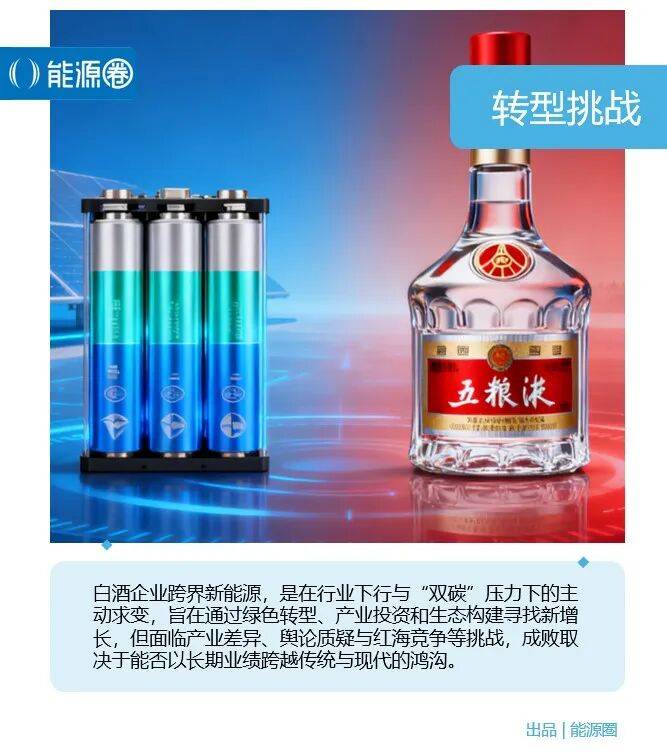
白酒老登的新能源春天
Sou Hu Cai Jing· 2026-02-23 05:46
Core Viewpoint - The traditional perception of the liquor industry and the new energy sector as distant is changing, with major liquor companies increasingly venturing into new energy initiatives to seek growth opportunities amid declining liquor sales [4][10]. Group 1: Industry Trends - Major liquor companies like Moutai and Wuliangye are investing heavily in new energy, with Moutai establishing a 10 billion yuan new energy fund and Wuliangye focusing on solar, energy storage, and hydrogen energy [4][6]. - The liquor industry is facing significant challenges, with national liquor production expected to decline for the eighth consecutive year, showing an 11.5% drop in the first ten months of the year [6][10]. - Internal pressures from new regulations and external pressures from carbon reduction strategies are pushing liquor companies to explore new growth avenues [7][10]. Group 2: Strategic Initiatives - Wuliangye is actively participating in the regional industrial transformation of Yibin, which is transitioning from a liquor hub to a new energy hub, with over 110 new energy projects attracting investments exceeding 270 billion yuan [7][8]. - Companies are taking steps to address their energy consumption issues by building green factories and utilizing renewable energy sources, such as Wuliangye's commitment to using 100% green electricity by 2025 [8][9]. - Leading liquor companies are beginning to define industry standards by creating comprehensive "zero-carbon solutions" and influencing their supply chains to adopt sustainable practices [9]. Group 3: Challenges and Market Dynamics - The transition from liquor to new energy is fraught with challenges due to the fundamental differences between the two industries, with liquor relying on brand culture and consumer demand, while new energy is driven by technology and capital [10][11]. - There are concerns regarding the motivations behind liquor companies' investments in new energy, with skepticism about whether these moves are genuine or merely opportunistic [10][11]. - The new energy sector is becoming increasingly competitive, with profit margins tightening, making it difficult for liquor companies to replicate their traditional high-profit models in this new landscape [11][12].

美一锤定音,特朗普访华3天,登机前加税通知发往中国,局势恶化
Sou Hu Cai Jing· 2026-02-23 04:16
Group 1 - The core issue is the sudden escalation of U.S.-China trade tensions, marked by the U.S. government's announcement of a significant tariff increase just before President Trump's scheduled visit to China [1][3][5] - A new tariff order was signed by Trump on February 20, imposing a 10% tariff on all imported goods, which was quickly raised to 15% within 24 hours, indicating a rapid and unexpected escalation in trade policy [3][5] - The U.S. Treasury Secretary indicated that Trump might visit China again during the APEC summit in November, suggesting a potential increase in high-level meetings between the two nations [7] Group 2 - The U.S. Supreme Court's ruling on February 20 stated that the president does not have the authority to impose large-scale tariffs under the International Emergency Economic Powers Act, which has significant implications for Trump's trade policies [11][13] - The ruling requires the return of previously collected tariffs to importers, creating a financial burden for the U.S. Treasury [16][30] - Trump's new tariff order, while circumventing the legal issues raised by the Supreme Court, essentially maintains the same policy but under a different framework, with a maximum validity of 150 days unless Congress approves an extension [20][41] Group 3 - The U.S. trade deficit reached a record $901.5 billion in 2025, the highest since records began in 1960, highlighting the urgency behind the tariff increases as a means to address this economic issue [23][25] - The imposition of tariffs has led to increased costs for American consumers, contributing to rising inflation and financial strain on households [26][28] - The U.S. government's approach to tariffs is seen as a misguided attempt to reduce the trade deficit, as it has not yielded the desired results and has instead harmed American industries [25][30] Group 4 - The U.S. seeks cooperation with China in specific areas such as military communication and rare earth supply chains, indicating a reliance on China for certain strategic needs [33][39] - However, the U.S. continues to impose restrictions in critical sectors like semiconductors and artificial intelligence, reflecting a dual strategy of seeking collaboration while simultaneously attempting to contain China's growth [35][39] - The upcoming visit by Trump is viewed as a response to domestic political and economic pressures, particularly with the 2026 midterm elections approaching, rather than a genuine effort to improve U.S.-China relations [40][42]

不停产,抢抓市场窗口期
Xin Lang Cai Jing· 2026-02-22 23:05
Core Viewpoint - The company, Fujian Zhongxin Fluorine Material High-Tech Co., Ltd. (referred to as "Zhongxin Gaobao"), is actively producing electronic-grade hydrogen fluoride and fluorine chemicals to meet the growing demand in emerging industries such as renewable energy, semiconductors, and biomedicine, aiming to seize market opportunities during the Spring Festival [1][2]. Group 1: Company Operations - Zhongxin Gaobao operates a fully automated production line capable of producing 60,000 tons of electronic-grade hydrogen fluoride and 10,000 tons of electronic-grade fluorine each year, primarily serving the LCD/OLED panel, solar photovoltaic, and mid-to-low-end chip sectors [1]. - The company has a diverse production capacity, including 70,000 tons/year of anhydrous hydrogen fluoride, 200,000 tons/year of sulfuric acid, and 6,000 tons/year of potassium chloride, among others, with a total output value of 680 million yuan last year [1]. - The company has maintained production during the Spring Festival, with around 200 employees working to fulfill orders that are scheduled until April [1]. Group 2: Industry Trends and Innovations - The demand for fluorine fine chemicals is driven by the growth of new industries, and the company emphasizes the importance of innovation and product development to gain a competitive edge [2]. - The company has introduced a new production line for fluorobenzene, which is a key intermediate for producing PEEK specialty engineering plastics, showcasing its commitment to expanding its product offerings [2]. - The company has established an Economic and Technical Committee to prioritize technological optimization for products with high consumption of raw materials, labor, and energy, enhancing product competitiveness [2].
预见2025:《2025年中国风电EPC行业全景图谱》(附市场现状、竞争格局和发展趋势等)
Qian Zhan Wang· 2026-02-22 02:08
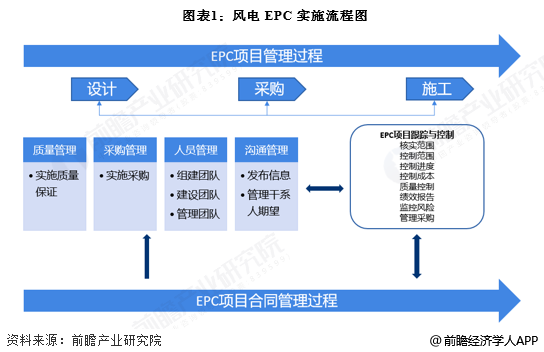
Industry Overview - Wind power EPC (Engineering, Procurement, and Construction) refers to the construction of wind power plants under the EPC model, where a general contractor is responsible for design, construction, procurement of wind turbine equipment, and other materials, delivering the completed project to the owner after all turbines are connected to the grid [1] - The wind power EPC industry can be divided into three segments: upstream suppliers of basic equipment and materials, midstream EPC contractors, and downstream project owners, which include enterprises or government entities [3] Industry Development History - The development of wind power EPC in China has gone through three stages: pilot stage (1984-2002), promotion stage (2003-2013), and comprehensive promotion stage (2014-present) [5] Policy Background - The introduction of carbon peak and carbon neutrality policies has made renewable clean energy generation a key focus for China's future development, with wind power EPC being a crucial part of this growth [8] Current Industry Status - The supply capacity and level of wind power EPC are continuously increasing, with major companies like China Power Construction and China Energy Engineering expanding their EPC business [12] - The demand for wind power EPC is rising, driven by the construction of wind farms, with China's cumulative installed wind power capacity reaching 603 million kilowatts by November 2025, a year-on-year increase of 22.4% [12] - The market size of wind power EPC saw a decline in 2022 due to a drop in new installed capacity, reaching 31.3 billion yuan, but is expected to rebound to 79 billion yuan by 2024 [14] Competitive Landscape - The wind power EPC market is predominantly led by large state-owned enterprises, with China Power Construction and China Energy Engineering being the top players [15] - In 2025, among 132 projects awarded in the wind power EPC sector, China Power Construction secured 24 projects (18% of the total), while China Energy Engineering won 19 projects (14%) [18] Future Development Outlook - The wind power EPC industry in China is projected to maintain rapid growth, with the market size expected to reach 140 billion yuan by 2030 [20] - Key trends include the expansion of offshore wind farms, integration of new technologies for smart wind farms, and the development of comprehensive applications for offshore wind energy [23]
康曼德资本董事长丁楹:马年新程,在不确定中把握确定性
Zhong Guo Ji Jin Bao· 2026-02-21 12:57
Group 1 - The core viewpoint of the article emphasizes the transition of China's capital market from liquidity recovery to structural pricing, highlighting a year of stabilization and differentiation in 2025 [2] - The macro environment in 2025 saw marginal improvements in global liquidity, with the Federal Reserve's multiple interest rate cuts providing external support for risk assets, while domestic policies continued to stabilize the market [2] - The market structure in 2025 was characterized by a focus on a few sectors with medium to long-term logic, such as AI computing power, self-controllable technologies, and high-end manufacturing, while traditional real estate and some cyclical industries were still in a clearing and bottoming phase [2] Group 2 - In 2026, the Chinese economy is expected to experience a weak recovery with structural upward trends, driven by a new round of technological and industrial cycles [3] - The focus on new technologies, renewable energy, digital economy, and biomedicine is reshaping production relationships and capital return structures, while traditional economic sectors are gradually declining [3] - The economic growth model is shifting from total expansion to quality enhancement, with stable growth policies expected to continue [3] Group 3 - The capital market in 2026 will shift its core variable from liquidity recovery to profitability, with a focus on fundamental performance rather than speculative narratives [4] - High-quality companies, particularly in the Hong Kong stock market and technology manufacturing sectors, are anticipated to reach profitability turning points between 2025 and 2026 [4] - The investment logic will increasingly return to fundamentals, leading to a more rational pricing system [4] Group 4 - The capital market is expected to exhibit three main characteristics: a higher probability of structural bull markets over broad bull markets, a balance between growth and value investments, and continued volatility with an upward shift in market stability [5] - Investors will prioritize company quality and industry dynamics, with high-growth sectors requiring caution regarding valuations, while traditional value assets regain significance [5] Group 5 - The investment strategy for 2026 is termed "Double Horses Running Together," focusing on both growth and stable assets [6] - Growth sectors, particularly those related to AI and new productive forces, are seen as long-term investment themes, while stable assets in finance, resources, and consumption are being revalued as quasi-debt equities [6] - The investment approach will involve a dynamic adjustment of asset allocation, favoring growth in the first half of the year and gradually shifting towards value in the second half [7]
全球市场动荡,黄金暴跌60美元!A股2月24日开市,你的持仓该怎么办?
Sou Hu Cai Jing· 2026-02-20 13:22
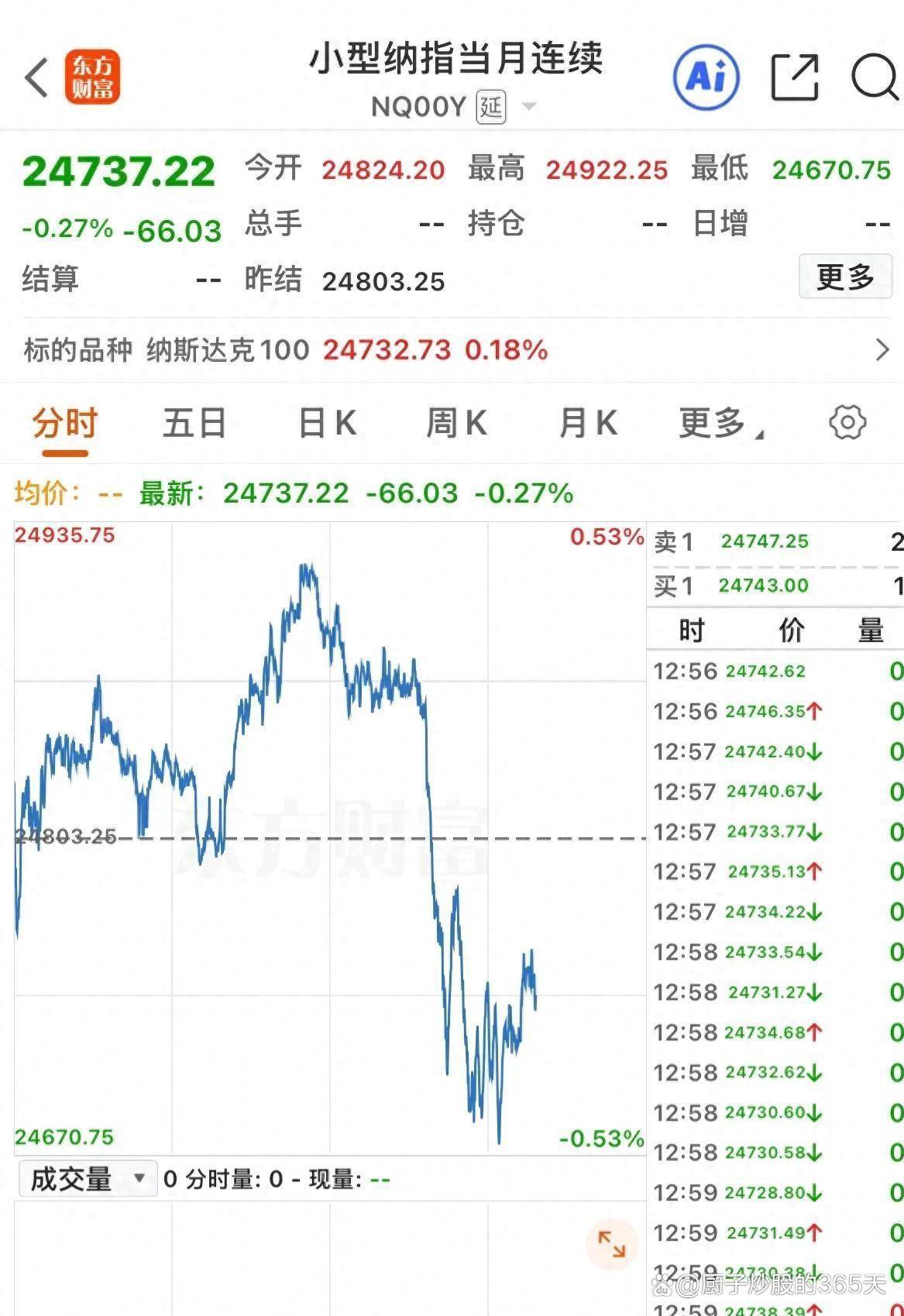
Group 1 - The global financial markets experienced significant volatility during the Chinese New Year holiday, which may impact the A-share market upon its reopening on February 24 [3][13] - U.S. stock index futures showed initial optimism with gains over 0.5%, but later faced a sell-off, leading to a mixed performance in major indices, with the Nasdaq down by 0.27% [3][4] - The last trading day before the holiday saw a divergence in U.S. market sectors, with technology and consumer service stocks declining, while sectors like renewable energy and high-end manufacturing gained traction [4][13] Group 2 - The precious metals market, particularly gold and silver, faced significant declines, with gold prices dropping below $5000 per ounce, attributed to a stronger U.S. dollar and profit-taking by investors [8][9] - The Hong Kong stock market demonstrated resilience with a "V-shaped" recovery, particularly in technology and resource sectors, which may provide a positive signal for the A-share market [8][9] - European markets mirrored the U.S. trends, with major indices experiencing declines, indicating a cautious sentiment among investors leading to profit-taking [9][11] Group 3 - A-share market had already undergone a significant adjustment before the holiday, with major indices experiencing declines, but the overall trend for the year remains upward [11][13] - The resilience shown by the Hong Kong market and the underlying support from domestic economic fundamentals suggest that A-shares may develop an independent trend post-holiday [13][14] - Focus areas for the A-share market post-holiday are likely to shift towards domestic industrial trends and sector rotations, particularly in renewable energy, high-end manufacturing, and technological innovation [13][14]
安本集团中国区总经理茅蓓丽:中国市场马年奔驰展潜力
Zhong Guo Ji Jin Bao· 2026-02-20 06:46
Group 1 - The market is expected to experience rapid growth driven by factors such as the rapid development of artificial intelligence, government support policies, effective stimulus measures, and a stable RMB exchange rate, potentially expanding further in the second half of 2026 [1] - The emergence of Deepseek in 2025 marked a significant moment for China's innovation, highlighting its rapid advancements and positioning as a global competitor in high-tech sectors [2] - The focus should be on the "infrastructure" of artificial intelligence, including data center infrastructure and software layers, with the ultimate winners being companies with scale, data access, and sustainable profitability [3] Group 2 - The energy storage sector and infrastructure-related sectors are expected to benefit from policy-driven demand, with power equipment showing improved pricing power and profitability visibility [3] - Consumer sectors, particularly those with strong cash flow and overseas expansion potential, are showing resilience despite being in the later stages of the consumption cycle [3] - The market may expand further in the second half of the year if policy support increases and demand recovers, with a focus on companies with pricing power and cash turnover capabilities [4] Group 3 - The RMB is expected to gain stronger support at the beginning of 2026 due to narrowing interest rate differentials between the US and China, alongside strong export performance [5] - A stronger RMB is generally favorable for the Chinese stock market, indicating more stable capital flows and improved risk appetite [5]