
绿色转型

Search documents
扩大高水平对外开放 促进普惠包容的经济全球化 ——访商务部党组书记、部长王文涛
Ren Min Ri Bao· 2026-01-12 23:21
Core Viewpoint - The report emphasizes the importance of expanding high-level opening-up to promote inclusive economic globalization and enhance China's modernization efforts [2][4][5]. Group 1: Significance of High-Level Opening-Up - High-level opening-up is seen as a strong driving force for high-quality development, with a focus on utilizing global resources and markets [2]. - It is crucial for meeting the people's needs for a better life, as it directly impacts employment and the availability of diverse consumer goods [3]. - The report highlights that high-level opening-up is essential for promoting inclusive and cooperative economic globalization, positioning China as a leader rather than a follower in global trade [4]. Group 2: Achievements in Opening-Up - Since the 18th National Congress, China has made historic achievements in opening-up, with significant growth in foreign trade and investment [6][7]. - In the first 11 months of 2025, China's goods trade reached 41.2 trillion yuan, a 3.6% increase year-on-year, maintaining its position as the world's largest trading nation [7]. - The report notes that China has become a major player in global service trade, with the total service trade expected to exceed 1 trillion USD in 2024 [7]. Group 3: Challenges and Opportunities - The current global environment presents both opportunities and challenges for expanding high-level opening-up, with increasing uncertainties [11]. - The report identifies a "pressure period" due to global economic slowdowns and geopolitical tensions, particularly in U.S.-China relations [12]. - However, it also highlights the potential for new growth in digital and green sectors, with significant market opportunities in these areas [12][13]. Group 4: Future Directions for Opening-Up - The report outlines four key areas for future focus: expanding autonomous opening-up, promoting trade innovation, enhancing two-way investment cooperation, and high-quality Belt and Road Initiative construction [14][15][16][17]. - Emphasis is placed on aligning with international standards and reducing barriers to trade and investment to foster a more open economic environment [14]. - The report also stresses the importance of protecting overseas interests and enhancing legal frameworks to support international investments [17].
四川西昌电力股份有限公司关于农垦罗家沟光伏试验电站二期投产发电的公告
Shang Hai Zheng Quan Bao· 2026-01-12 18:09
证券代码:600505 证券简称:西昌电力 公告编号: 2026-002 农垦罗家沟牧光互补分布式光伏试验电站第二期项目位于凉山州西昌市经久乡,场址地理坐标为北纬 27.7619°,东经102.2207°,场址海拔高程约1578m,电站规划总装机4.59MW。 二、项目建设情况 农垦罗家沟牧光互补分布式光伏试验电站第二期项目(4.59MW),于2025年5月6日正式开工建设,项 目占地面积107亩,通过公司自有35kV线路输送到变电站,实现就地消纳。 三、项目投产对公司的影响 四川西昌电力股份有限公司 关于农垦罗家沟光伏试验电站二期投产发电的 公告 本公司董事会及全体董事保证本公告内容不存在任何虚假记载、误导性陈述或者重大遗漏,并对其内容 的真实性、准确性和完整性承担法律责任。 四川西昌电力股份有限公司投资建设的农垦罗家沟牧光互补分布式光伏试验电站第二期项目 (4.59MW),于2026年1月9日正式发电上网运行。 一、项目概况 四川西昌电力股份有限公司董事会 2026年1月13日 农垦罗家沟牧光互补分布式光伏试验电站第二期的投运,优化补充公司电源结构,提升公司供电能力, 为公司绿色转型发挥积极作用。 特此公 ...

全面打造“公园城市、安逸家园”
Xin Lang Cai Jing· 2026-01-12 18:00
Core Viewpoint - Sichuan Province has released an implementation opinion aimed at promoting high-quality urban development, focusing on building modern cities characterized by innovation, livability, beauty, resilience, civilization, and intelligence, with a target to achieve significant progress by 2030 and establish a modern urban framework by 2035 [1][2]. Group 1: Urban Development Strategy - The opinion outlines a comprehensive urban spatial layout, emphasizing the development of the Chengdu-Chongqing urban axis and other key urban development belts, while adhering to principles like "one city, one policy" [2]. - Support for Chengdu includes establishing it as a model park city and enhancing its core functions, while also promoting the integration of the Chengdu metropolitan area [2][3]. - Regional cities like Mianyang and Yibin are encouraged to attract major productivity layouts, enhancing their economic growth potential [2]. Group 2: Technological Innovation and Industry Integration - The opinion emphasizes the importance of technological innovation and industry-city integration, proposing the establishment of key innovation zones and collaborative innovation frameworks [3]. - It advocates for the application of advanced technologies such as AI and clean energy in urban development, fostering new economic models and consumption scenarios [3]. Group 3: Quality of Life and Infrastructure - The opinion addresses housing security by promoting a new real estate development model and a tiered housing supply system [4]. - It outlines plans for enhancing public services, including education and healthcare, and improving community infrastructure [4][5]. - The focus on green transformation includes initiatives for pollution reduction, green building development, and waste classification [5]. Group 4: Safety and Governance - The opinion stresses the establishment of safety management systems for buildings and infrastructure, alongside measures to enhance urban resilience against extreme weather [5]. - It proposes the creation of a unified digital urban governance framework to improve service delivery and operational efficiency [5].
江苏江阴:“十年绿”换来“一江清”,长江大保护的十年答卷
Xin Lang Cai Jing· 2026-01-12 16:57
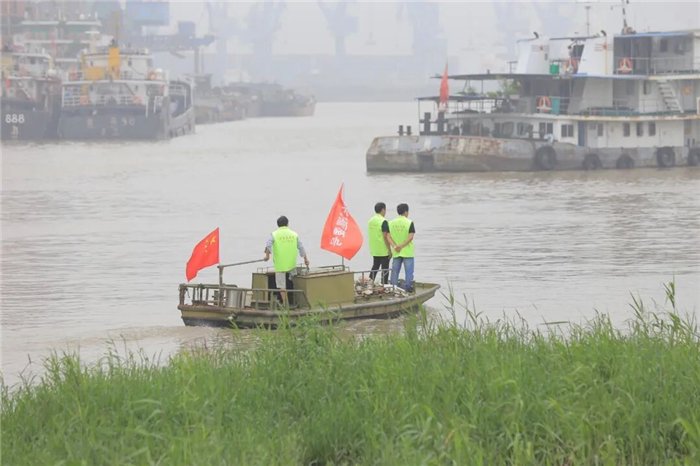
Core Viewpoint - The article highlights the successful ecological restoration efforts in Jiangyin along the Yangtze River, showcasing the positive impact on local wildlife, particularly the Yangtze finless porpoise, and the transformation of local industries towards sustainable practices. Group 1: Ecological Restoration - The sighting of Yangtze finless porpoises in Jiangyin signifies the improvement of the local ecosystem, attributed to the "big protection" policy initiated by the government in 2016 [1] - Jiangyin has optimized its production shoreline from 23.4 kilometers to 16.8 kilometers, contributing to the development of a modern riverside garden city [1] - Continuous efforts in ecological protection have led to a 100% compliance rate for water quality at 18 national and provincial monitoring points since the 14th Five-Year Plan [7] Group 2: Fishermen's Transition - Fishermen in Jiangyin have transitioned from "catching fish" to "protecting the river," with many signing agreements to stop fishing and joining dedicated protection teams [3] - The local community has released over 1.8 billion fish fry into the Yangtze River over 24 years, enhancing the river's ecological health [3] Group 3: Technological Support - The introduction of the "Jiang Shield" platform for monitoring illegal fishing activities has enabled 24-hour surveillance of the river, leading to the resolution of over 200 fishing-related incidents [4] Group 4: Industrial Transformation - Jiangyin has seen a shift from high-pollution industries to high-value, low-pollution enterprises, with a significant reduction in chemical factories and the establishment of green manufacturing practices [10] - The local port group has achieved a carbon emission reduction of 86.7% following the upgrade of its iron ore import terminal, reflecting a commitment to sustainable operations [9] Group 5: Economic Growth - Jiangyin's GDP is projected to exceed 500 billion yuan in 2024, with an annual growth rate of 5.5%, driven by the green transformation of its manufacturing sector [10]

浙能集团:再创历史新高!
Xin Lang Cai Jing· 2026-01-12 12:29
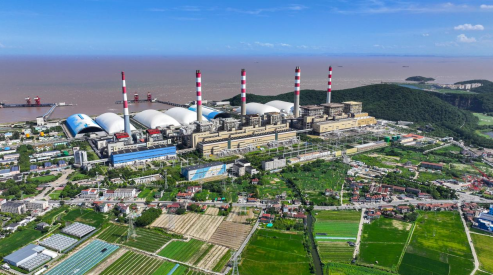
Core Viewpoint - Zhejiang Energy Group achieved record-high energy supply in 2025, with total power generation of 211.5 billion kWh, coal supply of 75.23 million tons, gas supply of 14.9 billion cubic meters, and heat supply of 138.16 million GJ, all showing year-on-year growth, demonstrating high-quality energy security [1][14]. Group 1: Energy Supply Achievements - In 2025, Zhejiang Energy Group's total power generation reached 211.5 billion kWh, marking a historical high [1][14]. - The company supplied 75.23 million tons of coal and 14.9 billion cubic meters of gas, both of which also saw significant year-on-year increases [1][14]. - The heat supply amounted to 138.16 million GJ, contributing to the overall energy security [1][14]. Group 2: Project Development and Capacity Expansion - Zhejiang Energy Group focused on major project construction, completing nearly 5 million kW of new installed capacity in the past year [3][16]. - Key projects included the expansion of the Taizhou Power Plant, Jiaxing Power Plant, and the renovation of the Zhenhai natural gas power plant, all of which feature advanced emission reduction technologies [3][16]. - The completion of these projects has enhanced the stability and safety of energy supply, supporting local economic development [3][16]. Group 3: Operational Efficiency and Reliability - During peak summer demand, Zhejiang Province experienced record-high electricity loads, with Zhejiang Energy Group's power generation units playing a crucial role in meeting this demand [5][18]. - The company implemented strategies to improve equipment reliability and enhance load capacity, ensuring maximum output from coal power units [5][18]. - Management focused on reducing non-scheduled outages and addressing output constraints, contributing to stable energy supply [5][18]. Group 4: Fuel Supply and Infrastructure - Zhejiang Energy Group's fuel supply strategy, leveraging a complete industrial chain, ensured effective coal supply to power plants [7][20]. - The company achieved record coal import volumes of 15 million tons and throughput of 30 million tons at its port, both marking new highs since its establishment [7][20]. - The natural gas division established a comprehensive supply system, optimizing energy structure and enhancing public welfare [11][24]. Group 5: Green Energy Transition - Zhejiang Energy Group is accelerating its green transition, focusing on offshore wind power and renewable energy projects [11][24]. - The company successfully integrated solar power projects, achieving a twofold increase in renewable energy capacity compared to the end of the 13th Five-Year Plan [11][24]. - The LNG receiving station in Wenzhou set a record for peak output, ensuring sufficient supply during high-demand periods [11][24]. Group 6: Winter Preparedness - As winter approaches, Zhejiang Energy Group is refining its strategies for power generation, coal supply, gas supply, and heating [13][26]. - The company is prioritizing equipment safety and risk management while optimizing coal supply and transportation scheduling [13][26]. - These efforts aim to enhance supply capabilities and ensure stable energy access for the community during winter [13][26].

船舶和海洋工程装备国际产教联盟在津成立
Zhong Guo Xin Wen Wang· 2026-01-12 11:13
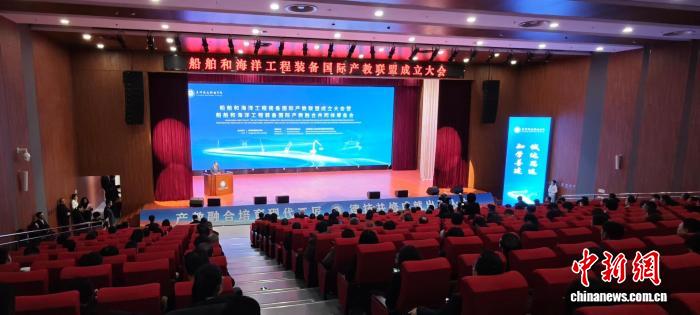
Group 1 - The International Alliance for Shipbuilding and Marine Engineering Equipment was established on January 10 in Tianjin, aiming to create a new platform for international integration of education and industry [1][4] - The alliance focuses on deep integration of the education chain, talent chain, industrial chain, and innovation chain, promoting high-quality development in the global shipbuilding and marine engineering equipment industry [2] - Four chair units and ten vice-chair units were awarded at the event, along with the signing of multiple cooperation memorandums and talent training agreements [2] Group 2 - Uzbekistan's participation in the alliance is expected to enhance practice-oriented talent cultivation, closely aligning vocational education with the actual needs of shipbuilding and marine industries [2] - Experts and representatives from countries like Bangladesh, Russia, and China discussed topics such as "international collaborative education under digital transformation" and "high-quality development paths for the shipbuilding industry under green transformation" during a roundtable session [3]
欧盟中国商会:高度欢迎中欧电动汽车案实现“软着陆”
Zhong Guo Xin Wen Wang· 2026-01-12 11:07
Core Viewpoint - The EU-China Chamber of Commerce welcomes the soft landing achieved through dialogue on the electric vehicle issue, believing it will significantly boost market confidence [1][2] Group 1: Impact on Market Confidence - The resolution of the electric vehicle issue is expected to create a more stable and predictable environment for Chinese electric vehicle and related industry companies operating in Europe, thereby enhancing market confidence [1] - The joint decision by China and the EU is seen as a clear and strong signal to the global market, promoting healthy and stable development of economic and investment cooperation between the two regions [1] Group 2: Implications for Industry Cooperation - The resolution is anticipated to deepen cooperation in market expansion and technological innovation between the electric vehicle industries of China and the EU, contributing to global green transformation and industrial collaboration [1] - The competitiveness of the Chinese electric vehicle industry is attributed to continuous technological innovation and cost advantages formed through market competition, rather than relying on subsidies [2] - The EU-China Chamber of Commerce aims to support higher-level, constructive win-win cooperation between Chinese and European enterprises based on this positive outcome [2]
(长春振兴突破正当时)突围突破聚动能 长春三年之变书写振兴新篇章
Zhong Guo Xin Wen Wang· 2026-01-12 09:49
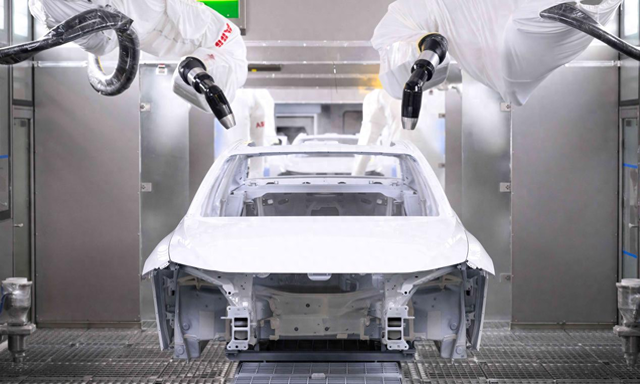
Core Insights - The article highlights the transformation of Changchun, an old industrial city, into a modern industrial hub driven by innovation, openness, green transformation, and urban integration, marking significant progress over the past three years [1][2][16]. Group 1: Innovation Leap - Innovation has become the most prominent feature of Changchun's industrial evolution, with the launch of Audi's electric vehicle production in December 2024 marking a key milestone in the city's electric vehicle strategy [3][6]. - The establishment of a comprehensive innovation ecosystem has been facilitated by national research institutions, leading to a significant increase in the number of specialized small and medium enterprises, from 39 to 54, representing a 38% growth over three years [7]. Group 2: Open Hub - Changchun has developed a multi-dimensional open system to overcome geographical limitations, with a 24.1% increase in total import and export volume from 2020 to 2024, and a 2.5 times increase in export volume [8]. - The city has established significant logistics infrastructure, including the first China-Europe freight train route in Jilin Province and a cross-border e-commerce pilot zone, enhancing its connectivity with global markets [7][8]. Group 3: Green Transformation - The city has integrated "green" into its industrial DNA, with a focus on electric and intelligent vehicles, energy-efficient equipment, and a growing share of new energy and materials in strategic emerging industries [9][12]. - Changchun has actively pursued a "waste-free city" initiative, achieving significant improvements in solid waste utilization and recycling rates, with air quality improving to an 89.6% good rate in 2024, a 3.6 percentage point increase year-on-year [11][12]. Group 4: Urban Circle Integration - The "Changchun Modern Urban Circle" has evolved from a conceptual plan to a tangible entity, enhancing regional collaboration and optimizing industrial division of labor [13][15]. - The development of intercity rapid transit networks has expanded the "one-hour commuting circle," facilitating better integration of industries and services across the urban area [15]. Group 5: Overall Development Logic - Changchun's transformation serves as a model for the revitalization of old industrial bases, emphasizing the importance of innovation, openness, green development, and regional collaboration in driving economic growth [16][17].
府谷县推动乡村发展从“量的积累”迈向“质的跨越”—— 藏粮于智筑根基 兴业富民绘新景
Zhong Guo Fa Zhan Wang· 2026-01-12 09:45
号角催征千帆竞,沃野新生万象兴。近年来,陕西府谷县锚定"农业强、农村美、农民富"总目标,以粮 食安全为根基、产业融合为引擎、民生提质为底色,通过系统性改革与创新性实践,推动乡村发展 从"量的积累"迈向"质的跨越",走出一条具有府谷特色的乡村振兴之路,让广袤乡村焕发出勃勃生机。 绘就和美乡村"新图景" 乡村振兴既要"塑形",更要"铸魂"。近年来,府谷县以"千万工程"为引领,推动乡村从"环境美"向"生活 美"、"外在美"向"内在美"跃升。20个和美乡村示范村各具特色,其中,府谷镇郝家寨村通过"风貌改造 +文化植入+产业配套",从昔日"空心村"蝶变为如今的"网红村",成功获评省级和美乡村示范村。 文明新风浸润乡土。黄甫镇"百姓议事室"、府谷镇"爱心银行"、新民镇"爱心超市"等平台陆续搭建,引 导群众主动参与公共事务;"婚事新办、丧事简办"等文明实践活动广泛开展,乡村文明程度持续提升。 民生保障网越织越密。公共就业服务平台注册用工单位1318家、提供岗位3762个,助力1万余名农村劳 动力实现"掌上就业";累计为农村困难学生发放资助金4239万余元,残疾儿童入学率保持100%;脱贫 户参保率、住院报销率均达100%, ...
西昌电力(600505.SH):农垦罗家沟光伏试验电站二期投产发电
智通财经网· 2026-01-12 08:25
农垦罗家沟牧光互补分布式光伏试验电站第二期的投运,优化补充公司电源结构,提升公司供电能力, 为公司绿色转型发挥积极作用。 西昌电力(600505.SH)发布公告,公司投资建设的农垦罗家沟牧光互补分布式光伏试验电站第二期项目 (4.59MW),于2026年1月9日正式发电上网运行。 ...