
贸易逆差

Search documents
下周重磅日程:中国5月外汇储备、美国非农、欧央行决议、鲍威尔讲话、日本国债拍卖
Hua Er Jie Jian Wen· 2025-06-01 04:32
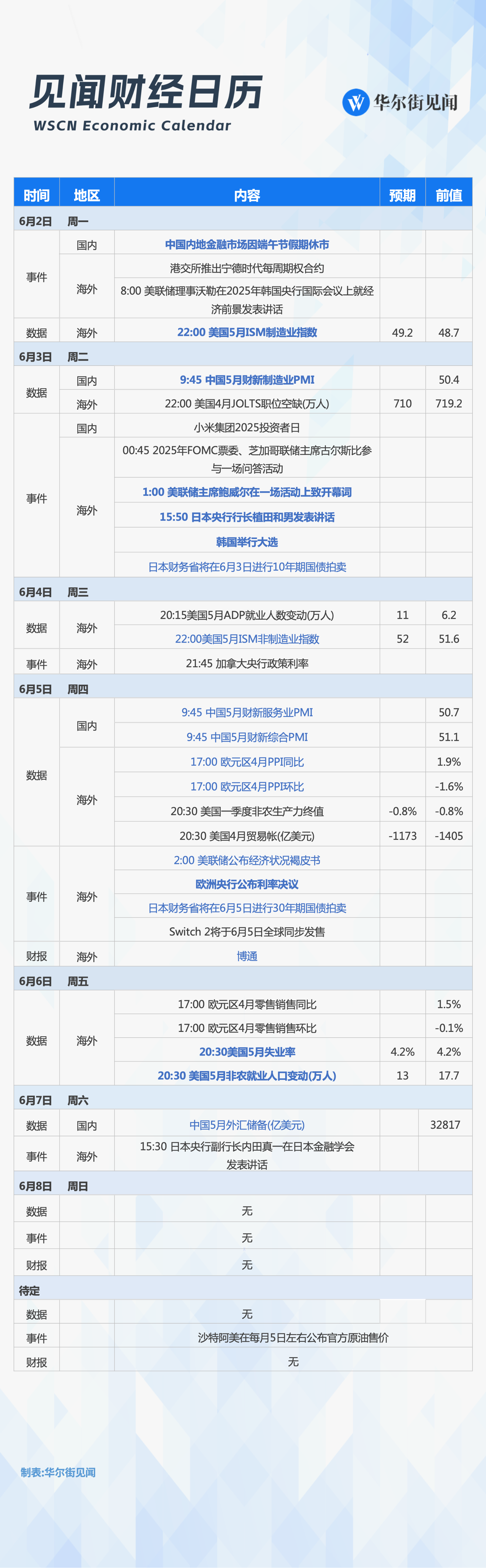
见闻财经日历 WSCN Economic Calendar | 时间 | 地区 | 内容 | | --- | --- | --- | | 6月2日 | 周一 | | | 事件 | 國内 | 中国内地会融市场因端午节假 港交所推出宁德时代每周期 | | | 運メ | | | | | 8:00 美联储理事沃勒在2025年韩国央行 | | | | 济前景发表讲话 | | 数据 | 海外 | 22:00 美国5月ISM制造业 | | 6月3日 | 품 二 | | | 数据 | 園内 | 9:45 中国5月财新制造业 | | | 海外 | 22:00 美国4月JOLTS职位卒 | | | 目立 | 小米佳田2025投盗者F | | | ール | リ ハポローレーリススペロト | | --- | --- | --- | | 事件 | 運み | 00:45 2025年FOMC票委、芝加哥联储 | | | | 与一场问答活动 | | | | 1:00 美联储主席鲍威尔在一场活云 | | | | 15:50 日本央行行长植田和男! | | | | 韩国举行大选 | | | | 日本财务省将在6月3日进行10年 | | 6月4日 ...

特朗普关税突遭法院“熔断”企业排队等退钱,英国变成最大冤种
Sou Hu Cai Jing· 2025-05-31 23:57
美国法院一纸判决,把特朗普的关税大刀砍崩了! 就在上周,三位联邦法官联手裁定:特朗普对全球加征的三种关税全部违法,政府不仅要取 消关税,还得给企业退钱加付利息! 这场面好比超市突然宣布之前收的"保护费"不算数,还得倒贴8%利息赔给商家。 最惨的是英国——刚和美国签完"不平等条约"接受10%关税,转头发现全世界可能就剩自己还在交钱。 而中国企业被多收的34%关税也在退款名 单里。 不过别急,特朗普已经拍桌子告到最高法院,关税大战进入加时赛… 美国国际贸易法院的裁决像颗炸弹,直接炸碎了特朗普的关税堡垒。 5月底,由三名法官组成的合议庭宣布:特朗普引用《国际紧急经济权力法》对所有贸易伙伴加征关税属于越权。 法官们白纸黑字写道:"总统没有无限收税的权力。 英国陷入史诗级尴尬。 就在判决公布前三天,英国贸易大臣还炫耀英美新协议:"我们用开放农产品市场,换来了全欧洲最低的10%基础关税! "结果现在全球关税可 能归零,英国反而成了唯一扛着10%关税的国家。 更扎心的是,英国去年对美国贸易顺差高达180亿英镑,若别国关税取消,英国商品在美国市场将彻底失去竞争力。 "这份判决书明确列出三类必须取消的关税:针对加拿大、墨西哥2 ...
【环球财经】市场消化最新宏观数据 美元指数30日小幅上涨
Xin Hua Cai Jing· 2025-05-31 00:20
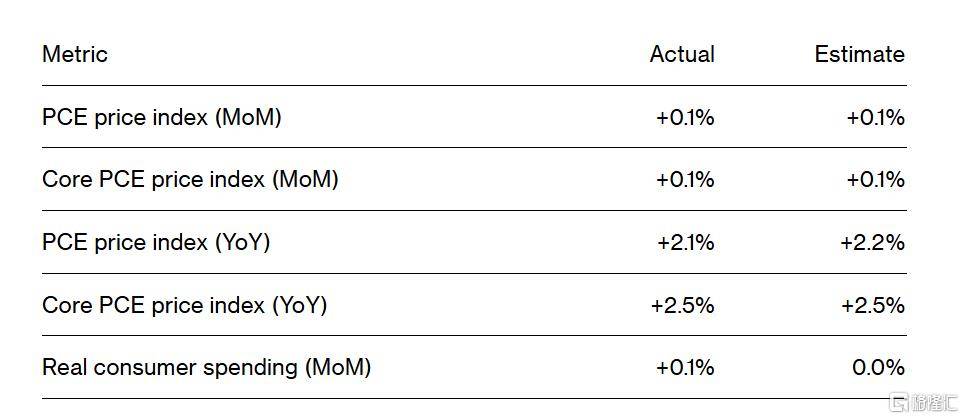
Group 1 - The US dollar strengthened against the euro, pound, and Swedish krona, while it weakened against the Swiss franc, yen, and Canadian dollar, with the dollar index rising by 0.05% to 99.328 [1] - The US international goods trade deficit for April was reported at $87.6 billion, significantly lower than the expected $143 billion and the revised $162.3 billion from March [1] - The US personal consumption expenditures price index increased by 0.1% month-on-month in April, matching market expectations, while the year-on-year increase was 2.1%, slightly below March's 2.3% [1] Group 2 - The German consumer price index for May rose by 0.1% month-on-month, below the expected 0.2% and April's 0.4%, with a year-on-year increase of 2.1% [1] - The likelihood of the European Central Bank lowering interest rates increased due to inflation data being close to the 2% target [1] - The Bank of England's external member Alan Taylor suggested that the central bank should consider lowering interest rates due to economic growth risks from the US-China trade war [2] Group 3 - Japan's consumer price index for May increased by 3.4% year-on-year, with the core index rising by 3.6%, and industrial production for April grew by 0.7%, exceeding the expected 0.1% [2] - The probability of the Bank of Japan raising interest rates by the end of the year is now estimated at 67% following the latest data [2] - Canada's GDP for March rose by 0.1%, and the annualized growth rate for the first quarter was reported at 2.2%, surpassing the expected 1.6% [2]
通胀保持温和!美国4月核心PCE同比2.5%,创四年多来新低
Sou Hu Cai Jing· 2025-05-30 14:17
Core Insights - The latest PCE data indicates a slowdown in consumer spending in April 2023, aligning with a moderate inflation rate, suggesting a potential economic deceleration [1][2]. Inflation Metrics - The PCE price index for April showed a year-over-year increase of 2.1%, down from 2.3% previously and below the expected 2.2%. Month-over-month, it rose by 0.1%, consistent with prior expectations [2][3]. - The core PCE price index, excluding food and energy, rose by 2.5% year-over-year, marking the lowest level since March 2021, and was revised from a previous estimate of 2.7% [2][3]. Consumer Spending and Income - Real consumer spending adjusted for inflation increased by only 0.1% in April, following a 0.7% rise in March. Personal consumption expenditures (PCE) rose by 0.2% month-over-month, down from 0.7% [2][3]. - Nominal wages and salaries continued to grow, increasing by 0.5% for the third consecutive month, while the savings rate reached 4.9%, the highest in nearly a year [2][3]. Trade and Tariff Developments - The U.S. trade deficit in goods narrowed significantly by 46% in April to $87.6 billion, with imports decreasing by $68.4 billion to $276.1 billion and exports increasing by $6.3 billion to $188.5 billion [8]. - The Trump administration is considering a "Tariff B Plan" to impose tariffs of up to 15% on a wide range of goods, which could impact consumer spending and inflation [6][9]. Federal Reserve Outlook - The Federal Reserve has maintained the benchmark overnight interest rate at 4.25%-4.50% since December 2022, with market expectations indicating a potential rate cut of 50 basis points by the end of the year [11][12]. - Economists predict that the negative effects of tariffs may become evident in the June data, influencing the Fed's future decisions on interest rates [10][15].
美国上诉法院暂时恢复特朗普关税政策,对“紧急状态”的司法解释成焦点
Sou Hu Cai Jing· 2025-05-30 02:42
据央视新闻报道,美东时间5月29日,联邦巡回上诉法院批准特朗普政府的请求,暂时搁置美国国际贸易法院此前做出 的禁止执行特朗普政府依据《国际紧急经济权力法》(IEPPA)对多国加征关税措施的行政令的裁决。 上诉法院在裁决书中说,在本法院审议相关动议文件期间,美国国际贸易法院在这些案件中作出的判决和永久性禁令将 暂时中止,直至另行通知。 联邦上诉法院是美国联邦司法系统中的中级上诉法院,管辖范围包括美国国际贸易委员会、基于美国宪法第三条的审判 庭、美国国际贸易法院、专利商标局专利申诉与抵触委员会等。如果对结果不满意,双方当事人都可以直接向最高法院 上诉。 尽管九大法官构成中保守派占据绝对优势,但目前不清楚未来最高法院是否会作出有利于特朗普政府的法理解释。 自4月2日开始,特朗普政府援引IEPPA,对大多数贸易伙伴加征10%的所谓对等关税,随后又特别针对来自加拿大、中 国和墨西哥的商品征收高额税款,自称是为了扭转美国长期巨额贸易逆差,以及打击非法移民和毒品。 分析普遍指出,IEEPA对"紧急状态"定义模糊,且未明确授权总统以国家安全为由加征全面关税。该法赋予总统在国家 紧急状态下对经济交易进行"调控"的权力,但不包括 ...

特朗普关税战略存变数白银T+D急挫
Jin Tou Wang· 2025-05-30 02:41
Group 1 - Silver T+D is currently trading above 8163, with an opening price of 8228 and a current price of 8168, reflecting a decrease of 0.21% [1] - The highest price reached today was 8230, while the lowest was 8161, indicating a bearish short-term trend in the silver T+D market [1] - Resistance levels for silver T+D are identified in the range of 8294-8360, while support levels are noted between 8150-8190 [3] Group 2 - Discussions within the Trump administration are ongoing regarding dual response strategies to trade issues, with no final decision made yet [2] - The recent court ruling allows Trump's emergency tariffs to remain in effect during the appeal process, potentially delaying any alternative plans [2] - The National Economic Council Director's statements appear contradictory to the ongoing discussions, asserting that trade negotiations will continue unaffected [2]
美国加税被驳回,黄金再跌一成!
Sou Hu Cai Jing· 2025-05-29 10:26
Group 1: Trade and Economic Policy - The U.S. International Trade Court ruled that President Trump's imposition of tariffs under the International Emergency Economic Powers Act (IEEPA) exceeded legal authority, emphasizing that the Constitution grants Congress exclusive power over foreign trade [1] - The ruling indicates a potential shift in trade policy and could impact future tariff decisions and international trade relations [1] Group 2: Federal Reserve and Economic Outlook - The Federal Reserve's meeting minutes revealed that most policymakers acknowledged facing "difficult trade-offs" in the coming months, with concerns about rising inflation and unemployment [3] - There are warnings about increasing recession risks and the need to monitor recent volatility in the bond market, which could pose risks to financial stability [3] - Changes in the dollar's safe-haven status and rising U.S. Treasury yields may have long-term economic implications [3] Group 3: Precious Metals Market - International gold prices have seen a significant decline, breaking the key support level of 3280 and reaching around 3245, indicating a bearish trend [4] - The daily chart shows a four-day consecutive decline, with MACD indicators suggesting a potential shift to a bearish trend if it falls below the zero line [4] - Short-term trading strategies suggest selling on rallies around the 3282-93 range, with support targets set at 3260-3250 and further down to 3209 if broken [6]
全球巨震!对等关税全面停止?
Sou Hu Cai Jing· 2025-05-29 10:05
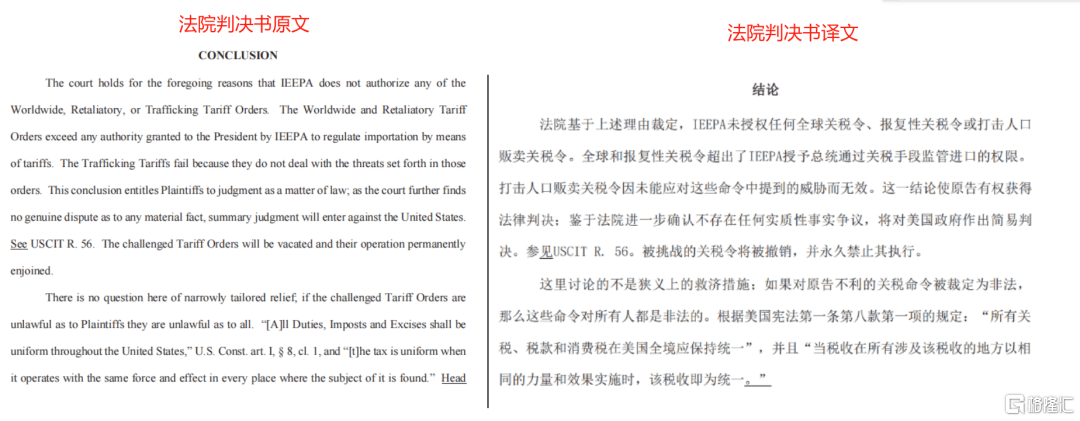
Core Points - The U.S. International Trade Court ruled that President Trump's imposition of tariffs under the International Emergency Economic Powers Act (IEEPA) exceeded legal authority, declaring the trade deficit as a "national emergency" [1][3][5] - The court's decision prohibits the enforcement of the "reciprocal tariffs" announced on April 2, emphasizing that tariffs must be uniform and have nationwide effect [2][6] - The ruling indicates that the IEEPA does not grant the president authority to implement "global tariffs" or "retaliatory tariffs," and the court found no significant factual disputes, leading to a summary judgment against the U.S. government [3][5] Impact of the Ruling - The court's decision mandates the cancellation of the reciprocal tariffs and those previously imposed on China, Canada, and Mexico related to the fentanyl issue, giving the White House 10 days to cease these tariffs [8] - Following the ruling, the Trump administration immediately filed an appeal [7] - Analysts suggest that the ruling could lead to a temporary easing of tariffs, which may positively impact the U.S. dollar and stock market if the decision holds [12] Market Reactions - The ruling has led to increased trading activity in the A-share market, with significant inflows into stock ETFs observed, indicating a shift in investor sentiment [14][27] - Despite recent inflows, there were notable outflows from major indices like the CSI 300 and CSI 500, suggesting volatility in market confidence [22][25] - The overall trading volume in the A-share market has fluctuated, with a return to over 1 trillion yuan in trading on certain days, reflecting active capital market conditions [27]
“少有人知”的法院,“总统越权”的裁决,今早发生了什么?对特朗普关税战意味着什么?
华尔街见闻· 2025-05-29 04:18
见闻君 几天前说的事 兑现了,美法院叫停特朗普关税。 据央视新闻,当地时间5月28日, 美国国际贸易 法院阻止了美国总统特朗普4月2日宣布的关税政策生效,并裁定特朗普越权 ,对向美国出口多于进口的国家 征收全面关税。 三位分别由里根、奥巴马和特朗普本人任命的法官一致裁定,总统滥用紧急权力,踩踏了宪法红线。若接下来特朗普上诉失败,他发动的贸易战将在10天内戛 然而止。 随后,白宫迅速强硬回应,称将动用"行政权力的每一杠杆"反击这一"未经选举的法官"的裁决。 "对等关税"涉嫌多重非法 美国国际贸易法院在裁决中宣布,特朗普总统上任后不久对多个国家实施的高额关税是非法的。这项裁决涉及两个合并案件——V.O.S. Selections v. United States 和 Oregon v. Department of Homeland Security。 就这一裁决,法院给出了四个重要结论: IEEPA下总统权力有限 宪法要求 "关税、税收在美国各地必须统一" ,因此法院在全国范围内永久禁止了这些关税的实施。 接下来会发生什么? 上诉争夺战已打响 法院认为1977年《国际紧急经济权力法》(IEEPA)不能赋予总统"无 ...
特朗普发帖自夸:对欧盟加征50%关税的威胁奏效!
Jin Shi Shu Ju· 2025-05-27 14:31
这番表态紧随美国和欧盟贸易局势的阶段性缓和。上周日,特朗普与欧盟委员会主席冯德莱恩通话后, 将原定于6月1日对所有欧洲商品加征50%关税的计划推迟至7月9日。 欧盟委员会首席发言人保拉·皮尼奥(Paula Pinho)周一表示,上周日的通话为谈判注入"新动力"。皮尼 奥称,"我们将以此为基础推进。看到双方领导人积极互动是积极信号,我们始终表示准备好达成协 议。" 欧盟委员会对特朗普的最新帖子拒绝置评。 美国财政部长贝森特上周也表示,特朗普发表新关税威胁的目标是为美国与欧盟的贸易谈判"点把火"。 "我以前说过,欧盟在这方面存在集体行动问题,"贝森特在《美国新闻编辑室》(America's Newsroom)节目中说。"这是个由27个国家组成的联盟。所以我得到的一些反馈是,一些国家甚至不知 道欧盟在代表他们谈判什么。" 然而,美国和欧盟通往贸易协议的道路仍然充满荆棘。双方仍有不同的优先事项,这可能会成为迅速达 成协议的障碍。目前尚不清楚谈判桌上的要求或提议是否发生了变化。 周二,美国总统特朗普宣称,其对欧盟加征50%关税的威胁取得成功,因此举促使欧盟加快了谈判进 程。 他在Truth Social上发帖称,"我对 ...