
通胀韧性

Search documents
【UNFX下周展望】流动性与预期再平衡 年末行情结构特征凸显
Sou Hu Cai Jing· 2025-12-20 09:29
Group 1 - The global financial market is transitioning from an event-driven state to a phase of reassessing existing pricing and consensus confirmation following significant macroeconomic events [1] - Market focus is shifting from "whether to take action" to "whether the policy stance remains restrained" regarding the Federal Reserve, with any statements on inflation resilience or policy patience likely to be magnified by the market [2] - The Bank of Japan's policy adjustment continues to impact the market, with attention on whether the subsequent reactions, such as yen volatility and interest rate changes, will persist [2] Group 2 - The market is expected to exhibit a differentiated performance, with risk assets oscillating between emotional recovery and year-end caution, lacking new variables to drive sustained strength [3] - The foreign exchange market may enter a phase of range trading, with volatility stemming more from capital flows and position adjustments rather than a macro directional shift [3] - Overall, the market is in a rebalancing phase post-major events, with macro uncertainty persisting but the driving forces shifting towards expectation digestion and capital behavior [3]
GTC泽汇:金价偏弱震荡与避险情绪走低
Sou Hu Cai Jing· 2025-12-04 13:11
Core Viewpoint - Gold prices are under pressure, fluctuating below $4200, with limited upward momentum despite a lack of strong bearish sentiment. Improved market risk appetite and a modest recovery of the dollar have weakened gold's safe-haven support, although expectations for monetary easing provide some support for gold prices [1][3]. Group 1: Market Conditions - Recent economic data has reinforced expectations for monetary easing, with November private sector employment unexpectedly decreasing by 32,000, contrasting sharply with previous growth. This has led the market to anticipate a 25 basis point cut in policy rates next week [3]. - The low interest rate environment enhances the relative attractiveness of non-yielding assets like gold, and with limited dollar rebound, gold's medium-term support structure remains relatively solid [3]. - Investor caution due to external uncertainties has limited deep corrections in gold prices, with market focus shifting to the upcoming PCE price index to gauge future policy direction [3]. Group 2: Trading Dynamics - Weekly jobless claims and corporate layoff data are expected to provide short-term volatility, but their impact is deemed limited. The overall market focus remains on inflation resilience and policy pace [3]. - In a positive stock market environment, safe-haven demand for gold remains weak, causing prices to hover within a narrow range during Asian and European trading sessions [3]. - The market is likely to remain in a consolidation phase, with limited movement unless significant events occur [3]. Group 3: Technical Analysis - Gold prices have repeatedly faced resistance in the $4245–$4250 range, indicating this level remains a significant upper barrier. If prices continue to decline, the $4164–$4163 weekly low area is expected to serve as initial key support [4]. - A break below this support could test the psychological $4100 level and the important technical convergence area around $4085, which is supported by the 200-period EMA on the 4-hour chart and the upward trend line since October [4]. - Conversely, if gold prices break above $4250 and stabilize in the $4277–$4278 range, there is potential for a renewed challenge of the $4300 level, laying the groundwork for further upward movement [4].

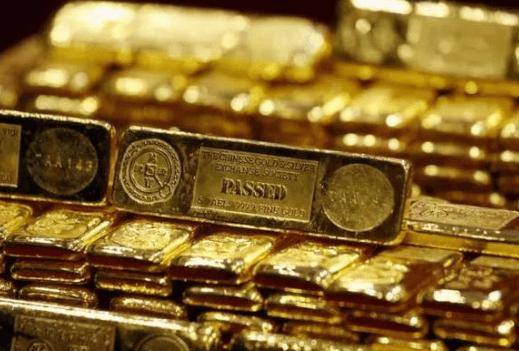
美联储“裱糊”困境引发无序震荡 美债市场年末不确定性或增长
Zhong Guo Jin Rong Xin Xi Wang· 2025-11-03 07:31
Core Viewpoint - The U.S. bond market is at a crossroads of monetary policy shifts and fiscal sustainability, facing unprecedented complexities due to diverging views within the Federal Reserve and increasing market uncertainties [1][2]. Group 1: Monetary Policy Changes - The Federal Reserve lowered the federal funds rate target range by 25 basis points to 3.75% to 4.00%, marking the second rate cut of the year [2]. - There is a notable split within the Federal Reserve, with some members advocating for larger rate cuts while others prefer to maintain current rates, indicating a lack of consensus [2][5]. - Market expectations for a December rate cut have fluctuated significantly, dropping from 90% to approximately 70% [5]. Group 2: Inflation and Economic Data - U.S. inflation remains stubbornly high, with September inflation reaching its highest level since January, driven by rising prices of essential goods [3]. - The ongoing government shutdown has hindered the collection of critical economic data, complicating the Federal Reserve's decision-making process [3]. - Tariff policies are contributing to rising consumer costs, with estimates suggesting that consumers bear 50% to 70% of the total tariff costs [3]. Group 3: U.S. Debt and Fiscal Concerns - The U.S. federal debt has surpassed $35 trillion, with the debt-to-GDP ratio reaching 143%, a historical high [5]. - Concerns over high fiscal deficits and excessive bond issuance are leading some investors, like Bill Gross, to sell U.S. Treasury futures, anticipating rising yields [5]. Group 4: Market Volatility and Investment Strategies - The bond market is expected to experience increased volatility due to multiple factors, including Federal Reserve policy uncertainty and the upcoming presidential election [6]. - Investors are adjusting their strategies in response to market uncertainties, with suggestions to shift towards longer-term bonds to mitigate exposure to short-term policy fluctuations [6].

11月2日重大:金价下周将迎大风暴是抄底良机还是万丈深渊?
Sou Hu Cai Jing· 2025-11-02 16:30
Core Viewpoint - The gold market is experiencing significant volatility, with international gold prices fluctuating around $4000 per ounce, influenced by changes in Federal Reserve policy expectations and global macroeconomic uncertainties [1][3] Group 1: Short-term Factors - The recent drop in international gold prices from a historical high of $4390 per ounce to $3987 per ounce, a nearly 9% decline, was primarily due to reduced expectations for a December rate cut by the Federal Reserve and a strengthening dollar [3][5] - Technical indicators suggest that gold prices are still in an overbought territory, indicating a need for further adjustment despite recent stabilization [5] - Demand for gold has temporarily weakened as the opportunity cost of holding gold increases with a stronger dollar, leading to reduced investor interest [5] Group 2: Long-term Support Factors - Long-term support for gold remains strong due to persistent inflation, with the U.S. core PCE index still above the 2% target and long-term inflation expectations around 2.5% [3][6] - Central banks globally, including those in Russia and India, have increased their gold holdings by a total of 126 tons in the first three quarters of 2025, providing a significant boost to the gold market [3][6] - Geopolitical risks and the restructuring of the dollar system also contribute to long-term support for gold prices [6] Group 3: Investment Strategy - Investors are advised to avoid speculative buying in the short term and consider accumulating gold if prices fall below $3800 per ounce, as this level represents a long-term support point [8] - For long-term investment, gold should be included as part of an asset allocation strategy, with a recommended allocation of 10-15% to hedge against inflation and dollar depreciation [9] - The upcoming price movements will reflect a battle between short-term expectations and long-term trends, emphasizing the importance of maintaining a rational approach to investment in gold [9]

新世纪期货交易提示(2025-6-30)-20250630
Xin Shi Ji Qi Huo· 2025-06-30 03:47
Report Summary 1. Industry Investment Ratings - **Black Industry**: Iron ore, coal and coke, rolled steel, and glass are rated as "Rebound"; soda ash is rated as "Oscillation" [2]. - **Financial Industry**: Shanghai 50 Index Futures/Options is rated as "Rebound"; CSI 500 and CSI 1000 are rated as "Upward"; 2 - year, 5 - year treasury bonds are rated as "Oscillation"; 10 - year treasury bonds are rated as "Rebound"; gold and silver are rated as "Correction"; Shanghai and Shenzhen 300 is rated as "Oscillation" [2][4]. - **Light Industry**: Pulp is rated as "Weak Oscillation"; logs are rated as "Strong Oscillation"; soybean oil, palm oil, and rapeseed oil are rated as "High - level Oscillation"; soybean meal, rapeseed meal, soybean No.2, and soybean No.1 are rated as "Oscillation with a Bearish Bias" [5]. - **Agricultural Products**: Live pigs are rated as "Rebound" [7]. - **Soft Commodities**: Rubber is rated as "Rebound"; PX, PR, and PF are rated as "Wait - and - See"; PTA and MEG are rated as "Short at High Levels" [9]. 2. Core Views - **Black Industry**: The overall supply of iron ore is increasing, demand is relatively low, and port inventories are entering a stocking cycle. Coal and coke prices have rebounded due to safety inspections and high iron - water production. The supply - demand structure of rolled steel has weakened, and glass prices have rebounded at low levels [2]. - **Financial Industry**: The central bank suggests strengthening monetary policy regulation. The stock market shows different trends, and the bond market rebounds slightly. Gold prices may correct in the short term [4]. - **Light Industry**: Pulp prices are expected to oscillate weakly, while log prices are expected to oscillate strongly. The supply of oils and fats is abundant, and the demand is in the off - season, with prices likely to oscillate at high levels. The soybean market is weak, and prices are expected to oscillate with a bearish bias [5]. - **Agricultural Products**: Live pig prices are expected to continue rising, driven by supply - demand changes and market sentiment [7]. - **Soft Commodities**: Rubber prices are expected to oscillate widely. PX prices follow oil prices, PTA and MEG are suitable for shorting at high levels, and polyester products show different trends [9]. 3. Summary by Category Black Industry - **Iron Ore**: Recent spot trading is weak, and the basis continues to narrow. Global shipments and arrivals are increasing, and the supply - demand surplus pattern remains unchanged. It rebounds in the short term, and attention should be paid to the trend of iron - water production [2]. - **Coal and Coke**: Environmental inspections have led to a decline in coking coal supply, and prices have rebounded strongly. Coke prices are under pressure, and inventories are increasing. Attention should be paid to iron - water production and supply - side trends [2]. - **Rolled Steel**: In the off - season, demand has weakened, production has increased, and inventories have started to rise. The overall demand is difficult to reverse seasonally, and prices may find support at the valley - electricity cost level in the short term [2]. - **Glass**: There is no substantial improvement in fundamentals. The daily melting volume will first decrease and then increase. Demand is expected to weaken, and inventories are at a high level. Prices have rebounded at low levels, and attention should be paid to downstream demand recovery [2]. - **Soda Ash**: It shows an oscillating trend [2]. Financial Industry - **Stock Index Futures/Options**: Different stock indices show different trends. The central bank's policy suggestions and economic data affect the market. It is recommended to hold long positions in stock indices [4]. - **Treasury Bonds**: Market interest rates are consolidating, and treasury bonds are rebounding slightly. It is recommended to hold long positions in treasury bonds with a light position [4]. - **Gold and Silver**: Gold's pricing mechanism is changing. Although the logic driving the price increase has not completely reversed, prices may correct in the short term due to factors such as interest - rate and tariff policies [4]. Light Industry - **Pulp**: Spot prices are stabilizing, costs are decreasing, demand is in the off - season, and prices are expected to oscillate weakly [5]. - **Logs**: Port shipments are increasing, to - be - arrived volumes are expected to decrease, and costs are providing support. Prices are expected to oscillate strongly [5]. - **Oils and Fats**: Palm oil production and exports are high, and inventories are increasing. The supply of soybean oil and palm oil is abundant, and prices are expected to oscillate at high levels [5]. - **Soybean Meal and Others**: The soybean market is weak due to favorable weather and high production. Domestic imports are large, and prices are expected to oscillate with a bearish bias [5]. Agricultural Products - **Live Pigs**: Supply - side sentiment is strong, and prices are rising. The average transaction weight is decreasing, and prices are expected to continue rising [7]. Soft Commodities - **Rubber**: Supply is affected by weather, demand shows a structural recovery, and inventories are in different states. Prices are expected to oscillate widely [9]. - **PX**: Geopolitical tensions are easing, supply is increasing, and prices follow oil prices [9]. - **PTA**: Costs are oscillating after a decline, and the supply - demand situation is weakening in the medium term. Prices follow costs in the short term [9]. - **MEG**: Arrivals are low, and the supply - demand situation is strong in the near term and weak in the long term. Prices are affected by the general market atmosphere [9]. - **PR**: Driven by cost factors, the market may adjust with a bullish bias [9]. - **PF**: Terminal performance is average, and prices are expected to oscillate within a range [9].
有色金属行业报告:关税预期扰动不改黄金上行趋势
China Post Securities· 2025-06-03 02:23
Investment Rating - The industry investment rating is "Outperform the Market" and is maintained [2] Core Views - The report highlights that the gold price trend remains upward despite fluctuations caused by tariff expectations, with a strong focus on inflation resilience and long-term interest rates [5] - Copper prices are expected to continue fluctuating around a cost level of $9,350 due to tariff uncertainties and macroeconomic factors [6] - Aluminum prices are projected to rise, supported by strong domestic demand and inventory depletion [6] - Molybdenum prices are increasing due to tight supply and stable demand from the steel sector [7] - Rare earth prices are under short-term pressure but are expected to recover as export controls ease and mining quotas are issued [7] Summary by Sections Industry Overview - The closing index for the industry is at 4,668.39, with a weekly high of 5,020.22 and a low of 3,700.9 [2] Price Movements - Basic metals saw price declines: Copper down 1.03%, Aluminum down 1.39%, Zinc down 2.93%, Lead down 1.23%, and Tin down 6.73% - Precious metals experienced mixed results: Gold up 0.41%, Silver down 0.93%, Platinum down 9.60% [21] Inventory Changes - Global visible inventories showed a decrease: Copper down 11,442 tons, Aluminum down 12,499 tons, Zinc down 12,099 tons, Lead down 4,080 tons, Tin down 106 tons, and Nickel down 681 tons [26]
有色金属行业报告:黄金上行开始,持续关注黄金股投资机会
China Post Securities· 2025-05-26 03:23
Investment Rating - The industry investment rating is maintained at "Outperform the Market" [1] Core Views - The report highlights that gold prices are on an upward trend, driven by resilient inflation and trade tensions, particularly with the potential for increased tariffs on Europe [4] - Copper prices are expected to remain volatile due to fluctuating tariffs, with a price center around $9,300 [5] - Aluminum prices are forecasted to rise due to strong domestic demand and inventory depletion [5] - Tungsten prices are anticipated to continue rising, supported by better-than-expected export recovery [6] - Rare earth prices are under pressure due to increased imports, but long-term investment opportunities are suggested as supply constraints may tighten [7] Summary by Sections Industry Overview - The closing index for the industry is at 4695.15, with a weekly high of 5020.22 and a low of 3700.9 [1] Price Movements - LME copper increased by 0.62%, while aluminum decreased by 0.60%. Gold prices on COMEX rose by 1.98% [20] Inventory Changes - Global visible copper inventory decreased by 14,348 tons, and aluminum inventory decreased by 11,426 tons [26]