
量子计算

Search documents
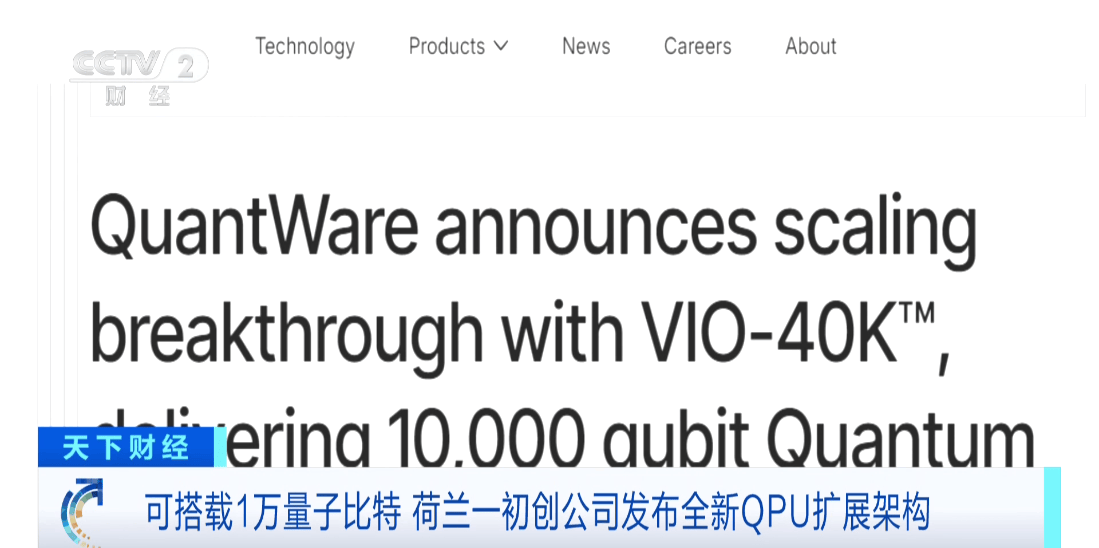
可搭载1万量子比特!荷兰一初创公司发布全新QPU扩展架构
Sou Hu Cai Jing· 2025-12-15 11:04
Group 1 - The core viewpoint of the article is that QuantWare has launched a new quantum processor unit (QPU) architecture capable of creating quantum chips with 10,000 qubits, which is nearly 100 times the capacity of the highest current industry chips [1][3]. Group 2 - QuantWare's new QPU architecture significantly surpasses existing commercial quantum chips, such as Google's Willow chip with 105 qubits and IBM's Heron chip with 156 qubits [3]. - The company is constructing a quantum chip factory expected to be operational by 2026, which aims to produce quantum chips on a large scale and become a major global player in the quantum chip manufacturing sector [5]. - Quantum computing is recognized as a cutting-edge technology with transformative potential in fields like chemistry, materials, and energy, yet current quantum chips are primarily limited to around 100 qubits [5].

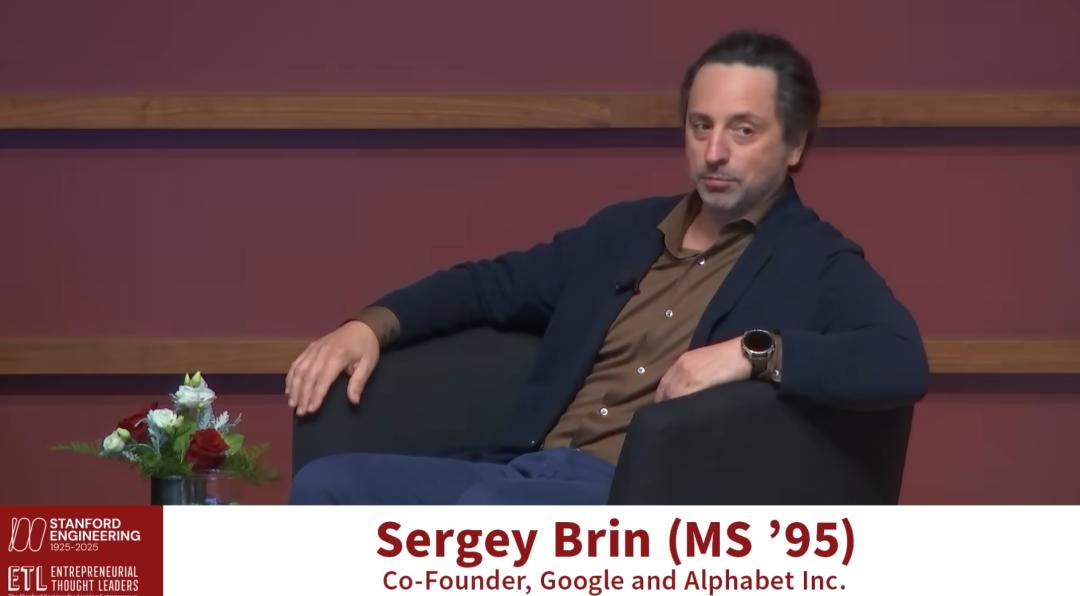
布林坦承谷歌低估Transformer,“还被OpenAI挖走了Ilya”
3 6 Ke· 2025-12-15 11:02
Core Insights - Google founder Sergey Brin reflected on the company's journey, acknowledging mistakes in the AI race and recognizing OpenAI's opportunity [1][4] - Brin emphasized the importance of not rushing to commercialize ideas without adequate preparation, using Google Glass as a cautionary example [25][27] Company History - Google was founded in 1998, evolving from a project called BackRub, which assessed webpage importance through links [11][12] - The name "Google" is derived from a mathematical term representing a 1 followed by 100 zeros, symbolizing the ambition to organize global information [14] AI Development - Google initially underestimated AI's potential after the release of the Transformer paper, leading to missed opportunities as OpenAI capitalized on the technology [20] - Despite setbacks, Google's long-term investment in AI research and development, including the creation of specialized TPU chips, has maintained its competitive edge [20] Future Technologies - Brin identified quantum computing and materials science as undervalued future technologies, suggesting a focus on their applications in AI [23] - He advised students to leverage AI in various aspects of life, while cautioning against pursuing fields where AI may excel, such as comparative literature [21][23] Entrepreneurial Advice - Brin warned young entrepreneurs against prematurely commercializing unrefined ideas, stressing the need for thorough preparation and cost management [25] - He shared insights from his return to Google, emphasizing the importance of staying engaged and continuously learning [27][29]

漫谈量子计算及加密货币即将面临的安全威胁
3 6 Ke· 2025-12-15 09:12
Group 1: Quantum Computing and Its Threat to Cryptocurrency - The 2025 Nobel Prize in Physics was awarded to three scientists for their work in quantum computing, highlighting the technology's potential impact on the public perception of quantum computing and its implications for cryptocurrency security [1] - Quantum computing is currently at a critical juncture, transitioning from theoretical concepts to practical applications, but remains in the "noisy intermediate-scale quantum" (NISQ) phase, limiting its ability to execute large-scale algorithms due to environmental noise [2] - Major players in the quantum computing industry, such as Quantinuum and IBM, have set ambitious goals for the development of logical qubits, with plans to achieve 100 logical qubits by 2027 and 2000 by 2033, indicating a long-term process towards fault-tolerant quantum computing (FTQC) [2] Group 2: Perception of Quantum Threats in the Cryptocurrency Market - The cryptocurrency market has developed a consensus regarding the theoretical risks posed by quantum computing, particularly concerning the vulnerability of elliptic curve digital signature algorithms (ECDSA) [4] - Despite acknowledging the risks, the market remains generally optimistic and somewhat desensitized to the quantum threat, partly due to past experiences of survival and the belief that post-quantum cryptography is being developed [4] - There is a fragmented approach to addressing quantum threats within the cryptocurrency sector, with some projects beginning to implement upgrade interfaces, but lacking a comprehensive defense strategy [4][5] Group 3: The Asymmetrical Nature of Quantum Threats - The unique aspect of quantum threats lies in their asymmetry, where attackers can prepare long before defenders can react, allowing them to collect public key data now for future attacks when quantum computing capabilities mature [5] - An example of this threat was illustrated by the LuBian mining pool hack, where attackers exploited a vulnerability in the random number generator to steal approximately $3.5 billion worth of Bitcoin, indicating a potential long-term strategy rather than immediate profit [6] Group 4: Challenges in Defense Mechanisms - The cryptocurrency community faces significant challenges in upgrading protocols to defend against quantum threats, as any major changes require extensive technical development and consensus-building [7] - The inability to predict when quantum computing will reach a critical threshold creates a dilemma for defenders, who must begin preparations immediately despite the lengthy upgrade processes [8] Group 5: Systemic Risks in Decentralized Finance - The integration of decentralized finance (DeFi) with traditional finance has created a complex ecosystem that is highly susceptible to systemic risks, as seen in the October 2025 market crash that liquidated over $19 billion in positions [9][11] - The emergence of new stablecoins and complex financial products has further complicated the risk landscape, with high leverage potentially leading to catastrophic failures during market volatility [10] Group 6: The Urgency of Quantum Threats - The threat from quantum computing is not just theoretical; it could lead to systemic collapse even before the technology is fully realized, as market confidence can be easily shaken by news of quantum advancements [14][15] - The cryptocurrency sector is exploring various defensive strategies, including the establishment of post-quantum cryptography standards and phased migration plans, but faces significant challenges in implementation due to decentralized governance inefficiencies [15][16]
天阳科技拟3000万元参投创投基金 间接切入量子计算赛道
Zheng Quan Ri Bao Wang· 2025-12-15 08:05
Group 1 - Tianyang Technology has signed a partnership agreement to invest 30 million yuan in the Qingdao Hongma Jinxin Venture Capital Fund, acquiring a 47.54% stake, which will enable indirect investment in the core business of quantum computing [1] - This investment marks another significant capital move by Tianyang Technology in the past three months, indicating an accelerated pace in its layout within the frontier technology sector [1] - In September, Tianyang Technology announced an acquisition of 5.02% of Beijing Capital Online Technology Co., Ltd. for approximately 444 million yuan, aimed at enhancing technological collaboration and resource sharing [1] Group 2 - The transfer of shares in Beijing Capital Online has been successfully completed, further solidifying Tianyang Technology's strategic positioning in the new generation of computing and frontier technology [2] - Quantum computing is seen as having disruptive potential in the financial sector, particularly in complex scenarios such as portfolio optimization and risk modeling, which can significantly enhance computational efficiency and accuracy [2] - Tianyang Technology's future core strategic direction includes the financial market, having secured exclusive permanent authorization for Algo market risk software in mainland China [2] Group 3 - Recent capital operations are expected to help Tianyang Technology expand its business from traditional fintech services to a broader technology landscape, creating a diversified business structure [3] - Collaborations with various enterprises will allow Tianyang Technology to absorb and integrate advanced technologies, enhancing its innovation capabilities and providing stronger technical support for its fintech operations [3]
布林坦承谷歌低估Transformer,“还被OpenAI挖走了Ilya”
量子位· 2025-12-15 08:05
Core Insights - The article discusses Google's journey from its inception to its current challenges in the AI space, highlighting mistakes made and opportunities missed, particularly in relation to OpenAI's rise [1][2][5][26]. Group 1: Google's History and Development - Google was founded by Sergey Brin and Larry Page, initially focusing on a project called BackRub, which evolved into the Google search engine [10][16][19]. - The name "Google" reflects their ambition to organize vast amounts of information, derived from a mathematical term representing a large number [21]. - Google fostered a strong academic environment, attracting top talent and focusing on foundational research, which laid the groundwork for its future innovations in AI [22][25]. Group 2: AI Strategy and Mistakes - After the release of the Transformer model, Google underestimated the potential of AI and failed to allocate sufficient resources, allowing OpenAI to capitalize on the opportunity [26][29]. - Despite setbacks, Google's long-term investments in AI research and development, including the creation of specialized TPU chips, have helped maintain its technological edge [30][29]. Group 3: Future Directions and Recommendations - Sergey Brin emphasizes the importance of leveraging AI in various aspects of life and encourages students to pursue computer science, as coding skills remain crucial for developing better AI [32][35]. - He suggests that quantum computing and materials science are undervalued future technologies that could have significant impacts, particularly in conjunction with AI [37]. - Brin advises against prematurely commercializing ideas without adequate preparation, using the example of Google Glass to illustrate the importance of refining concepts before market introduction [42][45].

中科信息(300678.SZ):未开展量子计算相关研究
Ge Long Hui· 2025-12-15 07:17
格隆汇12月15日丨中科信息(300678.SZ)在互动平台表示,公司未开展量子计算相关研究。 ...
天津滨海农商银行创新“投贷联动”模式 助力破解科创企业融资难题
2 1 Shi Ji Jing Ji Bao Dao· 2025-12-15 06:29
科创贷产品是天津滨海农商银行聚焦科技型企业融资需求推出的专属产品,支持科技型企业以信用、知 识产权质押、科创积分、投贷联动等模式开展融资,在授信额度的核定上,可采取销售收入定额和风险 投资定额两种方式,为科技型企业提供更为多元化的融资选择。该产品自上线以来,今年已累计为47户 科技型企业投放贷款3.28亿元,以实打实的金融支持,助力一批科创企业从"新苗"长成"大树"、从技术 突破迈向市场拓展。 下一步,天津滨海农商银行将深入贯彻落实党的二十届四中全会精神,锚定"科技自立自强"目标,深化 金融产品创新,沿着人工智能、量子计算、6G通信等行业的研究,让资金更快更精准地直达企业需 求。全力护航科创企业从小到大、从强到优,为天津高质量发展提供更多金融动力。 党的二十届四中全会提出"加快高水平科技自立自强,引领发展新质生产力"。针对轻资产高科技企 业"有技术缺资金"的成长困境,天津滨海农商银行积极创新,探索投贷联动的金融服务新模式,将企业 技术价值转化为可量化的信用资产,让金融"活水"精准滴灌科技创新一线。近期,天津滨海农商银行与 天津某投资管理公司达成投贷联动合作意向,以投贷联动模式为天津某航空航天企业发放1000万 ...
2026 年五大趋势:自信把握稍纵即逝的转型机遇-IBM 商业价值研究院
Sou Hu Cai Jing· 2025-12-15 02:59
Core Insights - The article outlines five key business trends for 2026, emphasizing the need for companies to embrace AI as a core driver for transformation and competitive advantage in an uncertain environment [1][6]. Group 1: Embracing Uncertainty - Companies should actively embrace uncertainty and turn it into a strategic asset, with 74% of executives believing that economic and geopolitical fluctuations will create new business opportunities [1][33]. - Real-time operational capabilities are deemed critical for maintaining competitive advantage, with 90% of executives stating that a lack of such capabilities will hinder success [1][30]. - 84% of executives believe that AI agents can facilitate quicker decision-making and resource reallocation, with 70% planning to enable AI agents to independently execute tasks by the end of 2026 [1][36]. Group 2: Employee Expectations of AI - Employee acceptance of AI is on the rise, with acceptance rates being twice as high as resistance across all age groups, and 77% of employees comfortable with the current pace of technological updates [2][41]. - 61% of employees feel that AI takes over monotonous tasks, allowing them to focus on higher-value work, and 48% are willing to accept AI management [2][45]. - There is a strong demand for skill enhancement, with 56% of employees willing to change jobs for better training opportunities, and 42% willing to accept a pay cut for quality training [2][45]. Group 3: Customer Accountability for AI - 95% of executives believe that consumer trust in AI products will determine the success of new offerings, with 89% of consumers wanting to be informed about AI interactions [3][47]. - Transparency is a core demand, as 80% of consumers would significantly reduce their trust if brands conceal AI usage, and two-thirds would switch brands in such cases [3][52]. - Consumers are tolerant of AI imperfections but demand transparency in data usage and the right to delete their data [3][52]. Group 4: Local Resilience in Globalization - 93% of executives assert that AI sovereignty must be included in 2026 strategies, with 73% recognizing the importance of data physical location due to reliance on AI [4][49]. - 50% of executives express concern over excessive dependence on specific regional computing resources, and 75% of chip procurement companies view supplier concentration as a significant challenge [4][49]. - Companies need to build local AI capabilities across the entire chain, from data centers to model training, while ensuring seamless cross-regional switching capabilities [4][49]. Group 5: Collaborative Advantage for Quantum Computing - Quantum advantage is expected to be realized by the end of 2026, but it requires cross-organizational resource integration, as no single entity can bear the costs alone [5][50]. - Organizations engaged in quantum initiatives are three times more likely to participate in multiple ecosystems, with 89% of executives believing that ecosystem partners can buffer business impacts [5][50]. - Collaborative ecosystems provide multiple benefits, with 79% of executives stating that they accelerate technology adoption and 86% indicating that ecosystem data can enhance AI capabilities [5][50].


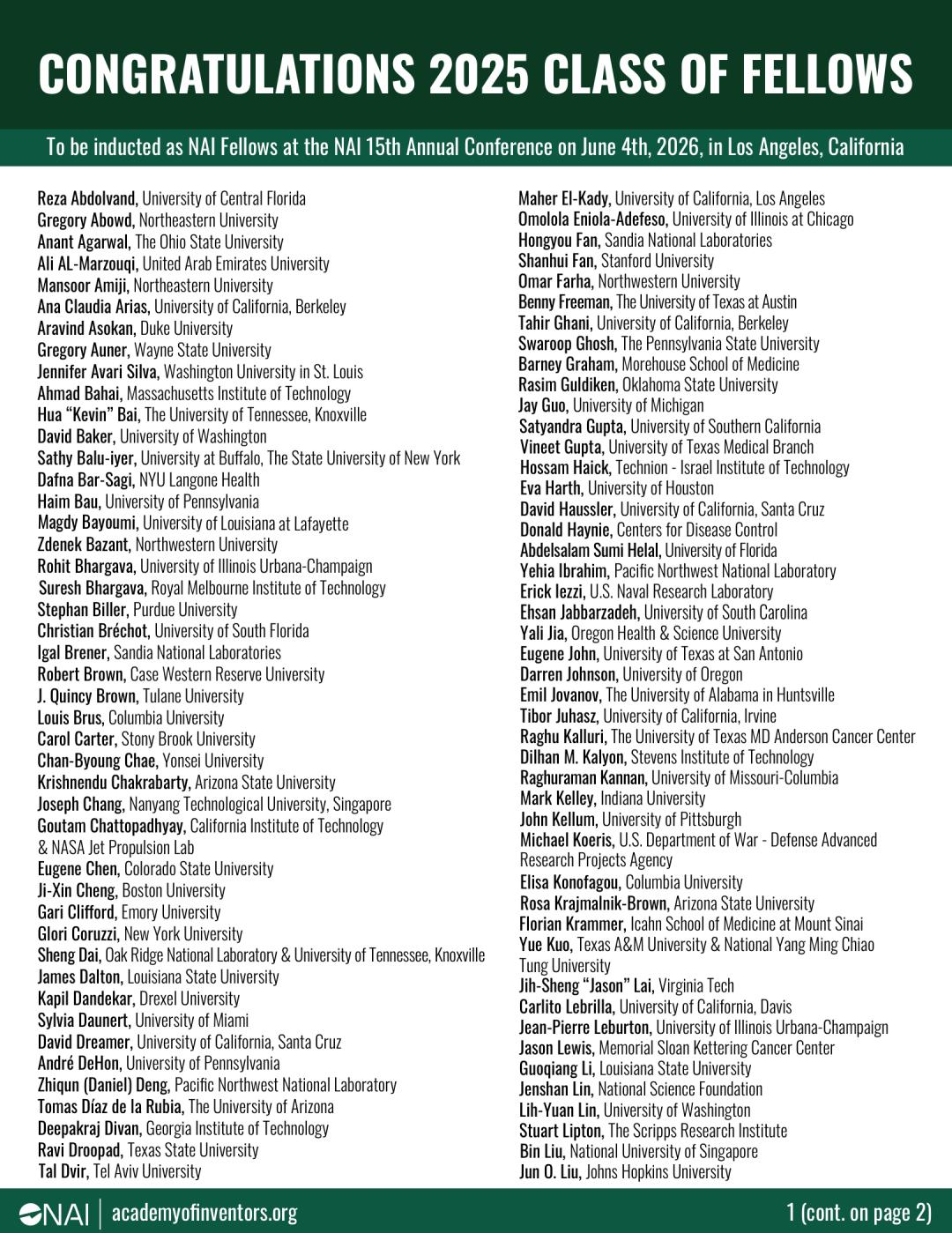
美国国家发明家科学院2025院士公布,每5人就有1个华人
3 6 Ke· 2025-12-15 02:27
据不完全统计,在刚刚出炉的185位美国国家发明家科学院新增院士中,华人约37人,占比20%,平均每5位NAI院士中就有一名是华人学者。 刚刚,美国国家发明家科学院(National Academy of Inventors,NAI)公布了2025届院士名单。 本届NAI院士共有185人入选,包括169名美国杰出的学术与机构发明家以及16位国际院士。 2025届院士完整名单 NAI院士是美国政府授予新兴发明家的最高专业荣誉。 2025届NAI院士共持有超过5300项美国专利,其中包括诺贝尔奖获得者、美国国家科学奖章与国家技术与创新奖章获得者,以及美国国家科学院、工程院 和医学院的成员等。 这些NAI院士横跨几乎所有重大发现领域,包括量子计算、AI和再生医学,他们的研究领域涵盖了当今时代最重大、最紧迫的挑战。 NAI院士项目创立于2012年,现已发展至2253位杰出研究人员和创新者,他们共持有超过86000项美国专利和20000项已实现许可的技术。 这些创新成果预计创造了约3.8万亿美元的收入,并带动了140万个就业岗位。 美国国家发明家科学院院长Paul R. Sanberg博士表示,新一届NAI院士将在明年6 ...
企业级应用:AI加速在企业端应用落地
2025-12-15 01:55
Summary of Key Points from Conference Call Industry Overview - The conference call discusses the enterprise-level application of AI, highlighting its rapid penetration into enterprise services and the performance of leading companies in the sector, indicating a significant market trend catalyzed by AI applications [1][2]. Core Insights and Arguments - **AI Application Growth**: AI applications are accelerating in enterprise services, with leading companies like 合合 and Amazon Cloud showing strong stock performance. The release of ChatGPT 5.2 and Deepseek V3.2 has also contributed positively to the market [1][4]. - **Performance Disparities**: There are notable differences in the performance of leading application companies across US, Hong Kong, and A-shares, driven by hardware and AI computing power as essential infrastructure [2][4]. - **Future AI Trends**: By 2026, AI is expected to evolve significantly, with chatbots transitioning to agents and the emergence of multimodal physical models. The competitive landscape among top models remains uncertain, with both international and domestic players like Gemini, GPT, 千问, and Deepseek being highlighted [2][6]. - **Industry Impact**: The influence of large models is profound, with companies like Adobe facing transformation pressures, while others like AppLovin and Salesforce are rebounding. Companies that integrate deeply with industry data will leverage AI strategies effectively [5][21]. Important but Overlooked Content - **Rapid Growth in AI Usage**: In China, the model invocation volume has surged nearly ninefold since last year, reaching an average daily invocation of 10 trillion tokens, marking a 363% year-on-year increase [3][10]. - **Sector Adoption Rates**: The IT, healthcare, and manufacturing sectors are leading in the adoption of enterprise-level AI, with significant growth in AI advertising and programming applications [3][14][16]. - **Open Source vs. Closed Source Models**: There are critical limitations in open-source models regarding long text processing, computational power, and AI agent capabilities compared to closed-source models, which need to be addressed for better performance [8][9]. - **Investment Opportunities**: The call suggests focusing on enterprise-level services in advertising and office applications, as well as verticals like industrial, military, tax, and e-commerce, where leading companies are expected to perform well [21]. Conclusion - The conference call emphasizes the transformative potential of AI in enterprise applications, the need for companies to adapt to evolving technologies, and the importance of strategic investment in sectors poised for growth. Investors are encouraged to focus on companies with strong fundamentals in these emerging areas [21].