
产教融合

Search documents
深理工成立第7个研究院,打造脑科学与生命科学国际交流枢纽
Nan Fang Du Shi Bao· 2025-11-18 04:25
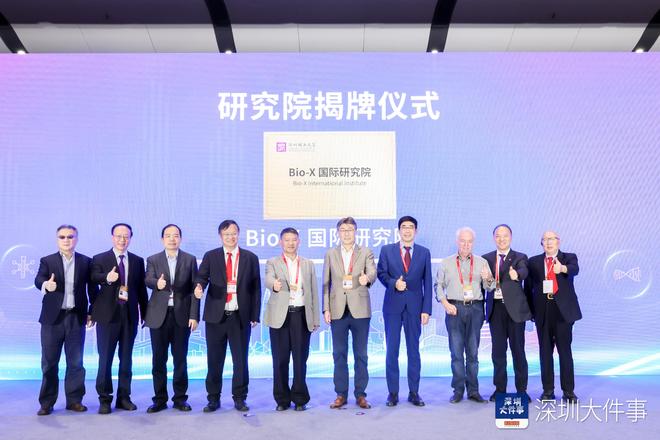
Bio-X国际研究院是深圳理工大学成立的第7个研究院,此前已成立了细胞与基因技术研究院、未来农业 研究院、人工智能研究院、未来医学中心等。 研究院是深圳理工大学培养多学科交叉复合型人才的重要基地,也是学校践行"科教融汇、产教融合"发 展理念和学院、研究院、书院"三院一体"建设的重要布局,主要围绕国家战略需求和深圳"20+8"产业集 群政策进行规划建设,实施建制化、有组织科研,将为深圳理工大学抢占未来科技制高点、高水平培养 国家急需的拔尖创新人才提供新的驱动力。 当天,深圳理工大学医疗器械产业技术研究院院长也同时受聘,由国家高性能医疗器械创新中心董事长 刘新担任。该研究院由深圳理工大学与国家高性能医疗器械创新中心共同建设,是深圳理工大学生物医 学工程领域应用基础研究与关键技术研发的主体,将建设成为国家级创新人才培养基地、一流学科建设 支撑力量、技术创新与产业转化重要平台。 南都讯 记者伍曼娜 11月15日,深圳理工大学Bio-X国际研究院在第二十七届高交会院士论坛——深圳创 新药发展论坛上揭牌成立。 该研究院以打造脑科学与生命科学领域国际交流枢纽、推动深圳理工大学国际化发展为使命,将依托深 圳理工大学在生命健康 ...

产教融合进入深水区,教博会热议科技赋能教育新范式
2 1 Shi Ji Jing Ji Bao Dao· 2025-11-18 03:50
Group 1 - The forum aims to bridge the "education-industry-employment" link and provide practical examples for innovative models of industry-education integration [1] - The "14th Five-Year Plan" for vocational education proposes the establishment of 100 national-level industry-education joint bodies and 200 industry integration communities, with 5,000 industry-integrated enterprises and 20,000 co-built training bases [2] - High-quality development of industry-education integration communities requires embracing new technological changes and transforming regional resources into talent cultivation advantages [2] Group 2 - The low-altitude economy is seen as an ideal testing ground for industry-education integration, with a strong demand for practical skills in various emerging technologies [3] - The application of "script education + AI" in the education sector is highlighted as a scalable solution to enhance efficiency and address challenges such as teacher shortages and outdated course materials [3] - Comprehensive skill sets, including humanities and professional design skills, are essential for individuals to effectively utilize AI tools in design [3]
“金秋启航”校园招聘活动在四川举办
Ren Min Ri Bao· 2025-11-17 22:40
本报北京11月17日电 (记者丁雅诵)教育部"金秋启航"校园招聘暨四川省2026届高校毕业生秋季大型 招聘会在四川宜宾举办。本次招聘活动汇集优质企事业单位550余家线下设展,370余家用人单位在"国 家大学生就业服务平台"和"川e就—四川大学生就业服务平台"设置线上招聘活动专区同步纳才,累计发 布岗位2万余个,吸引1.2万余名高校毕业生现场求职,超8万人在线参与。 (责编:杨光宇、胡永秋) 《 人民日报 》( 2025年11月18日 06 版) 据介绍,招聘会现场设立科创成果展示区和校企对接区,聚焦重点产业需求,深化产教融合模式创新。 宜宾大学城相关高校遴选20余个科技创新项目与大学生创新创业项目集中展示,校企双方围绕人才培 养、产教融合、实习就业等方面开展洽谈并现场签约。下一步,教育部还将在北京、广东、天津等地持 续举办"金秋启航"校园招聘系列活动,全力促进2026届高校毕业生高质量充分就业。 ...
打破路径依赖高质量建设地方“双一流”大学
Xin Hua Ri Bao· 2025-11-17 22:01
Core Insights - The article emphasizes the critical role of local "Double First-Class" universities in advancing national strategies and regional development, highlighting their importance in education, technology innovation, and talent cultivation [1] Group 1: Collaborative Mechanisms - Establishing a collaborative mechanism is essential for breaking down development barriers, with education, technology, and talent as the three core elements that determine a university's competitive edge [2] - A comprehensive coordination framework should be developed, involving unified leadership from the Party committee, collaboration between schools and departments, and inter-departmental cooperation to overcome governance challenges [2] - Innovation platforms should be created based on national strategies and regional needs, breaking down disciplinary boundaries and forming cross-disciplinary teams for research and talent development [2] Group 2: Focus on Core Areas - Local "Double First-Class" universities should concentrate their efforts on key areas rather than spreading resources too thin, transitioning from a "broad and general" approach to a "focused and strong" strategy [3] - It is recommended to categorize and integrate existing disciplines, focusing on developing 1-2 core competitive discipline clusters to achieve breakthroughs in evaluations [3] - A dynamic adjustment mechanism for disciplines should be established to align with regional industrial upgrades, promoting emerging fields like renewable energy and artificial intelligence while phasing out outdated disciplines [3] Group 3: Talent Development - A comprehensive "attract, cultivate, retain" talent system is necessary, with innovative approaches to talent acquisition and support from local governments [4] - Emphasis should be placed on nurturing young talent through long-term support and creating a conducive academic environment to retain skilled individuals [4] - The quality of talent cultivation must be prioritized, with a focus on adapting training models to meet contemporary demands and enhancing practical skills through project-based learning [5] Group 4: Social Service Integration - Local "Double First-Class" universities must transition from insular operations to actively engaging in regional development, aligning their services with local needs [6] - Establishing regular mechanisms for university-enterprise collaboration and creating specialized service teams can enhance the effectiveness of technology transfer and talent training [6] - Expanding funding sources through partnerships with local governments and enterprises is crucial for sustainable development [6] Group 5: Support Systems - A robust support system is essential for the successful implementation of internal development initiatives, requiring improved governance capabilities and digital transformation [7] - Strengthening administrative teams and fostering a culture of collaboration and innovation will enhance the overall effectiveness of university operations [7] - Creating a supportive environment that encourages exploration and tolerates mistakes is vital for fostering a culture of innovation [7]
以高质量职业教育服务中国式现代化建设
Xin Hua Ri Bao· 2025-11-17 21:49
□ 刘敏 2024年9月,习近平总书记在全国教育大会上强调,要"紧紧围绕立德树人根本任务,朝着建成教育强国 战略目标扎实迈进""构建职普融通、产教融合的职业教育体系,大力培养大国工匠、能工巧匠、高技能 人才"。习近平总书记的重要讲话不仅为新时代教育事业的发展指明了方向,也为职业教育的发展提供 了重要指引。 职业教育是教育体系的重要一环,承载着培养高素质技术技能型人才的重要使命。它不仅是提升国家竞 争力的重要路径,也是推动经济社会持续发展的重要动力。近年来,党中央对职业教育的重视程度之高 和推动职业教育改革发展的力度之大前所未有。《国家职业教育改革实施方案》《关于推动现代职业教 育高质量发展的意见》《关于深化现代职业教育体系建设改革的意见》《职业教育产教融合赋能提升行 动实施方案(2023—2025年)》等一系列重要政策文件密集出台,为职业教育改革发展搭建了"四梁八 柱",进一步完善了职业教育改革发展的制度保障体系,有力地支撑了职业教育的高质量发展。2022年 新修订的《中华人民共和国职业教育法》,以立法方式明确了职业教育是与普通教育具有同等重要地位 的教育类型,为推动职业教育从"层次"到"类型"转变提供了法律 ...
筑梦安居 匠造未来:“贝壳杯”2025职业技能邀请赛成功举办
Huan Qiu Wang· 2025-11-17 05:51
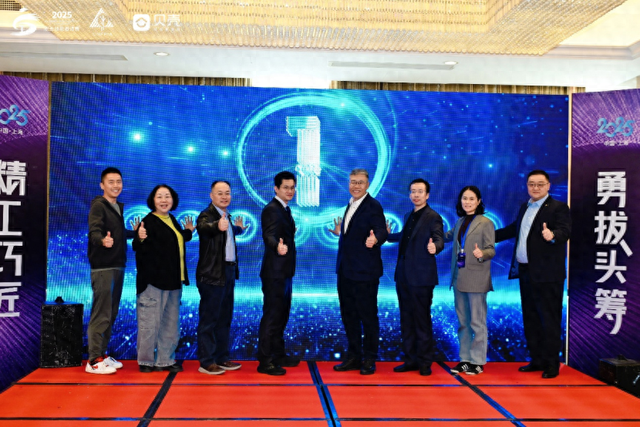
Core Points - The "Beike Cup" 2025 Vocational Skills Invitation Competition was successfully held in Shanghai, aiming to enhance the professional skills of home decoration service providers and support the construction of quality housing in China [1][4][26] - The event was organized by the China Timber Industry Association and involved various stakeholders, including educational institutions and industry representatives, to promote collaboration between education and industry [3][6][15] Group 1: Event Overview - The competition serves as a platform to select and motivate high-quality home decoration service providers, directly impacting consumer experience and industry quality upgrades [1][4] - The event featured participation from various industry leaders and educational institutions, highlighting the importance of collaboration in vocational training [3][6] Group 2: Industry Insights - The president of the China Timber Industry Association emphasized that high-standard vocational competitions can enhance practitioners' skills and service awareness, contributing to the core competitiveness of enterprises [4] - The vice president of Shanghai Sci-Tech Vocational College noted that the event aligns with national strategies for deepening industry-education integration and promoting high-quality vocational education [6] Group 3: Skills Development - The Secretary-General of the China Timber Industry Association's Home Decoration Branch pointed out the importance of skills in the current information age, advocating for competitions to improve craftsmanship and address industry shortcomings [9] - The event included practical competitions in customized furniture installation, tile laying, and painting, with judges evaluating participants on various criteria [22][24] Group 4: Future Directions - Beike is committed to enhancing the quality of service delivery through a structured talent cultivation mechanism, which includes skill training and quality control [26] - The company plans to continue investing in vocational skills training and technological empowerment to drive the industry towards healthier and higher-quality development [26]
擦亮劳务“金名片” 为特色产业提质增效注入“源头活水”
Yang Shi Wang· 2025-11-17 05:30
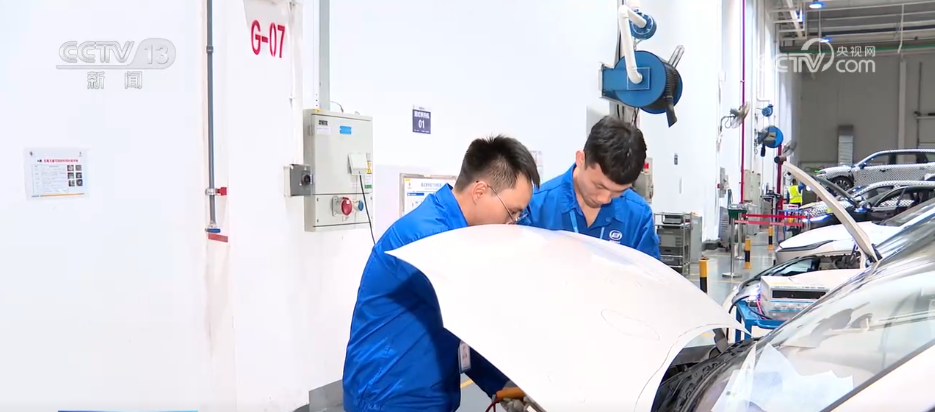
Core Viewpoint - Guangxi is leveraging its regional characteristics to develop labor service brands, which not only broadens the pathways for laborers to enhance skills and increase employment income but also injects "source water" for improving the quality and efficiency of characteristic industries [1]. Group 1 - The "Guangxi New Energy Vehicle Craftsman" labor service brand representative, Li Pingwu, has significantly reduced debugging time from two days to 40 minutes and aims to train 2,000 to 3,000 people annually [3]. - At the SAIC-GM-Wuling Liudong Baojun base, Li Pingwu leads a team that has overcome over 20 technical challenges, saving the company more than 70 million yuan in development costs [4]. - Guangxi has implemented the "Skills Illuminate the Future" three-year action plan, focusing resources on rural workers and college graduates, and has conducted labor service brand training for 104,500 people since 2025 [6]. Group 2 - The Deputy Director of the Laborer Work Department of Guangxi's Human Resources and Social Security Bureau, Li Yuefeng, stated that Guangxi's labor service brand will proactively expand into new occupations, addressing talent "bottlenecks" through deepening industry-education integration and customized training [8].
业界研讨石化行业优质教材建设
Zhong Guo Hua Gong Bao· 2025-11-17 02:37
Core Insights - The conference on high-quality textbook construction for the petroleum and chemical industry was held in Jinzhou, Liaoning, focusing on vocational education [1][2] - Emphasis was placed on aligning textbook development with the "14th Five-Year Plan" and national strategies for education, technology, and talent [1] Group 1: Key Requirements for Textbook Development - The need to uphold the fundamental task of moral education, ensuring a unified approach to value shaping, knowledge transmission, and skill cultivation [1] - The importance of deepening the integration of industry and education, creating a dynamic textbook system that reflects the characteristics of Liaoning's petrochemical industry [1] - The establishment of a collaborative mechanism involving government, industry, and educational institutions to support the integration of digital technology with teaching content [1] Group 2: Strategic Focus Areas - The focus on moral education and aligning knowledge transmission with value guidance and industry demand [1] - The emphasis on digital transformation through the use of artificial intelligence for dynamic content updates and interactive teaching [1] - The need for a collaborative model where enterprises express needs, schools develop content, and industries ensure quality, enhancing the textbook quality evaluation system [1] Group 3: Industry Perspectives - The construction of textbooks is seen as a strategic pivot for enhancing talent cultivation quality and strengthening the core competitiveness of educational institutions [2] - The necessity to align educational content with industry demands, integrating new technologies, processes, and standards into teaching [2] - The promotion of a collaborative development mechanism between schools and enterprises to address the disconnect between learning and application [2]
全国民办教育界专家齐聚沈阳 共商产教融合育才新体系
Xin Hua Wang· 2025-11-17 02:19
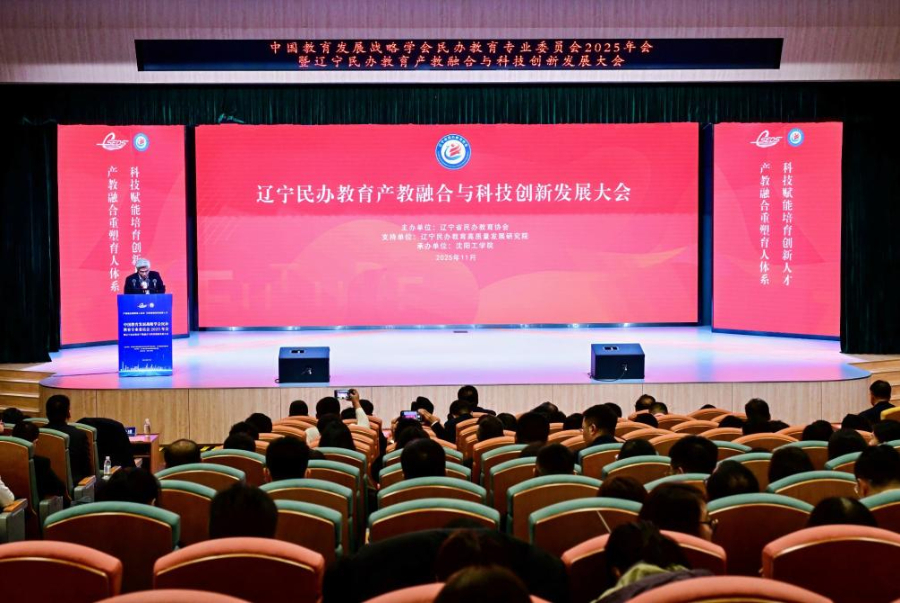
Core Insights - The conference focused on the theme "Integration of Industry and Education Reshaping Talent Cultivation System, Technology Empowering Innovative Talent Development" and attracted over 300 participants from the private education sector across China [1][5] Group 1: Conference Overview - The event was co-hosted by the China Education Development Strategy Association's Private Education Professional Committee and the Liaoning Private Education Association [1] - Various formats were utilized during the conference, including report sessions, on-site observation, parallel seminars, thematic discussions, case sharing, and roundtable dialogues, creating a comprehensive communication platform [3] Group 2: Key Activities and Discussions - Over 200 representatives participated in on-site visits to seven distinctive industrial colleges, such as Huawei-SYIT Modern Industry College and KUKA Authorized Industrial Robot College, to understand the innovative integration of industry and education [3] - Discussions in the parallel seminar focused on the application of AI in basic education and rural education revitalization, leading to multiple consensus points among participants [3] - Representatives from institutions like Xi'an Eurasia University and Chengdu Geely College shared their achievements in transforming and upgrading industry-education integration, digital teaching reforms, and innovative talent cultivation during the thematic seminar [3] Group 3: Outcomes and Implications - The conference stimulated new thoughts on the development of private higher education in terms of industry-education integration and technological innovation, injecting new energy and vitality into the sector [5] - It fostered consensus and gathered strength among various stakeholders to address the challenges of industry-education integration and build a new ecosystem of school-enterprise collaboration [5]
山东牵头全国药品行业产教融合共同体入选“标杆培育单位”
Da Zhong Ri Bao· 2025-11-17 01:00
Core Points - The National Pharmaceutical Industry Education-Industry Integration Community, led by Shandong Pharmaceutical Food Vocational College, has been recognized as a "Benchmark Cultivation Unit" for industry education integration, highlighting its leadership in deepening education-industry integration and serving industry development [1][2] - The community was officially established on September 22, 2023, in Weihai, with guidance from various governmental and educational bodies, including the National Pharmaceutical Vocational Education Teaching Guidance Committee and Shandong Provincial Market Supervision Administration [1] - It is the first education-industry integration community in the pharmaceutical sector, covering 27 provinces and municipalities across China, with 120 member units, including 38 schools, 64 enterprises, 5 research institutions, and 6 industry organizations [1] Summary by Sections Establishment and Recognition - The community was formed under the guidance of multiple organizations and has been recognized nationally for its contributions to education-industry integration [1][2] - Only 50 communities were selected for this honor, indicating a competitive selection process [1] Structure and Coverage - The community encompasses the entire pharmaceutical industry chain, including intermediates, raw materials, and formulations, covering research and development, production, operation, and services [1] - It includes a diverse membership base from various regions, enhancing its collaborative potential [1] Collaborative Framework - The community is building a three-dimensional integration ecosystem characterized by "carrier support, five-party collaboration, and bidirectional aggregation" [2] - It has established 58 functional platforms, including 8 industrial colleges, 20 productive training bases, and 23 research platforms, promoting efficient resource and outcome flow [2]