企业出海

Search documents
中信证券:下半年中国出口仍有望实现2.5%的正增长
Ge Long Hui A P P· 2025-08-13 01:28
Group 1 - The core viewpoint is that the slowdown in domestic economic growth and ongoing trade frictions are driving Chinese companies to seek opportunities abroad, marking the transition to the 2.0 era of overseas expansion [1] - Two new trends in overseas expansion are identified: the normalization of transshipment trade and diversification of regional layouts, which are essential for companies to adapt to tariff impacts [1] - High-tech products with rapidly increasing domestic production rates may create sufficient price advantages to counteract tariff effects, while traditional products can explore domestic upgrades and technology improvements to reduce costs and enhance efficiency [1] Group 2 - The macroeconomic impact of these trends is expected to support export growth, with estimates suggesting that accelerated overseas expansion, technological advancements, and diversified trade layouts could contribute an additional 3-5 percentage points to export growth [1] - The forecast for the second half of the year indicates that China's exports are likely to achieve a positive growth rate of 2.5% [1]

中信证券:我国企业出海的三大新趋势将对出口增速形成支撑
Xin Lang Cai Jing· 2025-08-13 00:20
Core Viewpoint - The report from CITIC Securities highlights the increasing demand for Chinese companies to expand overseas due to slowing domestic economic growth and ongoing trade frictions since 2015 [1] Group 1: Trends in Overseas Expansion - Chinese companies are transitioning from the 1.0 phase of overseas expansion, characterized by methods such as re-export trade, changing export destinations, relocating production capacity, and upgrading technology, to a 2.0 phase that emphasizes resilience and efficiency in response to heightened tariffs [1] - The new trends in overseas expansion include the normalization of re-export trade and diversification of regional layouts, which are essential strategies for companies to cope with tariffs [1] Group 2: Technological Advancements and Market Opportunities - High-tech products with rapidly increasing domestic production rates may create sufficient price advantages to mitigate tariff impacts, while traditional products can explore domestic gradient transfer and technology improvements to reduce costs and enhance efficiency [1] - There is a focus on actively expanding export markets in Belt and Road Initiative countries as part of the new strategies for overseas expansion [1] Group 3: Macroeconomic Impact - The three new trends in overseas expansion are expected to support export growth, with an estimated combined contribution of 3-5 percentage points to export momentum [1] - The report anticipates that China's exports may achieve a positive growth rate of 2.5% in the second half of the year [1]
SKG母公司未来健康叫停北交所上市
Nan Fang Du Shi Bao· 2025-08-12 23:10
Core Viewpoint - Future Health, the parent company of SKG, has officially terminated its IPO plans on the Beijing Stock Exchange due to strategic development needs, following a series of challenges in its previous IPO attempts [2][4]. Group 1: Company Overview - Future Health was established in 2007 and has evolved into a high-tech enterprise providing smart wearable health products, with its main brand being SKG, focusing on products like neck and eye massagers, and health watches [2][3]. - As of September 2023, over 80% of the company's revenue comes from wearable health products, with neck and waist massagers being the most significant product lines [3]. Group 2: Financial Performance - Future Health's revenue from 2021 to 2024 was as follows: 1.054 billion, 904 million, 1.046 billion, and 1.048 billion yuan, while net profits were 131 million, 119 million, 127 million, and 135 million yuan respectively [3]. - The company has faced scrutiny regarding its high cash dividends, which were 155 million and 160 million yuan in 2020 and 2021, exceeding its net profits for those years [5]. Group 3: IPO Journey - Future Health's IPO journey has been tumultuous, with multiple attempts and rejections, including a failed application for the ChiNext board in 2022 and a subsequent withdrawal of its application in July 2023 [4][6]. - The company had initially aimed to raise 1.6 billion yuan but later reduced its target to 1.29 billion yuan [4]. Group 4: International Expansion - In recent years, Future Health has focused on expanding its international presence, particularly through its SKG brand, which has increased investments in cross-border e-commerce platforms [7]. - The company signed a strategic investment agreement with Morgan Stanley, securing a significant investment to accelerate its overseas expansion [7]. - Despite increased marketing expenditures, the company's overseas revenue saw a decline of 14.18% in the first half of 2024, amounting to approximately 28.54 million yuan [8].


中企出海,国际化进程中的税务合规与资产堡垒
Sou Hu Cai Jing· 2025-08-11 10:43
Core Insights - The event titled "Chinese Enterprises Going Global: Tax Compliance and Asset Fortress in the Internationalization Process" was held on July 31, 2025, in Shanghai, organized by Ernst & Young (EY) in collaboration with various institutions to address the opportunities and challenges faced by enterprises in cross-border asset allocation and globalization [1] Group 1: Event Overview - The event aimed to provide guidance for enterprises going global amidst complex regulatory policies and globalization trends [1] - Key topics discussed included tax compliance, regulatory practices, and cross-border asset protection strategies [1][8][13] Group 2: Key Presentations - EY's partner Zhang Weiliang emphasized the importance of understanding local tax policies and establishing a robust tax information collection mechanism for enterprises venturing abroad [8][9] - OIC's partner Liu Xiaoying focused on regulatory practices and common pitfalls in overseas direct investment (ODI) and financing, advising companies to consider legal, tax, and foreign exchange regulations before expanding internationally [11] - Vistra's regional head Wang Guan discussed cross-border asset protection and inheritance strategies, highlighting the significance of legal tools like trusts and family offices in managing assets and ensuring stability during market fluctuations [13][14] Group 3: Conclusion - The event concluded with a strong emphasis on the ongoing challenges in the globalization journey for enterprises, while the shared insights and professional wisdom provided a supportive platform for future endeavors [17]

荔湾:创新打造“双平台” 矛盾化解“一站式”
Guang Zhou Ri Bao· 2025-08-10 01:49
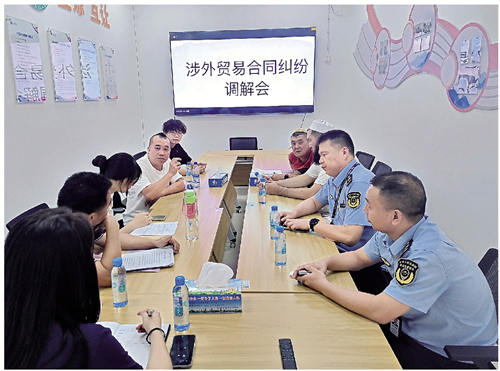
Core Insights - The establishment of a "dual platform" in the Liwan District aims to enhance dispute resolution and support for enterprises venturing into international markets, reflecting a proactive approach to managing cross-border trade challenges [1][2][4] - The mediation work station has achieved a high success rate of 97.2% in resolving disputes, with zero losses in foreign-related disputes, indicating effective conflict management strategies [1][3] - The "one-stop service" model has significantly reduced the time required for resolving cross-border payment disputes, showcasing the efficiency of the new system [2][3] Group 1: Dispute Resolution and Mediation - The mediation work station has successfully resolved 38 disputes this year, demonstrating its effectiveness in handling issues such as trademark infringement and cross-border claims [1] - The "Four Combinations" work method emphasizes legality, compliance, empathy, and reasonableness, contributing to a 30% decrease in litigation cases [2] - The satisfaction rate for mediation services has reached 100%, indicating strong support from local businesses [2] Group 2: Support for International Expansion - The service center has provided 20 different services, helping 18 enterprises secure overseas orders within a short timeframe [3] - The center's initiatives have led to a 35% increase in online transaction volume, amounting to over 50 million yuan, as businesses expand into Southeast Asian markets [3] - The implementation of a policy compilation and legal education activities has improved the standardization of foreign-related contracts to 90% [3] Group 3: Economic Growth and Business Environment - The annual foot traffic in the business district has increased by 50%, reflecting a growing interest in the area [4] - Over 300 new foreign-related registered enterprises have been established, indicating a shift towards becoming a hub for fashion industry innovation [4] - The integration of party leadership with legal services has enhanced the overall business environment, promoting a more supportive atmosphere for enterprises [4]
新疆生产建设兵团循环经济协会开启新疆企业出海非洲综合服务新征程
Xin Hua Cai Jing· 2025-08-08 09:38
Core Viewpoint - The strategic cooperation between the Xinjiang Production and Construction Corps Circular Economy Association and the Qingdao China-Africa Chamber of Commerce aims to enhance the economic and trade collaboration between Xinjiang enterprises and Africa, establishing a comprehensive service system for businesses venturing into African markets [1][3]. Group 1: Economic and Trade Services - The cooperation focuses on providing Xinjiang enterprises with precise information and market connection services to mitigate information asymmetry risks and accurately assess investment environments [1][2]. - The association will offer professional policy navigation and legal support, interpreting trade and investment policies between China and Africa, and providing legal consultation to ensure compliance with local regulations [1][2]. - Xinjiang enterprises will be organized for on-site visits to Africa, participating in trade expos and investment forums to facilitate direct business negotiations and partnerships [1][2]. Group 2: Cross-Border Trade Facilitation - The association will leverage the Qingdao China-Africa Chamber of Commerce's trade document platform, integrating resources from 24 African countries to address trade document processing challenges and enhance customs efficiency [2]. - Reliable warehousing and logistics support will be provided, utilizing overseas warehouses for logistics distribution and freight forwarding, effectively reducing transportation risks and costs [2]. - Additional services will include customs clearance, settlement support, and a comprehensive trade channel for Xinjiang enterprises entering the African market [2]. Group 3: Health Management Services - A one-stop medical health management platform will be established to provide timely and professional cross-border video consultation services for employees of enterprises operating in Africa [2]. - The platform will ensure 24/7 global medical support and has already served users in approximately 110 countries, aiming to alleviate concerns regarding overseas medical care [2]. - Future plans include integrating quality medical resources from China and Africa to offer health consultations, emergency rescue coordination, and local medical institution connections [2]. Group 4: Overall Impact and Future Directions - The cooperation is expected to empower Xinjiang enterprises with comprehensive service capabilities, covering market research, compliance support, and employee health protection, creating a full-cycle service loop [3]. - This strategic partnership represents a significant breakthrough in supporting local enterprises' international expansion and aims to inject new momentum into Xinjiang's economic engagement with Africa [3]. - The association will continue to enhance its service ecosystem, facilitating easier access for Xinjiang enterprises to all necessary support elements in the African market, promoting win-win cooperation in China-Africa economic and trade relations [3].
2025年东莞海外营销推广公司实力盘点!从策略到落地全覆盖
Sou Hu Cai Jing· 2025-08-08 07:33
Core Insights - The digital wave presents new opportunities and challenges for Chinese manufacturing companies looking to expand overseas, necessitating a shift from traditional foreign trade to a new overseas marketing ecosystem [1] - Companies in Changsha and Dongguan are particularly affected by low brand recognition and lack of localized marketing teams when entering international markets [1] - Collaborating with specialized service providers can help address these challenges by leveraging their core capabilities, focus areas, and practical results [1] Group 1: Service Providers - **Pulsar Cross-Border**: Possesses strong end-to-end operational capabilities, offering services from independent site setup to overseas advertising and brand communication, creating a complete business loop [3] - **BaiBang Overseas**: Integrates resources from major cross-border e-commerce platforms, providing one-stop services from store setup to customs clearance, focusing on traditional foreign trade enterprises [5] - **EasySino**: Specializes in search engine advertising, acting as an agent for platforms like Google and Tencent, with a robust advertising optimization system [6] Group 2: Focus Areas and Achievements - **Pulsar Cross-Border**: Targets issues like traffic acquisition and brand enhancement, particularly in industries such as medical devices and engineering machinery, with successful case studies demonstrating increased traffic and inquiries [3] - **BaiBang Overseas**: Aims to lower barriers for traditional foreign trade companies entering cross-border e-commerce, achieving sales growth through professional store operations and product optimization [5] - **EasySino**: Provides strategies for Google Ads, enhancing overseas inquiry volumes, especially in sectors like furniture and textiles [6] Group 3: Comprehensive Marketing Solutions - **Zhongqi Cross-Border**: Offers comprehensive digital marketing services, focusing on enhancing brand awareness and market share for foreign trade enterprises, recognized as an excellent agency for multiple years [9] - **BlueFocus**: Delivers integrated marketing and international communication services, helping brands enhance their global influence through media placements and KOL collaborations [10] - The journey of companies going overseas varies by development stage, with different needs at startup, growth, and maturity phases, highlighting the importance of selecting the right cross-border service provider [12]

中国企业出海,先读日本的 “学费清单”
吴晓波频道· 2025-08-07 00:29
Group 1 - The article discusses the similarities and differences between Chinese and Japanese companies in their overseas expansion efforts, highlighting Japan's extensive experience in this area [4][10]. - Japan's overseas net assets reached $3.36 trillion in 2023, equivalent to 80% of its domestic GDP, showcasing the significant impact of overseas investments on its economy [2][11]. - The Japanese government has established a comprehensive support system for overseas investments, particularly benefiting small and medium-sized enterprises (SMEs) [15]. Group 2 - The article outlines the stages of Japanese companies' overseas expansion, starting from limited overseas investments before 1980 to a more aggressive approach post-1985 due to the appreciation of the yen and the search for new growth opportunities [4][6]. - The ongoing China-U.S. trade war presents challenges for Chinese companies, with potential outcomes including increased imports from China or direct investments in the U.S., though these options face significant hurdles [9]. - The concept of creating a "shadow China" abroad, similar to Japan's overseas presence, is discussed, emphasizing that achieving similar overseas returns would require substantial annual investments [10][14]. Group 3 - Japanese companies faced challenges in internationalization, particularly in talent acquisition, which they addressed through gradual internal development and learning from experiences [15][16]. - The article emphasizes the importance of respecting local markets and cultures when entering foreign markets, as demonstrated by Japanese companies successfully localizing production in the U.S. [16]. - There is a willingness among Japanese companies to collaborate with Chinese firms in overseas ventures, viewing it as a new growth opportunity [18].

“护航者计划”专题培训在临港新片区“走出去”综合服务平台落地
3 6 Ke· 2025-08-06 02:29
Core Insights - The complex international situation and the restructuring of global supply chains have made "going global" a crucial strategic choice for Chinese enterprises, impacting both their development and regional industrial upgrades [1] - The "Going Global" comprehensive service platform in Lingang New Area aims to enhance the service capabilities for enterprises facing challenges such as complex trade environments and regulatory differences [1][2] Group 1 - The "Going Global" platform's "Navigator Plan" training program was held in Shanghai, focusing on macroeconomic trends, compliance, financial empowerment, talent development, and green development [1] - Notable speakers included Liu Yuanchun, who emphasized the importance of leveraging policy support and comprehensive service resources for enterprises to navigate the complexities of the international environment [1][2] Group 2 - Various organizations, including TC GROUP and law firms, shared insights on international investment, cross-border mergers, financial solutions, tax issues, and sustainable development strategies for enterprises going global [2] - The Lingang New Area "Going Global" platform was officially established in June 2024, having served over 1,000 outbound enterprises and hosted nearly 60 events attracting over 10,000 participants [2] Group 3 - The platform is developing a training ecosystem that covers all phases and dimensions of the "going global" process, collaborating with national branches for specialized training [3] - Future plans include utilizing overseas liaison stations to help enterprises understand local environments and enhance their overseas market strategies [3]
中国企业出海,大而不强?
Hu Xiu· 2025-08-06 01:47
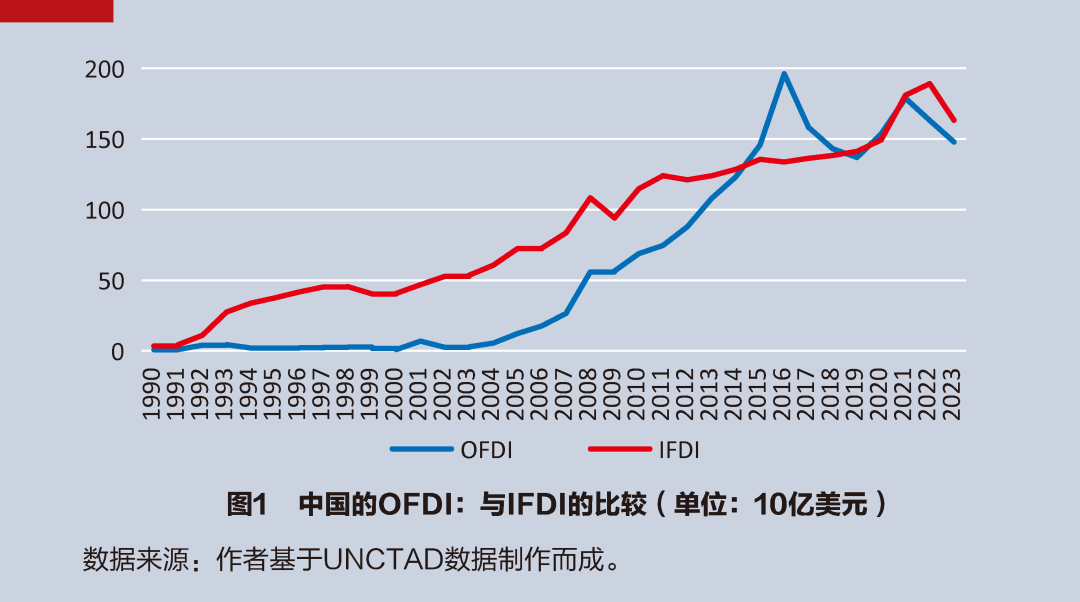
Core Viewpoint - The issue of Chinese companies "going abroad" has gained renewed attention due to the large-scale tariff wars initiated by Trump during his second term, highlighting its significance for both micro-level corporate strategies and macro-level national competitiveness [1] Group 1: Chinese Companies' "Going Abroad" Performance and Characteristics - "Going abroad" refers to domestic companies expanding internationally through various means such as trade exports and foreign direct investment (OFDI), with OFDI including greenfield investments and cross-border mergers and acquisitions [2] - In 2023, China's OFDI flow totaled $147.85 billion, accounting for 9.54% of global OFDI, ranking third after the United States and Japan [2] - Since China's accession to the WTO, OFDI growth has outpaced that of inward foreign direct investment (IFDI), with OFDI surpassing IFDI between 2015 and 2018 [2] - By 2024, China's OFDI stock represented 4.03% of the global total, trailing behind the United States and the Netherlands [2] Group 2: Investment Methods and Trends - From 2008 to 2017, cross-border mergers and acquisitions were nearly equal to greenfield investments in China's OFDI, but since 2018, greenfield investments have become increasingly significant, reaching 12% of global greenfield investments by 2023 [4] - In 2023, the primary sectors for China's OFDI included leasing and business services, wholesale and retail trade, manufacturing, financial services, mining, transportation, and scientific research, collectively accounting for over 90% [6] - The top destinations for China's OFDI in 2023 included Hong Kong, Singapore, and the United States, with a notable 185.08% increase in investments to Mexico, indicating a strategic shift to circumvent tariffs [6][8] Group 3: Micro-Level Analysis of Chinese Multinational Corporations - Among the world's top 100 non-financial multinational corporations by foreign assets in 2023, eight were from China, including major state-owned enterprises, but their transnationality index (TNI) was relatively low, ranging from 4% to 37% [9] - The TNI of Chinese companies is significantly lower than that of U.S. companies, which average around 50%, indicating a lack of diversification in industries represented by Chinese firms [9][10] Group 4: Theoretical Frameworks and Challenges - The "three advantages" theory suggests that successful internationalization requires ownership advantages, internalization advantages, and location advantages, with OFDI being more demanding than other methods [23] - The heterogeneity in productivity among firms indicates that only the most productive firms are likely to engage in OFDI, as they can absorb the associated costs and risks [24] - The significant growth in Chinese companies' "going abroad" over the past two decades has been influenced by various factors, including government support, but there is a need for a transition from government-driven to market-driven internationalization strategies [25]