生成式AI

Search documents
大模型独角兽:从持续亏损到市值千亿,押注未来逻辑何在?
3 6 Ke· 2026-01-13 07:25
Core Insights - The article discusses the rapid development of generative AI and highlights OpenAI as a leading player in the global market, with 748 registered generative AI companies in China [1] - The emergence of the "Six Little Tigers" in the AI model sector, including MiniMax and Zhiyuan AI, has attracted significant capital investment, indicating strong market interest [4] - The AI market is experiencing rapid growth, with both consumer (C-end) and enterprise (B-end) sectors showing robust development, driven by advancements in AI model technology [4][6] Company Performance - Zhiyuan AI's revenue grew from 57.4 million yuan in 2022 to 312 million yuan in 2024, marking a fivefold increase, with a 325% year-on-year growth in the first half of 2025 [5] - MiniMax's revenue surged from 3.46 million USD in 2023 to 30.52 million USD in 2024, nearly a ninefold increase, reflecting the commercial potential of AI model technology [5] - Both companies have achieved significant market valuations, with MiniMax reaching a peak market cap of over 150 billion HKD and Zhiyuan AI surpassing 110 billion HKD [6] Market Trends - The AI model sector is witnessing a wave of innovation across various industries, leading to a new round of industrial intelligence transformation [6] - Despite the growth, there are concerns about the sustainability of profitability, as many companies, including the "Six Little Tigers," face challenges similar to the previous "AI Four Dragons" due to ongoing losses [7][8] - The high costs associated with AI infrastructure and the need for substantial investment in computing power are significant barriers to achieving profitability in the AI model industry [9][10] Investment Landscape - The article raises concerns about the potential for an AI bubble, as companies with substantial losses are achieving high market valuations, which may not be sustainable [10][11] - The historical context of the "AI Four Dragons" serves as a cautionary tale for current AI model companies, emphasizing the importance of technology implementation and revenue generation to ensure long-term viability [11]

德艺文创(300640.SZ):正与相关方合作搭建基于生成式AI的文创产品研发设计平台
Ge Long Hui· 2026-01-13 07:12
Core Viewpoint - The company emphasizes the importance of innovative product development in the creative home goods sector, leveraging AI and digital technologies to enhance design efficiency and quality [1] Group 1: Company Strategy - The company is focusing on the research and development of creative home products as a foundational aspect of its growth [1] - It is collaborating with relevant parties to build a generative AI-based platform for the design and development of cultural and creative products [1] Group 2: Technology Integration - The integration of AI design tools and data analysis capabilities is a key focus for the company [1] - The aim is to improve the creative output efficiency and quality of the design department [1] Group 3: Market Expansion - The company plans to use AI-driven design innovation to support market expansion and ensure that its products meet customer needs [1]

GEO赛道崛起 万咖壹联加紧布局
Zhong Guo Jing Ji Wang· 2026-01-13 07:04
Core Viewpoint - The stock performance of WanKa YiLian (1762.HK) has been impressive, with a rise of over 15% as of January 12, driven by its strategic positioning in the GEO (Generative Search Engine Optimization) sector and its advantages in ecological collaboration [1] Group 1: Market Trends - The global AI search user base is projected to exceed 1.98 billion by 2025, indicating a rapid shift in user information retrieval habits from "search links" to "generated answers" [2] - By 2026, approximately 25% of traditional search traffic is expected to transition to AI Q&A platforms, creating substantial demand for GEO [2] Group 2: Company Positioning - WanKa YiLian is establishing a comprehensive competitive advantage suitable for the GEO era, positioning itself as a pioneer and potential beneficiary in the sector [3] - The company has deep partnerships with manufacturers to secure core traffic entry points and has accumulated vast amounts of data, totaling 28 billion records, with over 7.2 million new records added daily [3] - Daily data queries reach 2.35 million, with a data scanning volume of 15.8 TB, enabling the company to accurately analyze user search intentions and generate structured content for AI citation [3] Group 3: Technological Advancements - The company is investing in AI technology to build core capability barriers, including collaboration with Alibaba Cloud to develop AI agents for various life services [3] - Continuous investment in AI data annotation and corpus construction is being made, alongside the establishment of standardized AI data interface platforms with top mobile manufacturers [3] Group 4: Business Model Evolution - GEO is set to transform the commercial monetization landscape, shifting from low advertising revenue to high-value service commission models for mobile manufacturers [4] - WanKa YiLian acts as a crucial bridge between mobile manufacturers and application ecosystems, leveraging its experience in commission monetization from gaming partnerships to expand into diverse transaction applications like ride-hailing, food delivery, and e-commerce [4]
明略科技-W午后涨超13% AI创意测试产品AdEff正式登陆印尼市场
Zhi Tong Cai Jing· 2026-01-13 06:33
Core Viewpoint - Minglue Technology's stock surged over 13% following the announcement of its AI-driven creative testing product, AdEff, entering the Indonesian market, indicating strong investor confidence in the company's growth potential in the AI sector [1] Company Summary - Minglue Technology's AdEff product will provide AI-driven creative testing and screening services to local brand advertisers and creative agencies in Indonesia [1] - The product is developed based on Minglue's proprietary Hypergraph Multimodal Large Language Model (HMLLM), utilizing a collaborative architecture of large models and mixed expert models to predict consumer responses to advertisements accurately and provide optimization suggestions [1] Industry Summary - According to Guosen Securities, over 80% of consumers in China are using AI to obtain consumption information, with nearly 35% engaging in high-frequency interactions with AI daily, indicating a shift towards AI as a mainstream tool for consumer inquiries [1] - The global GEO market is experiencing rapid growth, with projections estimating it will reach $24 billion by 2026 and potentially $100 billion by 2030 [1]
中信建投研报:多模型能力筑壁垒 开启 AI 价值变现新周期
Xin Lang Cai Jing· 2026-01-13 06:22
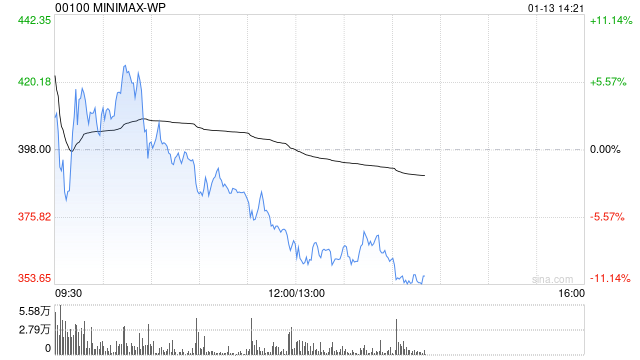
Core Insights - MiniMax has been rated "Buy" by CITIC Securities, highlighting its strategic focus on model intelligence breakthroughs amidst the global generative AI wave [1][5] - The company is one of the first in Shanghai to obtain large model registration, showcasing strong development potential through technological depth and commercial foresight [1][5] Company Strategy - MiniMax discards traditional thinking of "traffic as a barrier" and concentrates resources on model research and development [1][5] - The founder, Yan Junjie, possesses top-tier research capabilities and ToB commercialization experience, having previously led a team to create a leading facial recognition algorithm that generated over 2 billion yuan in smart city business revenue [1][5] - The strategic focus will shift to "technology iteration" in 2025, with plans to streamline inefficient teams and reduce marketing expenses to concentrate on core areas like multimodal interaction [1][5] Technological Advancements - MiniMax is adeptly navigating the second half of the Scaling Law trend, making continuous breakthroughs in architecture innovation and reasoning optimization [1][5] - The company has developed a unique layout in the multimodal field, combining "high-sensory interaction + productivity tools," with products like Talkie and Xingye accumulating vast RLHF data [1][5] Financial Performance - In the first three quarters of 2025, MiniMax achieved total revenue of 53.44 million USD, a year-on-year increase of 175%, with a diversified revenue structure driven by three main business segments [1][5] - The ToB business boasts a gross margin of 69.4%, while C-end products have also achieved a positive gross margin of 4.7%, indicating a significant recovery in profitability [1][5] Future Outlook - CITIC Securities forecasts that from 2025 to 2027, the company's revenue will maintain over 90% high-speed growth, with Non-GAAP gross margin expected to rise to 55% and net loss rate continuing to narrow [2][6] - As the AI industry transitions from tools to "digital employees," MiniMax is positioned to unlock significant opportunities in the trillion-yuan labor market, establishing itself as a leading player in the AI sector [2][6]

集成电路ETF(159546)回调超2.7%,市场关注AI芯片成本下探与行业复苏,回调或可布局
Mei Ri Jing Ji Xin Wen· 2026-01-13 06:12
Core Viewpoint - The electronic and semiconductor industry is currently performing outstandingly in the dual mainline market of technology and cycles, with the global semiconductor cycle showing over nine consecutive quarters of year-on-year positive growth since Q1 2023, demonstrating unprecedented structural depth and resilience in capital expenditure [1] Industry Summary - The current semiconductor cycle, driven by GPU and generative AI, surpasses previous cycles led by consumer electronics in both duration and intensity [1] - Communication equipment, such as optical communication, benefits from the expansion of AI computing power, data center growth, and the electronic upgrade of smart vehicles, showing a structural increase in demand similar to the 5G base station construction period of 2019-2020 [1] - The core driving factor in the industry is ΔG (marginal change in profit growth), with no significant turning point observed, indicating that the AI hardware sector is likely to maintain its strength in a favorable valuation environment [1] - The commercialization of AI applications is accelerating under the resonance of policy, demand, ecology, and capital, with improvements in domestic large model capabilities driving scenario realization, although caution is advised regarding the risk of growth rate shifts due to high base effects [1] Company Summary - The Integrated Circuit ETF (159546) tracks the Integrated Circuit Index (932087), which selects listed companies involved in integrated circuit design, manufacturing, packaging, testing, and related materials and equipment to reflect the overall performance of the integrated circuit industry [1] - This index features high technical content and growth characteristics, effectively representing the development status of China's integrated circuit industry [1]
从数字基建到价值医疗:中国AI医疗如何跨越商业化“三重门”?
Sou Hu Cai Jing· 2026-01-13 06:00
Core Insights - The global AI healthcare market is projected to reach $56 billion by 2026, with over 230 million weekly inquiries about health on AI platforms, indicating a rapidly expanding market [1][2] - China is advancing its AI healthcare initiatives at an unprecedented pace, with the National Healthcare Security Administration launching a pilot program for "Personal Medical Insurance Cloud" to enhance healthcare management [1][2] Group 1: Market Growth and Trends - The AI healthcare market in China is expected to grow from 8.8 billion yuan in 2023 to 315.7 billion yuan by 2033, with a compound annual growth rate (CAGR) of 43.1% [2] - As of January 2026, there are approximately 108,000 AI healthcare-related companies in China, with a significant increase in registrations, reaching a record high of 24,800 in 2025, a 22.38% year-on-year growth [3] - The number of AI healthcare-related patents has also been on the rise, with 2,471 applications in 2025, marking a new high [3] Group 2: Policy and Regulatory Environment - The National Medical Products Administration has issued guidelines for the registration and review of AI medical devices, indicating a strong governmental focus on integrating AI into healthcare [4] - Recent policies emphasize the importance of AI in upgrading the medical device industry, moving beyond efficiency improvements to becoming a driving force for innovation [4] Group 3: Technological Advancements - AI applications in medical imaging have shown significant improvements, reducing reading time by 53% and increasing detection rates by 17.6% [5] - AI drug development is one of the fastest-growing areas, with the potential to shorten development cycles by nearly 40% and increase success rates to approximately 14% [5] - Generative AI is being utilized for various tasks, including writing registration documents and analyzing clinical data, indicating a shift towards integrating AI into the entire operational process of medical device companies [6] Group 4: Challenges and Considerations - The commercialization of AI in healthcare faces challenges, particularly regarding data quality and standardization, as a significant amount of medical data is unstructured and inconsistent [8][9] - There is a need for robust data governance mechanisms and collaboration frameworks to facilitate data sharing across institutions while ensuring compliance and privacy [9] - Ethical considerations are paramount, with a focus on maintaining human oversight in AI-assisted decision-making processes to ensure accountability and safety in clinical applications [10]
GEO概念股,大涨
第一财经· 2026-01-13 05:24
据媒体报道称,马斯克当地时间1月10日在社交媒体平台X发文称,将在一周内正式开源X平台最新的 内容推荐算法,覆盖"所有用于决定向用户推荐自然内容和广告内容的代码"。马斯克表示,"此过程将 每四周重复一次",同时附带开发者说明,标注算法和逻辑上的改动内容。 编辑丨瑜见 | 代码 | 名称 | 米帽 | 息金额 | 息市值 | 现价 | | --- | --- | --- | --- | --- | --- | | 920021 | 流金科技 | +27.23% | 13.22 乙 | 37.39 Z | 12.02 | | 288362 | 光云科技 | +20.02% | 16.19 乙 | 125.1 乙 | 29.38 | | 301408 | 华人健康 | +20.00% | 13.06 Z | 110.4亿 | 27.60 | | 301378 | 通达海 | +19.99% | 2.08 Z | 43.94 乙 | 45.49 | | 300244 | 迪安诊断 | +19.99% | 13.96 Z | 195.4 乙 | 31.27 | | 300063 | 天龙集团 | +19.97% | 2 ...



中信建投研报:多模型能力筑壁垒 MiniMax(00100)开启 AI 价值变现新周期
智通财经网· 2026-01-13 04:25
Core Viewpoint - MiniMax is positioned as a leading player in the AI industry, leveraging a "counter-consensus" strategy focused on model intelligence breakthroughs, which allows it to stand out amid intense competition [1] Group 1: Company Strategy and Positioning - MiniMax has been recognized as one of the first companies in Shanghai to obtain large model registration, showcasing its strong development potential through technological depth and commercial foresight [1] - The company founder, Yan Junjie, possesses top-tier research capabilities and ToB commercialization experience, having previously led a team to create a leading facial recognition algorithm that generated over 2 billion yuan in smart city business revenue [1] - The strategic focus will shift to "technology iteration" by 2025, with efforts to streamline inefficient teams and reduce marketing expenses, concentrating on core areas like multimodal interaction [1] Group 2: Financial Performance and Growth Potential - In the first three quarters of 2025, MiniMax achieved total revenue of $53.44 million, a year-on-year increase of 175%, with a diversified revenue structure driven by three main business segments [2] - The ToB business boasts a gross margin of 69.4%, while C-end products have also achieved a positive gross margin of 4.7%, indicating significant recovery in profitability [2] - Projections indicate that from 2025 to 2027, the company's revenue will maintain over 90% high-speed growth, with Non-GAAP gross margins expected to rise to 55% and net loss rates continuing to narrow [2] Group 3: Market Opportunities and Competitive Advantage - MiniMax is positioned to unlock significant opportunities in the trillion-level labor market by transitioning from tools to "digital employees" in the AI industry [2] - The company aims to establish a competitive moat through model intelligence, leveraging technological accumulation, team advantages, and a clear commercialization path [2]
Gemini推出购物功能,AI重塑消费入口的1000天
36氪未来消费· 2026-01-13 04:14
Core Insights - The article discusses the ongoing competition among tech giants in the AI space, particularly focusing on the integration of AI into e-commerce and the implications for traditional shopping platforms [2][4][12]. Group 1: AI Integration in E-commerce - Walmart and Google announced a partnership to integrate Walmart's products into Google's Gemini, allowing users to browse and purchase items directly within the AI interface [3]. - The introduction of OpenAI's "Instant Checkout" feature in September 2025 marked a significant shift, enabling users to complete purchases without leaving the AI chat interface [7]. - On Black Friday 2025, AI-driven shopping led to a record online spending of $11.8 billion in the U.S., reflecting a 9.1% increase from the previous year, highlighting AI's growing role in consumer decision-making [4]. Group 2: Competitive Landscape - The competition is evolving into a three-way battle among shopping platforms, search engines, and large model developers, with each vying for control over the transaction entry point [4][12]. - OpenAI's rapid user growth and the introduction of features like SearchGPT have posed a direct threat to Google's traditional search model, which has dominated the market for two decades [9][11]. - Google's response to the AI challenge included the launch of its own large model, Gemini, which aims to enhance its search capabilities and maintain its market position [10][12]. Group 3: Responses from E-commerce Giants - Amazon has taken defensive measures by restricting AI companies' access to its platform, indicating its concern over losing control of the shopping process [15]. - In contrast, Shopify has adopted a more collaborative approach, allowing AI tools to assist in transactions while ensuring that the final payment process remains within its ecosystem [17]. - The differing strategies of Amazon and Shopify reflect their underlying business models, with Amazon focused on maintaining its revenue from search and advertising, while Shopify aims to facilitate transactions for merchants [17][18]. Group 4: Future Implications - The article suggests that while AI shopping tools are still in their early stages, they are beginning to disrupt traditional commercial structures, indicating that no company can remain unaffected by these changes [19]. - The ongoing evolution of AI in e-commerce is expected to redefine the boundaries of search, transaction, and decision-making processes, rather than simply replacing existing systems [18].