能源转型

Search documents
不缺电的中国,为何仍在狂建电厂?美媒:中国在造电力能源长城!
Sou Hu Cai Jing· 2026-01-16 08:51
Core Insights - China's electricity generation has reached the top globally, expected to exceed 10 trillion kilowatt-hours in 2024, more than double that of the United States, with an energy self-sufficiency rate above 80% [2] - Despite sufficient electricity supply, new power plant projects continue to be approved due to rapidly increasing electricity demand driven by emerging industries [4][6] - The construction of new coal power plants is primarily for backup and grid stability, while renewable energy sources are being expanded significantly [8][9] Group 1: Electricity Generation and Demand - In 2024, China's total installed power capacity is projected to be approximately 3.32 billion kilowatts, with a total generation of 10 trillion kilowatt-hours and electricity consumption around 9.9 trillion kilowatt-hours, indicating a near balance [4] - The demand for electricity is expected to grow significantly, with predictions that total electricity consumption will exceed 14 trillion kilowatt-hours by 2030, averaging a growth rate of 6.5% per year [4][6] Group 2: Renewable Energy Expansion - China has been a leader in renewable energy, with wind and solar power installations accounting for over 60% of global new capacity in recent years [11][24] - Major projects like the "Solar Wall" in the Kubuqi Desert are transforming landscapes and contributing significantly to clean energy generation, with plans to expand to 400 kilometers in length [13][24] Group 3: Energy Security and Strategic Planning - China's reliance on imported energy, particularly from the Middle East, necessitates a focus on self-sufficiency through the expansion of renewable energy sources [6][8] - The construction of new coal power plants is seen as a strategic reserve to ensure energy security amid global competition and climate change [20][24] Group 4: Technological Innovations in Energy Storage - Advances in energy storage technologies, such as pumped storage and battery storage, are crucial for managing the variability of renewable energy sources [15][16] - Virtual power plants are emerging as a solution to optimize energy distribution and enhance grid stability without the need for new power plants [16] Group 5: Environmental Considerations - While coal power capacity is increasing, the focus is on high-efficiency, low-emission plants to minimize environmental impact [21][23] - The integration of agricultural practices under solar panels in projects like the Solar Wall demonstrates a commitment to sustainable development [21]

四川大决策投顾:全球电网投资加快背景下,特高压高景气可期
Sou Hu Cai Jing· 2026-01-16 08:51
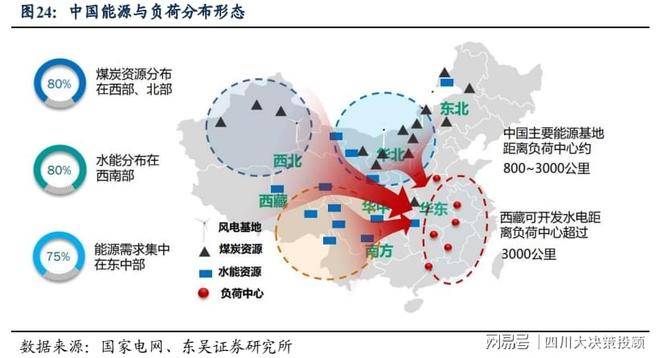
Core Insights - The ultra-high voltage (UHV) industry is a key carrier for energy transition, driven by the urgent demand for power delivery from western renewable energy bases under the "dual carbon" goals, leading to accelerated UHV construction [1][19] - Investment during the 14th Five-Year Plan period is expected to remain stable, with ample planned projects providing high certainty for upstream equipment performance [1][19] Group 1: UHV Construction and Demand - UHV construction aims to address the imbalance of electricity resources and demand in China, with resources concentrated in inland areas and demand in urbanized eastern coastal regions [2] - The recent peak in domestic UHV construction began in 2022, with approvals for 5, 5, 4, and 5 projects in 2022, 2023, 2024, and 2025 respectively, driven by the demand for power delivery from renewable energy bases [9] - The National Energy Administration has emphasized the importance of grid investment for renewable energy consumption, accelerating the construction of supporting projects [9] Group 2: UHV Industry Chain - The UHV industry chain is complete, divided into three main segments: upstream (core raw materials, special insulation materials, key components), midstream (core equipment manufacturing), and downstream (final users and investors like State Grid and Southern Grid) [4] - Key players in the midstream include companies like State Grid NARI, XJ Electric, Pinggao Electric, and TBEA, focusing on both DC and AC UHV technologies [4] Group 3: Global and Domestic Investment Trends - Global UHV investment is entering an upward cycle, with a projected CAGR of 6.7% from 2021 to 2024, driven by the integration of renewable energy and aging infrastructure [6] - The State Grid's fixed asset investment plan for the 14th Five-Year Plan has increased significantly to 4 trillion yuan, a 40% increase from the previous plan, focusing on UHV DC transmission projects [13] Group 4: Competitive Landscape - The competitive landscape of the UHV equipment market is stable, with high technical barriers and a consistent market share among core suppliers [15] - Major suppliers include State Grid NARI, XJ Electric, and China XD Electric, with significant shares in both DC and AC core equipment [16] Group 5: International Expansion Opportunities - The UHV industry is entering a significant international expansion phase, with China's mastery of core UHV technology and extensive experience in construction and operation [17] - Opportunities for international expansion are driven by demand for grid upgrades and renewable energy integration in countries along the Belt and Road Initiative and in developed regions [18] Group 6: Investment Logic - The investment logic in the UHV industry is clear, with urgent power delivery needs from western renewable energy bases driving continuous construction, supported by stable investment and ample project planning during the 14th Five-Year Plan [19]
山西电网16项迎峰度冬重点电网工程全部投运
Xin Hua Cai Jing· 2026-01-16 08:45
新能源在电力保供中也发挥着重要作用。1月9日,在风光资源充足时段,山西新能源发电最大出力占用 电负荷的比重近70%。国网山西电力在全力保障可靠供电、服务人民群众温暖度冬的同时,持续推动能 源向新向绿转型发展,实现电力保供与绿色发展协同推进。 (文章来源:新华财经) 近日,运城至景阳220千伏线路带电运行,至此,山西电网16项迎峰度冬重点电网工程全部投运,提升 供电能力约300万千瓦,为山西电力可靠供应和经济社会高质量发展注入强劲动能。 据了解,全部投运的16项工程总投资超10亿元,覆盖太原、晋中、运城、大同、长治、忻州、吕梁、阳 泉、晋城、临汾10个地市,全面提升电网保供能力。其中,太原北500千伏主变扩建工程新增的两台100 万千伏安变压器并网运行,有力提升了太原北部地区供电能力;运城至景阳220千伏线路工程投运,进 一步改善了运城西部主网架结构,增强了区域供电可靠性;曲沃西南街35千伏增容工程新增容量4万千 伏安,更好地满足了冬季清洁取暖用户用电需求。 此外,国网山西省电力公司还完成了97条途经微地形微气象区输电线路的防冰改造,给315条输电线路 加装观冰设备437套,有力提升了电网防灾抗灾和主动防御能力 ...
大行评级|美银:首予电能实业“买入”评级及目标价63港元
Ge Long Hui· 2026-01-16 07:55
美银发表报告,首次覆盖电能实业并予"买入"评级及目标价63港元,预期公司2024至27财年盈利年均复 合增长率达6%,因2025至26年的监管调整将显著提升其澳洲资产的股本回报率。而能源转型推动的资 本开支,将利好公司的受监管电网业务。该行指,收购活动及资本循环或为营运资金带来额外上行空 间,并预期营运资金增长将超越股息增幅,从而令中期股息创造潜在增长空间。电能实业2026年预测股 息率为5%,属香港同业中最高水平,该行认为具吸引力。而美联储降息周期及潜在并购成功,将成为 股价催化剂。 ...
英国石油公司披露四季度净债务下降 同时计提数十亿美元能源转型相关减值损失
Xin Lang Cai Jing· 2026-01-16 07:37
Core Viewpoint - The company warns of weakened profit outlook for Q4 2025 due to weak oil and gas product prices, poor trading performance, and significant impairment losses related to energy transition [1][5] Group 1: Upstream Business Performance - The company expects upstream production to remain stable compared to the previous quarter, with oil production steady but declines in natural gas and low-carbon energy output offsetting this stability [1][5] - Actual prices for commodities in the upstream segments are expected to decline, negatively impacting core reset cost profits [1][5] - The decline in natural gas prices is projected to reduce core profits by $100 million to $300 million, while the oil production segment may see profit reductions of $200 million to $400 million due to price lag effects [1][6] Group 2: Downstream Business Performance - The downstream business shows mixed results, with consumer business sales expected to decline due to seasonal factors, while fuel margins are anticipated to remain stable [2][6] - Refining business profit margins have improved, contributing approximately $100 million in gains, but these gains will be offset by frequent maintenance activities and temporary capacity losses from a fire at a refinery [2][6] - Oil trading performance is expected to be weak [2][6] Group 3: Impairment Losses and Financial Health - The company anticipates recording after-tax adjusted charges of $4 billion to $5 billion in Q4, primarily related to energy transition businesses and equity-accounted joint ventures [2][6] - Despite profit pressures, the company's balance sheet has improved significantly, with net debt expected to decrease to $22 billion to $23 billion by the end of Q4, down from $26.1 billion at the end of Q3 [2][7] - The company achieved approximately $3.5 billion in asset sales during the quarter, leading to total asset sale proceeds of about $5.3 billion for the year, exceeding the previous target of over $4 billion [2][7] Group 4: Tax Guidance and Strategic Challenges - The company updated its annual tax guidance, projecting the effective tax rate to rise from approximately 40% to around 42%, influenced by changes in profit distribution [3][7] - The statement highlights the strategic dilemma faced by the company in balancing cash flows from traditional oil and gas operations with the capital-intensive and increasingly volatile energy transition strategy [3][7] - Despite stable upstream production and ongoing asset divestitures improving the balance sheet, the weak trading environment and substantial impairment losses indicate continued profit volatility during the company's portfolio restructuring process [3][7] Group 5: Upcoming Financial Reporting - The company is scheduled to release its complete Q4 2025 and annual performance report on February 10, 2026 [4][7]

读懂铜:波动背后的供需关系 | 轻分享
高毅资产管理· 2026-01-16 07:04
Group 1 - The core reason for the recent surge in copper prices is a structural supply constraint, which has diminished the explanatory power of traditional economic indicators [3][8] - Key copper mines are facing operational setbacks due to natural disasters and safety incidents, leading to significant production downgrades [9] - The mining of copper is becoming increasingly difficult and costly due to declining ore grades and environmental concerns, making new project developments more politically challenging [11] - The discovery of new large copper mines is slowing down, with only 14 out of 239 major deposits discovered in the last decade [13] - U.S. tariff policies have disrupted the market, leading to a significant increase in copper inventories as companies rush to import refined copper [14][16] Group 2 - Copper is widely used in various industries, and its price increase indicates strong industrial demand and economic acceleration [19] - The demand for copper is being driven by the construction of AI infrastructure and energy transition, with projections indicating a significant increase in demand [20] - AI data centers and the associated energy needs are contributing over 60% of the new copper demand [21] - The energy transition could triple the demand for copper by 2045, with a potential structural deficit emerging as early as 2026 [23][26] Group 3 - The majority of copper mining resources are concentrated in South America and Africa, while smelting capacity is primarily located in Asia, especially China [28] - Three countries—Chile, the Democratic Republic of the Congo, and Peru—account for nearly 50% of global copper mining [29] - China has become the largest producer and consumer of copper products, with significant production capacities in refined copper and copper processing materials [33]

全球目光聚焦武汉2026储能技术展览会三大不可错过的参会理由
Sou Hu Cai Jing· 2026-01-16 05:25
来源:会展信息大全 在新能源转型浪潮席卷全球的当下,一场关于能源未来的盛会即将拉开帷幕。2026年9月22-24日,武汉国际博览中心将迎来全球瞩目的储能技 术展览会。这不仅是一场技术成果的集中展示,更是一次行业趋势的深度预判。本文将从行业变革、技术前瞻与产业机遇三个维度,带您解读 这场能源革命的深远意义。 【行业变革:能源转型催生万亿级市场】 当前全球能源结构正经历前所未有的重构。根据国际能源署报告,到2030年全球储能市场规模预计 突破5000亿美元。这种指数级增长背后,是传统能源体系面临的技术瓶颈与政策压力。以中国为例,"双碳"目标推动下,新能源装机容量持续 攀升,但配套储能系统却长期存在供需失衡。这种矛盾正在催生新的产业机遇。 武汉作为中部崛起的重要引擎,近年来在新能源领域布局尤为突出。2022年该市新增光伏装机容量达18.7GW,储能项目投资同比增长42%。 这种发展态势使得武汉成为储能技术展示的理想舞台。展会期间,参展商将围绕电化学储能、机械储能、热能存储等核心技术展开深度探讨, 展现行业最新发展趋势。 【技术前瞻:三大创新方向引领未来】 本次展会特别设置"前沿技术展区",重点呈现三个具有突破性的技 ...

冲击6连涨!有色金属ETF(512400)连续9日获资金净流入,供需格局深度重塑,全球基本金属价格显著上行
Xin Lang Cai Jing· 2026-01-16 05:06
Group 1 - The core viewpoint of the news highlights the significant upward trend in the prices of base metals, particularly aluminum and copper, driven by geopolitical tensions and supply chain security concerns, leading to a structural reshaping of the global base metal market [1] - The recent performance of the non-ferrous metal ETF (512400) shows a 0.05% increase, marking a six-day consecutive rise, with a turnover of 5.58% and a transaction volume of 1.811 billion yuan [1] - The demand for copper and aluminum is strongly driven by the acceleration of energy transition and the growth of green industries such as electric vehicles, photovoltaics, and wind power [1] Group 2 - The Kamoa-Kakula copper smelting plant has successfully produced its first batch of anode copper, marking the start of its capacity ramp-up phase, with full production expected by the end of 2026 [1] - The project is anticipated to produce between 380,000 to 420,000 tons of copper concentrate in 2026, with a midpoint of 400,000 tons, which will contribute significantly to global copper supply [1] - The non-ferrous metal ETF closely tracks the CSI Zhongshan Non-ferrous Metal Index, which includes 50 listed companies in the non-ferrous metal and non-metal materials sectors [2]
新能源及有色金属日报:关税事宜再起,铜价仍陷震荡格局-20260116
Hua Tai Qi Huo· 2026-01-16 05:06
1. Report Industry Investment Rating - Copper: Cautiously bullish [7] - Arbitrage: Suspended [7] - Options: Sell put options [7] 2. Core View of the Report - Although domestic demand is affected by high copper prices, subsidies for some end - products in 2026 will continue, TC is still at a low level, and mine supply is tight. It is recommended to buy on dips for hedging, with the range between 99,600 yuan/ton and 101,500 yuan/ton. Attention should be paid to the impact of Trump's tariff policy on Comex inventory [7] 3. Summary by Relevant Catalogs 3.1 Market News and Important Data 3.1.1 Futures Quotes - On January 15, 2026, the main Shanghai copper contract opened at 104,350 yuan/ton and closed at 102,810 yuan/ton, a - 1.26% decline from the previous trading day's close. The night - session main contract opened at 103,030 yuan/ton and closed at 102,860 yuan/ton, a 0.23% decline from the afternoon close [1] 3.1.2 Spot Situation - SMM 1 electrolytic copper spot quoted a premium of 80 - 320 yuan/ton to the 2601 contract, with an average premium of 200 yuan, up 60 yuan from the previous day. The spot price range was 102,160 - 102,990 yuan/ton. The main 2602 contract traded between 101,530 - 103,500 yuan/ton. The cross - month spread was between Contango 380 - 200 yuan, and the monthly import loss was about 1,560 - 1,770 yuan/ton. Shanghai's inventory increased by 17,400 tons compared to January 12, mainly in the form of warehouse receipts [2] 3.1.3 Important Information Summary - **Macro and Geopolitical**: On January 14, the US government announced that President Trump signed an executive order to impose a 25% tariff on semiconductors, semiconductor manufacturing equipment and their derivatives [3] - **Economic Data**: The number of initial jobless claims in the US last week decreased by 9,000 to 198,000, significantly lower than the market expectation of 215,000, the lowest level since November last year. The four - week moving average dropped to 205,000, a two - year low [3] - **Fed Chair News**: Trump has no plan to fire Powell, and he tends to choose the next Fed chair between Kevin Warsh and Kevin Hassett [3] 3.2 Supply - related Information 3.2.1 Mine End - Global key mineral supply chains are under increasing pressure. The demand for copper, lithium, nickel and rare earths is growing faster than new supply. About $5 trillion of cumulative investment is needed by 2035 to meet key mineral demand, and current exploration spending is 40% - 50% lower than required. The average cycle from discovery to first production is 16 years. Codelco's Ministo Hales copper mine's expansion project to extend its mining life to 2054 has obtained environmental approval, with an investment of $2.8 billion and a planned increase in annual output from 170,000 tons to 200,000 tons [4] 3.2.2 Smelting and Import - Elemental Group plans to invest $800 million in two core projects, with two - thirds for a copper smelting and refining plant and the rest for a power battery metal refinery. The projects are named "Polvolt" and have received EU and Polish government subsidies [5] 3.3 Consumption Information - China's unforged copper and copper products imports in December 2025 were 437,000 tons, up from 427,000 tons in November. The cumulative imports in 2025 were 5.321 million tons, a 6.4% year - on - year decrease [5] 3.4 Inventory and Warehouse Receipt Information - LME warehouse receipts changed by 75,000 tons to 141,125 tons compared to the previous trading day. SHFE warehouse receipts changed by 13,378 tons to 162,717 tons. On January 12, the domestic electrolytic copper spot inventory was 320,900 tons, a change of 27,500 tons from the previous week [6]
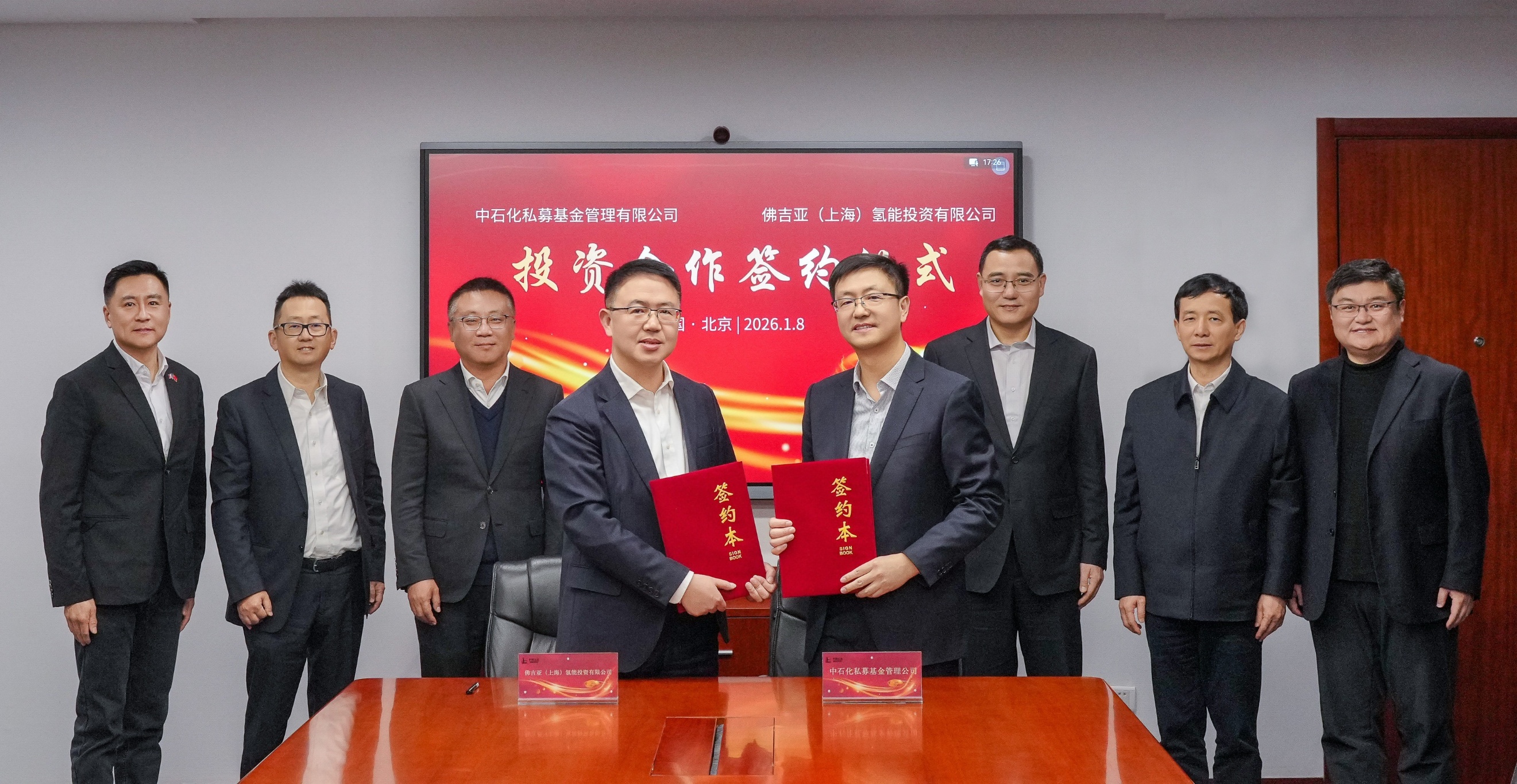
中国石化与佛瑞亚集团资本携手驱动中国氢能产业发展
Zhong Guo Qi Che Bao Wang· 2026-01-16 03:52
Group 1 - The strategic investment of 300 million RMB (approximately 40 million Euros) by Sinopec Capital through its private equity fund into Forvia's hydrogen investment arm in China highlights the commitment to optimizing the hydrogen market in China, which is experiencing rapid growth supported by government initiatives [1][3] - The partnership with Sinopec Capital is expected to enhance Forvia Hydrogen's market positioning and improve its capabilities in securing key government projects and industry collaboration [3][4] - Forvia aims to leverage this collaboration to create a clear roadmap for accelerated growth and value creation by optimizing its supply chain, including materials like carbon fiber and resin [3] Group 2 - Forvia's executives emphasized that this collaboration will help expand their market presence in China, improve cost competitiveness, and position them among global leaders in hydrogen solutions [4] - Sinopec Capital's leadership expressed a commitment to becoming the leading hydrogen company in China and aims to foster extensive equity investment collaborations with top global hydrogen enterprises [4] - The strategic investment is seen as a step towards promoting high-quality development in the global hydrogen industry through deep business cooperation between the two companies [4]