
避险资产

Search documents
伦敦贵金属矿商在周一大涨后下跌
Sou Hu Cai Jing· 2026-01-13 08:36
Core Viewpoint - London precious metal miners experienced a decline in trading as gold futures saw a slight drop after a significant rise on Monday, remaining near record highs due to investor concerns over the independence of the Federal Reserve following an investigation into Chairman Jerome Powell [1] Group 1: Market Reaction - Gold futures decreased by 0.4%, settling at $4,595.10 per ounce in New York [1] - Precious metal prices had previously surged, leading to a rise in the stock prices of London miners [1] Group 2: Company Performance - Hochschild Mining's stock fell nearly 2% [1] - Endeavour Mining's stock decreased by 1.5% [1] - Fresnillo's stock declined by 0.7% [1]
高层会商、撤离警告、关税大棒……美对伊朗持续施压
Xin Hua She· 2026-01-13 08:21
新华社北京1月13日电 美国媒体报道,美国总统特朗普定于13日与政府高级官员讨论美国针对伊朗的下一步措施。这将是近期特朗普与美高级官 员首次正式会商针对伊朗的相关方案。美国国务院12日发布"安全警告",要求美国公民立即离开伊朗。 特朗普12日还在社交媒体发文称,任何与伊朗有商业往来的国家在与美国进行任何商业往来时将被加征25%的关税。 另据美国《华尔街日报》援引匿名美国官员的话报道称,特朗普计划13日与政府高级官员讨论美国针对伊朗的下一步措施,其中可能包括增加反 伊朗政府网络消息源、针对伊朗军事和民用目标部署秘密网络武器、对伊朗政权实施更多制裁以及进行军事打击等,但预计特朗普不会在会议上 作出最终决定。 美国务院发"安全警告" 关税"配合"军事威胁 特朗普12日下午在社交媒体发文称,任何与伊朗有商业往来的国家在与美国进行任何商业往来时将被加征25%的关税。特朗普称,这是"最终"决 定并"立即生效"。 特朗普没有在社交媒体上就此作具体说明。 由于美国对伊朗长期实施严厉制裁,双方没有商业往来和正式外交关系,美国无法通过关税手段直接对伊朗进行有效施压。 白宫新闻秘书莱维特当天早些时候说,面对当前伊朗局势,特朗普认为 ...

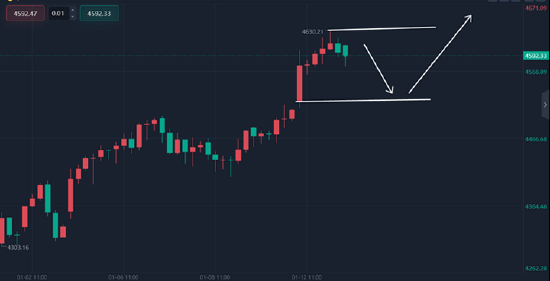
杨呈发:黄金调整结束企稳看涨 今日黄金走势分析
Xin Lang Cai Jing· 2026-01-13 08:12
1月13日,在全球金融市场风云变幻的2026年初,黄金价格犹如脱缰野马,一举突破每盎司4600美元的 历史关口,创下令人瞠目结舌的新纪录。这一波金价暴涨,不仅点燃了投资者的避险热情,更揭示了地 缘政治不确定性与美联储政策动荡交织下的市场深层逻辑。作为传统避险资产的黄金,正处于前所未有 的强势周期中,其背后的驱动力量值得我们深入剖析。从鲍威尔刑事调查的突发事件,到美元疲软和通 胀预期,再到全球地缘紧张局势的持续发酵,这些因素共同铸就了黄金的黄金时代。尽管市场短期波动 可能加剧,但黄金的牛市格局短期内难以逆转。展望未来,随着美联储决策依赖数据和全球风险的演 化,黄金仍有上行空间,投资者应密切关注本周的经济数据和法院裁决。 当前盘面来看,目前冲高回落有顶部形构图,今天要注意周期变化!在黄金阶段性突破4550后,连续一 个交易的上涨,现在黄金已经走高至4630,也就是说,黄金向上突破了80美金,其实这个力度不管走多 少都合理,属于市场正常的避险价值体现,前面强调的,黄金上涨后不猜顶,也就基于这个原则。那 么,在原则之内,如果要出现调整空间,也需要做出应对策略,周一的大涨,技术面日线表现不明显, 但H4周期开始有顶部形 ...
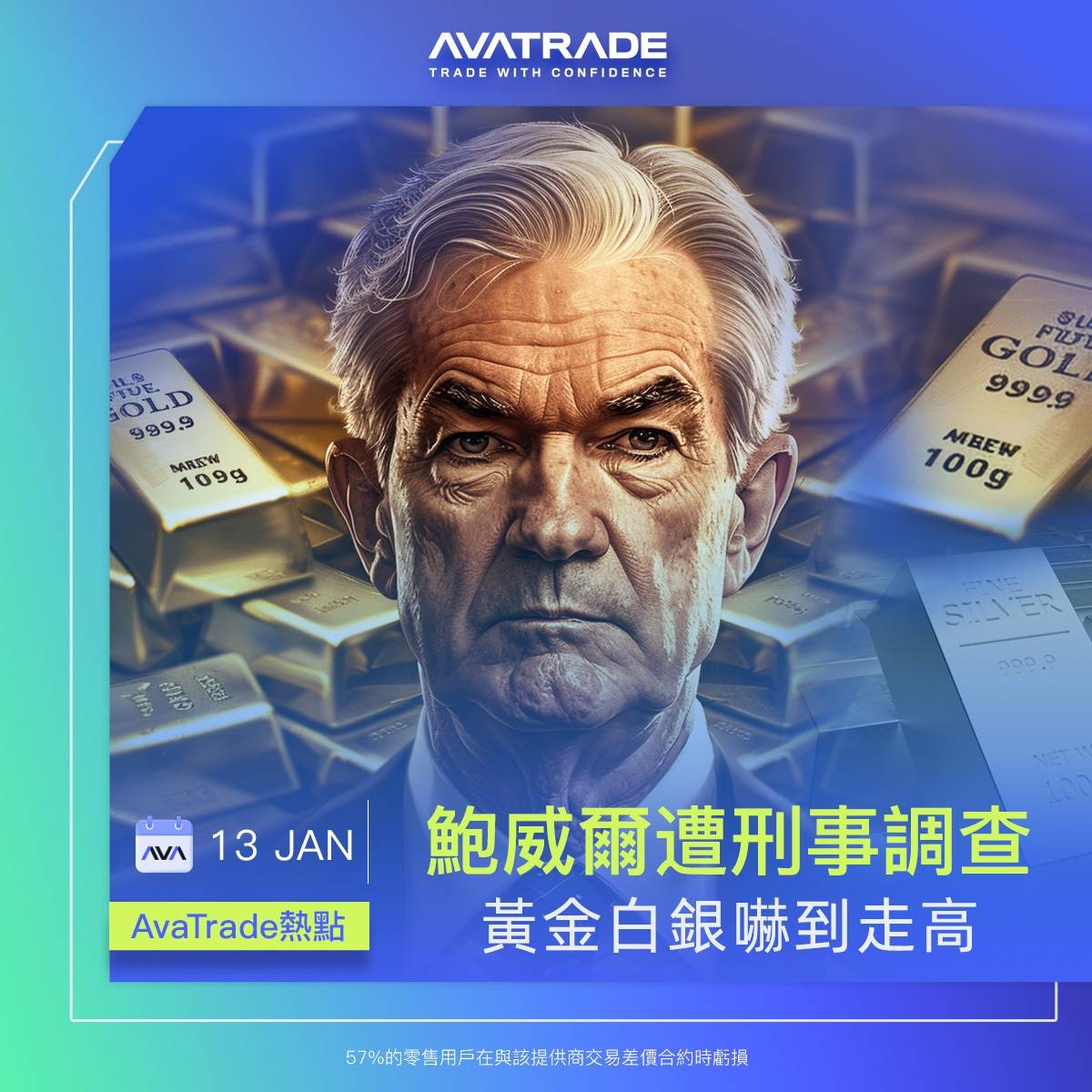
爱华中文官网:鲍威尔遭刑事调查 黄金白银吓到走高
Sou Hu Cai Jing· 2026-01-13 08:00
爱华中文官网热点行情 美联储主席鲍威尔周日晚间突然发声明,证实联邦检察官已就他在参议院银行委员会、针对美联储办公大楼整修案的证词展开刑事调查! 鲍威尔说得很白,表示重点根本不在整修或证词,而是在川普政府持续对央行「用力敲桌子」,要求大幅降息的政治压力。他强调,美联储做决策只能看经 济数据,不该变成政治风向球。前美联储主席叶伦更直接开酸,警告此举恐怕产生「寒蝉效应」,怎么看都像是想把鲍威尔拉下台,也让外界更担心央行独 立性被当成可有可无的装饰。 这消息一出,市场直接受惊,资金一秒转进避险资产。黄金周一正式突破每盎司4600美元,现货金上涨2.2%至4609.58美元,盘中最高冲到4629.94美元;2 月期金上涨2.5%至4614.70美元。白银更狂,盘中直奔86.22美元新高,收盘上涨6.8%至85.39美元。 波动率与收益率 VIX:▲4.3478%至15.12 美国十年期收益率: ▲0.1911%至4.195% 1. 前一天摘要 – 2026年1月12日,星期一 美国主要指数 标普500:▲0.1578%,至6977.27美元 道琼斯:▲0.1740%,至49590.2美元 罗素2000年:▲0.4400 ...
贵金属牛市行情火力全开,大宗商品超级周期再确认
Jin Shi Shu Ju· 2026-01-13 06:16
Core Viewpoint - The article highlights the significant rise in gold and silver prices, driven by geopolitical tensions and market reactions to U.S. government actions, indicating a solid continuation of the commodity "supercycle" [1][4]. Group 1: Price Movements - On Monday, gold futures for February delivery rose by 2.5% to $4,614.70 per ounce, reaching a peak of $4,640.50, while March silver futures surged by 7.3% to $85.09, hitting a high of $86.34, both marking historical records [2]. - Gold futures have seen a cumulative increase of over 100% over the past three years, while silver futures have more than doubled in price over the last four years [2]. Group 2: Geopolitical Factors - The ongoing geopolitical tensions, particularly in Iran, Venezuela, and Greenland, are contributing to the rising demand for gold as a safe-haven asset [4][5]. - The escalation of anti-government protests in Iran has resulted in over 500 deaths, adding uncertainty to the market and supporting gold prices [5]. Group 3: Market Sentiment and Future Outlook - Analysts suggest that the current lack of resistance levels in precious metal price charts makes it difficult to predict future price movements, but a target of $5,000 per ounce for gold and $100 for silver is considered reasonable in the coming months [5]. - The potential for a decline in gold prices may only occur if geopolitical issues in Venezuela and Iran are resolved, leading to lower oil prices and inflation levels [5].
市场屏息以待CPI数据 金价4500-4600美元窄幅震荡
Jin Tou Wang· 2026-01-13 06:04
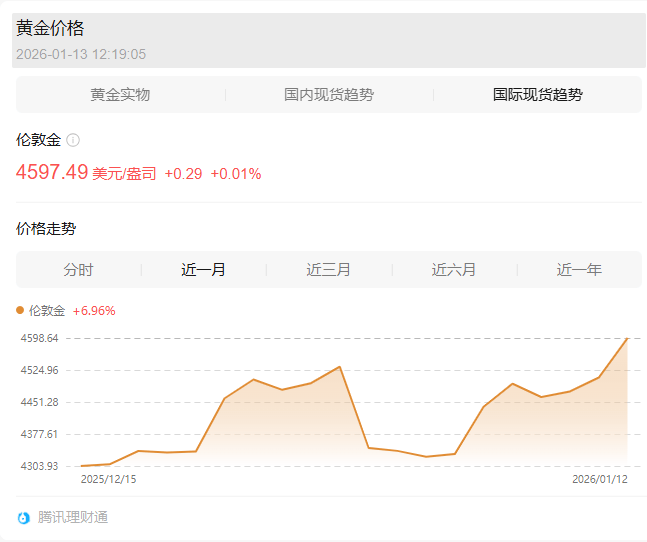
今日周二(1月13日)亚盘时段,国际黄金市场冲高回落,多空分歧加剧。截至发稿,伦敦金现报4584.07 美元/盎司,较前一交易日收盘价下跌14.57美元,跌幅0.32%,盘中曾短暂触及4600美元/盎司整数关口 后遇阻回落。 摘要今日周二(1月13日)亚盘时段,国际黄金市场冲高回落,多空分歧加剧。截至发稿,伦敦金现报 4584.07美元/盎司,较前一交易日收盘价下跌14.57美元,跌幅0.32%,盘中曾短暂触及4600美元/盎司整 数关口后遇阻回落。 中长期而言,黄金的基本面依然稳健。全球范围内,"去美元化"趋势不断加强,各国央行特别是新兴市 场国家如中国、印度等持续增加黄金储备,显示出对黄金长期价值的认可,这为金价提供了坚实的底部 支撑。同时,地缘政治紧张局势和不断攀升的全球债务水平增强了黄金作为避险资产的地位。汇丰银行 预测,在这些因素共同作用下,到2026年上半年,金价有望达到5000美元/盎司。此外,美国经济面临 的制造业疲软及消费挑战也预示着未来更宽松的货币政策环境,有利于黄金价格上涨。 【要闻速递】 综上所述,当前影响黄金走势的关键因素是美国12月CPI数据,短期内需密切关注4500美元/盎司关口 ...
金饰价格大涨!足金首饰价格已涨到1432元/克
Sou Hu Cai Jing· 2026-01-13 05:30
Core Viewpoint - The prices of gold and silver have surged to historic highs, driven by geopolitical tensions and concerns over U.S. monetary policy independence due to a criminal investigation involving Federal Reserve Chairman Jerome Powell [1][5]. Group 1: Precious Metals Price Movements - On December 12, gold and silver prices reached record highs, with silver rising over 6% to $86.237 per ounce and gold reaching a peak of $4630.24 per ounce [1]. - On December 13, gold experienced volatility, dropping below $4580 per ounce before rebounding to above $4590 per ounce, nearing $4600 [1]. Group 2: Domestic Market Reactions - Following the international gold price surge, several domestic brands increased their gold jewelry prices, with Chow Sang Sang's gold jewelry priced at 1432 yuan per gram, up from 1429 yuan per gram [3]. - Various domestic brands reported different price changes, with notable increases from brands like Chow Tai Fook and Liu Fu Jewelry [4]. Group 3: Market Analysis and Influences - Analysts attribute the rising gold prices to factors such as the Federal Reserve's situation and geopolitical tensions, indicating that gold remains a crucial safe-haven asset [4]. - Powell's criminal investigation has raised concerns about potential political pressure on U.S. monetary policy, which could undermine market confidence in the Federal Reserve's decisions [5]. - Ongoing unrest in Iran and the potential for U.S. military action are expected to accelerate the trend of "de-dollarization," providing further support for international gold prices [5].
FPG财盛国际:黄金交易提醒:今日这件大事恐引爆行!!
Sou Hu Cai Jing· 2026-01-13 05:08
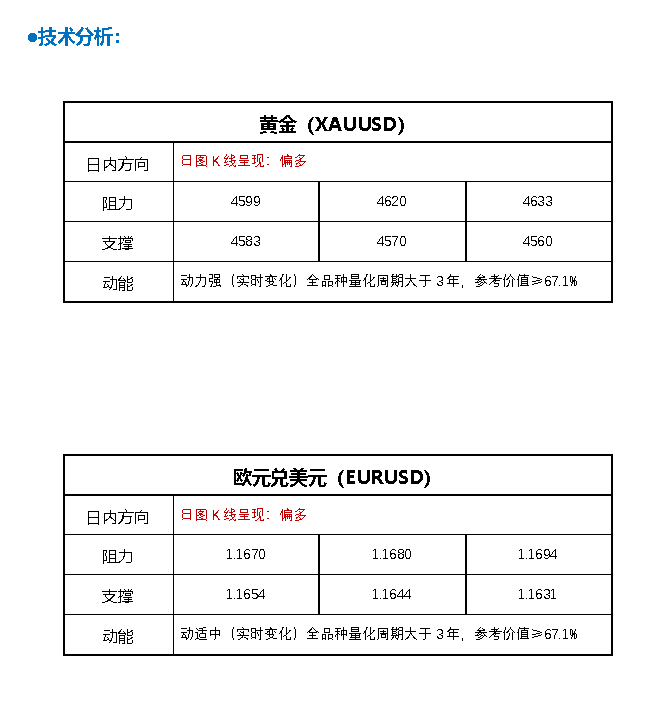
●FPG最新市场脱水消息: 1. 本交易日,投资者将聚焦美国CPI数据,预计将引发黄金市场大行情。 2. 现货黄金价格周一暴涨近2%,一度突破4600美元/盎司创历史新高,特朗普政府对美联储主席鲍威尔 展开刑事调查所引发的不确定性,让投资者涌入避险资产中。 3. 美国《纽约时报》当地时间周日报道称,据知情官员透露,美国哥伦比亚特区联邦检察官办公室已对 美联储主席鲍威尔展开刑事调查,涉及美联储总部翻修项目,以及鲍威尔是否就该项目的规模向国会作 出不实陈述。 4. 地缘政治紧张局势加剧了市场的避险情绪,特朗普警告伊朗不要越界,同时他也在权衡对德黑兰的潜 在回应。特朗普已经罢黜委内瑞拉总统尼马杜罗,并提出收购格陵兰的想法。 | | 欧元兑美元 (EURUSD) | | | | --- | --- | --- | --- | | 日图 K 线呈现: 偏多 日内方向 | | | | | 阻力 1.1670 | | 1.1680 | 1.1694 | | 支撑 1.1654 | | 1.1644 | 1.1631 | | 动能 | 动适中(实时变化)全品种量化周期大于 3年、参考价值≥67.1% | | | 点击输入图片 ...
特朗普自称委内瑞拉代总统,调查美联储却引火烧身
Sou Hu Cai Jing· 2026-01-13 04:02
Group 1: Geopolitical Tensions - The U.S. government has escalated sanctions against Iran, urging American citizens to leave the country immediately, indicating a significant rise in regional conflict risk [3][4] - President Trump announced a 25% tariff on any country conducting business with Iran, marking a severe phase in the economic blockade against Iran [4] - Concerns have been raised that Iran may block the Strait of Hormuz, potentially disrupting nearly one-third of global oil transportation, which could lead to oil prices rising by $10 to $20 per barrel if fully closed [4] Group 2: Domestic Economic Policies - Trump warned that a negative ruling from the Supreme Court regarding tariffs could result in actual compensation costs amounting to hundreds of billions of dollars, potentially reaching "trillions" when including related investments [6][7] - The investigation into Federal Reserve Chairman Powell has sparked backlash, with former Fed chairs emphasizing the importance of central bank independence, which has led to increased market uncertainty and a rise in precious metal prices [8][9] Group 3: Market Reactions - Following the geopolitical tensions and domestic policy concerns, gold and silver prices surged, with gold reaching $4,596.96 per ounce and silver at $85.55 per ounce [8] - Major bond investment firms have warned that challenges to the Fed's independence could undermine its credibility in combating inflation, introducing significant risks to financial markets [9] Group 4: Overall Impact - Trump's recent actions across various sectors have heightened global uncertainty and systemic risks, pushing the U.S. and its global partners into deeper turmoil and competition [10]
纸白银走势高位回调 政治干预美联储风险加剧
Jin Tou Wang· 2026-01-13 03:30
鲍威尔本人将此举斥为白宫试图施压降息的"借口",而他的任期将于5月结束,特朗普已开始面试潜在 继任者,包括贝莱德高管Rick Rieder。 今日周二(1月13日)亚盘时段,纸白银目前交投于18.812一线上方,截至发稿,纸白银暂报18.947元/克, 下跌0.88%,最高触及19.327元/克,最低下探18.702元/克,目前来看,纸白银盘内短线偏向看涨走势。 这一事件不仅加剧了政治干预美联储的风险,还直接冲击了美元的长期前景,导致美元指数周一下跌 0.23%,收报98.90,盘中一度逼近200日均线。Bannockburn Global Forex首席市场策略师Marc Chandler 表示,这一传票事件盖过了地缘政治因素,终结了美元的新年涨势。 【要闻速递】 美国司法部威胁就鲍威尔在美联储华盛顿总部25亿美元大楼翻修项目上的国会证词提起刑事诉讼,这一 消息如同一枚重磅炸弹,炸开了市场对美联储独立性的担忧之门。 【最新纸白银行情解析】 日图来看,纸白银价格开盘逐步回调,跌至负值区间,目前跌超1%,一小时布林带向上缩紧,表明反 弹力度减弱,一小时MACD直方图处负值且逐步拉升,与反弹趋势形成背离,显示上涨 ...