
制度型开放

Search documents
新思想引领新征程丨扩大高水平对外开放 开创合作共赢新局面
Yang Guang Wang· 2025-12-10 05:05
央广网北京12月10日消息 据中央广播电视总台中国之声《新闻和报纸摘要》报道,习近平总书记 指出,要坚持改革和开放相统一,稳步扩大制度型开放,主动对接国际高标准经贸规则,深化外贸、外 商投资和对外投资管理体制改革,营造市场化、法治化、国际化一流营商环境。 "十四五"以来,面对更趋复杂严峻的国际环境,我国以高水平对外开放促进深层次改革、推动高质 量发展,不断拓展中国式现代化发展空间的同时,也为世界经济带来新机遇。 在海口新海港、海口南港"二线口岸"货运集中查验场,海关工作人员正在模拟封关后的货车查验。 按照"一线放开、二线管住、岛内自由"的监管要求,今年12月18日,海南自由贸易港全岛封关运作将正 式启动。 海南省委深改办(自贸港工委办)发展战略研究处处长曹颖:海南自由贸易港全岛封关基础条件已 经具备,各项准备工作已经就绪。我们将努力把海南自由贸易港打造成为引领我国新时代对外开放的重 要门户。 自由贸易港是当今世界最高水平开放形态,制度型开放是高水平开放的必然要求。从上海自贸试验 区的先行先试,到如今全国22个自贸试验区和海南自贸港形成的"雁阵",我国主动对标国际高标准经贸 规则,在实践中探索降低贸易成本、激活 ...
海南“十五五”规划建议:稳步扩大制度型开放 推动率先落地《区域全面经济伙伴关系协定》条款
Zheng Quan Shi Bao Wang· 2025-12-10 02:24
Core Viewpoint - The Hainan Provincial Committee of the Communist Party of China has released suggestions for the 15th Five-Year Plan, emphasizing the need to steadily expand institutional openness and align with international high-standard economic and trade rules [1] Group 1: Economic Development Strategies - The plan aims to promote the implementation of the Regional Comprehensive Economic Partnership (RCEP) provisions and actively connect with the Comprehensive and Progressive Agreement for Trans-Pacific Partnership (CPTPP) and the Digital Economy Partnership Agreement (DEPA) [1] - It emphasizes the full implementation of the upgraded protocol of the China-ASEAN Free Trade Area 3.0, expanding autonomous openness towards key trading partners [1] Group 2: Regulatory and Standards Alignment - The strategy focuses on leveraging the advantages of the socialist system with Chinese characteristics to meet the industrial development needs and strengths of Hainan [1] - It aims to advance the alignment of international rules, regulatory coordination, mutual recognition of standards, and consistency in supervision, while steadily conducting pilot projects for standard institutional openness [1]
《自贸港“大家”谈》第十一期今日播出
Hai Nan Ri Bao· 2025-12-10 01:35
崔凡认为,封关运作是海南自贸港"关键一跃"。海南自贸港制度型开放,使得营商环境更稳定、更 有可预见性。海南自贸港建设,不仅是海南自己的事情,也可以起到辐射引领的作用,带动全国更高水 平的开放。海南现在一个重要的突破,就是允许建立外资独立办学机构,体现了海南自贸港是更高水平 开放形态的特点。 本报讯(海南日报全媒体记者李萌)在制度型开放中,海南自贸港有何特殊使命?全岛封关后,海南 自贸港如何对接国际高标准经贸规则?《自贸港"大家"谈》大型访谈节目将于12月10日播出第十一期, 对话中国世界贸易组织研究会首席专家、对外经济贸易大学教授崔凡。 节目由中共海南省委宣传部、中共海南省委深改办(自贸港工委办)指导,中央广播电视总台海南总 站、海南日报报业集团、海南广播电视总台联合制作。节目将在人民网、人民网+、新华网、新华网客 户端、央视新闻客户端、智通财经客户端、海南发布、海南自由贸易港官网(公号)、学习强国海南平 台、海南日报、南国都市报、南海网、海南日报客户端、新海南客户端、海南国际传播中心、海南卫 视、三沙卫视、海南自贸频道、海南新闻频道、海南新闻联播、直播海南、海南网台、视听海南客户端 等平台上线播出。 ...
自贸试验区育出近200项“创新果”
Ren Min Ri Bao Hai Wai Ban· 2025-12-09 22:32
以差异化探索新路径。22个自贸试验区资源禀赋、区位特点各不相同。遵循由点到面、由个别到一般、 由特殊到普遍的渐进式改革方式,我国支持各自贸试验区因地制宜开展差异化探索。比如,浙江将集成 创新重点放在大宗商品领域、江苏和山东分别围绕生物医药和海洋经济推动全产业链集成创新,为高水 平开放探索新路径。 新华社记者 王 翔摄 据新华社北京电(记者邹多为、丁乐)"十五五"规划建议明确提出"实施自由贸易试验区提升战略"。作 为党中央在新时代推进改革开放的重要战略举措,"十四五"时期,覆盖东西南北中的22个自贸试验区形 成了近200项制度创新成果。在大胆试、大胆闯、自主改中,自贸试验区这片"试验田"茁壮成长、实 力"圈粉"。 以高标准拓展新空间。五年来,在上海等有条件的自贸试验区以及海南自由贸易港,主动对接CPTPP和 DEPA等国际高标准经贸规则,累计推出了两批共110余项试点措施,涉及贸易、投资、知识产权、政府 采购、环境保护等重点领域,形成一批先进经验和典型案例,并通过向更大范围复制推广这些先行先试 措施,加快释放制度型开放的辐射带动作用,为经济增长开辟更为广阔的空间。 "十四五"以来,上海充分发挥自贸试验区及临港新 ...

浦东引领区建设五周年:以先锋之勇开新路 以创新之势谋未来
Shang Hai Zheng Quan Bao· 2025-12-09 18:53
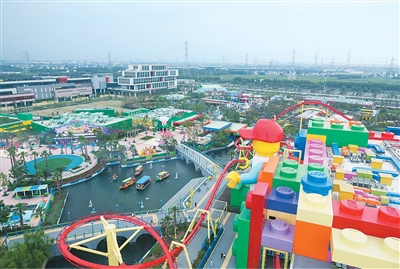
Economic Growth - In 2024, the GDP of Pudong New Area is projected to be 1.34 times that of 2020, with industrial output value at 1.27 times and total import-export volume at 1.25 times [1] - By 2025, Pudong is expected to maintain steady growth, with a GDP increase of 6% year-on-year in the first three quarters and a per capita GDP reaching $43,000, surpassing Italy [1] Investment and Foreign Capital - Pudong has completed 121 tasks outlined in the central government's opinions on supporting high-level reform and opening up, housing 25% of Shanghai's foreign enterprises and 50% of multinational company headquarters [2] - During the 14th Five-Year Plan, over 9,400 new foreign-funded enterprises were established in Pudong, with actual foreign investment reaching $45.3 billion, exceeding the previous five-year period [4] Innovation and Technology - Pudong has seen significant advancements in key industries, with the scale of integrated circuits, biomedicine, and artificial intelligence reaching 832.3 billion yuan, averaging an annual growth of 11.7% over three years [8] - The region has achieved breakthroughs in core technologies, including advanced processes and AI chips, with notable innovations such as the first domestically developed PD-1 drug and a four-arm laparoscopic surgical robot [8][10] Talent and Human Resources - Pudong is implementing a talent strategy to attract and retain high-level domestic and international talent, with initiatives like low-rent housing and entrepreneurial spaces for young innovators [11][12] - The "low-rent youth apartments" initiative has already attracted over 11,000 applicants, with an average age of 25 and 84% holding graduate degrees [12] Urban Development and Quality of Life - Pudong is focusing on improving living conditions by accelerating the renovation of urban villages and old neighborhoods, aiming to create more affordable rental housing [13] - The development of a comprehensive waterway system is underway to enhance urban connectivity and livability, promoting a vibrant community for residents and visitors [12][13]
国际金融中心对外开放的全球经验与上海提升路径
Guo Ji Jin Rong Bao· 2025-12-09 08:13
Core Insights - The high-level opening of financial markets is a core strategic pivot for the structural upgrade of the modern economic system, influenced by the post-pandemic global governance restructuring and digital technology paradigm shifts [1] - The competition logic of international financial centers has evolved from traditional "capital scale competition" to "institutional supply capability comparison" [1] Group 1: Current Status of Shanghai's Financial Market Opening - Shanghai has made significant progress towards becoming a globally influential international financial center, with 1,796 licensed financial institutions as of September 2025, nearly one-third of which are foreign institutions [2] - The internationalization of the RMB has improved, with the global payment share stabilizing at around 3.5%, ranking fourth globally, but still has substantial growth potential compared to the dollar's 48.5% [10] - Shanghai's financial market size ranks among the top globally, but foreign ownership in the stock market remains low at 8%-10%, compared to over 35% in mature markets like New York and London [9] Group 2: Comparative Analysis of Global Financial Centers - New York's governance-oriented open model is supported by the dollar's international status and a regulatory framework that promotes global rule output [4] - London's intermediary open model balances domestic regulatory flexibility with international rule adaptability, supported by a robust professional service network [5] - Singapore's adaptive open model emphasizes governance efficiency through a "three-in-one" framework that allows for dynamic regulatory adjustments [6] Group 3: Challenges and Opportunities for Shanghai - Shanghai faces structural shortcomings in market openness depth, monetary hub functionality, and financial rule discourse power compared to top financial centers [2] - The international financial rule discourse power of Shanghai is gradually increasing, transitioning from a "rule taker" to a "rule participant," but still needs to enhance its influence [10] - The regulatory framework in Shanghai requires further optimization to address issues such as multi-head regulation and data silos, which hinder cross-border investment and financial technology [11] Group 4: Governance Framework for High-Level Opening - Establishing governance principles such as adaptability, precision, and synergy is essential for constructing a high-level opening system [13] - Key tools for institutional innovation include high-standard rule pressure testing and the establishment of an internationalized legal protection ecosystem [14][15] - A multi-level risk prevention system is necessary to ensure the safety of financial high-level opening, incorporating macro-prudential management and regulatory technology [16] Group 5: Talent and Institutional Support - Building an international financial talent hub is crucial, with policies aimed at attracting high-end talent in derivatives innovation and financial technology [17] - The cultivation of specialized financial service clusters and enhancement of international financial cooperation platforms are vital for reducing transaction costs and increasing Shanghai's global competitiveness [17]
业界共话深化京港协同 赋能金融高水平开放
Zheng Quan Ri Bao· 2025-12-09 06:44
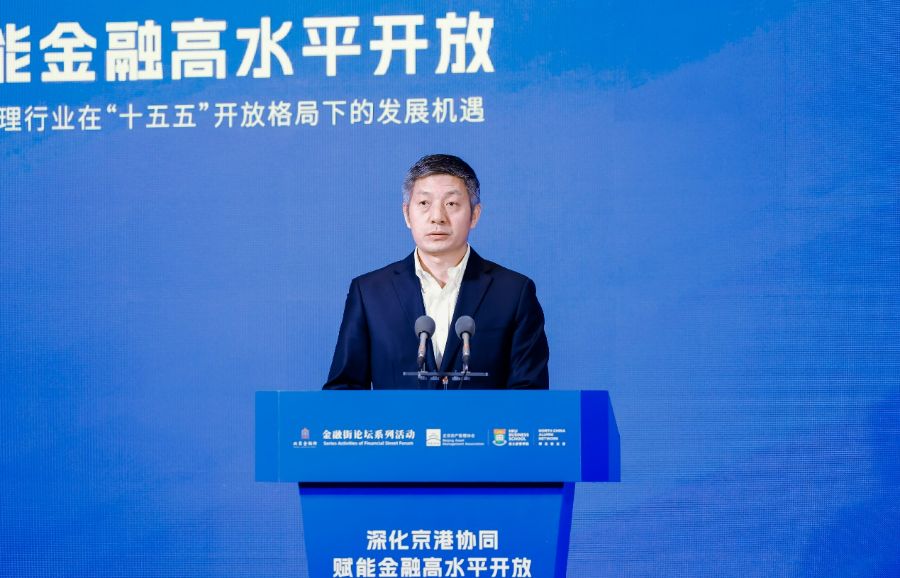
12月5日,"深化京港协同,赋能金融高水平开放——资产管理行业在'十五五'开放格局下的发展机 遇"金融街论坛系列活动在北京成功举办。与会业界人士就深化京港金融合作提出观点和建议,更好助 力金融高水平对外开放。 北京资产管理协会会长、工银理财有限责任公司总裁高向阳表示,当前,我国正处于"十四五"规划圆满 收官与"十五五"规划谋篇布局的关键交汇期,金融领域正从"要素型开放"向"制度型开放"进阶,构建适 配我国经济地位、兼具安全与开放属性的现代金融体系已成为核心任务。北京与香港作为我国金融体系 中两大核心枢纽,形成的"双中心"驱动效应,正是支撑这一任务落地的关键引擎。 中国国际经济交流中心副理事长王一鸣在主旨演讲中强调,京港深化金融合作,对巩固和提升香港国际 金融中心地位、助力构建以国内大循环为主体、国内国际双循环相互促进的新发展格局意义重大。他建 议从五个方面探索深化合作路径:一是合作发展科技金融;二是探索跨境资管合作;三是协同推进人民 币国际化;四是强化优势互补提升各自竞争力;五是加强金融监管协同,筑牢金融安全防线。 中国宏观经济学会副会长、香港大学经管学院金融学教授巴曙松在线参会时指出,中国资管市场历经多 轮 ...
11月进出口数据点评:高技术提速,新市场托底
Guoxin Securities· 2025-12-09 06:02
Group 1: Export Performance - November exports increased by 5.9% year-on-year, reaching $330.35 billion, a significant recovery from October's -1.1%[2] - Cumulative exports from January to November grew by 5.4%, while imports declined by 0.6%, resulting in a trade surplus of $1,075.85 billion[2] - High-tech and emerging products are driving export growth, with significant increases in automotive (53.0%), ships (46.4%), rare earths (34.9%), and integrated circuits (34.2%) exports[11] Group 2: Import Trends - November imports rose by 1.9% year-on-year to $218.67 billion, slightly below the expected 2.8%[13] - The import structure shows resilience in production demand, with notable increases in aircraft (88.7%), copper ore (35.3%), and integrated circuits (13.9%) imports[14] - Trade surplus reached $111.68 billion in November, marking the second-highest level of the year[14] Group 3: Market Dynamics - The global manufacturing recovery is uneven, with developed economies showing weak demand, while emerging markets like ASEAN and India maintain strong growth[7] - Container shipping rates are stabilizing, with the index rising to 1114.89, indicating a rebound in shipping demand[7] - The outlook for exports remains stable, with a projected year-on-year growth of approximately 5.5% for the year, and a potential decline to around 5% next year due to slowing external demand[16]
从“要素型开放”到“制度型开放”,资管业发力深化京港协同
2 1 Shi Ji Jing Ji Bao Dao· 2025-12-09 05:32
近日,"深化京港协同,赋能金融高水平开放——资产管理行业在'十五五'开放格局下的发展机遇"金融街论坛系列活动在北京举 办。 北京资产管理协会会长、工银理财有限责任公司总裁高向阳在会上表示,北京资产管理协会自成立以来,始终以"推动资管行业 高质量发展、搭建跨区域交流合作平台"为核心使命,本次活动正是协会立足"十五五"战略窗口期,助力京港金融"双中心"协 同、服务金融高水平开放的重要实践。 高向阳指出,当前,我国正处于"十四五"规划圆满收官与"十五五"规划谋篇布局的关键交汇期,金融领域正从"要素型开 放"向"制度型开放"进阶,构建适配我国经济地位、兼具安全与开放属性的现代金融体系已成为核心任务。北京与香港作为我国 金融体系中两大核心枢纽,形成的"双中心"驱动效应,正是支撑这一任务落地的关键引擎。 21世纪经济报道 杨希 中国国际经济交流中心副理事长王一鸣在主旨演讲中强调,京港深化金融合作,对巩固和提升香港国际金融中心地位、助力构 建"双循环"新发展格局意义重大。他建议从五个方面探索深化合作路径:一是合作发展科技金融;二是探索跨境资管合作;三 是协同推进人民币国际化;四是强化优势互补提升各自竞争力;五是加强金融监管 ...
2025中国经济回眸丨坚持在开放合作中育新机拓新局——中国与世界共享机遇共同发展
Xin Hua She· 2025-12-09 04:12
Group 1 - China's commitment to openness is seen as essential for national prosperity and development, with a focus on expanding high-level foreign trade despite external challenges [1] - The Ningbo-Zhoushan Port has achieved a historic milestone by surpassing 40 million TEUs in annual container throughput, becoming the third port globally to reach this level, reflecting China's strong foreign trade resilience [2] - In the first 11 months of the year, China's total goods trade value reached 41.21 trillion yuan, a year-on-year increase of 3.6%, with November showing a growth rate of 4.1% [2] Group 2 - China's cross-border e-commerce imports and exports reached approximately 2.06 trillion yuan in the first three quarters, marking a year-on-year growth of 6.4% [3] - The growth rates of imports and exports to ASEAN, Latin America, and Africa were 8.5%, 5.6%, and 18.7% respectively, indicating significant market expansion [3] Group 3 - China has maintained a continuous growth in imports for six months, with a cumulative increase of over 55 billion yuan in imports from least developed countries since the implementation of zero-tariff treatment [4] - The Ministry of Commerce emphasizes the need for high-quality trade development and international cooperation to enhance trade resilience [4] Group 4 - In 2023, the number of newly established foreign-invested enterprises in China reached 54,000, a year-on-year increase of 14.7%, showcasing China's strong market attraction [7] - Major international companies continue to invest in China, reflecting confidence in the Chinese market despite global economic uncertainties [7] Group 5 - Airbus has established its second A320 assembly line in Tianjin, marking 40 years of cooperation with China's aviation industry, highlighting China's role as a hub for high-end manufacturing [8] - The Chinese government has implemented measures to optimize the business environment, including the release of the "2025 Action Plan for Stabilizing Foreign Investment" [9] Group 6 - The Hainan Free Trade Port is attracting global attention with its "zero tariff" policies and simplified customs procedures, enhancing its appeal to international businesses [10] - China's free trade zones and ports are seen as critical to fostering a high-level open economy and facilitating international trade [11] Group 7 - The Belt and Road Initiative is providing new multilateral cooperation forms, enhancing trade, infrastructure, and personnel exchanges, which injects new momentum into regional economies [12] - A more open China aims to collaborate with countries worldwide to expand the global market and enhance shared mechanisms for cooperation [12]