
碳达峰碳中和

Search documents
关于绿色发展,二十届四中全会公报的三个“加快”意味着什么
2 1 Shi Ji Jing Ji Bao Dao· 2025-10-24 06:56
Core Viewpoint - The Fourth Plenary Session of the 20th Central Committee of the Communist Party of China emphasizes accelerating the comprehensive green transformation of economic and social development, aiming to build a beautiful China with a focus on carbon peak and carbon neutrality goals [1][2]. Group 1: Green Transformation Initiatives - The session outlines four key measures to accelerate green transformation: implementing a dual control system for carbon emissions, transitioning to a green low-carbon energy system, promoting green low-carbon industrial restructuring, and fostering green low-carbon lifestyles [2][3]. - By 2030, the goal is to achieve a utilization rate of approximately 4.5 billion tons of major solid waste annually, alongside enhancing energy efficiency in buildings and municipal facilities [4]. Group 2: Energy System Development - The construction of a new energy system is highlighted as a critical component, with a focus on increasing the share of non-fossil energy and developing clean energy bases such as wind, solar, and hydropower [3][6]. - The new energy system aims to ensure that the majority of new electricity demand is met by clean energy sources by the end of the 14th Five-Year Plan [3][5]. Group 3: Economic and Industrial Implications - The emphasis on green transformation reflects a commitment to integrating green development into the core of the economy, with a focus on enhancing the "green content" of industries to improve economic quality [3][5]. - The report indicates that green development is increasingly recognized as a fundamental aspect of economic growth, with a call for systematic, industrialized, and intelligent approaches to green transformation during the 14th and 15th Five-Year Plans [5][11]. Group 4: Policy and Market Mechanisms - The transition from energy consumption control to carbon emission control is seen as a crucial step in optimizing energy structure and achieving carbon reduction goals [12]. - The establishment of a unified carbon emission monitoring and reporting system is essential for precise emission reduction and effective policy implementation [12].
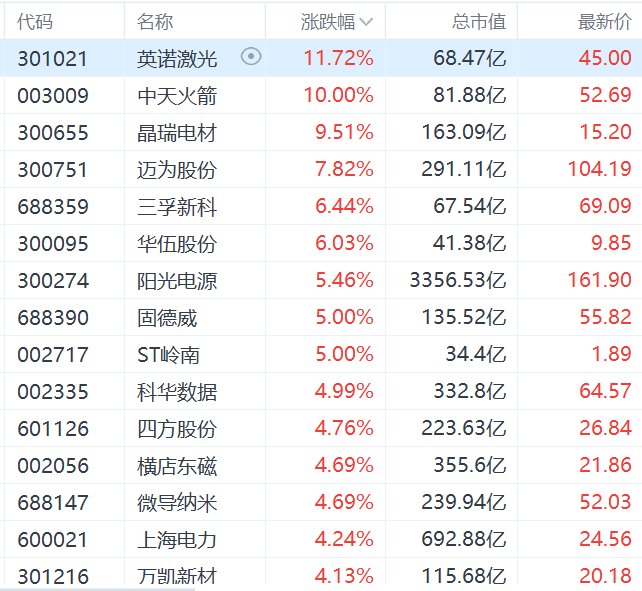
A股异动丨光伏概念股集体走强,阳光电源、固德威涨超5%
Ge Long Hui A P P· 2025-10-24 02:55
Core Viewpoint - The A-share market has seen a significant rise in photovoltaic concept stocks, driven by the recent policy direction from the Chinese Communist Party emphasizing green transformation and carbon neutrality [1][2]. Group 1: Market Performance - In the A-share market, notable gains were observed in photovoltaic stocks, with Inno Laser rising over 11%, Zhongtian Rocket hitting the daily limit, and Jingrui Electric Materials increasing by over 9% [1]. - Other companies such as Maiwei Co., Sanfu New Science, and Huawu Co. also experienced substantial increases, ranging from 5% to 7% [1]. Group 2: Policy Influence - The Fourth Plenary Session of the 20th Central Committee of the Communist Party of China highlighted the need for a comprehensive green transformation of economic and social development, aiming for carbon peak and carbon neutrality [1]. - The session emphasized the importance of establishing a new energy system and promoting green production and lifestyle practices [1]. Group 3: Stock Data Summary - Inno Laser (301021) saw an increase of 11.72% with a market cap of 6.847 billion [2]. - Zhongtian Rocket (003009) rose by 10% with a market cap of 8.188 billion [2]. - Jingrui Electric Materials (300655) increased by 9.51% with a market cap of 16.309 billion [2]. - Maiwei Co. (300751) rose by 7.82% with a market cap of 29.111 billion [2]. - Other notable stocks include Sanfu New Science (688359) up 6.44%, Huawu Co. (300095) up 6.03%, and Sunshine Power (300274) up 5.46% [2].






二十届四中全会公报:加快建设新型能源体系
Zhong Guo Dian Li Bao· 2025-10-24 02:23
中国共产党第二十届中央委员会第四次全体会议,于2025年10月20日至23日在北京举行。 全会提出,加快经济社会发展全面绿色转型,建设美丽中国。牢固树立和践行绿水青山就是金山银山的理念,以碳达峰碳中和为牵引,协同推进降碳、减 污、扩绿、增长,筑牢生态安全屏障,增强绿色发展动能。要持续深入推进污染防治攻坚和生态系统优化,加快建设新型能源体系,积极稳妥推进和实现碳 达峰,加快形成绿色生产生活方式。 ...

“十五五”时期,中国将着重办好这些事
中国基金报· 2025-10-24 01:53
Core Points - The article discusses the key tasks outlined during the Fourth Plenary Session of the 20th Central Committee of the Communist Party of China, focusing on the development of the 15th Five-Year Plan [2][3]. Group 1: Economic Development - Emphasis on building a modern industrial system to strengthen the foundation of the real economy [3]. - Accelerating high-level technological self-reliance to lead the development of new productive forces [4]. - Strengthening the domestic market and constructing a new development pattern by expanding domestic demand and promoting consumption and investment [5]. Group 2: Industrial and Technological Innovation - Focus on maintaining the development of the real economy while promoting intelligent, green, and integrated directions [6]. - Enhancing original innovation and tackling key core technologies to integrate technological and industrial innovation [6]. - Promoting the construction of a digital China and improving the overall effectiveness of the national innovation system [6]. Group 3: Market and Investment - Aiming to boost consumption and expand effective investment while removing barriers to the construction of a unified national market [7]. - Accelerating the establishment of a high-level socialist market economy to enhance high-quality development momentum [7]. - Expanding high-level opening-up to create a win-win cooperation scenario [8]. Group 4: Rural and Regional Development - Promoting agricultural modernization and comprehensive rural revitalization [9]. - Optimizing regional economic layout to facilitate coordinated regional development [10]. Group 5: Cultural and Social Development - Stimulating cultural innovation and creativity to promote the development of socialist culture [11]. - Enhancing the quality of life for all citizens and advancing common prosperity [13]. Group 6: Environmental and Security Initiatives - Accelerating the green transformation of economic and social development to build a beautiful China [14]. - Modernizing the national security system and capabilities to ensure a higher level of safety [15]. - Advancing the modernization of national defense and military capabilities [16].
聚焦高质量发展,进一步稳固A股慢牛
Huajin Securities· 2025-10-24 00:09
Group 1 - The report emphasizes a shift towards focusing on economic construction during the 14th Five-Year Plan, indicating a heightened urgency for economic growth compared to the previous plan [10][13][19] - Key areas of focus include the development of advanced manufacturing, technological self-reliance, and expanding domestic demand, which are seen as strategic priorities for the 15th Five-Year Plan [2][13][20] - The report anticipates that policies aimed at achieving economic growth targets will likely lead to increased fiscal and monetary support in the fourth quarter [10][18] Group 2 - The report suggests that the A-share market is likely to maintain a slow bull trend, with improving profit expectations driven by policies focused on economic construction and advanced manufacturing [3][15][18] - Short-term market dynamics may also benefit from increased liquidity and a positive outlook on economic growth, which could enhance market risk appetite [3][18][19] - The report identifies specific sectors that may benefit from these trends, including TMT (Technology, Media, and Telecommunications), machinery, and military industries, which are aligned with the modernization of the industrial system [4][19][20] Group 3 - Industries related to new productive forces, such as TMT, machinery, and military sectors, are expected to benefit from policies promoting technological innovation and infrastructure development [4][19][20] - The advanced manufacturing sector, including non-ferrous metals, chemicals, and pharmaceuticals, is highlighted as a key area for growth, driven by national security and environmental sustainability initiatives [20][21][22] - Consumer sectors, particularly those related to social services and retail, are also positioned to gain from policies aimed at boosting domestic demand and improving living standards [22][23]
“十五五”如何加快经济社会发展全面绿色转型?专访林卫斌:要逐步实现可再生能源在增量上和存量上对化石能源的替代
Mei Ri Jing Ji Xin Wen· 2025-10-23 16:10
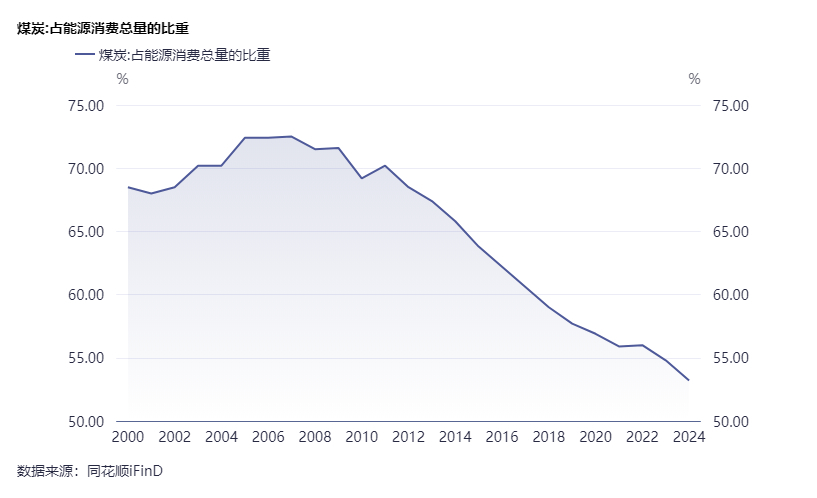
Core Viewpoint - The Fourth Plenary Session of the 20th Central Committee of the Communist Party of China emphasizes accelerating the comprehensive green transformation of economic and social development, aiming to build a beautiful China through a focus on carbon peak and carbon neutrality goals [1] Group 1: Energy Transition - The key to accelerating comprehensive green transformation lies in promoting green and low-carbon energy transition and continuously optimizing the energy structure [2] - The proportion of coal consumption in total energy consumption has been decreasing since the 18th National Congress of the Communist Party of China [5] - A dual approach of end-of-pipe and source governance is necessary for carbon emission reduction, with a focus on source governance for long-term sustainability [8] Group 2: Renewable Energy Development - There is a need for large-scale development and utilization of non-fossil energy sources, including hydropower, nuclear power, wind power, solar power, and biomass [9] - By 2060, the proportion of non-fossil energy consumption is targeted to reach over 80%, with non-fossil energy generation accounting for over 90% of total power generation [10] - The development of renewable energy should gradually replace fossil energy in both incremental and stock terms [11] Group 3: New Energy System Construction - A new power system characterized by "clean, low-carbon, safe, abundant, economically efficient, coordinated supply and demand, and flexible intelligence" is being constructed [9] - The construction of a new grid system is essential to support the new energy system, acting as a critical platform in the energy system [11] - Energy storage and hydrogen energy are key to enhancing system regulation capabilities and supporting dynamic balance in the power system [11]
读懂“十五五”,聚焦这一系列表述
Zhong Guo Ji Jin Bao· 2025-10-23 14:55
Core Points - The Fourth Plenary Session of the 20th Central Committee of the Communist Party of China was held from October 20 to 23, 2023, in Beijing, where the "Suggestions on Formulating the 15th Five-Year Plan for National Economic and Social Development" were reviewed and approved [1] Group 1: Economic Development - The "15th Five-Year" period is crucial for laying the foundation for the basic realization of socialist modernization and has an important transitional role [2] - The focus will be on building a modern industrial system with advanced manufacturing as the backbone, emphasizing the importance of the real economy and promoting intelligent, green, and integrated development [3] Group 2: Innovation and Technology - There is a strong emphasis on accelerating high-level technological self-reliance and enhancing the overall effectiveness of the national innovation system to boost autonomous innovation capabilities [4] Group 3: Domestic Market and Consumption - The plan aims to build a strong domestic market by expanding domestic demand, promoting consumption, and ensuring a close relationship between investment in goods and investment in people [5] Group 4: Rural Development - The session highlighted the importance of modernizing agriculture and rural areas, focusing on solving "three rural issues" and promoting urban-rural integration [6] Group 5: Social Welfare - There is a commitment to improving people's livelihoods and promoting common prosperity, with a focus on enhancing social mobility and quality of life [7][8] Group 6: Environmental Sustainability - The session calls for a comprehensive green transformation of economic and social development, with a focus on achieving carbon peak and carbon neutrality while enhancing ecological safety [9] Group 7: National Security and Defense - The modernization of the national security system and capabilities is emphasized, alongside the goal of achieving high-quality development in national defense and military modernization [10][11] Group 8: Party Governance - Effective party governance is seen as essential for strong economic and social development, with a focus on strict party discipline and anti-corruption efforts [13]
读懂“十五五”,聚焦这一系列表述
中国基金报· 2025-10-23 14:23
Core Viewpoint - The Fourth Plenary Session of the 20th Central Committee of the Communist Party of China emphasized the importance of the "15th Five-Year Plan" as a critical period for achieving socialist modernization and laid out various strategies for economic and social development [2][3]. Group 1: Economic Development Strategies - The session highlighted the need to build a modern industrial system centered on advanced manufacturing, reinforcing the foundation of the real economy and promoting intelligent, green, and integrated development [4]. - It called for enhancing the overall effectiveness of the national innovation system, focusing on self-reliance in technology and fostering new productive forces through original innovation and key core technology breakthroughs [5][6]. - The importance of expanding domestic demand and creating a strong domestic market was stressed, with a focus on improving consumption and investment interactions to stimulate economic growth [7]. Group 2: Rural and Agricultural Development - The session underscored the necessity of modernizing agriculture and rural areas, aiming to ensure that rural areas meet modern living standards and enhance agricultural productivity and quality [8]. Group 3: Social Welfare and Quality of Life - There was a strong emphasis on improving people's livelihoods and promoting common prosperity, with initiatives aimed at enhancing social mobility, employment quality, and public services [9]. Group 4: Environmental Sustainability - The session advocated for a comprehensive green transformation of economic and social development, with a focus on achieving carbon peak and carbon neutrality while promoting ecological safety and green growth [10]. Group 5: National Security and Defense - The need to modernize the national security system and capabilities was highlighted, ensuring a stable and orderly society while advancing national defense and military modernization [11][13]. Group 6: Party Governance - The session reiterated that effective party governance is crucial for robust economic and social development, emphasizing the importance of strict party discipline and anti-corruption measures [14].
从四中全会关键表述看中国经济动向
Zhong Guo Xin Wen Wang· 2025-10-23 13:40
Group 1 - The core viewpoint of the document emphasizes the importance of high-quality development and the commitment to deepening reforms during the "14th Five-Year Plan" period, aiming for significant advancements in various sectors including the economy, technology, and environmental sustainability [1][2] - The document outlines long-term goals for 2035, including a substantial increase in China's economic, technological, and defense capabilities, with a target for per capita GDP to reach the level of moderately developed countries [1] - It highlights the resilience and potential of the Chinese economy, asserting that the foundational conditions for long-term growth remain unchanged, supported by the advantages of the socialist system and a large market [1][2] Group 2 - The focus is on strengthening the real economy, with a commitment to maintaining a leading position in manufacturing and building a modern industrial system centered on advanced manufacturing [2] - There is a strong emphasis on enhancing independent innovation capabilities, with specific goals for improving the level of technological self-reliance and fostering new industries and business models [2][3] - The document stresses the importance of expanding domestic demand as a strategic foundation for economic development, aiming to enhance the internal circulation of the economy [2][3] Group 3 - The document calls for measures to boost consumption and effective investment while addressing barriers to the establishment of a unified national market [3] - It outlines the need for improved macroeconomic governance to enhance the effectiveness of economic management and to stimulate the vitality of various business entities [3] - The strategy includes expanding high-level openness and promoting innovative trade development, as well as enhancing cooperation in investment [4] Group 4 - The document emphasizes the role of key regions as growth poles, advocating for coordinated regional development strategies to optimize productivity and create a high-quality regional economic layout [4] - It also addresses the commitment to achieving carbon peak and carbon neutrality, promoting a green production and lifestyle while advancing pollution prevention and ecological optimization [4]
(经济观察)从四中全会关键表述看中国经济动向
Zhong Guo Xin Wen Wang· 2025-10-23 13:26
中新社北京10月23日电 题:从四中全会关键表述看中国经济动向 中新社记者 王恩博 中共二十届四中全会公报23日公布。透过其中关键表述,可一观当前和今后一个时期的中国经济动向。 全会还提出,要大力提振消费,扩大有效投资,坚决破除阻碍全国统一大市场建设卡点堵点。 ——提升宏观经济治理效能。近年来,宏观调控的前瞻性、针对性、有效性不断提高,助力中国经济妥 善应对各类风险挑战。 着眼增强高质量发展动力,全会提出"坚持和完善社会主义基本经济制度""完善宏观经济治理体系"等, 并表示要充分激发各类经营主体活力,加快完善要素市场化配置体制机制,提升宏观经济治理效能。 ——"十五五"时期经济社会发展主要目标。公报提出了"十五五"时期经济社会发展的主要目标,包 括"高质量发展取得显著成效""进一步全面深化改革取得新突破""美丽中国建设取得新的重大进展"等。 着眼更远的未来,全会还明确:到二〇三五年实现中国经济实力、科技实力、国防实力、综合国力和国 际影响力大幅跃升,人均国内生产总值达到中等发达国家水平,人民生活更加幸福美好,基本实现社会 主义现代化。 ——长期向好的支撑条件和基本趋势没有变。"十五五"时期是基本实现社会主义现 ...