港股IPO

Search documents
6.4犀牛财经早报:多家公募自购新发浮动费率基金 手回集团较招股价跌近三成
Xi Niu Cai Jing· 2025-06-04 01:37
Group 1: Fund Industry Developments - Multiple public funds are actively purchasing newly issued floating-rate funds, indicating strong market interest and support from fund companies [1] - The new floating-rate funds are designed to anchor performance benchmarks, incentivizing fund managers to enhance investment capabilities and research systems [1] - As of June 3, 440 A-share listed companies have announced share buybacks, with 78 companies initiating new buyback plans in May alone [1] Group 2: Wealth Management and Financial Services - The wealth management industry is experiencing a "fee reduction wave," with some products offering management fees as low as 0.01% per year, translating to just 1 yuan for a 10,000 yuan investment [2] - Major banks are adjusting their car loan commission structures, reducing high rebate rates to enhance service quality and market competitiveness [2] Group 3: Pharmaceutical and Biotechnology - Bayer's prostate cancer drug Nubeqa has received FDA approval based on positive results from a Phase 3 trial, showing a 46% reduction in the risk of disease progression or death [3] Group 4: IPO and Market Activity - There has been a significant increase in foreign capital participation in Hong Kong IPOs, with 15 out of 27 companies this year attracting foreign cornerstone investors, compared to only 3 last year [5] - Shenzhen Handback Technology Group's IPO faced challenges, with its stock price dropping nearly 30% from the initial offering price shortly after listing [6][7] Group 5: Corporate Financing and Strategic Moves - China Ping An plans to issue zero-coupon convertible bonds totaling 11.765 billion HKD to support its business development and capital needs [10] - United Optoelectronics intends to acquire 100% of Changyi Optoelectronics through a share issuance, with the final transaction details pending [8] Group 6: Market Performance - The US stock market saw all three major indices rise, with the Dow Jones increasing by 0.51% and Nvidia leading the gains in the tech sector [11]


外资“基石”大幅增加 国际资本抢滩港股IPO
Shang Hai Zheng Quan Bao· 2025-06-03 18:31
Group 1 - The number of foreign institutions participating as cornerstone investors in Hong Kong IPOs has significantly increased in 2023, with 15 out of 27 companies listing on the Hong Kong Stock Exchange attracting foreign investment, compared to only 3 out of 21 in the same period last year [1][5] - Foreign investors are primarily interested in sectors such as new consumption, new energy, and pharmaceuticals, indicating a recognition of the long-term value of China's core assets [1][5] - Notable companies that have attracted foreign cornerstone investors include CATL, Mijia Group, and Hengrui Medicine, among others [1][3] Group 2 - CATL's IPO on May 20 was one of the largest in recent years, attracting 23 cornerstone investors, including global sovereign wealth funds and major asset management firms [2][3] - The trend of increased foreign participation in Hong Kong IPOs is driven by a growing demand for international capital allocation and the benefits of China's industrial upgrade [5] - Foreign investors are focusing on high-growth sectors, with a preference for leading companies in the new economy, aiming for long-term financial returns [2][3] Group 3 - The new consumption sector has seen significant foreign investment, with Mijia Group raising $200 million from five cornerstone investors, including M&G plc [3][4] - The pharmaceutical sector is also attracting foreign interest, with companies like InnoCare Pharma securing cornerstone investors with international industry backgrounds, enhancing market confidence and long-term value [4][5] - Foreign institutions participating as cornerstone investors provide not only capital but also strategic collaboration opportunities, which can aid in technology transfer and resource integration [4][5]
港股IPO大爆发!多家科技公司转道港股
梧桐树下V· 2025-06-03 13:09
Core Viewpoint - The Hong Kong Stock Exchange (HKEX) has launched a new policy called "Tech Company Special Line" to provide a confidential listing channel and lower the threshold for specialized technology and biotechnology companies, attracting more tech firms to consider listing in Hong Kong [1]. Group 1: Eligibility Criteria - Applicable entities include specialized technology companies (e.g., AI, chips, new energy) and biotechnology companies (e.g., innovative drugs, medical devices), particularly those in early stages or with non-commercialized products [1]. - Core thresholds include industry attributes defined by HKEX under "Specialized Technology" (Chapter 18C) or "Biotechnology" (Chapter 18A), with specific focus on sectors like AI, quantum computing, and innovative drug development [3]. - R&D investment must account for at least 15% of total costs over the past three years for specialized technology, or core products must have passed Phase I clinical trials for biotechnology [3]. Group 2: Self-Assessment Tools - Companies can assess their eligibility by downloading the "18A/18C Qualification Self-Assessment Form" from the HKEX website [4]. Group 3: Confidential Submission Process - The first step involves signing a Non-Disclosure Agreement (NDA) with HKEX to ensure confidentiality of submitted materials [6]. - Companies must submit a "confidential version" of materials, including company profile, financial data, and legal documents, while sensitive details like technology specifics and client lists do not need to be disclosed [7]. - The review phase by HKEX's specialized team will provide feedback within 30 days, focusing on technical feasibility and compliance [8]. Group 4: Exclusive Services of "Tech Company Special Line" - Companies can receive one-on-one guidance from HKEX experts, including interpretations of listing rules and fundraising strategies [9]. - Eligible companies may benefit from a shortened review period of 30 days if they indicate "fast track" during application submission [10]. - Flexible equity design allows founders to retain control through weighted voting rights (WVR) without needing to prove "innovation" [11]. Group 5: Common Pitfalls to Avoid - Companies should avoid vague technical descriptions and instead provide third-party certifications or endorsements [13]. - Transparency in related party transactions is crucial; companies should disclose fair pricing or cut off related business beforehand [15]. - Establishing a robust investor relationship is important, with at least two independent investors managing over 1 billion HKD [18]. Group 6: Post-Listing Compliance - Companies must disclose significant developments in technology commercialization and R&D milestones, while certain national security-related details may be exempted [19]. - Maintaining market capitalization can be supported by quarterly R&D updates and regular communication with analysts [19]. - Companies can utilize a "green channel" for issuing new shares, allowing for expedited approval processes [20]. Group 7: Comparison with Other Markets - The article compares the listing requirements and processes of HKEX with those of A-shares and US markets, highlighting differences in profitability requirements, review periods, valuation levels, and information disclosure pressures [21][23].

新琪安招股中,净利润逐年下滑,为食品级甘氨酸及三氯蔗糖生产商
Ge Long Hui· 2025-06-03 09:51
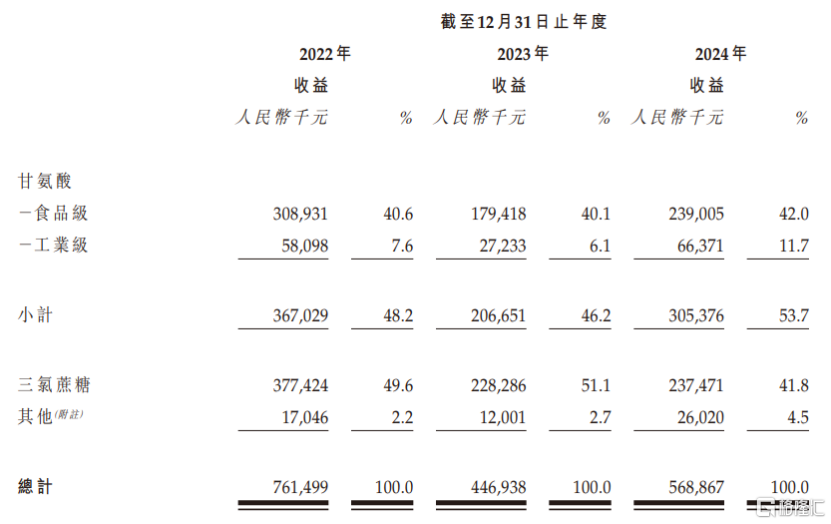
Core Viewpoint - The Hong Kong IPO market is currently active, with several companies, including New Qian An, in the process of going public [1] Group 1: IPO Details - New Qian An's IPO is scheduled from May 30 to June 5, 2025, with a listing date on June 10, 2025 [3] - The company plans to issue 10.5854 million H-shares, with 90% allocated for international sale and 10% for public sale [3] - The offering price is set between HKD 18.9 and HKD 20.9, with a post-issue market capitalization estimated between HKD 18.19 billion and HKD 20.11 billion [3] - The entry fee for investors is HKD 4,222.16 for 200 shares [3] - The lead underwriter for the IPO is Minyin Capital, with cornerstone investors holding approximately 26.8% to 29.7% of the shares post-offering [3] Group 2: Company Overview - New Qian An, established in 2003, is based in Jiangxi Province and specializes in the production and sale of food-grade glycine, industrial-grade glycine, and sucralose [4] - The revenue breakdown for 2024 indicates that food-grade glycine accounts for 42%, industrial-grade glycine for 11.7%, and sucralose for 41.8% of total revenue [4] Group 3: Market Position and Financial Performance - New Qian An ranks first in the global food-grade glycine manufacturing industry based on 2023 sales volume and revenue [3] - The company faces significant revenue volatility and a declining net profit trend, with revenues of approximately RMB 761.5 million, RMB 446.9 million, and RMB 568.9 million for 2022, 2023, and 2024, respectively [7] - The gross profit margins for the same years are 25.6%, 17.9%, and 17.9%, with net profits of approximately RMB 122 million, RMB 45 million, and RMB 43 million [7] - The average export market price for food-grade glycine has decreased from approximately RMB 23,000 per ton in 2022 to about RMB 14,800 per ton in 2024 [7] Group 4: Competitive Landscape - New Qian An's market share for food-grade glycine is approximately 5.1% by sales volume and 3.1% by revenue, with domestic competitors including Jinhe Industrial and Rhine Bio [7] - The average selling price of sucralose has dropped significantly from approximately RMB 311,700 per ton in 2022 to RMB 184,800 per ton in 2024 due to oversupply and price competition among major producers [8] - The company has established production facilities in China and overseas, focusing on expanding its international production and sales [8]
港股,狂飙!
Sou Hu Cai Jing· 2025-06-02 15:27
Group 1 - The Hong Kong IPO and secondary market are experiencing significant activity, attracting global attention, with 28 companies successfully listed and raising a total of HKD 77.32 billion as of May 30, nearing last year's total [1] - Notable companies such as CATL, Hengrui Medicine, and Chifeng Jilong Gold have seen high participation from cornerstone investors, performing well post-listing [1][5] - The consumer and technology sectors are showing clear advantages, with companies like Gu Ming and Mixue Group recently listing on the Hong Kong stock exchange [4][5] Group 2 - The pharmaceutical sector is also witnessing a surge in listings, with Hengrui Medicine achieving a dual listing on May 23, and its stock price increasing by 25.20% on the first day [7] - Since the reforms in 2018, Hong Kong's liquidity and growth have improved, with the average daily trading volume in 2025 being 2.8 times that of 2018 [7] - International funds are returning to Hong Kong, with sovereign wealth funds from the Middle East and Northern Europe increasing their holdings in Chinese assets, making Hong Kong a core channel for allocating quality equity assets in Asia [7][8] Group 3 - The market is undergoing structural changes, with a significant increase in A-share companies choosing to list in Hong Kong, as evidenced by 12 new "A+H" applications in Q1 2025 compared to only 2 in Q4 2024 [9] - Analysts believe that the valuation framework in Hong Kong is being reshaped, with the technology and consumer sectors now accounting for a significant portion of the market capitalization [9] - Companies are encouraged to highlight their core competencies and unique value propositions to attract higher issuance valuations, as seen with CATL's narrative of "technology iteration + global capacity + zero-carbon ecosystem" [9] Group 4 - CITIC Securities predicts that AI and market structure narratives will drive a continued rebound in Hong Kong stocks in the second half of the year, despite potential impacts from tariff policies [10] - The outlook for the third quarter suggests a trend of upward fluctuations, while the fourth quarter may see performance upgrades due to domestic growth policies and the catalytic effects of the AI industry [10]



如何看待今年以来港股IPO爆发︱重阳问答
重阳投资· 2025-05-30 06:27
Core Viewpoint - The significant increase in Hong Kong IPOs this year is attributed to a combination of policy support, improved market conditions, and strategic moves by companies [1][2][3] Group 1: IPO Market Overview - As of May 28, 2023, 27 companies have successfully listed on the Hong Kong stock exchange, raising over 77 billion HKD, nearing the total for the entire previous year [1] - Notable IPOs include the successful fundraising of 177 billion HKD by Mixue Group and over 35 billion HKD by CATL, making it the second-largest IPO globally after Saudi Aramco [1] - There are currently 157 companies waiting to go public, with 18 projects seeking to raise over 5 billion HKD [1] Group 2: Policy and Market Environment - Policy support is fundamental to the IPO surge, with the Hong Kong Stock Exchange optimizing listing rules and introducing a "special line" for tech companies to submit applications confidentially [2] - The China Securities Regulatory Commission has implemented measures to facilitate mainland companies listing in Hong Kong, reducing the review time from 100 days to 60 days [2] - The introduction of the FINI settlement platform has improved the efficiency of new stock issuances [2] Group 3: Market Liquidity and Investment Trends - Since the fourth quarter of last year, the Hong Kong market has shown strong performance, with net inflows from southbound funds exceeding 600 billion HKD [2] - The average daily trading volume in Hong Kong has surpassed 240 billion HKD this year, nearly doubling from the previous year [2] - Hong Kong has become a hub for scarce technology and consumer stocks, with over 80% of the MSCI index comprising Hong Kong stocks, indicating a sustained trend of foreign capital inflow [2] Group 4: Internationalization of Chinese Enterprises - The internationalization of high-quality Chinese enterprises is accelerating, with Hong Kong serving as a key platform for global financing [3] - Companies are seeking offshore funding through Hong Kong to support overseas expansion, brand acquisitions, and supply chain development [3] - The improved IPO environment is leading to a structural upgrade in the supply of quality assets in Hong Kong, attracting long-term capital [3]

大变化!A+H料成港股IPO主角!
券商中国· 2025-05-30 04:29
Core Viewpoint - The trend of dual listings in Hong Kong and A-share markets is gaining momentum, driven by factors such as asset revaluation in China, improved liquidity in Hong Kong stocks, and companies expanding overseas [2][3]. Group 1: Market Dynamics - A growing number of high-quality A-share companies are listing in Hong Kong, attracting significant international long-term capital and leading to a shift from discount to premium for AH shares [2][3]. - Recent IPOs, such as CATL and Hengrui Medicine, have set records in Hong Kong, showcasing strong demand from international investors with oversubscription rates of 15.17 times and 17.09 times, respectively [3][4]. - The pricing of these IPOs reflects a willingness among investors to pay higher valuations for companies with core competitiveness and industry leadership, indicating a shift in market sentiment [4]. Group 2: A+H Listing Trends - As of May 29, there are 156 companies waiting to go public in Hong Kong, with at least 24 A-share companies having submitted applications for dual listings, including industry leaders like Haitian Flavoring and Sany Heavy Industry [5][8]. - The trend of A+H listings is expected to continue, with many large enterprises across various sectors seeking to enhance their international presence and capital operations [8][9]. Group 3: Valuation Shifts - The valuation of new economy companies in Hong Kong has significantly increased, with their market capitalization rising from 2.8% in 2018 to approximately 28% in April 2023 [10]. - The influx of A-share companies into the Hong Kong market is likely to enhance liquidity and valuation levels, attracting more investors and increasing market activity [10][11]. - The phenomenon of A-share companies experiencing price adjustments upon announcing plans for Hong Kong listings, followed by price increases closer to their listing dates, indicates a recalibration of valuations [11].

【看新股】新荷花转赴港股IPO:中药饮片头部企业 2024年增收不增利
Xin Hua Cai Jing· 2025-05-29 23:16
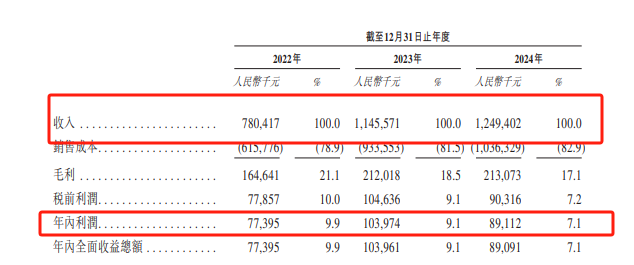
Core Viewpoint - Sichuan Xinhehua Traditional Chinese Medicine Co., Ltd. (referred to as "Xinhehua") has submitted an application for an IPO on the Hong Kong Stock Exchange, with Guangfa Securities (Hong Kong) and Agricultural Bank of China International as sponsors. The company aims to raise funds to expand its production capacity and explore overseas markets [1][10]. Group 1: Company Overview - Xinhehua specializes in the research, production, and sales of traditional Chinese medicine pieces, ranking second in China based on revenue from traditional Chinese medicine products in 2023 [2][3]. - The company has attempted to list on the A-share market multiple times but has not succeeded [2][10]. Group 2: Financial Performance - Xinhehua's revenue for the years 2022, 2023, and 2024 was 780.4 million RMB, 1.146 billion RMB, and 1.249 billion RMB, respectively, with net profits of 77.4 million RMB, 104.6 million RMB, and 89.1 million RMB [3][4]. - The gross profit margin has been declining, with total gross margins of 21.1%, 18.5%, and 17.1% for the years 2022, 2023, and 2024 [5][6]. Group 3: Product and Market Dynamics - A significant portion of Xinhehua's revenue comes from a limited range of products, with the top five products accounting for 26.5% of total annual revenue in 2024 [5]. - The gross profit margin for toxic traditional Chinese medicine pieces decreased from 29.7% in 2022 to 19.1% in 2024, while the margin for ordinary pieces fell from 19.6% to 16.7% during the same period [5][6]. Group 4: Future Plans and Use of Proceeds - The funds raised from the IPO will be used for expanding production capacity, upgrading digital production systems, enhancing sales and marketing activities, establishing overseas sales channels in Vietnam and Malaysia, and strategic investments and potential acquisitions [10].
港股IPO排队超150家,新消费主题受市场追捧
Huan Qiu Wang· 2025-05-29 01:13
Group 1 - The Hong Kong Stock Exchange (HKEX) has over 150 companies waiting to go public, with many seeking to raise more than $1 billion [1] - The "Chapter 18 series" listing rules may expand to allow unprofitable companies to list in Hong Kong [1] - As of May 28, there are 159 companies in the IPO queue, with 25 in the consumer sector, accounting for approximately 16% [1] Group 2 - New consumption themes, such as blind boxes and trendy toys, are reshaping the commercial landscape in Hong Kong [3] - The performance of new consumption stocks in the secondary market is linked to the significant recovery of the Hong Kong market and the influx of southbound capital [3] - CITIC Securities anticipates a potential bull market for both Hong Kong and A-share markets, with a key entry point expected between the end of Q3 and Q4 [3]

新消费企业抢滩港股IPO,能否再造“泡泡玛特式神话”?
第一财经· 2025-05-28 13:36
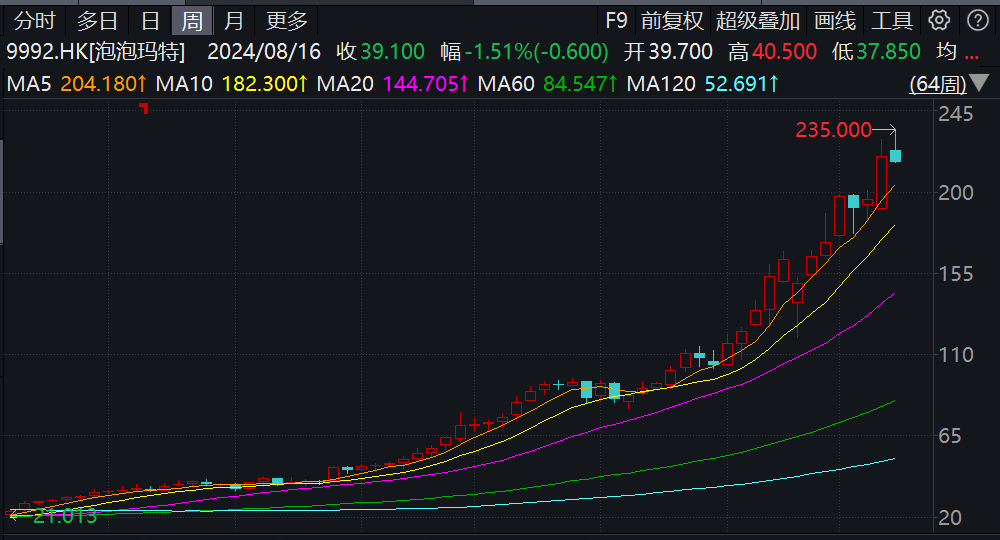
Core Viewpoint - The article discusses the surge of new consumer companies going public in the Hong Kong stock market, highlighting the strong performance of these companies and the factors driving this trend [1][4]. Group 1: Market Trends - Since the beginning of 2025, there has been a wave of new consumer companies listing in Hong Kong, with notable examples including Mixue Group and Pop Mart, which have performed well in the market [1][3]. - The consumer sector has seen a significant increase in interest, with the China Securities Hong Kong Stock Connect Consumer Theme Index rising over 20% year-to-date [1][4]. - As of May 28, 2025, there are 159 companies queued for IPOs in Hong Kong, with 25 of them being consumer-related, accounting for approximately 16% of the total [4]. Group 2: Financial Performance - New consumer companies have shown remarkable stock performance, with Pop Mart's market value exceeding 310 billion HKD and Mixue Group surpassing 200 billion HKD [1][5]. - The price-to-earnings (P/E) ratios for new consumer stocks are significantly higher than the average P/E of 20 for the broader consumer index, with Pop Mart at 86 times and Mixue Group at 43 times [5][6]. Group 3: Competitive Landscape - Despite the enthusiasm for new consumer stocks, there are concerns about increasing competition and the potential for homogenization in business models [3][8]. - Companies like 52TOYS are being compared to Pop Mart, but their financial performance shows a gap, with 52TOYS reporting continuous losses despite revenue growth [9]. - The food and beverage sector faces challenges related to brand premium and standardization, with companies needing to innovate to stand out in a crowded market [10]. Group 4: Investment Environment - The influx of southbound capital has provided liquidity to the Hong Kong market, with net inflows reaching 636.91 billion HKD since the start of 2025 [4]. - Policy support and improved liquidity have been key drivers for the surge in new consumer IPOs, with measures like streamlined approval processes attracting more companies to list [4][6]. - The article emphasizes the need for new consumer companies to focus on product innovation and brand differentiation to succeed in a competitive landscape [10].