贸易战

Search documents
全美商业经济协会调查显示,美国就业增长将依旧疲弱
Huan Qiu Wang· 2025-10-14 01:09
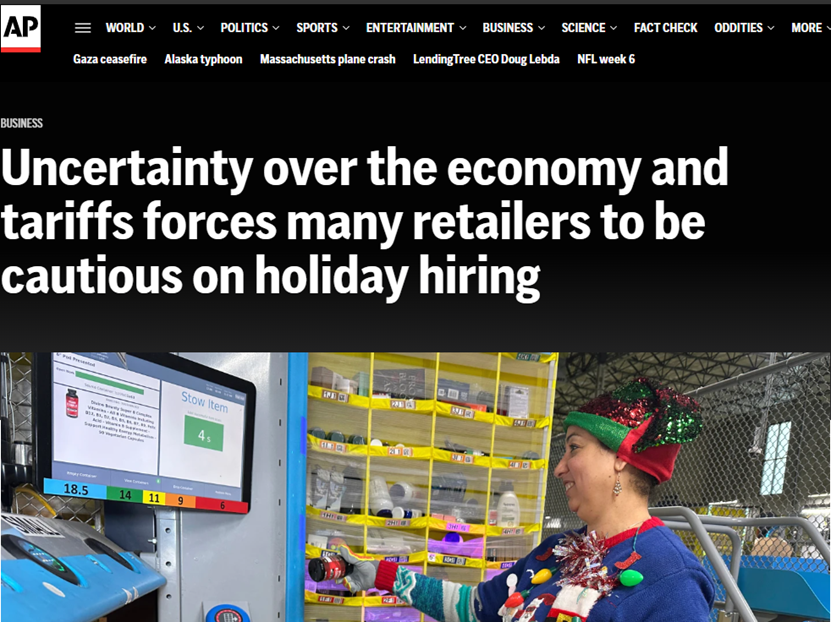
Group 1 - Economists have raised their growth forecasts for the US economy for the next two years, with a projected GDP growth of 1.8% for this year, up from the previous estimate of 1.3% [1] - Retailers are cutting or delaying hiring seasonal workers due to uncertainties related to the economy and tariffs, impacting their ability to prepare for the holiday shopping season [1][4] - The hiring plans of retailers indicate the first signs of the holiday shopping season, but the US job market is losing momentum, partly due to uncertainties from the trade war [4] Group 2 - A specific retailer plans to hire 220 temporary workers for the holiday season, which is a decrease from the 300 hired last year, and they have started recruitment nearly two months earlier than usual [1] - Analysts will closely monitor consumer reactions to price increases from retailers due to high tariff costs in the coming months [4]

贵金属行情延续:申万期货早间评论-20251014
申银万国期货研究· 2025-10-14 00:34
Group 1: Precious Metals - The price of spot gold has surged to a historical high of $4,130 per ounce, with a daily increase of 0.5%, while New York futures reached $4,150 per ounce, setting a new record [1] - Silver prices have also crossed $52.50 per ounce, marking a historical peak, with an increase of over 0.4% in the Asia-Pacific market [1] - Concerns over renewed trade tensions have benefited gold, which is increasingly viewed as a safe-haven asset amid deteriorating U.S. fiscal conditions and rising global distrust in the financial system [2][19] Group 2: Copper - Copper prices rose by 1.64% in the overnight market, driven by ongoing tightness in concentrate supply and high smelting output despite profit margins being at breakeven [20] - Investment in the power grid continues to show positive growth, while real estate remains weak, indicating mixed demand dynamics for copper [20] Group 3: Oil - The SC night market saw a rebound of 0.27% in oil prices, influenced by geopolitical developments, including a ceasefire agreement in Gaza [3][13] - OPEC's October report predicts a global oil demand increase of 1.3 million barrels per day this year and 1.38 million barrels per day next year, although short-term price trends may indicate a downward breakout [3] Group 4: Economic Indicators - U.S. trade tensions and the potential cancellation of new tariffs on China by President Trump have implications for market sentiment and trade dynamics [6] - China's import and export figures for September showed a year-on-year growth of 8%, with exports at 2.34 trillion yuan and imports at 1.7 trillion yuan, indicating a robust trade performance [7] Group 5: Market Trends - The stock market is expected to enter a phase of directional choice, with a likely continuation of a bullish trend, supported by a loose liquidity environment and potential inflows from foreign capital [11] - The bond market is experiencing a general rise, with the 10-year treasury yield dropping to 1.754%, reflecting a favorable environment for government bonds amid ongoing trade tensions [12]

道指涨近600点!特朗普立场软化美股高开高走,中国金龙指数大涨超3%
Di Yi Cai Jing· 2025-10-13 23:53
Group 1: Market Overview - The U.S. stock market rebounded significantly, with the Dow Jones Industrial Average rising by 587.98 points (1.29%) to close at 46067.58 points, driven by easing trade war concerns and positive comments from President Trump [2][3] - The Philadelphia Semiconductor Index surged nearly 5%, with Broadcom's stock increasing by 9.9% following its partnership with OpenAI to produce AI chips [2][3] - Major tech stocks also saw gains, including Tesla (up 5.4%), Google (up 3.0%), and Amazon (up 1.7%) [2] Group 2: Earnings Expectations - Analysts expect S&P 500 companies to report an 8.8% year-over-year increase in earnings for the third quarter [4] - The upcoming earnings season, featuring major banks like JPMorgan Chase and Goldman Sachs, is anticipated to provide insights into the economic situation amid ongoing government shutdowns [3][4] Group 3: Commodity Prices - International gold prices reached a historic high, with COMEX gold futures for October delivery rising by 3.34% to $4108.60 per ounce [6] - Crude oil prices also saw slight increases, with WTI crude up 1.00% to $59.49 per barrel and Brent crude up 0.94% to $63.32 per barrel [6]

我国进出口连续8个季度同比增长
Zheng Quan Shi Bao· 2025-10-13 23:24
Core Insights - China's total goods trade import and export value reached 33.61 trillion yuan in the first three quarters of this year, a year-on-year increase of 4% [1] - Exports amounted to 19.95 trillion yuan, growing by 7.1%, while imports were 13.66 trillion yuan, showing a slight decline of 0.2% [1] - The resilience and structural optimization of China's foreign trade have been highlighted, with significant contributions from local governments and foreign trade enterprises [1] Group 1: Trade Performance - In September, the monthly import and export value exceeded 4 trillion yuan, reaching 4.04 trillion yuan, the highest this year, with a year-on-year growth of 8% [1] - The growth rate of imports and exports accelerated each quarter, with increases of 1.3%, 4.5%, and 6% in the first, second, and third quarters respectively [1] - China has achieved year-on-year growth in imports and exports for eight consecutive quarters [1] Group 2: Export Structure - In September, the proportion of electromechanical products in total exports exceeded 63%, setting a new record [1] - In the first three quarters, the share of electromechanical products in total exports was 60.5%, an increase of 1.4 percentage points year-on-year [1] - High-tech product exports, including electronic information, high-end equipment, and instruments, grew by 8.1%, 22.4%, and 15.2% respectively [1] Group 3: Trade Partners and Markets - The trade growth was primarily driven by non-U.S. markets, compensating for the trade contraction with the U.S. [2] - Exports to about 80% of trade partners increased, with trade with Belt and Road Initiative countries reaching 17.37 trillion yuan, a growth of 6.2% [2] - Trade with ASEAN, Latin America, Africa, and Central Asia grew by 9.6%, 3.9%, 19.5%, and 16.7% respectively [2] Group 4: Future Outlook - The economic foundation of China remains stable, with strong potential and resilience, supporting the long-term positive trend in foreign trade [3] - However, uncertainties and challenges are increasing, necessitating efforts to stabilize foreign trade in the fourth quarter [3] - Future policies may focus on supporting enterprises in exporting and enhancing financial support for export companies [3]
加拿大一省长致信总理卡尼,呼吁取消对华电动汽车关税:“关税多存在一天,损害就加深一分”
Huan Qiu Shi Bao· 2025-10-13 22:49
Group 1 - The Premier of Manitoba, Ginew, has requested the federal government to eliminate the 100% tariff on electric vehicles imposed on China, citing disproportionate impacts on Western Canada due to a "dual-line trade war" [1] - The electric vehicle tariff was implemented in alignment with the U.S. last year to protect the Canadian automotive industry, but retaliatory measures from China have severely affected Canadian canola prices and the pork production sector [1] - A pork producer in Manitoba reported an annual negative impact of CAD 19 million (approximately 97 million RMB) due to these tariffs [1] Group 2 - Saskatchewan, the largest canola-producing province, saw its exports to China drop to CAD 9.6 million in August, a 76% decrease compared to the same period last year, with China previously being the second-largest export destination for its agricultural products [1] - The Premier of Saskatchewan, Moe, emphasized the need for Canada to improve relations with China and reduce reliance on the U.S. market, advocating for continued dialogue between Canada and China [1][2] - A recent poll indicated that only 44% of Canadians support the electric vehicle tariff, down from 63% the previous year, while opposition has risen from 27% to 47% [2] Group 3 - The Canadian Minister of Finance's office is currently evaluating the decision to impose tariffs on electric vehicles, although no timeline for this assessment has been disclosed [3] - Prime Minister Gainey mentioned that Canada is seeking to deepen relations with China in areas such as agriculture and climate [3]
基础稳、优势多、韧性强、潜能大 我国进出口连续8个季度同比增长
Zheng Quan Shi Bao· 2025-10-13 18:07
Core Insights - China's total goods trade value reached 33.61 trillion yuan in the first three quarters of this year, reflecting a year-on-year growth of 4% [1] - Exports amounted to 19.95 trillion yuan, increasing by 7.1%, while imports were 13.66 trillion yuan, showing a slight decline of 0.2% [1] - The resilience and structural optimization of China's foreign trade have been highlighted, with significant contributions from local governments and foreign trade enterprises [1] Trade Performance - In September, the monthly trade value exceeded 4 trillion yuan, reaching a record high of 4.04 trillion yuan, with an annual growth of 8% [1] - The growth rate of imports and exports accelerated each quarter, with increases of 1.3%, 4.5%, and 6% respectively in the first, second, and third quarters [1] - China has achieved continuous year-on-year growth in imports and exports for eight consecutive quarters [1] Export Composition - In September, the proportion of electromechanical products in total exports surpassed 63%, marking a new high [1] - For the first three quarters, electromechanical products accounted for 60.5% of total exports, an increase of 1.4 percentage points year-on-year [1] - High-tech product exports, including electronic information, high-end equipment, and instruments, grew by 8.1%, 22.4%, and 15.2% respectively [1] Market Dynamics - The trade war initiated by the U.S. has been a significant drag on foreign trade, particularly in the first half of the year [2] - Growth in foreign trade has been bolstered by expanding non-U.S. markets, with exports to about 80% of trade partners increasing [2] - Trade with Belt and Road Initiative countries reached 17.37 trillion yuan, growing by 6.2% and accounting for 51.7% of total trade [2] Future Outlook - The foundation for long-term positive trends in foreign trade remains strong, supported by a large market and a complete industrial system [3] - However, uncertainties and challenges are increasing, necessitating continued efforts to stabilize foreign trade in the fourth quarter [3] - Potential future policies may focus on supporting enterprises in exporting and enhancing financial support for export companies [3]
中国寸步不退,美国拿出两个方案,结果不给力,中方未接美方电话
Sou Hu Cai Jing· 2025-10-13 17:35
Core Viewpoint - The U.S. Department of Defense is considering allocating $1 billion to procure and stockpile rare earth elements, indicating a sense of urgency due to China's recent export control policies on rare earths [1][5]. Group 1: U.S. Actions and Responses - The U.S. has announced a 130% tariff on Chinese goods starting November 1, which is a significant escalation in the trade conflict [1]. - The U.S. Trade Representative revealed that attempts to negotiate with China regarding rare earth controls were unsuccessful, leading to dissatisfaction within the U.S. [5]. - The Pentagon's plan to stockpile rare earths reflects concerns over potential supply chain disruptions that could impact military and high-tech sectors [5][6]. Group 2: China's Position and Strategy - China's Ministry of Commerce stated that it does not wish to engage in a trade war but will not back down under pressure, emphasizing its right to control strategic resources [3][9]. - The Chinese government maintains a firm stance on its resource policies, indicating that it will not use these resources as bargaining chips in negotiations [10][11]. - China's response to U.S. tariffs and controls suggests a commitment to defending its strategic interests, which may lead to a prolonged conflict [9][11]. Group 3: Implications for Global Trade and Security - The trade conflict over rare earths signifies a direct clash over strategic resources and national security, moving beyond mere tariff comparisons [10]. - The breakdown of trust between the U.S. and China is evident, as both sides have revealed their positions with little room for negotiation [11]. - The situation highlights the potential for further escalation, as the U.S. may face challenges in managing its supply chains for critical materials [10][11].
中国三记重锤,特朗普48小时变脸
Sou Hu Cai Jing· 2025-10-13 15:20
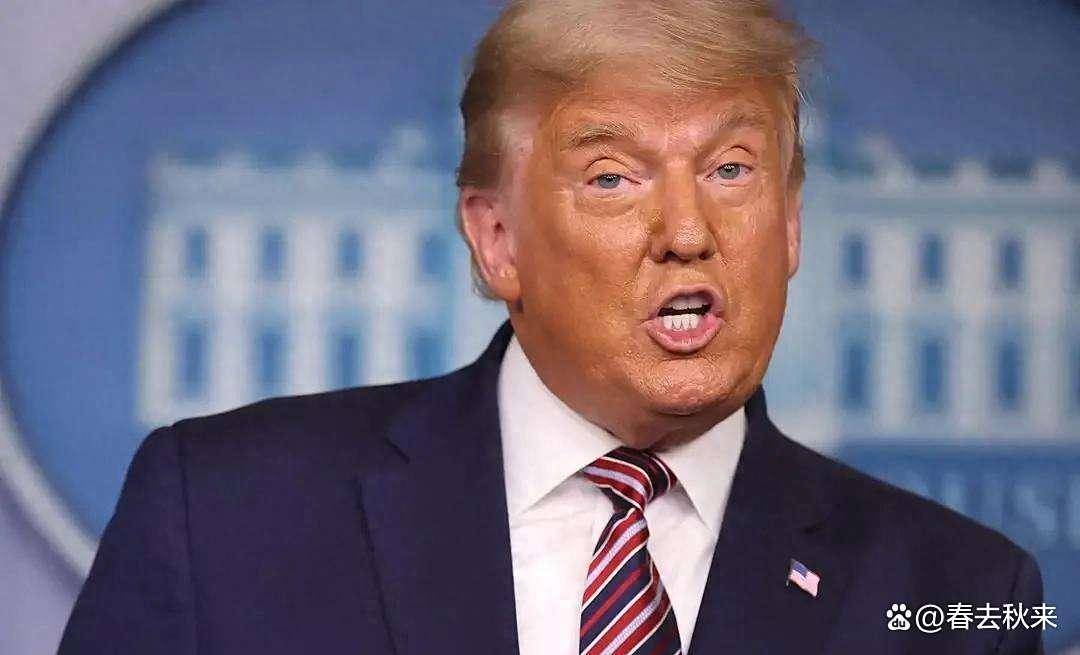
Core Viewpoint - The article discusses the escalating trade tensions between the U.S. and China, highlighting President Trump's fluctuating stance and China's strategic export controls on critical materials as a countermeasure to U.S. tariffs [1][3]. Group 1: U.S. Response and Market Reaction - President Trump initially threatened to impose a 100% tariff on all Chinese imports starting November 1, leading to significant market sell-offs, termed "Black Friday" [1]. - Following China's announcement of export controls, Trump's tone shifted to a more conciliatory one, stating "Don't worry about China, everything will be fine" [1]. - The U.S. stock market reacted positively to Trump's softened rhetoric, with Dow futures rising by 0.8%, S&P 500 futures by 1.04%, and Nasdaq futures by 1.34% [15]. Group 2: China's Strategic Measures - On October 9, China announced export controls on key materials including superhard materials, rare earth equipment, and lithium batteries, effective November 8 [3][5]. - The measures target critical components of the U.S. industrial supply chain, marking a shift from traditional tariff responses to more strategic controls [3][5]. - China holds over 85% of the global rare earth processing capacity, emphasizing its strategic advantage in high-tech sectors [5]. Group 3: Trade Conflict Background - The trade conflict has evolved since April, with multiple rounds of tariff increases from both sides, including a peak of 125% tariffs on Chinese goods by the U.S. [8][12]. - The Geneva talks in May led to a temporary reduction in tariffs, but subsequent U.S. actions reignited tensions, including adding Chinese entities to export control lists [13][14]. Group 4: China's Position and Future Outlook - China's response is characterized as a precise legal strategy rather than mere retaliation, with a focus on maintaining national security and international obligations [19][23]. - The Chinese government has indicated that export controls will not completely halt exports but will require licenses for compliance [22]. - As the November deadlines approach, the ongoing trade dynamics are expected to continue influencing global markets [26][27].

加拿大两省长叫板联邦政府,对华100%电动汽车关税战伤及自身
Sou Hu Cai Jing· 2025-10-13 15:08
Core Points - The letter from Manitoba's Premier calls for the cancellation of the 100% tariff on Chinese electric vehicles, highlighting the severe impact of the trade war on Canada's western agricultural provinces [1][4] - The joint appeal from the premiers of Manitoba and Saskatchewan reflects Canada's struggle to find its position amid the U.S.-China rivalry [1][5] Trade Impact - Saskatchewan's canola seed exports to China fell by 76% in August, indicating significant damage to the agricultural economy [4] - The retaliatory measures from China have led to a sharp decline in canola prices and have also adversely affected the pork production industry [4] Policy Dilemma - The Canadian federal government's tariff policy on China is part of a complex geopolitical strategy, continuing the high tariffs established during the Trudeau administration [5] - The current government under Prime Minister Carney has maintained these tariffs while attempting to negotiate relief on steel and aluminum tariffs with the U.S. [5] Public Sentiment - Public support for the electric vehicle tariff has dropped significantly, with only 44% of Canadians in favor, down from 63% the previous year [7] - The agricultural provinces, which are suffering from the trade war, have a contrasting view compared to the steel, aluminum, and automotive sectors that generally support the tariffs [7] Diplomatic Solutions - China's Ambassador to Canada indicated that the tariffs on Canadian agricultural products are retaliatory measures against Canada's tariffs on Chinese electric vehicles and steel [8] - A clear path for resolution was suggested, stating that if Canada removes the tariffs on Chinese electric vehicles, China would reciprocate by lifting tariffs on Canadian products [8] Strategic Autonomy - Canada is seeking to strengthen trade relations with China and India while navigating its complex relationship with the U.S. [9] - The Canadian Foreign Minister emphasized the importance of maintaining stable relations with major economies, prioritizing Canadian interests in foreign policy [9] - The recent actions of the premiers signal a need for Canada to protect its economic interests amid geopolitical tensions [9]

Expect one more move higher in the S&P into year-end, says Strategas' Chris Verrone
Youtube· 2025-10-13 13:14
Market Overview - The market has shown signs of fatigue over the past three to four weeks, with only about 50% of stocks above their 50-day average, indicating a lack of momentum [3] - Despite recent volatility, the market is expected to maintain support levels around 6,400 to 6,450, with a potential move towards 7,000 by year-end [4] Economic Indicators - Cyclical stocks are outperforming defensive stocks, and credit conditions remain benign, suggesting a generally healthy economic environment [3][8] - The recent market sell-off was triggered by concerns over potential trade tensions with China, particularly the announcement of 100% tariffs effective November 1st [6] Sector Performance - Healthcare has begun to show positive trends, raising questions about whether this will extend to other defensive sectors like staples and REITs [5] - Consumer stocks are expected to respond positively to lower oil prices and interest rates, but there is uncertainty about their performance heading into 2026 [11] Regulatory Environment - A significant deregulatory push across various industries, including banking and energy, is noted, which may impact market dynamics [12] - The performance of financial stocks, particularly money center banks, is crucial for the overall market outlook, as they have been leading for the past two years [13]