
东数西算

Search documents
【践行新发展理念 推动高质量发展】创新驱动 各地因地制宜发展新质生产力
Yang Shi Wang· 2025-10-19 12:50
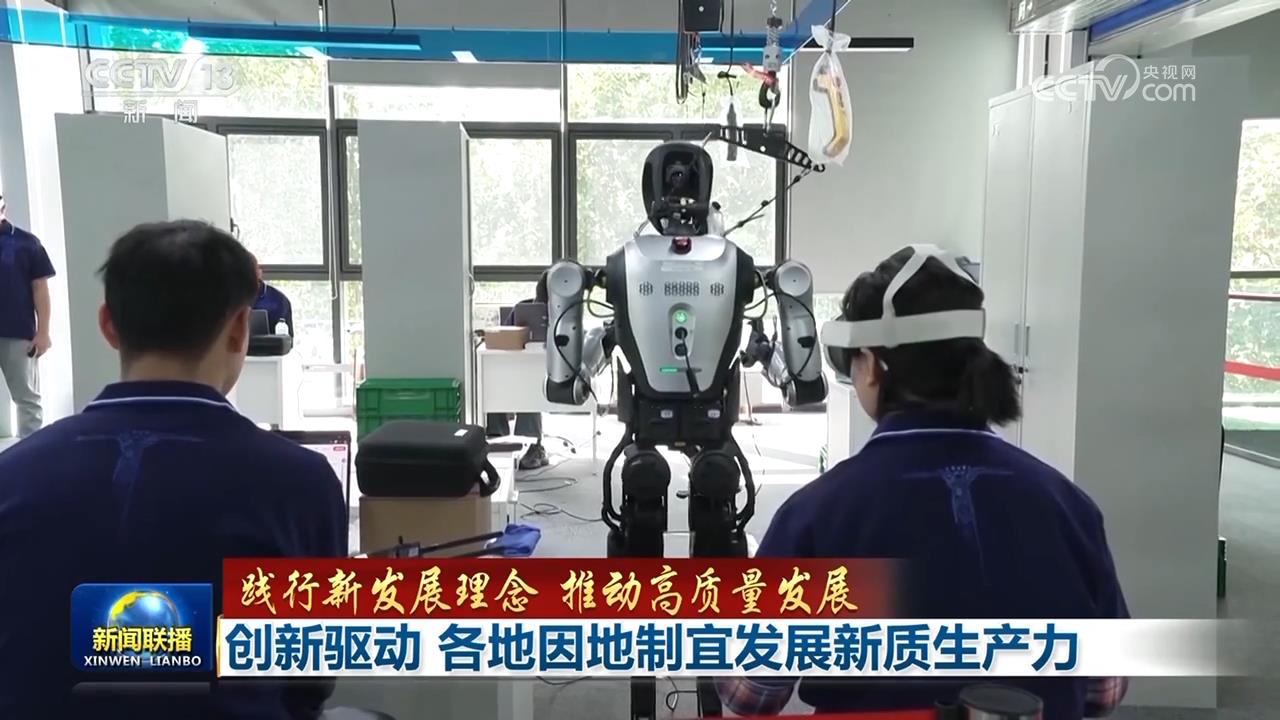
Group 1 - The article emphasizes the importance of innovation as the primary driving force for development, with various regions implementing new development concepts to foster high-quality economic growth [1] - The largest humanoid robot data training center in Beijing has been launched, featuring over 10,000 square meters dedicated to 16 specific scenarios in industrial manufacturing and healthcare services, integrating resources from government, universities, and finance to support the robot industry [3] - Jiangsu province's robot industry chain is expected to reach a scale of 200 billion yuan by the end of this year, with multiple cities like Nanjing and Wuxi rolling out innovation development plans for the robot industry [4] Group 2 - Shaanxi province is strategically investing in photon and hydrogen industries, with a photon sensing industrial park expected to host around 20 companies and generate an annual output value exceeding 2 billion yuan upon completion [7] - Anhui province leads the nation in quantum information, with quantum computing technology being applied across various sectors, including biochemistry and fintech, enabling users to access supercomputing capabilities on demand [9] - Guizhou province is leveraging its abundant renewable energy resources to enhance its data and AI capabilities, having released 51 public data operation products across nine sectors, including finance and tourism [11] Group 3 - Ningxia has seen an average annual growth of over 10% in its digital economy since the start of the 14th Five-Year Plan, establishing nine data center industrial parks to provide cloud computing services to over 4,000 enterprises [13]

2025年中国数据中心行业分类、相关政策、市场规模及竞争格局分析
Sou Hu Cai Jing· 2025-10-19 07:24
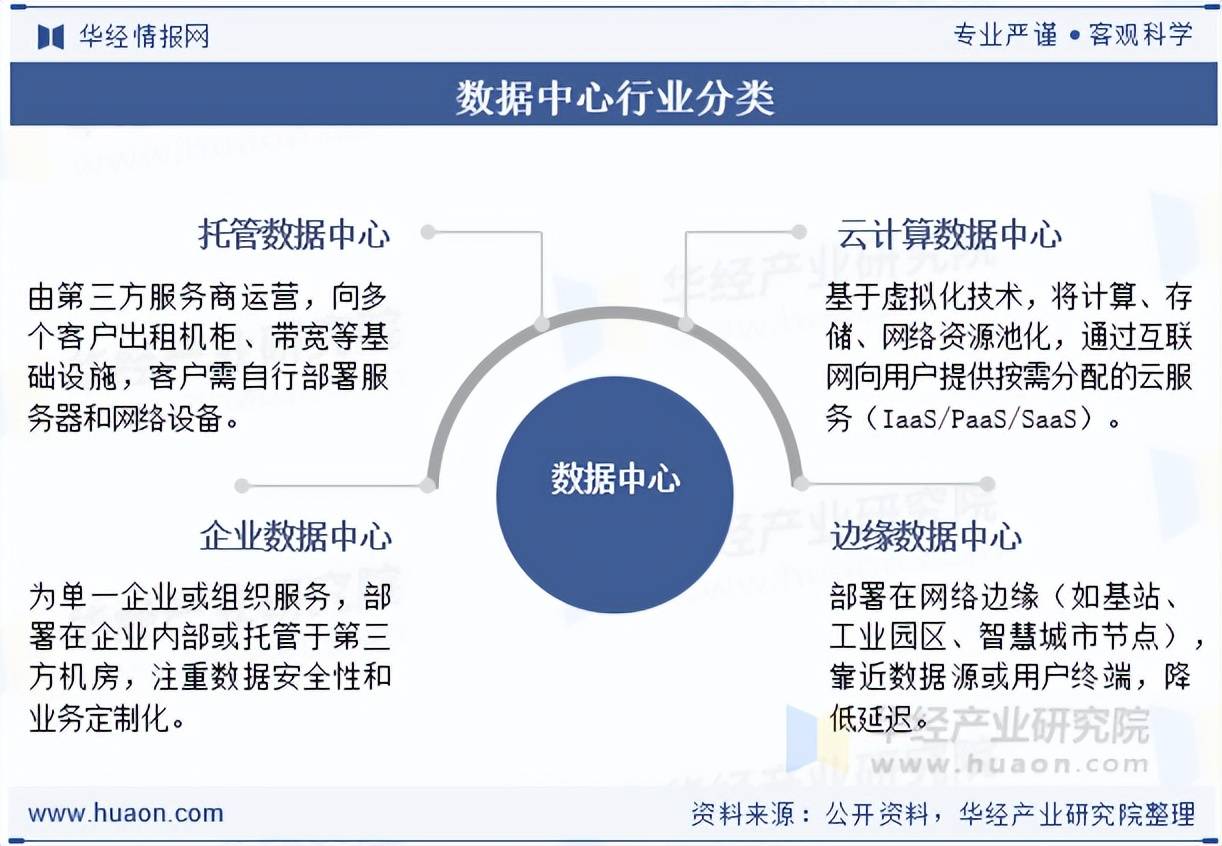
Core Insights - The data center industry is experiencing robust growth driven by emerging technologies such as 5G, cloud computing, and artificial intelligence, with the market size reaching 507.83 billion yuan in 2023 [6]. Policy Support - The development of the data center industry is supported by various policies at both national and local levels, focusing on layout optimization, green development, technology upgrades, and financing channels [4]. - Key policies include the "2030 Carbon Peak Action Plan" aimed at promoting energy-saving and carbon reduction in data centers [5], and the "New Type Data Center Development Three-Year Action Plan (2021-2023)" which outlines six key tasks for quality upgrades [5]. Market Structure - The competitive landscape of the data center industry is diverse, with major players including Alibaba Cloud, Tencent Cloud, and Huawei Cloud in the first tier, and third-party service providers like GDS Services, Century Internet, and DataPort in the second tier [8]. - The industry is characterized by a multi-tier structure, with significant contributions from both cloud service providers and telecommunications operators [8]. Industry Growth - The data center market is projected to continue its growth trajectory, supported by the increasing demand for digital services and the ongoing digital transformation across various sectors [6]. - The industry is moving towards a more integrated, large-scale, green, and intelligent development model [4]. Company Strategies - Major companies are expanding their data center footprints across key regions, with Century Internet and GDS Services actively developing data centers in first-tier cities and strategic locations [10]. - Companies like Alibaba Cloud and Tencent Cloud are establishing large-scale data centers in multiple regions, enhancing their service capabilities [10].




744万亿次、80亿人、100亿元 “数”说澎湃算力为经济发展积蓄强劲新动力
Yang Shi Wang· 2025-10-19 02:22
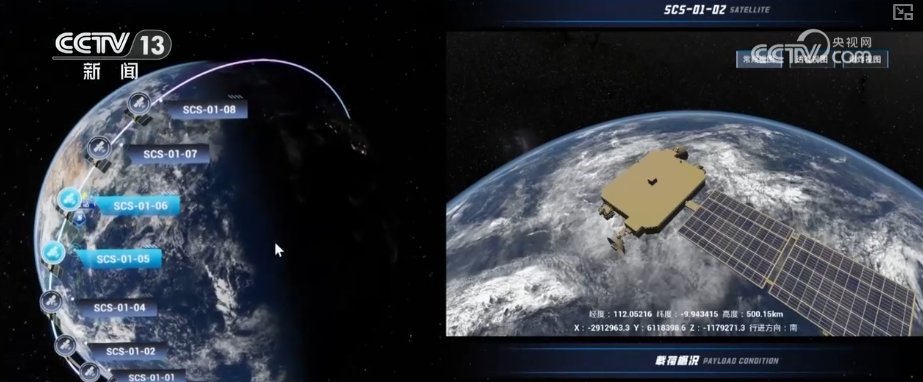
Core Insights - Since the "14th Five-Year Plan," China has initiated a new round of digital infrastructure development, establishing a national integrated computing network that connects various regions, positioning itself as the second-largest computing power globally, which supports the growth of the digital economy and creates new opportunities for growth [1][8][16] Group 1: Digital Infrastructure Development - The total computing power in China has seen an annual growth rate of 30% since the "14th Five-Year Plan," with over 70% of the new computing power coming from the western regions [8] - The "East Data West Computing" project has established eight national computing hub nodes and ten data center clusters, with over 60% of cities able to access a computing cluster within 5 milliseconds [9][11] - The construction of the largest and most extensive network infrastructure globally has made China one of the countries with the richest data application scenarios [16] Group 2: Economic Impact and Growth - In Gansu's Qingyang, the digital economy has transformed, with new enterprises generating nearly 10 billion yuan in revenue, showcasing the rapid growth of the digital economy in previously underdeveloped areas [13] - The emergence of over 30 "computing new cities" across China during the "14th Five-Year Plan" period has become a critical support for the artificial intelligence era, facilitating various applications from animation rendering to intelligent driving model training [18] - The digital revolution is redefining agriculture and manufacturing, with automated systems and real-time data collection enhancing productivity and efficiency [23][26]

全国算力“一张网”正由蓝图变现实
Zheng Quan Ri Bao· 2025-10-17 15:26
Core Insights - The construction of a national integrated computing network is essential for the rapid growth of the digital economy, likened to a "smart city" where computing power is the vital resource [1][2][8] - Recent government initiatives, including the "Millisecond Computing" action plan, aim to enhance the speed and accessibility of computing resources across the country [1][3] - The "East Data West Computing" project is a strategic effort to optimize resource allocation and strengthen technological collaboration, facilitating high-quality development [2][6] Group 1: Policy and Strategic Initiatives - The Ministry of Industry and Information Technology has launched a "Millisecond Computing" initiative to create a high-capacity, low-latency urban network for computing resources [1] - The "East Data West Computing" project has expanded its scope to include all provinces, aiming for efficient nationwide computing resource allocation [2] - The implementation of the "Computing Interconnection Action Plan" aims to establish a comprehensive standard and resource-sharing platform by 2026 [3] Group 2: Infrastructure Development - China Mobile has developed a national computing network with a focus on infrastructure, application empowerment, and technological innovation [6] - The company has established a data center layout covering all core hubs of the "East Data West Computing" initiative, including major intelligent computing centers [6] - The national computing internet service platform has achieved connectivity across 31 provinces, enhancing the efficiency of computing resource management [4] Group 3: Industry Collaboration and Challenges - The industry is moving towards a collaborative ecosystem, with telecommunications operators playing a crucial role in resource allocation and technological innovation [7][8] - Despite progress, challenges remain in integrating disparate computing resources and improving operational efficiency across various platforms [9][10] - Experts emphasize the need for a robust framework to address energy consumption, data security, and privacy concerns during the construction of the integrated computing network [10]

数据中心概念:资金靠前的12家公司(名单)
Sou Hu Cai Jing· 2025-10-17 14:02
Industry Overview - The Chinese data center industry is undergoing a transformation from single storage facilities to complex digital infrastructure by 2025, driven by global digital transformation and the "dual carbon" strategy [1] - Three core trends are emerging: explosive demand for computing power, accelerated green transformation, and deepened regional collaboration [1][2][3] Trend 1: Explosive Demand for Computing Power - The market size for intelligent computing driven by generative AI is expected to exceed 1 trillion yuan from 2025 to 2030 [1] Trend 2: Accelerated Green Transformation - The PUE (Power Usage Effectiveness) control is becoming stricter, with the penetration rate of liquid cooling technology expected to rise from 14% in 2024 to 33% in 2025 [2] Trend 3: Deepened Regional Collaboration - The "East Data West Computing" project is promoting the construction of eight major hub nodes, with western data centers accommodating non-real-time computing needs [3] Company Highlights - **ZTE Corporation**: A leader in global communication equipment and computing infrastructure, deeply involved in the "East Data West Computing" project [6] - **Changshan Beiming**: A leader in industrial internet and data centers, leveraging resources from Baowu Group [9] - **Zhongji Xuchuang**: A top global supplier of optical modules with over 45% market share in 800G products [12] - **Cambricon Technologies**: Focused on AI chips and computing services, with significant partnerships for computing power [15] - **Inspur**: A leader in end-to-end liquid cooling solutions, having deployed over 70,000 liquid cooling systems [17] - **Tuo Wei Information**: An AI computing and industry solution provider, participating in national digital infrastructure projects [20] - **Baiwei Storage**: A leading semiconductor storage manufacturer, covering both consumer electronics and data center sectors [23] - **Baosteel**: Transitioning from traditional steel to digital economy, planning large-scale data center clusters [26] - **Hongfa Technology**: An expert in power equipment and energy management for data centers, focusing on green low-carbon technology [29] - **Wanma Technology**: A comprehensive service provider for communication cables and data center infrastructure [32] - **Sida Semiconductor**: A core supplier of power semiconductors and data center power systems [35] - **Capital Online**: An innovator in cloud services and edge computing, establishing a nationwide integrated computing network [38]

筑牢基础 赋能发展 依米康引入国资战略投资者
Zhong Guo Zheng Quan Bao· 2025-10-17 13:28
Core Viewpoint - The transaction between Yimikang and Sichuan Capital Market Relief Development Fund highlights the strategic alignment of state-owned capital with national industrial development, particularly in the computing power sector, while also optimizing Yimikang's equity structure for future growth [1][4]. Group 1: Transaction Details - Yimikang's controlling shareholder, Sun Yizheng, transferred 22,024,400 shares to Sichuan Relief Development Fund, representing 5% of the total share capital, for a total transaction price of 267 million yuan, with a per-share transfer price of 12.128 yuan [1]. - The Sichuan Relief Development Fund is a professional capital operation platform under Sichuan Development (Holding) Co., Ltd., focusing on supporting listed companies' transformation and upgrading through capital [2]. Group 2: Company Performance and Strategy - Since establishing a focus on the information data sector in 2022, Yimikang has seen rapid growth, achieving a revenue of 737 million yuan in the first half of 2025, a year-on-year increase of 54.82%, and a net profit of 14.92 million yuan, up 124.13% [3]. - Yimikang has expanded its engineering business into intelligent computing center construction and accelerated its international market presence, with overseas revenue reaching 62.32 million yuan, a 60.31% increase year-on-year [3]. - The company is actively pursuing major clients like Alibaba and ByteDance, and has initiated a refinancing plan to enhance its computing power temperature control capabilities [3]. Group 3: Industry Context - The rise of artificial intelligence is driving diverse computing power demands, and policies like "East Data West Computing" are expanding the digital infrastructure market [4]. - The entry of state-owned capital through the Sichuan Relief Development Fund is expected to provide strong support for Yimikang, facilitating its market expansion [4].

工信部开展城域“毫秒用算”专项行动 破解算力时延瓶颈
Zheng Quan Ri Bao Wang· 2025-10-17 09:09
Core Viewpoint - The Ministry of Industry and Information Technology has launched a special initiative to develop a millisecond-level computing power network, aiming to enhance the responsiveness of computing resources within urban areas by 2027 [1][4]. Group 1: Millisecond Computing Power Network Development - The initiative focuses on creating a high-speed, low-latency network that allows for millisecond-level access to computing resources, addressing the gap between traditional network delays and real-time computing needs [1][4]. - By 2027, the goal is to establish a comprehensive urban millisecond computing power network capable of providing connectivity with less than 1 millisecond latency for computing centers and less than 10 milliseconds for application terminals [1][4]. Group 2: Actions to Achieve Goals - The initiative outlines three main actions: enhancing interconnectivity between computing centers, improving access to computing resources, and optimizing application responsiveness [1][4]. - Specific targets include achieving a unidirectional latency of less than 1 millisecond between medium and large computing centers by 2027, with at least 50% deployment of 400Gbps capacity [2][3]. Group 3: Technological Innovations and Infrastructure - The initiative emphasizes the need for advanced technologies such as task scheduling and intelligent network operation to facilitate dynamic coordination between computing and network resources [3][4]. - It also aims to enhance the performance of computing centers through the deployment of all-optical networks and innovative network protocols, improving communication efficiency for applications like artificial intelligence [4][5]. Group 4: Industry Impact and Applications - The millisecond-level computing power network is expected to drive commercial breakthroughs in high-value scenarios, such as autonomous driving and telemedicine, by significantly reducing response times [5]. - The initiative supports the "East Data West Computing" strategy by minimizing data transmission delays, thereby improving resource utilization efficiency across regions [4][5].
10月17日沪深两市涨停分析
Xin Lang Cai Jing· 2025-10-17 07:33
Group 1 - China COSCO Shipping Group's subsidiary is a leading integrated port and shipping enterprise in Hainan [2] - The company has a new duty-free pickup point, which is part of the duty-free business supply chain [2] Group 2 - Spot gold has risen to $4,330 per ounce, reaching a historical high [3] - Baoding Technology's wholly-owned subsidiary Hexi Gold Mine is engaged in gold mining and sales, with a metal reserve of 4.536 tons [3] - The company has a production capacity of 500 tons of silver annually [3] Group 3 - Tesla will hold a shareholder meeting to showcase new developments in robotics [5] - Pioneering Electronics, through its subsidiary, holds an indirect stake in Benmo Technology, which is rapidly developing in the robotics sector [5] - The company anticipates significant revenue growth in 2024 compared to 2023 [5] Group 4 - Guangdong Mingzhu expects a net profit increase of 858.45%-1071.44% in the first three quarters due to improved operational performance [6] - The actual controller of Cangzhou Mingzhu is set to change to the Guangzhou State-owned Assets Supervision and Administration Commission [6] Group 5 - The company is the first listed firm to produce electronic-grade phosphoric acid [7] - The company is a core supplier for military and armed police procurement, specializing in nuclear pollution prevention technology [7]

烽火通信涨2.02%,成交额5.61亿元,主力资金净流入1050.02万元
Xin Lang Cai Jing· 2025-10-16 03:09
Core Viewpoint - The stock of Fenghuo Communication has shown significant fluctuations, with a year-to-date increase of 38.89% and a recent decline of 3.70% over the past five trading days, indicating volatility in investor sentiment and market conditions [1]. Company Overview - Fenghuo Communication, established on December 25, 1999, and listed on August 23, 2001, is based in Wuhan, Hubei Province. The company specializes in the research, production, and sales of network information security products and mobile information products [1]. - The main revenue composition includes: 78.51% from communication system equipment, 18.02% from optical fiber cables, 1.98% from data network products, and 1.49% from other sources [1]. Financial Performance - For the first half of 2025, Fenghuo Communication reported operating revenue of 11.117 billion yuan, a year-on-year decrease of 19.73%. However, the net profit attributable to shareholders increased by 32.02% to 287 million yuan [2]. - The company has cumulatively distributed 3.791 billion yuan in dividends since its A-share listing, with 494 million yuan distributed over the past three years [3]. Shareholder Information - As of June 30, 2025, the number of shareholders for Fenghuo Communication was 128,200, a decrease of 8.49% from the previous period. The average number of tradable shares per shareholder increased by 9.28% to 9,102 shares [2]. - Among the top ten circulating shareholders, Hong Kong Central Clearing Limited holds 15.7589 million shares, an increase of 242,300 shares from the previous period. Southern CSI 500 ETF ranks as the sixth largest shareholder with 10.5624 million shares, up by 1.3183 million shares [3]. Market Activity - On October 16, the stock price of Fenghuo Communication rose by 2.02% to 26.78 yuan per share, with a trading volume of 561 million yuan and a turnover rate of 1.79%. The total market capitalization reached 34.525 billion yuan [1]. - The net inflow of main funds was 10.5002 million yuan, with significant buying and selling activities recorded [1].

神州泰岳跌2.04%,成交额1.91亿元,主力资金净流出1355.67万元
Xin Lang Cai Jing· 2025-10-16 03:06
Core Viewpoint - Shenzhou Taiyue's stock has experienced a decline recently, with a notable drop of 10.00% over the last five trading days, despite an overall increase of 8.88% year-to-date [1][2]. Financial Performance - For the first half of 2025, Shenzhou Taiyue reported a revenue of 2.685 billion yuan, a year-on-year decrease of 12.05%, and a net profit attributable to shareholders of 509 million yuan, down 19.26% year-on-year [2]. - Cumulatively, the company has distributed 1.297 billion yuan in dividends since its A-share listing, with 372 million yuan distributed over the last three years [3]. Shareholder Information - As of October 10, 2025, the number of shareholders for Shenzhou Taiyue reached 89,300, an increase of 6.12% from the previous period, while the average circulating shares per person decreased by 5.77% to 20,690 shares [2]. - The largest circulating shareholder is Hong Kong Central Clearing Limited, holding 56.3593 million shares, a decrease of 5.95812 million shares from the previous period [3]. Stock Market Activity - On October 16, Shenzhou Taiyue's stock price was 12.51 yuan per share, with a trading volume of 191 million yuan and a turnover rate of 0.82%, resulting in a total market capitalization of 24.609 billion yuan [1]. - The net outflow of main funds was 13.5567 million yuan, with significant buying and selling activity from large orders [1]. Business Segments - Shenzhou Taiyue's main business segments include gaming (75.53% of revenue), AI/ICT operation management (19.89%), IoT/communication (2.04%), and innovative services (1.99%) [1]. - The company operates within the media and gaming industry, with concepts including mobile games, online games, overseas expansion, 5G, and data computing [1].
