全球化

Search documents
让钢铁“觉醒” 驰骋世界工地
Su Zhou Ri Bao· 2025-11-24 00:44
智能AGV小车穿梭往来,机械臂灵活挥舞,在三一重机昆山产业园,焊接机器人手臂交替起落, 溅起湛蓝色火花,一台台身披"三一红"的挖掘机正沿着数字化产线有序流动。这里,每17分钟就有一台 大型挖掘机下线,等待奔赴海内外矿山、林场与基建工地。 在推动钢铁"觉醒"之外,三一重机还结合市场需求,细化打造20多个不同品类的"挖掘机机器人战 队",其中最小的1.6吨,最大的达400吨;实现"一台起订",微小挖机定制化率高达75%。 在三一重机演示的产品视频中,井下1.6米深的狭窄矿道中,一台小巧的SY35U矿安机正挥舞机械 臂破碎岩石。"矿井作业如'地道战',传统人工开采效率低、风险高。这款1.6吨设备'个子'虽小,却配 置了防爆系统和伸缩油缸,能适应极端工况。"三一重机小型挖机研究院院长席川比喻道,"它就像矿工 身边的'机械战甲'。" 而另一端,重达400吨的"巨无霸"矿用挖掘机约有3层楼高,将于本月底提前完成500小时耐久试 验,已收到多个海外矿业公司意向订单。"下一步,我们将挑战2000小时极限测试。"张松说,这款设备 光挖斗就有22立方米,可以同时站立几十人,一小时便可挖出一个篮球场。 "十五五"规划建议提出,坚持 ...

股市长牛之美国经验:呵护成长性
Sou Hu Cai Jing· 2025-11-24 00:18
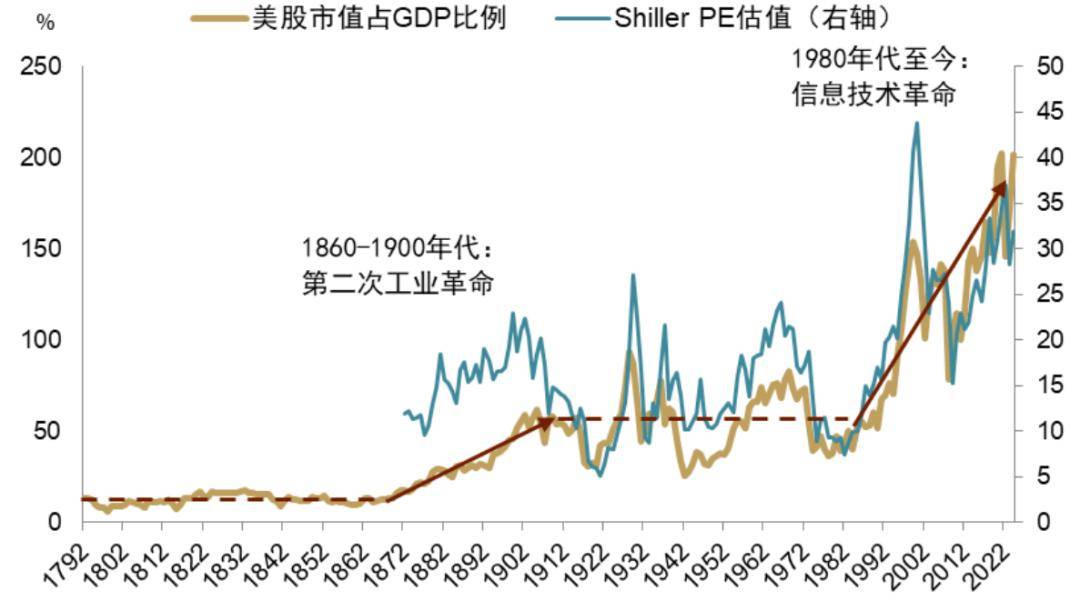
Group 1 - The core argument of the article is that the long-term bull market in the U.S. stock market since the 1980s is driven by structural economic transformation, technological advancements, and significant capital inflows, leading to a market capitalization to GDP ratio that has increased from 60% in the 1980s to over 200% today [1][3][6] - The U.S. stock market's growth rate has consistently outpaced economic growth, reflecting the market's ability to price in future growth potential [3][6] - The article highlights two historical periods of long bull markets in the U.S., specifically from 1860-1900 and from the 1980s to the present, both characterized by significant structural changes and technological progress [3][6] Group 2 - On the asset side, macroeconomic policies have focused on nurturing high-quality companies, with the Reagan administration's "creative destruction" policy facilitating the exit of outdated industries and promoting high-tech sectors [18][19] - Companies have increasingly prioritized operational efficiency and shareholder returns, with a notable shift towards high cash flow firms post-1980s, which began to outperform lower cash flow firms [23][28] - The introduction of SEC Rule 10b-18 in 1982 allowed companies to repurchase shares without the fear of being accused of stock price manipulation, leading to a significant increase in stock buybacks [28][29] Group 3 - Domestic long-term capital has steadily flowed into the U.S. stock market, driven by the introduction of retirement savings plans and the increasing participation of institutional investors [34][38] - The rise of long-term investors such as pension funds and mutual funds has contributed to market stability and improved price discovery [36][38] - The article notes that from 1980 to mid-2025, foreign investors have accumulated $2.36 trillion in U.S. stocks, significantly outpacing domestic investors' contributions [42][43] Group 4 - The Federal Reserve's "put option" policy has provided a safety net for the stock market, with the Fed intervening during market downturns to stabilize confidence and liquidity [48][49] - The article discusses how the Fed's focus on stock market performance has increased since the 1980s, with a notable rise in mentions of the stock market in FOMC minutes [48][49]

中金 | 股市长牛之美国经验:呵护成长性
中金点睛· 2025-11-23 23:39
Core Viewpoint - The article discusses the long-term bull market in the U.S. stock market since the 1980s, driven by economic structural transformation and the information technology revolution, leading to a significant increase in market capitalization relative to GDP, which has risen from 60% in the 1980s to over 200% currently [2][5]. Group 1: Macroeconomic Policy - The "腾笼换鸟" (tenglong huan niao) policy initiated by the Reagan administration aimed to enhance economic efficiency by phasing out outdated industries and promoting high-tech sectors, which helped reverse the long-term decline in U.S. economic efficiency [16][17]. - The policy included measures such as reducing subsidies, promoting international trade, and stimulating high-tech manufacturing, contributing to productivity growth [16][17]. Group 2: Microeconomic Enterprises - U.S. companies have shifted focus towards profitability quality and shareholder returns, with an increasing emphasis on cash flow and dividends since the 1980s [17][23]. - The introduction of SEC Rule 10b-18 in 1982 facilitated stock buybacks, allowing companies to manage their stock prices more effectively, which became a common practice post-1980s [23][24]. Group 3: Asset Side - Incremental Capital Flow - Long-term capital has steadily flowed into the U.S. stock market, supported by the rise of institutional investors and changes in retirement savings plans, significantly increasing household participation in equity markets [28][31]. - The share of long-term investors, such as pension funds and mutual funds, in the U.S. stock market rose to nearly 40% in the 1980s, enhancing market stability and price discovery [31][33]. Group 4: Globalization and Foreign Capital - The globalization process initiated in the 1980s led to significant inflows of foreign capital into the U.S. stock market, with overseas investors accumulating $2.36 trillion in U.S. equities from 1980 to mid-2025 [36][38]. - The "美元大循环" (dollar circulation) phenomenon facilitated the return of overseas dollars to the U.S., further supporting the bull market [36][38]. Group 5: Federal Reserve's Role - The Federal Reserve's "put option" policy has provided a safety net for the stock market, with interventions during major downturns since the late 1980s, reinforcing market confidence [40][41]. - The Fed's increasing focus on stock market performance has been evident, with more frequent mentions of the stock market in FOMC minutes since the 1980s [40][41].

虽未取得预期目标但转型是“大势所趋”,贝伦气候峰会“加时谈判”后闭幕
Huan Qiu Shi Bao· 2025-11-23 22:55
Core Insights - The COP30 climate conference in Belem, Brazil, concluded with a "voluntary political document" after extended negotiations, failing to achieve expected goals due to differing demands from participating countries [1][2] - The final document titled "Global Mobilization: Unity and Cooperation to Address Climate Change Challenges" aims to promote the implementation of the Paris Agreement, covering aspects such as mitigation, adaptation, funding, and international cooperation [1][3] Group 1: Conference Outcomes - The conference did not reach consensus on phasing out fossil fuels, which disappointed some environmental organizations in Brazil [1][2] - Developed countries agreed to triple climate financial aid to developing nations, committing to provide $120 billion annually starting in 2035 to address damages from global warming [2] Group 2: Negotiation Dynamics - Tensions during negotiations were high, with Colombia's representative strongly opposing a climate document that disregarded scientific evidence, labeling it as ineffective [2] - Over 80 countries, led by the UK, France, and Colombia, advocated for a transition plan from fossil fuels based on resolutions from COP28, facing strong opposition from major oil-producing countries like Saudi Arabia and Russia [2] Group 3: Global Climate Diplomacy - COP30 marked the first formal acknowledgment of the significant risk of a 1.5-degree Celsius global temperature rise, despite criticisms of the conference's limited outcomes [3] - The conference was seen as a test of globalization and multilateralism, with the ability to reach a consensus document indicating a glimmer of hope for global climate diplomacy [3] - UN Secretary-General António Guterres emphasized that the political document reflects a collective commitment to tackle challenges that cannot be addressed individually [3]
人民币结算破局!澳大利亚刚示范,加拿大能否抓住中国订单?
Sou Hu Cai Jing· 2025-11-22 07:15
Group 1 - Canada's diplomatic strategy has shifted from containment of China to seeking cooperation, with Prime Minister Carney acknowledging China as an important strategic partner [1][6] - The economic pressure faced by Canada, particularly in the agricultural sector, has driven this strategic change, as Canadian canola exports to China have significantly declined [5][11] - The relationship between Canada and the U.S. is strained, as evidenced by Trump's immediate termination of trade negotiations following Carney's statements, indicating a potential rift within Western alliances [3][8] Group 2 - Canada's previous alignment with U.S. policies against China is now seen as a misstep, as China is a major trading partner for many countries, including Canada [6][12] - The potential for cooperation between Canada and China is significant, especially in agricultural and commodity sectors where both countries have complementary needs [6][11] - Other Western nations, like Australia and Germany, are also reassessing their strategies and relationships with China, indicating a broader trend of countries prioritizing national interests over rigid alliances [8][12] Group 3 - The failure of U.S. sanctions against China has prompted Canada and other allies to reconsider their positions, as they face their own economic challenges [9][14] - For Canada to successfully re-engage with China, it may need to lift restrictions on Chinese electric vehicles and adopt more flexible trade practices [11][14] - The current global landscape emphasizes cooperation over confrontation, with countries urged to recognize the importance of mutual benefits in international trade [14][16]

钛媒体「2025 EDGE AWARDS 创新评选」正式开启,在全球视野中锚定创新版图
Sou Hu Cai Jing· 2025-11-22 03:05
Core Insights - The 2025 EDGE AWARDS has officially launched, focusing on global innovation and value creation rather than just technological breakthroughs or business scale [1] - The evaluation criteria for innovation will expand to include supply chains, ecosystems, and value chains, emphasizing adaptability and value reconstruction [1] - The awards aim to recognize companies, products, and individuals that redefine industry boundaries and contribute to technological and industrial advancements [1] Award Categories - The awards will feature multiple categories, including Annual AI Innovation List, Annual Globalization Company List, Annual Listed Company Value List, and Annual Person List [5] - The Annual AI Innovation List will spotlight companies that drive AI technology application and innovation, enhancing business efficiency and industry integration [5] - The Annual Health Industry List will recognize companies that achieve significant advancements in medical technology and health service systems, contributing to public health and sustainable industry development [10] Specific Awards - The "Best AI Industry Company" will honor companies that make breakthroughs in AI technology development and lead industry standards [6] - The "Best Health Industry Company" will recognize firms excelling in technology R&D, product quality, and market expansion, contributing significantly to health and industry upgrades [11] - The "Best Globalization Pioneer" will be awarded to companies that achieve significant breakthroughs in overseas markets, enhancing China's international influence [24] Investment and Corporate Governance - The Annual Investment and Entrepreneurship List will highlight outstanding investors and institutions in fundraising, investment, management, and exit strategies [37] - The Annual Listed Company Value List will honor companies that excel in governance, investment value, and social responsibility, setting benchmarks for sustainable development [40] Creator Recognition - The Annual Creator List will focus on creators who produce high-quality content in text or video, driving industry discussions and knowledge sharing [46] - The "Most Influential Text Creator" and "Most Influential Video Creator" awards will recognize creators who demonstrate originality and industry insight [47][48] Notable Individuals - The Annual Person List will celebrate ten influential figures in technology who drive progress and reshape industry landscapes [49]

突发快讯!白宫通告全球:特朗普签署行政令,修改对巴西商品关税范围,引国际高度关注
Sou Hu Cai Jing· 2025-11-21 21:57
Core Points - The article discusses the significant adjustments made by the Trump administration regarding tariffs on Brazilian imports, highlighting a strategic balance between trade protectionism and domestic consumer needs [1][3]. Tariff Adjustment Details - The tariff adjustments are characterized by a targeted approach, maintaining a 40% tariff on industrial products and certain raw materials while exempting specific agricultural products like coffee and beef, as well as key aerospace components [3]. - This dual strategy aims to protect domestic manufacturing while alleviating inflationary pressures on essential consumer goods [3]. Strategic Considerations - The tariff changes reflect a threefold strategic calculation: addressing domestic consumer concerns, advancing U.S.-Brazil trade negotiations, and signaling a dual approach to trade policy [5]. - The exemption of tariffs on essential goods is seen as a move to mitigate domestic pressures and restore political support for the Trump administration [5]. - The retention of high tariffs on industrial goods serves to apply pressure on Brazil while demonstrating a willingness to negotiate with constructive partners [5]. Brazil's Response - Brazil's government has adopted a combination of strong rhetoric and flexible strategies in response to U.S. tariff policies, emphasizing the impact on American consumers [7]. - Brazil has diversified its export markets, significantly increasing coffee exports to China by 28%, thereby reducing reliance on the U.S. market [7]. - The Brazilian administration maintains open communication channels with the U.S. while advocating for its own trade interests [7]. Global Impact - The tariff adjustments highlight ongoing challenges in global trade, particularly the impact of unilateral trade policies on multilateral trade systems [9]. - Brazil faces an average tariff of 33% from the U.S., indicating a broader trend of trade protectionism affecting Latin America [9]. - The uncertainty in trade policies is prompting global companies to reassess their supply chains, leading to a long-term restructuring of global trade dynamics [9]. Conclusion Insights - The adjustments in tariffs reveal the complexities of modern international trade, emphasizing the need for a balance between competing interests [11]. - Emerging economies like Brazil can learn from these developments by diversifying their trade relationships and enhancing their negotiating power [11]. - The article underscores that despite rising protectionism, the interconnectedness of global supply chains and economic interests remains a driving force in international trade [11].

7年200万销量见证 捷途以场景创新领潮广州车展
Yang Zi Wan Bao Wang· 2025-11-21 13:42
Core Insights - Jietu Motors showcased its full lineup at the 2025 Guangzhou International Auto Show under the theme "Travel to See the World," highlighting its achievement of 2 million sales in 7 years and its commitment to high-quality development in the automotive industry [1] - The company emphasizes a user-centered development philosophy, integrating technology and user needs, which has led to innovative products and a robust ecosystem that enhances travel experiences [1][2] - Jietu's global expansion has resulted in cumulative overseas sales of 576,291 vehicles across 91 countries, achieving top market share and customer satisfaction in several regions [3] Product Innovation - The launch of the Jietu Traveler series aims to popularize the "boxy" vehicle design, with the 2026 Traveler and Traveler C-DM models offering both fuel and electric hybrid options [2] - The Mountain Sea L7 PLUS, a "traveling small RV," features advanced configurations such as a 32-variable electric seven-seater and dual intelligent refrigerators, enhancing family travel experiences [2] - The Mountain Sea T1 four-wheel drive version boasts a powerful 435 kW total output and 840 N·m peak torque, catering to diverse travel needs [2] Market Strategy - Jietu's strategy focuses on precise market insights and technological accumulation, allowing it to break through market homogenization with differentiated products [2] - The brand's commitment to user engagement and shared growth is evident in its approach to transforming sales achievements into customer benefits [3] - The ongoing transformation in the automotive industry towards electrification, intelligence, and globalization presents opportunities for Jietu to solidify its market position through user-oriented innovation and comprehensive product offerings [3]
腾讯李强:携手1000家伙伴服务3万家江苏客户
Sou Hu Cai Jing· 2025-11-21 12:47
Core Insights - Tencent has been supporting industrial upgrades in Jiangsu since establishing its office in 2002, collaborating with over 1,000 partners and serving 30,000 clients, with 80% of the top 20 private enterprises in Jiangsu receiving digital services [1] - The company is at a historical turning point, with AI models significantly impacting all industries, emphasizing the need to embrace intelligence and global expansion to capture broader markets [2] - Tencent has accelerated the development of its self-researched AI models, releasing over 30 new models in a year, with its Hunyuan model ranking first in a global competition for image generation [2] - The advertising business has seen record revenue growth, benefiting from AI investments, with double-digit growth sustained for twelve consecutive quarters [2] - Tencent has expanded its international presence, establishing 11 regional offices and 9 global technical support centers, while adapting its products and technologies to comply with international standards [3] - The company has achieved over 400 international certifications, covering major global standards such as GDPR, SOC, and ISO [3] - Best practices have been shared in collaboration with leading companies across various industries, showcasing Tencent's commitment to intelligent and global strategies [3]


当AI应用股回归基本面,哪一支是“低估值、高确定性”标的?
美股研究社· 2025-11-21 07:36
Core Viewpoint - The article emphasizes a shift in market sentiment towards AI applications that can demonstrate tangible performance, particularly in the advertising sector, where companies like JOYY (欢聚集团) are showing significant growth in their AI-driven advertising business, BIGO Ads [3][10]. Group 1: Market Sentiment and Performance - Since October, the US tech sector has experienced significant volatility, with a shift from blind faith in AI to a focus on performance metrics [3]. - Investors are increasingly favoring companies with a safety margin, steady profitability, and clear evidence of AI adding value [3]. - The advertising technology sector is highlighted as a mature field within AI applications, with companies like JOYY entering a profit realization phase [3]. Group 2: JOYY's Performance and Growth - JOYY reported a revenue of $540 million in Q3, with BIGO Ads contributing $104 million, marking a 33.1% year-over-year growth and a 19.7% quarter-over-quarter increase [3][12]. - Following the Q3 report, JOYY's stock surged over 12%, reaching a peak of $67.85 [5]. - The company’s advertising revenue now constitutes 28.1% of total revenue, reflecting a fundamental shift in its revenue structure [12]. Group 3: Competitive Landscape in AI Advertising - The AI advertising landscape is becoming increasingly differentiated, with companies like AppLovin showing strong growth but limited valuation flexibility due to high market expectations [7]. - JOYY, categorized previously as a "live streaming platform," is now being recognized for its potential in the AI advertising space, with its stock price not yet fully reflecting its growth potential [7][14]. Group 4: BIGO Ads' Growth Dynamics - BIGO Ads has shown consistent acceleration in its advertising business, with a 30% increase in core advertiser budgets quarter-over-quarter [8]. - The platform's advertising request volume has surged, with a 228% year-over-year increase, indicating strong demand and effective scaling [9]. - BIGO Ads is expanding its verticals beyond gaming into tools, finance, and e-commerce, positioning itself as a global advertising network [10]. Group 5: Financial Health and Valuation - JOYY's financial structure is supported by its stable live streaming business, which provides a "cash cow" effect, while BIGO Ads contributes high growth momentum [12]. - The company has a net cash position of $3.32 billion, with a market capitalization of approximately $3.2 billion, indicating that its cash alone covers its market value [13]. - The current market valuation does not fully reflect JOYY's intrinsic value, suggesting a potential revaluation as the market recognizes its growth and profitability [14].