
国内大循环

Search documents
产业链自主完备不是闭门造车
Jing Ji Ri Bao· 2025-05-29 22:21
Core Viewpoint - The recent meeting of the State Council emphasizes the importance of strengthening the domestic circulation, particularly focusing on the self-sufficiency and completeness of the industrial and supply chains, which is essential for enhancing the resilience of industrial development [1][2]. Group 1: Importance of Self-Sufficient Supply Chains - A self-sufficient industrial and supply chain ensures stable supply of raw materials, equipment, and technology, mitigating risks of production disruptions [2]. - The stability of the supply chain is crucial for providing diverse and high-quality products, which in turn stimulates consumer spending [2]. - Self-sufficient supply chains facilitate the deep integration of industrial and innovation chains, enhancing the adaptability of the supply system to domestic demand [2]. Group 2: Focus on Key Areas - The goal of self-sufficiency is not to achieve complete self-reliance but to ensure control over critical areas such as chip manufacturing, basic software, and high-end equipment [2][3]. - The emphasis is on mastering core technologies through innovation and industrial upgrades to maintain supply even in extreme external conditions [2][3]. Group 3: Global Cooperation and Specialization - Equating self-sufficiency with isolation is a misunderstanding of global industrial development; true self-sufficiency involves enhancing core competitiveness within a global cooperative framework [3]. - Utilizing regional advantages and promoting specialized division of labor and inter-regional collaboration are vital for achieving self-sufficient supply chains [3]. Group 4: Continuous Improvement of Supply Chains - Continuous efforts to supplement, strengthen, and expand the supply chain are essential for enhancing self-sufficiency [4]. - Supplementing focuses on addressing weaknesses in the industrial chain to reduce reliance on foreign imports [4]. - Strengthening involves enhancing the competitiveness of existing industries and promoting their transformation towards high-end, intelligent, and green development [4]. - Expanding aims to cultivate emerging industries and broaden the industrial chain to create new economic growth points [4].
学习笔记丨创新中国特色企业制度,赋能企业高质量发展
2 1 Shi Ji Jing Ji Bao Dao· 2025-05-29 10:41
为贯彻落实党中央关于完善中国特色现代企业制度的战略部署,近日中办、国办印发《关于完善中国特 色现代企业制度的意见》(以下简称《意见》)。这份新时代完善企业制度的纲领性文件,对于以高质 量企业支撑高质量发展、构建高水平社会主义市场经济体制具有重要现实意义。 中国特色现代企业建设需要根据我国市场体系、制度环境以及社会传统文化等国情进行推进。产权清 晰、权责明确、政企分开、管理科学是现代企业共同特征,但简单形式上搭建公司治理框架不足以解决 治理中"形似而神不至"的问题。因此,中国特色现代企业制度建设需要具备如下特征:在领导体制层 面,党的领导是中国特色社会主义最本质特征,也是进一步全面深化改革、推进中国式现代化的根本保 证;在产权结构层面,强调坚持和落实"两个毫不动摇",尊重企业独立法人财产权,优化企业股权结 构,充分激发各类企业内生动力和创新活力;在公司治理层面,强调加快建立健全权责法定、权责透 明、协调运转、有效制衡的国有企业公司治理机制,支持民营企业优化法人结构、完善内部治理规则; 在企业创新层面,强调以改革创新为动力,完善企业激励创新的体制机制;在社会责任层面,强调推动 将企业社会责任理念融入生产经营全过程 ...
市场有望迎来指数牛,风格转向核心资产趋势性行情
Mei Ri Jing Ji Xin Wen· 2025-05-29 01:20
Group 1 - The A-share market is experiencing a narrow consolidation, with the Shanghai Composite Index down 0.02% to 3339.93 points, the Shenzhen Component Index down 0.26%, and the ChiNext Index down 0.31%. The market turnover reached 1.03 trillion yuan [1] - CITIC Securities believes that both the Hong Kong and A-share markets are likely to enter a bull market, with the end of Q3 to Q4 being a critical entry point for the index, indicating a trend shift towards core assets [1] - The policy framework is continuously reinforcing the "domestic circulation" strategy, promoting domestic demand upgrades through targeted measures such as consumption subsidies and tax incentives. This approach aims to connect the "external demand easing period" with the "internal demand cultivation period" [1] Group 2 - Major liquor companies have reduced channel inventory to reasonable levels, and with ongoing policy support and improved consumption scenarios, the demand for liquor is gradually recovering. The consumption of yellow wine is rising, beer consumption is entering peak season, and raw milk prices in the dairy sector are stabilizing [1] - The Food and Beverage ETF (515170) tracks the CSI segmented food and beverage industry theme index, focusing on high-barrier and resilient sectors such as liquor, beverages, and dairy products. It includes top stocks like Moutai and Wuliangye, providing a convenient investment tool for small capital [2]
苏州市政府党组理论学习中心组召开学习会 学深悟透 实干担当
Su Zhou Ri Bao· 2025-05-28 00:08
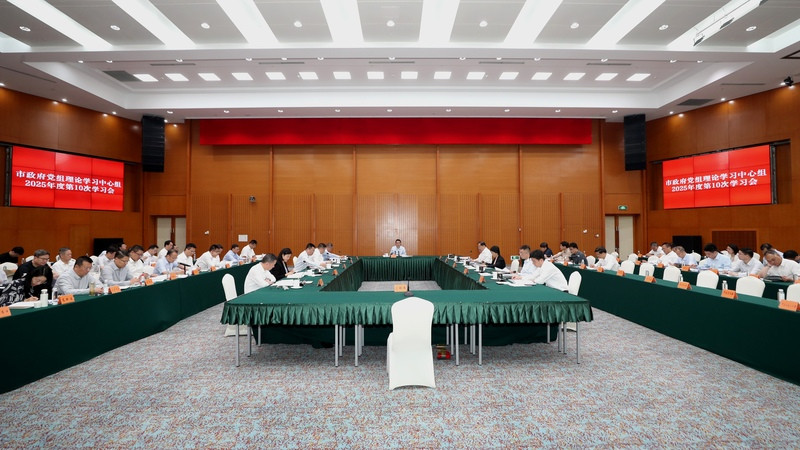
5月26日,市政府党组理论学习中心组召开学习会,深入学习贯彻习近平总书记在上海考察时、在部分省区 市"十五五"时期经济社会发展座谈会上的重要讲话精神,对辽宁辽阳市白塔区一饭店火灾事故和贵州毕节市黔西 市游船倾覆事故作出的重要指示精神,以及李强总理在做强国内大循环工作推进会上的讲话精神、省委书记信长 星在苏州调研时的讲话要求。市委副书记、市长、市政府党组书记吴庆文主持会议。 会议要求,要切实扛好经济大市挑大梁责任,进一步推动经济持续回升向好。市政府党组要把做强国内大循 环摆到更加突出的位置,多措并举稳就业、稳企业、稳市场、稳预期,切实解决一批群众急难愁盼,努力实现经 济社会高质量发展。要科学谋划全市"十五五"时期经济社会发展,突出抓好重大任务、重大工程、重大项目,高 质量编制好"十五五"规划。 会议强调,要筑牢安全生产坚实底板,确保交出发展和安全两张高分报表。端午假期临近,市政府党组要更 好统筹发展和安全,深入推进安全生产"六化"建设,扎实开展消防安全排查整治,强化重点领域安全管理,确保 人民群众生命财产安全。 濮建明 摄 会议指出,要始终牢记习近平总书记殷殷嘱托,大力推动科技创新与产业创新深度融合。市政府党组 ...

【新华解读】前4月全国规上工业企业利润缘何加快增长?
Xin Hua Cai Jing· 2025-05-27 12:05
Core Viewpoint - Despite increased volatility in the international trade environment, China's industrial enterprises above a designated size reported a profit growth of 1.4% year-on-year from January to April, indicating a continued recovery trend [1][2]. Group 1: Economic Performance - From January to April, the profit of industrial enterprises above a designated size increased by 1.4% year-on-year, with April alone showing a 3.0% increase compared to the previous year [1]. - The industrial added value for the same period grew by 6.4% year-on-year, while the Producer Price Index (PPI) decreased by 2.4% [2]. - The revenue profit margin for these enterprises rose by 0.17 percentage points to 4.87%, indicating a narrowing year-on-year decline [2]. Group 2: Policy Support - A series of stable growth policies have been implemented to support industrial enterprises, particularly in response to external pressures [1][2]. - The State Council's meeting on April 18 emphasized measures to stabilize employment and foreign trade, as well as to promote consumption and domestic demand [1]. - Policies such as increased export tax rebates and financial support for foreign trade enterprises have created a favorable environment for trade development [1][2]. Group 3: Industry Insights - Among 41 major industrial sectors, 23 reported year-on-year profit growth, with equipment manufacturing and high-tech manufacturing leading the way [3]. - Equipment manufacturing profits grew by 11.2%, contributing 3.6 percentage points to the overall profit growth of industrial enterprises [3]. - High-tech manufacturing profits increased by 9.0%, surpassing the average growth rate of all industrial enterprises by 7.6 percentage points [3]. Group 4: Future Outlook - The current revenue growth rate for industrial enterprises remains low, indicating a need for continued monitoring of profit trends [4]. - Expectations suggest that adjustments in tariffs between China and the U.S. may lead to reduced export costs and improved external demand, further supporting profit growth [5].
又一世纪运河来了?中国拼命“挖运河”,背后是一场真正的国运之战
3 6 Ke· 2025-05-27 07:48
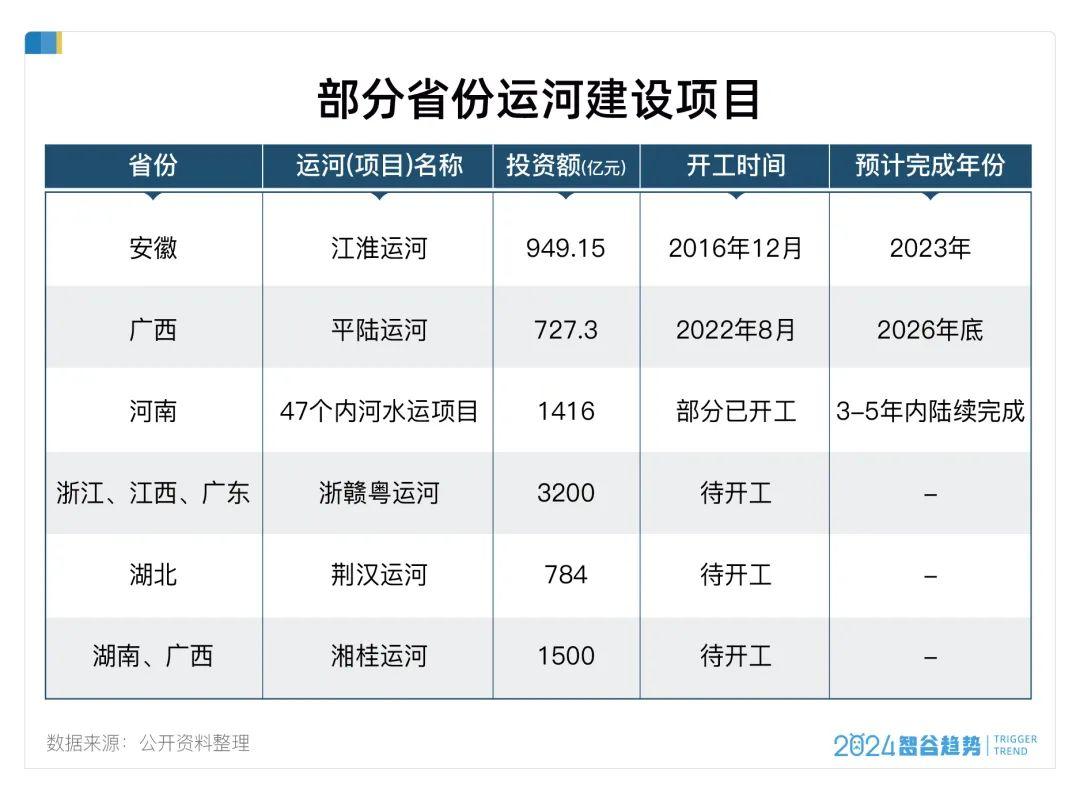
Core Viewpoint - The recent implementation of the "Implementation Opinions on High-Level Construction of 'Shipping Zhejiang'" highlights the strategic push for the construction of the Zhejiang-Jiangxi Canal, which is part of a broader initiative to enhance inland waterway transportation across China, marking the onset of a "new canal era" in the country [2][18][22]. Investment and Economic Impact - A total of over 850 billion yuan is being invested across at least eight provinces to revive inland waterway transport, with the Zhejiang-Jiangxi-Guangdong Canal alone projected to cost 320 billion yuan, surpassing the Grand Canal to become the world's longest canal [2][18]. - The construction of these canals is expected to significantly reduce transportation costs, with water transport costing only half of rail transport, one-fifth of road transport, and one-twentieth of air transport [7][21]. Project Details - The Zhejiang-Jiangxi Canal will span approximately 760 kilometers, connecting key cities in Zhejiang and Jiangxi provinces, and is seen as a monumental water transport project [1][5]. - Other notable projects include the Xianggui Canal with an investment of 150 billion yuan, the Jianghuai Canal at 95 billion yuan, and the Jinghan Canal at 74.8 billion yuan, all aimed at enhancing connectivity and economic integration [2][10]. Historical Context and Future Prospects - Historical examples, such as the Suez Canal and the Grand Canal, illustrate the transformative power of major waterway projects in reshaping trade and economic dynamics [3][4]. - The successful completion of these canal projects is anticipated to create a comprehensive water transport network across China, facilitating economic growth and regional development [22][23]. Strategic Importance - The push for canal construction is part of a broader strategy to strengthen domestic circulation and address bottlenecks in the logistics and transportation system, which currently sees a logistics cost-to-GDP ratio of 14.1% [19][20]. - The development of these canals is viewed as a critical step in establishing a robust inland waterway system that can support China's economic ambitions and enhance regional connectivity [21][22].
泓德基金:上周港股创新药板块表现亮眼
Xin Lang Ji Jin· 2025-05-26 09:18
Group 1 - The domestic equity market experienced fluctuations last week, with major indices showing a weekly change within 1% and an average daily trading volume around 1.1 trillion yuan [1] - The North Securities 50 Index reached a historical high after breaking through 1500 points but then showed significant adjustment [1] - The A-share technology growth sector showed signs of weakening, while the Hong Kong innovative drug sector performed well [1] Group 2 - China's innovative drug sector has rapidly developed in recent years, with the number of active innovative drugs developed by Chinese companies reaching 3,575 by the end of 2024, ranking first globally [1] - Approximately 31% of innovative drug candidate molecules introduced by large multinational pharmaceutical companies in 2024 are from China, a significant increase from 0% in 2019 [1] - In April, the added value of high-tech manufacturing above designated size grew by 10%, indicating a clear trend towards high-end industrial development [1] Group 3 - The Chinese economy has shown resilience against external shocks, with a year-on-year increase of 2.4% in total goods import and export from January to April [1] - The bond market experienced overall fluctuations, with long-term bonds performing slightly better than short-term ones, and credit bond yields generally declining [2] - The market's response to recent interest rate changes, including a 10 basis point rate cut, has been limited, with future observations focusing on changes in funding supply post-tax period [2]
农银汇理投资部副总经理、基金经理谷超:中国优质资产将迎来价值重估
Shang Hai Zheng Quan Bao· 2025-05-25 18:03
Group 1 - China's economy achieved expected goals and tasks in 2024, with significant progress in high-quality development despite various uncertainties [1] - The government aims to boost consumption and expand domestic demand as the primary driver of economic growth, especially in response to weak external demand [1][2] - The reliance of China's economy on foreign trade is relatively low, with exports accounting for only 18.9% of GDP in 2024, compared to 34.9% in 2006 [1] Group 2 - China is accelerating the construction of a new development pattern focused on domestic circulation, with strong growth in sectors like artificial intelligence, new energy, and high-end equipment manufacturing [2] - Breakthroughs in generative AI and intelligent driving indicate China's leading position in these fields, supported by a large domestic market and engineering talent [2] - The advancements in technology are expected to lead to a wave of high-quality enterprises with core competitiveness in the global market [2]
提振消费+赋能地方资源 银行业多举措助推国内大循环
Zheng Quan Ri Bao· 2025-05-25 15:21
Group 1: Core Insights - The meeting emphasized strengthening the domestic circulation as a priority, integrating the expansion of domestic demand strategy with supply-side structural reforms to enhance the quality and level of economic circulation [1] - The banking sector is focusing on boosting consumption and empowering local resource brand development, exploring innovative paths to support the domestic circulation [1] Group 2: Consumption Potential - Consumption is identified as a key link in facilitating domestic circulation, with banks targeting both durable goods and service consumption through innovative financial products and optimized service models [2] - Banks like Citic Bank are collaborating with leading electric vehicle brands to offer customized financial solutions, effectively integrating loan processes with car purchasing to enhance consumer experience [2] - In the service consumption sector, banks are launching low-interest credit products and promotional activities to stimulate tourism and related spending [2][3] Group 3: Financial Innovation for Local Resources - The banking industry is leveraging local resource advantages to create a comprehensive service system that supports the upgrading of specialty industries and brand value enhancement [5] - Various banks are introducing tailored credit tools to support local projects, such as "homestay loans" and supply chain financing for specialty products, thereby invigorating local economies [6] - Strengthening cooperation between banks and government entities is crucial for brand development, with initiatives aimed at promoting local brands and standards [6] Group 4: Technology and Data Utilization - Banks are encouraged to innovate financial services by integrating technology, such as using big data and AI for credit assessment and loan processing, enhancing efficiency and reducing risks [4][7] - The focus is on creating a diversified financial service system that aligns with regional development characteristics and industry dynamics [7] - Continuous innovation in financial services is seen as essential for unlocking the potential of domestic circulation and supporting high-quality economic development [7]
支持国内大循环银行应展现更大担当作为
Zheng Quan Ri Bao· 2025-05-25 15:20
Core Viewpoint - The banking sector plays a crucial role in promoting domestic economic circulation and is tasked with providing financial support to both emerging and traditional industries, thereby driving economic growth [1][3]. Group 1: Support for Emerging Industries - Banks should actively innovate financial products and services to provide stable long-term funding for emerging industries such as artificial intelligence and renewable energy, helping them overcome technological bottlenecks and facilitating their industrialization [1]. - Establishing diversified technology financial service models, including intellectual property pledge loans, is essential for supporting enterprises and promoting the transformation and application of technological achievements [1]. Group 2: Support for Traditional Industries - Increased funding for upgrading and transforming traditional manufacturing projects is necessary, focusing on technological upgrades, equipment renewal, and digital transformation to enhance competitiveness [1]. - Banks are encouraged to strengthen credit support for small and micro enterprises to alleviate their financing difficulties, thereby solidifying the foundation for domestic economic circulation [1]. Group 3: Strengthening Supply Chain Stability - Banks are responsible for providing comprehensive financial services to key areas and critical links in the industrial supply chain, ensuring stability and self-sufficiency [2]. - Support for core enterprises is vital to enhance their integration capabilities and collaborative effects within the supply chain, using supply chain financial products to promote the development of upstream and downstream small and medium enterprises [2]. Group 4: Promoting Consumption - Banks should optimize consumer financial products and services, developing personalized and diversified consumer credit products to meet the varied consumption needs of residents and unleash consumption potential [2]. - Collaborating with e-commerce platforms and offline retail enterprises to promote consumption scenarios and new business models is essential for enhancing service consumption [2]. Group 5: Overall Economic Strategy - The banking sector's efforts to support domestic economic circulation align with national strategic responsibilities and are essential for the sector's sustainable development [3]. - By optimizing service models and innovating financial products, banks can provide precise support for emerging industries, empower traditional industries, and promote overall economic stability and growth [3].