
AI医疗

Search documents
黄金站上4400,难道是新一轮上涨开始了?|1222 张博划重点
Hu Xiu· 2025-12-22 15:50
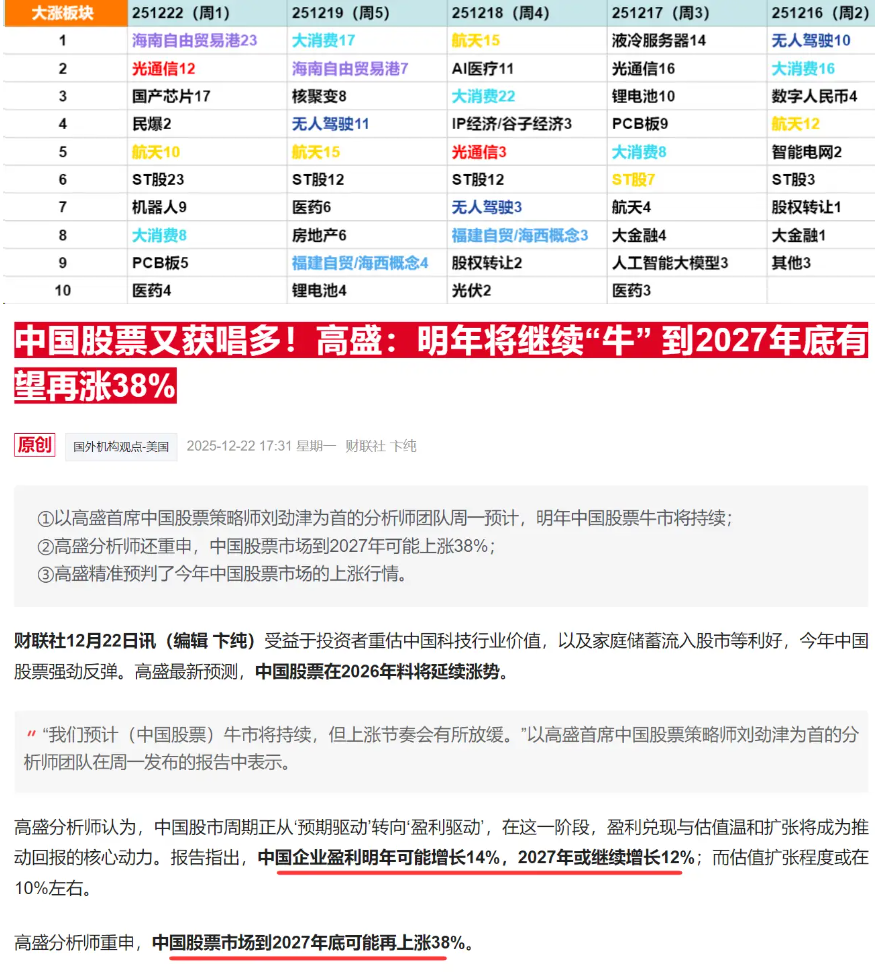
Market Performance - The market opened high and saw a collective rebound in the three major indices, with the ChiNext Index rising over 2% [1] - The Shanghai Composite Index surpassed the 3900-point mark and the 60-day moving average, indicating a bullish trend [1] - The closing performance showed the Shanghai Composite Index up by 0.69%, the Shenzhen Component Index up by 1.47%, and the ChiNext Index up by 2.23% [1] Trading Volume - The total trading volume in the Shanghai and Shenzhen markets reached 1.86 trillion yuan, an increase of 136 billion yuan compared to the previous trading day [1] Sector Performance - The top-performing sectors included Hainan Free Trade Port, which saw significant gains, along with sectors like AI healthcare and domestic chips [2] - The data indicates a strong interest in sectors such as consumer goods, autonomous driving, and liquid-cooled servers, reflecting market trends [2]

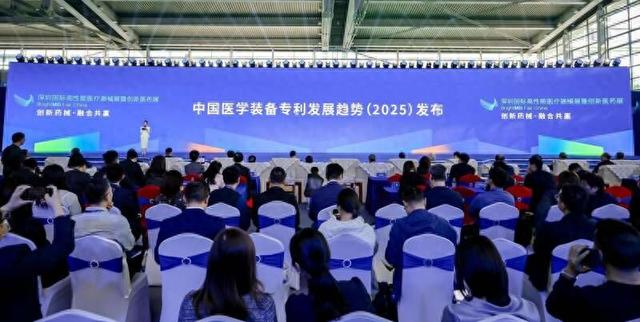
成果密集落地,2025深圳国际药械展引领创新风向标
Zhong Guo Qing Nian Bao· 2025-12-22 10:31
Group 1 - The 2025 Shenzhen International High-Performance Medical Device and Innovative Pharmaceutical Exhibition showcased over 300 global companies and more than 1,000 innovative products, highlighting China's transition from "technology catch-up" to "innovation leadership" in the medical device industry [1] - The annual innovation results from the National High-Performance Medical Device Innovation Center revealed 11 assessment results, including the "Top 100 Emerging Enterprises" focusing on high-end medical imaging and surgical robots, with 100 companies engaging in 339 industry-academia-research collaborations and undertaking 133 research projects [1] - The assessment introduced three innovation indices focusing on emerging fields such as AI-assisted diagnosis and ophthalmic devices, indicating significant breakthroughs in globally pioneering products like vascular interventional surgical robots and critical materials in "bottleneck" areas [1] Group 2 - The report "Trends in Medical Equipment Patents in China (2025)" indicated that by 2025, China will have over 2.8 million medical equipment patent applications, maintaining the global lead with a 34.1% share, and a year-on-year growth of 3.2%, with a ten-year compound growth rate of 15.5%, both double the global average [2] - Shenzhen contributed 140,000 patent applications, accounting for 43.1% of Guangdong Province's total of 325,000 applications, showcasing the city's significant role in medical device innovation [2] - Experts noted that the medical device industry has shifted from imitation to independent innovation, achieving a level of development comparable to global standards, with future devices expected to integrate various technologies for smarter, personalized, and more active solutions to health and disease [2]
空头加仓,龙头跳水,周一怎么办?
Jin Rong Jie· 2025-12-22 08:58
Group 1 - The core viewpoint indicates that major index futures have seen an increase in short positions, suggesting a shift towards defensive strategies among institutional investors, as evidenced by the net short positions in the three major index contracts [1] - The article highlights that the stock market experienced a significant drop in high-position stocks, particularly Pingtan, which serves as a bellwether for the current market cycle, indicating potential risks for high-position stocks despite their ability to reach new highs [1] - The sentiment analysis suggests that the market is currently in a state of fluctuation, with the potential for further adjustments if the market does not show strong support after a high opening [1] Group 2 - Recent sector trends indicate that news-driven stocks, such as those in nuclear power, autonomous driving, and AI healthcare, are experiencing short-lived rallies, emphasizing the need for strategic entry points to capitalize on these opportunities [2] - The article notes the interconnection between different themes, particularly in commercial aerospace, consumer goods, and technology, advising investors to avoid chasing strong performers and instead focus on identifying resilient stocks amidst market fluctuations [2]
医药生物行业跨市场周报(20251221):AI医疗激活医药险全链路闭环,建议关注相关投资机会-20251222
EBSCN· 2025-12-22 08:07
Investment Rating - The report maintains a "Buy" rating for the pharmaceutical and biotechnology sector [4][5]. Core Insights - The report emphasizes the activation of "medical insurance" through AI in healthcare, suggesting a focus on investment opportunities in related sectors such as home medical devices, offline health check-ups, and pharmaceutical retail [2][21][23]. - The report highlights the importance of clinical value in the pharmaceutical sector, advocating for investments in innovative drug chains and medical devices, particularly in light of evolving domestic and international policies [3][26][27]. Summary by Sections Market Review - The A-share pharmaceutical and biotechnology index fell by 0.14%, underperforming the CSI 300 index by 0.14 percentage points, while outperforming the ChiNext index by 1.39 percentage points, ranking 22nd among 31 sub-industries [1][10][16]. - The Hong Kong Hang Seng Healthcare Index decreased by 1.77%, outperforming the Hang Seng Index by 0.19 percentage points [1][10]. R&D Progress - Recent developments include the NDA application for SSGJ-608 by Sanofi, clinical application advancements for vaccines by CanSino and Shiyao Group, and ongoing clinical trials for various drugs by Heng Rui and CanOya [1][31]. Investment Strategy - The report suggests focusing on three categories of companies: 1. AI + Home Medical Devices, recommending companies like Yuyue Medical and Sinocare [23][25]. 2. AI + Offline Health Check-ups, with a focus on Meinian Health, which has significant data resources for AI model calibration [23][25]. 3. AI + Pharmaceutical Retail, highlighting Alibaba Health and Shuyu Pingmin as key players [23][25]. Key Company Earnings Forecast and Valuation - The report provides earnings per share (EPS) and price-to-earnings (PE) ratios for several companies, recommending "Buy" for companies like Innovent Biologics, Yifan Biologics, and Mindray Medical [4][28]. Important Company Announcements - Recent announcements include various clinical trial approvals and strategic partnerships among key players in the pharmaceutical sector, indicating ongoing innovation and development [30][31]. Financial Data Updates - Basic medical insurance revenue reached 2,108.6 billion yuan in the first nine months of 2025, with a monthly income of 227.6 billion yuan in September, reflecting a 15.9% month-on-month increase [34]. - The pharmaceutical manufacturing industry reported a year-on-year revenue decline of 2.90% for the first ten months of 2025, indicating challenges in the sector [49]. Regulatory and Market Trends - The report notes a structural shift in domestic policies favoring innovative drugs and highlights the increasing global demand for pharmaceuticals driven by aging populations [27][26].
收评:创业板指高开高走涨超2% 海南、算力硬件股集体走强
Zhong Guo Jin Rong Xin Xi Wang· 2025-12-22 07:44
Market Performance - A-shares indices collectively opened higher on December 22, with the Shanghai Composite Index returning above 3900 points and the ChiNext Index rising over 2% [1] - The total trading volume in the Shanghai and Shenzhen markets reached 1.86 trillion yuan, an increase of 136 billion yuan compared to the previous trading day [1] - The Shanghai Composite Index closed at 3917.36 points, up 0.69%, with a trading volume of 789.8 billion yuan; the Shenzhen Component Index closed at 13332.73 points, up 1.47%, with a trading volume of 1.0722 trillion yuan; the ChiNext Index closed at 3191.98 points, up 2.23%, with a trading volume of 488.3 billion yuan [1] Sector Performance - The Hainan Free Trade Zone sector saw significant gains, with nearly 20 stocks including Hainan Mining and Hainan Rubber hitting the daily limit [1] - The computing hardware concept performed actively, with companies like New Yisheng reaching historical highs and stocks such as Hengtong Optic-Electric and Changfei Fiber also hitting the daily limit [1] - The commercial aerospace concept showed strength, with Shenjian Co. also hitting the daily limit [1] - Conversely, the AI healthcare concept declined, with Huaren Health dropping over 9%, and the film and theater sector also saw declines, with Bona Film Group hitting the daily limit [1][2] Institutional Insights - Jifeng Investment noted that the market is in a rebound phase, with the Hainan Free Trade Zone sector leading gains; the overall market trend remains upward, supported by the 60-day moving average [3] - Long-term investment opportunities are suggested in high-growth sectors such as semiconductors, consumer electronics, artificial intelligence, robotics, and commercial aerospace [3] - CITIC Securities highlighted that by mid-December 2025, SpaceX successfully launched 3095 Starlink satellites, indicating a breakthrough in domestic medium-lift rocket development, which will lower launch costs and accelerate market growth in satellite and computing sectors [3] - Investment opportunities in commercial aerospace are expected to expand significantly, with a potential trillion-yuan market size emerging [3] Economic Signals - Multiple signals indicate a classic "cross-year-spring" market trend is developing, with expectations for accelerated central budget investments in 2026 [4] - Major institutional investors are increasing their holdings in broad-based ETFs like A500 ETF, providing stable incremental capital to the market [4] - The focus of the market is likely to shift towards blue-chip indices represented by the CSI 300 and SSE 50, with an emphasis on cyclical sectors such as industrial metals and non-bank financials [4] News Updates - The People's Bank of China issued 40 billion yuan of six-month central bank bills in Hong Kong at an interest rate of 1.67%, with applications totaling 81.2 billion yuan [5] - Xiaomi Group announced the launch of the Xiaomi 17 Ultra, scheduled for December 25, with discussions on rising memory costs impacting smartphone prices in the coming years [6] - Porsche confirmed it will gradually shut down its self-built charging network, totaling approximately 200 stations, starting March 1, 2026, and will shift to deep cooperation with leading charging operators [8]




重回3900点!A股三大指数午盘集体收涨
Sou Hu Cai Jing· 2025-12-22 03:58
东方财富 12月22日,A股三大指数高开高走。截至午间收盘,上证指数涨0.64%,报3915.20点;深证成指涨1.36%,报13318.80点;创业板指涨1.80%,报3178.51点。 全市半日成交额1.20万亿,超3400只个股上涨。 从板块来看,海南自贸概念集体爆发,海汽集团、海南瑞泽等近20股涨停。商业航天概念反复走强,神剑股份、北斗星通涨停。算力硬件概念表现活 跃,"易中天"光模块三巨头集体上涨。半导体设备股拉升,拓荆科技等多股创历史新高。 东方财富 下跌方面,AI医疗概念震荡回落,华人健康大跌。板块方面,海南自贸区、贵金属、算力硬件等板块涨幅居前,医药商业、影视院线、银行等板块跌幅居 前。 ...

渤海证券研究所晨会纪要(2025.12.22)-20251222
BOHAI SECURITIES· 2025-12-22 02:15
Company Research - The report focuses on Gongchuang Turf (605099), a leading global artificial turf company, which has shown steady growth with a revenue increase of 9.52% and a net profit growth of 30.89% in the first three quarters of the year [10] - The company has a strong presence in the leisure turf segment, with over 70% of its revenue coming from this category, and it exports to more than 140 countries, with over 95% of its revenue generated from overseas [10] - The global artificial turf market is expected to grow, with a projected CAGR of 9.28% in industry size and 11.21% in sales area from 2015 to 2023, reaching €4.141 billion by 2027, representing a 28.64% increase from 2023 [11] - Gongchuang Turf has established a robust R&D system, with R&D expenses of 71.82 million yuan in the first three quarters of 2025, a 10.58% increase year-on-year, significantly higher than its peers [11] - The company has a planned production capacity of 17.6 million square meters after the completion of its overseas production bases, with a high capacity utilization rate maintained above 95% from 2020 to 2024 [11] Industry Research - The report highlights the recent National Medical Security Work Conference, which outlines eight key tasks for 2026, focusing on supporting the development of commercial health insurance and promoting innovation in the pharmaceutical industry [13][16] - The SW pharmaceutical and biotechnology sector saw a decline of 1.23% in the week of December 12-18, 2025, with mixed performance across sub-sectors [13] - The report suggests that with the implementation of the new drug catalog and commercial insurance for innovative drugs, there are investment opportunities in pharmaceutical companies whose products enter the medical insurance system [16] - The report also notes that the pharmaceutical and biotechnology sector has shown weak reactions to recent catalysts, leading to a downgrade of the industry rating from "positive" to "neutral" [16]
谷歌Suncatcher计划拟发射81星,太空算力赛道再添一科技巨头;国内首例全3D打印涡扇发动机地面试车成功——《投资早参》
Mei Ri Jing Ji Xin Wen· 2025-12-22 00:47
Important Market News - China successfully launched the communication technology test satellite No. 23 using the Long March 5 rocket, marking the 618th flight of the Long March series [1] Industry Insights - Google has announced the "Project Suncatcher" plan in collaboration with Planet to launch a cluster of 81 satellites, aiming to create a prototype space data center. The project features three breakthroughs: a distributed collaborative architecture for high-frequency communication between satellites, a fully solar-powered design with energy consumption at only 1/5 of ground data centers, and dedicated edge computing modules for real-time data processing in orbit [2] - The satellite internet sector is becoming a new frontier in global technology competition, with the satellite communication industry expected to exceed 200-400 billion yuan by 2030, with an annual compound growth rate of 10%-28%. The industry is transitioning from "concept validation" to "scale application," forming a new communication pattern of "integrated space and ground, interconnected everything" [3] - A fully 3D-printed turbofan engine developed by a consortium including the Chinese Academy of Sciences has completed ground testing. This engine simplifies the traditional multi-part assembly into an integrated component, representing a significant innovation in manufacturing [4] - The 3D-printed turbofan engine reduces the number of core components by over 40% and the structural weight by 25%, enhancing the thrust-to-weight ratio and paving the way for lightweight, high-performance aviation power equipment [4] - Ant Group's AI health application "Antifufu" has seen a surge in downloads, ranking second on Apple's free app chart. The app was upgraded to enhance health companionship, Q&A, and services, leveraging Ant Group's extensive healthcare resources [5] - The AI healthcare sector in China is projected to grow from 97.3 billion yuan in 2023 to 159.8 billion yuan by 2028, with a notable compound annual growth rate. Key growth areas include AI medical imaging and AI pharmaceuticals [5]

中信建投:继续看好AI医疗投资机会
Xin Lang Cai Jing· 2025-12-22 00:13
Core Insights - Ant Group's AI health application "Ant Aifu" has rapidly climbed to the 3rd position in the Apple App Store download rankings following its new version release [1] - The domestic AI healthcare sector has seen continuous advancements in policy, technology, products, and applications this year [1] - Technological breakthroughs are expected to transition from individual products to a full-chain scenario, with application scenarios moving from large hospitals to grassroots and individual levels [1] Industry Trends - AI healthcare demonstrates significant application value in enhancing medical device functionality, interpreting test results, assisting clinical decision-making, and health management [1] - Medical enterprises and hospitals must prioritize AI healthcare as an innovative direction and competitive trend [1] - With ongoing national policies and industry technology catalyzing developments, the application scenarios for AI healthcare are expected to accelerate [1]

中信建投:AI健康应用蚂蚁阿福下载量攀升,继续看好AI医疗投资机会
Zheng Quan Shi Bao Wang· 2025-12-22 00:00
人民财讯12月22日电,中信建投研报称,蚂蚁集团旗下AI健康应用"蚂蚁阿福"新版App发布后,下载量 迅速攀升,位居苹果应用商店下载总榜的第3位。今年以来,国内AI医疗在政策、技术、产品及应用等 方面均有持续进展,技术突破有望从单个产品走向场景全链条,应用场景从大医院下沉到基层和个体。 AI医疗在提升医疗器械功能、检查检验结果解读、辅助临床医生决策、健康管理等多个领域的应用价 值较大,是医疗企业和医院必须重视的创新方向和竞争趋势。在国家政策和行业技术的持续催化下, AI医疗应用场景有望加速落地,建议关注行业投资机会。 转自:证券时报 ...