新能源转型

Search documents
韧性增长 解码一汽解放的“护城河”和竞争力
Zhong Guo Qi Che Bao Wang· 2025-07-30 07:55
Core Insights - The commercial vehicle industry is undergoing a transformation, with FAW Jiefang leading the charge through quality improvements and ecological collaboration [1][3][5] - FAW Jiefang has achieved significant market leadership, holding the top market shares in various segments, including 23.2% in the medium and heavy truck market and 28.3% in the cargo truck market [1][5][12] - The company emphasizes quality over sales volume, launching a "three-year quality campaign" that has already shown a 30% reduction in quality-related issues [8][9][11] Group 1: Market Position and Strategy - FAW Jiefang's brand value reached 145.03 billion, maintaining its position as the leading commercial vehicle brand for 14 consecutive years [1] - The company views the entry of new players into the commercial vehicle market as a sign of opportunity rather than a threat, reinforcing its confidence in maintaining a leading position [3][5] - FAW Jiefang is committed to not participating in price wars, focusing instead on the long-term value of its products [6][9] Group 2: Quality and Innovation - The company has initiated a comprehensive quality improvement strategy, targeting enhancements in product design, manufacturing, and service reliability [8][9][11] - FAW Jiefang's focus on core technologies, such as engines and drivetrains, is seen as a key competitive advantage [5][6] - The company has reported a 30.3% decrease in external quality losses and a 26% reduction in claims frequency, indicating significant progress in quality management [11] Group 3: New Energy and International Expansion - FAW Jiefang is actively expanding its presence in overseas markets, targeting regions such as Southeast Asia and the Middle East, with plans to establish eight wholly-owned subsidiaries [12][14] - The company has successfully transitioned to new energy vehicles, achieving a market share of 14.5% in the new energy medium and heavy truck segment, the highest in the industry [14] - FAW Jiefang's long-term strategy focuses on sustainable development, emphasizing quality, technology, and product value while avoiding price competition [14]



骆驼股份2025上半年净利超5亿 低压锂电业务持续放量业绩稳健增长
Chang Jiang Shang Bao· 2025-07-29 23:39
Core Viewpoint - The significant increase in sales of low-voltage lithium batteries has driven steady performance improvement for Camel Group (601311.SH) [1][4] Group 1: Company Performance - Camel Group expects a net profit of 5.02 billion to 5.65 billion yuan for the first half of 2025, representing a year-on-year increase of 60% to 80% [1][6] - The company achieved total revenue of approximately 155.92 billion yuan in 2024, a year-on-year growth of 10.75%, with a net profit of about 6.14 billion yuan, up 7.26% [5] - The company has cumulatively distributed dividends of approximately 25.21 billion yuan since its listing in 2011 [2][3] Group 2: Business Strategy and Development - Camel Group has established a comprehensive industrial chain covering lead-acid batteries, lithium batteries, and battery materials, forming a closed-loop ecosystem from research and development to recycling [1] - The company has actively transitioned towards low-voltage lithium battery business, with a significant increase in sales driven by the growing demand in the electric vehicle market [4][5] - Camel Group's low-voltage lithium battery revenue grew by 376% year-on-year, becoming a key driver of performance growth [5] Group 3: Employee Engagement and Shareholder Returns - The second phase of the employee stock ownership plan raised 29.75 million yuan, with 44 employees participating, aimed at attracting and retaining talent [2] - The company plans to distribute cash dividends of 2.90 yuan per 10 shares, totaling approximately 3.4 billion yuan, which accounts for 55.41% of the net profit attributable to shareholders [3]

中国长安汽车集团挂牌成立,丰田最早将于2028年在欧洲启动电动汽车生产 | 汽车早参
Mei Ri Jing Ji Xin Wen· 2025-07-29 23:09
Group 1: China Automotive Industry Developments - China Changan Automobile Group officially established in Chongqing, marking the first central enterprise headquartered in the city, enhancing the integration of the automotive industry among major state-owned enterprises [1] - The restructuring of Changan Automobile is expected to improve market expectations regarding its resource integration capabilities, particularly in the areas of new energy transition and intelligent layout [1] - The establishment of three major state-owned automotive groups may accelerate industry concentration and promote collaborative development across the supply chain [1] Group 2: FAW Group's Diversification - FAW Group has established a new company, FAW Qiyu (Shenzhen) Technology Co., Ltd., focusing on smart unmanned aerial vehicles and artificial intelligence, indicating a significant step towards diversification into high-tech fields [2] - This move is likely to strengthen market expectations regarding FAW Group's technological transformation, particularly benefiting its new energy and intelligent connected vehicle business valuations [2] - The cross-industry layout reflects the trend of high-end manufacturing integration, potentially boosting investor confidence in the technological upgrades of traditional automotive companies [2] Group 3: Autonomous Driving Expansion - WeRide and Uber have expanded their Robotaxi service in Abu Dhabi, indicating a breakthrough for Chinese autonomous driving technology in international markets [3] - The expansion is expected to double the order volume, enhancing market evaluations of WeRide's commercialization capabilities and competitiveness in the global autonomous driving sector [3] - The overseas expansion of leading companies in the autonomous driving industry may increase investor interest in related sectors such as vehicle-road collaboration and high-precision mapping, boosting confidence in the long-term development of smart driving [3] Group 4: Toyota's Electric Vehicle Production Plans - Toyota plans to start producing electric vehicles in Europe as early as 2028, with an annual production target of approximately 100,000 units at its Czech subsidiary [4] - This acceleration of local electric vehicle production in Europe highlights a new phase in the electrification transformation of traditional automakers [4] - The plan is expected to enhance market recognition of Toyota's execution capabilities in its electrification strategy, especially in light of tightening carbon emission policies in Europe [4]



福田汽车股价微跌0.36% 上半年新能源销量同比激增151%
Jin Rong Jie· 2025-07-29 17:50
Group 1 - The core stock price of Foton Motor as of July 29, 2025, is 2.78 yuan, down 0.36% from the previous trading day, with a trading volume of 251 million yuan [1] - Foton Motor's main business includes the manufacturing of commercial vehicles, with products such as heavy trucks, light trucks, and new energy vehicles. The company is focusing on the transformation to new energy and has launched multiple electric platforms and technical solutions [1] - In the first half of 2025, Foton Motor reported sales of over 50,000 new energy vehicles, representing a year-on-year increase of 151%, while heavy truck sales increased by 74.3% year-on-year [1] - The chairman of Foton Motor, Chang Rui, aims to increase the proportion of new energy vehicle sales to 50% by 2030 [1] - Foton Motor has introduced the "Morning Star" pure electric light truck platform and four new energy products, targeting logistics and urban distribution scenarios [1] Group 2 - On July 29, 2025, the net outflow of main funds was 16.6583 million yuan, accounting for 0.09% of the circulating market value [2]

近5GWh!南网等4企获储能订单
行家说储能· 2025-07-29 12:20
Core Insights - Multiple companies have recently announced significant collaborations in the energy storage sector, totaling 4.874 GWh of storage orders [1] Group 1: South China Power Grid and Indonesia - South China Power Grid International (Hong Kong) has signed an agreement with Indonesia's state electricity company to jointly research energy storage development in Indonesia, focusing on five key areas: development planning, investment policies, pricing mechanisms, technical solutions, and safety standards [2][4] - This collaboration aims to enhance the efficiency of energy storage projects in Indonesia and accelerate its low-carbon transition, serving as a model for energy storage development in Southeast Asia [4] Group 2: Samsung SDI - Samsung SDI has won 2.574 GWh of energy storage orders by securing six out of eight projects in the first round of public bidding by the South Korean government [5] - The total project capacity is 3.39 GWh across various regions, with an estimated project value of approximately 1 trillion KRW (7.25 million USD, about 51.5 billion RMB) [5] - Samsung SDI's competitive edge in the bidding process was attributed to its advantages in non-price criteria, which accounted for 40% of the evaluation [5][6] Group 3: Fluence and Invenergy - Fluence has partnered with independent power producer Invenergy to construct the Hashknife project in Navajo County, Arizona, which includes 475 MW of solar power and 1.9 GWh of energy storage [7] - The project will be developed in two phases, with the first phase starting in 2024 and expected to be operational by 2026, while the second phase will begin this year and is expected to be operational by 2027 [8] - The project will utilize Fluence's Gridstack and Gridstack Pro lithium-ion storage solutions, with total economic investment projected at 53 million USD [9] Group 4: Tesla - Tesla is currently operating a 185 MW solar plus 400 MWh battery energy storage system (BESS) project in Lincoln County, Nevada [10] - In the second quarter of 2025, Tesla deployed 9.6 GWh of battery storage products, with a total deployment of approximately 20 GWh in the first half of the year [11] - Tesla's Shanghai Gigafactory has produced its 1,000th Megapack energy storage system in less than six months, which will be shipped to Europe [11]



福田汽车上半年销量同比增长9.1% 董事长常瑞:力争2030年新能源销量占比提升至50%
Mei Ri Jing Ji Xin Wen· 2025-07-29 05:28
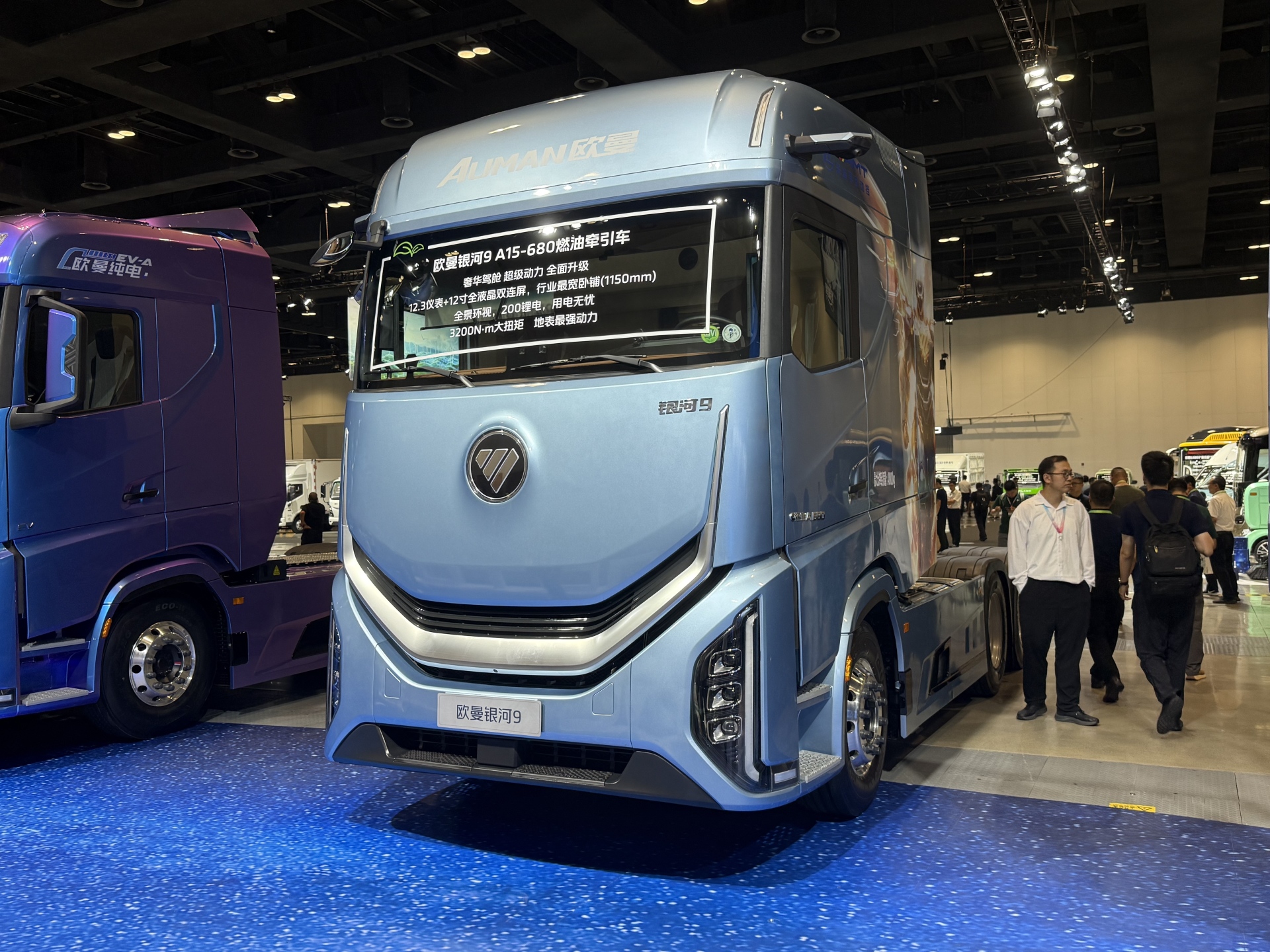
Core Insights - Foton Motor reported a total sales volume of 327,000 units in the first half of the year, representing a year-on-year increase of 9.1% [1] - Heavy truck sales reached nearly 67,000 units, showing a significant year-on-year growth of 74.3% [1] - Sales of new energy vehicles exceeded 50,000 units, marking a remarkable year-on-year surge of 151% [1] Group 1: Sales Performance - The company achieved collaborative growth across various market segments, including heavy trucks, light trucks, vans, new energy, and export businesses [1] - The export business continues to lead the industry, indicating strong international demand [1] Group 2: Strategic Initiatives - Foton Motor plans to focus on the transformation towards new energy, integrating ecological business into the dealer system, and enhancing the market share of traditional businesses [1][2] - The company aims to encourage domestic dealers to actively engage in overseas operations and implement special enhancement plans for underperforming businesses [1] Group 3: Product Development - Foton launched the new pure electric light truck platform "Qimingxing" and several electric technologies, including the "Aiyike" super electric drive [2] - Four new energy products were introduced, catering to different scenarios: Xiangling U7, Fengjing T7, Foton Kavenledi, and Ouman Galaxy pure electric products [2] Group 4: Future Goals - The company is committed to deepening organizational management innovation in marketing, R&D, and manufacturing, aiming for comprehensive internationalization, new energy, and intelligence [2] - Foton targets to increase the proportion of new energy vehicle sales to 50% by 2030 [2]
市场竞争日趋白热化 一汽解放打响“质量攻坚战”
Zheng Quan Ri Bao· 2025-07-28 17:00
Core Viewpoint - The commercial vehicle industry is experiencing intensified competition, with both traditional players and new entrants like BYD and Geely recognizing the sector's potential, as highlighted by the chairman of FAW Jiefang, Li Sheng [1] Group 1: Company Performance - FAW Jiefang achieved eight industry-leading performances in the first half of the year, including being ranked first in brand value for 14 consecutive years and holding the largest market share in the domestic heavy-duty truck market [1] - The company aims to explore sustainable development through multiple initiatives, including enhancing quality, breaking through core technologies, and expanding globally [1] Group 2: Quality Improvement - The company has initiated a quality improvement campaign led by Li Sheng, with a target to reduce quality issues by 30% annually, aiming for a total reduction of 65% in three years [2] - FAW Jiefang has implemented comprehensive quality control across all processes, from design to service, embedding "quality first" into its corporate culture [2] - The powertrain division has undergone reforms to enhance control over key components, with the 15L6SV3 natural gas engine demonstrating industry-leading fuel consumption [2] Group 3: New Energy Transition - The transition to new energy vehicles is seen as crucial for breaking growth bottlenecks, with the company targeting to lead in new energy sales for heavy-duty trucks this year [3] - FAW Jiefang has established a sustainable business model through partnerships for charging networks and battery swapping technology, addressing the challenges of new energy commercial vehicles [3] - The company is committed to continuous product innovation, with plans for the J7 series and new global products set to launch in the coming years [3] Group 4: Global Expansion - FAW Jiefang is shifting its global strategy from trade exports to localized operations, with expectations that overseas sales will match domestic sales within five years [4] - The company has already established four overseas subsidiaries and plans to complete eight by the end of the year, with a factory in Uzbekistan now operational [4] - FAW Jiefang's overseas sales (excluding Russia) increased by 60% in the first half of the year [4] Group 5: Pricing Strategy - In response to market price competition, FAW Jiefang has chosen to focus on value rather than price, maintaining stable pricing despite industry-wide price cuts [4][5] - The company has implemented mechanisms to balance dealer interests and prevent price dumping, while also introducing differentiated products to avoid price wars [5] Group 6: Ecosystem Collaboration - FAW Jiefang is enhancing its ecosystem through collaborations that provide added value to customers, such as free vehicle inspections and maintenance reminders during charging [5] - The company is developing a comprehensive service system covering the entire lifecycle of vehicles, ensuring customers have a seamless experience from purchase to resale [5][6] Group 7: Long-term Strategy - FAW Jiefang is adopting a steady approach to navigate industry changes, emphasizing long-term competitiveness over short-term sales fluctuations [6]
2025年中国整车行业研究报告:新能源转型加速度,智能化变革驱动产业升级
Tou Bao Yan Jiu Yuan· 2025-07-28 13:13
Investment Rating - The report indicates a positive outlook for the Chinese vehicle industry, particularly in the areas of new energy vehicles (NEVs) and smart driving technologies, suggesting a strong investment opportunity in these sectors [2]. Core Insights - The Chinese automotive industry is rapidly transitioning towards new energy and smart technologies, with significant growth in market penetration for NEVs and advancements in intelligent features becoming central to brand competition [2]. - By 2025, the market share of domestic brands is expected to reach 69.1%, with NEV penetration projected to exceed 52.5%, highlighting a shift in competitive dynamics within the industry [3][24]. - The report emphasizes the importance of government policies, technological innovations, and consumer demand in driving the transformation of the automotive sector [19]. Summary by Sections Market Overview - The average monthly sales of passenger vehicles in China are projected to stabilize above 2 million units from 2024 to 2025, with NEV penetration reaching 52.5% [3]. - The market is witnessing a significant increase in the share of domestic brands, which rose from 45.9% in early 2022 to 69.0% by May 2025 [22][24]. NEV Market Dynamics - The NEV market is expected to see a substantial increase in sales, with monthly sales rising from 393,000 units in 2023 to over 900,000 units by 2025, reflecting a penetration rate increase from 26.7% to 52.5% [17][19]. - Government incentives, including tax exemptions and subsidies for vehicle replacements, are anticipated to further stimulate market demand [4][6]. Competitive Landscape - The competitive landscape is evolving, with Tesla maintaining a leading position, while domestic brands like BYD are experiencing rapid growth, and new entrants like Xiaomi are making significant inroads [3][36]. - The report notes a bifurcation in profitability, where leading companies like BYD are achieving high margins, while traditional automakers face pressure [31][33]. Export Trends - China's passenger vehicle exports are projected to grow significantly, with monthly exports expected to reach between 430,000 and 470,000 units by 2025, showcasing enhanced international competitiveness [26][28]. - The share of NEVs in exports is also increasing, indicating a strong global demand for Chinese automotive products [45]. Future Projections - By 2030, the total automotive market in China is expected to grow to 36.39 million units, with NEVs projected to account for 87.4% of passenger vehicle sales [49].
国证国际港股晨报-20250728
Guosen International· 2025-07-28 05:14
Group 1: Market Overview - The report highlights that the tariff concerns are gradually dissipating, leading to significant net inflows in Hong Kong Stock Connect trading [2][3] - The Hang Seng Index experienced a decline, closing at 25,388 points, down 278 points or 1.1%, with a trading volume of 281.8 billion HKD [2][3] - Northbound trading recorded a net inflow of nearly 20.2 billion HKD, an increase of 442.8% compared to the previous day [2][3] Group 2: Sector Performance - Among the 12 Hang Seng Composite Industry Indices, 2 sectors rose while 10 sectors fell, with the largest declines seen in consumer discretionary, financials, and materials, each down 1.87%, 1.09%, and 1.09% respectively [3] - The technology sector also saw a decline of 0.72% [3] Group 3: Company Analysis - Great Wall Motors - Great Wall Motors (2333.HK) is expected to achieve a revenue of 92.3 billion HKD in the first half of 2025, a year-on-year increase of 1.0%, with a net profit of 6.34 billion HKD, down 10.2% year-on-year [5] - In Q2 2025, the company reported a revenue of 52.35 billion HKD, a year-on-year increase of 7.8% and a quarter-on-quarter increase of 30.8%, with a net profit of 4.59 billion HKD, up 19.1% year-on-year and 161.9% quarter-on-quarter [5] - Q2 sales improved, reaching 313,000 units, a year-on-year increase of 10.1% and a quarter-on-quarter increase of 21.9% [5] Group 4: Future Outlook for Great Wall Motors - The company plans to launch multiple new models in the second half of 2025, focusing on hybrid and smart electric vehicles, which are expected to enhance sales [6] - The report maintains a target price of 18.0 HKD for Great Wall Motors, corresponding to a 10.3 times forecasted P/E ratio for 2025, with a buy rating [6]
上半年狂揽8个 “行业第一” 解放年中会亮出成绩单
第一商用车网· 2025-07-27 11:13
Core Viewpoint - The article highlights the achievements and strategic direction of FAW Jiefang in the first half of 2025, emphasizing its leadership in the commercial vehicle market and commitment to innovation and collaboration with partners [3][5][10]. Group 1: Market Performance - In the first half of 2025, FAW Jiefang achieved eight "industry firsts," maintaining its position as the leading brand in the commercial vehicle sector for 14 consecutive years, with a brand value of 1450.29 billion [3]. - The company secured a 23.2% market share in the domestic heavy-duty truck market, 24.6% in the tractor market, and 28.3% in the cargo truck market, all ranking first in the industry [3]. - FAW Jiefang's market share in the new energy heavy-duty truck sector reached 14.5%, with the fastest growth rate in the industry, while its share in the new energy tractor market was 16.3%, also ranking first [3]. Group 2: Strategic Initiatives - FAW Jiefang's Chairman, Li Sheng, emphasized the need for the company to adapt to energy structure transformations and intense market competition, aiming to consolidate its advantages in the heavy-duty truck segment [5]. - The company plans to enhance its overseas exports, which have seen a 61% growth across seven regions, including Southeast Asia and West Africa [5]. - The marketing strategy for the second half of the year includes a focus on maintaining leadership in key segments and expanding in new energy and core markets [10]. Group 3: Product Development - FAW Jiefang is strengthening its core competitiveness by launching 10 new models in the traditional energy sector and 22 new models in the new energy sector, showcasing advancements in its powertrain technology [15]. - The company introduced new products featuring four new self-developed engine assemblies and three new transmission assemblies, enhancing its technological edge [15]. - The exhibition at the conference showcased 13 representative models and six powertrain products, highlighting the company's commitment to innovation in both traditional and new energy vehicles [17][18]. Group 4: Collaboration and Future Outlook - The company called for partners to maintain confidence in the commercial vehicle industry's future and FAW Jiefang's brand development, emphasizing the importance of collaboration [5][8]. - FAW Jiefang aims to achieve high-quality development and successfully complete the "14th Five-Year Plan" by working closely with its commercial partners [18].