
能源安全

Search documents
为啥俄罗斯原油占比首超沙特!我国进口能源版图中东惊变值得吗
Sou Hu Cai Jing· 2025-08-01 11:53
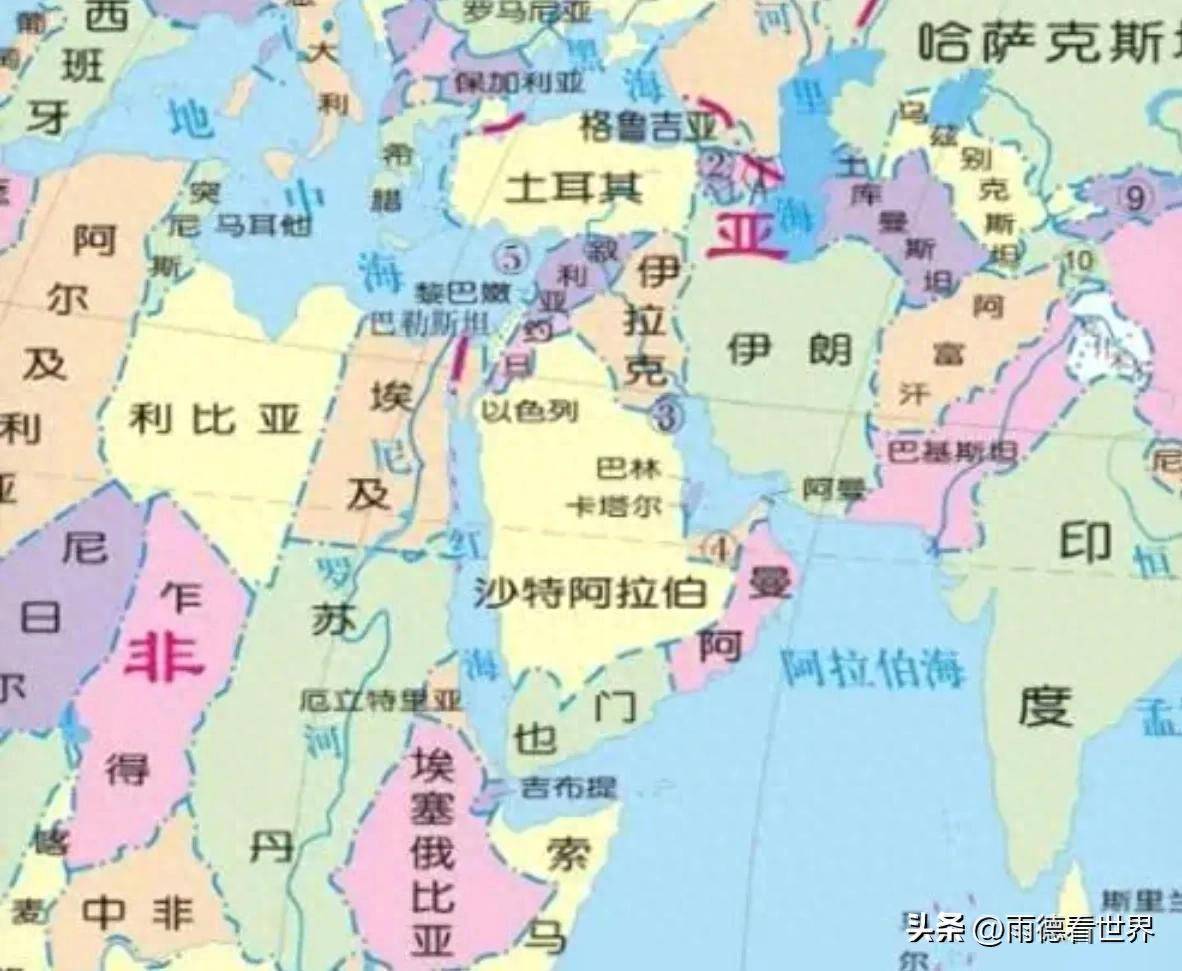
Core Insights - The global competition for oil, particularly in the Middle East, is a significant aspect of international relations, with the U.S. historically seeking control over this resource-rich region to maintain its influence and pricing power [1] - China's energy strategy is evolving towards reducing dependence on Middle Eastern oil, focusing on domestic production and diversifying import sources [3][7] Group 1: Energy Production and Consumption - In 2024, China's oil production is projected to reach a historical high of 212 million tons, yet it still falls short of the annual demand of 756 million tons, leading to an import volume of 553 million tons and a dependency rate of 71.9% [3][11] - The share of Middle Eastern oil in China's imports has decreased to below 55%, with Russia emerging as a significant supplier, accounting for 15.5% of imports [9][7] Group 2: Transportation and Supply Chains - Since 2004, China's oil imports have surged nearly sixfold, with Middle Eastern oil supply now constituting 51% of total imports, while Russian oil supply has reached 15.5% [5][9] - The construction of land-based energy corridors, such as the China-Russia oil pipeline with an annual capacity of 30 million tons, is helping to mitigate reliance on maritime routes like the Malacca Strait [7][19] Group 3: Energy Security Measures - China has established a strategic oil reserve system capable of covering 100 days of net imports, alongside increasing domestic oil and gas production to enhance energy security [11][12] - The promotion of green energy solutions, including the rise of electric vehicles and solar energy, is expected to reduce reliance on traditional oil, with 30 million electric vehicles projected to replace approximately 28 million tons of gasoline by 2024 [12][14] Group 4: Financial and Geopolitical Dynamics - The use of the Chinese yuan in oil transactions is increasing, with 99.6% of Sino-Russian oil trade now settled in yuan, marking a shift away from the U.S. dollar's dominance in global oil markets [14][19] - The potential of African oil resources is being recognized, with Nigeria's refineries expected to start production by 2025, contributing to a growing share of West African oil in the global market [16][19] Group 5: Strategic Initiatives - China's energy strategy is characterized by a multi-faceted approach, including the "island-hopping" strategy and enhancing energy autonomy, which is reshaping the global energy landscape [18][19] - The expansion of energy supply chains, including new production bases in Europe and North America, is aimed at overcoming trade barriers imposed by Western nations [18][19]

王毅慕安会发问振聋发聩:停购俄油气谁能补缺口?现场寂静揭现实
Sou Hu Cai Jing· 2025-08-01 04:46
慕尼黑安全会议上的一个问答瞬间,近来持续引发国际社会热议。当王毅向慕安会主席抛出那个尖锐问题——若中国终止从俄罗斯采购油气,有哪个国家能 填补这一缺口时,现场短暂的寂静,恰如其分地彰显了这个问题背后的现实分量。 全球能源格局如同一张精密编织的网络,每个节点的权重都由 客观条件决定,绝非主观意志可以轻易撼动。作为全球顶级能源消费国,中国每日的油气消 耗量是写在各类统计年鉴里的硬指标,这种规模级的需求,需要匹配同样量级的稳定供应才能维系。俄罗斯的油气产能摆在那里,从西伯利亚延伸至中国北 方的输油输气管道早已贯通多年,阀门开启便能实现稳定输送,这种地理邻近带来的便捷性与可靠性,在全球范围内都属罕见。 有人设想过由多个国家分摊供应缺口,但这就像农业生产的客观规律——播下白菜籽只能收获白菜,不可能凭空长出其他作物。中国的油气需求总量是既定 事实,俄罗斯的供应规模是历经多年市场磨合形成的结果,如同作物生长需要经历完整周期,其他国家短期内根本没有这样的冗余产能。 国家间的能源合作从来不是口头承诺那么简单,更像是蚂蚁搬运食物的过程,需要通过无数次信号传递与步骤衔接才能完成。中俄能源合作从最初的意向接 触,到价格谈判、管道设计 ...
日韩计划加强石油保供合作
Zhong Guo Hua Gong Bao· 2025-08-01 02:17
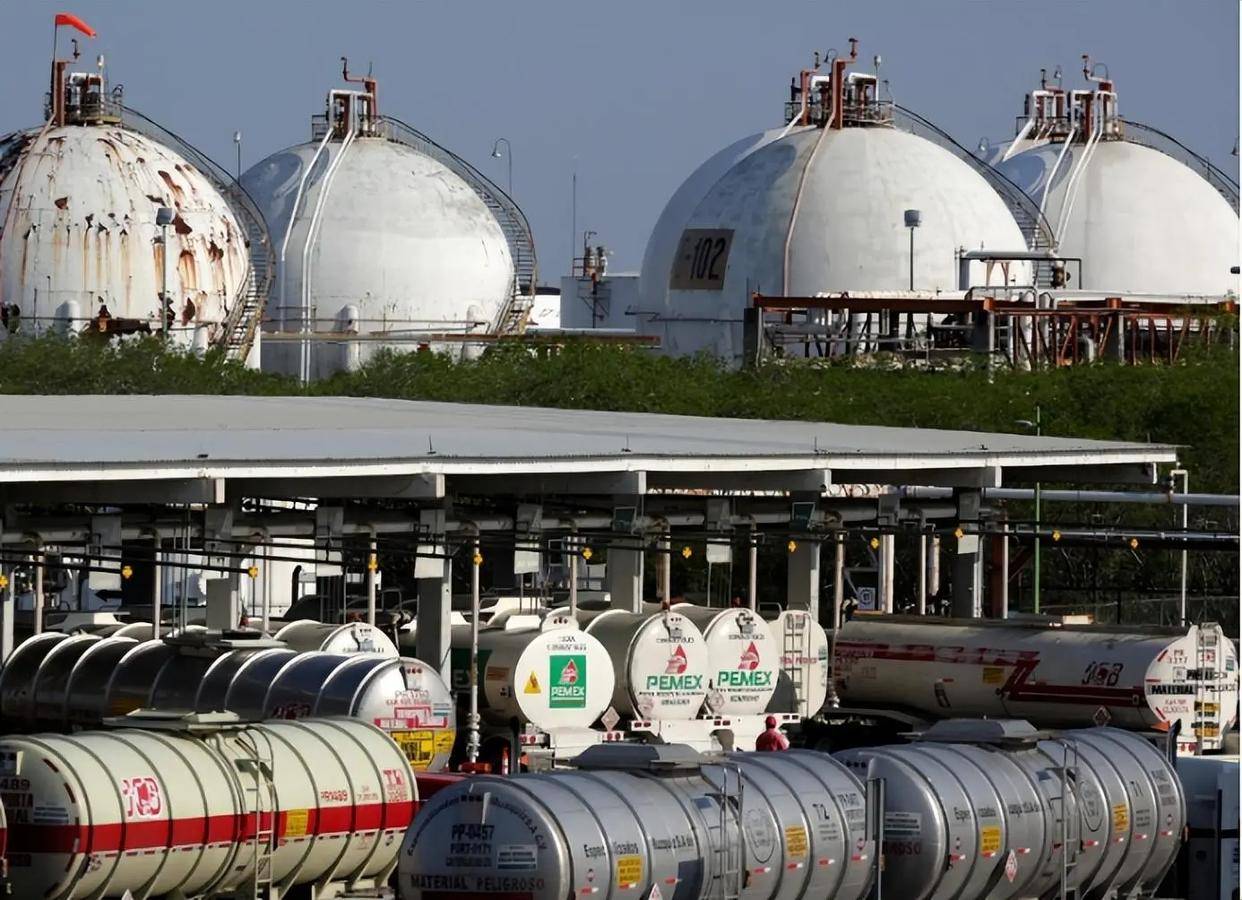
Core Insights - South Korea and Japan are enhancing cooperation on oil supply security in response to the recent Israel-Iran conflict, which raises concerns about potential disruptions in high-sulfur crude oil trade from the Middle East [1] - The Korea National Oil Corporation (KNOC) and the Japan Oil, Gas and Metals National Corporation (JOGMEC) held an annual meeting to discuss oil reserve policies, emphasizing the importance of regular collaboration for energy security [1] Group 1 - Both South Korea and Japan rely heavily on oil imports, with their crude oil demand almost entirely dependent on imports from the Persian Gulf [1] - KNOC reports that the combined oil reserves of the South Korean government and private sector can sustain supply for 206.9 days, while Japan's reserves can last for 199.3 days [1] - Japanese refiners indicate that over 80% of their crude oil procurement comes from Saudi Arabia and the UAE, highlighting the need for preparedness in light of the Israel-Iran conflict [1] Group 2 - Future plans include regular meetings between KNOC and JOGMEC to share experiences and strengthen energy security cooperation [1] - South Korean refiners are expected to prioritize meeting the spot procurement needs of Japanese buyers during peak demand seasons, such as the summer travel season and winter heating period [2] - Over the past decade, South Korean refining companies have established strong business relationships with Japanese trading companies and refineries, facilitating regular spot tenders for middle distillates [2]
【环球财经】印尼核电发展提速
Xin Hua Cai Jing· 2025-07-31 13:48
新华财经雅加达7月31日电(记者冯钰林)印度尼西亚能源和矿产资源部长巴赫利尔·拉哈达利亚日前宣 布印尼正加快核电站建设,积极寻求外国投资支持。 实际上,在印尼开发核电的想法已经讨论了约20年,但推进缓慢,印尼需要与核电建设运营方面更有经 验的国家合作。 (文章来源:新华财经) "印尼向所有国家开放互惠互利的投资。"巴赫利尔·拉哈达利亚表示,虽然合作模式仍在审查中,但已 有几个国家表示有兴趣投资印尼的核项目。 能矿部副部长尤利奥特·丹戎说,印尼已与多国签署谅解备忘录,接下来将评估其使用的核技术,"我们 会看哪种技术更先进,以及我们是否准备好应用。"他说。 印尼工商会副主席阿里奥·佐约哈迪库苏莫提出,核能作为国家加强能源安全并减少对化石燃料依赖的 战略手段,具有巨大潜力,广泛开展公众宣传以消除其对潜在风险的担忧至关重要。 据该部介绍,印尼拟定在苏门答腊和加里曼丹各建设装机容量为250兆瓦的核电站,而6月在西加里曼丹 省发现的24112吨铀矿储量,则进一步强化了印尼发展核电的燃料物质基础。"最迟到2034年,我们的能 源领域必须拥有核电。"巴利勒·拉哈达利亚说。 根据印尼国家电力公司《2025-2034年电力供应业 ...
国家发改委:扎实维护粮食、能源、产业链供应链等重点领域安全
Zheng Quan Shi Bao Wang· 2025-07-31 11:25
Core Points - The National Development and Reform Commission (NDRC) emphasizes the need for comprehensive coordination and balance to stabilize employment and ensure the safety of key sectors such as food, energy, and supply chains [1] - The NDRC highlights the importance of ensuring energy supply during peak summer and winter seasons while prioritizing the safety of people's lives [1] - There is a focus on enhancing safety production and disaster prevention measures, as well as addressing risks in key industries [1] - The implementation of policies to support enterprises and improve basic public services, particularly for the elderly and children, is underscored [1] - Efforts to stabilize the supply and prices of essential goods for the public are being intensified [1]
国家发改委:扎实维护粮食、能源、产业链供应链等重点领域安全 加大民生商品保供稳价工作力度
news flash· 2025-07-31 11:17
Core Viewpoint - The National Development and Reform Commission emphasizes the importance of maintaining the safety of key areas such as food, energy, and supply chains while enhancing efforts to stabilize prices and ensure the supply of essential goods [1] Group 1: Economic Stability Measures - The commission highlights the need for comprehensive coordination and balance to stabilize employment [1] - There is a focus on strengthening the safety of food, energy, and supply chains [1] - Efforts will be made to ensure energy and electricity supply during peak summer and winter seasons [1] Group 2: Public Safety and Support Policies - The safety of people's lives is prioritized, with an emphasis on enhancing production safety and disaster prevention [1] - There is a commitment to addressing risks and hidden dangers in key industries [1] - The implementation of policies to assist enterprises and improve basic public services, particularly for vulnerable groups, is reinforced [1] Group 3: Price Stabilization Efforts - The commission plans to increase efforts in ensuring the supply and stabilizing the prices of essential goods [1] - There is a focus on improving services for the elderly and children as part of the broader public welfare initiatives [1]
中美贸易急转藏深意,740亿能源大单告吹引震动,特朗普为何访华
Sou Hu Cai Jing· 2025-07-31 08:36
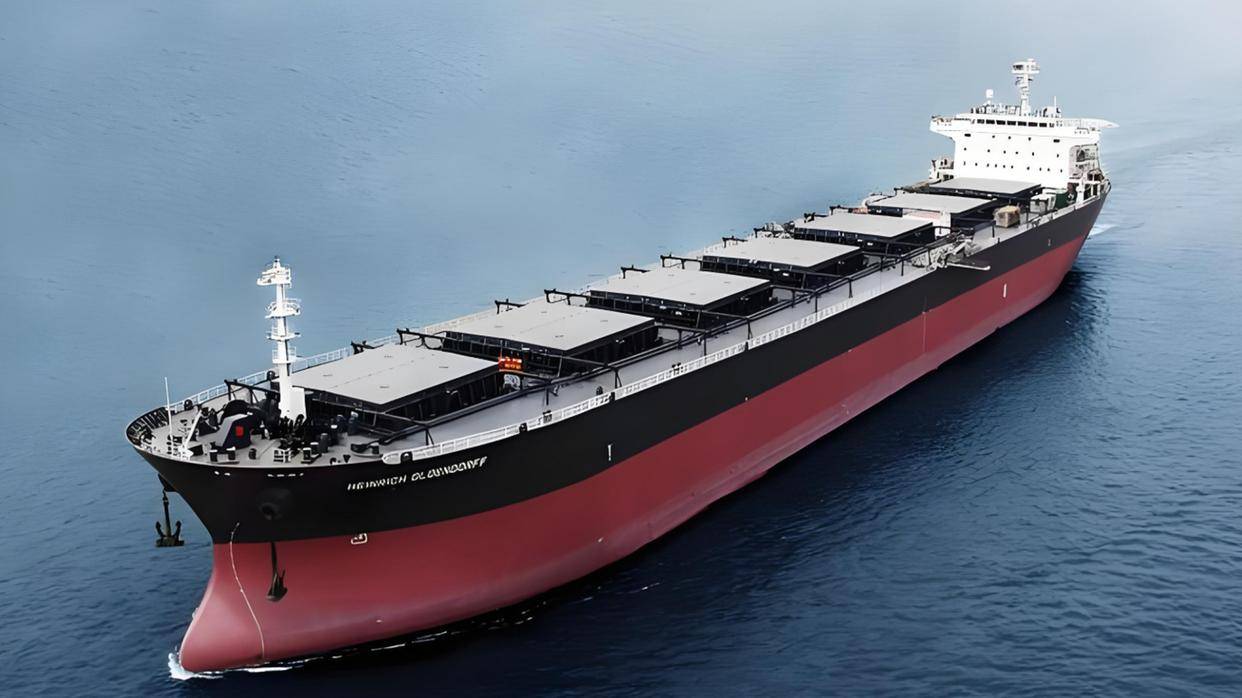
Core Viewpoint - The article discusses the significant decline in U.S. energy exports to China, resulting in a $74 billion deal collapsing, with U.S. energy exports to China dropping to zero by June 2025, highlighting the geopolitical and economic implications of this shift [1][3][5]. Group 1: U.S. Energy Export Decline - By June 2025, U.S. exports of crude oil, natural gas, and coal to China fell to zero, a stark contrast to nearly $800 million in business the previous year [3][5]. - The Texas oil fields faced severe repercussions, with layoffs and drilling platforms shutting down, and 30% of companies struggling for survival [3][5]. - Liquefied natural gas orders ceased for four consecutive months, and coal exports plummeted from $9 million to mere hundreds, indicating a drastic decline in U.S. energy market presence [3][5]. Group 2: Impact of Tariff Policies - The collapse of the energy deal is attributed to the tariff policies enacted during the Trump administration, which led to China imposing tariffs as high as 99% on U.S. energy products [5]. - U.S. shale oil production costs are around $60 per barrel, while Middle Eastern oil is below $20, making U.S. exports uncompetitive [5]. - Experts criticize the tariff strategy as self-destructive, effectively pushing away the largest customer for U.S. energy [5]. Group 3: China's Energy Strategy - China has diversified its energy sources, relying on cheaper oil from Russia, Saudi Arabia, and Iran, and has secured long-term contracts for natural gas [7]. - With an energy self-sufficiency rate exceeding 80% and a significant share of renewable energy, China is well-prepared to withstand the loss of U.S. energy imports [7]. - Analysts note that China's strategic approach has strengthened its position in the global energy market [7]. Group 4: Global Energy Market Shifts - The decline in U.S. energy exports is reshaping global energy dynamics, with countries like the EU, Japan, and South Korea seeking alternatives to U.S. oil and gas [9]. - The use of the U.S. dollar in energy transactions is decreasing, with 87% of energy trades between China and Russia now conducted in yuan [9]. - Research indicates a shift in the global energy trade center towards Asia, diminishing U.S. dominance in the market [9]. Group 5: U.S. Response and Internal Conflict - In response to the energy export crisis, Trump plans to visit Beijing in August 2025 to negotiate, amid pressure from Texas and West Virginia business owners [9][11]. - Internal conflicts within the U.S. administration are evident, with differing opinions on how to address the loss of the Chinese market [11]. - The situation reflects a complex interplay of economic and geopolitical factors, with both sides needing to navigate their strategies carefully [11]. Group 6: Future Outlook - Recent data shows U.S. energy exports at a two-year low, with a projected increase in trade deficit by $30 billion [13]. - The Asian energy consumption market is on the rise, indicating a long-term shift in global energy focus [13]. - The ongoing energy competition underscores the importance of self-reliance in energy security for nations [13].
贝森特当面警告,拟对华最高征税500%!俄罗斯石油,真的不能再买了?
Sou Hu Cai Jing· 2025-07-31 03:14
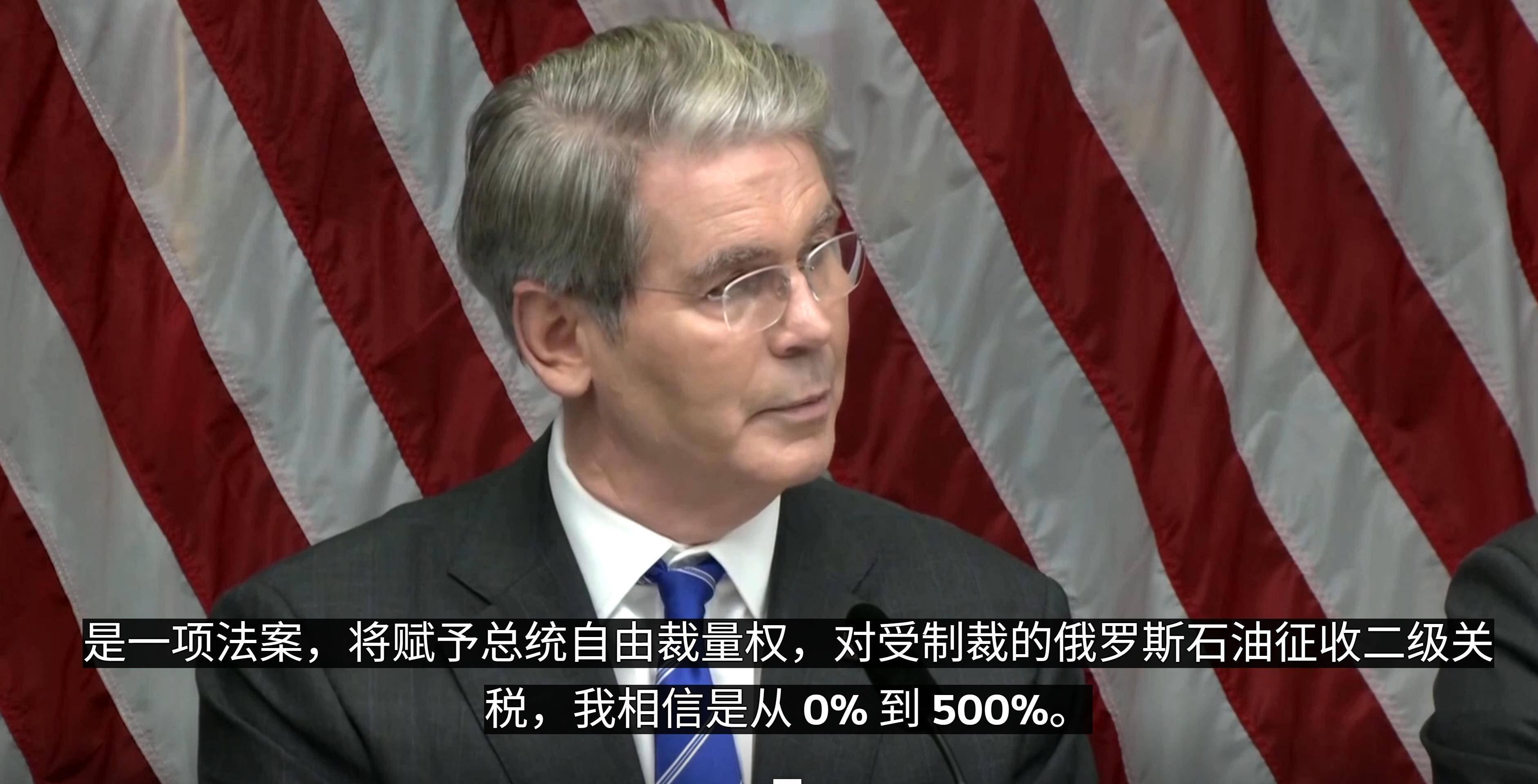
Group 1 - The core issue revolves around the U.S. Treasury Secretary's warning to China about potential punitive tariffs of up to 500% on Russian oil imports, highlighting the escalating tensions in U.S.-China relations [1][4] - The U.S. has the authority to impose these tariffs under the 2024 Russia Energy Sanctions Enhancement Act, with China currently importing approximately 2 million barrels of Russian oil daily [4] - China's response emphasizes its commitment to energy sovereignty, indicating a firm stance against U.S. pressure [4][6] Group 2 - The geopolitical dynamics between the U.S. and China are complicated by the natural geographic advantages and energy complementarities between China and Russia, which the U.S. may be underestimating [6] - Despite U.S. threats, China has increased its imports of Russian oil by 35%, demonstrating the market's resilience against sanctions [4][6] - The ongoing U.S.-China trade tensions are not only economic but also involve deeper political factors, with concerns in the U.S. about the impact of high tariffs on domestic prices and employment [6][8] Group 3 - The relationship between the U.S. and Europe is showing signs of strain, as some European leaders express reluctance to follow U.S. sanctions against China, indicating potential fractures in the transatlantic alliance [8] - The future of U.S.-China relations remains uncertain, with both sides calculating their interests, suggesting a prolonged conflict ahead [8][9] - China's adaptability and resilience in the face of U.S. pressure may lead to a diminishing influence of the U.S. in global markets if it continues to rely on coercive tactics [9]
参与雅江水电站建设的,为什么都是重研发的企业?
Sou Hu Cai Jing· 2025-07-31 00:11
新组建的中国雅江集团有限公司在国资委最新更新的99家央企名录中位列第22位,位于中国长江三峡集团之后,国家能源投资集团之前,甚至高于电信、 联通和移动三大运营商。 近期,雅鲁藏布江下游水电工程吸引了全球的关注。 这座计划投资1.2万亿耗时20年方能完工的庞大工程,开通后装机容量6000万千瓦、年发电量将超过3000亿千瓦时,能够满足3亿人全年用电需求,解决我 国东南沿海地区的用电紧张局面。 公开资料显示,这个工程国家足够重视。国家领导人出席雅江工程开工仪式,国家为此专门成立了副部级的中国雅江集团有限公司,由国务院国有资产监 督管理委员会代表国务院履行出资人职责,列入国务院国有资产监督管理委员会履行出资人职责的企业名单。 | 19 | 中国华电集团有限公司 | | --- | --- | | 20 | 国家电力投资集团有限公司 | | 21 | 中国长江三峡集团有限公司 | | 22 | 中国雅江集团有限公司 | | 23 | 国家能源投资集团有限责任公司 | | 24 | 中国电信集团有限公司 | | ર્ટ | 中国联合网络通信集团有限公司 | | 26 | 中国移动通信集团有限公司 | 该工程的启动将是中 ...


全球可再生能源发电成本持续降低
Jing Ji Ri Bao· 2025-07-31 00:07
Core Insights - Renewable energy is not only cost-competitive compared to fossil fuels but also reduces dependence on international fuel markets and enhances energy security [1][2] - The business case for renewable energy is stronger than ever, driven by technological advancements and improved supply chains, although short-term challenges remain [2][5] - International cooperation is essential to protect the achievements of the energy transition, ensuring open and resilient supply chains, and establishing stable policy and investment frameworks [5] Cost Competitiveness - In 2024, solar photovoltaic power is expected to be 41% cheaper than the lowest-cost fossil fuel electricity, while onshore wind projects will be 53% cheaper [1] - Onshore wind remains the most affordable new renewable energy source at $0.034 per kilowatt-hour, followed by solar photovoltaic at $0.043 per kilowatt-hour [1] - The addition of 582 gigawatts of new renewable energy capacity in 2024 is projected to save approximately $57 billion in fossil fuel costs [1] Structural Challenges - Rising costs in Europe and North America are influenced by structural challenges such as permitting delays and limited grid capacity, while regions like Asia, Africa, and South America may see significant cost reductions due to their renewable energy potential [2] - Integration costs are becoming a new constraint for renewable energy deployment, particularly in G20 and emerging market countries, necessitating accelerated grid investments [3] Financing and Investment - Financing costs are a critical factor in project feasibility, with high capital costs in many developing countries significantly increasing the levelized cost of electricity (LCOE) for renewables [3] - Stable and predictable revenue frameworks are crucial for reducing investment risks and attracting capital, with tools like Power Purchase Agreements (PPAs) playing a key role [2] Technological Advancements - Battery storage systems and hybrid systems combining solar, wind, and storage are increasingly vital for integrating intermittent renewable energy [4] - The cost of utility-scale storage systems is projected to reach $192 per kilowatt-hour by 2024, a 93% decrease since 2010, driven by manufacturing scale and technological improvements [3] Future Outlook - The total savings from all operational renewable energy projects in 2024 are estimated to reach $467 billion in fossil fuel costs [5] - The transition to renewable energy is irreversible, but its pace and equity depend on today's choices regarding international cooperation and investment frameworks [5]