量子科技

Search documents
北交所策略周报:春季躁动关注未来产业,蘅东光元旦前上市-20251228
Shenwan Hongyuan Securities· 2025-12-28 08:15
Group 1 - The market sentiment is positive, with the North Exchange 50 index rising by 1.19% and the trading volume decreasing by 11.69% compared to the previous week [2][12][16] - Key market themes include commercial aerospace, Hainan "closure" theme, liquid cooling, lithium battery material price increases, and rising copper prices, indicating active thematic investments in future industries such as quantum technology, biomanufacturing, hydrogen energy, nuclear fusion, brain-computer interfaces, embodied intelligence, and sixth-generation mobile communication [12][13][14] - The report maintains a positive outlook on the North Exchange thematic market during the spring rally, emphasizing the importance of timing in thematic investments and highlighting specific stocks to watch, including Fujida, Xingtou Measurement and Control, and others in emerging technology sectors [13][14] Group 2 - The North Exchange saw one new stock listed this week, Jiangtian Technology, which had a significant first-day increase of 180.58% [26][7] - The report notes that the quality of new stocks on the North Exchange is expected to continue improving, with attention on the upcoming listing of Hengtong Light [14][26] - The new three-board market saw 10 new listings and 42 delistings this week, with a total of 5,956 companies currently listed [47][49]
合肥,又将诞生一个明星IPO
投中网· 2025-12-28 07:01
Core Viewpoint - The article highlights the rapid growth and potential of the quantum technology industry in Hefei, China, particularly focusing on the success of Guoyi Quantum, which has achieved a valuation exceeding 9.5 billion yuan and is preparing for an IPO [7][12][16]. Group 1: Company Overview - Guoyi Quantum, founded by the 90s entrepreneur He Yu, has developed a complete industrial chain in quantum technology, covering quantum communication, computing, and measurement [7][8]. - The company has successfully launched several groundbreaking products, including the first domestically produced commercial X-band electron paramagnetic resonance spectrometer, breaking foreign monopolies [11][14]. - Guoyi Quantum has delivered over a thousand high-end scientific instruments to prestigious clients, including Tsinghua University and Oxford University, establishing itself as a leading unicorn in Hefei [11][14]. Group 2: Investment and Valuation - The company has attracted significant investment from notable firms such as Hillhouse Capital and IDG, reflecting strong confidence in its potential within the quantum technology sector [12][13]. - As of May 2025, Guoyi Quantum's valuation is calculated at over 9.5 billion yuan based on a share transfer price of 328.13 yuan, with He Yu holding more than 8.18% of the company [16][15]. Group 3: Industry Context - Hefei is emerging as a hub for quantum technology, with over 80 companies in the sector and a notable "Quantum Avenue" that symbolizes its growth [18][19]. - The city is home to the "Quantum Three Musketeers"—Guoyi Quantum, Guandun Quantum, and Benyuan Quantum—each focusing on different segments of the quantum industry [18][19]. - The development of quantum technology in Hefei is supported by significant policy backing and a strong academic foundation from institutions like the University of Science and Technology of China [19].


a股2026年十大预测
Soochow Securities· 2025-12-28 03:29
Group 1: Market Predictions - A-shares are expected to continue an upward trend, with a new volatility center established in 2026[7] - The rotation between growth and value styles will be crucial for trading success in 2026[12] - In the first half of 2026, the technology growth style is anticipated to lead, with a broadening trend in growth stocks[17] Group 2: Sector and Investment Trends - AI-related products, such as AI glasses, may replicate the growth seen in TWS earphones post-2019[25] - The "14th Five-Year Plan" will drive investment in emerging industries, including quantum technology and hydrogen energy[28] - Commodity prices are expected to reach a mid-term peak in the second quarter of 2026[31] Group 3: Economic Indicators - The Federal Reserve is projected to cut interest rates 1-2 times in the first half of 2026, then halt cuts in the second half[39] - The Producer Price Index (PPI) negative range is expected to continue narrowing, indicating potential economic recovery[42] - Risks include slower-than-expected economic recovery and geopolitical events that could impact market stability[3]
民航旅客量有望创新高,日本推出史上最高财政预算 | 财经日日评
吴晓波频道· 2025-12-27 00:29
Group 1 - The National Venture Capital Guidance Fund has officially launched, focusing on cutting-edge fields such as artificial intelligence, biopharmaceuticals, quantum technology, and 6G, with a lifespan of 15 to 20 years to match the long-term R&D needs of hard technology [2] - The fund aims to leverage a substantial fiscal investment to mobilize trillions in social capital, with at least 70% of investments directed towards seed and early-stage companies [2][3] - The fund operates as a "fund of funds," delegating decision-making to regional funds, which enhances efficiency and separates government guidance from market operations [2] Group 2 - Japan's new fiscal year budget is set at approximately 122.3 trillion yen (about $786 billion), marking a 6.3% increase from the previous year's budget [4] - The government plans to issue around 29.6 trillion yen in new bonds to support this budget, with a slight reduction in reliance on debt issuance [4][5] - The budget focuses on social security, debt repayment, and defense spending, reflecting the increasing financial pressures due to an aging population and rising costs [4][5] Group 3 - China's civil aviation sector is projected to achieve a record high of 770 million passenger trips in 2025, a 5.4% increase from 2024 and a 16.6% increase from 2019 [6] - The average economy class ticket price is expected to drop by 2.9% to 740 yuan, indicating a strategy of "price for volume" among airlines [6][7] - Despite the increase in passenger numbers, the low ticket prices are compressing profit margins, raising concerns about the sustainability of this pricing strategy [7] Group 4 - The robot rental market is experiencing explosive growth, with daily rental prices for basic intelligent robots dropping to around 200 yuan, while more advanced models range from 2,000 to 5,000 yuan [8] - The demand for robot rentals is high, with bookings extending into February, but prices are fluctuating significantly [8] - The market for humanoid robots is still in its early stages, and broader applications are needed for significant growth [9] Group 5 - The price of tomatoes has surged, with retail prices in many regions exceeding 10 yuan per jin, reflecting a nearly 71.9% year-on-year increase [10] - Adverse weather conditions have impacted supply, leading to higher prices during a seasonal transition period [10] - The demand for tomatoes is expected to rise further as the New Year and Spring Festival approach, maintaining upward pressure on prices [10] Group 6 - A report from Visa indicates that 28% of American adults would be pleased to receive cryptocurrency as a gift, with this figure rising to 45% among Gen Z [11] - Nearly half of shoppers have utilized AI tools for shopping tasks, highlighting the growing integration of technology in consumer behavior [11][12] - The rising inflation has made cryptocurrency a more appealing gift option, reflecting a shift in consumer preferences towards asset-based gifts [11] Group 7 - The LOF market has seen significant volatility, with multiple funds experiencing rapid price fluctuations, indicating potential irrational trading behavior [13] - The recent surge in silver prices has created arbitrage opportunities in the LOF market, but the risks associated with such trading strategies are evident [13] - The complexity of LOF products and the lack of transparency can lead to vulnerabilities for ordinary investors [13] Group 8 - The stock market experienced a slight increase, with the Shanghai Composite Index rising by 0.1% amid a volatile trading session [14] - Market sentiment showed signs of recovery after a brief dip, although many stocks turned from gains to losses [14] - The trading volume was substantial, indicating active market participation despite the fluctuations [14]

辽宁省委书记许昆林:积极引进量子科技等未来产业领军企业,推动形成龙头企业引领、众多企业聚集、各创新主体协作的良好发展生态
Xin Lang Cai Jing· 2025-12-27 00:11
Core Viewpoint - Liaoning Province is focusing on the development of quantum technology and other future industries, aiming to establish unique advantages and industrial characteristics in several niche areas [1] Group 1: Strategic Planning - The provincial government emphasizes the need for scientific planning and coordination to align with national strategic demands and cutting-edge technological trends [1] - A comprehensive development plan for quantum technology and future industries will be formulated, covering the entire chain from basic research to industrialization [1] Group 2: Innovation and Talent Development - There is a strong focus on enhancing innovation capabilities and attracting leading enterprises in quantum technology to create a collaborative ecosystem with leading companies and various innovation entities [1] - The government aims to strengthen the construction of relevant disciplines and curriculum systems to cultivate high-level talent, emphasizing talent introduction through team recruitment and project incubation [1] Group 3: Research and Development Support - Support for universities and research institutions will be increased to conduct industry technology research and development driven by market demand and results transformation [1] - The goal is to achieve breakthroughs in basic research and key core technologies, promoting deep integration of technological and industrial innovation [1] Group 4: Policy Environment - A favorable policy environment will be created to accelerate the establishment of a diversified and stable long-term investment mechanism [1] - The government plans to develop a support policy system for quantum technology and future industries, providing robust policy backing in areas such as technological breakthroughs, collaborative innovation, and cluster cultivation [1]
科学有答案 创新无止境(院士讲科普·年终特别报道)
Ren Min Wang· 2025-12-26 22:21
Core Insights - By 2025, China is expected to achieve significant breakthroughs in various scientific fields, including quantum technology and lunar research, contributing to the nation's technological self-reliance and innovation [3][5]. Group 1: Space Exploration - The Chang'e 6 mission is set to return samples from the moon's far side, revealing new insights into lunar oxidation mechanisms and marking a major scientific breakthrough in lunar research [4]. - The Tianwen-2 probe will conduct close-range exploration of a near-Earth asteroid, with a sample return expected by the end of 2027, indicating a shift towards long-term space exploration and resource utilization [4]. - China plans to advance its lunar research station, manned lunar missions, Mars sample return, and Jupiter system exploration, enhancing its capabilities in deep space exploration [4]. Group 2: Quantum Computing - Quantum computing is identified as a critical future technology, with China focusing on achieving full autonomy in quantum computing through the development of hardware and software systems [7]. - The third-generation superconducting quantum computer "Benyuan Wukong" has been launched, participating in numerous collaborations across key industries and achieving international cooperation in quantum computing [8]. - The development of quantum computing is likened to building a rocket, emphasizing the importance of integrating hardware and software for effective functionality [7]. Group 3: Brain-Computer Interfaces - Brain-computer interface technology is evolving to connect biological intelligence with machine intelligence, utilizing advanced decoding and encoding techniques to interpret brain signals [9]. - Clinical advancements in brain-computer interfaces are being made, with the establishment of comprehensive clinical trial centers and the initiation of global trials [11]. - The technology aims to redefine the boundaries of intelligence by merging carbon-based and silicon-based systems, enhancing cognitive capabilities [10]. Group 4: Digital Intelligence Technologies - Digital intelligence technologies, including cloud computing and artificial intelligence, are seen as essential tools for enhancing innovation across various industries [13]. - The integration of digital technologies into industrial processes is expected to significantly improve production efficiency and transform manufacturing paradigms [13]. - Open collaboration and resource sharing are highlighted as accelerators for technological advancement, contributing to global challenges [14]. Group 5: Hydrogen Energy - Hydrogen energy is recognized as a vital component of the renewable energy revolution, complementing electricity and supporting sustainable development [16]. - China has made significant progress in hydrogen fuel cell technology and is establishing a related industrial chain to enhance the role of hydrogen in the energy transition [17]. - The future of hydrogen energy will focus on tailored solutions that meet specific regional needs, ensuring its benefits for society [16]. Group 6: Research Talent Development - Universities are positioned as key players in nurturing research talent, aligning educational programs with national strategic needs [19]. - The emphasis is on practical applications of research, encouraging scientists to engage with industry and address real-world challenges [19]. - A supportive environment for young researchers is essential, promoting innovation and allowing for flexible evaluation of research outcomes [20]. Group 7: Basic Research Support - Basic research in China is gaining increased attention and funding, although it still lags behind developed countries in terms of investment [22]. - Continuous support for basic research is necessary, including funding stability and diverse investment channels to foster groundbreaking discoveries [22][23]. - A positive research culture is crucial for sustaining long-term engagement in basic research, promoting a supportive atmosphere for scientists [23]. Group 8: Science Popularization - The relationship between scientific innovation and public science education is emphasized, with efforts to enhance public understanding of science [24][25]. - Initiatives aimed at improving scientific literacy among youth are seen as foundational for future technological advancements [25][26].
21评论丨发挥引导基金带动作用,激活创新链条
Xin Lang Cai Jing· 2025-12-26 19:59
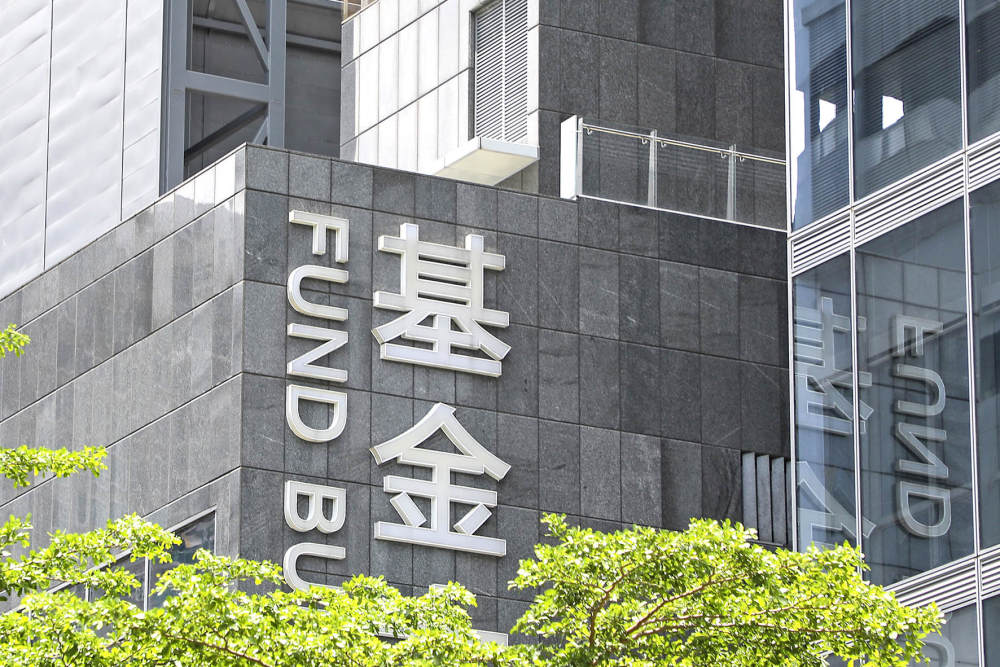
Core Viewpoint - The establishment of the National Venture Capital Guidance Fund marks a strategic initiative to support the construction of a modern industrial system and foster an autonomous innovation capital chain amid increasing international technological competition [1][2]. Group 1: Strategic Significance - The National Venture Capital Guidance Fund aims to inject confidence into the market by signaling long-term governmental support for innovation and entrepreneurship [2]. - It addresses market failures by providing initial funding for high-risk, long-cycle original technology projects, filling the gap left by market capital [2]. - The fund is designed to create an innovation network that promotes collaboration among various market entities, facilitating the flow of capital, knowledge, and management experience [2]. Group 2: Regional Fund Structure - The simultaneous establishment of three regional funds in Beijing-Tianjin-Hebei, the Yangtze River Delta, and the Guangdong-Hong Kong-Macao Greater Bay Area represents a strategic allocation of resources based on national priorities [2][3]. - Each region specializes in different aspects of innovation: Beijing-Tianjin-Hebei focuses on original innovation, the Yangtze River Delta excels in engineering and industrialization, and the Greater Bay Area is known for application and business model innovation [3]. - This structured approach aims to shorten the time it takes for technological achievements to transition from laboratories to market applications, contributing to the establishment of a unified national market [3]. Group 3: Long-term Investment and Risk Sharing - The 14th Five-Year Plan emphasizes the importance of building a modern industrial system and outlines strategic areas for future investment, including quantum technology and biomanufacturing, which require long-term funding and risk-sharing mechanisms [4][5]. - The National Venture Capital Guidance Fund is positioned as a key vehicle for this risk-sharing mechanism, particularly in critical technology sectors facing external pressures [5]. - The fund seeks to explore innovative institutional reforms to balance the acceptance of failure with the prevention of moral hazards, ensuring that investment decisions respect professional judgments while meeting policy objectives [5].
【财闻联播】涉嫌严重财务造假,*ST长药或被强制退市!官方回应“中原保时捷中心闭店跑路”
券商中国· 2025-12-26 13:33
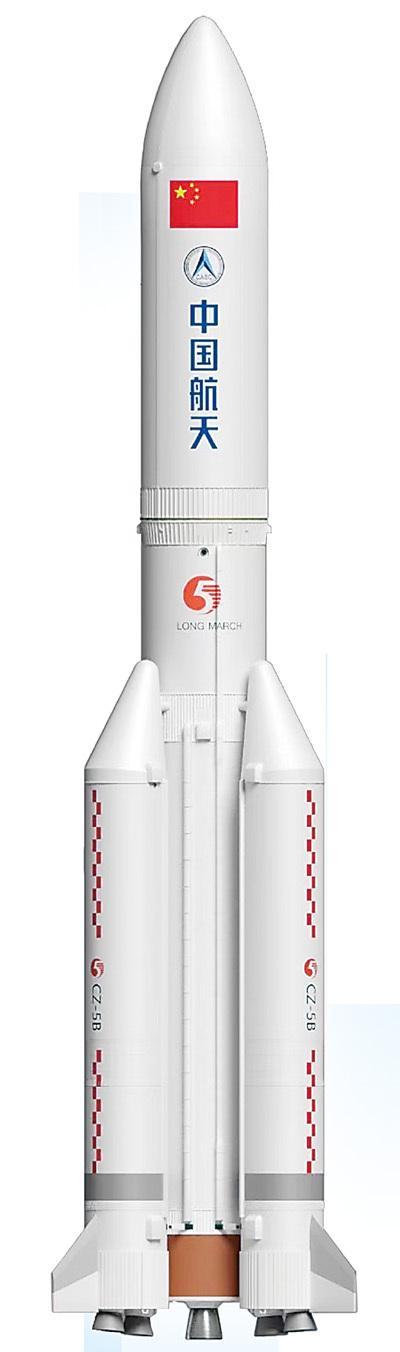
Macro Dynamics - The Ministry of Industry and Information Technology emphasizes the construction of computing power network systems and the implementation of the "millisecond computing" initiative by 2026, focusing on high-quality development in the information and communication industry [2] - The National Entrepreneurship Investment Guidance Fund aims to leverage over one trillion yuan in social capital, with a focus on early-stage investments in hard technology sectors such as AI, biopharmaceuticals, quantum technology, and 6G [3] Company Dynamics - The Shanghai Stock Exchange has released detailed rules for commercial rocket companies under the fifth set of listing standards on the Sci-Tech Innovation Board, aimed at supporting the innovation and development of the commercial aerospace sector [5] - The first national standards for large AI models have been implemented, marking a new phase of scientific authority and unified norms in China's large model industry, with over 95,000 calls made to the model for evaluation tasks [6] - As of November 2023, China's total installed power generation capacity reached 3.79 billion kilowatts, a year-on-year increase of 17.1%, with solar power capacity growing by 41.9% [7] - The official response to the closure of the "Zhengzhou Central Porsche Center" indicates that operations will be suspended, with plans to address employee wages and customer issues within specified timeframes [13] - *ST Chang Pharmaceutical has received a notice of administrative penalty for suspected false financial reporting, which may lead to a significant violation forced delisting [15] - Jiufeng Energy has exclusively supplied liquid hydrogen for the Long March 8 carrier rocket launch, which successfully placed 17 low-orbit satellite internet satellites into orbit [16] - Weichuang Electric plans to establish a joint venture in Thailand with Zhejiang Rongtai to expand the mechatronics market for intelligent robots [17]
国家创业投资引导基金正式启动 预计撬动万亿级社会资本
Sou Hu Cai Jing· 2025-12-26 11:44
Core Insights - The National Venture Capital Guidance Fund has officially launched, with three regional funds established: Beijing-Tianjin-Hebei, Yangtze River Delta, and Guangdong-Hong Kong-Macao Greater Bay Area, managed by CICC Capital, State Investment and Development Corporation, and Shenzhen Capital Group respectively [1][4] Group 1: Fund Characteristics - Increased financial support: The fund utilizes long-term special national debt funding, with a total of 100 billion yuan contributed by the central government to leverage central financial resources [1] - More precise investment focus: The fund emphasizes "early, small, long-term, and hard technology" investments, targeting cutting-edge fields such as artificial intelligence, biopharmaceuticals, quantum technology, and 6G, with a lifespan of 15 to 20 years to match the long-term R&D needs of hard technology [1] - Enhanced fund operation model: The fund operates under a "mother fund + regional fund + sub-fund" model, aiming to mobilize social capital at a scale of trillions through substantial fiscal resources [2] Group 2: Management Mechanism - Improved management mechanism: The fund will be operated in a market-oriented manner by capable management institutions, with plans to explore a due diligence exemption mechanism and a full lifecycle assessment mechanism to enhance fund vitality and encourage long-term focus [3] Group 3: Regional Fund Focus - Yangtze River Delta Venture Capital Guidance Fund: This fund is jointly funded by national and multi-level state-owned assets from Shanghai, Jiangsu, Zhejiang, and Anhui, focusing on investments in artificial intelligence, quantum technology, hydrogen energy storage, biomanufacturing, embodied intelligence, and 6G, supporting original and disruptive technological innovations [4]

新华财经晚报:国家创业投资引导基金启动 预计撬动万亿级社会资本
Xin Hua Cai Jing· 2025-12-26 11:38
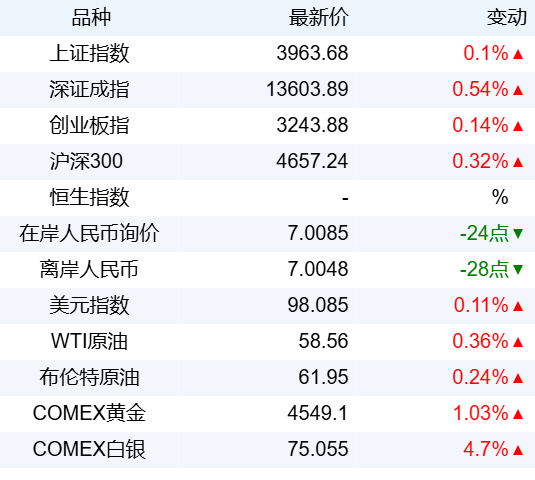
【重点关注】 ·国家创业投资引导基金启动预计撬动万亿级社会资本 ·工信部:有序开展卫星物联网等新业务商用试验 ·预计降费超8亿元深交所推出2026年降费措施 ·市场监管总局开展规范光伏行业价格竞争秩序合规指导 ·现货白银价格一度突破每盎司75美元 【国内要闻】 ·12月26日,国家创业投资引导基金启动,京津冀创业投资引导基金、长三角创业投资引导基金、粤港 澳大湾区创业投资引导基金三只区域基金设立运行。财政部相关负责人表示,国家创业投资引导基金具 备以下新的特点:一是财政力度更大;二是投资定位更精准,基金以"投早、投小、投长期、投硬科 技"为鲜明导向,聚焦人工智能、生物制药、量子科技、6G等前沿领域,以长达15年—20年的存续周期 匹配硬科技、长周期的研发需求;三是资金放大效果好,基金采取引导基金、区域基金、子基金三层架 构,在区域基金及子基金层面,积极面向地方政府、金融机构、国有企业、民营企业等,通过千亿级财 政资金,预计将撬动万亿级的社会资本。 ·财政部等四部门发布《关于进一步发挥政府性融资担保体系作用加力支持就业创业的指导意见》,其 中指出,降低创业群体综合融资成本。鼓励有条件的地方在可持续经营的基础上, ...