AI大模型

Search documents
机构:2026年国产算力业绩弹性及投资确定性兼备
Zheng Quan Shi Bao Wang· 2025-12-30 01:17
Group 1 - The core viewpoint is that both Chinese and US technology stocks have performed well since 2025, with the computing power sector leading the market, and there are localized explosive opportunities in models and applications [1] - Looking ahead to 2026, domestic computing power is on the rise, with performance elasticity and investment certainty, potentially replicating the long bull market seen in US stocks since 2023 [1] - The urgency for development in semiconductor equipment and AI chips has increased under overseas restrictions, making domestic substitution a prevailing trend [1] Group 2 - Domestic chip manufacturers have begun to explore solutions such as super nodes to compensate for the performance disadvantages of single cards by leveraging the advantages of multiple cards [1] - The construction of multi-card clusters raises higher demands for the quantity and quality of components, creating greater investment opportunities across the supply chain, particularly in segments like liquid cooling, storage, power supply, optical modules, PCB, and quantum computing [1] - North American computing power is experiencing a rigid expansion in AI model computing demand, with the North American computing power industry chain having mature capacity and technical barriers in server assembly, high-end PCBs, and optical modules, which are core support links for computing infrastructure construction [1] Group 3 - Domestic computing power is forming a complete ecosystem through technological collaboration between AI models and domestic chip manufacturers, with continuous capacity expansion expected to accelerate the penetration of domestic computing power chips into the domestic computing infrastructure supply chain under the dual logic of "self-control + supply chain security" [1]
千方科技9.56亿募资转向物流无人化 持续加码创新近三年研发费累逾30亿
Chang Jiang Shang Bao· 2025-12-29 23:46
Core Viewpoint - Qianfang Technology has announced a significant adjustment in the use of its raised funds, shifting the remaining 956 million yuan from the original smart transportation project to the research and industrialization of key technologies for logistics automation [1][2]. Fundraising and Project Adjustment - The total planned investment for the original project was 1.306 billion yuan, with 392 million yuan already invested, leaving 956 million yuan to be redirected to the new logistics automation project [2]. - The adjustment is attributed to increased payment pressures from downstream customers and tighter budgets, leading to slower market demand release than expected [2]. - The new project is expected to have a construction period of 36 months, with a post-tax internal rate of return of 13.16% and a static investment payback period of approximately 8.9 years [2]. Financial Performance - Qianfang Technology reported a strong recovery in performance, achieving a net profit attributable to shareholders of 189 million yuan in the first three quarters of 2025, a significant increase of 1098.97% year-on-year [1][4]. - The company’s total assets reached 17.944 billion yuan as of September 30, 2025, providing a solid foundation for the strategic transition [2]. Business Structure and Revenue - The company’s revenue for the first three quarters of 2025 was 5.256 billion yuan, a year-on-year decline of 2.82% [4]. - The intelligent IoT business generated 2.001 billion yuan in revenue, accounting for 72.54% of total revenue, while the smart transportation business contributed 903 million yuan, representing 27.29% [5]. International Market Presence - Qianfang Technology's products have been exported to multiple countries, including the United States, Germany, Poland, and Spain, with overseas revenue reaching 1.19 billion yuan in the first half of 2025, a year-on-year increase of 9.66% [6]. - The overseas revenue now accounts for 35.96% of total revenue, indicating a growing global market presence [6]. Research and Development - The company has maintained a high level of investment in research and development, with R&D expenses totaling 3.008 billion yuan from 2023 to the first three quarters of 2025 [6]. - As of June 30, 2025, Qianfang Technology had applied for over 5,600 patents, including 4,299 invention patents [6].

2025年中国车载语音行业概览:AI+车载语音重塑人车交互新体验(精华版)
Tou Bao Yan Jiu Yuan· 2025-12-29 12:02
Investment Rating - The report indicates a positive outlook for the in-vehicle voice industry in China, with a projected compound annual growth rate (CAGR) of 26.9% from 2025 to 2030, suggesting strong investment potential [5][28]. Core Insights - The Chinese in-vehicle voice industry is currently undergoing a significant transformation driven by AI large models, with major companies like iFlytek, Baidu, and Huawei leading the development of lightweight models for automotive applications [2]. - The penetration rate of voice control in passenger vehicles is steadily increasing, expected to rise from 73.4% in 2022 to 83.6% in 2024, indicating a shift from high-end to standard configurations across all price segments [3][24]. - The competitive landscape of the in-vehicle voice industry is highly concentrated, with the top five companies holding a market share of 86.7%, highlighting the dominance of key players [5]. Summary by Sections Industry Overview - The in-vehicle voice system integrates voice as the primary interaction method, allowing drivers and passengers to control vehicle functions and access information without manual operation, enhancing driving safety and cabin intelligence [7]. Current Trends - The in-vehicle voice systems are evolving from basic command execution to cognitive interaction, with a focus on personalized and emotional services [2][11]. - The hybrid voice system has become the mainstream solution, balancing the advantages of embedded and cloud-based systems, thus improving response speed and recognition accuracy [8]. Market Dynamics - The market size for in-vehicle voice systems in China is projected to grow from CNY 3.946 billion in 2025 to CNY 12.994 billion in 2030, driven by the ongoing electrification and intelligence of vehicles [28]. - The rapid growth of the passenger vehicle market, alongside increasing consumer demand for intelligent interaction experiences, is propelling the expansion of voice control systems [31][32]. Competitive Landscape - Major suppliers are actively developing AI large models, with different focuses: smart voice technology companies are optimizing model functions, internet tech firms are integrating voice with content services, and automakers are creating proprietary models linked to vehicle control systems [4][26]. Consumer Preferences - There is a notable increase in consumer preference for voice interaction features, which significantly influences purchasing decisions, prompting manufacturers to standardize and upgrade voice systems [35][40]. - The demand for seamless, intelligent, and personalized interaction experiences is driving the evolution of in-vehicle voice systems, with a focus on enhancing dialogue naturalness and functionality [41].
绕开光刻机“卡脖子”,中国新型芯片问世!专访北大孙仲:支撑AI训练和具身智能,可在28纳米及以上成熟工艺量产
Mei Ri Jing Ji Xin Wen· 2025-12-29 10:20
Core Insights - A Chinese research team has developed a new type of chip based on resistive random-access memory (RRAM) that achieves a precision of 24-bit fixed-point accuracy in analog matrix computations, marking a significant advancement in computational efficiency and energy consumption for AI applications [2][12][15] - This chip can support various cutting-edge applications, including 6G communication, embodied intelligence, and AI model training, while being produced using mature 28nm technology, thus avoiding reliance on advanced lithography processes [2][4][10] Technology Overview - The new chip represents a departure from traditional digital computing paradigms, which rely on binary logic and silicon-based transistors, to a more efficient analog computing approach that directly utilizes physical laws for calculations [4][6][15] - The precision of analog computing has been significantly improved, reducing relative error from 1% to one part in ten million (10⁻⁷), which is crucial for large-scale computations where errors can accumulate exponentially [8][12][15] Innovation Highlights - The chip's innovations include the use of RRAM as a core component, a novel feedback circuit design that minimizes energy consumption while enhancing accuracy, and the implementation of classic iterative optimization algorithms for efficient matrix equation solving [15][16] - The chip's architecture allows for high-speed, low-power solutions to matrix equations, making it suitable for applications that require rapid computations, such as second-order training methods in AI [19][21] Application Potential - The chip is particularly well-suited for medium-scale applications, such as AI model training and 6G MIMO systems, where it can outperform traditional digital chips [18][25] - Future plans include scaling the chip's matrix size from 16x16 to 128x128 within two years, with aspirations to reach 512x512, which would enhance its applicability in various computational scenarios [25][26] Strategic Value - This development provides China with a potential alternative to reliance on advanced processes and NVIDIA GPUs, positioning the country favorably in the global computational landscape [10][11] - The successful demonstration of this new computing paradigm is seen as a critical step towards addressing future computational demands, emphasizing the need for ongoing investment in technology and infrastructure [11][26]


中国证券行业2025年十大新闻
证券时报· 2025-12-29 08:48
Core Viewpoint - 2025 is a pivotal year for the Chinese securities industry, focusing on deepening functional positioning and high-quality development, with an emphasis on mergers and acquisitions, international expansion, and technological innovation [2][4]. Group 1: Industry Development Strategy - The industry development strategy is projected in two dimensions: internally, to create a first-class investment bank through mergers and acquisitions; externally, to recommend the value of Chinese assets to global markets [2]. - High-quality development is the main theme, requiring securities firms to act as both market participants and builders, as well as to become "boosters" of technological innovation and "guardians" of residents' wealth [2]. Group 2: Mergers and Acquisitions - 2025 marks a critical year for mergers and acquisitions in the Chinese securities industry, with major firms merging and smaller institutions seeking transformation [4]. - Notable mergers include the formation of "Guotai Haitong Securities" from Guotai Junan and Haitong Securities, and the merger of Guolian Securities and Minsheng Securities, which has significantly improved their profitability rankings [4][5]. - The merger wave is reshaping the competitive landscape, with the top firms now dominating profit rankings [4]. Group 3: Classification Evaluation - The classification evaluation of securities firms is undergoing significant revisions in 2025, emphasizing the need for firms to enhance their functional roles and professional capabilities [6]. - New regulations remove the revenue bonus while increasing the emphasis on return on equity (ROE), guiding firms to focus on operational efficiency rather than mere scale [6][7]. Group 4: Margin Trading and Financing - The margin trading market is heating up, with a record balance of 2.54 trillion yuan, reflecting a 36.6% increase from the beginning of the year [9]. - Competition among firms has intensified, with some lowering financing rates below 4% to attract clients, indicating a shift towards long-term client retention strategies [9][10]. Group 5: Investment Banking and Technology - The securities industry is adapting to the "hard technology" era, with reforms aimed at providing more inclusive financing paths for tech companies [11]. - Firms are establishing research institutes focused on emerging industries and enhancing their service capabilities through collaboration and talent development [13]. Group 6: AI Integration - The adoption of AI technologies is rapidly transforming the securities industry, with firms implementing AI across various business functions, significantly improving efficiency [15]. - The shift towards AI-driven services is seen as a critical factor in maintaining competitive advantage, with some firms fully committing to AI integration [15]. Group 7: Internationalization - Chinese securities firms are deepening their internationalization efforts, expanding their service offerings beyond traditional roles to include cross-border wealth management and derivatives trading [17]. - The internationalization process is driven by both market demand and strategic goals, positioning firms as key players in the global market [17][18]. Group 8: Asset Management Transformation - The public offering process for asset management is reaching a turning point, with firms reassessing their roles in the broader asset management landscape [19]. - The transition of collective investment products is a priority, with many firms adapting to regulatory changes and focusing on private equity and other specialized products [20][21]. Group 9: Capital Space Optimization - Regulatory changes are encouraging firms to optimize capital management, with a focus on enhancing capital utilization efficiency [25]. - The average leverage ratio of listed securities firms is currently at 3.45 times, indicating room for improvement compared to other financial institutions [25]. Group 10: Name Changes Reflecting Strategic Shifts - A wave of name changes among securities firms signals strategic realignments and resource restructuring following mergers and acquisitions [26]. - The name changes often reflect deeper integration and new strategic directions, indicating a shift in focus and operational capabilities [26][28].




IPO雷达丨冲刺港股IPO,卡诺普被证监会追问:是否存在入股对价异常?是否存在股权代持?
Sou Hu Cai Jing· 2025-12-29 03:42
近日,中国证监会公布《境外发行上市备案补充材料要求》,证监会国际司公示多家准IPO企业补充材 料要求,其中,成都卡诺普机器人技术股份有限公司(以下简称"卡诺普")被要求补充说明是否公司业 务涉及AI大模型的具体情况、公司主要股东上层投资人中"境外企业"及中国境内主体的穿透情况、是否 存在入股对价异常、是否存在股权代持等问题。 中国证监会请卡诺普补充说明以下事项,请律师核查并出具明确的法律意见: 一、请补充说明公司及下属公司是否涉及开发、运营网站、小程序、APP、公众号等产品,同时应包括 公司及下属公司通过授权旗舰店、其他品牌商城、第三方平台店铺、电商店铺营运服务等业务,收集、 储存、接触、处理的个人信息或订单规模。是否涉及向第三方提供信息内容,提供信息内容的类型以及 信息内容安全保护措施;同时说明收集及储存的用户信息规模、数据收集使用情况,上市前后个人信息 保护和数据安全的安排或措施。 二、关于业务模式:(1)请补充说明公司业务涉及AI大模型的具体情况,大模型的应用场景、具体功 能等;(2)请补充说明你公司下属公司经营范围包含工业互联网数据服务等的具体情况,是否实际开 展相关业务及具体运营情况,是否已取得必要 ...
开普云股价涨5.65%,长城基金旗下1只基金重仓,持有1.04万股浮盈赚取12.41万元
Xin Lang Cai Jing· 2025-12-29 01:59
Group 1 - The core viewpoint of the news is that Kaipu Cloud's stock has increased by 5.65%, reaching a price of 223.00 yuan per share, with a trading volume of 1.82 billion yuan and a turnover rate of 1.24%, resulting in a total market capitalization of 150.64 billion yuan [1] - Kaipu Cloud Information Technology Co., Ltd. is located in Dongguan, Guangdong Province, and was established on April 17, 2000, with its listing date on March 27, 2020. The company primarily provides internet content service platform construction, operation, and maintenance, as well as big data services for various government agencies, large and medium-sized enterprises, and media units across the country [1] - The main business revenue composition of Kaipu Cloud includes: intelligent source 49.34%, AI large model and computing power 20.04%, AI content security 15.37%, and digital governance and others 15.13% [1] Group 2 - From the perspective of fund holdings, one fund under Great Wall Fund has a significant position in Kaipu Cloud. The Great Wall Steady Growth Mixed A Fund (200016) held 10,400 shares in the third quarter, accounting for 3.27% of the fund's net value, ranking as the tenth largest holding [2] - The Great Wall Steady Growth Mixed A Fund (200016) was established on August 2, 2012, with a latest scale of 61.4456 million yuan. Year-to-date returns are 22.68%, ranking 4145 out of 8159 in its category; the one-year return is 21.93%, ranking 4008 out of 8147; and the cumulative return since inception is 145.28% [2]

2025年终经济观察 | 稳企业强信心 筑牢高质量发展根基
Xin Hua She· 2025-12-29 00:03
Core Viewpoint - The stability of enterprises is crucial for the economic development of China, with a focus on policies aimed at stabilizing employment, businesses, markets, and expectations to promote high-quality economic growth [1][2]. Group 1: Policy Support and Business Performance - Guangdong private enterprise Xincheng Group reported an annual revenue exceeding 80 billion yuan, with a net profit growth of over 15%, attributed to supportive policies amid global and domestic economic pressures [2]. - The Chinese government has implemented a series of policies to enhance business vitality, including financial support for upgrading manufacturing lines, which has significantly reduced financing costs for enterprises [2][3]. Group 2: Market Environment and Legal Framework - Creating a fair and vibrant market environment is essential for stabilizing enterprises, with measures such as the implementation of the Private Economy Promotion Law and the establishment of a long-term regulatory mechanism for enterprise-related fees [3]. - Efforts to alleviate burdens on businesses include clearing overdue payments, regulating administrative enforcement, and promoting financial support measures [3]. Group 3: Innovation and Competitiveness - Innovation is driving enterprise competitiveness, exemplified by Shanghai Xijing Technology's Q-Truck, which utilizes green energy and advanced AI technology, successfully securing international orders [4]. - The focus on innovation is emphasized as essential for enterprises to navigate challenges and enhance resilience, with policies encouraging investment in new technologies and production capabilities [5][6]. Group 4: Future Opportunities and Strategic Planning - The upcoming "14th Five-Year Plan" outlines strategic opportunities for various industries, including the establishment of a modern industrial system and the promotion of high-level technological self-reliance [9]. - The National Venture Capital Guiding Fund aims to attract social capital for early-stage enterprises, indicating a long-term commitment to supporting business growth [10]. Group 5: Investment and Development Focus - Recent initiatives highlight the importance of effective investment in new productive forces and emerging industries, such as integrated circuits and biomedicine, to create favorable conditions for enterprise development [11]. - The emphasis on improving the business environment and fostering innovation is expected to invigorate the Chinese economy, leading to sustained growth and vitality [12].
小鹏汽车联合北大提出全新视觉Token剪枝框架
Zheng Quan Shi Bao Wang· 2025-12-28 08:41
Core Viewpoint - The collaboration between Xiaopeng Motors and Peking University's Key Laboratory of Multimedia Information Processing has resulted in the acceptance of a paper that introduces a new efficient visual token pruning framework, FastDriveVLA, specifically designed for end-to-end autonomous driving VLA models [1] Group 1: Company Developments - Xiaopeng Motors aims to continue its focus on achieving Level 4 (L4) autonomous driving technology [1] - The company plans to increase investments in the AI large model sector to accelerate the integration of physical AI large models into vehicles [1] Group 2: Industry Innovations - The FastDriveVLA framework represents a new paradigm for efficient visual token pruning in autonomous driving VLA models [1]
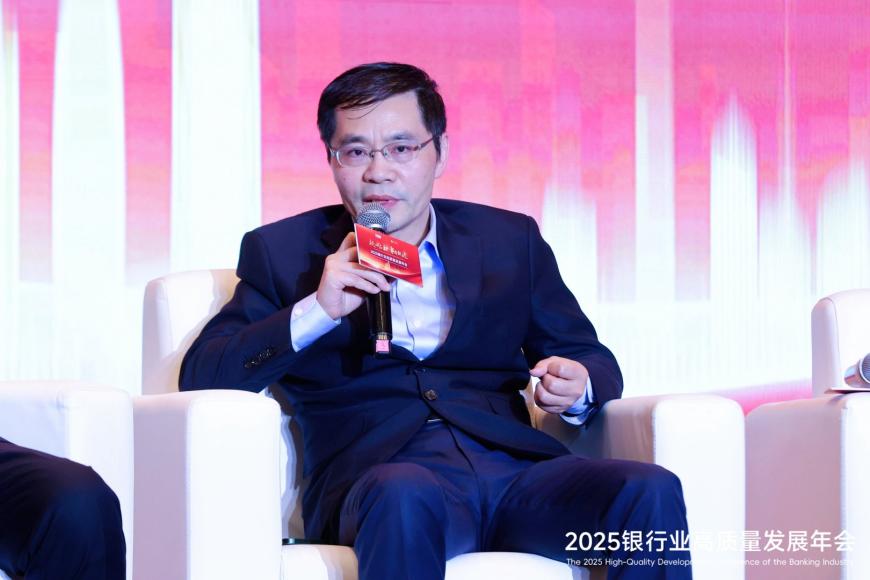
光大银行智能运营中心副总经理黄广明:大模型算力成本会不断下降,这是行业发展的必然趋势
Jin Rong Jie· 2025-12-28 04:19
12月26日,由金融界主办、宁波银行支持、清华大学经济管理学院中国金融研究中心提供学术支持的"启航·2025银行业高质 量发展年会"在北京成功举办。本次年会以"凝心启新,聚力致远"为主题,汇聚监管专家、学界精英、行业领袖及科技企业 代表,围绕服务实体经济、数字化转型、AI+金融创新、风险防控等议题展开深度讨论,为银行业高质量发展建言献策。 光大银行智能运营中心副总经理黄广明在会上分享了该行在AI大模型应用领域的探索与思考。他首先介绍了光大银行科技 板块架构:即包括模型算法部门、算力部门、数据部门、IT开发部门。 黄广明表示,光大银行是业内少数专门成立模型部门的银行,且该部门已成立多年。早期,该行主要布局人工智能小模 型、决策式模型,通过与互联网公司合作,在业务场景中实现了良好应用;近年来,随着大模型兴起,该行将大模型应用 于银行整体经营环节。目前,该行每年模型应用数量以十倍级速度递增。 针对行业普遍关心的算力成本过高问题,黄广明分享了两点看法:一是随着技术持续改进,大模型算力成本会不断下降, 这是行业发展的必然趋势;二是算力未来会像电脑一样成为常态配置,未来算力也不会成为大模型落地的阻碍。 谈及光大银行大模型 ...