
华为鸿蒙座舱

Search documents
新年车市重压下,岚图提前预告4款华为赋能新车
Guan Cha Zhe Wang· 2026-01-30 02:16
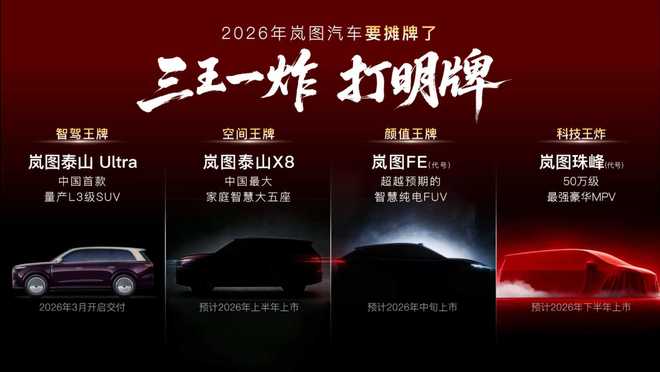
Core Viewpoint - Lantu Motors plans to launch four new models in 2026, all equipped with Huawei's L3-level intelligent driving hardware, aiming to enhance market share, user reputation, and brand development ahead of its upcoming IPO in Hong Kong [1][10]. Group 1: New Model Launches - The four new models include the Lantu Taishan Ultra, which is the first mass-produced L3-level assisted driving SUV in China, set to deliver in March 2026 [3]. - The Lantu Taishan X8, a large five-seat SUV, will feature Huawei's latest intelligent cockpit system and is expected to launch in the first half of 2026 [3]. - The Lantu FE, a fashionable utility vehicle, will be equipped with a four-laser radar perception system and is scheduled for a mid-2026 release [3]. - A luxury MPV, code-named "Zhu Feng," will debut with 12 innovative technologies and is the first MPV to feature L3-level intelligent driving, launching in the second half of 2026 [3]. Group 2: Financial Performance and Market Position - Lantu Motors has shown significant growth, with sales reaching 86,000 units in 2024, a 70% increase year-on-year [4]. - The company has been deepening its collaboration with Huawei, signing a strategic agreement in January 2024, which has led to the launch of new models equipped with Huawei's technology [6]. - Despite a strong sales performance, Lantu reported net losses of 1.538 billion yuan, 1.496 billion yuan, and 90 million yuan from 2022 to 2024, but turned a profit of 434 million yuan in the first seven months of 2025 [7]. Group 3: IPO and Market Strategy - Lantu Motors is preparing for an IPO in Hong Kong, with plans to replace Dongfeng Group's listing status, which has faced declining stock prices [10]. - The IPO process involves a combination of equity distribution and merger, with Lantu expected to gain a higher valuation [10]. - The company has received necessary approvals from various regulatory bodies, indicating progress towards its market debut [10]. Group 4: Challenges Ahead - Lantu did not meet its sales target of 200,000 units last year, with over half of its sales reliant on the Dreamer MPV model [11]. - The company faces challenges from increased market competition and the reduction of government subsidies, which have been crucial for its financial performance [11][13]. - Operational efficiency and cost optimization remain critical areas for Lantu as it aims to sustain growth in a competitive landscape [11].

【新能源周报】新能源汽车行业信息周报(2026年1月5日-1月11日)
乘联分会· 2026-01-13 08:40
Industry Information - The world's first commercially viable solid-state battery has been introduced, featuring an energy density of 400 Wh/kg and the ability to charge in just 5 minutes, with a cycle life of up to 100,000 times [11] - The Ministry of Commerce predicts that over 11.5 million vehicles will be replaced under the vehicle trade-in policy by 2025, with a total sales value exceeding 2.6 trillion yuan [11] - At CES 2026, autonomous driving technology and artificial intelligence are highlighted as key themes, with significant interest in how AI can address safety challenges in autonomous vehicles [12][13] - Contemporary Amperex Technology Co., Ltd. (CATL) has signed a five-year strategic agreement with NIO to deepen collaboration on battery swapping technology [10] - The first half-solid-state lithium battery energy storage project in Inner Mongolia has been connected to the grid, marking a significant advancement in energy storage technology [14] Policy Information - The State Council is accelerating the introduction of comprehensive management measures for the recycling of new energy vehicle batteries [22] - Various local governments are implementing policies to promote the development of electric vehicle charging infrastructure, including the construction of charging stations and the integration of charging facilities in urban planning [20][25][37] - The Guangdong provincial government is optimizing insurance services for new energy vehicles and exploring the development of smart driving liability insurance products [27] - The Ministry of Industry and Information Technology is soliciting opinions on national standards related to automatic parking and safety event data for smart connected vehicles [35] Company Information - NIO has launched 36 new power swap stations, bringing the total to 3,680 stations [8] - GAC Group has signed a contract with Huawei to deepen cooperation in the HarmonyOS ecosystem and AI technology [8] - Leap Motor has achieved a record delivery of over 160,000 units of its B series vehicles [8] - Huawei's partnership with Qian Kun has resulted in over 900,000 units sold in 2025, with a market share of 27.8% in urban navigation assistance [16]






2025年中国车载语音行业概览:AI+车载语音重塑人车交互新体验(精华版)
Tou Bao Yan Jiu Yuan· 2025-12-29 12:02
Investment Rating - The report indicates a positive outlook for the in-vehicle voice industry in China, with a projected compound annual growth rate (CAGR) of 26.9% from 2025 to 2030, suggesting strong investment potential [5][28]. Core Insights - The Chinese in-vehicle voice industry is currently undergoing a significant transformation driven by AI large models, with major companies like iFlytek, Baidu, and Huawei leading the development of lightweight models for automotive applications [2]. - The penetration rate of voice control in passenger vehicles is steadily increasing, expected to rise from 73.4% in 2022 to 83.6% in 2024, indicating a shift from high-end to standard configurations across all price segments [3][24]. - The competitive landscape of the in-vehicle voice industry is highly concentrated, with the top five companies holding a market share of 86.7%, highlighting the dominance of key players [5]. Summary by Sections Industry Overview - The in-vehicle voice system integrates voice as the primary interaction method, allowing drivers and passengers to control vehicle functions and access information without manual operation, enhancing driving safety and cabin intelligence [7]. Current Trends - The in-vehicle voice systems are evolving from basic command execution to cognitive interaction, with a focus on personalized and emotional services [2][11]. - The hybrid voice system has become the mainstream solution, balancing the advantages of embedded and cloud-based systems, thus improving response speed and recognition accuracy [8]. Market Dynamics - The market size for in-vehicle voice systems in China is projected to grow from CNY 3.946 billion in 2025 to CNY 12.994 billion in 2030, driven by the ongoing electrification and intelligence of vehicles [28]. - The rapid growth of the passenger vehicle market, alongside increasing consumer demand for intelligent interaction experiences, is propelling the expansion of voice control systems [31][32]. Competitive Landscape - Major suppliers are actively developing AI large models, with different focuses: smart voice technology companies are optimizing model functions, internet tech firms are integrating voice with content services, and automakers are creating proprietary models linked to vehicle control systems [4][26]. Consumer Preferences - There is a notable increase in consumer preference for voice interaction features, which significantly influences purchasing decisions, prompting manufacturers to standardize and upgrade voice systems [35][40]. - The demand for seamless, intelligent, and personalized interaction experiences is driving the evolution of in-vehicle voice systems, with a focus on enhancing dialogue naturalness and functionality [41].
燃油车入局智能化,传统品牌积极推进“油电同智”
Zheng Quan Shi Bao Wang· 2025-12-11 05:24
Core Insights - The automotive industry is witnessing a shift where traditional fuel vehicles are accelerating their smart technology integration to compete with the rising market share of electric vehicles (EVs) [1][2][9] - Industry experts suggest that the smartification of fuel vehicles is a transitional solution, as the long-term trend favors the replacement by electric vehicles, leading to a restructuring of the automotive supply chain [1][9] Fuel Vehicle Smartification - The launch of the first fuel sedan equipped with Huawei's advanced driving solution, the FAW Audi A5L QianKun, signifies a trend where traditional fuel vehicles are adopting smart technologies [2][3] - Data from the China Passenger Car Association indicates a 17.3% year-on-year decline in fuel vehicle sales in 2024, with their market share dropping to 52.4%, and further down to 49.9% in the first nine months of 2025 [2] - A report highlights that 71.9% of consumers consider smart cockpit features as a primary factor in their purchasing decisions, indicating that smart technology is becoming a critical decision-making factor [2] Technological Challenges - Experts point out several technological bottlenecks in the smartification of fuel vehicles, including limitations in architecture, power supply issues, and challenges in heat dissipation and integration [5][6] - The traditional fuel vehicle's distributed electronic architecture has low bandwidth, making it difficult to support high computing demands, while the 12V battery cannot sustain the power needs of advanced driving hardware [5][6] Industry Trends - The trend of fuel vehicles adopting smart driving solutions is gaining momentum, with various models from brands like Mercedes-Benz and Volkswagen also integrating smart technologies [3][4] - The automotive industry is moving towards an "oil-electric intelligence" strategy, with major players like FAW-Volkswagen and Mercedes-Benz committing to smart upgrades across their fuel vehicle lineups [8][10] Future Outlook - The shift towards smartification in fuel vehicles is expected to have profound impacts on the automotive industry, driving more companies to invest in smart driving technology and potentially altering market competition dynamics [9] - The long-term outlook suggests that electric vehicles will dominate the market, with the smartification of fuel vehicles serving as a defensive innovation strategy to buy time for the transition [9][10]

燃油车加速智能化 供应链或重塑
Zheng Quan Shi Bao Wang· 2025-12-10 23:37
Core Insights - The increasing demand for intelligent driving is driving traditional fuel vehicles to accelerate their smart transformation in response to market competition [1] - The launch of the first fuel sedan equipped with Huawei's advanced intelligent driving solution, the FAW Audi A5L QianKun Intelligent Driving Edition, marks a significant development in the automotive industry [1] - Industry experts suggest that the smart transformation of fuel vehicles is a transitional solution, as the long-term trend favors electric vehicles, leading to a restructuring of the automotive supply chain [1] Industry Trends - The market share of new energy vehicles is continuously increasing, prompting traditional fuel vehicles to adopt intelligent features [1] - The automotive industry is expected to evolve into a structure where "electrification lays the foundation, and intelligence determines the victor" [1] - The status of traditional Tier 1 suppliers is declining, with Chinese technology companies becoming the core of the supply chain [1]
燃油车入局智能化 传统品牌积极推进“油电同智”
Zheng Quan Shi Bao· 2025-12-10 18:52
Core Viewpoint - The automotive industry is witnessing a shift where traditional fuel vehicles are accelerating their smart technology integration to compete with the rising market share of electric vehicles (EVs). However, experts believe that this smartification of fuel vehicles is a transitional solution, as the long-term trend favors the replacement by electric vehicles, leading to a restructuring of the automotive supply chain with Chinese tech companies becoming central players [1][9]. Group 1: Smartification of Fuel Vehicles - The first fuel sedan equipped with Huawei's advanced smart driving solution, the FAW Audi A5L QianKun, has been launched, alongside the Dongfeng Nissan Teana featuring Huawei's Harmony cockpit [2]. - Data from the China Passenger Car Association indicates that fuel vehicle sales are projected to decline by 17.3% year-on-year in 2024, with their market share dropping to 52.4%. By the first nine months of 2025, this share further decreased to 49.9%, indicating that new energy vehicles have officially surpassed traditional fuel vehicles as the mainstream choice for consumers [2][3]. - A report highlights that 71.9% of users consider smart cockpits a primary factor in their purchasing decisions, while 69.3% focus on in-car interaction experiences, emphasizing the critical role of smart technology in consumer choices [2]. Group 2: Technological Challenges and Solutions - Experts point out that fuel vehicles face several technological bottlenecks in their smartification process, including limitations in architecture, power supply issues, and challenges in heat dissipation and integration [5]. - Despite these challenges, the narrative that fuel vehicles cannot be smartified is changing, as more models are now equipped with advanced smart driving systems, such as the FAW Audi A5L QianKun and the SAIC Audi A5L Sportback [6]. - Huawei and Audi have overcome key challenges related to computing power, power supply, and heat dissipation, enabling the integration of high-performance computing platforms in fuel vehicles [7]. Group 3: Industry Transformation and Supply Chain Restructuring - The trend of fuel vehicles adopting smart technology is part of a broader "oil-electricity intelligence" strategy being pursued by many automakers, including joint ventures like FAW-Volkswagen and Mercedes-Benz [8]. - As consumer demand for smart driving features increases and technology costs decrease, traditional automakers are accelerating their efforts to enhance their products' smart capabilities [8]. - The shift towards smartification is expected to have profound implications for the automotive industry, driving a transformation towards intelligent vehicles and altering competitive dynamics, with a focus on collaboration between automotive manufacturers and tech companies [9][10].
合纵连横,油电同强:丰田在中国破局的两条路径
2 1 Shi Ji Jing Ji Bao Dao· 2025-12-05 13:01
Core Viewpoint - The annual Guangzhou Auto Show highlighted the significant presence of Huawei and its collaborations with GAC and Dongfeng, while foreign brands like Toyota are also making notable strides in their transformation efforts, particularly in the electric and hybrid vehicle sectors. Group 1: Huawei's Role and Domestic New Forces - Huawei was a major focus at the Guangzhou Auto Show, showcasing its partnerships with GAC and Dongfeng through models like "Qijing" and "Yijing" [1] - Domestic new forces such as Xiaomi's upgraded HAD system and the launches from Zhiji and Xiaopeng also drew considerable attention [1] Group 2: Toyota's Transformation - Toyota reported a net profit of 932 billion yen and revenue of 12.38 trillion yen for Q3 2025, with a market capitalization of $266 billion, making it the second-largest automaker globally, surpassing BYD [2] - At the auto show, Toyota unveiled four new products, emphasizing its commitment to both electric and hybrid technologies under the "oil-electric synergy" strategy [2] - The new models include the Corolla with a fuel efficiency of 4.13 liters per 100 km and the bZ3, which is the first pure electric model under the RCE system [2] Group 3: Collaborative Strategies - Toyota is enhancing its product capabilities by collaborating with various Chinese companies, exemplified by the launch of the GAC Toyota Platinum Smart 7, which targets the mid-range electric sedan market [3] - This model integrates Huawei's HarmonyOS and electric drive technology, as well as compatibility with Xiaomi's hardware ecosystem and Momenta's intelligent driving solutions [3] Group 4: Market Performance - From January to October this year, FAW Toyota achieved cumulative sales of 660,000 units, while GAC Toyota's total sales reached nearly 640,000 units [4] - Through its "oil-electric synergy" and collaborative strategies, Toyota is transforming into a formidable competitor in the Chinese market, challenging domestic new forces [4]

合纵连横 油电同强:丰田在中国破局的两条路径
2 1 Shi Ji Jing Ji Bao Dao· 2025-12-05 13:01
Core Viewpoint - The annual Guangzhou International Auto Show highlighted the significant presence of Huawei and the transformation efforts of foreign brands like Toyota, which showcased its new products and strategies to compete in the Chinese market [2][3]. Group 1: Toyota's Financial Performance - In Q3 2025, Toyota reported a net profit of 932 billion yen and revenue of 12.38 trillion yen, with a market capitalization of $266 billion, making it the second-largest automaker globally, surpassing BYD by more than double [2][3]. Group 2: Product Launches and Innovations - Toyota is actively developing electric and hybrid technologies, introducing new models such as the intelligent hybrid Corolla and the new RAV4, which offers multiple powertrain options, including a 1.8L hybrid version with a fuel efficiency of 4.13 liters per 100 kilometers [3]. - The new bZ3 model is Toyota's first pure electric vehicle under the RCE system, showcasing its commitment to electric mobility [3]. Group 3: Strategic Collaborations - Toyota is leveraging partnerships with Chinese companies to enhance its product offerings, exemplified by the launch of the GAC Toyota Platinum Smart 7, which integrates Huawei's HarmonyOS and Xiaomi's hardware ecosystem, along with Momenta's intelligent driving solutions [3]. - This collaborative approach allows Toyota to address its weaknesses and strengthen its position in the competitive Chinese market [3]. Group 4: Sales Performance - From January to October this year, FAW Toyota achieved cumulative sales of 660,000 units, while GAC Toyota's total sales reached nearly 640,000 units, indicating a strong market presence and competitiveness against new entrants [4].
破除新能源用车焦虑,传祺向往的解题思路
晚点LatePost· 2025-12-02 09:13
Core Viewpoint - GAC Trumpchi's new positioning of the "Wishing" series as a "no range anxiety" electric vehicle lineup aims to address the fundamental concerns of electric vehicle users regarding reliability, charging convenience, and product quality [3][4][20] Product Strategy - The "Wishing" series includes three models: Wishing S7 (mid-size SUV), Wishing M8 (mid-large MPV), and Wishing S9 (mid-large SUV), effectively covering the SUV and MPV markets [5] - GAC Trumpchi has partnered with Huawei to enhance the smart features of Wishing M8 and Wishing S9, positioning them among the industry's top tier in terms of intelligence [5][11] Technical Innovations - The Wishing series addresses range anxiety through advanced technology, achieving a comprehensive range of over 1200 kilometers, with the Wishing M8 featuring a 2.0T ATK engine with a thermal efficiency of 44.14% [6][8] - The flexible energy strategy of "one car, three uses" allows users to switch between pure electric, range-extended, and plug-in hybrid modes, optimizing fuel economy and driving experience [6][8] Quality Assurance - GAC Trumpchi emphasizes product quality through rigorous testing, including wind tunnel tests and extreme condition evaluations, ensuring reliability under various scenarios [8][9] - The self-developed battery technology has maintained a record of over one million vehicles with "zero combustion," enhancing user confidence in safety [9] Resale Value - GAC Trumpchi has ranked first in resale value among domestic brands for three consecutive years, addressing consumer concerns about rapid depreciation in the electric vehicle market [11] - The collaboration with Huawei has further advanced the product evolution from "reliable" to "smart," enhancing user experience with top-tier intelligent features [11] Lifestyle Integration - GAC Trumpchi aims to create a comprehensive ecosystem beyond just vehicles, integrating various lifestyle aspects such as culture, health, and travel into the "Wishing Life Circle" [12][13] - The brand's partnership with the popular show "Wishing Life" reflects its commitment to building emotional connections with users, promoting a philosophy of enjoying life [13][15] Market Performance - As of October this year, GAC Trumpchi's cumulative sales of new energy vehicles have exceeded 150,000 units, indicating a positive market reception [17] - Future plans include launching upgraded models and expanding the product matrix to cater to diverse family structures and usage scenarios [18]

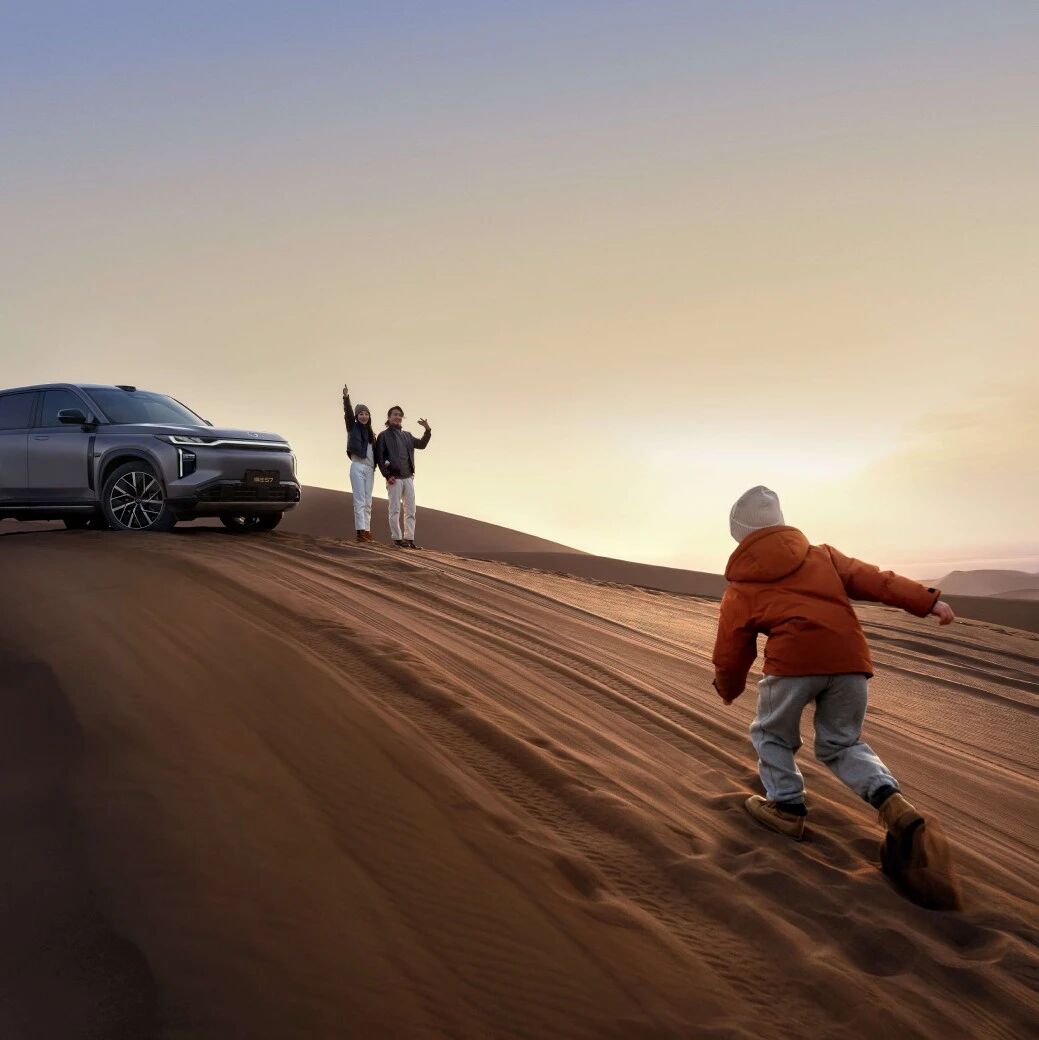
脑洞设计:场景化创新与现实的交锋
Zhong Guo Qi Che Bao Wang· 2025-12-01 01:52
Core Insights - The 2025 Guangzhou Auto Show showcased innovative designs and technologies from various automakers, sparking debate over the practicality and necessity of such features [2][6][10] - The event highlighted a shift in the automotive industry towards scenario-based innovations, targeting specific user needs such as outdoor camping and leisure activities [3][8][11] Group 1: Innovative Designs - Several automakers introduced models with unique features, such as the Zhiji LS9 with a "mobile shower room" and "carried floor heating" system, aimed at outdoor enthusiasts [3][4] - The Toyota RAV4 Forest Edition was designed for outdoor lovers, featuring waterproof materials and enhanced lighting for camping [3][11] - Ford's Intelligent Mustang was presented as an all-terrain camping SUV, equipped with a power supply capability of up to 6.6 kW, catering to users' needs for energy while camping [3][8] Group 2: Industry Perspectives - Industry experts expressed concerns about whether these designs represent true innovation or merely serve as marketing gimmicks, with some features deemed impractical for regular use [6][10] - There is a growing emphasis on "scenario-defined vehicles," suggesting that cars must meet diverse user scenarios to attract consumers in a competitive market [4][8] Group 3: Consumer Reactions - Consumer feedback indicated a preference for practical innovations that address real needs rather than flashy features that do not enhance the driving experience [10][12] - Despite skepticism, the Zhiji LS9's shower feature generated significant interest, with 5,200 units sold within 25 minutes of its launch, indicating a market for such unique offerings [7][10] Group 4: Market Trends - The automotive market is evolving from meeting basic transportation needs to catering to personalized lifestyles, with a focus on specific user groups like outdoor enthusiasts and business professionals [8][11] - Innovations are increasingly being evaluated based on their technical feasibility and practical application, moving away from mere conceptual designs [11][12]
