
人民币汇率稳定

Search documents
在岸、离岸人民币升破7.10关口|快讯
Sou Hu Cai Jing· 2025-10-28 05:45
Core Points - The onshore and offshore RMB/USD exchange rates both surpassed the 7.10 mark on October 28, with the onshore rate opening at 7.1070 and reaching a low of 7.0995, reflecting an increase of 75 basis points from the opening price [2] - The offshore RMB/USD exchange rate opened at 7.1087 and hit a low of 7.0994, showing an increase of 93 basis points from the opening price [2] - The People's Bank of China announced a mid-point exchange rate of 7.0856 for the RMB against the USD, which is an increase of 25 basis points from the previous day's mid-point of 7.0881, marking a new high since October 15, 2024 [2] Industry Analysis - Analysts suggest that the recent adjustments in the RMB mid-point rate towards a stronger direction are influenced by the robust domestic economic performance and the significant decline of the USD [2][3] - The focus on stabilizing the RMB exchange rate is shifting towards maintaining the CFETS index, which may help alleviate trade frictions and provide a stable external environment for Chinese foreign trade enterprises [3] - The Governor of the People's Bank of China emphasized the importance of market forces in determining the exchange rate and maintaining stability at a reasonable level to prevent significant fluctuations [3]

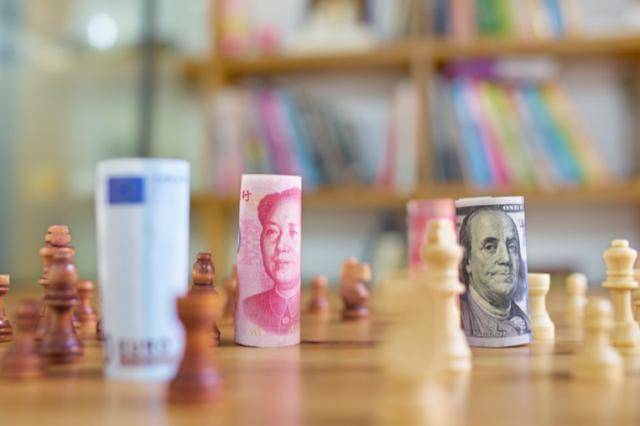
外汇局:完善跨境资金流动监测预警体系,保持人民币汇率在合理均衡水平上的基本稳定
Sou Hu Cai Jing· 2025-10-24 12:32
Core Points - The meeting emphasized the importance of maintaining stability in the foreign exchange market and ensuring the safety of the national economy and financial system [1] - It highlighted the need for a dual management approach of "macro-prudential + micro-regulation" in the foreign exchange market [1] - The meeting called for the improvement of the cross-border capital flow monitoring and early warning system [1] - There is a focus on keeping the RMB exchange rate stable at a reasonable and balanced level [1] - The meeting stressed the importance of comprehensive supervision in the foreign exchange sector and the strict crackdown on illegal activities [1] - It also mentioned the need to enhance the management of foreign exchange reserves to ensure the safety, liquidity, and value preservation of these assets [1]
年内上涨近900点,人民币中间价创一年新高
Bei Jing Shang Bao· 2025-10-15 11:27
Core Viewpoint - The Chinese yuan (RMB) has appreciated against the US dollar, with the central parity rate reaching a new high of 7.0995 on October 15, marking the first time it has surpassed the 7.10 threshold since late October 2024 [1][3][4] Exchange Rate Performance - On October 15, the RMB central parity rate was adjusted up by 26 basis points from the previous day's rate of 7.1021, achieving a near one-year high [3] - The onshore and offshore RMB against the US dollar both appreciated, with onshore RMB at 7.1267 (up 0.17%) and offshore RMB at 7.1301 (up 0.14%) [3] - Since the beginning of 2025, both onshore and offshore RMB have appreciated over 2%, specifically 2.37% and 2.82% respectively [3] Dollar Index Movement - The US dollar index fell below 99, reported at 98.8482 on October 15, down 0.21% for the day [4] - Despite a 1% increase in the dollar index since October 2025, it has depreciated nearly 9% overall this year [4] Economic Context - The recent appreciation of the RMB is attributed to the decline of the US dollar and increased external market volatility, which necessitates stronger measures to stabilize the currency market [4][5] - The People's Bank of China (PBOC) emphasizes maintaining a stable RMB exchange rate to support domestic economic stability and external trade [6][7] Future Outlook - Analysts predict that the RMB will continue to operate in a strong position in the short term, with a focus on the dollar's performance and the PBOC's management of the central parity rate [8] - The RMB's future stability is supported by a solid macroeconomic foundation and the anticipated impact of US monetary policy adjustments [7][8]

货币政策框架转型稳步推进 为高质量发展提供有力支撑
Jin Rong Shi Bao· 2025-10-15 01:05
Core Viewpoint - The People's Bank of China (PBOC) has established a modern monetary policy framework that effectively supports the economic and social development goals outlined in the 14th Five-Year Plan, with a focus on maintaining stable total liquidity, optimizing structure, reducing costs, and stabilizing expectations [1][2]. Monetary Policy Tools and Achievements - Since the beginning of the 14th Five-Year Plan, the PBOC has implemented 9 reserve requirement ratio cuts, reducing the ratio by 3.5 percentage points, which has released approximately 7 trillion yuan in long-term liquidity [2][3]. - The PBOC has utilized various monetary policy tools to maintain ample liquidity, including open market operations and reverse repos, while promoting reasonable growth in credit [2][3]. Structural Monetary Policy Tools - The PBOC has improved its structural monetary policy tool system, focusing on key areas such as technological innovation, green development, and consumer services, achieving comprehensive coverage of financial services [3]. - The annual growth rates of social financing scale and broad money supply (M2) have reached around 9% to 10%, significantly higher than the nominal economic growth rate of 6% to 7% [3]. Interest Rate Marketization - The PBOC has deepened interest rate marketization reforms, establishing a clearer relationship between short-term and long-term interest rates, and has adjusted the policy interest rate to influence market rates [4][5]. - Since the beginning of the 14th Five-Year Plan, the PBOC has cumulatively lowered the policy interest rate by 0.8 percentage points, leading to a decrease in the loan market quotation rates (LPR) for both 1-year and 5-year loans [5]. Exchange Rate Stability - The PBOC has maintained a stable RMB exchange rate through managed floating exchange rate systems, enhancing the currency's elasticity and ensuring it remains within a reasonable equilibrium [6][7]. - The foreign exchange market has shown resilience, with the RMB exchange rate maintaining stability against major currencies, supported by a robust macroeconomic foundation [6][7]. Expectations Management - The PBOC has emphasized the importance of expectation management and effective communication of monetary policy, enhancing transparency and understanding of policy measures [8][9]. - Various channels have been utilized to communicate with the market, including regular policy announcements, financial data releases, and public education on monetary policy [9][10].

央行:我国宏观经济基本盘稳固,中长期汇率稳定有坚实基础
Xin Lang Cai Jing· 2025-10-14 09:09
Core Insights - The article discusses the achievements of the People's Bank of China (PBOC) during the "14th Five-Year Plan" period, highlighting the deepening of financial reforms and the effective implementation of monetary policy to support economic development [1][2]. Monetary Policy Framework - The PBOC has established a supportive monetary policy stance, contributing to the successful completion of the main economic and social development goals of the "14th Five-Year Plan" [1][2]. - A total of 9 reserve requirement ratio (RRR) cuts have been implemented, releasing approximately 7 trillion yuan in long-term liquidity [2][3]. - The PBOC has enhanced its monetary policy toolbox, including open market operations and reverse repos, to maintain liquidity and promote reasonable growth in credit [2][3]. Structural Monetary Policy Tools - The PBOC has improved its structural monetary policy tools, focusing on key areas such as technological innovation and green development, ensuring comprehensive coverage of financial services [3]. - The annual growth rates of social financing and broad money supply (M2) have been maintained at around 9%-10%, significantly higher than the nominal economic growth rate of 6%-7% [3]. Interest Rate Marketization - The PBOC has made significant progress in market-oriented interest rate reforms, establishing a clearer relationship between short-term and long-term interest rates [4][5]. - The establishment of a market-based deposit rate adjustment mechanism has led to a more market-driven environment for loan rates, with the average interest rate for new corporate loans and personal mortgages around 3.1% as of August 2025 [5]. Exchange Rate Stability - The PBOC has maintained a stable RMB exchange rate, with a focus on market-driven adjustments and a managed floating exchange rate system [6][7]. - The RMB exchange rate index has remained around 100, indicating stability against major currencies, while the corporate foreign exchange hedging ratio has increased from 17% in 2020 to 30% in 2025 [7]. Communication and Expectation Management - The PBOC has emphasized the importance of expectation management and effective communication of monetary policy, enhancing transparency and understanding of policy measures [8][9]. - Various channels have been utilized for policy communication, including press releases, financial data publications, and public education initiatives, leading to improved policy transmission effects [9].
中国央行:将继续坚持市场在汇率形成中的决定性作用,强化预期引导
Hua Er Jie Jian Wen· 2025-10-14 08:58
Core Viewpoint - The People's Bank of China (PBOC) emphasizes the resilience of the foreign exchange market during the 14th Five-Year Plan period, indicating that the RMB exchange rate remains stable at a reasonable equilibrium level, which supports the implementation of independent monetary policy and stabilizes the financial market [1] Group 1 - The PBOC highlights that the macroeconomic fundamentals are solid, and the international balance of payments is expected to maintain autonomous equilibrium, providing a strong foundation for medium to long-term exchange rate stability [1] - The central bank will continue to uphold the decisive role of the market in the formation of the exchange rate, maintain exchange rate flexibility, strengthen expectation guidance, and prevent risks of excessive exchange rate adjustments [1] - The PBOC aims to keep the RMB exchange rate fundamentally stable at a reasonable equilibrium level [1]
央行重磅发布,信息量大
中国基金报· 2025-09-26 12:09
Core Viewpoint - The People's Bank of China (PBOC) emphasizes the need for a moderately loose monetary policy to support high-quality economic development and create a favorable financial environment for economic recovery [1][2]. Group 1: Monetary Policy and Economic Environment - The PBOC has increased macroeconomic regulation efforts this year, implementing a moderately loose monetary policy to enhance counter-cyclical adjustments and support the real economy [1]. - The loan market quotation rate reform is showing continued effectiveness, with social financing costs at historically low levels [1]. - The external economic environment is becoming more complex, with weakening global economic growth and increasing trade barriers, while domestic economic performance shows steady improvement despite challenges such as insufficient domestic demand [1][2]. Group 2: Future Monetary Policy Directions - The meeting suggests strengthening monetary policy regulation, enhancing its foresight, targeting, and effectiveness, and ensuring that monetary policy measures align with economic growth and price level expectations [2]. - There is a focus on maintaining ample liquidity and guiding financial institutions to increase credit supply, matching social financing scale and money supply growth with economic growth targets [2]. - The PBOC aims to enhance the resilience of the foreign exchange market and stabilize market expectations, ensuring the RMB exchange rate remains stable at a reasonable level [2][3]. Group 3: Support for Key Sectors - The meeting highlights the importance of supporting small and micro enterprises, promoting financial services for the private economy, and addressing financing bottlenecks for these businesses [3]. - There is a commitment to stabilizing the real estate market by improving financial systems and revitalizing existing properties and land [3]. - The PBOC emphasizes the need for coordinated macroeconomic policies to enhance domestic circulation and stimulate demand, ensuring a stable economic recovery [3].
【早知道】住建部:持续巩固房地产市场稳定态势;证监会:完善发行上市等制度机制
Sou Hu Cai Jing· 2025-09-23 00:04
Group 1 - The China Securities Regulatory Commission (CSRC) aims to deepen reforms in the Sci-Tech Innovation Board, ChiNext, and Beijing Stock Exchange, enhancing the issuance and listing systems to cultivate patient capital [1] - The People's Bank of China (PBOC) is focused on creating a favorable monetary and financial environment to support sustained economic recovery [1] - The State Administration of Foreign Exchange (SAFE) is committed to maintaining the basic stability of the RMB exchange rate at a reasonable and balanced level, alongside ensuring basic equilibrium in international payments [1] Group 2 - The National Audit Office is increasing efforts to reveal major risk hazards in local government debt, finance, and energy sectors [1] - The Ministry of Housing and Urban-Rural Development is working to solidify the stability of the real estate market and is focused on developing a new model for real estate growth [1] - The General Administration of Sport of China has issued guidelines to promote the high-quality development of health through sports [1] - The National Energy Administration has set a goal for 2030 to achieve self-sufficiency in the supply chain of key energy equipment industries [1]
帮主郑重解读!潘功胜、李云泽等四位大佬重磅发声,A股投资者最该拎清的干货都在这
Sou Hu Cai Jing· 2025-09-22 12:11
Group 1 - The four key figures in the financial sector collectively emphasized the importance of stability in the market, funding, and risk control, indicating a unified approach from various departments to support the market [3][6] - Pan Gongsheng highlighted that the monetary policy will focus on stability while providing support to the real economy, particularly manufacturing and small enterprises, which will ultimately strengthen the earnings of listed companies [3][4] - Li Yunzhe stressed the need to tighten financial regulations to prevent risks from entering the stock market and to ensure that funds are directed towards reliable sectors, rather than speculative investments [4][6] Group 2 - Wu Qing discussed the importance of maintaining market liquidity and balancing IPOs with market capacity, ensuring that underperforming companies are removed to preserve market resources [4][5] - Zhu Hexiong addressed the significance of stabilizing the exchange rate to prevent foreign capital from withdrawing due to currency fluctuations, which would help maintain stability in the A-share market [5][6] - The collective message from these financial leaders is aimed at long-term investors, encouraging them to focus on sectors that align with the stability of the real economy and the clean-up of the market [6]
国家外汇管理局:保持人民币汇率在合理均衡水平上的基本稳定和国际收支基本平衡
Zheng Quan Shi Bao Wang· 2025-09-22 11:51
Core Viewpoint - The State Administration of Foreign Exchange (SAFE) emphasizes maintaining the stability of the RMB exchange rate at a reasonable and balanced level, alongside ensuring basic equilibrium in international payments [1] Group 1: Regulatory Framework - SAFE aims to faithfully fulfill its foreign exchange regulatory responsibilities as assigned by the Central Committee of the Communist Party [1] - The agency plans to establish a more convenient, open, secure, and intelligent foreign exchange management system [1] - There is a focus on deep reforms and high-level opening in the foreign exchange sector to enhance the facilitation of cross-border trade and investment [1] Group 2: Market Development - SAFE intends to build an open, diverse, functional, and competitive foreign exchange market to actively support regional strategic implementation [1] - The agency will improve the monitoring and early warning system for cross-border capital flows [1] Group 3: Financial Stability - SAFE aims to promote high-quality development in foreign exchange reserve management, positioning reserves as a stabilizer and ballast [1] - There is a commitment to constructing a regulatory system for foreign exchange that is complete and effective, enhancing regulatory collaboration, and cracking down on illegal activities in the foreign exchange sector [1] - The agency will strengthen the rule of law in the foreign exchange domain [1]