
企业改革

Search documents
漩涡中心的宗馥莉
21世纪经济报道· 2025-07-21 04:12
Core Viewpoint - The article discusses the internal family conflict within Wahaha Group, focusing on the challenges faced by Zong Fuli, the heir of the beverage giant, amid a $2.1 billion family inheritance dispute with her half-siblings [4][28]. Group 1: Family Conflict and Legal Issues - Zong Fuli is embroiled in a family inheritance dispute involving $2.1 billion, initiated by her half-siblings Zong Jichang, Zong Jieli, and Zong Jisheng [4][5]. - The legal proceedings began with the filing of an originating summons in December 2024, with the case opening in January 2025 [5]. - The internal family conflict has been exacerbated by the public emergence of her half-siblings, placing Zong Fuli in a challenging position [1][4]. Group 2: Corporate Structure and Management Changes - Zong Fuli has been actively restructuring Wahaha Group, including significant changes in the board of directors and management personnel, with many positions filled by individuals from her own company, Hongsheng Beverage [22][21]. - The restructuring includes merging or eliminating several departments, transferring contracts to Hongsheng Beverage, and a significant reduction in R&D capabilities [24][22]. - The company has also closed 18 production lines while simultaneously opening new ones under Zong Fuli's control, indicating a strategic shift in operations [10][12]. Group 3: Strategic Positioning and Future Outlook - Zong Fuli's leadership style is characterized by a strong work ethic and a focus on aggressive reforms, which have sparked both support and controversy within the company [21][24]. - The ongoing family dispute and management changes could significantly impact Wahaha Group's future, affecting its relationships with employees, factories, and distributors [28][27]. - The article highlights the importance of Zong Fuli's ability to navigate these challenges to ensure the stability and growth of Wahaha Group, a leading player in the beverage industry [28].


21特写|漩涡中心的宗馥莉
2 1 Shi Ji Jing Ji Bao Dao· 2025-07-21 02:33
Core Viewpoint - The article discusses the internal family conflict within Wahaha Group, focusing on Zong Fuli, the heir and current chairperson, who is facing a lawsuit from her half-siblings over a $2.1 billion (approximately 150 billion RMB) inheritance dispute, which has put her leadership under scrutiny [1][2][3]. Group 1: Family Conflict and Legal Issues - Zong Fuli is embroiled in a family inheritance dispute initiated by her half-siblings, Zong Jichang, Zong Jieli, and Zong Jisheng, who claim a share of the family fortune [2][3]. - The lawsuit was filed in December 2024, with the court hearing taking place in January 2025 [3]. - The internal family conflict has been ongoing but gained public attention in July 2025, highlighting the challenges Zong Fuli faces in maintaining control over the company [4]. Group 2: Corporate Structure and Leadership - Zong Fuli has been actively consolidating her control over Wahaha Group, having taken over 29.40% of the shares and assuming the role of chairperson [12][15]. - Following the death of her father, Zong Qinghou, in February 2024, Zong Fuli's leadership transition was marked by internal strife and a temporary resignation that was later retracted [11][12][13]. - The company has undergone significant restructuring under Zong Fuli's leadership, including a major overhaul of the management team and the merging or elimination of several departments [15][17]. Group 3: Business Strategy and Operations - Zong Fuli's strategy involves a dual approach of closing underperforming factories while simultaneously expanding her own beverage production company, Hongsheng Beverage [8][9]. - The restructuring has led to the transfer of contracts and resources from Wahaha Group to Hongsheng Beverage, consolidating control over marketing and production [16][17]. - Despite facing internal dissent and legal challenges, Zong Fuli's reforms are aimed at streamlining operations and enhancing profitability [18][19].
宗庆后遗产纠纷,宗馥莉为什么要这么做?
Hu Xiu· 2025-07-18 08:34
Core Viewpoint - The inheritance dispute within Wahaha Group, initiated by the founder Zong Qinghou's death over a year ago, reveals deeper family conflicts beyond mere financial disagreements [1][2]. Group 1: Inheritance Dispute - The inheritance battle centers around Zong Qinghou's promise of $700 million to each of his three illegitimate children, with complications arising from the trust account and the withdrawal of $1.1 million [3]. - The eldest daughter, Zong Fuli, is the primary instigator of the conflict, challenging the status quo established by her father and halting production lines associated with her stepmother [3][4]. - Zong Fuli's ambition to reform rather than merely inherit the family business indicates her desire to break free from her father's legacy and implement necessary changes within Wahaha [4][5]. Group 2: Zong Fuli's Leadership Aspirations - Zong Fuli's actions suggest a long-standing intention to assert her authority, as she began her campaign shortly after her father's death [6]. - The relationship between Zong Fuli and Zong Qinghou was complex, marked by public displays of affection contrasted with private conflicts, including intense arguments over inheritance matters [7][8]. - To be recognized as the legitimate heir, Zong Fuli must demonstrate her capability to manage the business, which involves holding positions in 200 companies and being a legal representative for 40 [11]. Group 3: Need for Reform - Zong Fuli recognizes that the fast-moving consumer goods sector requires innovation, as Wahaha's brand and product offerings have become outdated [14][16]. - Her admiration for competitors like Nongfu Spring highlights her understanding of the need for creative branding and product development to revitalize Wahaha [15][16]. - The ongoing power struggle may hinder Wahaha's progress, as the largest shareholder, Hangzhou Shoucheng State-owned Assets, is unlikely to support Zong Fuli's initiatives [18]. Group 4: Future Prospects - Zong Fuli's efforts to dismantle her father's legacy may be a necessary step towards establishing her own vision for the company, which could lead to revitalization if successful [19]. - The generational transition within the company emphasizes the importance of innovation alongside inheritance, suggesting that true progress requires the next generation to carve their own path [20].
英媒:日本年轻人争当“巴菲特”
Huan Qiu Shi Bao· 2025-07-15 22:41
Group 1 - Japan is experiencing a significant investment boom, with financial literacy becoming more prevalent among the population, as evidenced by the establishment of dedicated sections in bookstores and advertisements for investment seminars on public transport [1][2] - As of the end of 2023, over 50% of Japanese household assets are held in cash and bank deposits, compared to only 1/8 in the United States [1] - The introduction of the new NISA system in 2024 has exceeded expectations, with 5 million new accounts opened and total assets reaching 59 trillion yen, achieving the government's target three years ahead of schedule [1] Group 2 - Japan's core inflation rate has risen to 3.7%, prompting a shift in public perception towards investment as a necessary means to protect existing assets due to the diminishing value of idle cash [2] - The Tokyo Stock Exchange has mandated listed companies to focus on capital costs and stock price management, leading to record-high stock buybacks and dividend payouts [2] - The government is considering a "Platinum NISA" plan to allow individuals aged 65 and older to invest tax-free in monthly dividend funds, recognizing the importance of this demographic in asset management [2] Group 3 - Critics point out that approximately half of the funds invested through the NISA system are flowing into foreign stock markets, with 80% to 90% of investments made through mutual funds [2] - New investors often default to investing in the S&P 500 or global stock indices, indicating a strategic approach to diversification rather than reliance on the domestic market [2]
四问娃哈哈:谁是宗馥莉的敌人和朋友?
Guan Cha Zhe Wang· 2025-06-30 13:09
Core Points - The transition of leadership at Wahaha has been marked by significant turmoil following the death of former chairman Zong Qinghou, with Zong Fu Li now at the helm [1][2] - The company is facing operational challenges, including forced employee relocations and production line shutdowns, which have raised concerns about its management and future direction [16][19] - The ambiguity surrounding Wahaha's status as a state-owned or private enterprise has led to ongoing debates about governance and asset management [4][11] Group 1: Leadership Transition - Zong Fu Li officially took over as the legal representative and chairman of Wahaha, indicating a complete leadership change [1] - The company has experienced a rapid decline in public trust and sales following a series of controversies surrounding Zong Fu Li's management style and decisions [2][22] - The leadership transition has been characterized by a stark contrast in management styles between Zong Fu Li and her predecessor, leading to employee dissatisfaction and operational disruptions [21][25] Group 2: Operational Challenges - Many production lines have been shut down since the Spring Festival, affecting approximately 1,500 employees and leading to significant income reductions for workers [16][19] - Employees have expressed confusion and frustration over the company's direction, questioning whether they are working for Wahaha or for Zong Fu Li personally [4][19] - The company has faced criticism for outsourcing production while its own lines remain inactive, raising quality concerns among consumers [16][19] Group 3: Corporate Structure and Governance - Wahaha's ownership structure is complex, with significant stakes held by both state-owned and private entities, leading to confusion about its classification as a state-owned or private enterprise [4][5] - The recent trademark transfer of the "Wahaha" brand has sparked debates about potential state asset losses, with legal implications still under scrutiny [11][13] - The historical context of Wahaha's establishment and its ties to state support complicate its current governance and operational strategies [6][7]

中国石油大庆石化未上市业务前5个月整体盈利
Zhong Guo Fa Zhan Wang· 2025-06-23 08:27
Group 1 - The core viewpoint highlights Daqing Petrochemical's proactive market expansion and profitability enhancement through reforms and integration of resources [1][2] - Daqing Petrochemical has achieved overall profitability in the first five months of the year, laying a solid foundation for high-quality development [1] - The company has implemented reforms in labor, personnel, and distribution systems, effectively reducing the number of legal entities and optimizing organizational structure [1] Group 2 - Daqing Petrochemical is focusing on market-oriented optimization of its unlisted business structure, exiting inefficient operations and concentrating resources on advantageous industries [2] - The company has signed 45 external market contracts this year, covering multiple fields and injecting new vitality into its development [2] - The detection technology development company has increased its profit by 3.92 million yuan in the first five months, enhancing its core competitiveness through the application of new technologies [2]

美国银行:投资者对日股投资兴趣上升 因美股估值过高
news flash· 2025-06-23 06:23
Core Viewpoint - Investors are increasingly interested in Japanese stocks due to high valuations in the US stock market, prompting a search for diversification [1] Group 1: Investor Sentiment - There is a noticeable rise in investor interest in Japanese equities as a response to elevated US stock valuations [1] - The need for diversification beyond US markets is a significant driver for this shift towards Japanese stocks [1] Group 2: Economic Factors - Signs of accelerated corporate reform in Japan are attracting global investors [1] - Japan's transition towards an "inflationary economy" is also a factor drawing investor attention [1] Group 3: Trade Concerns - Despite the growing interest, concerns remain regarding the trade outlook between the US and Japan [1] - The expiration of the US's suspension of "reciprocal" tariffs on several countries, including Japan, is approaching, adding uncertainty [1] - Ongoing discussions about a new trade agreement between the US and Japan are characterized by high uncertainty [1]

太原第二热电厂:逆势突围 实现“单亏”目标
Sou Hu Cai Jing· 2025-06-17 11:16
Core Insights - The Taiyuan Second Thermal Power Plant achieved its "single loss" target in May, marking the highest operational performance in nearly five years, focusing on "efficiency improvement, cost leadership, quality enhancement, and upgrading" [1] Group 1: Reform and Development - The plant emphasizes proactive and comprehensive reforms to enhance its foundation, advantages, and address weaknesses, including changes in systems, mechanisms, and talent [3] - Historical issues were addressed by eliminating outdated facilities and optimizing human resources, reducing the workforce from 223 to 62 in the comprehensive service center, and saving 20 million yuan in labor costs [3] Group 2: Cost Control and Fuel Management - By the end of May, the plant achieved a coal delivery progress rate of 237.64%, saving 46.42 yuan/ton in entry costs and a total of 46.43 million yuan in fuel costs [5] - The plant optimized fuel management, resulting in a cumulative cost reduction of 75.43 million yuan from January to May through better procurement and coal blending strategies [5] Group 3: Power Generation and Revenue - From January to May, the plant generated 24.37 billion kWh of electricity, an increase of 0.85 billion kWh year-on-year, with an average settlement price of 418.01 yuan/MWh, exceeding the regional average by 17.57 yuan/MWh [7] - The plant implemented flexible operational strategies, generating additional revenue of 12.05 million yuan from strategic downtime and 5.245 million yuan from capacity fees [8] Group 4: Financial Management - The plant adopted a detailed financial strategy, coordinating over 50 meetings with banks, managing over 5 billion yuan in funds, and reducing financial costs by 14.4 million yuan [10] - The comprehensive financing cost rate decreased from 2.75% at the beginning of the year to 2.45%, achieving a reduction of over 100 million yuan in financial expenses over three years [10] Group 5: New Energy Development - The plant views new energy projects as critical for transformation, aiming for significant breakthroughs in project completion and profitability, with a target of generating 30 million yuan from new energy this year [11] - The plant has successfully implemented a management system for new energy projects, achieving a total generation of 28.87 million kWh to support its cash flow goals [11] Group 6: Overall Strategy and Future Outlook - The Taiyuan Second Thermal Power Plant is committed to continuous reform and development, aiming to achieve a "no cash flow loss" target while navigating the dual challenges of energy supply and transformation [12]
中国企业改革与发展研究会彭华岗会长一行到访通鼎集团考察交流
Sou Hu Cai Jing· 2025-06-11 20:11
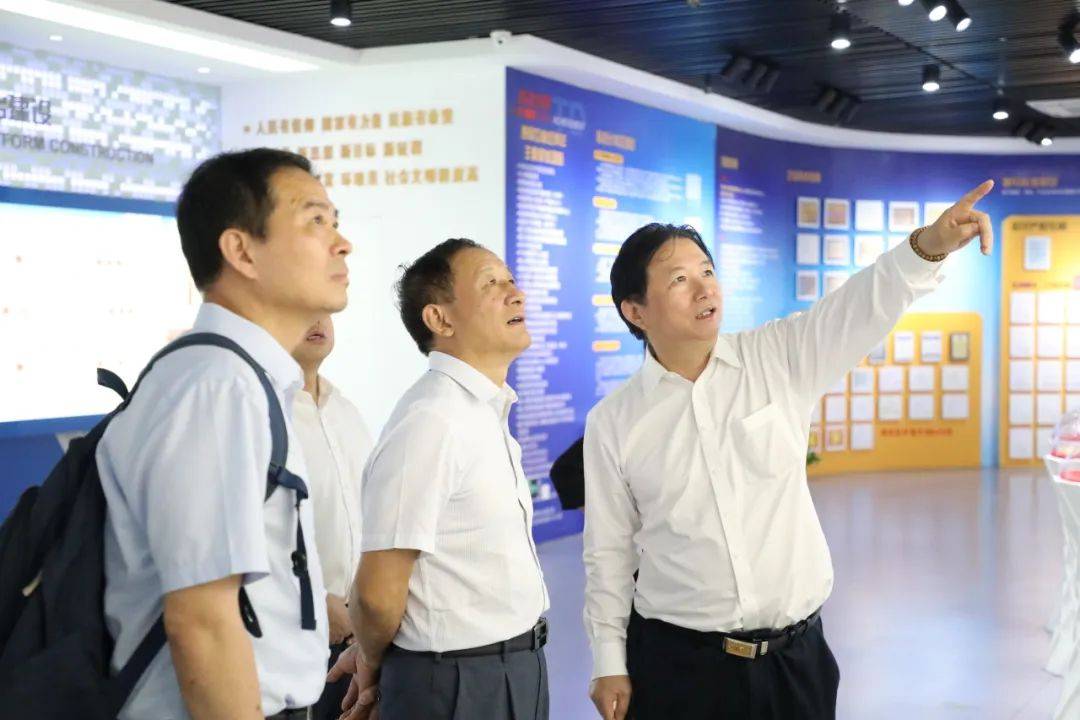
Group 1 - The visit by the China Enterprise Reform and Development Research Association (中企研) aimed to deepen resource integration and information sharing between national social organizations and enterprises [1] - The delegation, led by 彭华岗, included key figures from 中企研 and was warmly received by 通鼎集团's leadership, including 董事长沈小平 and 总经理钱慧芳 [1][3] - During the visit, the delegation toured 通鼎集团's exhibition hall and the optical fiber smart workshop, where they observed the production processes of optical fiber preform and testing [3] Group 2 - In the special cable workshop, the general manager introduced new technologies and products such as new energy cables and environmentally friendly cables, highlighting breakthroughs in smart manufacturing and quality control [5] - 彭华岗 emphasized 中企研's commitment to supporting national strategies and enterprise reform, focusing on sustainable development and high-quality growth for Chinese enterprises [5][7] - 沈小平 expressed gratitude for the visit and outlined 通鼎集团's business and future development plans, indicating a desire for continued collaboration and resource sharing with 中企研 [7] Group 3 - The delegation also visited 震泽镇 to investigate the local silk culture and the development of rural tourism, showcasing the integration of cultural heritage and economic development [8]

每经品牌观丨娃哈哈争议需回归原点 最是品牌不可辜负
Mei Ri Jing Ji Xin Wen· 2025-06-08 14:27
Core Viewpoint - The controversy surrounding Wahaha reflects the historical choices and current challenges faced by the company, particularly under the leadership of Zong Fuli, following the death of Zong Qinghou. The brand's value is emphasized as its core asset, and the focus should be on maintaining and enhancing this brand value amidst various disputes and changes [1][2]. Group 1: Brand and Corporate Structure - Wahaha's external operational model, which has been a source of controversy, can be traced back to the brand protection strategies employed during the late 1990s when foreign investment was introduced. The brand was retained by Wahaha Group, allowing it to grow independently of foreign control [2]. - As of the end of 2022, state-owned Wahaha Group accounted for only 15.67% of the total assets of the Wahaha system, with revenues and net profits at 2.74% and 0.39% respectively, indicating a significant portion of profits is generated outside of state control [2]. Group 2: Leadership and Management Changes - Zong Fuli's management style differs significantly from that of Zong Qinghou, focusing on efficiency and reform. This shift aims to transform Wahaha from a "familial organization" to a "market-oriented organization," which may disrupt existing利益格局 [3]. - Wahaha's projected revenue for 2024 is over 72.8 billion yuan, representing a 36.7% year-on-year increase, which reflects the short-term momentum generated by the reforms [3]. Group 3: Brand Value and Consumer Trust - The greatest challenge for Zong Fuli lies in maintaining the brand's value system, as her reforms are perceived as a betrayal of the original corporate values instilled by Zong Qinghou. The public's perception of Wahaha is closely tied to Zong Qinghou's legacy [3][4]. - To ensure sustainable development and brand value, Zong Fuli must find a new balance of interests that respects state-owned equity and protects employee rights, ultimately gaining consumer trust [4].