
创新药国际化

Search documents
生物医药ETF(512290)涨超1%,创新药国际化与器械国产化逻辑强化
Mei Ri Jing Ji Xin Wen· 2025-05-23 03:08
Group 1 - The core viewpoint emphasizes the resonance between innovation and domestic demand in the pharmaceutical and biotechnology industry, with a focus on innovative drugs as the main direction [1] - The industry is expected to benefit from policy support, enhanced global competitiveness, and the realization of commercial profitability, particularly in innovative drugs [1] - The internationalization of innovative drugs is accelerating, and companies with differentiated innovation capabilities and global BIC potential products are viewed as long-term investment opportunities [1] Group 2 - The medical device sector shows stable demand, with a potential recovery in procurement expected by 2025, reinforcing the replacement logic [1] - Consumer healthcare is benefiting from the recovery of domestic demand, with positive outlooks for medical services and chain pharmacies [1] - AI in healthcare is bringing new changes to the industry, with digital transformation enhancing efficiency and new business models being anticipated [1] Group 3 - Continuous policy support for innovation is noted, with reforms in medical insurance payments and the development of commercial health insurance creating a diversified payment system that provides incremental funding for innovative drugs and devices [1] - The Biopharmaceutical ETF (512290) tracks the CS Biomedicine Index (code: 930726), which reflects the overall performance of listed companies in the biotechnology, medical devices, and services sectors [1] - The CS Biomedicine Index is characterized by significant innovation attributes and growth features, effectively capturing market trends in the biopharmaceutical industry [1]
恒瑞医药港股IPO,大涨33%,市值超3800亿
3 6 Ke· 2025-05-23 02:57
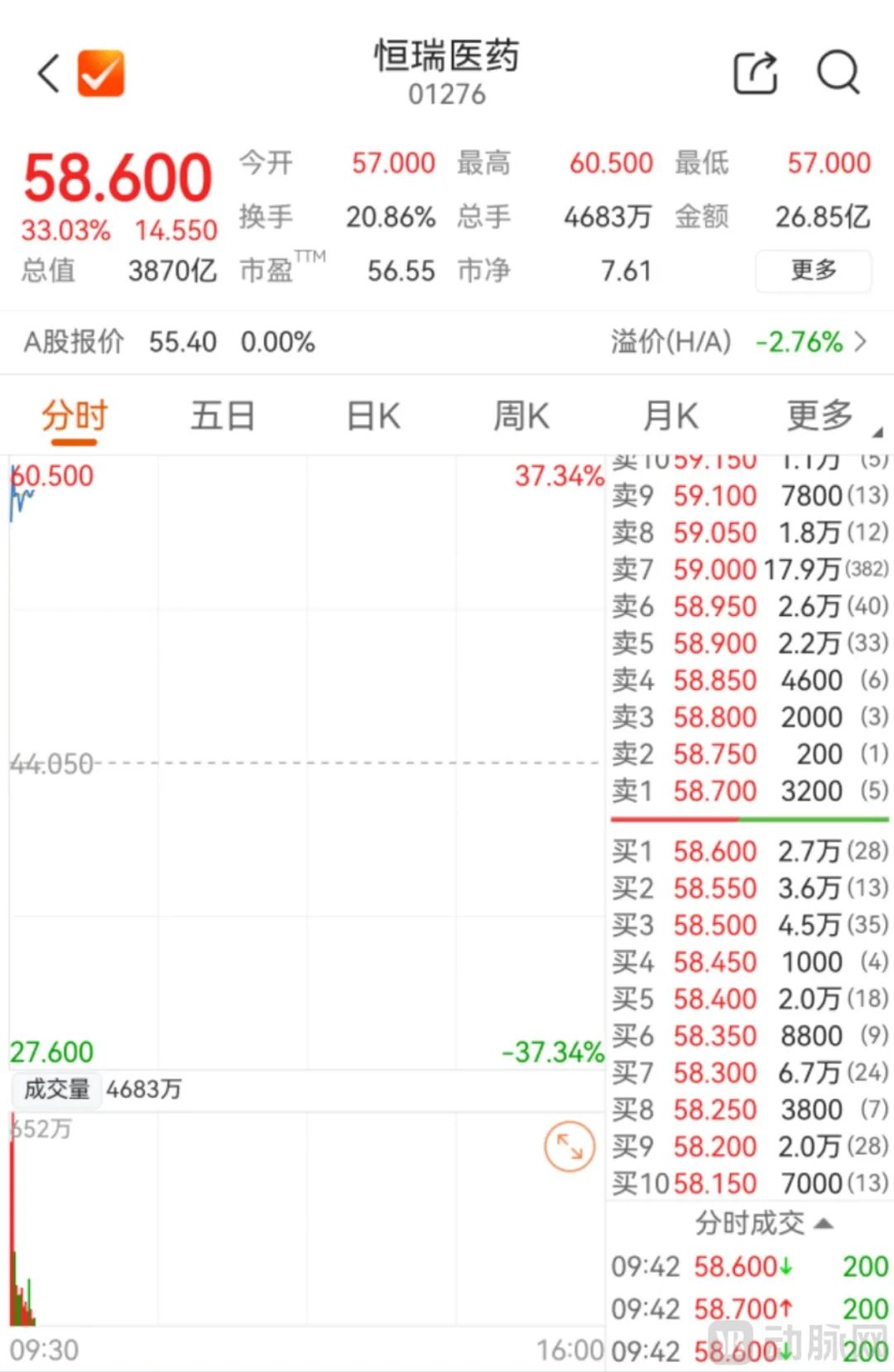
Core Viewpoint - Heng Rui Pharmaceutical's listing on the Hong Kong Stock Exchange has ignited market interest, raising HKD 9.89 billion with an initial offering price of HKD 44.05 and a current market value exceeding HKD 380 billion [1][2]. Group 1: Listing and Market Performance - Heng Rui's stock opened at HKD 57 and is currently trading at HKD 58.6, reflecting a market capitalization surpassing HKD 380 billion [1][2]. - The company has a significant trading volume of 46.83 million shares, indicating strong market activity [2]. Group 2: Internationalization Strategy - The listing is part of Heng Rui's ambition for internationalization, aiming to diversify funding sources and enhance its global presence [4]. - Despite being a leader in the pharmaceutical industry, Heng Rui's international sales have not met expectations, with overseas revenue accounting for less than 5% of total income over the past three years [4][5]. - The company has been adjusting its international strategy, moving from direct clinical trials abroad to partnerships with larger firms to commercialize innovative drugs [5][6]. Group 3: Business Development (BD) and Revenue Growth - Heng Rui's recent partnerships have led to significant upfront payments, with the company receiving approximately EUR 160 million and USD 100 million in 2024, translating to around RMB 2 billion [6]. - The company has engaged in 13 licensing deals since 2018, with potential total transaction values around USD 14 billion [5][6]. Group 4: Product Pipeline and Future Prospects - Heng Rui has several promising products in its pipeline, including weight loss drugs and cardiovascular treatments, which are expected to generate substantial revenue [7][9]. - The company is focusing on ADC (Antibody-Drug Conjugate) drugs, which are anticipated to contribute significantly to overseas income [9][10]. - Heng Rui has over 90 innovative products in clinical development, with more than 30 in critical stages, indicating a robust pipeline for future growth [11]. Group 5: Long-term Strategy and Infrastructure Development - The funds raised from the Hong Kong listing will be used to build new production and research facilities both in China and internationally [14]. - Heng Rui aims to enhance its production capacity and ensure compliance with international quality standards, which will support its long-term internationalization goals [14][15]. - The company is also expanding into high-end medical devices, further diversifying its product offerings and market reach [15].


国产创新药国际化加速,还有哪些企业值得关注?
智通财经网· 2025-05-23 01:44
Group 1: Innovation in China - China has transitioned from a follower to a leader in innovation, playing an increasingly important role in global industrial transformation [1] - According to the 2024 Global Innovation Index, China ranks 11th globally, the only middle-income economy in the top 30, improving one position from 2023 [1] - Notable advancements include the B2-W robotic dog by Yushu Technology and BYD's world record in electric vehicle charging speed, showcasing China's technological prowess [1] Group 2: Pharmaceutical Industry Developments - Recently, 3SBio signed an exclusive licensing agreement with Pfizer for the PD-1/VEGF bispecific antibody SSGJ-707, valued at over $6 billion, with a record $1.25 billion upfront payment [2] - This agreement signifies a shift for Chinese innovative pharmaceutical companies from imitation to global leadership, enhancing industry collaboration models [2] - The trend of Chinese pharmaceutical companies utilizing the License-out model for global expansion is becoming prominent, with AstraZeneca's CEO warning that Europe is losing its leading position in pharmaceutical innovation to China [2] Group 3: International Collaborations - Chinese companies are increasingly engaging in international collaborations, as seen with Bai Li Tianheng's $8.4 billion licensing deal for an ADC drug with Bristol-Myers Squibb [3] - As of 2024, China completed 94 License-out transactions in innovative drugs, totaling $51.9 billion, a 26% year-on-year increase [3] - In the first quarter of 2025, there were 41 License-out transactions amounting to $36.93 billion, setting a new historical record for the same period [3] Group 4: Global Impact of Chinese Innovation - China's large population and unique disease spectrum make it an indispensable part of global pharmaceutical innovation [4] - Pfizer's collaboration with Guardant Health for liquid biopsy testing in China exemplifies the international partnerships driving clinical development and research [4] - The ongoing international cooperation is crucial for the globalization of Chinese pharmaceutical innovation, enhancing its international influence [4] Group 5: Future Outlook - The Chinese pharmaceutical industry is moving from "scale accumulation" to "value creation," with a focus on innovation and global competitiveness [5] - Continuous improvement in innovation quality and deepening international cooperation are leading to a new round of value reassessment in the industry [5] - Investors are encouraged to focus on innovative companies with global competitiveness to capitalize on the benefits of China's pharmaceutical globalization [5]
创新药生存法则生变:PD-1价格腰斩倒逼国际化转型,BD授权成第二增长引擎
2 1 Shi Ji Jing Ji Bao Dao· 2025-05-14 11:12
Core Insights - The Chinese pharmaceutical industry is transitioning from a "high growth" phase to a "high-quality growth" phase, with innovative drugs entering a stage of realization [1] - In Q1 2023, 60 companies in the pharmaceutical and biotechnology sector reported revenues exceeding 1 billion yuan, with 2 companies surpassing 10 billion yuan [1] - The market sentiment towards the pharmaceutical sector has improved significantly, with a notable increase in the allocation of broad-based indices to the industry [1] Industry Performance - The innovative drug sector has seen a systematic valuation increase, driven by the recognition of the business models of Chinese innovative drug companies [1] - Major companies are entering profitability, and their R&D pipelines are beginning to generate regular income through business development (BD) [1] - The PD-1/PD-L1 segment remains a hot area, with companies like Junshi Biosciences and Innovent Biologics reporting significant revenue growth [2][3] Company Highlights - Junshi Biosciences reported Q1 revenue of 501 million yuan, a year-on-year increase of 31.46%, while narrowing its losses [2] - Innovent Biologics achieved over 2.4 billion yuan in product revenue, a 40% increase, driven by rapid growth in key products [2] - BeiGene turned its losses into profits, reporting Q1 revenue of 8.048 billion yuan, a 50.2% increase, with strong sales of its PD-1 product [3] Business Development Strategies - BD transactions are crucial for innovative drug companies, with Heng Rui Medicine reporting a 20.14% increase in revenue due to successful BD deals [6] - The strategy of out-licensing provides financial relief and validates product market value through partnerships with multinational corporations [8][9] - Companies are increasingly focusing on internationalization and exploring differentiated development paths to remain competitive [4][5] Market Dynamics - The pricing of PD-1 treatments has decreased significantly, leading to intensified competition in the market [4] - Companies are urged to expand internationally while navigating regulatory challenges from agencies like the FDA and EMA [4][5] - The shift in valuation logic for PD-1 companies is moving from sales volume to international capabilities [3] Corporate Governance and Strategy - Recent leadership changes in companies like Fosun Pharma and Heng Rui Medicine reflect a strategic focus on optimizing asset structures and enhancing operational management [11][12] - The emphasis on internal promotions combined with external talent acquisition aligns with the need for innovation and adaptability in the biopharma sector [12] - Companies are encouraged to strengthen their operational frameworks and clarify strategic directions to navigate industry challenges [12]
港股大厂财报季关键时刻,野村:上调港股目标点位!
Jin Rong Jie· 2025-05-14 03:08
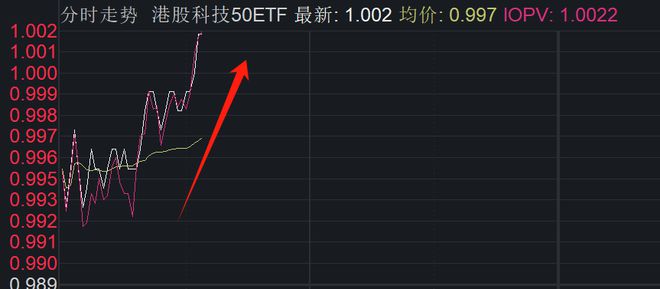
Group 1 - JD.com reported Q1 revenue of 301.1 billion yuan, a year-on-year increase of 15.8%, exceeding market expectations of 289.44 billion yuan [1] - Following the earnings report, JD.com shares rose over 4%, with Xiaomi and Tencent also gaining more than 2%, contributing to a significant increase in the Hong Kong Tech 50 ETF [1][3] - The Hong Kong stock market has seen a substantial increase in equity financing, with a total of 146.34 billion HKD raised this year, a year-on-year increase of 321.96% [4] Group 2 - The Hong Kong Tech Index includes 50 constituent stocks, compared to 30 in the Hang Seng Tech Index, allowing for a diversified investment strategy that includes both large and small tech companies [7] - The inclusion of the new energy vehicle sector and a higher weight in pharmaceuticals has contributed to the Hong Kong Tech Index outperforming the Hang Seng Tech Index by over 3% this year [8][9] - The recent trend of companies choosing to list in Hong Kong, such as Chery Automobile and Heng Rui Pharmaceutical, is driven by the more mature international investor structure in the Hong Kong market compared to A-shares [3][4]
葛兰在管基金一季报发布 点明创新药、消费医疗、医疗设备赛道机遇
Huan Qiu Wang· 2025-04-23 03:08
Core Viewpoint - The report from China Europe Fund highlights the performance and strategic outlook of three funds managed by renowned fund manager Ge Lan, focusing on the healthcare and innovation sectors, indicating a positive trend in the Chinese pharmaceutical and medical device markets [1][3]. Fund Performance - The largest fund, China Europe Healthcare Mixed Fund, reported a net value growth rate of 2.37% for Class A shares and 2.17% for Class C shares, outperforming the benchmark return of 0.46% during the same period [3]. - The top ten holdings of the fund include major companies such as Heng Rui Medicine, WuXi AppTec, and Mindray Medical, with notable changes in the portfolio compared to the end of 2024 [3]. Market Environment - The overall policy environment continues to support innovation while reinforcing compliance, with the National Medical Insurance Administration exploring a new category for Class B drugs, which expands payment options for innovative drugs [3]. - The normalization of anti-corruption and price governance in the pharmaceutical sector is leading companies to enhance their academic promotion systems, fostering a healthier and more sustainable domestic medical market [3]. Innovation and Collaboration - The report emphasizes the acceleration of research and development in innovative drugs, particularly in areas like multi-antibody and ADC technologies, with increasing collaboration between domestic companies and international firms [4]. - Key clinical data disclosures and ongoing global partnerships are expected to enhance the competitiveness of Chinese companies in the ADC, multi-antibody, and peptide sectors [4]. Consumer Healthcare and Medical Devices - The consumer healthcare sector is anticipated to see structural opportunities, particularly in aesthetic medicine and ophthalmology, driven by rising health management awareness among residents [4]. - The demand for home medical devices is projected to grow steadily due to the aging population, while the medical device sector is recovering, with significant growth in domestic bidding data observed in the first quarter [4].




医药健康行业研究:全年看好创新药,短期看血制品和科学仪器,下半年看左侧反转
SINOLINK SECURITIES· 2025-04-20 15:14
Investment Rating - The report maintains a positive outlook on the pharmaceutical sector, particularly on innovative drugs and their internationalization process, while suggesting a focus on blood products and scientific instruments in the short term [4][18]. Core Insights - The pharmaceutical sector has shown stable stock performance, with significant approvals for innovative drugs such as the IL-21/IL-23 dual antibody by Kangfang Biopharma and the successful phase 3 clinical trial results for Eli Lilly's orforglipron [1][2][18]. - The report emphasizes the resilience and growth potential of the pharmaceutical sector amidst changing external tariff environments, highlighting low geopolitical risks for innovative drugs and opportunities for domestic replacements in blood products and medical devices [4][18]. - The report suggests a continuous focus on innovative and semi-innovative drug companies, as well as potential recovery in the performance of generic drugs, chain pharmacies, and traditional Chinese medicine post-Q1 reports [4][20]. Summary by Sections Pharmaceutical Sector - Kangfang Biopharma's IL-21/IL-23 dual antibody has been approved for moderate to severe plaque psoriasis, marking a significant milestone as the first domestic drug of its kind [19]. - The approval of AstraZeneca's capivasertib for second-line breast cancer treatment further highlights the growing number of innovative drugs being approved in China [23][25]. - The report anticipates a surge in licensing transactions as Chinese innovative drug assets mature, leading to more predictable performance for pharmaceutical companies [2][25]. Biological Products - Eli Lilly's orforglipron has successfully completed phase 3 clinical trials, demonstrating superior A1C reduction compared to placebo, which positions it as a leading oral GLP-1 receptor agonist [26][29]. - The report encourages monitoring the progress of domestic GLP-1 small molecules, which are showing promising clinical results [33][34]. Medical Devices - Domestic companies are making significant strides in innovative research and development, with products like the LiqMagic peripheral vascular shockwave treatment system gaining traction in clinical applications [35][36]. - The report notes that the innovative technology in vascular treatment is expected to enhance patient outcomes and reduce procedural risks [35][36]. Investment Recommendations - The report recommends focusing on innovative and semi-innovative drug companies such as Kelun-Biotech, Kangfang Biopharma, and Huadong Medicine, as well as blood products and scientific instruments for potential domestic replacements [5][20]. - It also suggests paying attention to the recovery of generic drugs, chain pharmacies, and traditional Chinese medicine as the market stabilizes post-Q1 [4][20].



美国将对药品征收关税:全球产业格局生变
21世纪经济报道· 2025-04-09 10:03
Core Viewpoint - The article discusses the implications of the U.S. government's decision to impose tariffs on imported pharmaceuticals, highlighting potential impacts on global pharmaceutical supply chains and the strategies that Chinese innovative drug companies may adopt in response [2][6][10]. Group 1: Impact of Tariffs on Pharmaceutical Industry - The U.S. tariffs on pharmaceuticals aim to encourage multinational companies to establish production facilities in the U.S., thereby reducing reliance on imports [2][5]. - Analysts suggest that the tariff policy may lead to increased instability in the global pharmaceutical supply chain, particularly affecting Chinese innovative drug companies' international strategies [2][6]. - The tariffs could result in higher export costs and reduced profit margins for Chinese companies that depend on the U.S. market [6][10]. Group 2: Responses from Chinese Innovative Drug Companies - Several Chinese innovative drug companies are assessing the potential impacts of the tariffs, with some indicating that they may face valuation pressures in the short term [2][6]. - Companies like Hengrui Medicine and Zai Lab have stated that the tariffs will have limited impact on their operations due to their low reliance on U.S. sales [7][8]. - Analysts recommend that Chinese companies accelerate local production in the U.S. to mitigate tariff risks and explore supply chain diversification in lower-cost regions [10][11]. Group 3: Long-term Strategies and Market Dynamics - The article emphasizes the importance of maintaining strong research and development capabilities and diversifying risk through licensing agreements [3][12]. - The global pharmaceutical landscape may shift, with Indian pharmaceutical companies potentially benefiting from the changes in the supply chain dynamics [6][10]. - The article notes that while geopolitical risks are significant, the ultimate competitive advantage for innovative drug companies lies in their ability to deliver clinical value and innovation [12].


恒瑞医药去年净利增五成背后:对外授权费占四分之一,16.5亿研发费资本化处理
Sou Hu Cai Jing· 2025-04-03 01:52
Core Insights - Heng Rui Pharmaceutical reported a net profit increase of 47.28% year-on-year for the fiscal year 2024, driven by significant external licensing fees contributing nearly a quarter of total profits [1][3][4] Financial Performance - The company achieved an operating revenue of 27.985 billion yuan, a year-on-year increase of 22.63%, with a net profit attributable to shareholders of 6.337 billion yuan [3] - Two major external licensing payments, approximately 1.6 billion euros and 1.0 billion USD, contributed about 1.683 billion yuan to the profit, accounting for nearly 25% of total profits [3][4] Revenue Breakdown - Revenue from generic drugs slightly declined, while sales from innovative drugs increased by 30.60%, making up over 50% of total revenue [5][6] - The sales of generic drugs faced pressure from centralized procurement, with a reported decrease of 844 million yuan in sales from specific products [6] Research and Development - Heng Rui's R&D investment reached 8.228 billion yuan, with 29.40% of sales revenue allocated to R&D, and about 20% of R&D expenses capitalized [7][8] - The company is shifting its R&D focus from oncology to chronic diseases, with 47 innovative pipelines in non-oncology areas, surpassing the number of oncology products [8] Leadership Changes - The appointment of Feng Ji as the new president is expected to align with the company's internationalization strategy and enhance its capabilities in chronic disease treatment [2][8]
