
区域全面经济伙伴关系协定(RCEP)

Search documents
前7月云南对湄公河五国进出口值超659亿元
Zhong Guo Xin Wen Wang· 2025-08-15 16:24
Core Insights - Yunnan Province's import and export value with the five Mekong countries reached 65.94 billion yuan in the first seven months of 2025, marking a year-on-year increase of 6.3% and accounting for 89.3% of Yunnan's total trade with the ten ASEAN countries [1] Group 1: Trade Performance - Yunnan's exports to the five Mekong countries totaled 24.55 billion yuan, reflecting a year-on-year growth of 10.2%, with key categories including agricultural products, electromechanical products, and labor-intensive products [1] - Imports from the five Mekong countries amounted to 41.39 billion yuan, showing a year-on-year increase of 4.2%, primarily consisting of agricultural products, metal ores, and natural and synthetic rubber [1] Group 2: Trade Agreements and Benefits - Yunnan Province is actively implementing tariff reduction policies under the Regional Comprehensive Economic Partnership (RCEP), China-ASEAN Free Trade Agreement, and China-Cambodia Free Trade Agreement, leading to a continuous increase in the utilization rate of free trade agreements [1] - In the first seven months, the value of imports from the five Mekong countries under preferential trade agreements reached 22.23 billion yuan, resulting in a tax reduction benefit of 4.41 billion yuan; 63,000 certificates of origin were issued for preferential treatment, with a total value of 9.92 billion yuan [1]
今年前7个月柬埔寨与RCEP成员国贸易额约230亿美元 同比增长15.6%
Shang Wu Bu Wang Zhan· 2025-08-14 15:07
Core Insights - In the first seven months of this year, Cambodia's trade with RCEP member countries reached approximately $23 billion, marking a 15.6% increase compared to $19.8 billion in the same period last year [1] - Trade with RCEP countries accounted for 62% of Cambodia's total international trade during this period [1] - Exports to RCEP member countries amounted to $5.78 billion, reflecting an 11% year-on-year growth, while imports from these countries totaled $17.22 billion, showing a 17.3% increase [1] - For the entire year of 2024, Cambodia's trade with RCEP countries is projected to reach $34.5 billion, maintaining a 62% share of total international trade [1] - The implementation of RCEP has significantly boosted Cambodia's foreign trade, indicating substantial trade development potential [1]
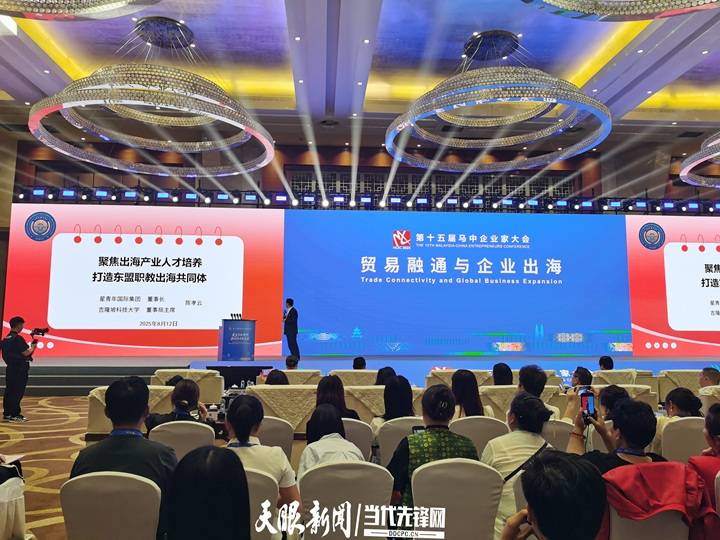
马中企业家大会 | “贸易融通与企业出海”论坛在贵阳举行
Sou Hu Cai Jing· 2025-08-12 15:17
Group 1 - The forum "Trade Connectivity and Enterprises Going Global" held at the 15th Malaysia-China Entrepreneurs Conference aims to activate the collaborative development of the industrial chain between China and Malaysia, driven by the Belt and Road Initiative and the Regional Comprehensive Economic Partnership (RCEP) [2] - The forum featured six leaders from various fields discussing new growth points such as green manufacturing, smart parks, and industry going global, while exploring innovative paths like e-commerce platforms, supply chain finance, and AI empowerment in traditional manufacturing [2] - Malaysia has been China's largest trading partner for 14 consecutive years, with bilateral trade reaching USD 203.6 billion in 2023, indicating a strong economic tie between the two countries [2] Group 2 - The chairman of Star Youth International Group emphasized the importance of international vocational education cooperation in meeting the global market's demand for high-quality technical talent, which is crucial for economic development [3] - The internationalization of vocational education is seen as a key factor in promoting economic growth and enhancing cultural exchange and understanding between countries [3] Group 3 - The secretary of Guiyang University highlighted the role of cultural exchange in fostering trade connectivity and enterprise globalization, aiming to create a favorable cultural atmosphere for cooperation between China and Malaysia [4] - The focus is on deepening educational cooperation with Malaysia and seeking more collaboration opportunities in both education and commerce [4]

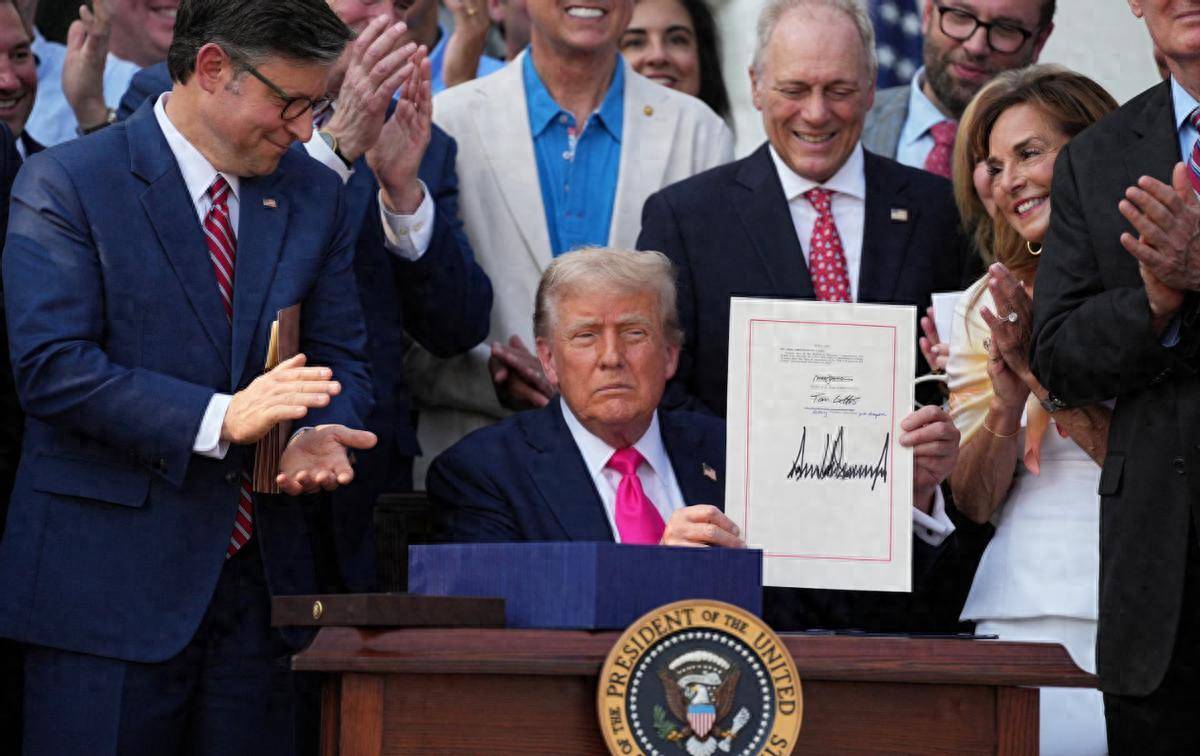
特朗普捅马蜂窝,11国加入战局,美国遭围攻,认定中国是唯一赢家
Sou Hu Cai Jing· 2025-08-11 00:27
Core Viewpoint - The article discusses the implications of Trump's tariff policies, suggesting that China emerges as the primary beneficiary of these measures, contrary to Trump's intentions of strengthening the U.S. economy [1][20]. Group 1: Tariff Policies and Economic Impact - Trump's administration has implemented high tariffs on various countries under the guise of "America First," aiming to compel trade concessions from them [1]. - Despite promises of significant investments from allies like the EU, South Korea, and Japan, these commitments have largely remained unfulfilled, with many companies hesitant to invest in the U.S. due to high costs and instability [3][5]. - The U.S. stock market reacted negatively to the tariff announcements, with the Dow Jones Industrial Average dropping over 1,100 points in three days, indicating a loss of investor confidence [5]. Group 2: Global Trade Dynamics - The tariffs have prompted countries to seek alternatives to the U.S. dollar for trade, with BRICS nations proposing a new clearing system to facilitate transactions in their own currencies [7][11]. - This shift is leading to the formation of a new trade bloc centered around non-Western countries, reducing reliance on the U.S. and its currency [11][24]. Group 3: Comparisons with Historical Economic Policies - Former U.S. Treasury Secretary Summers draws parallels between Trump's tariff strategy and Argentina's post-WWII economic policies, which initially showed short-term gains but ultimately led to long-term economic decline [13][16]. - The high tariffs have increased production costs for U.S. manufacturers, undermining their international competitiveness and leading to capital outflows [18][20]. Group 4: China's Economic Resilience - China has demonstrated significant economic resilience in response to U.S. tariffs, adjusting its export structure and expanding trade with other nations, particularly ASEAN countries [20][22]. - The Belt and Road Initiative has further strengthened China's economic ties with developing countries, providing alternative markets for its exports [22].
规则对接与数字互联,构建区域贸易便利化新框架
Zhong Guo Chan Ye Jing Ji Xin Xi Wang· 2025-08-06 08:55
Core Viewpoint - The China-ASEAN economic and trade relationship is increasingly close, with cross-border e-commerce emerging as a new engine for bilateral trade growth, driven by the implementation of the Regional Comprehensive Economic Partnership (RCEP) and the conclusion of negotiations for the China-ASEAN Free Trade Area 3.0 [1] Group 1: Current Development Status of Cross-Border E-Commerce - Cross-border e-commerce has become a significant force in promoting trade growth between China and ASEAN, with transaction volume exceeding 600 billion RMB in 2023, maintaining double-digit growth for three consecutive years [2] - The implementation of tariff reciprocity pilot programs has significantly improved customs clearance efficiency, with average declaration times reduced by 30%-40% and tariff costs for some product categories decreased by over 15% [2] - The "Single Window" platform has been rapidly developed, with 77 new service functions added by the end of 2023, covering 875 services across 23 categories, supporting over 600,000 enterprises in Shanghai alone [3] Group 2: Challenges in Cross-Border E-Commerce Development - Fragmentation of tariff systems and differences in tax classification and origin rules among ASEAN countries complicate the implementation of policies, leading to increased risks of misclassification and compliance issues for enterprises [5][6] - The lack of interoperability between "Single Window" platforms across ASEAN countries hinders data sharing and operational efficiency, requiring enterprises to operate across multiple systems [7] - Many small and medium-sized enterprises (SMEs) face challenges in understanding and utilizing policies effectively, leading to low participation rates in tariff reciprocity programs [8] Group 3: Recommendations for Enhancing Cross-Border E-Commerce - Establish a "Three Mutuals" tariff governance system to innovate tax recognition mechanisms and improve consistency in tax classification through AI and cloud platforms [9] - Optimize the application of origin rules by promoting blockchain-based certificate management systems to enhance the interoperability of origin certificates across ASEAN [9] - Develop an intelligent collaborative "Single Window" platform by standardizing data and protocols with ASEAN countries, enhancing operational efficiency and reducing redundancy for enterprises [11]
川辣飘香“榴莲国” 蓉企出海“抢”订单
Sou Hu Cai Jing· 2025-07-29 12:58
Group 1 - The event "2025 International Agricultural Products Cooperation Activities (Malaysia, Thailand)" aims to enhance international agricultural trade cooperation and support Chengdu enterprises in expanding their international market presence [1][6] - Chengdu will organize a delegation of high-quality enterprises in agriculture, fresh produce, food, and condiments to participate in the "Malaysia International Food and Beverage Exhibition (MIFB)" from July 30 to August 1, showcasing Chengdu's export products [3][4] - The event includes various activities such as international exhibitions, promotional meetings, and business matchmaking to help Chengdu enterprises connect with Southeast Asian markets and secure international orders [5][6] Group 2 - The promotional meetings in Malaysia and Thailand will adopt a "presentation + targeted negotiation" model, inviting local government trade agencies and key enterprises to facilitate direct connections between Chengdu agricultural products and international buyers [5][6] - Chengdu's government aims to promote local food and condiment enterprises to enter the ASEAN market while also facilitating the import of high-quality fruits and seafood from Malaysia and Thailand to diversify local market offerings [6][7] - The government-led initiative provides core support for enterprises, including cost reduction for participation in exhibitions and enhanced trust from international clients, thereby increasing the likelihood of successful collaborations [7][8]

商务部服贸司负责人谈2025年上半年我国服务外包产业发展情况
Shang Wu Bu Wang Zhan· 2025-07-28 11:18
Core Insights - In the first half of 2025, China's service outsourcing execution amount reached 839.77 billion RMB, a year-on-year decrease of 1% [1] - Offshore service outsourcing execution amount was 483.35 billion RMB, showing a year-on-year growth of 3.9% [1] Business Structure - Offshore Information Technology Outsourcing (ITO) execution amount was 198.87 billion RMB, remaining flat compared to the previous year [1] - Business Process Outsourcing (BPO) execution amount increased by 25.7% to 90.23 billion RMB [1] - Knowledge Process Outsourcing (KPO) execution amount was 194.25 billion RMB, a slight decrease of 0.2% [1] - Rapid growth was observed in business operation services and maintenance services, with execution amounts of 55.32 billion RMB and 31.11 billion RMB, increasing by 22.1% and 40% respectively [1] Regional Distribution - The 37 service outsourcing demonstration cities in China collectively executed 425.37 billion RMB in offshore service outsourcing, a year-on-year increase of 4.2%, accounting for 88% of the total [1] - The Yangtze River Delta region executed 250.93 billion RMB in offshore service outsourcing, a growth of 3% [1] - The Beijing-Tianjin-Hebei region executed 59.45 billion RMB, with a significant year-on-year increase of 17.3% [1] International Market - The top three sources of China's offshore service outsourcing were the United States (88.89 billion RMB), Hong Kong (85.25 billion RMB), and the European Union (62.07 billion RMB), with growth rates of 0.3%, -0.7%, and -4.2% respectively [2] - Execution amount from RCEP member countries reached 143.66 billion RMB, a year-on-year growth of 15.4% [2] - Execution amount from countries involved in the Belt and Road Initiative was 166.78 billion RMB, showing a year-on-year increase of 16.3% [2] Company Nature - Domestic enterprises executed 265.85 billion RMB in offshore service outsourcing, a slight decrease of 0.4%, accounting for 55% of the total [2] - Foreign enterprises executed 217.5 billion RMB, with a year-on-year growth of 9.6%, making up 45% of the total [2] Employment Impact - As of June 2025, China's service outsourcing sector had absorbed 17.255 million employees, with 11.312 million holding a university degree or higher, representing 65.6% [2] - In the first half of 2025, the sector added 289,000 new employees, with 204,000 of them holding a university degree or higher, accounting for 70.6% [2]
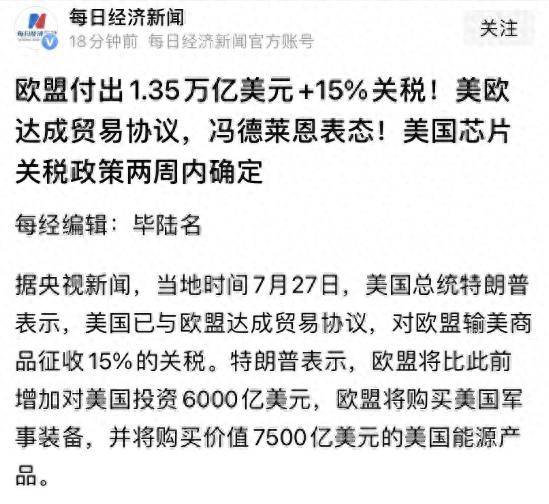
美欧达成史上最大贸易协议,欧洲吃亏吗?或反思为何当初不学中国
Sou Hu Cai Jing· 2025-07-28 07:28
Group 1 - The core point of the article is that the US and EU have reached a trade agreement that lowers tariffs on automobiles and other goods to 15%, which is half of the previously threatened 30% [1][2] - The EU's investment and purchase of US products will reach $135 million as part of the agreement [5][9] - The agreement is described as potentially the largest trade agreement in history, with US-EU trade accounting for 44% of global trade [2] Group 2 - The EU has made concessions to reach this agreement, which may lead to European funds flowing to the US instead of supporting local industries [7] - The EU's increased purchase of US energy products could reduce reliance on Russian energy but may increase dependence on the US, raising concerns about energy security [7] - Some key areas, such as tariffs on steel, aluminum, chips, and spirits, remain undetermined, leaving EU exports in these sectors facing uncertainty [11] Group 3 - Criticism has emerged regarding the agreement being imbalanced and potentially detrimental to European interests, with concerns about the high tariff levels being unsustainable in the long term [12][25] - The EU's complex political structure and differing national interests may hinder its ability to respond effectively to US pressure in trade negotiations [14][21] - In contrast, China has adopted a long-term strategic approach in trade negotiations, focusing on multilateral cooperation and reducing reliance on single markets [15][17][23] Group 4 - The article suggests that Europe may have missed opportunities to learn from China's trade strategies, which emphasize economic independence and strategic autonomy [19][21] - The EU's reliance on the US market and its challenges in forming a unified trade strategy highlight vulnerabilities in its trade negotiations [25]
专访泰国天丝集团CEO许馨雄:投资中国就是投资长期确定性
2 1 Shi Ji Jing Ji Bao Dao· 2025-07-16 10:36
Core Viewpoint - The article highlights the significance of the Thai company Tsingtao Group's participation in the Chain Expo, emphasizing its strategic focus on the Chinese market and the potential for growth in the beverage industry, particularly energy drinks and health foods. Group 1: Company Overview - Tsingtao Group, the largest energy drink manufacturer in Southeast Asia, has invested a total of 4.36 billion yuan in China over the past five years, establishing its China headquarters in Beijing and new production bases in Sichuan and Guangxi [2][7]. - The company emphasizes its commitment to the Chinese market, viewing it as a long-term investment opportunity due to the country's economic resilience and market potential [7][6]. Group 2: Market Trends and Opportunities - The Chinese beverage industry is projected to grow by 7.5% in 2024, reaching a total output of 188 million tons, indicating a robust demand for energy drinks and health foods [10]. - Tsingtao Group plans to focus on new product development, marketing scene expansion, and digital channel construction to align with the evolving consumer lifestyle [10][9]. Group 3: Strategic Initiatives - The company aims to enhance its supply chain resilience by reducing reliance on single supply sources and optimizing local production through new factories in Sichuan and Guangxi [8][6]. - Tsingtao Group is committed to green manufacturing and smart logistics, focusing on carbon reduction across the supply chain from raw material procurement to end delivery [9][8]. Group 4: Regional Cooperation and Policy Benefits - The Belt and Road Initiative and the Regional Comprehensive Economic Partnership (RCEP) are seen as catalysts for enhancing trade and investment opportunities between China and ASEAN countries, benefiting Tsingtao Group's operations [11][12]. - The company intends to leverage these policy advantages to optimize regional raw material procurement and capacity distribution, enhancing its competitive edge in the market [12][11]. Group 5: Cultural and Economic Exchange - Tsingtao Group aims to strengthen Sino-Thai economic cooperation and cultural exchange, particularly in light of the 50th anniversary of diplomatic relations between China and Thailand [13]. - The company plans to explore more collaborative projects that enhance supply chain synergy and promote bilateral trade [13].

美国宣布施压日韩加征25%关税,日韩经济或雪上加霜
2 1 Shi Ji Jing Ji Bao Dao· 2025-07-08 13:55
Group 1 - The new US tariff policy is expected to increase pressure on the already fragile economies of Japan and South Korea [1][2] - The US will impose tariffs ranging from 25% to 40% on imports from Japan and South Korea starting August 1, with a 25% tariff specifically on Japanese and Korean products [1][3] - Japan and South Korea have expressed regret over the tariffs and are seeking to negotiate with the US to protect their national interests [4][5] Group 2 - The automotive industry in both Japan and South Korea has already been impacted by previous US tariffs, leading to negative export growth in May [2][4] - Japan's exports to the US fell by 11.1% in May, with a significant 24.7% drop in automotive exports, marking the first decline in overall exports in eight months [4][7] - South Korea's exports to the US decreased by 8.1% in May, primarily due to a reduction in automotive exports, contributing to an overall export decline of 1.3% [4][8] Group 3 - The US tariffs are seen as a means to pressure Japan and South Korea into making concessions in future trade negotiations, particularly in sectors where the US has a trade deficit [3][9] - Japan's economy is highly dependent on exports, with estimates suggesting a potential 20-30% decrease in exports to the US if all proposed tariffs are enacted [7][9] - South Korea's economy is also vulnerable, with a potential risk of recession if negotiations with the US fail, as indicated by a recent downgrade in its potential growth rate [8][9] Group 4 - The tariffs are likely to disrupt supply chains in the Asia-Pacific region, increasing costs and investment risks for companies [9] - Strengthening regional cooperation through agreements like the Regional Comprehensive Economic Partnership (RCEP) could help mitigate the negative impacts of US tariffs [9]