国产化替代

Search documents
宏诚创新一季度订单迎爆发式增长,国内首创产品订单排产至三季度
Xin Lang Cai Jing· 2026-02-19 05:36
Group 1 - The company, Beijing Hongcheng Innovation Technology Co., Ltd., has experienced explosive growth in orders during the first quarter of this year, with significant increases in domestic products such as the first fully localized RF handheld smart terminal and unattended IoT refrigerators, leading to a notable rise in the share of domestic substitution business [1][2] - The company aims for 2026 to be a critical year for strategic upgrades and breakthroughs, focusing on product development, capacity release, and market expansion to lay a solid foundation for achieving annual goals [1][3] - The company has implemented a core strategy of "AI + IoT + Security," enhancing production efficiency through the integration of AI and IoT technologies, optimizing supply chain support, and advancing the construction of blood safety platforms and digital service optimization [2][3] Group 2 - Recent breakthroughs in research and technology include the launch of the NBIS next-generation blood information management system, which utilizes AI algorithms and big data to address traditional system issues, achieving real-time information synchronization and risk warning [3] - The company has achieved CNAS certification for its fully localized RF handheld smart terminal, breaking the overseas technology monopoly and ensuring full control over core components [3] - The company plans to consolidate its leading position in core sectors and steadily advance its IPO process, with a focus on strategic elevation and decisive breakthroughs by 2026 [3]
集结产业中坚力量!共破国产化攻坚难题
半导体行业观察· 2026-02-19 02:46
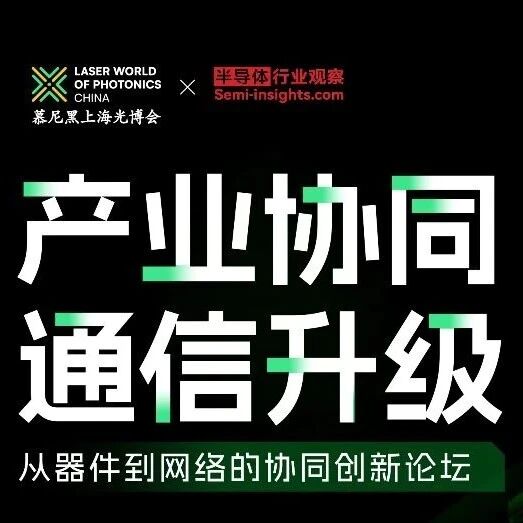
Core Viewpoint - The article emphasizes the importance of heterogeneous integration and optoelectronic fusion in the semiconductor and optoelectronic industries as key paths for technological breakthroughs and domestic substitution, especially with the rapid growth of AI computing power and the upcoming 5G-A and 6G deployments [1]. Industry Overview - By 2025, China's semiconductor market is projected to exceed 2.3 trillion yuan, with the optoelectronic device market accounting for 18%. However, the domestic substitution rate in critical areas such as third-generation semiconductor materials, high-end EDA tools, and photonic integrated chips (PIC) remains below 40% [1]. - The upcoming "Collaborative Innovation Forum from Devices to Networks" aims to facilitate collaboration across the entire industry chain, bringing together key players from academia, enterprises, and demand-side [1]. Event Details - The forum will take place on March 18, 2026, at the Shanghai New International Expo Center, focusing on full industry chain collaboration [1]. - The event will gather around 200 core industry practitioners, including major telecom operators, leading cloud service providers, equipment manufacturers, and key players in the optoelectronic and semiconductor sectors [1]. Participation and Engagement - The forum will also feature a live broadcast on the Semiconductor Industry Observation video account, expected to attract over 100,000 industry peers, breaking down geographical barriers for communication [2]. - Notably, 45% of participating companies have revenues exceeding 1 billion yuan, with an average of over 15% of their revenue invested in R&D [2]. Technological Breakthroughs - The article highlights that the domestic semiconductor industry's breakthroughs are not isolated but require a full-chain collaboration from materials to applications. Current advancements in areas like advanced packaging and optical matrix computing (oMAC) have established a foundation for collaboration [2]. - The event's agenda includes discussions on various topics, such as optoelectronic integrated chips for information and communication systems, silicon photonics for high-speed AI optical connections, and the advantages of silicon capacitors in AI applications [3][4]. Collaborative Innovation - The core of collaborative innovation is to break down information barriers and technological silos, allowing for rapid transformation of academic research into industrial productivity and driving technological iterations through enterprise application needs [7]. - The forum aims to create a bridge for efficient connections across the entire chain from source innovation to industrial implementation, facilitating direct procurement opportunities for participating companies with major cloud service providers and telecom operators [6][7].

芯聚赋能•展领未来——半导体行业观察解锁产业新机遇
半导体行业观察· 2026-02-18 01:13
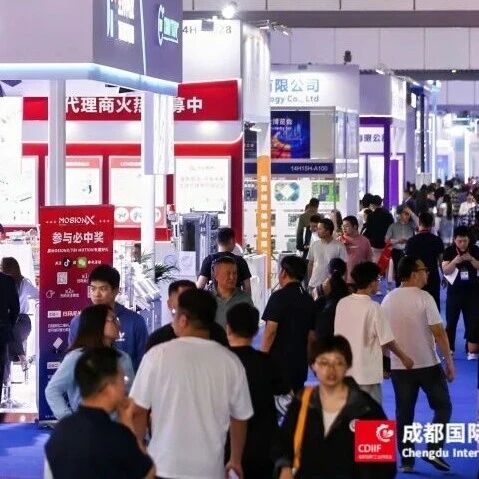
Core Viewpoint - The global semiconductor industry is undergoing a significant adjustment period, with domestic substitution accelerating in key areas such as wafer manufacturing, packaging and testing, equipment materials, and EDA tools, making industry chain collaborative innovation the core to breaking through [1] Group 1: Major Vertical Exhibitions - The three major vertical exhibitions, including the Munich Shanghai Optical Expo, PCIM Asia, and WAIC, serve as essential platforms for global industry resources and cutting-edge technologies, establishing themselves as the top tier in industry significance [2][3] - These exhibitions are recognized as the leading indicators of industry trends, showcasing the highest level of authority and resource aggregation capabilities [3] Group 2: Munich Shanghai Optical Expo - Scheduled for March 18-20, 2026, at the Shanghai New International Expo Center, this expo is the largest and most prestigious in the global optoelectronics field, featuring over 1,400 top domestic and international companies [4] - The event covers the entire industry chain from materials to optical chips and devices, showcasing key technologies such as silicon-based photonic integration and quantum dot lasers [4] Group 3: PCIM Asia - Taking place from August 26-28, 2026, at the Shenzhen International Convention and Exhibition Center, PCIM Asia focuses on the power electronics industry, gathering over 800 leading companies [5][6] - The exhibition highlights third-generation semiconductors and serves as a platform for product launches and technical exchanges in the power electronics sector [6] Group 4: WAIC (World Artificial Intelligence Conference) - The main exhibition in Shanghai is set for July 5-7, 2026, with a focus on AI integration with semiconductors, featuring a display area of 77,000 square meters and attracting over 1,000 top companies [7] - The event emphasizes core areas such as GPU/DPU/NPU heterogeneous computing chips and edge computing semiconductors, showcasing the deep integration of semiconductors and AI [7] Group 5: Bay Area Strategic Hub - The Bay Area is positioned as a critical platform for domestic substitution, linking global resources and activating new industrial dynamics [9][10] - It houses over 70% of China's semiconductor design companies and 60% of packaging and testing firms, creating a complete industrial ecosystem [10] Group 6: Market Demand and Opportunities - The semiconductor industry in the Bay Area is projected to exceed one trillion in procurement for equipment, materials, and EDA tools over the next decade, indicating significant opportunities for domestic manufacturers [11][12] - The exhibition serves as a core window for domestic companies to connect with essential orders and projects [12] Group 7: Focus on Core Areas - The exhibition targets critical segments of the semiconductor industry, including wafer manufacturing equipment and advanced packaging technologies, fostering innovation and collaboration [13] - It invites top experts to address industry challenges and provide insights into technology breakthroughs [13] Group 8: Regional and Global Linkage - The exhibition acts as a gateway to the South China market, facilitating connections between domestic and international resources [14] - It supports a dual circulation model, promoting both domestic and international market interactions [14] Group 9: Strategic Matrix of Four Major Exhibitions - The four major exhibitions form a strategic matrix that combines leading segments with ecological collaboration, creating a resource aggregation platform for the semiconductor industry [16]

国产车载SerDes龙头冲刺上市!
是说芯语· 2026-02-15 04:01
Core Viewpoint - Ruifake Semiconductor (Tianjin) Co., Ltd. has officially launched its initial public offering (IPO) and listing guidance, marking its entry into the capital market as a leading domestic player in the automotive SerDes field [1]. Company Overview - Established in July 2009, Ruifake has a registered capital of 70 million yuan and is classified under the manufacturing industry of computers, communications, and other electronic devices. The company is recognized as a national high-tech enterprise and a specialized and innovative small and medium-sized enterprise in Tianjin [2][4]. - The company was founded by several returnee semiconductor technology experts from Silicon Valley and local seasoned marketing professionals, supported by leading industry capital such as Junlian Capital and Sequoia Capital, providing it with inherent advantages in R&D and market layout [2]. Business Structure - Ruifake has established a national layout with its headquarters in Tianjin and sales and customer support nodes in Shenzhen, Chongqing, and Shanghai, creating a complete business loop from chip R&D and design to market promotion. Its business scope includes manufacturing electronic components and software, technology development and transfer, and wholesale and retail of products [3]. - The shareholding structure is clear, with the controlling shareholder, Wang Yuanlong, directly holding 21.36% of the shares and indirectly controlling 16.76% of the voting rights through other entities, totaling 38.11% of the voting rights [3][4]. Competitive Advantages - Ruifake's core competitiveness lies in technological independence, high-end product offerings, and comprehensive scene coverage. The company insists on self-research of core IP, with all products utilizing proprietary IP cores, avoiding reliance on third-party IP and establishing a complete domestic supply chain from chip design to packaging and testing [5]. - The company focuses on high-speed analog circuits, SoC circuit design, and embedded software, having developed PHY IPs for USB3.0, SATA1/2/3, PCIE, HDMI, and MIPI, creating significant technical barriers. It is also a member of the HSMT (China Automotive High-Speed Multimedia Transmission) industry standard drafting unit [5]. Product Matrix - Ruifake targets three core areas: automotive-grade, industrial-grade, and consumer-grade products. Its automotive-grade SerDes chips are its core business, being one of the only two companies globally to mass-produce SerDes chips exceeding 12G PAM4, with over 20 products in mass production and transmission rates ranging from 2Gbps to 12.8Gbps [6]. - The company has successfully entered the supply chain of major manufacturers like Changan Automobile and aims to rank among the top three in the Chinese market for intelligent auxiliary driving domain control (NOA) SerDes chips by the end of November 2025, with plans to launch products with a transmission rate of 25.6Gbps for 8K automotive display needs [6]. Future Prospects - The launch of the IPO guidance is expected to broaden the company's financing channels, enhance R&D investment, and expand its product line, solidifying its leading position in the automotive SerDes field. It is anticipated that with the advancement of the listing process and the popularization of HSMT standards, Ruifake will leverage domestic substitution policies and market demand growth to achieve dual breakthroughs in technology and business [8].

研判2026!中国水质检测仪器行业发展背景、产销量、市场规模、竞争格局及未来展望:水质安全需求提升带动检测仪器市场,国产替代进程不断加快[图]
Chan Ye Xin Xi Wang· 2026-02-15 00:27
Core Viewpoint - The water quality testing instrument industry is experiencing steady growth driven by increasing public concern for water safety and stricter environmental regulations, with the market size projected to grow from 1.83 billion yuan in 2017 to 5.22 billion yuan by 2025, representing a compound annual growth rate (CAGR) of 14.03% [1][9]. Industry Overview - Water quality testing refers to the process of determining the types and concentrations of pollutants in water, evaluating water quality status [3]. - Key water quality indicators include comprehensive indicators (temperature, color, turbidity, pH, conductivity, suspended solids, dissolved oxygen, chemical oxygen demand, and biochemical oxygen demand) and toxic substances (phenols, cyanides, arsenic, lead, chromium, cadmium, mercury, and organic pesticides) [3]. - Water quality testing instruments can be categorized by function (single-parameter and multi-parameter testers), testing items (pH meters, total phosphorus testers, etc.), and usage environment (laboratory, portable, simple, and online testers) [4][3]. Market Demand and Growth - The market demand for water quality testing instruments is steadily increasing due to heightened public awareness and regulatory pressures [1][9]. - The industry is expected to play a crucial role in dynamic water quality monitoring, pollution warning, and comprehensive management, driven by advancements in smart, portable, and multi-parameter integrated technologies [1][9]. Industry Development Background - Water quality safety is a significant concern, with ongoing improvements in surface and groundwater quality in China [4][5]. - In 2024, 90.4% of monitored surface water quality sections were rated as good (Class I-III), indicating progress in water environment governance [5]. - Continuous, precise, and efficient monitoring of water quality is essential for ensuring environmental safety and supporting scientific decision-making [5]. Industry Chain - The upstream of the water quality testing instrument industry includes raw materials and components such as sensors, probes, circuit boards, optical components, and consumables [5]. - The midstream involves the production and manufacturing of water quality testing instruments, while the downstream encompasses sales channels and application fields, including environmental water, wastewater, and water conservancy sectors [5][6]. Competitive Landscape - The industry features a diverse competitive landscape with international leaders (e.g., Thermo Fisher, Hach, Siemens, ABB) dominating the high-end market, while domestic companies (e.g., Xuedilong, Xianhe Environmental Protection, and others) focus on mid-range markets and specialized applications [9][10]. - Domestic firms leverage their understanding of local markets and flexible service models to establish competitive advantages in mid-tier markets [10]. Key Companies - Xianhe Environmental Protection Technology Co., Ltd. has developed a comprehensive service provider model in environmental monitoring, with a reported revenue of 138 million yuan in the first half of 2025, reflecting a 0.73% year-on-year growth [10]. - Lihua Technology Co., Ltd. specializes in environmental monitoring systems, reporting a revenue of 558 million yuan in the first three quarters of 2025, marking a 5.15% increase [12]. Industry Trends - The industry is moving towards multi-parameter integration, real-time monitoring, and intelligent analysis, with future instruments expected to combine various detection technologies [13]. - There is a focus on miniaturization and rapid on-site detection capabilities, enabling water quality testing to expand into distributed scenarios such as river inspections and household water safety [14]. - Companies are transitioning from equipment suppliers to comprehensive solution providers, offering monitoring systems and data services, enhancing the value derived from long-term monitoring data [14].


芯聚蓉城 链通沪蓉 掘金川渝!
半导体芯闻· 2026-02-14 08:56
Core Insights - The article highlights the rapid growth and opportunities in the semiconductor industry in Chengdu, which is positioned as a national integrated circuit industry base with a complete industrial chain in the western region [1][4][5] - The 2026 Chengdu International Industrial Expo will feature the "Chip Future" integrated circuit series of activities, aiming to connect the semiconductor industry with global resources and local market demands [2][3][12] Industry Overview - Chengdu's semiconductor market is projected to exceed 137 billion yuan by 2025, driven by significant demand for various chips, including industrial-grade sensors and automotive power semiconductors [1][5][8] - The region has established a collaborative industrial ecosystem, with Chengdu focusing on IC design and advanced packaging, while Chongqing specializes in power semiconductor manufacturing [5][6] Event Details - The expo will take place from March 11 to 13, 2026, at the China West International Expo City, featuring a dedicated 30,000 square meter semiconductor exhibition area [3][9] - The event will include policy empowerment, technology sharing, demand release, and precise matching of industry needs, particularly in precision testing, robotics, and laser equipment [2][11] Market Demand - The demand for chips in the Chengdu-Chongqing economic circle is substantial, with Chengdu producing over 120 million smart terminals annually and Chongqing being a major hub for laptop and automotive manufacturing [7][8] - Key sectors such as aerospace, industrial robotics, and laser equipment are rapidly developing, further increasing the demand for specialized chips [8][11] Strategic Collaboration - The event aims to facilitate cross-regional collaboration between Chengdu and Shanghai, enhancing resource sharing and industry cooperation [10][12] - The integration of the Chengdu and Shanghai exhibitions will provide participating companies with enhanced visibility and access to a broader market [10][12]
沃顿科技投资新项目,子公司设立并拓展技术应用
Jing Ji Guan Cha Wang· 2026-02-14 07:47
Recent Developments - The company plans to invest in a reverse osmosis membrane and polyphenylene sulfide production line in Jiangbei New District, Nanjing, aiming for an annual production capacity of 20 million square meters of reverse osmosis membranes and 3,000 tons of polysulfone by October 2025 [1] - A wholly-owned subsidiary, Wotton Technology (Nanjing) Co., Ltd., was established with an investment of 300 million yuan, serving as the investment and operation entity for the aforementioned project [2] Product Development - The company's UE series membrane products have achieved stable applications in downstream semiconductor enterprises, indicating a technological breakthrough in high value-added areas [3] Institutional Research - The company has been frequently visited by institutional investors, receiving 53 research visits from 45 institutions in the past year, focusing on business growth drivers and domestic substitution in the industry [4] Shareholder Structure - As of January 31, 2026, the number of shareholders decreased by 5.14% to 25,800, indicating an increase in share concentration and potential changes in investor structure [5] Financial Performance - For the first nine months of 2025, the company reported revenue of 1.382 billion yuan, a year-on-year increase of 19.72%, and a net profit attributable to shareholders of 195 million yuan, reflecting a growth of 29.21% [6]

赛微电子业绩扭亏依赖非经常性收益,主营业务承压致股价回调
Jing Ji Guan Cha Wang· 2026-02-14 01:42
Company Performance - The company forecasts a net profit attributable to shareholders of between 1.414 billion and 1.504 billion yuan for 2025, marking a significant turnaround with an increase of 932% to 985% year-on-year. However, this growth is primarily driven by a one-time gain from the sale of a subsidiary's equity, amounting to approximately 1.815 billion yuan [2] - Excluding this non-recurring gain, the company's net profit is expected to be a loss of between 303 million and 391 million yuan, indicating a further deterioration compared to 2024, with operating revenue projected to decline by over 30% [2] Operational Situation - The core Beijing FAB3 production line is still in the ramp-up phase, achieving a monthly capacity of 15,000 wafers by the end of June 2025, but with a low capacity utilization rate of approximately 23% [3] - High fixed costs due to depreciation and amortization, along with increased asset impairment provisions and stock incentive expenses, have led to ongoing losses for this production line [3] - The long customer certification cycle and small order sizes have exacerbated the mismatch between idle capacity and strong market demand, hindering the recovery of profitability [3] Market Dynamics - Prior to the earnings forecast announcement, the company's stock price experienced fluctuations, including a single-day increase of 7.71% on February 9, followed by a decline of 4.82% on February 13. Net capital outflow of 491 million yuan was recorded on February 5, while there was a net inflow of 254 million yuan on February 9, indicating that some funds may have positioned themselves ahead of the positive earnings forecast and subsequently realized profits, leading to a stock price correction [4] Industry Analysis - Despite the long-term steady growth of the global MEMS market, projected to reach 19.2 billion dollars by 2030, the company faces competition from international giants in the high-end foundry sector, with the domestic substitution process constrained by customer certification cycles [5] - The semiconductor sector has recently experienced an overall pullback, with the semiconductor index underperforming the broader market by 6.70 percentage points last week, which may amplify individual stock volatility [5] Future Outlook - The stock price correction is primarily due to the market recognizing that the company's earnings growth relies on non-recurring gains rather than improvements in core business operations. The expansion of operating losses, low capacity utilization, and competitive pressures in the industry have weakened investor confidence in the sustainability of short-term profits [6] - Attention should be paid to the subsequent capacity digestion and order fulfillment of the Beijing FAB3 production line [6]

金博股份:碳纸、气体扩散层产品的技术性能已达国际领先水平
Zheng Quan Ri Bao Wang· 2026-02-13 13:14
Group 1 - The company, Jinbo Co., has developed carbon paper and gas diffusion layer materials for fuel cells, leveraging its technological expertise in carbon-based materials [1] - The technical performance of these products has reached an internationally leading level, indicating strong competitive capabilities [1] - The products have been validated and delivered in bulk to several leading domestic membrane electrode, stack, and electrolyzer manufacturers, establishing the company as a designated supplier for a well-known hydrogen fuel cell system manufacturer [1]

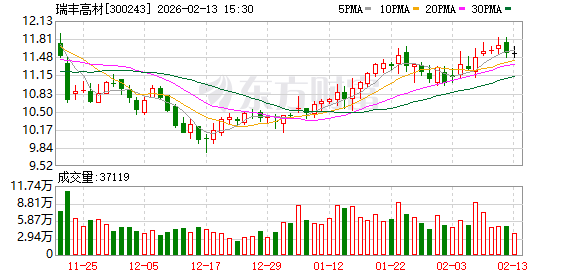
瑞丰高材:公司成立之初便致力于实现PVC塑料助剂ACR/MBS的国产化替代
Zheng Quan Ri Bao· 2026-02-13 09:13
Core Viewpoint - The company, Ruifeng High Materials, is focused on domestic substitution of PVC plastic additives ACR/MBS, successfully breaking the technological monopoly of Japan, Europe, and the United States [2] Group 1: Business Expansion and Product Development - The company has been continuously focusing on industrial transformation and upgrading, developing new products such as engineering plastic additives, SBR series for new energy battery binders, and epoxy resin toughening agents [2] - The MBS-GM series products, which are toughening modifiers for PC/ABS, have successfully replaced similar products from Japan and the United States, and the company is further expanding its market to increase the domestic substitution rate [2] - The company has achieved significant sales growth in engineering plastic additives, with projected sales revenue exceeding 100 million yuan in 2024, representing a year-on-year increase of 212.46%, accounting for 5.33% of total operating revenue [2] Group 2: Market Position and Future Outlook - The high-end ABS powder products are primarily dominated by international manufacturers such as Korea's Kumho and BASF, but the company has also achieved bulk sales of these products [2] - Although the new products currently account for a low proportion of the company's operating revenue, their short-term impact on overall performance is limited, but they are expected to maintain a high growth rate in 2025 [2]