存储超级周期

Search documents
港股概念追踪 | 2家半导体公司部分芯片涨价 机构称本轮存储超级周期至少延续至2027年(附概念股)
智通财经网· 2026-01-27 23:39
野村证券认为,这一轮始于2025年下半年的存储超级周期至少延续至2027年,并且真正有意义的新增供 给最早要到2028年初期才会出现。野村分析师团队表示,投资者们在2026年应继续超配存储龙头,把存 储芯片价格—利润—估值三击作为2026年存储投资主线,而不是仅把存储当HBM单一题材,该机构预 计三大存储芯片公司(三星电子、SK海力士、美光科技)盈利将创历史新高。 相关概念股: 智通财经APP获悉,1月27日,中微半导、国科微2家半导体公司相继发出涨价函,公司旗下部分芯片产 品将不同程度涨价。中微半导发布的涨价通知函显示,受当前全行业芯片供应紧张、成本上升等因素的 影响,封装成品交付周期变长,成本较此前大幅度增加,框架、封测费用等成本也持续上涨。鉴于当前 严峻的供需形势以及巨大的成本压力,经过慎重研究,决定于即日起对MCU、Norflash等产品进行价格 调整,涨价幅度15%~50%。若后续成本再次发生大幅变动,价格也将跟进调整。 据产业链消息,另一家半导体公司国科微也对客户发出涨价函,国科微宣布自1月起对合封512Mb的 KGD(已知合格芯片)产品涨价40%,对合封1Gb的KGD产品涨价60%,对合封2Gb ...



又一存储独角兽赴港上市,估值超100亿,五年飙涨12倍
21世纪经济报道· 2026-01-27 13:22
Core Viewpoint - The article highlights the successful IPO application of Shenzhen Hongxin Yu Electronics Co., Ltd. (Hongxin Yu), a rapidly growing independent storage manufacturer in China, amidst a significant price surge in the storage industry. The company aims to capitalize on the booming semiconductor market and its strong valuation of nearly 10.8 billion RMB [1][4]. Group 1: Company Overview - Hongxin Yu, founded in 2018, has quickly become the fifth largest independent storage manufacturer globally and the second largest in mainland China, driven by the urgent need for domestic semiconductor supply chain localization [2][4]. - The company has completed at least seven rounds of equity financing in just seven years, attracting numerous well-known investment institutions, leading to a valuation increase from approximately 816 million RMB in March 2020 to 10.76 billion RMB by March 2025, representing a growth of over 12 times [4][5]. Group 2: Financial Performance - In the first nine months of 2025, Hongxin Yu's revenue reached 7.744 billion RMB, significantly exceeding the 2023 level of 8.78 billion RMB, despite a slight decline in 2024 [8]. - However, the company faced a substantial net profit decline of 54.55% in the first three quarters of 2025, dropping to 351 million RMB, with a gross margin decrease from 23.7% to 13.1% due to price fluctuations in its core embedded storage products [10][12]. Group 3: Market Position and Strategy - Hongxin Yu's embedded storage business is its main revenue driver, contributing 35.76 billion RMB, or 46.2% of total revenue in the first nine months of 2025. The company is expanding into higher-value automotive and enterprise-level markets [5][7]. - The global storage market is projected to grow from 263.3 billion USD in 2025 to 407.1 billion USD by 2029, with an annual growth rate of 11.5%, driven by AI and cloud computing demands [7][8]. - The company is preparing for the AI-driven storage supercycle, focusing on developing next-generation control chips and advanced testing centers to meet the increasing data demands of AI applications [12].

每日投资策略-20260126
Zhao Yin Guo Ji· 2026-01-26 04:53
Market Overview - Global markets showed mixed performance, with the Hang Seng Index closing at 26,750, up 0.45% year-to-date, while the US Dow Jones fell by 0.58% [1][3] - The Chinese stock market saw gains, particularly in materials, consumer discretionary, and healthcare sectors, while energy and real estate lagged [3] Industry Insights - The Chinese pharmaceutical sector is experiencing a significant upward trend, with the MSCI China Healthcare Index rising 9.2% since early 2026, outperforming the MSCI China Index by 5.6% [4] - The trend of Chinese innovative drugs going overseas continues to gain momentum, with multiple business development (BD) transactions occurring in early 2026, indicating a strong market for overseas licensing [5] - Key transactions include the overseas rights granted by Rongchang Biopharma to AbbVie for RC148 and by Haisika for HSK39004, showcasing the clinical progress of these drugs [5] Company Analysis - China Ping An is projected to see a 12% increase in operating profit to RMB 135.9 billion in 2025, driven by improvements in life and health insurance segments [7] - The new business value (NBV) is expected to grow by 42% year-on-year to RMB 40.4 billion, with a strong performance anticipated in the first quarter of 2026, particularly in the bancassurance channel [8] - The target price for China Ping An has been raised to HKD 90, reflecting adjustments in profit and NBV growth forecasts, with the company currently trading at 0.71 times FY26E P/EV [8]
我国首次实现火箭平台太空金属3D打印实验交付;银河航天徐鸣表示,太空新基建迎万亿市场,2035年全球太空经济将达1.8万亿美元——《投资早参》
Mei Ri Jing Ji Xin Wen· 2026-01-26 00:00
点评:复杂异形构件外形复杂、空腔分隔片薄、工艺刚性差,且对力学性能要求高,锻造技术成型难度 大,而 3D 打印不受零件外形轮廓复杂程度约束,制造的零件强度基本能满足航天领域关键零件的设计 要求。3D 打印在发动机、叶片、结构框架、机匣类等关键零件制造中优势明显:材料利用率从 30% 提 升至 95% 以上,废料率可降低到 5% 以下,零部件减重 30%-60%,交付周期缩短 50% 以上。在火箭 发动机领域,多重因素叠加可使综合生产制造成本降低 30%-60%。概念股包括银邦股份、德恩精工、 锐科激光等。 每经记者|杨建 每经编辑|彭水萍 (一)重要市场新闻 1月24日,据北京市经济和信息化局网站,《北京市关于促进商业卫星遥感数据资源开发利用的若干措 施(2026—2030年)》近日印发,其中提出,强化空间基础设施建设。支持企业规划建设具有差异化优 势、商业价值明确、应用前景清晰的商业卫星星座。完善空间基础设施资源,推动通导遥算能力融合, 满足多元化使用需求。加强太空云计算、人工智能、大数据等新一代信息技术在卫星星座中的应用。对 于符合要求的空间基础设施建设项目,支持申请国家、市级财政资金。 (二)行业掘金 ...
存储行业,年报预增浪来袭
财联社· 2026-01-23 14:36
Group 1 - The storage "super cycle" narrative is gaining momentum, with several companies in the storage industry chain reporting positive news, including expected significant profit growth for 2025 [2][5] - Shannon Chip Creation (香农芯创) forecasts a net profit of 480 million to 620 million yuan for 2025, representing a year-on-year increase of 81.77% to 134.78% [2] - Dongxin Co. (东芯股份) anticipates a net loss of 17.4 million to 21.4 million yuan for 2025, although the storage segment has achieved profitability [3] Group 2 - Zhongwei Company (中微公司) expects a net profit of 2.08 billion to 2.18 billion yuan for 2025, reflecting a year-on-year growth of approximately 28.74% to 34.93% [4] - Shengen Co. (神工股份) projects a net profit of 90 million to 110 million yuan for 2025, with a year-on-year increase of 118.71% to 167.31% [5] - The companies involved in storage chip design, semiconductor equipment, and materials are benefiting from the storage market's positive impact on their performance, driven by the growing demand for enterprise-level storage due to the rise of artificial general intelligence (AGI) [5] Group 3 - Shannon Chip Creation's proprietary brand "Haipu Storage" has launched multiple products in the enterprise SSD and DRAM segments, expecting sales revenue of 1.7 billion yuan for 2025, with 1.3 billion yuan projected for Q4 [6] - Zhongwei Company reports increased recognition for its plasma etching equipment, with significant growth in shipments for advanced logic and storage device manufacturing [6] - Shengen Co. indicates that the global semiconductor market is recovering, leading to increased revenue from its large-diameter silicon materials business due to rising demand for key consumables in the domestic market [6] Group 4 - Future storage product prices are expected to continue rising, with a significant increase in procurement costs for DRAM products anticipated in 2026 [7] - The market expects a general increase in wafer foundry prices in 2026, with TSMC and SMIC likely to raise prices for advanced processes [7] - The anticipated increase in storage prices is expected to tighten foundry capacity, benefiting domestic foundry companies like SMIC and Huahong [7] Group 5 - The demand for storage price increases is expected to transmit to the upstream packaging and testing sector, with companies like Licheng and Huadong adjusting their packaging prices by up to 30% due to high capacity utilization [8] - The advanced packaging and storage-related packaging sectors are likely to benefit from the price increases driven by demand [8]





存储股集体爆发,有龙头净利暴增超10倍
21世纪经济报道· 2026-01-22 12:25
Core Viewpoint - The storage chip industry is experiencing a significant growth phase driven by AI demand, with leading companies like Demingli (001309.SZ) forecasting substantial revenue and profit increases for 2025, indicating a robust market outlook for storage products [1][6][12]. Group 1: Company Performance Forecasts - Demingli expects 2025 revenue between 10.3 billion to 11.3 billion yuan, a year-on-year increase of 115.82% to 136.77%, with net profit projected at 650 million to 800 million yuan, reflecting an increase of 85.42% to 128.21% [1][6]. - The fourth quarter of 2025 is anticipated to see net profit between 677 million to 827 million yuan, marking a staggering growth of 1051.59% to 1262.41% year-on-year [1][6]. - Other companies like Baiwei Storage (688525.SH) and Lanke Technology (688008.SH) have also reported optimistic forecasts, with Baiwei expecting revenue of 10 billion to 12 billion yuan, a growth of 49.36% to 79.23% [6][7]. Group 2: Market Trends and Drivers - The global storage market is entering a "super cycle" driven by AI, with supply-demand imbalances leading to rising prices for storage products, benefiting manufacturers [4][12]. - Major storage manufacturers are adjusting production strategies, with companies like Samsung and SK Hynix reducing output of traditional memory chips while increasing capacity for high-performance products [12][13]. - The demand for high-performance storage solutions is surging due to the proliferation of AI applications, which require advanced storage capabilities for data centers and AI servers [12][13]. Group 3: Stock Market Performance - The storage sector has seen significant stock price increases, with companies like Xiangnong Chip (300475.SZ) rising over 407% and Demingli increasing by over 273% since the beginning of the year [8][9]. - The storage index has risen nearly 119% over the past year, with continued upward momentum in 2023 [1][9]. Group 4: Expansion Plans of Domestic Manufacturers - Domestic storage manufacturers are ramping up production capacity through new investments and expansions, with Demingli and Baiwei Storage announcing significant fundraising plans to enhance their production capabilities [11][14]. - The industry is expected to see continued price increases for storage products into 2026, driven by ongoing supply constraints and rising demand [12][14].


存储芯片的“暴力美学”:为何本轮存储牛市才刚走完上半场?
RockFlow Universe· 2026-01-22 10:37
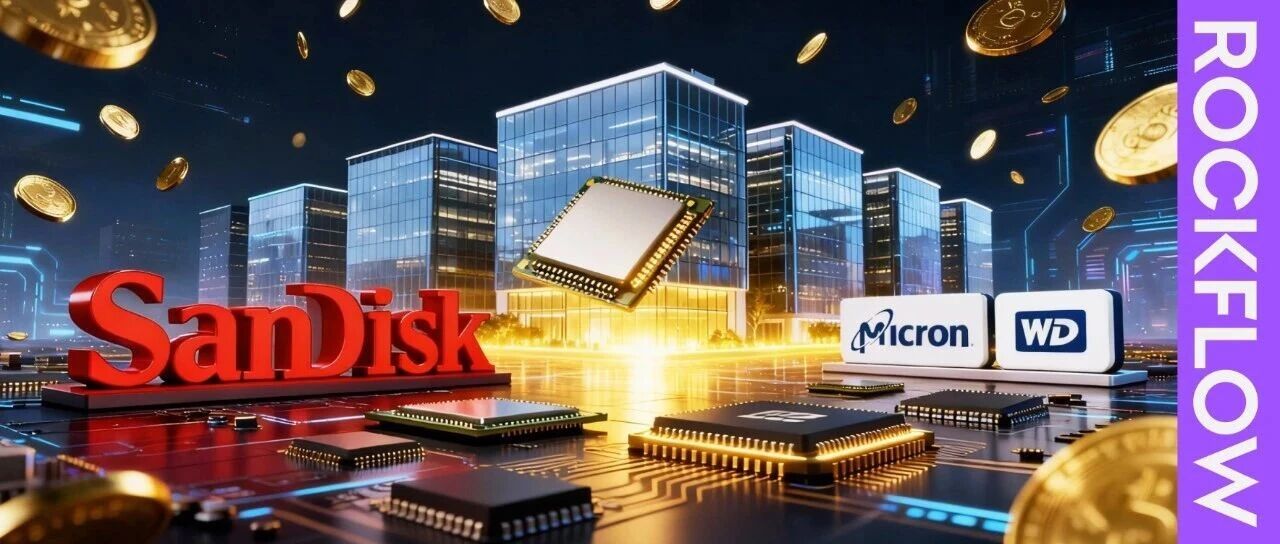
Core Insights - Storage chips are transitioning from a commodity to a core fuel for AI computing, with HBM's "capacity black hole" effect disrupting traditional DRAM supply and increasing demand for enterprise SSDs [3][5][8] - The current supercycle in storage is leading to accelerated differentiation among key players, with Micron (MU) leveraging 1-gamma technology, SanDisk (SNDK) benefiting from high profit elasticity, and Western Digital (WDC) maintaining its position through HAMR technology [3][5][13] - Four catalysts are preventing a decline in storage prices: increased memory demand from AI, a new capital expenditure norm focused on technology upgrades, a shift in power dynamics favoring storage manufacturers, and geopolitical factors ending price wars [3][28][32] Group 1: Market Dynamics - Storage chips have historically been viewed as a commodity, but this perception is changing as they become essential for AI, breaking traditional cyclical valuation patterns [5][8] - HBM is critical for AI performance, consuming DRAM capacity at a rate of 1:3, meaning that as production shifts to HBM, traditional memory supply will significantly decrease [9][10] - The demand for enterprise SSDs is expected to rise as AI applications evolve, with significant increases in data storage needs [11][12] Group 2: Key Players Analysis - Micron (MU) is positioned as the only pure-play DRAM manufacturer in the U.S., benefiting from technological advancements and local incentives, with expectations for EPS to rise due to increased HBM production [17][19] - SanDisk (SNDK), now independent, is recognized for its high sensitivity to enterprise SSD pricing, showing significant stock price increases post-split [20][21] - Western Digital (WDC) is seen as an undervalued player in cold data storage, leveraging its HAMR technology to maintain a competitive edge in HDD markets [22][24] Group 3: Future Outlook - The storage market is expected to enter a phase driven by structural demand changes rather than supply-side reductions, with significant growth anticipated in the next 6-12 months [27][28] - Key catalysts for continued strength in the storage sector include increased AI-driven demand, a shift in capital expenditure focus, changing power dynamics in pricing, and geopolitical stability [28][30][32] - Investment strategies for 2026 suggest a focus on Micron as a core holding, SanDisk for high-growth potential, and Western Digital for defensive stability [33][35][36]

存储超级周期里 国产厂商“涨”声一片
2 1 Shi Ji Jing Ji Bao Dao· 2026-01-22 09:37
Core Viewpoint - The storage chip industry is experiencing a significant growth cycle driven by AI demand, with major companies like Demingli (德明利) forecasting substantial revenue and profit increases for 2025, indicating a robust market outlook for storage products [1][2][3]. Company Performance - Demingli expects 2025 revenue between 10.3 billion to 11.3 billion yuan, a year-on-year increase of 115.82% to 136.77%, with net profit projected at 650 million to 800 million yuan, reflecting an increase of 85.42% to 128.21% [1][2]. - In Q4 2025, Demingli anticipates revenue of 3.641 billion to 4.641 billion yuan, representing a growth of 209.72% to 294.79% [1]. - Other companies in the storage sector, such as Baiwei Storage (佰维存储) and Lanqi Technology (澜起科技), have also reported optimistic forecasts, with Baiwei expecting revenue of 10 billion to 12 billion yuan and net profit of 850 million to 1 billion yuan, and Lanqi projecting net profit of 2.15 billion to 2.35 billion yuan [2][3]. Market Trends - The storage market is undergoing a transformation, with major players like SanDisk, Micron, and Samsung raising product prices due to increased demand for high-performance storage chips driven by AI applications [3][6]. - The demand for high-performance storage solutions is growing as AI applications proliferate, leading to a significant increase in the market size [6][7]. - The supply side is tightening as major manufacturers reduce production of traditional storage chips while focusing on advanced processes for AI server applications, contributing to rising prices [6][7]. Industry Dynamics - The AI-driven storage supercycle is creating a favorable environment for domestic storage manufacturers, who are increasing capital expenditures to expand production capacity [5][8]. - Companies like Jiangbolong (江波龙) and Demingli are actively pursuing fundraising initiatives to enhance their production capabilities and market presence [7][8]. - Baiwei Storage is also investing in expansion projects, with plans for advanced packaging manufacturing to enhance competitiveness in the storage market [9].
存储涨疯了,终端厂商开始扛不住了
芯世相· 2026-01-22 08:09
Core Viewpoint - The article discusses the significant price increase in storage components, particularly DRAM and NAND Flash, driven by rising demand from AI applications and the resulting impact on various consumer electronics and automotive industries [3][16][20]. Group 1: Impacted End Products - By Q4 2025, various manufacturers across mobile phones, PCs, laptops, and even the automotive sector began to publicly acknowledge the cost pressures from rising storage prices, leading to price hikes or reduced shipment forecasts [3][5]. - Xiaomi has signed long-term supply agreements to mitigate cost increases and has raised the price of its new model, Xiaomi 17 Ultra, by 500 yuan due to increased memory costs [5][6]. - Other smartphone manufacturers, including Redmi, iQOO, Lenovo, and OPPO, have also raised prices by up to 20% and some have canceled product launches due to memory price surges [6][7]. - Major PC manufacturers like Lenovo, Dell, and HP are also planning price increases, with Dell's commercial PCs seeing price hikes of up to 30% [8][9][10]. Group 2: Price Trends and Market Dynamics - Storage prices have been on a significant upward trend since August 2023, with major manufacturers like Samsung and Micron announcing price increases and even pausing quotes [13][14]. - In December 2025, storage module prices continued to rise, with fluctuations ranging from 10.42% to 68.42%, while DRAM prices surged significantly [15][19]. - The market is experiencing a "seller's market" dynamic, where the balance of power is shifting towards suppliers due to limited availability and rising costs [18][19]. Group 3: Future Outlook and Industry Challenges - The ongoing shortage of high-end storage chips is expected to persist until at least 2028, driven by AI demand, which is reshaping the storage market [20]. - The structural changes in production capacity are leading to reduced availability for consumer electronics, with potential impacts on automotive electronics and home appliances [16][20]. - The article warns that if storage prices exceed a certain threshold, demand may decline, leading to a challenging environment for manufacturers who must balance profit margins with market share [19][20].

全球第三、国内第一!卡位DDR5刚需组件,锁定存储超级周期
市值风云· 2026-01-21 10:14
Core Viewpoint - The storage sector is entering a historic super cycle driven by explosive AI demand, leading to a price surge in DDR5 and HBM products, with a significant supply-demand gap emerging [3] Group 1: Market Dynamics - The price of memory modules has reached levels comparable to housing prices in Shanghai, highlighting the market's focus on storage components [3] - The demand for SPD chips, essential for DDR5 memory modules, is experiencing a significant increase due to the rising penetration of DDR5 and the doubling of memory usage in AI servers [4] Group 2: Company Positioning - The company is a core supplier of SPD chips for DDR2/3/4/5, benefiting from both technological advancements and the surge in AI demand, indicating strong growth potential during the storage super cycle [4]