开源生态

Search documents
北京人形加速搭建具身智能开放生态
Zheng Quan Ri Bao· 2025-10-26 16:27
Group 1 - Beijing Humanoid Robot Innovation Center has launched the open-source embodied intelligence platform "Wisdom Open" SDK in collaboration with UBTECH, marking a new phase in the open-source ecosystem for embodied intelligence [1][2] - The newly introduced open-source embodied world model WoW aims to help robots quickly learn various skills, enhancing their operational capabilities in real-world applications [1][2] - The development of specialized models for material handling has improved robots' generalization recognition abilities, allowing them to efficiently handle various types of cargo boxes [1] Group 2 - The embodied intelligence platform and world model have established a comprehensive data system that supports high-quality training for different robotic bodies and task scenarios [2] - The dual open-source strategy of "platform + model" is seen as a foundational infrastructure for the industry, potentially attracting more developers and fostering a cycle of technological iteration [2] - The commercialization of humanoid robots is accelerating, with Beijing Humanoid's robots already operational in factories, performing tasks such as box handling and transportation [2] Group 3 - Other companies in the industry are also pushing for commercialization, with UBTECH achieving mass application of its Walker S robot in industrial settings [3] - The humanoid robot industry is experiencing rapid development, with open-source ecosystems becoming a competitive advantage for leading companies [3] - The focus is shifting from single-point technological breakthroughs to competitive ecosystems, particularly in standardized industrial applications, which are easier to commercialize [3]
知乎联合魔搭发布报告:开发者正进化为“超级个体”
Xin Lang Ke Ji· 2025-10-24 09:08
Core Insights - The report highlights that China's AI market is experiencing explosive growth, presenting a trillion-level opportunity for developers [1] - The developer community is characterized by high quality and diversity, with 93.35% holding a bachelor's degree or higher, and nearly half being master's or doctoral graduates [1] - Developers are transitioning from "coding" to "intent expression," reshaping products and organizations [1] Developer Demographics - The majority of developers (28%) are aged 28-32, while 22% are aged 33-37, creating a "golden structure" of experience and vitality [1] - Developers are primarily concentrated in the internet/software (50.7%) and AI (32.7%) sectors [1] - Organizational forms are diverse, with 24.27% working in large companies with over 1,000 employees, 20.74% in teams of fewer than 50, and 13.7% as independent developers [1] Motivations and Challenges - A significant 63.55% of developers are driven by a passion for cutting-edge technology, while 59.11% view AI as an opportunity [2] - The primary concern for 79.4% of developers is how to translate technology into value, with 60.8% worried about the rapid pace of technological updates [2] Community and Ecosystem - The community ecosystem is vital for developer growth and innovation, with 16 million active learners and 3.56 million deep creators in the tech and AI fields on Zhihu [2] - The largest open-source model platform, ModelScope, aggregates over 120,000 models and 20 million users, creating a complete ecosystem for model supply, secondary innovation, and application landing [2]

全国首个省级开源社区正式落地
Xin Hua Ri Bao· 2025-10-21 20:23
本报讯(记者付奇姚政宇)10月21日,开源生态高质量发展推进大会暨开放原子紫金专区运营总部签约仪 式在苏州举行。当天,江苏软件产业人才发展基金会、苏州市工信局、吴中区三方签署合作协议,标志 着全国首个省级开源社区正式落地,并进入规模化、系统化推进阶段。会上发布的紫金专区三年进阶发 展规划(2025—2027年)提出,专区将在三年内建成基础设施,孵化超50个项目,吸引万名开发者。 选择落地苏州吴中区,正是看中这里扎实的产业基础。"我们依托赛迪研究院、信通院、哈工大苏研院 等大院大所和华为(苏州)开发者创新中心、苏州工业软件应用创新中心等产业平台,持续推动江苏省信 创先导区、江苏省级软件名园'一区一园'建设。"苏州市吴中区委常委、经开区党工委副书记、管委会 副主任黄乃宏介绍。当天,紫金专区先后与RISC-V开源芯片产业创新中心、哈工大苏州研究院达成战 略合作。截至目前,紫金专区已汇聚40余家龙头企业、顶尖高校及科研机构,正在孵化15个具有高成长 性的开源项目,初步构建了"政产学研用金"协同的开源生态格局。"我们的目标是打造'立足江苏、辐射 长三角、服务全国'的开源技术创新策源地与产业生态高地。"省工信厅副厅长池宇 ...
今天,好像见证了属于SD时代的消亡
Hu Xiu· 2025-10-13 02:37
Core Viewpoint - The announcement of liblib's upgrade to version 2.0 signifies the end of an era for the open-source AI drawing community, reflecting a shift in user engagement and technology evolution [2][57][69]. Group 1: Company Overview - Liblib is recognized as the largest open-source model community in China, previously dominating the SD ecosystem [4][31]. - The transition to liblib 2.0 includes a new brand, logo, interface, and features aimed at expanding its user base and enhancing monetization opportunities [2][69]. Group 2: Industry Context - The open-source AI drawing ecosystem, particularly around Stable Diffusion (SD), experienced rapid growth and innovation, attracting a wide range of users and creators [10][48]. - The emergence of simpler models like GPT-4o and NanoBanana indicates a trend towards lowering barriers for new users, marking a significant shift in the industry [53][55]. Group 3: User Experience and Community - The initial excitement around AI drawing tools was characterized by a vibrant community that actively shared techniques and models, fostering a culture of experimentation and creativity [19][41]. - As technology advanced, the complexity of using these tools led to user fatigue, prompting a search for more accessible solutions [51][52]. Group 4: Future Outlook - The evolution of liblib into a one-stop creative platform reflects broader trends in the industry, where integration and user-friendliness are prioritized to attract a larger audience [68][69]. - Despite the changes, the community remains active, with a focus on maintaining creativity and quality among creators [73][75].


盘点AI黄金周:Sora 2引爆AI视频、蚂蚁冲进万亿参数俱乐部
Sou Hu Cai Jing· 2025-10-10 02:08
Core Insights - The AI industry is experiencing a significant surge, particularly with the release of new large models like OpenAI's Sora 2 and Ant Group's Ring-1T, indicating a shift towards specialized applications rather than just parameter competition [1][3][24] - In September alone, over 40 large models were launched globally, showcasing a diverse range of applications from programming to video generation, with a notable increase in Chinese models [3][12][19] - The competitive landscape is evolving, with a focus on efficiency and scene adaptation, as evidenced by the adoption of the MoE (Mixture of Experts) architecture becoming mainstream [6][19][21] Industry Developments - OpenAI's Sora 2 and Ant Group's Ring-1T-preview are examples of the new generation of models that emphasize scene adaptation and efficiency [1][3] - The Chinese large model market is gaining traction, with significant contributions from companies like Ant Group, Alibaba, and Tencent, which are focusing on practical applications in various sectors [12][19][23] - The open-source model trend is gaining momentum, with a 70% increase in the number of models released in September compared to August, highlighting the rapid development in this space [1][3][12] Technical Innovations - Ant Group's Ring-1T-preview, with 1 trillion parameters, demonstrates advanced reasoning capabilities and has been compared favorably to GPT-5 in performance [7][21] - The focus on scene-specific capabilities is evident, with models like Ant's Ling-flash-2.0 achieving high performance in programming tasks while maintaining low activation parameters [19][21] - The integration of multi-modal capabilities is becoming a key feature, as seen in models that can handle text, image, and audio inputs effectively [19][21] Market Dynamics - The competitive landscape is characterized by a shift from general-purpose models to those tailored for specific industries, such as finance and healthcare, which are being rapidly adopted [23][24] - Chinese companies are increasingly seen as leaders in the open-source model ecosystem, with significant growth in the usage and contribution to open-source projects [12][16][24] - The trend towards open-source is reshaping the global AI landscape, with Chinese firms leveraging this strategy to gain a competitive edge [16][24][26]
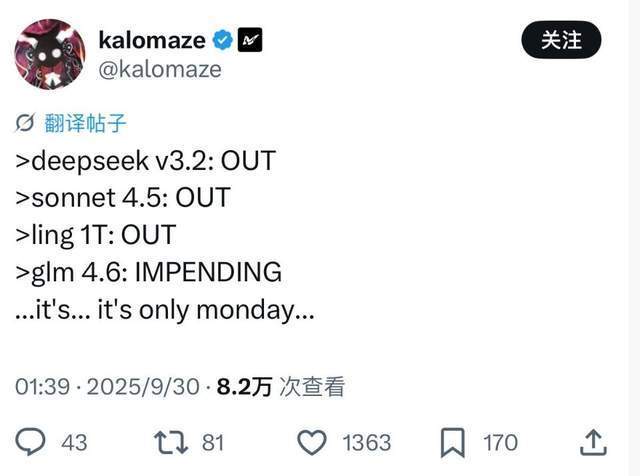
AI大模型开闭源路线之争是伪命题,关键是……
Guan Cha Zhe Wang· 2025-10-09 05:17
Core Viewpoint - The competition between open-source and closed-source AI models is intensifying, with open-source models like DeepSeek and Qwen leading China's tech advancement globally. However, concerns about the profitability and economic impact of open-source models persist [1]. Group 1: Open Source vs Closed Source - Open-source software allows community participation beyond organizational boundaries, which is essential for sustainable development and ecological growth [4]. - The distinction between open-source and closed-source languages is significant, with open-source languages like Ruby fostering broader collaboration and innovation [6]. - The coexistence of open-source and closed-source models is expected, with both contributing to competitive software ecosystems [7]. Group 2: Economic Impact of Open Source - Japan's experience with Ruby demonstrates that open-source languages can empower smaller contractors to engage in larger projects, enhancing local economic development [10][11]. - The presence of Ruby's creator in Shimane Prefecture has been pivotal in establishing a local ecosystem that supports larger engineering projects [11]. - The development of a robust open-source community can help retain local talent and stimulate regional economic growth, as seen in Shimane [12]. Group 3: Lessons for China - China can learn from Japan's open-source initiatives to build a new regional economic engine, especially in light of the risks associated with reliance on closed-source AI models [13]. - The importance of open-source algorithms in AI development is emphasized, advocating for a competitive landscape that includes both open-source and closed-source options [13]. - Educational initiatives to promote understanding of open-source principles are crucial for fostering a skilled workforce capable of contributing to open-source projects [16]. Group 4: Challenges and Future of Programming Languages - The rise of AI in programming may lead to a divide between those who understand programming and those who rely solely on AI-generated code, potentially impacting the future of programming languages like Ruby [19][21]. - The need for education in programming remains critical, as reliance on AI could diminish human cognitive skills in understanding IT [21]. - The balance between efficiency gained through AI and the necessity for human understanding of programming concepts is a key consideration for the future [21].

当机器人学会开可乐:深聊灵巧手的“不可能三角”与六大技术门派
Hu Xiu· 2025-09-30 12:01
Core Insights - The challenge of teaching robots to perform tasks like opening a soda bottle is significantly more difficult than teaching them to do a backflip, with the difficulty being tenfold [1] - The "impossible triangle" of performance, cost, and reliability has been a long-standing issue in the industry [1] - The evolution of dexterous hands over the past forty years involves six major technological schools, each with its own history and conflicts [1] - In the AI era, large models are expected to enhance VLA control and Sim2Real simulation, accelerating the transition from laboratory to real-world applications [1] Industry Developments - A visit to a Silicon Valley team demonstrated high-difficulty operations such as screwing, opening soda bottles, and handling iPhones [1] - AI large models are injecting "intelligent brains" into dexterous hands, potentially disrupting traditional hardware monopolies through open-source ecosystems [1] - The future of robotics in households is being questioned, particularly regarding the initial scenarios where dexterous hands will become prevalent [1] - This technological revolution may redefine the rules of human-robot collaboration [1]

华为全联接大会 2025 (HC2025)举行
Huan Qiu Wang· 2025-09-30 01:37
Core Insights - The Huawei Connect 2025 conference focused on "Elevating Industry Intelligence," showcasing the role of openEuler in breaking industry barriers and promoting deep integration of resources through open collaboration [1][9] - openEuler has empowered numerous enterprise applications over six years, contributing to the global open-source ecosystem and establishing a new paradigm for open-source development in China [1][9] Group 1: Technological Innovations - The Lingqu Interconnect Bus technology has achieved breakthroughs in resource pooling and elastic supply, enhancing the core capabilities of openEuler [1] - openEuler enables unified management of device pooling, allowing flexible resource matching and high performance in super-node systems, thus driving efficiency in computing scenarios [3] Group 2: Energy Efficiency and Sustainability - The South China Power Grid's new server series, based on the Kunpeng processor and openEuler, reduces overall power consumption by approximately 13-15% under the same computing power, potentially saving 15 million kWh annually across a thousand servers [5] - The collaboration between Kunpeng and openEuler aims to optimize computing costs and promote green computing, aligning with national carbon reduction strategies [5] Group 3: Ecosystem Development - openEuler has rapidly developed an ecosystem with 25 vendors, including Kirin and Tongxin, launching commercial distributions widely used in critical sectors like finance, energy, and manufacturing [7] - The conference featured a showcase of advanced technologies, including a flexible manufacturing line integrating various platforms and systems, enhancing production efficiency and adaptability to market demands [7] Group 4: Future Prospects - The journey of openEuler continues beyond the conference, with a commitment to driving industry innovation through open-source collaboration and technological advancements [9]
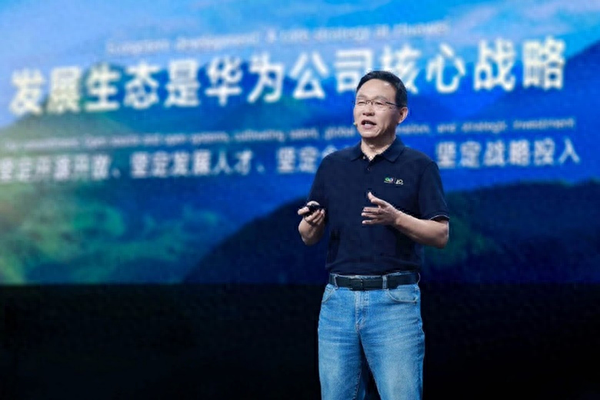
前瞻全球产业早报:上海元宇宙相关产业规模已突破3000亿元
Qian Zhan Wang· 2025-09-29 10:50
Group 1 - The profit of industrial enterprises in China improved significantly from a year-on-year decline of 1.7% in the first seven months to a growth of 0.9% in the first eight months of 2025 [2] - The manufacturing sector saw a profit increase of 7.4%, accelerating by 2.6 percentage points compared to the previous month [2] - In August, the profit of industrial enterprises experienced a notable growth of 20.4%, reversing a decline of 1.5% in July [2] Group 2 - During the National Day and Mid-Autumn Festival holiday, small passenger cars will be allowed free passage on national toll roads from October 1 to October 8, 2025 [3] - The free passage applies to vehicles exiting toll roads during the specified time frame, with specific guidelines for ordinary and expressways [3] Group 3 - The scale of the metaverse-related industry in Shanghai has surpassed 300 billion yuan, with over 30 XR terminal manufacturing companies [4] - The Shanghai Future Industry Fund has successfully expanded its scale from 10 billion yuan to 15 billion yuan, focusing on disruptive innovation and early-stage technology investments [4] Group 4 - Li Kaifu emphasized that DeepSeek's core contribution to China's AI development is the promotion of an open-source ecosystem, which is crucial for keeping pace with the U.S. [5] - Tencent has released and open-sourced its new generation multimodal image model, HunyuanImage 3.0, which is the largest and best-performing open-source model in its category [5] Group 5 - Meituan has launched nighttime delivery services using drones in Shenzhen, marking the first integration of drone technology into nighttime instant retail delivery in China [7] - Since its regular operation began in 2021, Meituan's drones have completed over 600,000 delivery tasks, significantly reducing average delivery times [7] Group 6 - The sales revenue of the Xuancheng Pang Donglai Trading Group has exceeded 17 billion yuan in the first nine months of 2025, surpassing its total sales for the entire year of 2024 [8] - The supermarket segment leads in sales, with a notable contribution from the Pang Donglai Times Square store [8] Group 7 - BMW is recalling over 330,000 vehicles due to potential short circuit hazards in starter motors and related components, affecting more than 130,000 cars in Germany alone [11] - The recall involves multiple models produced between September 2015 and September 2021, indicating a potentially broader international impact [11] Group 8 - Eli Lilly's new drug Inluriyo has been approved by the FDA for treating advanced or metastatic breast cancer in specific patient populations [11] - The drug is an oral estrogen receptor antagonist, targeting patients with ER+ and HER2- breast cancer who have progressed after at least one line of endocrine therapy [11]

「从追赶者到引领者,路有多远?」 我们和CANN一线开发者聊了聊
机器之心· 2025-09-28 04:50
Core Viewpoint - The article discusses the transformation of the AI industry, emphasizing that the competition has shifted from hardware capabilities to a battle for software, developers, and ecosystem building, with Huawei's Ascend and its heterogeneous computing architecture CANN at the forefront of this change [1][4]. Summary by Sections CANN Open Source Announcement - Huawei's rotating chairman Xu Zhijun announced that the CANN hardware enabling will be fully open-sourced by December 30, 2025 [2]. Significance of CANN Open Source - The open-sourcing of CANN represents a profound self-revolution in the domestic AI infrastructure, aiming to break the closed model traditionally dominated by hardware manufacturers and embrace a more open and community-driven future [4][19]. - The success of the ecosystem relies on attracting academic innovation and creating a stable, universal, and efficient foundational tool for developers [5][18]. Developer Perspectives on CANN - Developers describe CANN's evolution as a challenging journey, with early versions requiring low-level programming skills, which hindered productivity [10][11]. - The introduction of the Ascend C programming language marked a significant improvement, aligning more closely with mainstream programming practices [15]. Challenges Faced by Developers - Early developers faced high technical barriers and a lack of stable architecture, leading to a difficult development environment [11][13]. - Systemic issues persisted, such as the inability to reproduce model accuracy across different frameworks due to a lack of transparency in the underlying systems [17]. The Role of Open Source - Open sourcing CANN is seen as a means to break down technical barriers and empower developers by providing transparency and control over the platform [21][23]. - The open-source model aims to foster a vibrant community where developers can contribute and innovate, moving away from reliance on a few official experts [29]. Ecosystem Empowerment - Open source provides unprecedented opportunities for deep integration between academia and industry, allowing researchers to address real-world problems and convert solutions into academic contributions [26]. - The shift from users to contributors is expected to cultivate a new generation of developers who can engage in high-quality projects [28]. Future Outlook for CANN - The current focus is on matching CUDA's capabilities while fostering original innovations within the CANN ecosystem [44]. - Huawei has committed to investing significant resources, including 1,500 petaflops of computing power and 30,000 development boards annually, to support the open-source community [45].