数智经济

Search documents
抬升发展标杆 提振“四气”精神 当好全力打造“五个中心”、全面建设现代化大武汉的排头兵
Chang Jiang Ri Bao· 2025-12-03 07:28
Group 1 - The Deputy Mayor emphasized the importance of implementing the spirit of the 20th National Congress and the key speeches by General Secretary Xi Jinping, aiming to elevate development standards and boost the "Four Spirits" to lead the construction of a modern Wuhan [1] - In the East Lake High-tech Zone, the Deputy Mayor visited several companies, including Xiaomi and Changjiang Storage, highlighting the zone's role as a leader in high-quality development and a core area for national technological innovation [1] - The Deputy Mayor called for deep integration of technological and industrial innovation, accelerating the development of East Lake Science City and promoting the transformation of "China's Optics Valley" into a "World Optics Valley" [1] Group 2 - In the Jiang'an District, the Deputy Mayor focused on the development of headquarters economy and historical preservation, advocating for urban renewal to enhance environmental quality and promote the digital economy [2] - The Deputy Mayor stressed the urgency of completing annual work goals and ensuring economic stability as the year-end approaches, while also emphasizing the importance of safety inspections in key areas [2] - Plans for the next year include high-quality preparation of the "14th Five-Year Plan" to ensure a strong start to the new year [2]
熊征宇调研东湖高新区、江岸区时强调:抬升发展标杆,提振“四气”精神,当好全力打造“五个中心”、全面建设现代化大武汉的排头兵
Chang Jiang Ri Bao· 2025-12-03 00:40
Core Insights - The city is focusing on high-quality development and modernization, emphasizing the importance of technology innovation and economic transformation [1][2] Group 1: East Lake High-tech Zone - The East Lake High-tech Zone is identified as a leader in high-quality development and modernization, aiming to become a nationally influential technology innovation center [1] - The city plans to enhance the integration of technological and industrial innovation, accelerate the construction of East Lake Science City, and promote the development of "China Optics Valley" into a global hub [1] Group 2: Jiang'an District - Jiang'an District is recognized for its potential in headquarters economy and historical preservation, with a focus on urban renewal and improving environmental quality [2] - The district aims to develop digital economy and building economy, while also upgrading industries such as commerce, finance, construction, and design [2] Group 3: Economic Strategy - As the year-end approaches, there is a call for urgency in completing annual goals, enhancing economic operation management, and providing precise services to enterprises [2] - The city is preparing for next year's development by formulating the "15th Five-Year Plan" to ensure a strong start to the new year [2]

国海证券最新研判:牛市有望进入第三阶段
Zhong Guo Ji Jin Bao· 2025-11-27 11:45
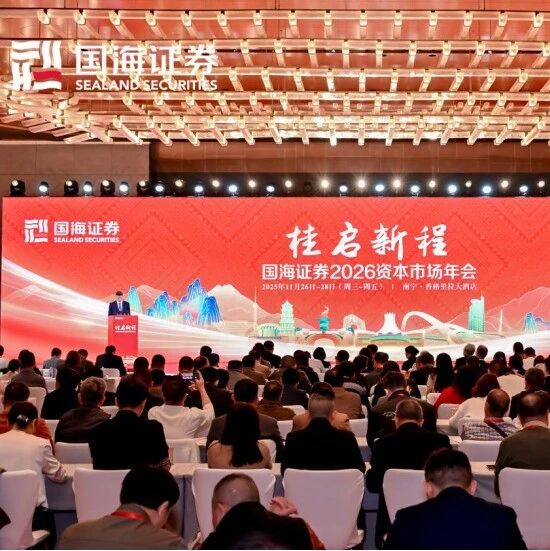
Core Viewpoint - Guohai Securities held the 2026 Capital Market Annual Conference in Nanning, Guangxi, focusing on how finance can empower high-quality regional development in the context of new opportunities and challenges [1] Group 1: Conference Overview - The conference lasted three days and featured one main venue and eight parallel sub-venues, attracting over 500 listed companies, more than 60 experts from various fields, and over 35 business leaders, with more than 2,000 attendees on the first day [1][2] - Guohai Securities aims to leverage its role as a local listed securities company to facilitate connections between industries, technology, and finance, promoting the introduction of funds, resources, and talent into Guangxi [2] Group 2: Economic Insights - Jiang Xiaojun, a prominent economist, highlighted the solid foundation for stable development during the 14th Five-Year Plan, emphasizing improved innovation capabilities and the rapid development of the digital economy [3] - Summer Lei, Chief Economist at Guohai Securities, projected that China's economy has a solid foundation and significant potential for long-term growth, with consumption being the main engine of economic growth [4] Group 3: Market Outlook - The A-share market is expected to continue a "slow bull" trend, with technology remaining a key focus area, supported by a favorable liquidity environment and significant household savings [5] - The 2026 market is anticipated to enter a third phase of a bull market driven by both valuation and performance, with a focus on emerging sectors such as AI, robotics, and innovative pharmaceuticals [6] Group 4: Asset Allocation Strategies - Guohai Securities' fixed income chief suggested that interest rates are likely to remain low, providing opportunities for bond market trading within a fluctuating range [7] - The conference included discussions on eight key topics, including AI, key metals, and new materials, indicating a broad interest in innovative sectors [7][8]

国海证券年度策略会来了!解码“2026年市场机会在哪”
券商中国· 2025-11-26 23:23
Core Viewpoint - The financial industry is focusing on empowering regional high-quality development through integrated services in industry, technology, and finance [1] Group 1: Event Overview - Guohai Securities held its 2026 Capital Market Annual Conference in Nanning, marking the first time the annual strategy meeting was hosted at its headquarters, reflecting the company's commitment to local industry upgrades and new productivity cultivation [4][5] - The event attracted over 2,000 attendees, including more than 500 listed companies and over 60 experts from various fields, indicating strong interest and participation in the capital market [5] Group 2: Economic Outlook - Guohai Securities' Chief Economist Xia Lei emphasized that China's economic foundation is solid, with significant potential for long-term growth, supported by macro policy planning [8] - Consumption is identified as the main engine for economic growth, contributing 53.5% to GDP growth in the first three quarters of 2025, with a net export contribution of 29% [8] - The structure of export products has shifted from labor-intensive to high-value-added industries, with the share of electromechanical products in exports rising from 7.8% in 1980 to 60.7% by October 2025 [8] Group 3: Investment Opportunities - The roundtable discussion highlighted that the stock market is expected to enter a phase driven by both valuation and performance in 2026, with a focus on emerging sectors such as AI, robotics, and innovative pharmaceuticals [10] - Guohai Securities' Chief Asset Allocation Officer noted that the A-share market remains in a long-term slow bull phase, with opportunities in the bond market due to a favorable domestic policy environment [10][11] - The fixed income chief projected that interest rates will remain low, with a stable bond market outlook, suggesting opportunities for segment trading in a fluctuating market [11]

上海杨浦向新而行,全域创新活力奔涌 全力推进杨“数”浦新质秀带创新区建设
Ren Min Ri Bao· 2025-11-24 23:12
Core Insights - Yangpu District is transforming from an industrial area to an innovation hub, focusing on integrating various innovation resources and fostering a vibrant ecosystem for technological advancements [1][11]. Group 1: Innovation and Research - The "Yang's Digital Innovation Zone" plan outlines 23 key tasks aimed at enhancing innovation across the district, promoting a free flow of innovative elements [1]. - Yangpu District leverages its proximity to universities like Fudan University to foster collaboration between research teams and industry, resulting in 26 papers published in major international journals in the first half of the year [2]. - The district supports high-level innovation platforms, including the Shanghai Mathematics and Interdisciplinary Research Institute, to enhance research capabilities and entrepreneurial support [3]. Group 2: Economic Development - Yangpu District is home to over 8,300 digital economy enterprises, contributing more than 40% of the district's tax revenue and over 60% of its revenue, establishing itself as a key growth area for Shanghai's digital economy [4]. - The online new economy sector, particularly software and information services, reported revenues of 289.07 billion yuan in the first nine months of the year, marking a 27.4% year-on-year growth [7]. Group 3: Innovation Ecosystem - The district has established a comprehensive innovation and entrepreneurship system, exemplified by the growth of companies like Shangmi Technology, which has expanded from a small office to a global enterprise [4]. - Yangpu District promotes collaboration between universities and industries through initiatives like the "City's Immersive Scene Innovation Center" with Huawei, enhancing the integration of education and industry [5]. Group 4: Future Industry Development - Yangpu is actively developing new industries such as brain-like intelligence and embodied intelligence, with the establishment of the first future industry cluster in Shanghai focused on brain-like intelligence [8]. - The district aims to attract 100 AI companies to the AI Agent Industrial Park over the next three years, fostering a new ecosystem that integrates AI with various industries [8]. Group 5: Innovation Index and Support - The Yangpu Innovation Index has shown a stable growth rate of 12.9% annually over the past nine years, reflecting the district's increasing capacity for technological innovation [10]. - In 2024, the district's R&D investment intensity is projected to reach 4.83%, with a notable increase in the number of patents per capita, indicating a robust innovation environment [10].
深入学习领会党的二十届四中全会精神 确保高质量完成我省“十五五”规划编制工作
Zheng Zhou Ri Bao· 2025-11-05 00:44
Core Points - The meeting emphasized the importance of aligning the "14th Five-Year Plan" with the spirit of the 20th Central Committee and the significant directives from General Secretary Xi Jinping during his visit to Henan [1][2] - The focus is on creating a high-quality development plan that reflects the unique characteristics of Henan and meets the expectations of the people [1] - The meeting highlighted the need for scientific, anticipatory, and proactive planning in the context of China's modernization strategy [2] Group 1 - The meeting was chaired by Provincial Secretary Liu Ning, with the aim of gathering opinions and suggestions for the "14th Five-Year Plan" [1] - Liu Ning stressed the importance of understanding the guiding principles, major goals, and strategic tasks for economic and social development during the "14th Five-Year Plan" period [2] - The plan should prioritize economic construction, modern industrial system development, and high-quality growth while ensuring the improvement of people's livelihoods [2] Group 2 - The meeting called for a scientific and democratic decision-making process, emphasizing the need for data-driven planning and integration with national strategies [3] - Various provincial leaders and departments participated in the discussion, indicating a collaborative approach to the planning process [3] - The goal is to ensure that more projects are included in the national "14th Five-Year Plan" framework, facilitating effective implementation of the provincial plan [3]
经济运行保持平稳
Jing Ji Ri Bao· 2025-10-21 04:20
Core Viewpoint - The national economy of China has shown overall stability in the first three quarters, with a solid advancement in high-quality development under the strong leadership of the central government [1] Economic Performance - In the first three quarters, China's GDP reached 10,150.36 billion yuan, with a year-on-year growth of 5.2% [2] - The primary industry added value was 580.61 billion yuan, growing by 3.8%, contributing 4.7% to economic growth [2] - The secondary industry added value was 3,640.20 billion yuan, with a growth of 4.9%, contributing 34.6% to economic growth [2] - The tertiary industry added value was 5,929.55 billion yuan, growing by 5.4%, contributing 60.7% to economic growth [2] - In the third quarter, GDP was 354.50 billion yuan, with a year-on-year growth of 4.8% [3] Production and Supply - All sectors showed stable growth, with agriculture increasing by 4.0%, contributing 0.3 percentage points to economic growth [3] - Industrial production grew by 6.1%, contributing 1.8 percentage points to economic growth [3] - The service sector showed steady improvement, with significant contributions from information transmission, software, and IT services, which grew by 11.2% [3] Domestic Demand and Trade - Final consumption expenditure contributed 53.5% to economic growth, adding 2.8 percentage points to GDP [4] - Capital formation contributed 17.5% to economic growth, adding 0.9 percentage points to GDP [5] - Net exports contributed 29.0% to economic growth, adding 1.5 percentage points to GDP [5] Market Dynamics and New Growth Drivers - The digital economy has shown significant support, with revenue from the information transmission, software, and IT services sector growing by 12.1% from January to August [6] - The manufacturing sector is undergoing rapid transformation, with equipment manufacturing and high-tech manufacturing growing by 9.7% and 9.6% respectively [6] - Investment in high-tech services grew by 6.1%, surpassing the overall fixed asset investment growth rate [6]
国民经济稳中有进显韧性——国家统计局相关部门负责人解读前三季度主要经济数据
Jing Ji Ri Bao· 2025-10-21 00:52
Economic Overview - The national economy is operating smoothly with high-quality development being steadily advanced under the strong leadership of the central government [1] - In the first three quarters, China's GDP reached 10,150.36 billion yuan, growing by 5.2% year-on-year [2] - The GDP for the third quarter was 3,545 billion yuan, with a year-on-year growth of 4.8% [3] Production and Supply - All sectors showed stable growth, with agriculture, industry, and services contributing positively to economic growth [4] - Agricultural production increased by 4.0%, contributing 0.3 percentage points to economic growth [4] - Industrial production grew by 6.1%, contributing 1.8 percentage points to economic growth [4] - The service sector's value added increased by 5.4%, contributing 3.1 percentage points to GDP growth [23] Domestic Demand and Trade - Final consumption expenditure contributed 53.5% to economic growth, adding 2.8 percentage points to GDP [5] - Capital formation contributed 17.5% to economic growth, adding 0.9 percentage points to GDP [6] - Net exports contributed 29.0% to economic growth, adding 1.5 percentage points to GDP [6] Market Dynamics and New Growth Drivers - The digital economy showed significant support, with revenue from information transmission and software services growing by 12.1% [7] - The manufacturing sector is undergoing transformation, with high-tech manufacturing increasing by 9.6% [7] - Investment in high-tech services grew by 6.1%, indicating a shift towards new growth drivers [30] Agricultural Sector - The agricultural economy is showing a stable and positive trend, with autumn grain production expected to be stable [8] - Livestock production is also stable, with pork production increasing by 3.0% [10] Industrial Development - Industrial production increased by 6.2% in the first three quarters, with 37 out of 41 major industrial sectors showing growth [14] - The export value of industrial products grew by 3.3%, indicating resilience in the industrial sector [14] Energy Sector - Energy production is steadily increasing, with coal production at 3.57 billion tons, up 2.0% year-on-year [18] - The share of non-fossil energy consumption is steadily rising, with a 1.7 percentage point increase compared to the previous year [21] Service Sector Growth - The service sector's value added reached 592,955 million yuan, growing by 5.4% [23] - The modern service industry is thriving, with significant growth in information technology and business services [24] Investment Trends - Fixed asset investment reached 371,535 billion yuan, a slight decline of 0.5% year-on-year, primarily due to real estate investment [26] - Industrial investment grew by 6.4%, contributing positively to overall investment growth [27] Consumer Market Expansion - Retail sales of consumer goods reached 365,877 billion yuan, growing by 4.5% year-on-year [33] - Online retail sales increased by 9.8%, indicating a shift towards digital consumption [36] Employment Stability - The urban unemployment rate averaged 5.2%, with major cities showing slightly lower rates [38] - Employment in key sectors such as transportation and hospitality has increased, reflecting a stable job market [39] Resident Income and Consumption - Per capita disposable income reached 32,509 yuan, growing by 5.1% year-on-year [41] - Per capita consumption expenditure was 21,575 yuan, with significant growth in categories like household goods and services [43]
郑学工:前三季度国民经济运行保持总体平稳
Guo Jia Tong Ji Ju· 2025-10-20 02:17
Economic Overview - In the first three quarters, China's GDP reached 10,150.36 billion yuan, with a year-on-year growth of 5.2% [2] - The contribution rates to economic growth from the primary, secondary, and tertiary industries were 4.7%, 34.6%, and 60.7% respectively [2] Industry Performance - Agricultural production showed stability with a year-on-year increase of 4.0%, contributing 0.3 percentage points to economic growth [3] - Industrial production increased by 6.1% year-on-year, contributing 1.8 percentage points to economic growth, with manufacturing growing by 6.5% [3] - The service sector also performed well, with significant growth in information transmission, software, and IT services, which grew by 11.2% [3] Domestic Demand and Trade - Final consumption expenditure contributed 53.5% to economic growth, adding 2.8 percentage points to GDP [5] - Investment in key areas showed rapid growth, with capital formation contributing 17.5% to economic growth [5] - Net exports maintained stable growth, contributing 29.0% to economic growth [5] Market Dynamics - The digital economy showed significant support, with revenue from information transmission and IT services growing by 12.1% [6] - The manufacturing sector is accelerating its transformation, with high-tech manufacturing increasing by 9.6% [7] - Modern service industries are also improving, with high-tech service sector revenue growing by 9.4% [7]
「改革创新」邵春堡:建设宽松的数智化营商环境
Sou Hu Cai Jing· 2025-10-12 13:34
Core Viewpoint - The article emphasizes the importance of artificial intelligence and its related industries in enhancing the quality and scale of the digital economy, positioning them as new engines for economic growth. It highlights the need for institutional guarantees to support private enterprises in their innovative endeavors within the digital economy [3]. Group 1: Challenges Faced by Private Enterprises in Digital Transformation - The digital economy, driven by digital technologies and data, creates mismatches with traditional economic factors such as land, capital, and labor, necessitating adjustments and regulations [4]. - There is a conflict between unclear data ownership and the innovation investments made by private enterprises, which contribute over 70% of China's technological innovations. The ambiguity surrounding data ownership and usage rights discourages investment and innovation [4]. - The outdated regulatory methods lead to compliance anxiety among private enterprises, as they struggle to understand dynamic regulatory requirements, which may inhibit their willingness to innovate [4]. - The misalignment of competition rules in the digital economy creates challenges for fair development among private enterprises, particularly with the dominance of major platform companies and the potential for algorithmic discrimination against smaller firms [5]. Group 2: Enhancing Legal Frameworks to Empower Private Enterprises - To address the aforementioned challenges, a shift from traditional legal frameworks to those that accommodate digital transformation is necessary, focusing on three key transitions [6]. - The legal framework should evolve from a focus on physical space to one that considers digital space, establishing clear rules for data rights, security, and circulation to empower private enterprises [7]. - The regulatory approach should transition from merely overseeing compliance to enabling growth by reducing institutional transaction costs for private enterprises, thus enhancing their operational efficiency [7]. - Legal requirements should be integrated into the innovation processes of private enterprises to provide preemptive compliance support, transforming punitive measures into safeguards that encourage innovation [7]. Group 3: Institutional Innovations for Private Enterprises - Current institutional innovations should focus on three areas to meet the practical needs of private enterprises [8]. - Clear definitions of data ownership are essential, allowing private enterprises to gain rights to data processing and usage, thereby enabling them to monetize data effectively [8]. - Algorithm regulation should be transparent and allow for error correction, providing private enterprises with clarity on compliance and reducing the fear of punitive actions for non-malicious algorithmic deviations [8]. - Facilitating cross-border data flow is crucial for private enterprises engaged in international business, requiring clear pathways and simplified processes for data export [8]. Group 4: Building a Supportive Digital Environment for Private Enterprises - Creating a conducive digital environment for private enterprises involves establishing a legal ecosystem that encourages participation, adapts rules, and allows for continuous iteration [9]. - A stable and fair business environment, characterized by clear data ownership, transparent regulation, and equitable competition, is vital for unleashing the innovative potential of private enterprises in the digital economy [9].