智能体

Search documents
OpenClaw 深度测评与应用指南
Soochow Securities· 2026-03-06 08:09
- The report primarily focuses on the capabilities and applications of OpenClaw, a next-generation AI agent, emphasizing its ability to transition from a traditional Q&A tool to an actionable assistant capable of executing tasks autonomously[1][7][8] - OpenClaw supports multiple deployment methods, including local computer deployment, cloud server deployment, and paid one-click deployment, each catering to different user needs in terms of cost, security, and ease of use[17][18][42] - OpenClaw enables users to autonomously configure and expand models through a self-bootstrapping mechanism, allowing for flexible switching between models based on task complexity and cost considerations[47][48][50] - The system supports the creation of independent agents and sub-agents, each with customizable configurations, roles, and permissions, enabling multi-tasking and specialized task handling in complex scenarios[51][55][57] - OpenClaw features a robust Skills repository (ClawHub), allowing users to install, customize, and develop modular skills for specific tasks, enhancing its adaptability to various professional workflows[60][61][64] - In practical applications, OpenClaw demonstrates its utility in tasks such as generating investment analysis reports, summarizing fund manager meeting notes, and conducting quantitative backtesting, showcasing its ability to handle complex workflows autonomously[76][79][82] - OpenClaw also supports advanced functionalities like email management, scheduled tasks, and database querying, further extending its applicability in professional and research environments[85][86][88]
五道口两会之声丨信息披露制度、耐心资本、民营经济、企业出海、算力布局、智能体、生育健康、童食健康
清华金融评论· 2026-03-06 02:16
Group 1 - The article emphasizes the importance of building a transparent and efficient information disclosure system to help private enterprises expand their financing channels [4][6] - It highlights the need for regulatory bodies to promote compliance and transparency in information disclosure, while companies should enhance their internal management mechanisms [6] - The article discusses the challenges faced by private enterprises in securing financing, suggesting the establishment of a long-term mechanism to encourage lending to these businesses [10][12] Group 2 - The article addresses the rising infertility rates among couples in China, proposing a multi-faceted approach to improve women's reproductive health and reduce the burden of childbirth [13][15] - It suggests the establishment of a comprehensive service system for Chinese enterprises going global, aiming to streamline processes and provide better support for international operations [22][24] - The article proposes innovative measures to stabilize the real estate market and stimulate domestic demand, including flexible purchasing policies and targeted financial support [25][27]


Counterpoint 研讨会2026年具身智能和半导体产业洞察
Counterpoint Research· 2026-03-05 11:25
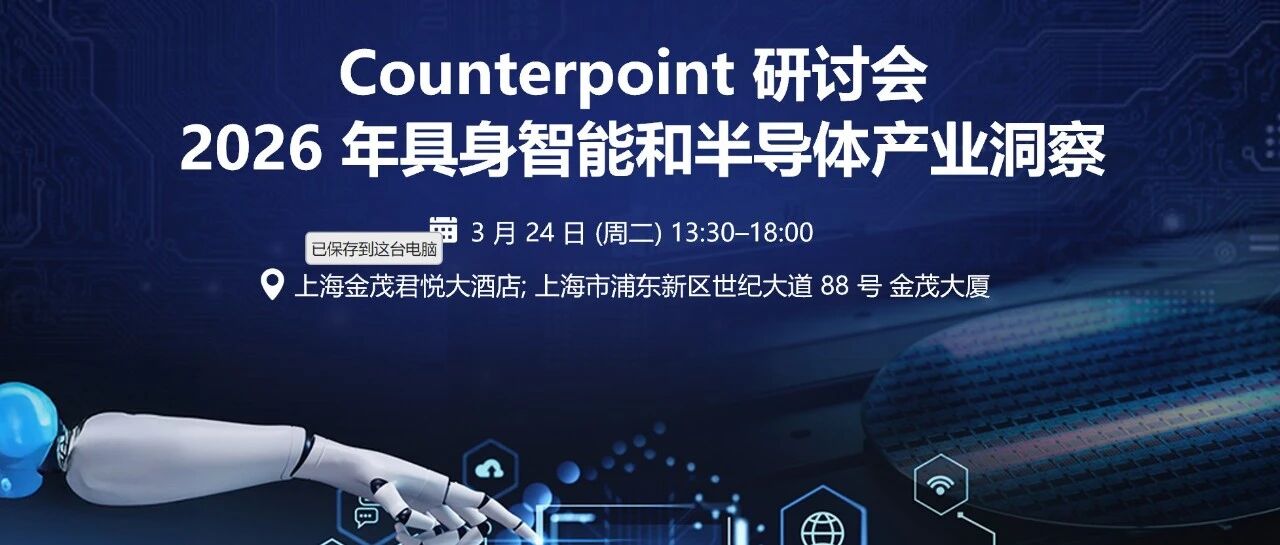
Core Insights - The article emphasizes the transition of embodied intelligence from concept to commercial application by 2026, focusing on key areas such as smart cities, humanoid robots, and autonomous driving, while identifying growth opportunities within these sectors [5][7]. Group 1: Event Overview - The Counterpoint seminar will take place on March 24, 2026, from 13:30 to 18:00 at the Grand Hyatt Shanghai, aimed at exploring the commercial milestones of embodied intelligence [6]. - The seminar will cover the evolution of AI from generative models to agentic and physical AI, highlighting the shift in industry focus towards computational infrastructure, key chips, advanced manufacturing, and diverse edge devices [5][11]. Group 2: Target Audience - The event is designed for professionals in semiconductor, cloud data centers, automotive electronics/intelligent driving, robotics/intelligent hardware, consumer electronics OEM/ODM, and investment and research sectors [7]. Group 3: Agenda Highlights - The agenda includes various presentations on topics such as the AI ecosystem, humanoid robot brain and computational needs, automotive chip localization, and the impact of AI on consumer electronics, providing insights into market dynamics and strategic opportunities [8]. - Key speakers will discuss the structural impacts of the AI wave on the foundry market, storage industry, and consumer electronics, offering actionable market and strategic insights for 2026 [11]. Group 4: Pricing Information - Ticket prices for the seminar are set at 800 RMB for regular tickets and 500 RMB for early bird tickets until March 17 [12].
8点1氪:伊朗确定最高领袖候选人;全国人大代表建议彩礼金额不超过6万元;阿里高管紧急开会答疑,回应千问模型负责人林俊旸卸任
36氪· 2026-03-05 00:26
Group 1 - Iran has identified several candidates for the Supreme Leader position, with a selection process imminent [4] - The U.S. Treasury Secretary announced that a new 15% global import tariff is expected to take effect this week [8] - Hundreds of oil tankers are trapped in the Strait of Hormuz, causing significant disruptions in global shipping [12] Group 2 - The U.S. stock market saw all three major indices rise, with the Nasdaq up 1.29% and large tech stocks mostly gaining [7] - Apple announced the launch of the MacBook Neo, with a starting price of 4,599 yuan, available from March 11 [25] - Volvo plans to increase production of its electric EX60 SUV due to strong demand in key markets [13] Group 3 - The World Platinum Investment Council predicts a supply shortfall of 240,000 ounces in the platinum market this year [14] - Domestic gold jewelry prices have dropped significantly, with many stores reporting prices below 1,600 yuan per gram [14] - The Korean government is prepared to initiate a 100 trillion won market stabilization plan if necessary [13] Group 4 - Alibaba's core management team, including Jack Ma, discussed AI challenges and opportunities at a school event [9] - A report indicates that the active intelligent agent scale in Chinese enterprises is entering a rapid growth phase, with a projected compound annual growth rate of over 135% [18] - Manifold AI has completed nearly 200 million yuan in Pre-A round financing, focusing on developing world models and embodied intelligence applications [24]

瑞幸咖啡实控方大钲资本将收购蓝瓶咖啡;Seedance2.0生成视频价格公布:一秒1块钱;沐曦股份一季度营收最高预增87.26%丨邦早报
创业邦· 2026-03-05 00:09
Group 1 - Dazhong Capital has signed a deal with Nestlé to acquire Blue Bottle Coffee, with Dazhong taking over global stores while Nestlé retains the coffee machine and capsule business [2] - Muxi Co., Ltd. expects Q1 2026 revenue to reach 400 million to 600 million yuan, representing a year-on-year growth of 24.84% to 87.26%, driven by advancements in AI technology and GPU market expansion [2] - JP Gan, founder of Ince Capital, purchased a luxury apartment in Hong Kong for 1.48 billion HKD (approximately 190 million USD), coinciding with a recovery in the Hong Kong real estate market [2] Group 2 - Seedance 2.0 has announced video generation pricing, with costs of 28 yuan per million tokens including video input and 46 yuan per million tokens excluding video input, equating to 1 yuan per second for video generation [6] - Alibaba's Qwen project is emphasized as a top priority by CEO Wu Yongming during an internal meeting following the announcement of a leadership change [8] - The total sales of Hongmeng Intelligent Vehicles have reached 1.28 million units, achieving the fastest record for new force brands to deliver one million vehicles in just 43 months [8] Group 3 - PhonePe, a digital payment app backed by Walmart, aims for a valuation of up to 10.5 billion USD in its upcoming IPO in India [11] - Ayar Labs, supported by NVIDIA, has completed a 500 million USD funding round, bringing its valuation to 3.75 billion USD [11] - Cursor, an AI programming assistant, has surpassed an annual revenue of 2 billion USD, with enterprise clients contributing 60% of its income [10]

阶跃星辰全面开源Step3.5 Flash,冲上OpenClaw Top2;智元正式开源发布灵渠OS Alpha版本丨AIGC日报
创业邦· 2026-03-05 00:09
Group 1 - Jack Ma reappeared with Alibaba and Ant Group's core management discussing AI, highlighting the importance both companies place on AI development [2] - Jumpspace has fully open-sourced the Step3.5 Flash model, which features a sparse MoE architecture with 196 billion parameters, achieving a maximum inference speed of 350 TPS, indicating its strong performance in complex reasoning tasks [2] - Zhiyuan Robotics has officially released the Alpha version of Lingqu OS, aimed at building an ecosystem for embodied intelligent robots, providing a stable communication framework and tools for developers [2] Group 2 - IDC's report indicates that the active intelligent agent scale in Chinese enterprises is entering an unprecedented acceleration phase, with projections of over 350 million active agents by 2031 and a compound annual growth rate exceeding 135% [2] - The report also notes an exponential increase in token consumption for intelligent agents, expected to grow over 30 times annually, driven by the increasing complexity and density of tasks [2]

智能体助力Anthropic提速2026年run-rate,国防部风险只是噪声?
Haitong Securities International· 2026-03-04 12:53
Investment Rating - The report does not explicitly state an investment rating for the industry or company Core Insights - Anthropic's annualized revenue run-rate has exceeded USD 19 billion, significantly up from approximately USD 9 billion at the end of 2025 and around USD 14 billion just weeks ago, driven by enterprise and developer adoption of the Claude family of products, including Claude Code [1][11] - The commercialization curve for Claude has steepened noticeably in early 2026, with rapid penetration into enterprise use cases, particularly in programming and complex task automation, leading to higher-frequency usage and stronger willingness to pay [2][12] - The company completed a new financing round in February, achieving a post-money valuation of approximately USD 380 billion, reflecting a market repricing of its enterprise monetization potential [2][12] Summary by Sections Revenue Growth - Anthropic's run-rate rose from about USD 9 billion at the end of 2025 to roughly USD 14 billion several weeks ago, and has recently surpassed USD 19 billion, approaching USD 20 billion [1][11] - The key driver of this growth is the rapid adoption of products focused on programming and complex task automation, such as Claude Code, which has led to increased usage and payment willingness [2][12] API Token Consumption - The spread of open-source agent and automation toolchains, like OpenClaw, has increased API token consumption, as models now complete tasks through multi-step workflows rather than single responses [3][13] - Each task step involves context injection and reasoning, resulting in significantly higher token usage compared to traditional chat [3][13] Policy and Compliance Risks - U.S. Secretary of Defense Pete Hegseth labeled Anthropic a "supply-chain risk," which could affect procurement decisions by government agencies and defense contractors [1][11] - If requirements are not met, the Pentagon could terminate a cooperation arrangement with a cap of USD 200 million, but Anthropic has stated it will challenge any such designation legally [3][14] Consumer and Enterprise Dynamics - Consumer momentum for Claude is rising, with increased app-store downloads and public support for Anthropic's stance during disputes [4][15] - Enterprise adoption has reached new highs, with Anthropic leading in enterprise AI chat subscription spend share and API spend, indicating that enterprise budgets are crucial for run-rate expansion [4][15] Long-term Outlook - The diffusion of toolchains like OpenClaw and the trend towards "code + agentic workflows" are expected to strengthen Claude's usage among developers and enterprises, setting a positive tone for rapid growth in 2026 [5][16] - The long-term impact of government-related uncertainties on Anthropic's growth trajectory is viewed as limited, with the majority of revenue still coming from private enterprises and consumers [5][16]
超350家中国企业亮相MWC:从手机到机器人,AI出海提速
第一财经· 2026-03-04 02:20
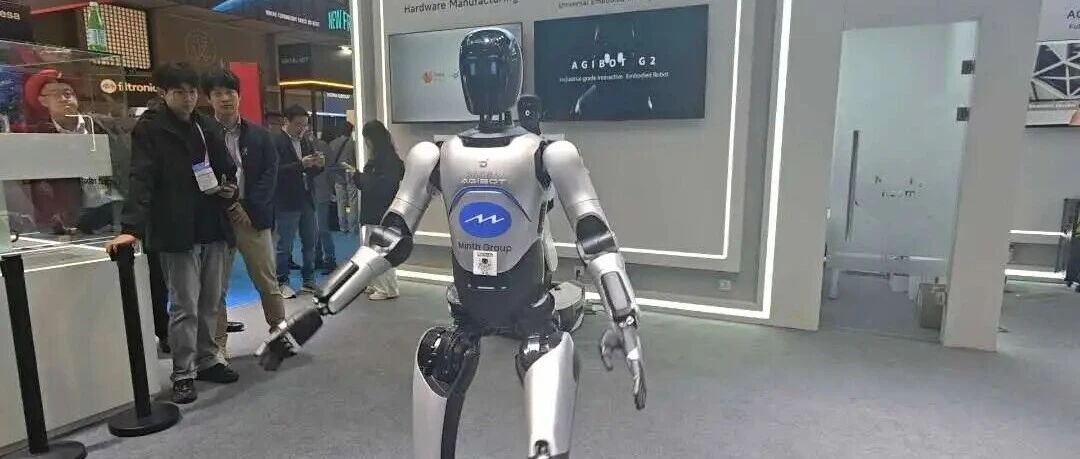
Core Viewpoint - The 2026 Mobile World Congress (MWC) highlights the significant shift towards AI technology, with Chinese companies increasingly focusing on the European market for AI applications and hardware integration [3][4]. Group 1: Chinese Companies at MWC - Approximately 350 Chinese companies participated in MWC 2026, marking a 21% increase from 288 last year, making them the largest overseas contingent after the US and Spain [3]. - The presence of Chinese firms reflects a transition from traditional manufacturing advantages to a focus on AI capabilities and hardware innovation [3][4]. Group 2: AI as the Core Technology - AI emerged as the central theme of MWC 2026, with Qualcomm's CEO emphasizing that AI is transforming human-computer interaction, shifting the focus from applications to intelligent agents [4]. - Honor's Robot Phone features an active camera structure that responds to voice commands, showcasing the integration of AI into hardware design [5][6]. Group 3: Innovations in Mobile Imaging and AI Integration - Vivo introduced a 400mm telephoto lens and modular accessories aimed at transforming smartphones into professional-grade filming tools, highlighting the use of AI to enhance imaging capabilities [8]. - TCL and Lenovo showcased AI-driven products, emphasizing the integration of AI into hardware rather than just software, which is a distinctive approach of Chinese manufacturers [8]. Group 4: Expansion of Robotics and Wearable AI Products - Chinese robotics companies, such as AGIBOT, showcased a range of robots designed for various applications, indicating a strategic focus on B2B markets and European partnerships [11][13]. - Alibaba's AI glasses debuted at MWC, with plans for additional AI wearable products, reflecting a broader strategy to penetrate global markets beyond traditional communication devices [14].




Cursor:AI编程「第三时代」来了
机器之心· 2026-03-02 09:03
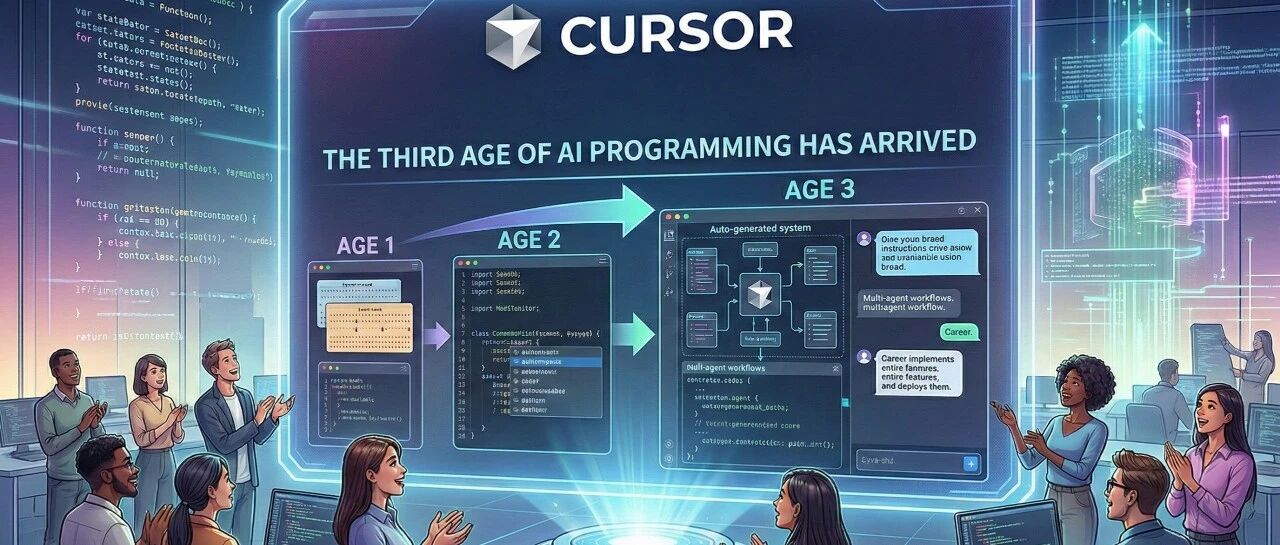
Core Viewpoint - The article discusses the transition into the "third era" of AI programming, characterized by agents that can independently complete larger tasks with minimal human intervention [1][3]. Summary by Sections Transition from Tab to Agent - The initial phase of coding involved manual key presses, which was transformed by Tab auto-completion, marking the first era of AI-assisted programming. The introduction of agents allowed developers to interact through a prompt-response cycle, leading to the second era. The current third era features agents capable of working over longer time spans and completing larger tasks independently [3][5][6]. Growth of Agent Usage - As of March 2025, the number of Tab users was approximately 2.5 times that of Agent users. However, this ratio has reversed, with Agent users now being twice that of Tab users, and Agent usage has increased rapidly [8][11]. Cloud Agents and Artifacts - Cloud agents operate independently in virtual machines, allowing developers to delegate tasks and focus on other activities. These agents autonomously iterate and test, returning comprehensive outputs that include logs and previews, thus enabling the management of multiple agents simultaneously [13][14]. Internal Changes at Cursor - Within Cursor, 35% of merged code submissions are generated by cloud-based agents. Developers adopting this new workflow typically focus on problem definition and output review rather than step-by-step guidance [15][17]. Future Considerations - There is a recognition that significant work remains to standardize this new development paradigm. Ensuring agents operate efficiently and have access to necessary tools and context is crucial for broader adoption [16]. The recent updates to Cursor have enhanced agent capabilities, allowing for seamless modifications and improved user experience [16]. Community Perspectives - Some community members suggest that the evolution from Tab to synchronous agents and then to cloud agents is an optimization within the same paradigm, emphasizing that the next leap should involve removing the concept of "source code" entirely [18]. Others highlight the need for robust validation mechanisms as autonomous systems scale up code submissions [18].
如何迎接AI重塑?美的与伊利各有心得
虎嗅APP· 2026-03-01 09:28
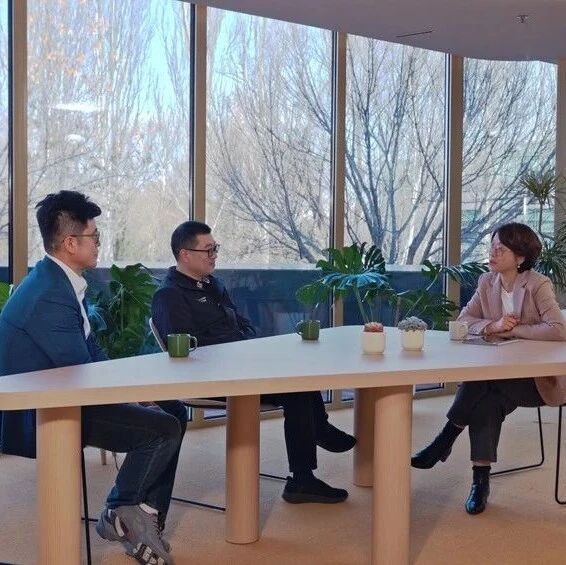
Core Insights - The article discusses the transformative impact of generative AI on the manufacturing industry, emphasizing its role in reshaping the value chain from marketing to supply chain management [2][3]. Group 1: AI Implementation in Manufacturing - Since the introduction of generative AI in 2022, companies have moved from initial skepticism to widespread adoption across the entire supply chain, indicating a strong disruptive potential [5]. - AI has significantly improved customer service efficiency by providing 24/7 support and enhancing information accuracy, leading to better user experiences [5]. - Companies like 伊利 and 美的 are leveraging AI for various applications, including product design, customer interaction, and operational efficiency, with a focus on real-time consumer insights [7][9]. Group 2: Value Creation and Efficiency - AI is being utilized to enhance product development by analyzing user feedback and improving responsiveness to market trends, although human involvement remains crucial for testing [9][10]. - The application of AI in predictive maintenance and operational efficiency has shown promising results, particularly in manufacturing settings [9][10]. - Companies measure AI's impact through workforce optimization, investment precision, and cost reduction, particularly in marketing [10][12]. Group 3: Future Trends and Challenges - The year 2025 is anticipated to be a pivotal moment for AI integration, with companies focusing on high-value scenarios and the development of intelligent agents [15][20]. - The emergence of GEO (Generative Engine Optimization) as a new traffic source is prompting brands to rethink their engagement strategies with consumers [16][17]. - Companies are encouraged to focus on high-value areas for AI implementation, especially where resource wastage is significant, to maximize efficiency gains [20][21]. Group 4: AI's Role in Consumer Interaction - The shift from SEO to GEO represents a fundamental change in how brands interact with consumers, with AI-generated content reshaping perceptions of product value [18][19]. - AI's integration into consumer products is enhancing functionality and user experience, leading to increased acceptance among users [19][20]. Group 5: AI Native and Physical AI - The concept of AI native involves integrating AI into business processes, aiming for autonomous decision-making across the value chain [25][28]. - Physical AI, characterized by embodied intelligence, is expected to revolutionize manufacturing processes, with existing products already incorporating AI features [28][29]. - Companies must focus on identifying which AI applications deliver real commercial value, rather than merely increasing the number of intelligent agents [28][29].