
物价上涨

Search documents
日本东京都23区12月核心CPI同比上涨2.3%
Zhong Guo Xin Wen Wang· 2025-12-27 01:38
Core Insights - The core consumer price index (CPI) for Tokyo's 23 wards in December, excluding fresh food, is reported at 111.1, reflecting a year-on-year increase of 2.3% [1] - The prices of non-fresh food items increased by 6.2% year-on-year, with significant price hikes observed in staple foods and beverages [1] Price Increases - Ordinary japonica rice prices surged by 35.3% year-on-year [1] - Sushi prices rose by 16.2% year-on-year [1] - The price of rice balls, a common item in Japanese diets, increased by 15.5% year-on-year [1] - Chocolate prices saw a year-on-year increase of 25.1% [1] - Coffee bean prices experienced a dramatic rise of 60.6% year-on-year [1] Future Projections - The average core CPI for Tokyo's 23 wards in 2025 is projected to be 110.1, which is an increase of 2.7% compared to the previous year [1] - Rice prices are expected to rise by 64.6% compared to the previous year, marking the largest increase since 1971 for comparable data [1] Economic Context - The continuous rise in prices is attributed to the increase in raw material costs, which is placing a heavier burden on consumers [1] - The CPI data for Tokyo's 23 wards serves as a leading indicator for Japan's national CPI, with the national CPI data set to be released on January 23 of the following year [1]
日本2026年度预算预计连续两年创新高
日经中文网· 2025-12-24 08:00
日本财务相片山皋月日前已与各内阁成员进行过协调,2026年度预算案最早将于12月26日在 内阁会议上敲定。日本政府各省厅提出的概算要求总额为122.4万亿日元。 2026年度税收预计为83.7万亿日元左右,创下历史新高。在物价上涨的背景下,税收增长, 将超过在2025年度补充预算中估算的该年度税收规模(80.7万亿日元)。 尽管如此,为了弥补缺口部分,预计将新发行29.6万亿日元的国债。金额高于2025年度的 28.6万亿日元。预计赤字国债将达到22.9万亿日元左右。 由于应对物价上涨,财政支出出现膨胀 年度支出方面,医疗、养老金、护理等加在一起,社会保障相关费用将达到39.1万亿日元左 右。在2026年度诊疗报酬修订案中,用于医疗从业人员人工费用等的主体部分的上调幅度为 3.09%,达到30年来的最高水平。将为医疗机构应对物价上涨和加薪提供资金来源。 2026年度预算案的一般会计总额将达122.3万亿日元。社会保障相关费用创历史新高…… 用于偿还国债本金和支付利息的国债费用为31.3万亿日元左右,超过创下历史最高纪录的 2025年度最初预算案中的28.2万亿日元,将首次突破30万亿日元大关。 日本政府已针对 ...


高市出席经济学家恳亲会,强调积极财政
日经中文网· 2025-12-24 03:26
Core Viewpoint - The article discusses the economic outlook for Japan in 2026, emphasizing the need for responsible fiscal policies to enhance national strength and the potential impact of international relations on the economy [4][5]. Group 1: Economic Outlook - Prime Minister Kishi Nobuo stated that Japan needs responsible and proactive fiscal measures to strengthen national power, highlighting that improving corporate profits will lead to wage increases and increased consumption, creating a virtuous cycle [4]. - Tsutsui Yoshinobu, president of Keidanren, noted that 2025 would be a pivotal year for Japan amid significant changes in the political and economic landscape due to international turmoil [4]. - Nomura Real Estate Holdings' president predicted that with wage increases and government policies, the economy would remain robust, and real estate prices would continue to rise due to asset effects from a strong stock market [5]. Group 2: Concerns and Risks - Concerns regarding U.S. tariff policies were raised, with Mitsubishi Electric's president expressing the need for the Japanese government to support small and medium-sized enterprises and reduce tax burdens [5]. - The 2026 government budget is expected to exceed 120 trillion yen, marking a historical high, while the Bank of Japan has raised policy interest rates to 0.75%, the highest in 30 years [6]. - Morgan Stanley's chief economist expressed concerns about the effectiveness of fiscal measures in addressing inflation, warning that a combination of fiscal expansion and delayed monetary policy adjustments could increase market volatility [6].

从年度汉字看日本民生之困
Xin Lang Cai Jing· 2025-12-21 16:36
Group 1: Annual Kanji Selection - The annual kanji for 2025 in Japan is "bear," which received over 23,000 votes out of a total of 189,000, reflecting concerns over bear attacks that resulted in 230 incidents and 13 fatalities from April to November 2023, marking a historical high [1] - The second most voted kanji is "rice," which highlights the ongoing rice price surge that has led to public panic buying and a reported rice shortage, with the average price of 5 kg of rice exceeding 4,000 yen for 13 consecutive weeks [2] - The third kanji, "high," is associated with rising food prices, as 20,609 food items have seen price increases this year, with rice balls and sushi prices rising by 17.3% and 14.5% respectively [3] Group 2: Economic Context and Government Response - The Japanese government has proposed a 400 billion yen special subsidy to address rising food prices, including rice, but local governments are reluctant to distribute rice discount coupons due to their minimal impact [3] - The government is also planning to increase defense spending significantly, with a budget of 11 trillion yen already set for the 2025 fiscal year, aiming to raise this to 2% of GDP by 2025, which may lead to increased personal income taxes [4] - The rising defense budget is seen as a heavy burden on the economy, diverting funds from addressing pressing social issues such as food price inflation and public welfare [4]
日本核心CPI连续51个月同比上升
Xin Hua Cai Jing· 2025-12-19 02:44
Core Insights - Japan's core Consumer Price Index (CPI), excluding fresh food, rose by 3.0% year-on-year to 112.5 in November, marking the 51st consecutive month of year-on-year increases [1] - The year-on-year increase in November's core CPI remained stable compared to the previous month, while the month-on-month increase was 0.3%, slightly lower than the 0.4% recorded in the prior month [1] Price Drivers - The primary driver of the price increase in November was food, with significant price hikes observed in grains, snacks, prepared foods, dining out, beverages, meat, and dairy products [1] - Coffee bean prices surged by 51.6% year-on-year, while the price of ordinary japonica rice saw a year-on-year increase of 37.0%, although this was a decrease from last year's high levels [1] - Other categories such as housing repairs, electricity, automotive-related expenses, communication fees, and hotel accommodations also experienced year-on-year price increases [1] Economic Policy Impact - Concerns have been raised by media and experts regarding Prime Minister Suga Yoshihide's commitment to an active fiscal policy, which is exacerbating the depreciation of the yen and potentially leading to further inflation in Japan [1]
涨价潮来了!房子车子打折了,但这3类悄悄“变贵”了
Sou Hu Cai Jing· 2025-12-15 03:13
Core Viewpoint - The article highlights the subtle yet significant price increases in essential goods and services, contrasting them with the noticeable price drops in larger items like houses and cars, which are driven by market pressures rather than consumer benefits [1][3]. Group 1: Price Trends in Essential Goods - Prices of staple foods such as rice, flour, and oil are gradually increasing, influenced by weather anomalies and rising logistics costs, which ultimately affect consumer spending [3][4]. - Utility bills for water, electricity, and gas are experiencing incremental increases, often unnoticed, but they contribute to overall higher living costs as energy prices rise [4][5]. - Daily necessities are not increasing in price but are being downsized in quantity, leading to a hidden form of price inflation where consumers pay the same for less product [5][6][7]. Group 2: Consumer Behavior and Recommendations - Consumers are advised to avoid excessive stockpiling of goods, particularly staples, to prevent waste and manage costs effectively [9]. - Prioritizing energy-efficient products is recommended, as they may have a higher upfront cost but lead to long-term savings on utility bills [10]. - Taking advantage of government subsidies, promotional offers, and discounts is encouraged to maximize savings [11]. - A cautious approach to investments is suggested, emphasizing the importance of maintaining liquidity and protecting principal over seeking high returns [12].

东北阿姨1984年花了两千多块买50克黄金,网友算账后表示:亏大了
Sou Hu Cai Jing· 2025-12-11 02:44
Core Insights - A customer brought a 50-gram gold piece purchased in 1984 to a jewelry store, highlighting the long-term value perception of gold [1][2] - The initial purchase price was 2,350 yuan at a rate of 47 yuan per gram, which contrasts sharply with current gold prices around 1,000 yuan per gram, suggesting a significant increase in nominal value [2][5] - Despite the nominal increase in gold prices, the real value of the investment has not kept pace with inflation and wage growth over the decades, leading to a perception of loss [5][6] Summary by Sections - **Historical Context**: The gold was bought in 1984 for 2,350 yuan, equivalent to a substantial portion of a monthly salary at that time [2][5] - **Current Valuation**: Current gold prices are approximately 1,000 yuan per gram, making the 50 grams worth around 50,000 yuan today, which is significantly higher than the original purchase price [5][6] - **Inflation and Wage Growth**: The purchasing power of the original investment has diminished, with 2,000 yuan in 1984 being roughly equivalent to 200,000 yuan today, indicating that the investment has not outperformed inflation and wage increases [5][6] - **Emotional and Cultural Value**: The gold piece represents more than just a financial investment; it carries sentimental value and reflects the family's history over the past 40 years, suggesting that the true worth may extend beyond mere monetary calculations [6]

科伦坡11月份物价上涨2.1%
Shang Wu Bu Wang Zhan· 2025-12-09 18:19
(原标题:科伦坡11月份物价上涨2.1%) 斯央行上周将隔夜政策利率维持在7.75%,认为当前利率水平适合在明年下半年将通胀率提升至其 5.0%的中期目标。 剔除食品、能源和交通等波动较大的项目后的核心价格,在11月份同比上涨了2.4%,高于10月份 的2.2%。截至2025年11月的十二个月里,食品价格同比上涨了3.0%,低于10月份的同比3.5%,因为许 多食品的价格在11月出现了环比下降。这使得11月份的食品通胀率下降了0.6%。大米、海鱼、芒果、 糖、鸡肉等许多食品的价格在11月份较10月份有所下降。椰子、蔬菜、大洋葱和干辣椒等一些食品的价 格则有所上涨。 截至11月的12个月内,非食品价格同比上涨了1.7%,高于10月份的1.4%。由于汽油价格在月度燃 油价格调整中有所下降,因此当月非食品价格环比下降了0.1%。 斯里兰卡《每日镜报》12月2日报道,科伦坡地区消费者价格在截至2025年11月的12个月中上涨了 2.1%,与10月的水平持平,食品和非食品价格均有所缓和。 11月份的价格环比下降0.2%。但由于斯近几日遭遇了历史上最严重的洪灾,导致物资供应和供应 链可能中断,12月份的价格可能会飙升。 ...
日本学者:真忍不住想把这届政府称作“亡国”内阁
Xin Lang Cai Jing· 2025-12-07 01:38
Core Viewpoint - The Japanese government, led by Prime Minister Sanna Takashi, is pushing for a supplementary budget of 18.3 trillion yen (approximately 118 billion USD) to address rising prices, but this has raised concerns about the sustainability of Japan's fiscal policy and the potential for further inflation [1][4][6]. Economic Stimulus Measures - The proposed economic stimulus plan includes tax reductions on gasoline and diesel, expanded subsidies for winter electricity and gas, and an increase in the personal income tax threshold [2][7]. - Despite these measures, real wages are not keeping pace with inflation, leading to a decline in consumer purchasing power [2][7]. Inflation and Price Increases - Japan's core consumer price index, excluding fresh food, has risen for 50 consecutive months, indicating persistent inflation [2][7]. - A report indicates that by 2025, 20,609 food items are expected to see price increases, a significant rise from 12,520 items the previous year, marking an increase of approximately 65% [2][7]. Public Sentiment and Market Reactions - Public sentiment towards the economic stimulus plan is largely negative, with many citizens believing that subsidies will only provide temporary relief and may lead to further price increases in the long term [2][7]. - Concerns about the sustainability of Japan's fiscal policy have led to a sell-off in long-term bonds, with the yield on new 10-year government bonds reaching 1.935%, the highest since July 2007 [2][8]. Fiscal Policy Concerns - Analysts warn that the expansionary fiscal policy could lead to rising bond yields, further depreciation of the yen, and increased inflation, potentially destabilizing financial markets [3][8]. - The proposed budget relies heavily on new government debt, with 11.7 trillion yen of the budget expected to be financed through new bond issuance, raising alarms about the government's fiscal responsibility [3][8].
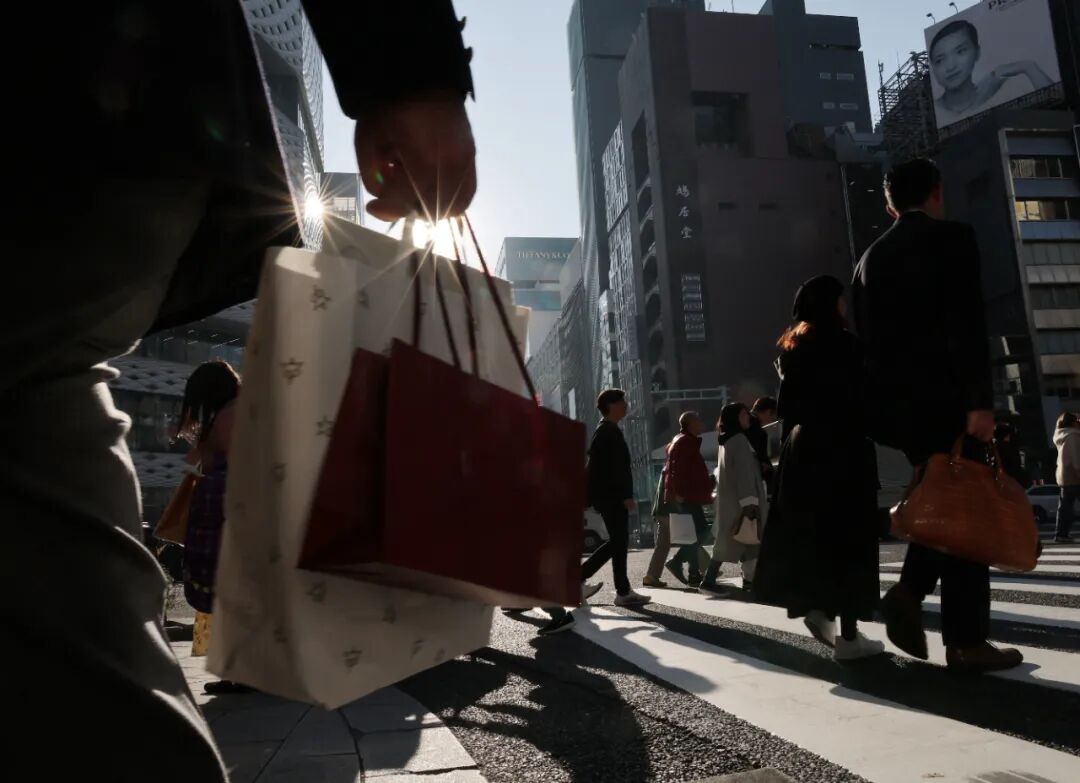
记者手记|高市大肆发债难纾涨价困境
Xin Hua She· 2025-12-06 12:42
记者手记|高市大肆发债难纾涨价困境 日本东京大学名誉教授上野千鹤子在社交媒体表示,18.3万亿日元的补充预算中竟有11.7万亿日元 要靠新发国债筹措,真忍不住想把这届政府称作"亡国"内阁。 (新华社东京12月6日电) 新华社记者刘春燕 日本首相高市早苗日前推动内阁批准总规模达18.3万亿日元(1美元约合155日元)的补充预算 案。虽尚未获得国会批准,这一靠大规模发债筹款的补充预算已引发日本媒体和专家普遍忧虑。 日本舆论认为,高市以"落实物价对策"之名编制巨额补充预算、推出大规模经济刺激计划,"刷存 在感"是最大目的,无法让日本摆脱物价持续上涨的困境。对于债务余额占国内生产总值比重高达 240%的日本政府来说,减税、补贴等大规模财政支出计划,势必加重债务负担,加剧日元贬值, 进一步推高日本物价。 受日元贬值、进口商品价格上涨等因素影响,近年日本物价持续上涨。日本总务省报告显示,截 至今年10月,日本去除生鲜食品后的核心消费价格指数已连续50个月同比上升。日本企业信用调 查公司帝国数据库日前公布的调查结果显示,2025年日本累计有20609种食品价格上涨,较去年的 12520种大幅增加约65%。 高市多次强调,物 ...