
规模经济

Search documents
国泰海通:维持BOSS直聘-W(02076)增持评级 目标价109.66港元
Zhi Tong Cai Jing· 2025-09-18 02:16
Core Viewpoint - The report from Guotai Junan maintains a buy rating for BOSS Zhipin-W (02076), highlighting a slowdown in revenue growth due to macroeconomic fluctuations and a return to average growth rates, but effective cost control has led to continued profit margin improvement [1]. Group 1: Financial Performance - In Q2 2025, the company reported revenue of 2.102 billion RMB, an increase of 9.7%, and a GAAP net profit of 711 million RMB, up 70.4% [2]. - Adjusted net profit for Q2 2025 was 941 million RMB, reflecting a 30.9% increase [2]. - The company announced a dividend of 80 million USD and a share buyback plan of 250 million USD [2]. Group 2: Cost Efficiency - The company has shown significant improvement in cost efficiency, with a reduction in sales expense ratio by 8.47 percentage points and R&D expense ratio down by 3.36 percentage points [2]. - The stock-based compensation (SBC) expense ratio decreased by 4.80 percentage points to 10.93% [2]. - The company has maintained strong profit margins due to low customer acquisition costs and high efficiency in marketing investments [2]. Group 3: Future Outlook - Revenue growth is expected to improve sequentially, with Q3 2025 revenue projected between 2.13 billion and 2.16 billion RMB, representing a year-on-year increase of 11.4% to 13% [3]. - The company has a clear and rational plan for the commercialization of AI in the human resources service sector, with products in 2B, 2C, and 2M segments undergoing gray testing [3]. - The company is positioned well in the market with a solid brand presence and matching efficiency, reducing concerns about competition [3].

以科技金融促进创新发展的思考
Jin Rong Shi Bao· 2025-09-15 01:23
Group 1 - The core viewpoint emphasizes the importance of financial support for technological innovation and the role of scale economy in enhancing research and development efficiency [1][4][14] - The "G2 model" of innovation highlights the collaboration between the US and China, where the US leads in frontier innovation while China excels in commercialization and scaling [2][3] - China's challenges in technological innovation stem from supply-side restrictions and demand-side decentralization pressures due to geopolitical tensions [2][3] Group 2 - Innovation is categorized into "0 to 1" (original innovation) and "1 to 10" (incremental innovation), with China primarily focusing on the latter [3][4] - Scale economy plays a crucial role in both leading and catching-up innovations, impacting the ability to invest in research and development [4][5] - Internal scale economies benefit large enterprises in managing high-cost innovation projects, while external scale economies arise from collaboration among smaller firms [5][6] Group 3 - Financial services are essential for supporting innovation, with the need for policies that encourage private sector investment in research and development [6][18] - The role of capital markets is highlighted in promoting leading innovations, with equity financing being more suitable than debt financing for high-risk projects [18][19] - The effectiveness of capital markets in fostering innovation is contingent on improving information disclosure and regulatory frameworks [19][20] Group 4 - The structure of the financial system is critical, with a focus on separating financial and industrial operations to enhance resource allocation efficiency [21][22] - Regulatory frameworks should balance efficiency and safety, ensuring that financial institutions do not extend government guarantees to the real economy [22][23] - The promotion of external scale economies through diverse financial institutions can enhance the overall effectiveness of the financial system [24][25]
1元打火机,狂赚150亿
创业家· 2025-09-07 10:11
Core Viewpoint - The article highlights the success story of Shaodong, a small city in Hunan, China, which has become the world's largest lighter production base, producing approximately 15 billion lighters annually and generating nearly 15 billion yuan in output value. The city has maintained a stable price of 1 yuan for its lighters for 20 years, showcasing effective cost control and innovation in production processes [4][12][28]. Group 1: Industry Background - Shaodong's lighter industry emerged as a result of a shift from the coastal city of Wenzhou, which faced challenges due to international market barriers and regulations [8][13]. - The lighter market was historically dominated by Western brands until Chinese manufacturers, particularly from Wenzhou, began to produce affordable alternatives, leading to a significant market share [11][12]. - The decline of Wenzhou's metal lighter industry due to regulatory challenges opened the door for Shaodong's rise in the injection-molded lighter segment, which began to flourish in the early 2000s [15][16]. Group 2: Key Success Factors - Shaodong's success can be attributed to three main strategies: focusing on technology and craftsmanship to enhance product value, selecting the right market segment, and fostering collaboration among local manufacturers [18][22][26]. - The city has shifted its focus from low-cost production to higher-value products, with exports to Europe and the U.S. reaching a total value of 440 million yuan in 2022 [21][22]. - Shaodong's lighter industry benefits from a well-established supply chain, with over 120 related enterprises providing components and services, allowing for rapid production and cost efficiency [23][25]. Group 3: Pricing Strategy - Despite rising costs in land, materials, and labor, Shaodong has maintained the price of its lighters at 1 yuan for two decades, achieving this through stringent cost control measures [30][31]. - Automation and technological upgrades have significantly reduced production costs, enabling higher output with fewer workers, thus maintaining profitability even at a low price point [33][39]. - The concept of economies of scale plays a crucial role, as increased production volume leads to lower average costs, allowing Shaodong to sustain its pricing strategy effectively [34][35]. Group 4: Broader Implications - The success of Shaodong's lighter industry exemplifies how small products can lead to substantial economic impact, reflecting a broader trend in China's manufacturing sector where low-cost, high-volume production can compete globally [37][41]. - Similar success stories exist in other regions of China, such as the toothbrush industry in Yangzhou and the makeup brush industry in Henan, indicating a pattern of small towns leveraging niche markets for significant economic contributions [36][38].


中金研究 | 本周精选:地缘经济论、策略
中金点睛· 2025-09-06 01:09
Group 1 - The concept of geoeconomics has evolved from an academic idea to a significant topic in global economic and policy discussions, highlighting the shift from cooperation to competition in the international economic order [6] - Geoeconomic competition emphasizes the importance of economies of scale in international trade and global supply chains, with technology becoming a core area of competition among nations [6] - The zero-sum nature of geoeconomic competition suggests that one party's gain often comes at the expense of another, increasing the significance of absolute economic size [6] Group 2 - Since the implementation of "reciprocal tariffs" in early April, concerns regarding U.S. inflation, stock market prospects, and Federal Reserve interest rate cuts have persisted, yet the U.S. stock market continues to reach new highs [8] - The mainstream view has misjudged the impact of tariffs on U.S. stocks and inflation by focusing too much on the end effects of tariffs rather than the transmission process and the allocation of tariff revenues [8] Group 3 - The upward trend since September 2024 continues, with the U.S. Federal Reserve in a rate-cutting cycle and increasing downward pressure on U.S. demand [10] - The current turnover rate of over 5% indicates potential short-term volatility, but historical trends suggest that such periods do not typically alter mid-term market performance [10] Group 4 - Rapid increases in trading volume often indicate a quick rise in investor risk appetite, leading to short-term adjustments without changing the mid-term trend [12] - Historical data shows that after adjustment periods, indices tend to exhibit a pattern of oscillating upward, surpassing previous highs [12] Group 5 - In the first half of 2025, A-share companies reported a 2.8% year-on-year increase in profits, with the non-financial sector seeing a slight 1.5% growth [14] - Key sectors such as TMT, non-ferrous metals, and certain midstream areas performed well, contributing positively to index performance [14] - Financial metrics indicate stable performance, with improvements in cash flow and capital expenditure, while the overall profitability still requires enhancement [14]
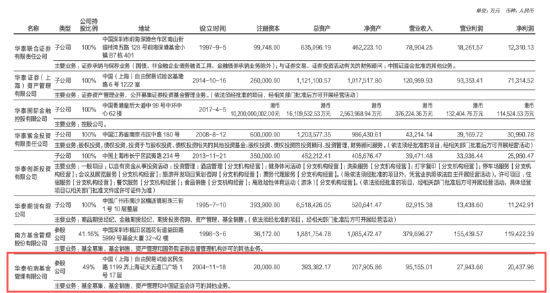
公募降费冲击波:华泰柏瑞基金上半年营利双降,净利同比暴跌36%仅赚2.04亿,营收9.52亿同比下滑5%
Xin Lang Ji Jin· 2025-09-01 10:26
Core Viewpoint - The performance of Huatai-PB Fund in the first half of 2025 shows a significant decline in both revenue and net profit, highlighting the challenges faced by the company and the broader industry due to increased competition and changing market conditions [3][5][14]. Financial Performance - Huatai-PB Fund reported a revenue of 0.952 billion yuan in the first half of 2025, a decrease of 5% year-on-year [3][5]. - The net profit for the same period was 0.204 billion yuan, reflecting a substantial decline of 36.16% compared to the previous year [5][10]. - In contrast, the company achieved a revenue of 2.313 billion yuan and a net profit of 0.730 billion yuan for the entire year of 2024, indicating that the first half of 2025 only accounted for 28% of the previous year's net profit [5][14]. Market Position and Product Structure - Huatai-PB Fund maintains a leading position in the ETF market, with its Huatai-PB CSI 300 ETF reaching a scale of 419.682 billion yuan, significantly ahead of its closest competitor [6][10]. - Over 82% of the company's assets, amounting to 567.7 billion yuan, are concentrated in ETF products, which are known for their low management fees [8][10]. - The company has faced pressure from industry-wide fee reductions, impacting its revenue from management fees [8][10]. Industry Trends - The public fund industry is experiencing a trend of declining management fees, particularly for passive products like ETFs, which has led to increased competition and pressure on profit margins [8][10][14]. - The performance of Huatai-PB Fund reflects a broader industry challenge, where reliance on a single product line and scale expansion is becoming insufficient to withstand competitive pressures [14]. Investment Opportunities - Despite the overall decline in financial performance, Huatai-PB Fund's thematic ETFs, particularly in innovative sectors like pharmaceuticals and rare earths, have shown strong performance, indicating potential growth areas [12][14].
J&T EXPRESS(01519) - 2025 Q2 - Earnings Call Transcript
2025-08-29 10:30
Financial Data and Key Metrics Changes - The company's parcel volume reached 13.99 billion parcels, a year-on-year increase of 27% [8] - Revenue increased to $5.5 billion, representing a year-on-year growth of 13% [8] - Adjusted net profit rose to $160 million, a significant year-on-year increase of 147% [8][30] - Gross profit margin declined from 11% to 9.8% due to competitive pressures in the China market [21] Business Line Data and Key Metrics Changes - In Southeast Asia, parcel volume reached 3.23 billion parcels, a year-on-year increase of 58%, with market share rising to 32.8% [9] - Revenue in Southeast Asia increased by 29.6% year-on-year to $2 billion, with adjusted EBIT growing by 74% [22] - In China, parcel volume reached 10.6 billion parcels, a year-on-year increase of 20%, but revenue per parcel decreased to $0.30 [13][25] - New markets saw parcel volume increase to 170 million parcels, a year-on-year growth of 22%, achieving positive EBITDA for the first time [15][27] Market Data and Key Metrics Changes - Southeast Asia's market share increased by 5.4 percentage points year-on-year, solidifying the company's leadership position [9] - The new markets segment achieved a significant turnaround, with a market share increase of 6.2% [15] Company Strategy and Development Direction - The company focuses on continuous cost reduction and developing non-ecommerce platform customers to enhance profitability [11] - Plans to replicate China's cost reduction experience in Southeast Asia and new markets [16] - Emphasis on investing in network capacity and automation to improve operational efficiency [16][28] Management's Comments on Operating Environment and Future Outlook - The global economic environment remains volatile, with geopolitical conflicts and trade uncertainties posing challenges [7] - Management expressed confidence in future growth, particularly in Southeast Asia and Latin America, driven by strong local partnerships [16][39] - The company aims to maintain a long-term focus on value creation amidst competitive pressures [17] Other Important Information - The company achieved a strong cash flow, with net cash flow from operating activities amounting to $421 million, an increase of 21.8% [30][32] - Total cash and cash equivalents reached $1.7 billion as of June 30, 2025 [32] Q&A Session Summary Question: Impact of domestic policy on earnings and performance in Latin America - Management noted price recovery in certain provinces due to anti-involution policies, which may improve earnings [36] - The Latin American market is expected to grow further, supported by partnerships with platforms like TikTok and MercadoLibre [39] Question: Update on non-ecommerce platform businesses and operational capacity in Southeast Asia - Non-ecommerce business accounts for less than 10% of total parcels but contributes higher margins [44] - Current capacity in Southeast Asia can handle over 30 million parcels daily, with ongoing investments in capacity expansion [47] Question: Cost reduction potential and market share expansion plans - Transportation and sorting costs per parcel have decreased, with ongoing efforts to further reduce costs [51] - The company is evaluating potential new markets for expansion, with a focus on maintaining leadership in Southeast Asia [60] Question: Unit economics guidance and franchise model adoption - The company aims to balance parcel volume growth with ASP strategy, maintaining stable EBIT per parcel [72] - The network partner model is being implemented across Southeast Asia, with 30% of the network run by partners [77] Question: Cooperation with MercadoLibre and AI technology initiatives - Collaboration with MercadoLibre is progressing well, with significant potential for growth [90] - The company has deployed over 900 autonomous delivery vehicles in China, enhancing last-mile delivery efficiency [94]
规划70GWh!吉利短刀电池产能行业第一
起点锂电· 2025-08-25 10:24
Core Viewpoint - The article highlights the advancements in battery technology by Geely, particularly the development of the "Shen Dun" short blade lithium iron phosphate battery, which is set to significantly enhance the company's production capacity and market position in the electric vehicle sector [3][4]. Group 1: Production Capacity and Technology - Geely's subsidiary, Jiyao Tongxing, has established the largest advanced production capacity for short blade batteries in the industry, with plans to reach a production scale of 70GWh by 2027 across 8 production bases [4][8]. - The Shen Dun short blade battery, launched on June 27, 2024, features a length reduction of 40% compared to traditional long blade batteries and an increase in thickness by 35% [3][5]. - The battery boasts a cycle life of 3,500 cycles (approximately 1 million kilometers) and supports fast charging from 10% to 80% in just 17 minutes and 4 seconds at a 2.45C rate [5]. Group 2: Safety Features - The battery has undergone extreme safety tests, including 8-pin puncture tests, 5.8mm live ammunition penetration, dynamic seawater immersion, and 26-ton crushing tests, utilizing a patented grid framework and three-layer protective design [6][7]. Group 3: Production Bases and Investment - The production bases include locations in Tonglu, Quzhou, Jianhu, Ganzhou, Shangrao, Yingtan, Ningguo, and Zaozhuang, with significant investments aimed at achieving the planned production capacity [7][8][10]. - The Tonglu base is set to achieve an annual production capacity of 12GWh, while the Quzhou base aims for 24GWh, with total investments exceeding 100 billion yuan [8][9]. Group 4: Market Position and Growth - Following the integration of its battery businesses, Geely's battery installation volume has entered the top 10 in the Chinese market, with a total of 8.24GWh installed in 2024, surpassing LG Energy [13][14]. - Geely plans to increase its self-supply ratio of batteries to 30% within two years, with current self-supplied battery volume accounting for approximately 18% of its total demand [15][16]. Group 5: Strategic Partnerships - Geely has established a strategic partnership with CATL, which has been a key supplier since 2013, and plans to expand their joint production capacity to 25GWh by 2024 [16].


中通快递-W(02057.HK):单票收入同比下降 Q2净利短暂承压
Ge Long Hui· 2025-08-21 20:01
Core Insights - Zhongtong Express reported a revenue of 11.83 billion yuan for Q2 2025, representing a year-on-year growth of 10.3%, while adjusted net profit decreased by 26.8% to 2.05 billion yuan [1][2] Revenue Analysis - The revenue growth of 10.3% in Q2 2025 was driven by an increase in business volume, which reached 9.85 billion parcels, a year-on-year increase of 16.5%. However, the average revenue per parcel decreased by 4.7% to 1.18 yuan due to increased subsidies and lighter parcel weights [1][2] - The market share of Zhongtong Express was 19.5%, showing a slight year-on-year decline of 0.1 percentage points but a quarter-on-quarter increase of 0.6 percentage points [1] Cost and Profitability - The core cost per parcel decreased by approximately 0.07 yuan, with transportation costs down by 0.06 yuan to 0.33 yuan, attributed to economies of scale and lower oil prices. However, the overall cost per parcel increased by 9% to 0.89 yuan due to rising other costs [2] - The gross margin fell by 8.9 percentage points to 24.9%, and the adjusted net margin also decreased by 8.9 percentage points to 17.3% due to a larger decline in revenue per parcel compared to costs [2] Future Outlook - The company has revised its full-year parcel volume growth target to between 38.8 billion and 40.1 billion parcels, reflecting a year-on-year growth of 14%-18%, down from the previous estimate of 20%-24% [2] - The board approved a mid-term dividend of $0.30 per share, with a payout ratio of 40% [2] Profit Forecast and Rating - The profit forecasts for 2025-2027 are maintained at 9 billion yuan, 9.7 billion yuan, and 10.6 billion yuan respectively, with a "Buy" rating upheld [2]
亨利加集团拟2000万港元收购城投中国理财有限公司65%股权
Zhi Tong Cai Jing· 2025-08-20 13:59
Core Viewpoint - The company, Henry Group (03638), has announced a conditional agreement to acquire 65% of the issued shares of City Investment China Financial Limited for HKD 20 million, which is expected to enhance its market position in the financial services industry and diversify its client base [1] Group 1: Acquisition Details - The buyer, Greatness Aim Limited, is a wholly-owned subsidiary of the company, while the seller is PSPB (2013) Investment Limited [1] - City Investment China Financial Limited is a licensed money lender in Hong Kong, primarily engaged in lending and debt recovery [1] Group 2: Strategic Benefits - The acquisition is anticipated to expand and diversify the company's client base, further solidifying its market position in the financial services sector [1] - The company expects to leverage operational synergies and economies of scale to enhance cost efficiency and profitability through shared infrastructure and resources [1] - The strategic benefits include entering new markets and improving compliance capabilities, which are expected to broaden the revenue base and create new opportunities in lending [1] Group 3: Financial Outlook - The target company has a substantial loan portfolio, which is expected to provide stable income and significant growth potential for the company [1] - The reliable track record of the target company indicates its profitability can contribute to the company's overall growth [1]
TJX(TJX.US)上调年度盈利预期,低价商品需求强劲成推手
智通财经网· 2025-08-20 13:48
Core Viewpoint - TJX Companies reported better-than-expected Q2 sales and profits, leading to an upward revision of annual earnings forecast and a nearly 5% increase in stock price during pre-market trading [1] Group 1: Financial Performance - Q2 sales reached $14.4 billion, exceeding the market average expectation of $14.13 billion; earnings per share were $1.10, higher than the anticipated $1.01 [1] - The company raised its earnings per share forecast for FY2026 to a range of $4.52 to $4.57, up from the previous estimate of $4.34 to $4.43 [2] Group 2: Market Position and Strategy - TJX's core customer base consists of price-sensitive consumers, who are increasingly favoring high-value products amid economic uncertainty due to fluctuating U.S. trade policies [1] - The company has a total of 5,134 stores, with an average annual growth rate of 2.6% in new store openings over the past two years, which is higher than the overall retail sector [2] Group 3: Future Outlook - The company has adjusted its same-store sales growth forecast for FY2026 from a range of 2% to 3% to a target of 3%, reaching the upper limit of the previous forecast [2] - Management anticipates a 2.5% year-over-year sales growth for the next quarter, while analysts project a 4.8% revenue growth over the next 12 months, slightly slower than the past six years [2]
