
零关税政策

Search documents
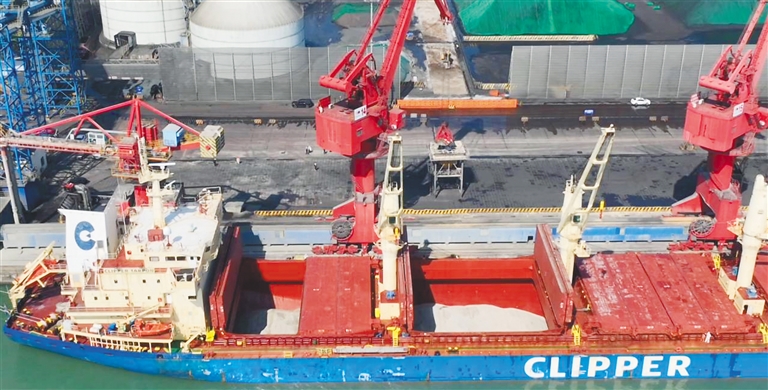
封关后首批“零关税”锂精矿运抵洋浦港
Hai Nan Ri Bao· 2026-01-09 23:21
Core Insights - The first batch of "zero tariff" lithium concentrate has arrived at Yangpu Port, marking a significant step for the Hainan Free Trade Port in the new energy sector [2][3] Group 1: Import and Production - A vessel carrying 28,950 tons of lithium concentrate from Mali has docked at Guotou Yangpu Port, providing stable raw materials for Hainan Star Sea New Materials Co., Ltd.'s annual production of 20,000 tons of battery-grade lithium hydroxide [2] - This shipment is the first batch of "zero tariff" imports since the full closure of Hainan's Free Trade Port, indicating a successful implementation of the new policy [2][3] - The lithium concentrate was imported through Hainan Mining's subsidiary, marking a critical step in establishing an integrated new energy supply chain [2][3] Group 2: Business Model and Cost Efficiency - The company plans to enhance its "two ends abroad" business model by importing lithium concentrate and processing it within the Hainan Free Trade Port, ultimately supplying battery-grade lithium hydroxide to the global market [2] - This model allows the company to significantly reduce raw material import costs due to the "zero tariff" policy while leveraging the geographical advantages and logistical convenience of the Free Trade Port [2][3] Group 3: Project Development and Future Plans - The 20,000-ton battery-grade lithium hydroxide project, with a total investment of 1.056 billion yuan, commenced construction at the end of 2022 and is the first project in Danzhou Yangpu to provide raw materials for new energy vehicle batteries [3] - The project is expected to achieve full process integration by June 2025, enhancing the efficiency of production and contributing to the establishment of a green low-carbon industrial chain in Hainan [3] - Future plans include the addition of a lithium carbonate production line to further support the development of the new energy industry in Hainan [3]


海南自贸港药品、医疗器械“零关税”政策落地一周年 累计减免税款超6000万元
Sou Hu Cai Jing· 2026-01-05 00:55
Core Insights - The "zero tariff" policy for pharmaceuticals and medical devices in Hainan Free Trade Port has been successfully implemented for one year, with cumulative imports valued at approximately 460 million yuan and tax reductions of about 62 million yuan [1] Group 1: Policy Overview - The "zero tariff" policy allows registered medical institutions, higher medical education institutions, and medical research institutes in the Boao Lecheng International Medical Tourism Pilot Zone to import specified pharmaceuticals and medical devices without paying import tariffs, value-added tax, and consumption tax [1] - The policy has been described as a significant benefit for registered medical institutions, reducing costs for patients and improving cash flow for enterprises [1] Group 2: Implementation and Future Plans - Haikou Customs has actively optimized customs clearance processes and conducted in-depth research to understand the challenges faced by different types of enterprises in utilizing the policy [1] - Future efforts will focus on further optimizing regulatory services and guiding enterprises to fully leverage the policy, aiming to enhance the release of policy benefits and support the development of a global hub for high-quality medical resources in the pilot zone [1]
海南封关首周市场活跃 海口海关回应五大核心关切
Zhong Guo Jing Ying Bao· 2025-12-27 14:15
Core Viewpoint - The Hainan Free Trade Port has officially implemented a comprehensive policy system characterized by "one line open, two lines controlled, and freedom within the island," aimed at enhancing trade facilitation and regulatory efficiency [1][2]. Group 1: Policy Implementation and Impact - The first week of policy implementation saw over 400 million yuan in goods benefiting from the "zero tariff" policy, with duty-free consumption on the island increasing by 54.9% year-on-year [1]. - The "zero tariff" policy has expanded significantly, increasing the number of eligible tariff-free items from 1,900 to approximately 6,600, covering about 74% of all goods, a 53% increase compared to before the closure [3][4]. - The policy allows for the free circulation of "zero tariff" goods and their processed products among eligible entities, promoting industrial competitiveness and cluster effects [3]. Group 2: Regulatory Innovations - The customs authority has introduced a "smart + credit" regulatory model, which includes a smart regulatory platform that enables "one-time declaration, one-time inspection, and one-stop release" [2][6]. - The customs has established a collaborative mechanism with various departments to enhance data sharing and joint management, focusing on comprehensive governance and security [3][9]. - The introduction of electronic tracking for "zero tariff" goods and simplified customs procedures aims to improve operational efficiency and reduce costs for businesses [4][8]. Group 3: Industry Development Opportunities - The optimized "processing and value-added" tax exemption policy is expected to lower operational costs for enterprises and stimulate local industries such as agriculture and aquaculture [8]. - The policy changes facilitate the extension and collaboration of industrial chains, allowing for cumulative rules to apply across the entire island, thus promoting synergistic development [8]. - The regulatory framework supports the growth of local特色产业 by counting the value of self-produced goods towards the value-added calculation, making it easier for companies to meet the required thresholds for tax exemptions [8].
爆了,千亿“免税茅”起飞?
3 6 Ke· 2025-12-24 11:52
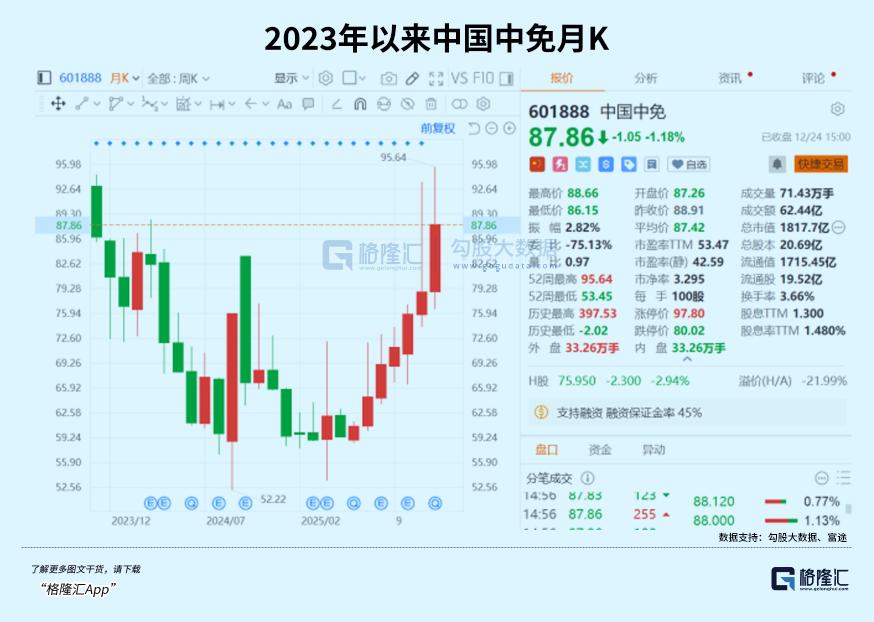
Core Viewpoint - The official launch of Hainan Free Trade Port on December 18 has led to a significant rise in related stocks and a surge in duty-free shopping, indicating strong market potential for companies like China Duty Free Group (CDFG) [1][3]. Group 1: Market Performance and Growth - Hainan-related stocks, including Hainan Airport and China Duty Free, have seen substantial gains, with Hainan Development's stock price doubling since September [1]. - On the first day of the duty-free shopping policy, sales reached 161 million yuan, with a year-on-year increase of 61%, and the number of shoppers increased by 53.1% [1][3]. - CDFG's stock has risen by 50% since June, reaching a two-year high, benefiting from the overall growth in the duty-free market [1][3]. Group 2: Policy Changes and Market Dynamics - The new duty-free shopping policy implemented on November 1 allowed for the sale of additional product categories, leading to a 27.1% year-on-year increase in shopping amounts to 2.38 billion yuan [3]. - The number of duty-free items available has increased from over 1,900 to 6,637, enhancing the attractiveness of Hainan as a shopping destination [3][6]. - The introduction of "zero tariff" policies is expected to lower procurement costs for CDFG, potentially increasing its gross margin to 31.2% in 2024 [10][12]. Group 3: Competitive Landscape - CDFG currently holds a market share of 78.7% in the domestic duty-free market and 82% in Hainan's duty-free market, with Hainan accounting for about 60% of its total revenue [7][10]. - The zero-tariff policy may attract more competitors, potentially diluting CDFG's pricing power and market dominance [13][15]. - New entrants, including foreign companies, are beginning to compete in the duty-free sector, which could impact CDFG's market share in Hainan [20][19]. Group 4: Future Outlook and Challenges - While the launch of the Hainan Free Trade Port presents new growth opportunities for CDFG, the overall consumer demand remains weak, which may hinder significant revenue recovery [25][26]. - CDFG's high static P/E ratio of 42.39 reflects market expectations for substantial growth, but if sales do not improve as anticipated, the stock may face downward pressure [27]. - The competitive landscape is shifting from price competition to a focus on brand, service, and experience, requiring CDFG to invest continuously to maintain its market position [27][28].

周一这一板块爆发!29只个股集体涨停!
Zheng Quan Ri Bao Wang· 2025-12-22 08:35
Core Viewpoint - The Hainan Free Trade Port has shown strong market performance, with a significant increase in stock prices and a notable rise in duty-free sales following the implementation of "zero tariff" policies and the first day of island-wide customs closure [1][2]. Group 1: Market Performance - The Hainan Free Trade Port sector experienced a 5.43% increase in overall stock prices, with 29 stocks reaching their daily limit [1] - Duty-free sales in Sanya reached 1.18 billion yuan on the first day of customs closure, with subsequent daily sales of 1.05 billion yuan and 1.08 billion yuan, reflecting year-on-year growth of 45.8% and 47% respectively [1] Group 2: Policy Impact - The "zero tariff" policy scope will expand from 1,900 to 6,600 items, increasing the coverage of goods from approximately 21% to 74%, enhancing the policy's impact on consumer goods and industrial raw materials [1] - The introduction of policies aimed at reducing costs and improving efficiency is expected to enhance the cost structure of business entities and stimulate market activity [2] Group 3: Industry Opportunities - The expansion of the "zero tariff" policy and improved customs facilitation will promote the free flow of goods, attract more capital, and enhance the appeal of Hainan as a tourist destination [2] - The tourism retail, logistics, and related industries are expected to benefit significantly from the increase in duty-free sales and international tourism consumption driven by the new policies [2][3] Group 4: Long-term Outlook - The regulatory framework established post-closure is anticipated to trigger a migration peak for resource-oriented and institution-dependent industries, with a shift towards high-value manufacturing and technology sectors by 2028-2030 [3] - The closure marks a transition from a commodity flow-based opening to a rules-based opening, positioning Hainan as a significant area for international trade and investment [3][4]
封关首日货值破5亿,专家称新加坡只有港口没有制造业,海南岛会慢慢取代其位置
Sou Hu Cai Jing· 2025-12-21 23:35
Core Insights - Hainan's full island closure operation officially started on December 18, 2025, with a zero-tariff policy covering over 6,600 types of goods, marking a significant step in China's higher-level opening-up strategy [1][3] - The total value of imported goods on the first day of the closure exceeded 500 million yuan, indicating strong initial demand [1] - The closure is expected to challenge Singapore's traditional shipping hub status, as Southeast Asian goods can now be transferred to China via Hainan, reducing transit time by 5 days and costs by 30% [1][10] Trade Policy and Economic Impact - The "first line" refers to the customs points between Hainan and foreign countries, where zero-tariff and relaxed trade management measures are implemented, while the "second line" manages the flow of goods and taxes between Hainan and mainland China to prevent smuggling [3] - The zero-tariff policy is expected to cover nearly all production equipment and raw materials, potentially saving import equipment companies approximately 1 billion yuan in taxes [3] - Hainan's processing and value-added capabilities are set to attract more businesses, as companies like Jingbo (Hainan) New Materials Co., Ltd. have already benefited from significant tax reductions [10] Competitive Landscape - Singapore has historically been a trade hub due to its layered business model, which includes logistics, processing, corporate operations, and financial services [5][6] - In 2024, Singapore's port handled 41.12 million TEUs, while Hainan's Yangpu Port only surpassed 2 million TEUs, highlighting the current disparity in trade volume [7] - Hainan's closure allows for direct shipping from Indonesia to Hainan, bypassing Singapore, which could alter the regional trade dynamics [19] Bilateral Relations and Future Prospects - The closure has led to an increase in visa-free entry for 86 countries, enhancing tourism and trade opportunities [15] - A partnership between Hainan's Meilan International Airport and Singapore's Changi Airport aims to establish a joint commercial management platform, further integrating the two economies [17] - Hainan's unique policies and broader closure scope are expected to create exceptional synergies, positioning it as a pioneer in China's blue economy development [19]
仪器公司“组团”布局海南自贸港,图什么?
仪器信息网· 2025-12-19 09:28
Core Viewpoint - The article discusses the strategic shift of numerous instrument companies establishing operations in Hainan Free Trade Port, driven by the upcoming full island closure and favorable policies such as zero tariffs and simplified customs procedures [3][4]. Group 1: Instrument Companies' Movement to Hainan - Multiple instrument companies have set up branches in Hainan, including notable firms like杰莱美, 瑞赛司, and 迈瑞医, with establishments planned from 2021 to 2025 [6][7]. - Leading scientific instrument companies, such as Thermo Fisher, are accelerating their strategic layouts in Hainan by establishing collaborative innovation laboratories and research centers [7]. Group 2: Benefits of Hainan Free Trade Port - The Hainan Free Trade Port's zero-tariff policy is a key attraction, with the number of zero-tariff items expanding from over 1,900 to more than 6,600, covering 74% of all product categories, including medical devices and precision instruments [9][10]. - The new policies will simplify customs processes, significantly reducing the time required for importing scientific instruments and lowering procurement costs for companies [12][13]. Group 3: Advantages for Scientific Instrument Companies - The closure of Hainan will enhance operational efficiency for scientific instrument companies by streamlining customs procedures and reducing the complexity of import documentation [12][13]. - The expansion of zero-tariff categories will lower one-time procurement costs and long-term operational burdens, facilitating equipment upgrades and technological advancements [12][13]. - The influx of scientific instrument and medical device manufacturers will create a clustering effect, promoting domestic production and innovation in high-end research instruments [12][13]. Group 4: Export Opportunities for Domestic Instruments - Domestic instruments exported from Hainan can benefit from zero-tariff treatment on imported components, reducing manufacturing costs and enhancing profitability through a 15% corporate income tax reduction [16]. - The policies also encourage foreign instrument manufacturers to establish local production in Hainan, allowing them to benefit from favorable trade conditions when exporting or selling to the mainland [16]. Group 5: Conclusion - The full closure of Hainan is viewed as a new starting point for industrial advancement, with leading companies' concentration in the region highlighting the potential for technological development and market expansion [18].

看图学习丨打造引领我国新时代对外开放的重要门户
Yang Guang Wang· 2025-12-19 07:09
Core Viewpoint - The construction of Hainan Free Trade Port is a significant decision made by the Central Committee to deepen reform and opening up in the new era, with the full island customs closure officially starting on December 18, enhancing international and domestic connectivity [1][3][17]. Group 1: Strategic Goals and Policies - The strategic goal of Hainan Free Trade Port is to establish it as a key gateway for China's new era of opening up to the outside world [3]. - The overall plan for Hainan Free Trade Port emphasizes the need for a phased and step-by-step approach to build a policy and institutional system compatible with a high-level free trade port [4][18]. - The implementation of the Hainan Free Trade Port Law is crucial for the comprehensive deepening of reform and opening up [4]. Group 2: Geographic and Economic Advantages - Hainan's unique geographical position, bordered by the Qiongzhou Strait to the north and surrounded by the sea on three sides, makes it a vital maritime hub connecting the Indian Ocean and the Pacific, as well as a regional center linking Northeast Asia and Southeast Asia [6]. - The full island customs closure will create a special customs supervision area, characterized by a policy of "one line open, one line manage, and free flow within the island" [19]. Group 3: Benefits of Full Island Customs Closure - The coverage of "zero tariff" goods will significantly increase from over 1,900 tax items to more than 6,600 tax items, including traditional Chinese medicine, textile raw materials, non-ferrous metal products, and machinery [25]. - The beneficiaries of the "zero tariff" policy will expand to include various enterprises and institutions across the island, with fewer restrictions on the flow of imported goods and their processed products [26]. - The new policies will allow more countries' tourists to enter Hainan visa-free, enhancing the island's attractiveness as a travel destination [27]. Group 4: Future Development and Opportunities - The full island customs closure marks a new phase in the construction of Hainan Free Trade Port, promoting a mutually beneficial and cooperative new type of open system [31]. - The initiative is expected to provide new development opportunities and enhance the quality of life for residents by allowing access to high-quality global goods at more affordable prices [31].

“放”“免”“简” 从大数据里的“动词变化”看海南封关带来的新机遇
Yang Shi Wang· 2025-12-19 02:49
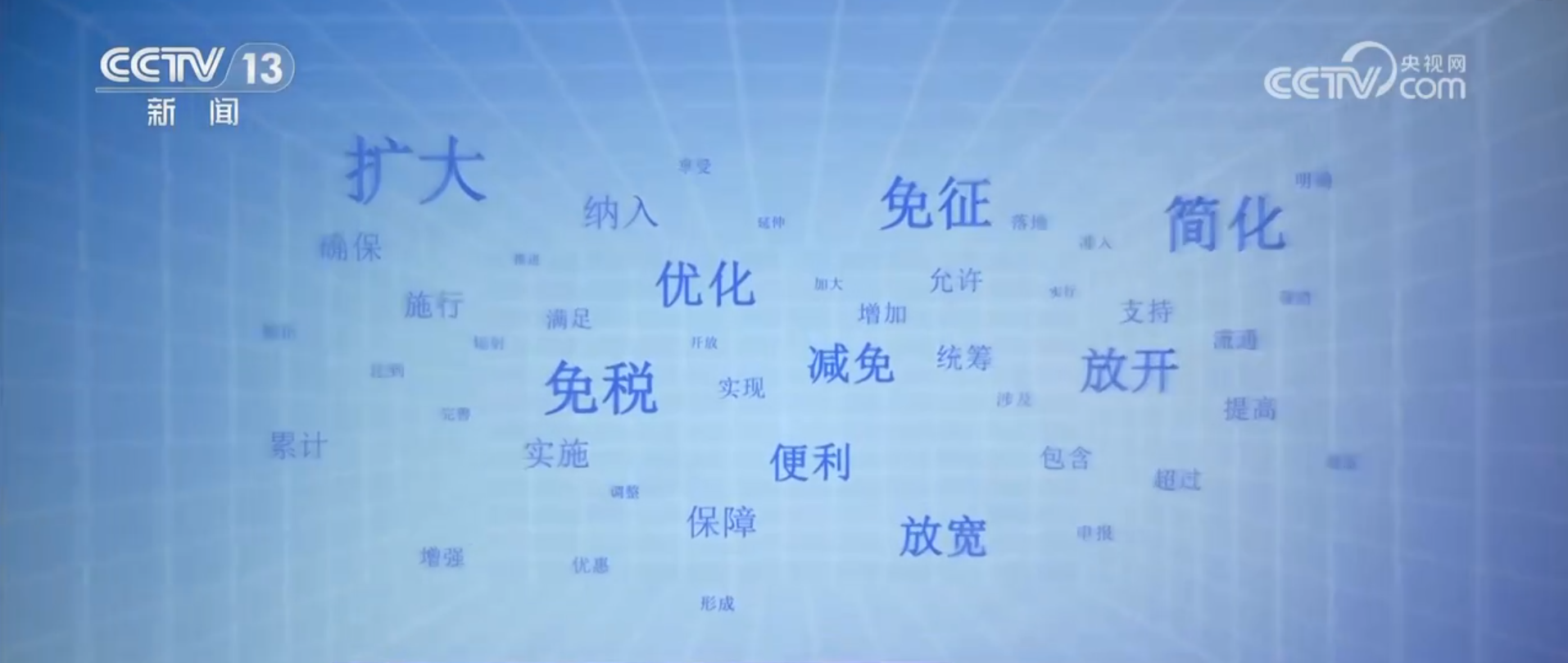
Core Insights - The news highlights the opportunities arising from Hainan's customs closure, indicating a shift in public interest from tourism to development and entrepreneurship in the region [1][3]. Group 1: Opportunities from Policy Changes - The first category of verbs identified in the policy document includes "release," indicating a trend towards loosening regulations and expanding market access, which presents opportunities for individuals looking to work or start businesses in Hainan [5]. - The second category focuses on "exemption," particularly regarding the reduction of costs for businesses. For instance, products that achieve a value-added rate of 30% through local processing can enter the mainland without import duties, encouraging the establishment of complete industrial chains on the island [7]. - The third category emphasizes "simplification," which pertains to the ease of personnel movement and administrative processes. The management of personnel flow between Hainan and the mainland remains streamlined, facilitating easier transitions for individuals [8]. Group 2: Employment and Economic Growth - There has been a notable increase in job postings in Hainan, particularly in roles related to customs, e-commerce, and cross-border services, reflecting the region's evolving economic landscape post-closure [10]. - Ticket bookings for travel to Hainan during the off-peak season have surged by 163% since the announcement of the customs closure, indicating a growing interest in the region beyond tourism [10]. - The number of foreign visitors to Hainan has increased by 26%, with nearly 180 countries represented, showcasing the island's appeal as a destination for both tourism and business [10].
海南自由贸易港,正式启动全岛封关
Sou Hu Cai Jing· 2025-12-18 14:42
Core Viewpoint - The official launch of the Hainan Free Trade Port's full island closure on December 18, 2025, marks a significant step in China's commitment to high-level opening-up and the construction of an open world economy [1][3]. Group 1: Policy Changes - The full island closure will implement a series of policies including the import tax item catalog, tax policies for goods circulation, and customs supervision methods [1][3]. - The "zero tariff" policy will expand from over 1,900 tax items to more than 6,600, increasing the proportion to 74% [8]. - The processing and value-added tax exemption policy will be optimized by removing restrictions on the main business income of encouraged industries [8]. Group 2: Trade Facilitation - The closure will create a customs supervision special area characterized by "one line" for free movement and "two lines" for controlled movement, allowing for more convenient trade with international markets [4][5]. - Eight open ports will allow eligible imported goods to be released directly, while ten "two-line" ports will implement various convenient measures for goods entering the mainland [9]. Group 3: Tourism and Consumption - The policy will enhance the tourism consumption environment, with expanded duty-free shopping options for residents and visitors [10][11]. - The construction of international cultural tourism projects will be accelerated, aiming to create a unique and influential tourism consumption scene [12][13]. Group 4: Development Goals - The full island closure is seen as a milestone in the construction of the free trade port, with a three-step plan for development leading to a mature system by 2035 [15][16].
