AI出海

Search documents
破圈·跨海:中国文化出海的新坐标
36氪· 2025-08-20 09:31
Core Viewpoint - The article emphasizes the accelerated trend of cultural export from China, showcasing how Chinese cultural products are gaining global recognition and acceptance, moving beyond domestic popularity to become integral to international consumer choices [2][10]. Group 1: Cultural Export Trends - Over the past year, cultural exports have evolved from individual hits to a collective effort across multiple sectors, indicating a more mature approach to global markets [2]. - The global consumer landscape is shifting towards value-driven choices, with a focus on cultural identity and emotional resonance rather than just price [4]. - The emergence of Generation Z and Alpha as key consumer groups is driving a demand for diverse cultural content, making cultural export a competitive core rather than an ancillary attribute [4]. Group 2: Characteristics of Successful Brands - Successful Chinese brands in the global market share three common traits: high recognition cultural symbols, the ability to link product functionality with emotional value, and flexible market adaptation capabilities [4][5]. - The gaming, short drama, and new consumption sectors are highlighted as particularly active areas for cultural export, utilizing localized narratives and emotional storytelling to integrate Chinese elements into local cultures [5]. Group 3: Strategic Approaches for Cultural Export - A multi-threaded, sustainable strategic approach is necessary for cultural export, moving away from a single-threaded model that focuses solely on viral hits [8]. - Continuous shaping of cultural symbols is essential, integrating products, stories, and social media into a cohesive narrative that can be recognized across different markets [8][9]. - Dynamic adaptation of channels and scenarios is crucial, as consumer touchpoints vary significantly across regions, necessitating real-time adjustments to distribution strategies [9]. Group 4: Upcoming Events and Initiatives - The upcoming cultural exchange event in Nanning on September 18, organized by 36Kr, aims to gather industry leaders to discuss new paths, challenges, and opportunities for Chinese culture in the global market [10][12]. - The event will focus on various sectors including gaming, new consumption, and short dramas, highlighting the importance of collaboration and shared insights among industry players [14][15].

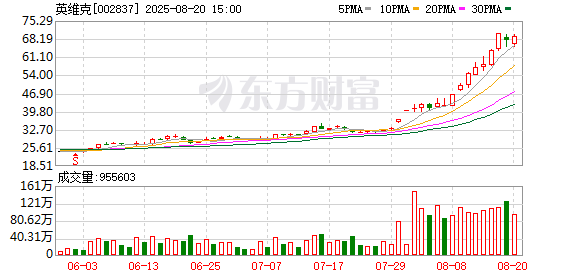
国金证券给予英维克买入评级:温控业绩高增,液冷板块龙头出海
Mei Ri Jing Ji Xin Wen· 2025-08-20 08:32
Group 1 - The core viewpoint of the report is that Yingweike (002837.SZ) is rated as a buy due to strong performance driven by dual growth in data center temperature control and cabinet temperature control in the first half of 2025 [2] - The business structure and competitive factors are expected to put short-term pressure on the gross margin [2] - The liquid cooling segment is anticipated to become another important area for AI export, alongside optical modules, with platform companies likely to benefit significantly [2]


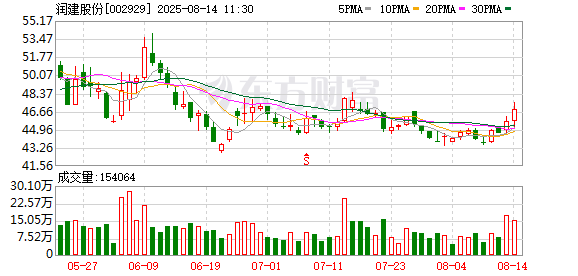
润建股份:目前公司已在马来西亚、印尼等东盟国家参与24个算力中心的建设运维工作
Mei Ri Jing Ji Xin Wen· 2025-08-14 04:23
Group 1 - The company has been actively expanding its overseas market presence, particularly in ASEAN countries, since 2019, leveraging the national strategy for going global [1] - The company is involved in the construction and operation of 24 computing power centers in ASEAN countries such as Malaysia and Indonesia [1] - The company has developed intelligent solutions for various industries, including urban governance, energy operation, smart education, and smart agriculture, with successful applications in ASEAN countries [1] Group 2 - Notable projects include "ASEAN AI Grading," "Vietnamese Legal Consultation AI Assistant," and "AI Photovoltaic Management Platform" [1] - The company is optimistic about the prospects of AI and computing power going global and plans to continue increasing its business expansion efforts [1]
中企出海新叙事:AI成为“舞台真主角”
3 6 Ke· 2025-08-04 09:13
Core Insights - In 2025, AI is expected to transition from being a mere tool to taking over actual production processes for Chinese companies going global, marking a significant evolution in their overseas operations [1][27] - The collective success of Chinese companies in international markets is driven by a strong penetration of AI technologies, with Chinese enterprises accounting for approximately 50% of the projected 7.6 billion global AI application visits in 2025 [2][7] - AI is evolving from a supportive role to becoming a primary driver of business processes, enabling companies to streamline operations and enhance efficiency [3][8] Group 1: AI's Role in Global Expansion - AI is no longer just an efficiency tool but is becoming integral to the entire business process, from content production to customer management [2][7] - The shift in AI's role allows service providers to engage directly in business operations, as seen with a cross-border e-commerce technology service provider starting its own e-commerce operations [3][4] - AI's ability to enhance individual productivity is evident, with examples of individuals managing multiple roles through AI assistance, thus lowering the skill barrier for overseas operations [4][5] Group 2: Efficiency and Cost Reduction - Companies like Tiwan Tans have demonstrated that small teams can achieve outputs equivalent to larger teams by utilizing self-developed AI systems, significantly improving operational efficiency [5][6] - AI has drastically reduced costs in various operational aspects, such as advertising and customer service, with examples showing cost reductions from 5 yuan to 0.02 yuan per link uploaded [6][9] - The overall organizational logic of overseas enterprises is being restructured, moving from trial-and-error approaches to systematic processes [6][9] Group 3: Market Demand and AI Adoption - The demand for AI solutions is rapidly increasing among global SMEs, particularly in emerging markets like Southeast Asia and Latin America, where AI is becoming a standard tool for content marketing and customer service [10][11] - Chinese AI companies are actively seeking to penetrate international markets, with examples of successful applications like liblibAI and Vidu expanding their user bases significantly [7][12] - The trend indicates a mutual need between overseas enterprises and AI providers, accelerating the integration of AI into business operations [7][12] Group 4: Challenges and Bottlenecks - Despite advancements, many Chinese AI models face deployment challenges, with over 62% of companies citing cross-border data processing as a major technical barrier [13][15] - Language and cultural adaptation remain significant hurdles, as many AI-generated content fails to resonate with local audiences [14][15] - Compliance with international regulations is a critical issue, with many companies struggling to meet standards like GDPR, which can delay product launches [15][17] Group 5: Future Directions - The future of AI in global expansion involves enhancing deployment capabilities, cultural adaptation, and real-time compliance mechanisms [18][22] - Companies are beginning to implement AI as a cohesive system that connects various operational nodes, moving towards a fully integrated AI-driven business model [25][27] - The transition to "Outward 2.0" signifies a new phase where AI not only assists but actively drives business processes, fundamentally changing how companies operate internationally [1][27]
36氪出海·关注|从WAIC看AI出海:一场“生而全球”的比赛
3 6 Ke· 2025-08-01 02:29
Core Insights - The World Artificial Intelligence Conference (WAIC) this year showcased a significant increase in international participation, with 156 procurement groups from over ten countries attending, including first-time exhibitors from the UK, Singapore, and Malaysia [4][8] - The event highlighted China's transition from a follower to a core participant in the AI robotics industry, with Chinese companies demonstrating advantages in manufacturing and data collection compared to their US counterparts [8][12] - The conference served as a major connection point for Chinese companies offering comprehensive solutions and global procurement groups seeking technology [9][10] Group 1: International Participation - WAIC saw a notable rise in international attendees, with a diverse range of languages spoken and increased participation from regions like Hong Kong and Taiwan [4][8] - The presence of procurement groups from various countries indicates a growing global interest in AI technologies, particularly in sectors like fintech and smart city solutions [4][8] Group 2: China's Role in AI Robotics - Chinese companies are now seen as key players in the AI robotics sector, leveraging their manufacturing capabilities and rich data resources to outpace US firms [8][12] - Reports indicate that China is leading the global market in AI robotics, with a widening gap between Chinese and American companies [8][12] Group 3: Export Trends - The export market for Chinese industrial robots is rapidly growing, with a 61.5% year-on-year increase expected in the first half of 2025, and nearly 30% of these exports targeting Europe [12][14] - Companies like Mech-Mind and XREAL are at the forefront of this trend, showcasing products that enhance productivity and offer innovative consumer experiences [10][13] Group 4: Global Market Demand - The demand for AI solutions is global, driven by common challenges such as labor shortages and aging populations, which are prevalent in both developed and developing countries [6][8] - The conference underscored the importance of addressing these global needs through innovative AI applications, with a focus on both productivity tools and consumer lifestyle products [10][14]

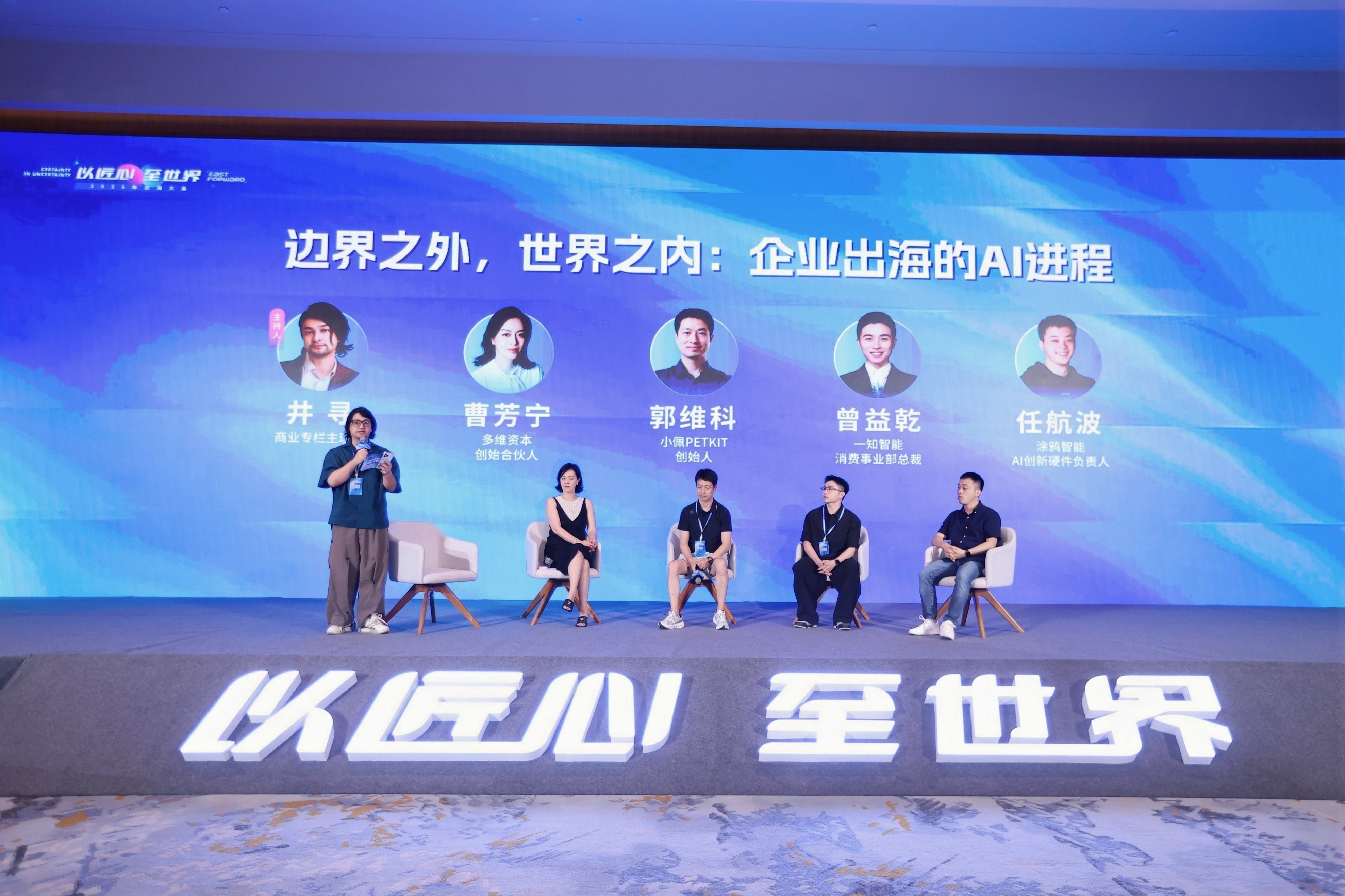
圆桌对话:边界之外,世界之内:企业出海的AI进程 | 2025出海大会
3 6 Ke· 2025-07-30 09:05
Core Insights - The 2025 "Craftsmanship to the World" Overseas Conference will be held in Hangzhou, focusing on globalization and overseas expansion, with discussions on various sectors including consumption, technology, e-commerce, finance, and new energy [1] - A roundtable discussion on "AI's Journey Overseas" will feature industry leaders discussing the challenges and opportunities for Chinese companies in the global AI market [4][5] Group 1: Conference Overview - The conference will include a main venue and sub-venues, with themes such as "Certainty in Uncertainty" and "Doing Business Globally" [1] - The event will feature over 10 keynote speeches and 5 roundtable discussions, aiming to provide a sustainable path for companies to navigate globalization [1] Group 2: AI and Global Competition - The discussion will highlight the importance of understanding local markets and user needs rather than merely replicating domestic strategies [7] - Companies like PETKIT and Tuya will share their experiences and strategies for leveraging AI in their products and services to enhance global competitiveness [6][8] Group 3: Market Adaptation and Localization - Different markets have varying levels of acceptance for AI, with developed markets showing a strong willingness to pay for AI solutions, while emerging markets may not see immediate advantages [9][10] - Localization is crucial, with companies advised to deploy local teams to adapt to cultural and regulatory requirements [10] Group 4: Operational Efficiency and AI Integration - AI can significantly enhance operational efficiency, with examples of how companies are using AI to improve customer service and reduce costs [13][14] - The focus should be on integrating AI into specific business scenarios to ensure measurable outcomes rather than just emphasizing technological capabilities [14] Group 5: Future of Globalization and AI - The potential for AI to create truly global companies lies in understanding cultural differences and developing products that resonate with local consumers [15][16] - Companies must differentiate their offerings to avoid market saturation and ensure successful international expansion [19][20]
Manus真要跑路了?实探北京办公区仅剩十几人在工作,明确不再招聘
Sou Hu Cai Jing· 2025-07-12 00:04
Core Insights - Manus, a prominent AI agent company, is undergoing significant layoffs and relocating its headquarters from China to Singapore, raising concerns in the industry about its future and operational strategy [2][9][12] - The company has ceased recruitment efforts and is facing challenges in the domestic market, including competition from larger firms and a lack of user willingness to pay for services [11][13] Group 1: Company Operations - Manus has laid off a significant portion of its workforce in China, reducing its staff from approximately 120 to a smaller number, with only core technical personnel moving to Singapore [2][5] - The company has stopped its collaboration with Alibaba's Tongyi Qianwen project, although an Alibaba insider claims this is a misunderstanding [2][9] - Manus has completed four rounds of financing, with a valuation reaching $500 million after a $75 million investment led by Benchmark [7] Group 2: Market Challenges - The decision to move to Singapore is influenced by increased scrutiny from U.S. investors and the challenges of operating in the competitive Chinese AI market [9][10] - The domestic market is characterized by low user payment willingness and intense competition from major players like ByteDance and Alibaba [11][13] - Manus's high pricing strategy for its products, such as the Pro version at 1428 yuan/month, is seen as aggressive given the current market conditions [11] Group 3: Future Outlook - The company is focusing on expanding its operations in international markets, including the U.S., Japan, and the Middle East, as it seeks to establish a sustainable business model [11][12] - Manus's founder has expressed optimism about the potential for success in global markets despite the challenges faced [12][13] - The trend of Chinese AI companies relocating overseas is becoming more common, reflecting broader industry pressures [12][13]

多个产品跻身第一阵营,AI出海成中企出海新热点
Bei Jing Ri Bao Ke Hu Duan· 2025-07-10 08:07
Group 1 - The core viewpoint is that AI going overseas is becoming a new trend for Chinese companies, with several leading AI applications collaborating with Alibaba Cloud to penetrate international markets [1][2] - Companies like Vidu, Question.AI, and LiblibAI have successfully utilized Alibaba Cloud's infrastructure to expand their services globally, achieving significant growth in user engagement and market reach [1][2] - Vidu's AI video generation application has reached over 200 countries, with a 300% quarter-on-quarter increase in B-end service clients and usage [1] Group 2 - Question.AI, an online education platform, reported over 100,000 daily active users within two months and over 1 million within six months of launching its overseas product [2] - The maturity of China's cloud infrastructure and large models has enabled rapid deployment of AI solutions in international markets, with both emerging AI-native companies and traditional enterprises upgrading their products for global expansion [2] - Alibaba Cloud aims to provide comprehensive foundational capabilities for Chinese enterprises to facilitate smooth operations overseas, addressing the need for quick adaptation in foreign markets [2]
人工智能的新浪潮和商业化
3 6 Ke· 2025-06-09 09:11
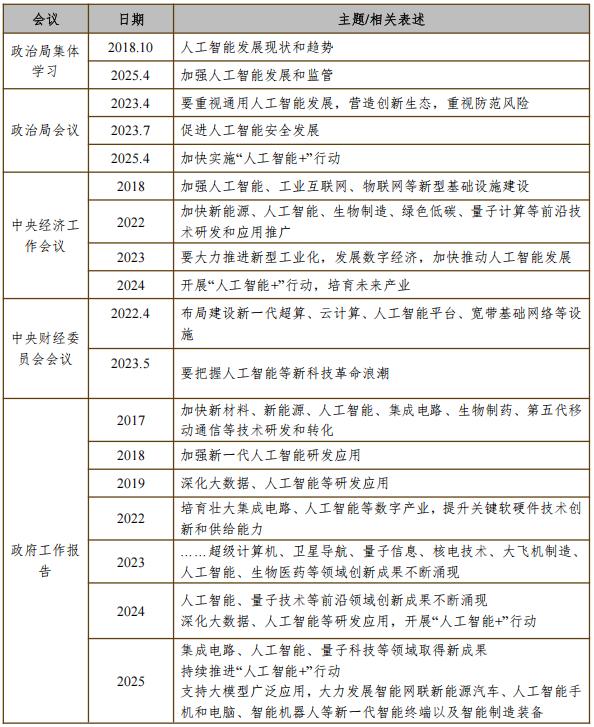
Group 1: National Strategy on AI - The Chinese government places high importance on the innovation and development of artificial intelligence (AI), with significant emphasis from President Xi Jinping since 2014 [1][2] - AI was first included in the "Government Work Report" in 2017, and the State Council issued the "New Generation Artificial Intelligence Development Plan," aiming for AI to reach world-leading levels by 2030 [1][2] - A surge in AI research and application has been observed, with various provinces organizing study sessions on AI [1] Group 2: AI Waves Initiated by Google - Two landmark events in AI development are identified: AlphaGo's victory over Lee Sedol in 2016 and the release of ChatGPT by OpenAI in 2022, both initiated by Google [3] - China's AI landscape has seen the emergence of notable companies, including the "AI Four Little Dragons" and the "Six Little Tigers of Large Models," with 505 generative AI services registered with the cybersecurity department [3] Group 3: Investment in AI Models - The training costs for cutting-edge AI models have skyrocketed, with Google's Gemini Ultra costing $191 million and Grok 3 consuming 200,000 NVIDIA GPUs [5][6] - Major companies are announcing substantial investment plans, with Stargate and NVIDIA each planning to invest $50 billion over four years, while Amazon, Microsoft, Google, and Meta plan to invest between $60 billion to $100 billion in 2023 [5][6] Group 4: Profitability Challenges - Despite significant investments, the profitability of AI applications remains elusive, with only 22 applications achieving an annual recurring revenue (ARR) of over $100 million globally [7][9] - OpenAI, for instance, has generated $5.5 billion in revenue but has a cumulative financing of $57.9 billion, indicating a long path to profitability, projected to reach $125 billion in revenue by 2029 [7][9] Group 5: AI Going Global - While U.S. AI models struggle with profitability, Chinese companies are successfully expanding overseas, with firms like Ruqi Software and Kunlun Wanwei generating significant revenue from international markets [10][11] - Many Chinese AI companies have initiated their internationalization efforts early, leading to a wave of overseas expansion, with MiniMax reportedly earning over $70 million from international markets last year [10][11]

人工智能的新浪潮和商业化
腾讯研究院· 2025-06-09 07:49
Group 1: National Strategy on AI - The Chinese government places high importance on the innovation and development of artificial intelligence (AI), with significant emphasis from President Xi Jinping since 2014 [2][3] - AI was first included in the "Government Work Report" in 2017, and the State Council issued the "New Generation Artificial Intelligence Development Plan," aiming for AI to reach world-leading levels by 2030 [2][3] - Numerous important meetings have highlighted AI, including collective studies by the Political Bureau and various provincial party committees focusing on AI [2][3] Group 2: AI Waves Initiated by Google - Two landmark events in AI development are the victory of AlphaGo over Lee Sedol in 2016 and the release of ChatGPT by OpenAI in 2022, both initiated by Google [4] - China's AI landscape has seen the emergence of notable companies, including the "AI Four Little Dragons" and the "Six Little Tigers of Large Models," with over 505 generative AI services registered [4] Group 3: Investment and Profitability Challenges - The advancement of large models is driven by the "Scaling Laws," indicating that larger models yield better performance, leading to exponential growth in computational and data requirements [6][7] - Training costs for leading AI models have surged, with Google's Gemini Ultra costing $191 million and Grok 3 utilizing 200,000 NVIDIA GPUs [6][7] - Major companies like Stargate and NVIDIA plan to invest $500 billion over the next four years, while Amazon, Microsoft, Google, and Meta are set to invest between $60 billion to $100 billion in AI [7][8] Group 4: AI Going Global - Despite profitability challenges, many Chinese AI companies are successfully expanding overseas, with firms like Ruqi Software and Kunlun Wanwei generating significant revenue from international markets [12][15] - Companies such as MiniMax and Butterfly Effect are gaining popularity among overseas users, with MiniMax's overseas revenue potentially exceeding $70 million last year [12][15] - The trend of AI companies going global is becoming a significant commercialization direction, with many firms starting their international ventures simultaneously with domestic operations [15]