
AI泡沫

Search documents
为何科技巨头们都要斥巨资投OpenAI?
Hua Er Jie Jian Wen· 2026-02-05 03:03
所谓的千亿美金融资,本质上是科技巨头们为了防止AI泡沫破裂而不得不进行的一场自救式"供血"。 2月4日,据The Information资深记者Ken Brown报道,OpenAI正在筹集一笔高达1000亿美元的融资。英伟达可能打算投 300亿,亚马逊200亿,软银300亿,微软也得跟100亿。 在OpenAI 7300亿美元的离谱估值下,这些聪明人为什么抢着送钱,在Brown看来,逻辑非常直白。 银行不信OpenAI了,巨头只能自己上 以前OpenAI很聪明,它自己不借钱,而是让甲骨文(Oracle)、CoreWeave、Vantage数据中心在内的合作伙伴利用自身 的资产负债表去借钱建数据中心,OpenAI未来再通过合同付款。 OpenAI相当于"画饼",合作伙伴拿饼去银行换贷款。然而,这种策略现在面临巨大的市场阻力。Ken Brown指出: "投资者已经表明,他们愿意向依赖OpenAI来支付未来账单的公司提供的贷款是有限的。" 现在,债市的投资者也清醒了。他们发现OpenAI烧钱太快,未来根本付不起房租。于是,投资者推高了甲骨文等公司的 融资成本,甚至把它们的债券当成"垃圾债"来对待。 他们意识到,如果 ...

铜冠金源期货商品日报-20260205
Tong Guan Jin Yuan Qi Huo· 2026-02-05 02:51
商品日报 20260205 联系人 李婷、黄蕾 电子邮箱 jytzzx@jyqh.com.cn 投资咨询业务资格 沪证监许可[2015]84 号 主要品种观点 宏观:美国 1 月 ADP 就业偏弱,A 股延续缩量反弹 海外方面,美国年初就业有所降温,1 月 ADP 仅增 2.2 万人,低于预期 4.5 万人,就业 增量高度集中于教育和医疗,制造业与专业服务收缩,结构性疲弱清晰。1 月 ISM 服务业 PMI 升至 53.8,但就业几乎停滞、价格回升,显示需求修复未能转化为用工扩张,"高价格、 弱就业"的分化格局延续。全球资源品博弈加剧,美、欧、日以"供应链韧性"为名加速制 度化结盟,旨在弱化中国在关键工业原料上的主导权。海外市场风险偏好较弱,美股科技又 因 AI 泡沫担忧下挫,美元指数抬升至 97.7,金价在 5000 美元上方震荡,铜价收跌 3%,油 价收涨,关注周五非农就业数据。 国内方面,A 股周三延续反弹,上证指数重回 4100 点,红利风格领涨,煤炭、光伏、 航空等板块领涨,两市成交额小回落至 2.5 万亿元、逾 3200 只收涨,赚钱效应边际转弱, 宽基指数 ETF 转为净流出,两融余额继续边际回 ...
深夜 缅甸发生6.0级地震!锡价大涨
Qi Huo Ri Bao· 2026-02-04 00:19
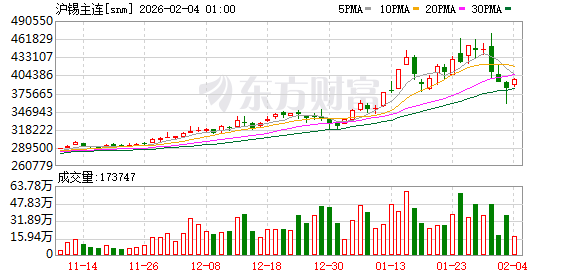
Group 1 - The core viewpoint of the news highlights the recent fluctuations in the tin market, particularly the significant drop in Shanghai tin futures, which fell by 6.7% to 383,340 yuan/ton, followed by a recovery of 6.64% in the night session [2] - A 6.0 magnitude earthquake occurred in Myanmar, a major tin producer, raising concerns about potential impacts on tin mining operations, although the effects remain uncertain [2] - The recent decline in tin prices is attributed to profit-taking after reaching historical highs, concerns over AI market bubbles following disappointing earnings from tech giants, and a shift in market sentiment towards a more hawkish Federal Reserve [3] Group 2 - The current tin market is characterized by a tight supply-demand balance, with increased imports of tin concentrate in recent months alleviating previous supply shortages [4] - Demand from traditional sectors like consumer electronics is weak, but long-term growth expectations from emerging sectors such as electric vehicles and AI servers are providing support for tin prices [4] - The downstream operating rates are stable, and as Myanmar's tin production increases, the supply-demand situation is expected to improve, potentially putting further downward pressure on tin prices [4]
深夜,缅甸发生6.0级地震!锡价大涨
Qi Huo Ri Bao· 2026-02-03 23:27
国泰君安期货分析师刘雨萱告诉记者,沪锡本轮下跌的主要原因,一是最近一个月价格涨至历史高位附近,随着前期入场资金相继获利了结,盘面回调压 力较大。二是近期科技巨头微软的财报不及预期,引发市场对AI泡沫的担忧,美股尤其是科技股大幅回调。上周五,美国总统特朗普提名凯文.沃什接替 鲍威尔出任美联储主席,市场预期大幅逆转,对美联储转向"鹰派"、美元走强的担忧加剧,进一步导致市场风险偏好下降,有色、贵金属板块整体下行, 获利盘出现"踩踏"式抛售。 在经历了连续两个交易日的"恐慌性抛售"后,本周二有色金属板块跌幅收窄,但是沪锡期货主力合约依然大幅下跌,盘中一度跌破360000元/吨关口,最 终收于383340元/吨,收跌6.7%。 不过,3日夜盘时段,沪锡期货主力合约大幅上涨,最终收涨6.64%。 昨夜,据德国地质学研究中心消息,格林尼治时间3日15时33分(北京时间3日23时33分),缅甸发生6.0级地震,震源深度10公里。 去年3月,缅甸发生7.9级地震。缅甸是全球第三大锡生产国(占全球总供应量的15%~20%),其核心产区佤邦贡献了该国90%的锡产量,更是中国锡矿进口 的"命脉"(占中国进口量的30%)。目前本次地震 ...

比特币盘中跌近8%、跌破7.3万,抹平特朗普当选以来涨幅
Hua Er Jie Jian Wen· 2026-02-03 20:25
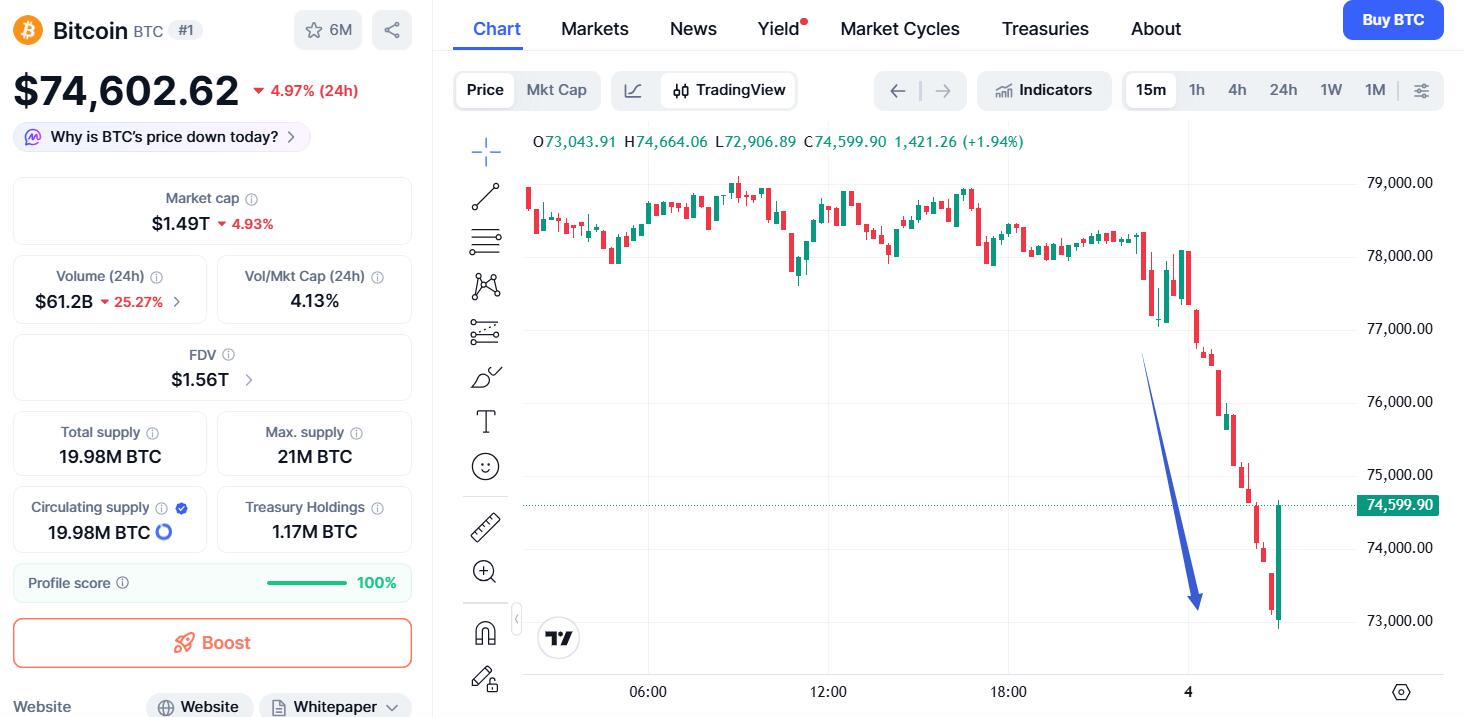
比特币周二跌至特朗普重返白宫以来的最低谷,这一标志性数字资产自美国总统特朗普当选以来积累的涨幅被完全抹去。虽然特朗普政府展现出对加密货币 的友好姿态,机构采用率激增,但比特币自2025年10月创下历史高点以来已累计跌超40%。 虽然此后比特币很快重上7.4万美元,但进入2026年以来已累跌超15%。投资者对经济逆风的担忧持续升温,股市在低风险偏好和AI泡沫担忧中挣扎反弹, 加密货币市场情绪跌至谷底。香港加密期权平台SignalPlus合伙人Augustine Fan表示:"加密货币情绪正触及底部,市场正以熊市模式交易。" 杠杆清算加剧抛压 比特币周二跌破了2025年4月7日跌破7.45万美元所创的年内低点,当时特朗普公布的所谓对等关税计划冲击了全球金融市场。 FalconX高级衍生品交易员Bohan Jiang表示:"许多交易员试图抄底,押注反弹至80,000美元上方。随着比特币持续走低,大量头寸被清算,给价格带来压 力。" CoinMarketCap数据显示,2月3日周二美股午盘时段,加密货币普遍加速下跌。比特币一度跌破7.3万美元,较亚市早盘7.91万美元上方的日内高位跌超6000 美元、跌近8%,刷新2 ...
Stocks: Palantir earnings, ISM trigger global rally in stocks
Fortune· 2026-02-03 12:16
A huge global rally in stocks is underway today after Palantir delivered yet another blockbuster earnings call that blew through analysts’ expectations yesterday and—separately—a poll of manufacturers showed they were surprisingly optimistic about the future.Palantir stock was up 10.86% in overnight trading, after closing 0.81% yesterday.Nasdaq 100 futures rose 0.41% this morning. Apple, Alphabet, and Amazon also rose yesterday and remained buoyant in overnight trading. S&P 500 futures were up 0.14% this mo ...



国泰君安期货所长早读-20260203
Guo Tai Jun An Qi Huo· 2026-02-03 01:44
Report Industry Investment Rating The document does not provide an overall industry investment rating. Core Viewpoints of the Report - The latest released US ISM Manufacturing PMI in January soared from the previous month's 47.9 to 52.6, far exceeding the expected 48.5, indicating a substantial expansion in the US manufacturing sector [7][8]. - The sharp decline in precious metals and non - ferrous metals was mainly due to concerns over the overseas AI bubble and the unexpected adjustment of the Fed's replacement candidates. However, there may still be buying opportunities at relatively safe low - points, especially for copper in the long - term [9][11]. - The short - term outlook for stock index futures is expected to stabilize and recover. The end of the "Spring Rally" was affected by policy adjustments and external risks, but there is still a possibility of a second - wave rally [13]. Summary by Relevant Categories 1. Metals Gold and Silver - Yesterday, gold, silver, platinum, and palladium accelerated their decline. The sharp drop was mainly triggered by the fall of US stocks, extreme trading convergence in precious metals, and the potential hawkish stance of the new Fed Chairman. In the short - term, it is recommended to consider option strategies mainly based on selling options, and the internal - external spread of silver may converge. The support level for gold is lowered to $4275 per ounce, and for silver, it remains at $70 per ounce [9][10]. Copper - The price of copper was weak due to pessimistic sentiment. The US manufacturing expansion and production changes in major copper - producing regions such as Zambia, Chile, and Canada affected the market. The copper trend strength was neutral [24][25][26]. Zinc - Zinc was in a range - bound oscillation. News such as the delay of the US employment report and the potential Fed Chairman's plan to shrink the balance sheet influenced the market. The zinc trend strength was neutral [27][28][29]. Lead - The decrease in LME lead inventory limited the price decline. Positive US manufacturing data and the delay of the US employment report were important news. The lead trend strength was neutral [30][31]. Tin - Tin was in a phase of decline and consolidation. The price of tin dropped significantly, and there were various macro and industry news such as Iran - US negotiations. The tin trend strength was bearish [33][34][35]. Aluminum - Aluminum was waiting for market repair. Alumina had a slight rebound, and cast aluminum alloy followed the trend of electrolytic aluminum. There were various data changes in the aluminum market, and relevant news such as Iran - US nuclear negotiations and India - US trade agreements affected the market. The aluminum trend strength was bullish, while alumina and aluminum alloy were neutral [37][38]. Platinum and Palladium - Platinum was slightly recovering in the oscillation, and palladium had strong resilience but was still in low - level oscillation. The market was affected by factors such as the delay of the US employment report and the expansion of the US manufacturing sector. The trend strength of both was neutral [39][40][43]. Nickel and Stainless Steel - The marginal influence on nickel was dominated by macro sentiment, with a game between fundamentals and speculative positions. For stainless steel, there were frequent maintenance and production cuts in February, and nickel - iron was expected to support the price. The trend strength of both was neutral [46][47][52]. 2. Energy - related Coal - **Coking Coal and Coke**: Both were in high - level oscillations. The coking coal market had issues such as a high auction non - sale rate, and the price of both was affected by factors like the adjustment of the CCI metallurgical coal index [74][75]. - **Steam Coal**: The supply - demand was in a weak balance, and the coal price before the Spring Festival was expected to be stable. The market was affected by factors such as port inventory changes and potential production cuts in Indonesia [79][80]. 3. Chemicals PX, PTA, and MEG - PX followed the sharp decline of oil prices and was in an interval - oscillation market. PTA was also in an interval - oscillation market with a bearish view on the monthly spread. MEG was in a unilateral interval - oscillation market with large supply pressure. The market was affected by factors such as the restart of domestic and overseas devices, changes in the supply - demand of PTA and MEG, and the decline of the overall commodity market [85][90][91]. Rubber and Synthetic Rubber - Rubber was in a weak - oscillation trend. The inventory in Qingdao increased, and the production and sales of tires were affected by the approaching Spring Festival. Synthetic rubber was in a high - level decline, influenced by factors such as the reduction of geopolitical conflicts and the approaching boundary of valuation indicators [93][96][98]. LLDPE and PP - LLDPE had a narrowing import profit, limited offers, and weakened oil price support. PP was greatly affected by cost, and its profit might be repaired. The market was affected by factors such as the decline of raw material prices, changes in supply and demand, and the profit of production devices [99][100][103]. Caustic Soda - Caustic soda was supported by cost, and the future expectation was strong. Although the high - inventory situation made the spot market weak before the Spring Festival, the market's expectation of future supply reduction was strong. The trend strength was bullish [105][107][110]. Pulp - Pulp was in a wide - range oscillation. The market demand was weak, and the high - inventory and weak - demand contradiction restricted the market trend. The trend strength was neutral [111][113][114]. Glass - The price of glass raw sheets was stable. The market demand was limited, and attention should be paid to the winter - storage policy of manufacturers in high - inventory areas. The trend strength was neutral [116][117]. Methanol - Methanol was oscillating with support. The macro - sentiment was weak, but the international energy price provided support. The supply - demand pattern was weak in the short - term, and the inventory was high. The trend strength was neutral [119][121][122]. Urea - Urea was in short - term horizontal consolidation. The macro - sentiment was weak, and there was a small - scale state reserve release. The fundamental pressure and support levels were clear. The trend strength was neutral [124][125][126]. Styrene - Styrene was in a relatively strong oscillation. The market was in a high - production and high - inventory pattern, and the future supply - demand situation and the restart of parking devices should be noted. The trend strength was neutral [127][128]. Soda Ash - The spot market of soda ash changed little. The supply was high, and the demand was weak. The price was expected to be weakly stable and oscillating. The trend strength was neutral [130][132]. LPG and Propylene - LPG was strongly affected by short - term geopolitical factors, and the fundamental driving force was downward. Propylene's upward driving force was weakening, and attention should be paid to cost - end disturbances. The market was affected by factors such as price changes, device maintenance plans, and changes in shipping volume. The trend strength of both was neutral [134][138][139]. PVC - PVC had a strong sentiment, but the fundamentals did not improve significantly. Although there were some supporting factors in the short - term, the high - production and high - inventory structure was difficult to change, and attention should be paid to the future supply reduction situation. The trend strength was neutral [142][143][144]. Fuel Oil and Low - Sulfur Fuel Oil - Fuel oil had a sharp decline and continued in a high - volatility state. Low - sulfur fuel oil mainly followed the decline, and the price difference between high - and low - sulfur fuels in the overseas spot market continued to shrink. The trend strength of both was bearish [147]. 4. Others Logs - Logs had a slight upward exploration. The price and trading volume of log contracts changed, and the market was affected by factors such as the manufacturing PMI. The trend strength was bullish [81][83][84]. Shipping Index (European Line) - The shipping index (European line) was in an oscillating market. The market was affected by factors such as the weakening of commodity sentiment, the easing of the geopolitical situation, and changes in shipping capacity. Different contracts had different strategies. The trend strength was neutral [149][160][162]. Short - fiber and Bottle - grade Resin - Both short - fiber and bottle - grade resin were in short - term oscillations after the release of emotional risks. The market was affected by factors such as price changes of upstream polyester raw materials and production and sales of products. The trend strength of both was neutral [165][166]. Offset Printing Paper - For offset printing paper, it was recommended to hold short positions and conduct a 3 - 4 reverse spread. The price in the spot market was stable, and the trading atmosphere was weak. The trend strength was bearish [168][169][170]. Pure Benzene - Pure benzene was in a relatively strong oscillation. The inventory in some ports decreased, and the price changed. The trend strength was neutral [173][174][175]. Fats and Oils - Palm oil was affected by the ebb of macro - sentiment and the attenuation of geopolitical influence, and soybean oil was in high - level oscillation adjustment. The market was affected by factors such as the decline of international crude oil prices, the expected high yield of South American soybeans, and relevant policies in Indonesia. The trend strength of both was neutral [177][178][179]. Soybean Meal and Soybean - Soybean meal oscillated following the sentiment of the commodity market, and the state - reserve auction of soybeans had a positive impact. The market was affected by factors such as the decline of international crude oil prices and the expected high yield of Brazilian soybeans. The trend strength of both was neutral [183][185]. Corn - The decline range of corn was limited. The price in the spot market changed, and the futures price was affected by the overall market situation. The trend strength was neutral [186][187][188]. Sugar - Sugar was in a weak operation. The global sugar supply - demand situation changed, and attention should be paid to policies such as China's import of syrup and premixed powder. The trend strength was bearish [189][190][191]. Cotton - Cotton was expected to maintain an oscillating trend. The spot trading of cotton was average, the price of cotton yarn was stable, and the ICE cotton futures declined. The trend strength was bullish [193][194][197]. Eggs - The spot price of eggs weakened. The prices of futures and spot contracts changed, and the market was affected by factors such as the prices of feed and related products. The trend strength was bearish [199][200]. Hogs - The pre - festival price increase of hogs was less than expected, and the pressure increased. The prices of spot and futures contracts changed, and the trend strength was bearish [202][203][204]. Peanuts - Peanuts were in a weak - oscillating state. The spot price was stable, and the futures price and trading volume changed. The trend strength was neutral [206][207][208].
OpenAI再不上市,财务窟窿就要把巨头们拖垮了
创业邦· 2026-02-02 10:13
Core Viewpoint - OpenAI is facing significant financial challenges, with predictions that it may run out of funds by 2027, leading to various potential scenarios including bankruptcy, IPO, government intervention, or acquisition by another company [5][16][66]. Financial Situation - OpenAI's weekly active users have surpassed 800 million, but only about 5% are paying subscribers, translating to approximately 40 million paying users [15]. - HSBC estimates that OpenAI will incur at least $792 billion in costs over the next five years for AI infrastructure, requiring 3 billion weekly active users and a 10% paid user ratio by 2030 to avoid financial shortfalls [17][20]. - OpenAI's projected revenue for 2025 is $13 billion, with a cash burn of $25 billion and R&D expenses of $67 billion in the first half of the year [32]. Revenue Streams - OpenAI's revenue model relies heavily on subscriptions and advertising, but even with 200-300 million paying users, it may still face a revenue gap of $100-150 billion by 2030 [24][25]. - Potential new revenue sources include advertising, consumer hardware, API services, and enterprise licensing, but challenges remain in effectively monetizing these avenues [26][28][29]. Market Competition - OpenAI's market share has decreased from 87.2% in January 2025 to approximately 68% by January 2026, with competitors like Google Gemini gaining traction [51][52]. - The lack of a "killer app" ecosystem for OpenAI makes it difficult to retain users compared to competitors that have established distribution channels [54][56]. Future Outlook - OpenAI is considering an IPO by late 2026 to leverage current market optimism, but faces significant challenges including a complex financial structure and potential legal issues [57][60]. - The company is seen as "too big to fail," with many stakeholders invested in its success, leading to speculation about government intervention if financial troubles arise [70][65].

跌麻了!沃什风暴,金银“失血休克”
Ge Long Hui A P P· 2026-02-02 04:18
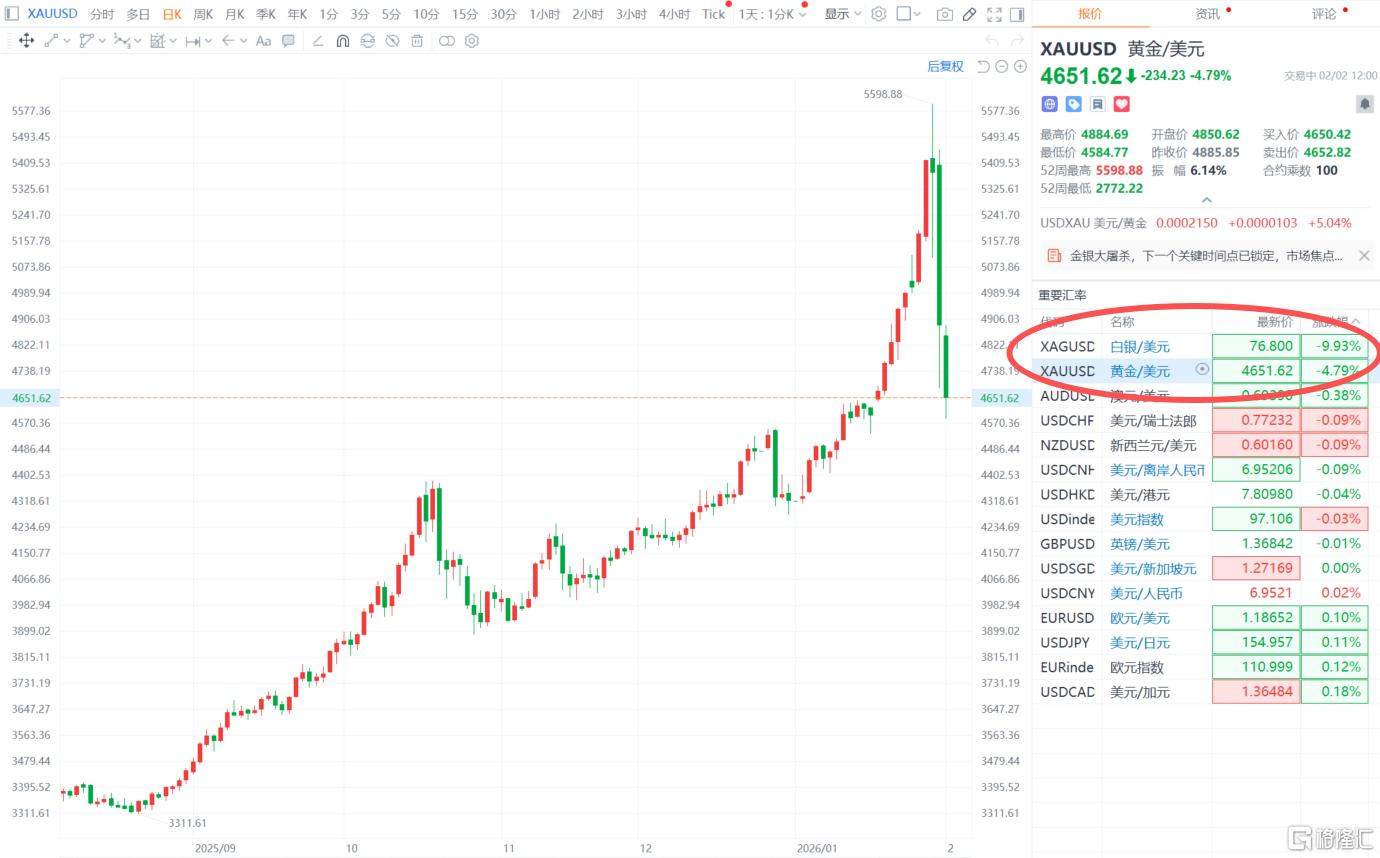
Group 1 - The core viewpoint of the article highlights a significant decline in gold and silver prices, with gold dropping over 6% to below $4600 per ounce, marking a decline of over $1000 from its historical high of $5598.88 per ounce set on January 29, representing the largest single-day drop in nearly 40 years [1][9][10] - Silver prices also experienced a sharp decline, with spot silver falling below $77 at one point, and later reported to be down over 9% to $76.8 per ounce [2][3] - Futures markets showed widespread declines, with various precious metals such as silver, platinum, and palladium hitting their daily limit down, and gold futures dropping over 11% [5][6] Group 2 - The article describes the "Walsh Storm" as a catalyst for the extreme market panic, with silver prices plummeting by 26% and gold by 9% on a single day, marking the worst performance in a decade [9][10] - The appointment of the hawkish Walsh as the Federal Reserve Chair led to a cooling of interest rate cut expectations, resulting in a strong dollar and a rapid reversal of the bullish trend in precious metals [10][11] - Major exchanges have responded to the volatility by raising margin requirements for gold and silver trading, indicating a tightening of market conditions [15][16] Group 3 - The article raises concerns about a potential bubble in the gold market, with warnings from analysts that the recent surge in gold prices may be speculative and could lead to a significant price correction [19][20][21] - Citigroup has cautioned that gold valuations have reached extreme levels, with global gold expenditure as a percentage of GDP hitting a 55-year high, suggesting a risk of a price halving if the allocation returns to historical norms [23][24] - Despite the bearish outlook, some analysts believe that the fundamental support for gold remains strong due to ongoing currency devaluation and geopolitical risks, suggesting a complex market environment [26][28]
2026开年怪象:美股波动平平,黄金汇市却已“杀疯了”
Jin Shi Shu Ju· 2026-02-02 02:38
Core Insights - The volatility in the U.S. stock market is significantly lower compared to other asset classes, with gold and oil experiencing notable fluctuations [1] - Geopolitical risks are driving increased volatility in commodities and currencies, while stock market volatility remains concentrated at the individual stock level [1][2] - Gold has seen a remarkable rise in 2026, achieving its largest monthly gain since 1999, despite a recent sharp decline [1][2] Group 1: Market Volatility - U.S. stock market volatility is subdued, while gold and oil markets are experiencing heightened fluctuations [1] - The Cboe Volatility Index (VIX) remains below its one-year average, indicating low overall market volatility despite individual stock movements [1] - The divergence in stock price movements has led to a decrease in overall volatility metrics, with individual stocks like Microsoft showing significant price drops [2] Group 2: Gold Market Dynamics - Gold's recent performance has been characterized by a significant increase in both spot prices and volatility, with a record inflow into gold ETFs [2] - The SPDR Gold Trust (GLD) has attracted over $20 billion in the past eight months, reflecting strong investor interest [2] - The implied volatility of GLD has reached historical highs relative to the S&P 500, indicating a strong demand for bullish bets on gold [2] Group 3: Currency and Bond Market Reactions - The U.S. dollar has faced significant downward pressure, particularly against the Japanese yen, following geopolitical developments and comments from President Trump [4][5] - The appointment of Kevin Warsh as Fed Chair has led to a more stable bond market, with investors showing interest in shorting long-term bond volatility [5] - Despite low implied volatility in the bond market, there is a narrowing path for potential U.S. interest rate cuts, as indicated by options on secured overnight financing rates (SOFR) [5]