
数智化

Search documents
新华时评丨数智赋能,服贸“惠”全球
Xin Hua She· 2025-09-14 05:37
Group 1 - The core theme of the 2025 China International Service Trade Fair is "Digital Intelligence Leading, Service Trade Renewing," aiming to gather global service resources and create cooperation opportunities [1] - Over 80 countries and international organizations participated, with nearly 500 Fortune 500 and industry-leading companies showcasing new technology applications and solutions [1][2] - The fair featured more than 190 new products and achievements, including digital currency, cross-border healthcare, and cloud education, highlighting the integration of digital technology and intelligent methods [1][2] Group 2 - The integration of big data and AI in supply chain platforms enhances logistics efficiency, while AI-driven platforms provide personalized treatment plans in healthcare [2] - China's service trade continues to grow, with a projected total import and export value exceeding 7.5 trillion yuan in 2024, marking a 14.4% year-on-year increase [3] - Knowledge-intensive service trade, characterized by digitalization, intelligence, and greening, has become a significant growth engine, with a 38% increase compared to 2020 [3] Group 3 - The fair reflects China's commitment to high-level opening-up and the promotion of inclusive growth in service trade, countering rising unilateralism and protectionism [3][4] - The event signals China's willingness to collaborate with other countries to promote global service trade openness and innovation [4]
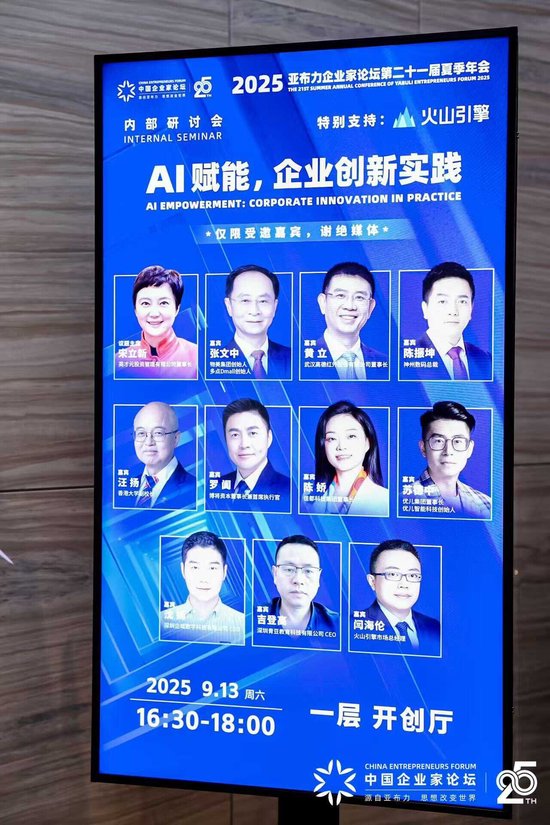
优儿集团苏德中:AI应用企业需具备一定条件
Xin Lang Cai Jing· 2025-09-14 04:03
2025亚布力企业家论坛第21届夏季年会于9月12日-13日在广州市黄埔区举行,主题为"磨砻砥砺 行稳致 远——全球新形势下的企业发展"。亚布力创新论坛理事,优儿集团创始人、董事长苏德中博士出席并 发言。 专题:2025亚布力论坛第21届夏季年会 苏德中表示,中国企业家如今面临的AI革命,场景和用户需求是必须深度思考的要素。企业拥抱AI 需 要考虑三方面:第一个是明确客户是谁;第二个是分析客户需求;第三个是提升客户认知。 责任编辑:杨赐 他指出,中国企业家面临巨大的机会,以优儿集团为例,以AI赋能婴幼儿成长,以数智化优化园区管 理和家庭教育,以科技加强安全管理,都是行业拥抱AI的创新实践与成果。 ...

老外涌入中国
2 1 Shi Ji Jing Ji Bao Dao· 2025-09-14 03:17
Core Insights - The global tourism industry is experiencing a significant recovery since 2024, with international tourist arrivals exceeding 300 million in Q1 2025, marking a 5% year-on-year increase [1] - China remains the largest tourism spending country, with outbound spending increasing by 30% [1] - The integration of AI and digital technologies is a key focus at the 2025 Service Trade Fair, enhancing inbound tourism experiences [1] Inbound Tourism Growth - In 2024, China received 130 million inbound tourists, representing a year-on-year growth of over 60% [4] - The order volume for foreign tourists on the Qunar platform increased by 1.8 times in 2024, prior to the launch of its English version in July 2025 [4] - There is a notable trend of foreign tourists exploring deeper into China's third-tier cities, with ticket bookings to places like Datong, Yiwu, and Yining doubling [4] Airport Enhancements for Inbound Tourists - Beijing Capital Airport has introduced an English version of its app and website, offering services in four languages and 43 functionalities [5] - The airport provides a luggage storage service for travelers under the 240-hour visa-free policy, allowing them to enjoy local cuisine without carrying their bags [5] AI and Big Data in Tourism - The global tourism industry is undergoing structural adjustments, with AI and big data reshaping the tourism value chain [7] - Companies like Xiaohongshu are leveraging AI to enhance destination visibility and user engagement, focusing on the entire booking process [7] - Meituan Travel is developing AI tools for both consumer and business users, including an AI travel assistant for consumers and specialized services for hotels and scenic spots [8] AI Applications in Travel Services - Qunar is actively implementing AI applications for user engagement, covering areas such as travel itinerary planning and intelligent customer service [8] - An AI travel toolbox will be launched on Qunar's app homepage before the National Day holiday, consolidating various functionalities for users [8]

老外涌入中国
21世纪经济报道· 2025-09-14 03:12
Core Insights - The global tourism industry is experiencing a significant recovery since 2024, with international tourist arrivals exceeding 300 million in Q1 2025, marking a 5% year-on-year increase. The Asia-Pacific market leads this growth, with China being the largest tourism spender, showing a 30% increase in outbound spending [1][3]. Group 1: Inbound Tourism Growth - Inbound tourism in China has seen a remarkable increase, with 1.3 billion international visitors in 2024, representing over 60% growth year-on-year [3][4]. - The data from the Qunar platform indicates that orders from foreign tourists increased by 1.8 times in 2024, highlighting a growing interest in travel to China [3][4]. - There is a notable trend of foreign tourists exploring third-tier and lower cities in China, with ticket bookings to places like Datong, Yiwu, and Yining doubling [4]. Group 2: Digital Transformation in Tourism - The integration of AI and big data is reshaping the tourism industry, with companies leveraging these technologies to enhance service offerings and customer experiences [5][6]. - Platforms like Xiaohongshu are collaborating with international destinations to improve visibility and engagement, utilizing AI algorithms for targeted marketing [6][8]. - Qunar is actively developing AI applications for users, including travel itinerary planning and intelligent customer service, with plans to launch an AI travel toolbox on its app [8].


21现场|2025旅游真相:老外涌入中国,AI帮你规划
2 1 Shi Ji Jing Ji Bao Dao· 2025-09-14 00:48
Core Insights - The global tourism industry is experiencing a significant recovery since 2024, marking a milestone in its revival [1][2] - The 2025 World Tourism Cooperation and Development Conference highlighted the importance of "digital intelligence" and "supporting inbound tourism" as key themes [2] Inbound Tourism Growth - In Q1 2025, international tourist arrivals exceeded 300 million, representing a 5% year-on-year increase, with China's outbound tourism spending rising by 30% [2] - Inbound tourism in China saw a remarkable increase, with 1.3 billion foreign visitors in 2024, a growth of over 60% compared to the previous year [5] - The platform "Qunar" reported a 1.8 times increase in orders from foreign tourists in 2024, indicating a growing interest in deeper travel experiences within China [5] Technological Advancements in Tourism - The integration of AI and big data is reshaping the tourism industry, with companies like Xiaohongshu and Meituan exploring AI applications for both consumer and business users [7][9] - Xiaohongshu is collaborating with various international destinations to enhance visibility and streamline the booking process through AI-driven insights [7] - Qunar is set to launch an AI travel toolbox on its app, consolidating multiple functionalities for user convenience [9] Airport Enhancements for Inbound Tourists - Beijing Capital Airport has implemented multilingual services and features to accommodate inbound tourists, including a luggage storage service for travelers [6]

21现场|2025旅游真相:老外涌入中国 AI帮你规划
2 1 Shi Ji Jing Ji Bao Dao· 2025-09-14 00:34
Group 1: Tourism Recovery and Growth - The global tourism industry has seen a milestone recovery since 2024, with international tourist arrivals exceeding 300 million in Q1 2025, marking a 5% year-on-year increase [1] - China remains the largest tourism spending country, with outbound spending increasing by 30% [1] - Inbound tourism in China has surged, with 130 million inbound tourists recorded in 2024, representing a growth of over 60% [2] Group 2: Inbound Tourism Trends - The order volume for foreign tourists on the Qunar platform increased by 1.8 times in 2024, coinciding with the launch of its English version in July 2025 [2] - Major cities like Beijing, Shanghai, Guangzhou, and Shenzhen remain the primary entry points for foreign tourists, but there is a notable increase in orders for third-tier cities such as Datong, Yiwu, and Yining, with flight bookings doubling [2] Group 3: Airport Enhancements for Inbound Tourists - Beijing Capital Airport has implemented an English version of its app and website, offering services in multiple languages and 43 functionalities, including flight inquiries and travel consultations [3] - The airport has introduced a luggage storage service for travelers benefiting from the 240-hour visa-free policy, allowing them to explore local cuisine [3] Group 4: AI and Big Data in Tourism - The global tourism industry is undergoing structural adjustments, with AI and big data technologies reshaping the tourism value chain and development patterns [4] - Companies like Xiaohongshu are leveraging AI algorithms to connect overseas destinations with Chinese users, enhancing the travel decision-making process [4] - Qunar is actively integrating AI applications for user engagement, including travel planning and intelligent customer service, with plans to launch an AI travel toolbox on its app [4] Group 5: AI Innovations in Travel Services - Meituan Travel is exploring AI capabilities for both consumer (C-end) and business (B-end) users, with plans to introduce an AI travel assistant for consumers and specialized tools for hotel and scenic area merchants [5]
新华全媒+丨服贸会上的文旅“新”体验
Xin Hua She· 2025-09-13 13:33
Core Viewpoint - The 2025 Service Trade Fair showcases cutting-edge technologies in cultural and tourism services, enhancing visitor experiences and interactions through innovations like AI, wearable devices, and smart robots [1]. Group 1: Exhibition Highlights - Various advanced technologies are presented, including AI dressing photo booths, wearable devices, and intelligent robots, enriching the exhibition experience for attendees [1]. - Children engage with robots in activities such as playing Go and participating in VR experiences, demonstrating the interactive nature of the exhibits [3][9]. Group 2: Specific Exhibits - The Beijing Cultural Relics Bureau's booth features an immersive MR exhibition titled "See the Yin and Shang," allowing visitors to experience historical narratives [11][14]. - The Beijing Broadcasting and Television Bureau showcases virtual reality solutions for cultural and tourism services, highlighting the integration of digital technology in these sectors [15][16].

记者手记:在服贸会上感受“数智”与“金融”双向奔赴
Xin Hua Wang· 2025-09-13 11:16
Core Insights - The integration of "digital intelligence" and "finance" is creating innovative practices that enhance financial services and support high-quality development [1] - Financial services are increasingly utilizing AI technology, transforming from passive to proactive engagement with customers [1] - Cross-border payment solutions are being enhanced through technological innovations, addressing pain points for foreign visitors in China [2] Group 1: Financial Services Innovation - The financial service exhibition at the China International Fair for Trade in Services showcased the deep integration of AI in finance, with practical applications like intelligent robots providing customer service [1] - Banks are implementing personalized financial solutions through interactive technologies, such as retirement calculators and AR glasses for elderly clients [1] - Financial institutions are focusing on enhancing service breadth and depth by directing resources towards technological innovation [3] Group 2: Support for Technological Innovation - Financial institutions are actively supporting tech innovation by providing comprehensive services across various financial products, including equity investment plans and specialized insurance [3] - The China Banking sector is promoting significant financial support for AI and technology projects, with initiatives like a 1 trillion yuan AI support plan [3] - The financial sector is increasingly utilizing data analytics to provide precise support for small and medium enterprises, enhancing the efficiency of green finance [4] Group 3: Financial Growth Metrics - As of June, loans related to the "five major articles" in finance accounted for approximately 70% of the total loan increment, with growth rates surpassing overall loan growth [5] - The ongoing transformation in finance is reshaping its boundaries while simultaneously catalyzing technological breakthroughs [5]
服贸焕新 长期资本的风向标
Bei Jing Shang Bao· 2025-09-12 16:20
Group 1 - The application of cutting-edge technology and digital intelligence at the service trade fair has positioned it as a new anchor for linking financial capital and a long-term capital trendsetter [1][2] - The fair showcased nearly 2,000 enterprises, including around 500 Fortune 500 and industry-leading companies, covering 26 of the top 30 countries and regions in service trade, establishing itself as a global platform for long-term capital [1][2] - The fair highlighted nine major exhibition themes, including telecommunications, computer and information services, health services, and financial services, which are currently hot investment areas in the capital market [2][3] Group 2 - The service trade fair featured 113 enterprises presenting 198 new products and innovations, including the world's first 3D-printed polymer fatigue-resistant absorbable vascular stent and the first domestic quantum computer exceeding 1,000 bits, showcasing innovation strength and development potential [2][3] - Long-term capital is crucial for funding intensive and knowledge-intensive service trade enterprises, supporting both independent innovation and new trade models [2][3] - The fair's emphasis on terms like "AI+", digital intelligence, and green low-carbon reflects profound trends in future industrial development [4][5]
不担心智能体热度很快过去
Bei Jing Shang Bao· 2025-09-12 16:20
Core Viewpoint - The rise of intelligent agents is seen as a significant trend in digital transformation, with companies like Fengqing Technology leading the way in providing personalized AI solutions for both enterprises and individual users [1][4]. Group 1: Company Strategy - Fengqing Technology emphasizes the importance of intelligent agents as part of the broader trend of digital, data-driven, and intelligent upgrades in enterprises, indicating that this trend is not temporary but a fundamental shift in technology [1][6]. - The company has launched personal intelligent agents to provide users with data security and convenience, allowing them to utilize their data without uploading it to the cloud [2][3]. - The design of personal intelligent agents includes various usage modes, such as cloud-connected and fully private offline models, ensuring user privacy while maintaining functionality [3]. Group 2: Market Demand - There has been a noticeable shift in client demands, with a growing interest from small and medium-sized enterprises in adopting intelligent agents to avoid being outpaced by larger companies [5]. - The concept of intelligent agents has gained widespread attention, with many companies recognizing the need to integrate these technologies into their operations to remain competitive [5][6]. - The industry anticipates that 2024 will be a pivotal year for intelligent agents, as more organizations begin to adopt these technologies [4]. Group 3: Technology Integration - The integration of data-centric and model-centric approaches is crucial, as different scenarios may require different strategies for effective implementation of intelligent agents [7]. - The ongoing advancements in intelligent technology encompass not only large models and intelligent agents but also data weaving and governance, which are essential for the overall success of digital transformation initiatives [6].