
民营经济

Search documents
三驾马车” 拉动 眉山按下民营经济高质量发展 “快进键
Zhong Guo Fa Zhan Wang· 2025-07-04 14:41
Group 1: Economic Development and Investment - The major project by Jinxiang Sairui Chemical Co., with a total investment of 5 billion yuan, aims to solidify the company's leading position in the global melamine industry and boost the local economy [1] - In 2024, the added value of the private economy in Meishan is expected to exceed 100 billion yuan, reaching 117.037 billion yuan, accounting for 61.9% of the GDP, becoming a core engine for regional economic transformation [1][6] - The private economy in Meishan achieved an added value of 27.2 billion yuan in Q1 2025, growing by 8.0%, contributing 4.9 percentage points to GDP growth [6] Group 2: Policy Support and Financial Innovation - Meishan has introduced a series of policies to empower private enterprises, including a comprehensive policy system to optimize the business environment and a "one-stop" service mechanism for enterprises [2][3] - The "Tax and Electricity Index Loan" product has provided credit of 4.518 billion yuan to 1,042 private enterprises, with loan disbursements reaching 2.775 billion yuan [3] - The city has implemented various measures to ensure that policy benefits reach enterprises, including a special fund of over 114 million yuan for key industries and intelligent manufacturing upgrades [3] Group 3: Innovation and Technology Development - Meishan Boya New Materials Co. has invested over 80 million yuan in R&D over the past three years, obtaining 108 patents, including 29 international patents [4][5] - The company is a leading global producer of LYSO scintillation crystals, holding 82.2% of the domestic market and over 30% of the global market share [4] Group 4: Business Environment and Cost Reduction - Meishan has streamlined administrative processes, reducing project approval times by over 40%, and has implemented various cost-reduction measures, saving enterprises over 2 billion yuan in electricity costs [7][8] - The city has also reduced the bidding guarantee for government investment projects and implemented electronic bidding to further lower costs for enterprises [8]
“申”情陪伴、与“民”同行,中行上海市分行激发民营经济新动能
Zhong Guo Jin Rong Xin Xi Wang· 2025-07-04 09:19
Group 1 - The private economy in Shanghai contributed 30.3% of the city's economic added value and 38.2% of tax revenue, showcasing its resilience and potential [1] - The private sector accounts for 80% of the "specialized, refined, distinctive, and innovative" enterprises and "little giant" companies in Shanghai [1] - The Bank of China Shanghai Branch is committed to innovative financial products and services tailored to the characteristics and needs of private enterprises [1] Group 2 - Shanghai's private economy has a strong outward-oriented characteristic, with the Bank of China Shanghai Branch leveraging its global advantages to support private enterprises in going global [2] - A private listed company in the geotechnical engineering sector has accelerated its international expansion but faces challenges such as financing barriers and exchange rate risks [2] - The Bank of China Shanghai Branch has customized a comprehensive service plan for the company, including guarantees and credit, to support its participation in major projects along the Belt and Road [2] Group 3 - The recycling of renewable resources is crucial for both public welfare and the construction of a "waste-free city" [3] - A private enterprise engaged in landscaping has established recycling service stations but faces funding challenges [3] - The Bank of China Shanghai Branch provided a tailored financial service plan, reducing interest costs by 1% and waiving guarantee fees to support the company's recycling platform [3] Group 4 - The Bank of China Shanghai Branch offers integrated financial services to help private enterprises tap into major regional strategies and benefit from a unified market [4] - A leading domestic express service provider has transitioned from a labor-intensive to a technology-intensive model with the support of the Bank of China [4] - The Bank of China Shanghai Branch has facilitated the issuance of the first private technology innovation bond in the transportation sector to support the company's development [4]

★银行业创新融资供给机制 增强民企发展动能
Zhong Guo Zheng Quan Bao· 2025-07-03 01:56
Core Viewpoint - The article emphasizes the crucial role of private enterprises in China's economic transformation and the importance of financial support from banks to foster their growth and development [1][2]. Financial Support for Private Enterprises - Private enterprises are essential in transitioning traditional industries, developing emerging sectors, and nurturing future industries, with financial "water" being vital for their growth [1]. - Banks are innovating financial products and optimizing services to enhance credit support for private enterprises, especially during challenging times [1][2]. - The experience of Mingjia Semiconductor highlights the need for bank credit to support production operations during early mass production phases [1][2]. Innovation in Financial Products and Services - Banks are responding to policy calls by innovating financial products and optimizing services to support the healthy development of private enterprises [3]. - Examples include ICBC's "Assistance Combination Loan" and CCB's "Shan Ke Loan," which aim to address financing difficulties for small and micro enterprises [3]. - The introduction of the Private Economy Promotion Law is seen as a significant breakthrough in providing a robust legal framework to alleviate financing challenges for private enterprises [2][3]. Leveraging Financial Technology - The integration of financial technology is accelerating, with banks exploring AI, blockchain, and big data to enhance service efficiency and risk management [4][5]. - Banks are encouraged to build intelligent financing service platforms that can quickly assess various data points to streamline loan approval processes and improve credit risk pricing [4]. - The use of digital technologies is expected to broaden service channels and enhance risk control capabilities for private enterprises [4][5].



★从风险保障到融资活水 保险业双向赋能助力民营经济高质量发展
Zhong Guo Zheng Quan Bao· 2025-07-03 01:56
Core Viewpoint - The insurance industry plays a crucial role in supporting the development of the private economy by providing diversified risk protection and funding solutions, which is essential for both economic growth and the industry's own development [1][3]. Group 1: Product Innovation - The insurance industry is actively innovating products to meet the diverse insurance needs of private enterprises, including customized products like "Employee Welfare Insurance" for SMEs and specialized insurance for various sectors such as automotive repair and catering [2][3]. - Insurance companies are developing a comprehensive product service system tailored to the characteristics of different industries within the private economy, addressing their unique insurance demands [2][3]. Group 2: Support for Technological Innovation - Private enterprises are key players in technological innovation, but they face complex risks that require tailored insurance solutions throughout their lifecycle [3][4]. - Insurance companies are establishing a risk protection system for technology enterprises, including specialized insurance for first-time technology equipment and new materials, as well as knowledge property risk assessment models [3][4]. Group 3: Financial Support - Insurance funds provide long-term and stable financial support to private enterprises through equity and bond investments, helping to alleviate financing difficulties [5][6]. - Several insurance companies have initiated large-scale funds to support private enterprises in various sectors, including technology and health care, with significant capital commitments [5][6]. Group 4: Collaboration and Policy Support - The insurance industry is enhancing collaboration with government and banking sectors to create a "government-bank-insurance" model, facilitating resource allocation to private enterprises [6]. - The financial regulatory authority is promoting policies to support financing for small and private enterprises, aiming to stabilize the economy and enhance the overall financial ecosystem [6].

★政策加力支持创新资本融资 民营经济再添新动能
Zheng Quan Shi Bao· 2025-07-03 01:56
Core Viewpoint - The recent policies released by multiple ministries signify a new phase of institutional benefits for the development of China's private economy, particularly focusing on venture capital's role in supporting technological innovation [1][2]. Group 1: Policy Initiatives - The joint release of the "Several Policy Measures to Accelerate the Construction of a Technology Finance System" emphasizes the role of venture capital in supporting technological innovation and encourages the development of private equity secondary market funds [1][2]. - The People's Bank of China and the China Securities Regulatory Commission have announced measures to support the issuance of technology innovation bonds, broadening financing channels for technology enterprises [2]. Group 2: Venture Capital's Role - Venture capital institutions are identified as key players in the innovation ecosystem, acting as value discoverers and risk-sharers for the private economy [1]. - The characteristics of venture capital, including high-risk tolerance and long-term value anchoring, enable it to support technological innovation effectively [1]. Group 3: Market Developments - The first private venture capital "technology innovation bond" was successfully issued by Shenzhen-based Oriental Fortune, utilizing a dual credit enhancement model involving both national and local guarantees [3]. - As of May 26, 20 private equity institutions have announced the issuance of technology innovation bonds, with a total scale reaching 20.57 billion yuan [3]. Group 4: Innovative Financing Solutions - Yuanhe Holdings set a benchmark in the market by issuing a technology innovation bond with a scale of 600 million yuan and a low interest rate of 1.92%, directing funds towards strategic emerging industries [4]. - The recent policies are seen as a way to supplement long-term funding sources for private equity funds, promoting early-stage investments in hard technology [4].
陕西民间投资增速连续十七个月高于全国
Shan Xi Ri Bao· 2025-07-02 23:01
Group 1 - The core viewpoint is that Shaanxi's private investment has shown significant growth, with a year-on-year increase of 16.2% from January to May 2025, continuing a trend of being above the national average for 17 consecutive months [1] - The number of newly started private investment projects in Shaanxi increased by 33.1% year-on-year in the first five months of 2025, with active investments in modern energy, advanced manufacturing, and strategic emerging industries [1] - The private economy's proportion in Shaanxi is relatively low, which is seen as a shortcoming in the province's economic development. In 2023, Shaanxi identified the development of the private economy as a strategic measure to improve overall economic performance [1] Group 2 - The growth of private investment in Shaanxi is attributed to the release of policy synergies, optimization of the business environment, and increased confidence among private enterprises, particularly following the implementation of the "Private Economy Promotion Law" [2] - In 2023 and 2024, Shaanxi added over 1.6 million new private business entities, accounting for approximately 98% of the total new business entities in the province [2] - Over 80% of the more than 8,000 industrial enterprises above designated size in Shaanxi are private enterprises, which are deeply integrated into the province's industrial chain construction [2]
第61期周讯 | 充电鼓劲助力民营企业大有可为
Sou Hu Cai Jing· 2025-07-02 12:13
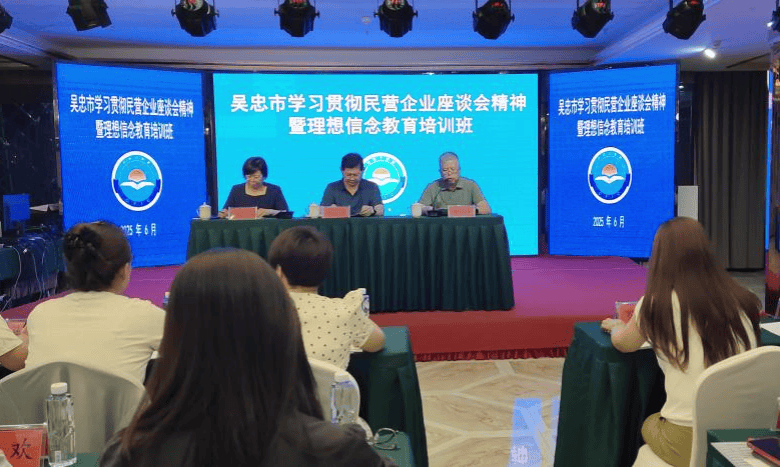
Group 1 - The training program for private entrepreneurs in Shizuishan aims to enhance management capabilities and innovation through courses on the Private Economy Promotion Law, national "dual carbon" policies, and AI applications for cost reduction in SMEs [1] - The program includes practical learning experiences, such as observing 3D printing and digital machine tool manufacturing at local companies, to promote digital transformation among SMEs [1] Group 2 - The Wuzhong City Federation of Industry and Commerce organized a seminar to discuss the spirit of the private enterprise symposium and provide ideological education for over 50 participants, including industry representatives [2] - Key topics included the implementation of Xi Jinping's thoughts on socialism with Chinese characteristics and the Private Economy Promotion Law [2] Group 3 - The Jinfeng District Federation of Industry and Commerce organized a police open day event for 30 private enterprise leaders to enhance their awareness of discipline and responsibility [6] Group 4 - The Helan County Federation of Industry and Commerce held a meeting to discuss the "Ten Thousand Enterprises Prosper Ten Thousand Villages" initiative, inviting representatives from local banks to explain relevant policies [7] Group 5 - The Litong District Federation of Industry and Commerce and the local People's Procuratorate held a meeting to address issues of illegal enforcement and ensure a fair legal environment for business development [9] Group 6 - The Xiji County Federation of Industry and Commerce convened a meeting with over 40 member enterprises to discuss administrative law enforcement issues, focusing on the challenges faced by businesses and suggestions for improvement [11]

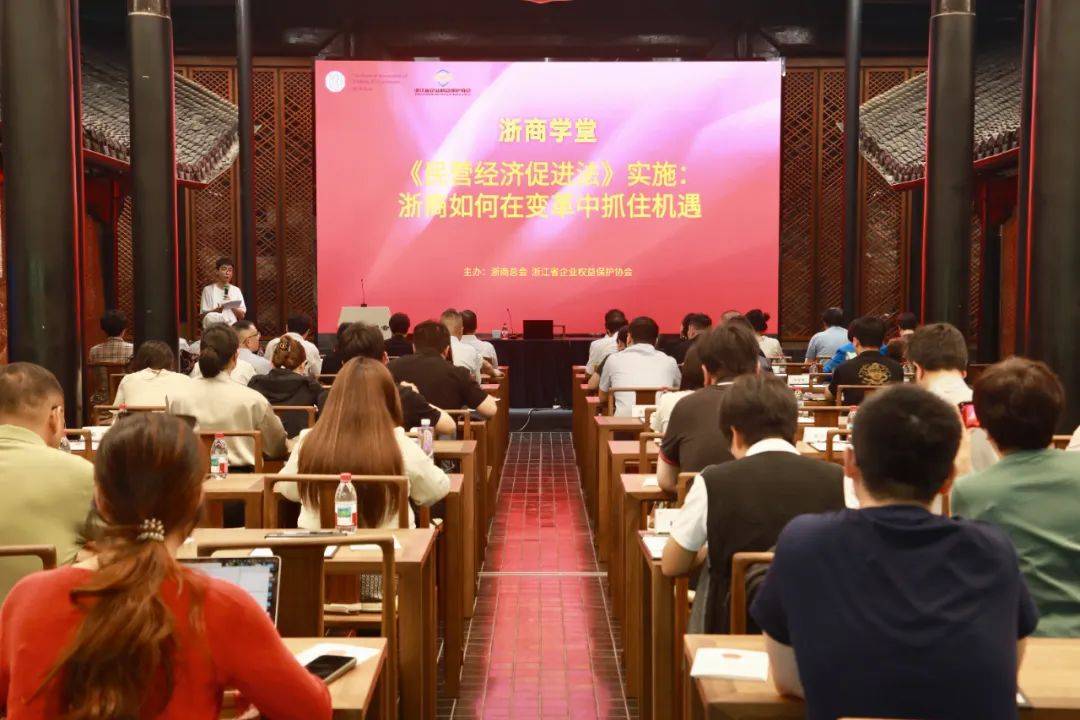
浙商总会举办《民营经济促进法》专题讲座 助力民营经济高质量发展
Sou Hu Cai Jing· 2025-06-30 11:51
Core Viewpoint - The implementation of the "Private Economy Promotion Law" is a significant milestone for the development of the private economy in Zhejiang, providing a solid legal guarantee for private enterprises and creating a stable, fair, and transparent development environment [3][5]. Group 1: Importance of Private Economy in Zhejiang - The private economy in Zhejiang is a crucial part of the province's identity, with a total value reaching 6.1 trillion yuan in 2024, accounting for 67.4% of the provincial GDP [3]. - The private sector contributes over 70% of the province's tax revenue, over 80% of imports and exports, over 80% of employment, and 90% of the number of enterprises [3]. Group 2: Key Initiatives and Recommendations - The event aimed to interpret the core significance of the "Private Economy Promotion Law" and explore how enterprises can achieve high-quality development under legal protection [5]. - Three key initiatives were proposed for enterprises: to deeply learn the law for compliant operations, to adapt to changes by focusing on new sectors like digital and green economies, and to promote the spirit of innovation while taking social responsibility [5]. Group 3: Legal Awareness and Support Measures - Suggestions for private enterprises included enhancing legal awareness, carefully reviewing contracts and investment projects, wisely choosing legal counsel, and emphasizing the collection of effective evidence [7]. - The "Private Economy Promotion Law" includes significant innovations in legal status definition, fair competition guarantees, financing support, and encouragement of technological innovation, reflecting the government's strong support for the private economy [8].
杭州人,正在闷声发大财
投资界· 2025-06-28 07:38
Core Viewpoint - Hangzhou is emerging as a new financial hub, attracting talent and investment, making money a natural instinct for its residents [3][5][19]. Group 1: Population and Talent Attraction - By 2024, Hangzhou's resident population is projected to exceed 12.62 million, marking a continuous double-digit growth for ten years [5]. - In 2022, over 25% of the talent influx to Hangzhou was from the digital economy sector, including IT, internet, and gaming [6]. - The proportion of high-end job seekers applying in first-tier cities has decreased from 45% in 2017 to 36% in 2021, while new first-tier cities like Hangzhou have seen an increase from 31% to 35% [7]. Group 2: Quality of Life and Income - Hangzhou boasts a per capita disposable income of 73,797 yuan in 2023, approximately 1.9 times the national average, ranking sixth among mainland cities [8]. - The city offers a high quality of life with significant green spaces and cultural activities, making it an attractive place for work and leisure [8][19]. Group 3: Economic Structure and Opportunities - Hangzhou's GDP reached 2.18 trillion yuan, with the private economy contributing 61.5% of this figure [10]. - The city is home to major companies like Alibaba and NetEase, which have established a robust digital economy and service sector [10][11]. - The median annual salary for computer programmers in Hangzhou is 250,000 yuan, with 10% earning over 520,000 yuan [10]. Group 4: Entrepreneurial Environment - Hangzhou has a vibrant entrepreneurial ecosystem supported by substantial government funding and investment, with over 1.7 trillion yuan invested in nearly 40,000 enterprises in 2023 [15]. - New graduates can receive up to 200,000 yuan in project funding and three years of rent subsidies, while successful projects can receive up to 5 million yuan in rewards [15][16]. - The city has streamlined its application processes for subsidies, allowing for efficient access to financial support [17][18].



徐曙海在市政协重点提案办理协商座谈会上强调 用心用情营造公平透明营商环境 全心全意支持民营经济发展壮大
Zhen Jiang Ri Bao· 2025-06-27 23:35
Group 1 - The mayor emphasizes the importance of creating a fair and transparent business environment to support the development of the private economy, in line with Xi Jinping's important speeches [1][2] - The focus is on addressing the urgent needs of private enterprises, including improving labor relations, enhancing policy support, and protecting intellectual property rights [2] - The government aims to strengthen the relationship between the government and businesses, ensuring that private enterprises feel supported and valued [2] Group 2 - The meeting included discussions from various company leaders who provided suggestions on improving labor relations and administrative practices [1] - The mayor highlighted the need for a multi-faceted approach to resolve labor disputes and reduce the burden on enterprises through better regulation of administrative inspections [2] - There is a call for private entrepreneurs to embrace entrepreneurial spirit and focus on innovation to contribute to the high-quality development of the region [2]