双碳战略

Search documents
郭承站:聚力谱写生态环保产业新篇章
Jing Ji Ri Bao· 2025-12-01 00:57
Core Insights - The article emphasizes the importance of carbon peak and carbon neutrality as guiding principles for China's economic green development, highlighting the ecological and environmental industry's role in the 14th Five-Year Plan [1][2] Group 1: Industry Development Goals - The ecological and environmental industry is transitioning from a focus on pollution control to a systematic approach that integrates carbon reduction, pollution reduction, green expansion, and economic growth [2] - The industry has achieved significant milestones, with revenue reaching approximately 2.3 trillion yuan, supported by advancements in scale, technology, and cluster layout [1] Group 2: Innovation and Technology - High-quality development in the ecological and environmental industry requires a focus on technological innovation, aiming to shift from end-of-pipe emissions control to resource recovery and smart systems [3] - The establishment of a national environmental technology innovation center is proposed to tackle critical technologies and ensure a self-sufficient and secure supply chain [3] Group 3: Market Dynamics and Enterprise Role - Private enterprises play a crucial role in the ecological and environmental industry, accounting for over 90% of the total number of firms and generating more than 70% of innovative outcomes [4] - The article advocates for a collaborative framework between state-owned and private enterprises to enhance resource integration and innovation [4] Group 4: Policy and Planning - The article calls for an expansion of policy tools to support the ecological and environmental industry, including tax incentives and financial support, while integrating industry development into national energy conservation and environmental protection plans [4] - A comprehensive and actionable industry development plan is necessary to guide local and enterprise efforts towards sustainable growth [4] Group 5: Value Creation and Economic Benefits - The ultimate goal of the ecological and environmental industry is to address pressing environmental issues while transforming environmental governance into value creation [5] - Innovative approaches to urban ecological management and water governance are highlighted as means to achieve both ecological and economic benefits [5]
走近大国工程丨“氢”装上阵 逐绿前行
Zhong Yang Ji Wei Guo Jia Jian Wei Wang Zhan· 2025-12-01 00:40
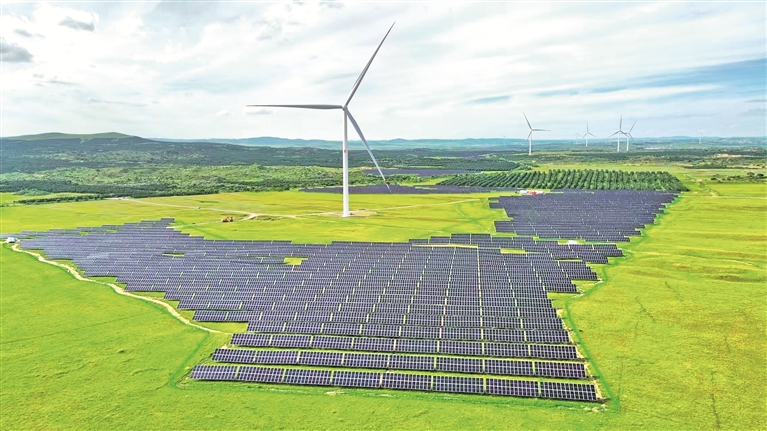
Core Viewpoint - The China Datang Corporation's 150,000 kW integrated wind-solar-storage hydrogen production demonstration project in Duolun County has successfully entered market operation, showcasing a replicable model for the hydrogen energy industry and contributing to the green transformation of the economy and society [9][21]. Group 1: Project Overview - The project utilizes "green electricity to produce green hydrogen" technology, integrating renewable energy with traditional coal chemical processes [9][12]. - It has been recognized as a pilot project by the National Energy Administration in the hydrogen energy sector [9]. - The project consists of three main components: the new energy end, hydrogen production end, and energy management platform [12][13]. Group 2: Technical Innovations - The project features the first large-capacity electrolyzer in China's wind-solar hydrogen production industry, with a capacity of 2,000 standard cubic meters per hour [14][15]. - It has established a deep adjustment mechanism for large-capacity electrolyzers in weak grid hydrogen production, filling a gap in the industry [15]. - The project employs a digital energy management system that monitors and coordinates various components, enhancing operational efficiency [18][19]. Group 3: Environmental Benefits - As of November 20, the project has generated 193 million kWh of electricity, with over 60% used for hydrogen production, resulting in a hydrogen output of 23.41 million standard cubic meters [16]. - The project is expected to reduce carbon dioxide emissions by over 40,000 tons annually, equivalent to the carbon absorption of approximately 1,400 hectares of mature forest [19][20]. Group 4: Market and Economic Impact - The project has fully transitioned to market operation, reflecting the collaborative efforts of multiple sectors within China Datang [15][21]. - It is positioned as a significant contributor to the national "dual carbon" strategy and the green transformation of the coal chemical industry [20][21].

省委十四届十次全会精神在全省干部群众中引发热烈反响、强烈共鸣扎扎实实抓落实 奋力谱写新篇章
Xin Hua Ri Bao· 2025-11-30 23:26
新征程的号角,总是在重要时刻吹响。 11月28日至29日,省委十四届十次全会在南京举行。这场承前启后的重要会议,审议通过了《中共 江苏省委关于制定江苏省国民经济和社会发展第十五个五年规划的建议》,为江苏未来五年发展指明了 方向、注入了强劲动力。 从城市到乡村,从机关到基层,从企业到校园……全会精神如战鼓催征,迅速传遍江苏大地,在全 省广大干部群众中引发强烈共鸣、汇聚奋进力量。大家一致表示,将牢记嘱托、感恩奋进,切实把思想 和行动统一到全会部署上来,坚定扛起走在前、做示范的责任担当,奋力谱写"强富美高"新江苏现代化 建设新篇章。 牢记嘱托、勇担使命 越是壮阔的征程,越需要领航的力量。 回望不凡历程,我们深切体会到,成就的取得,根本在于以习近平同志为核心的党中央领航掌舵; 展望"十五五",我们无比坚信,只要坚定不移地沿着习近平总书记指引的方向奋勇前进,就一定能够赢 得崭新的未来。 "《建议》提出统筹发展和安全,建设更高水平的平安江苏,这为我们在'十五五'时期推进应急管 理体系和能力现代化指明了方向、提供了遵循。"省应急管理厅党委书记、厅长任栋表示,全省应急管 理系统将迅速把思想和行动凝聚到全会决策部署上来,以实干 ...
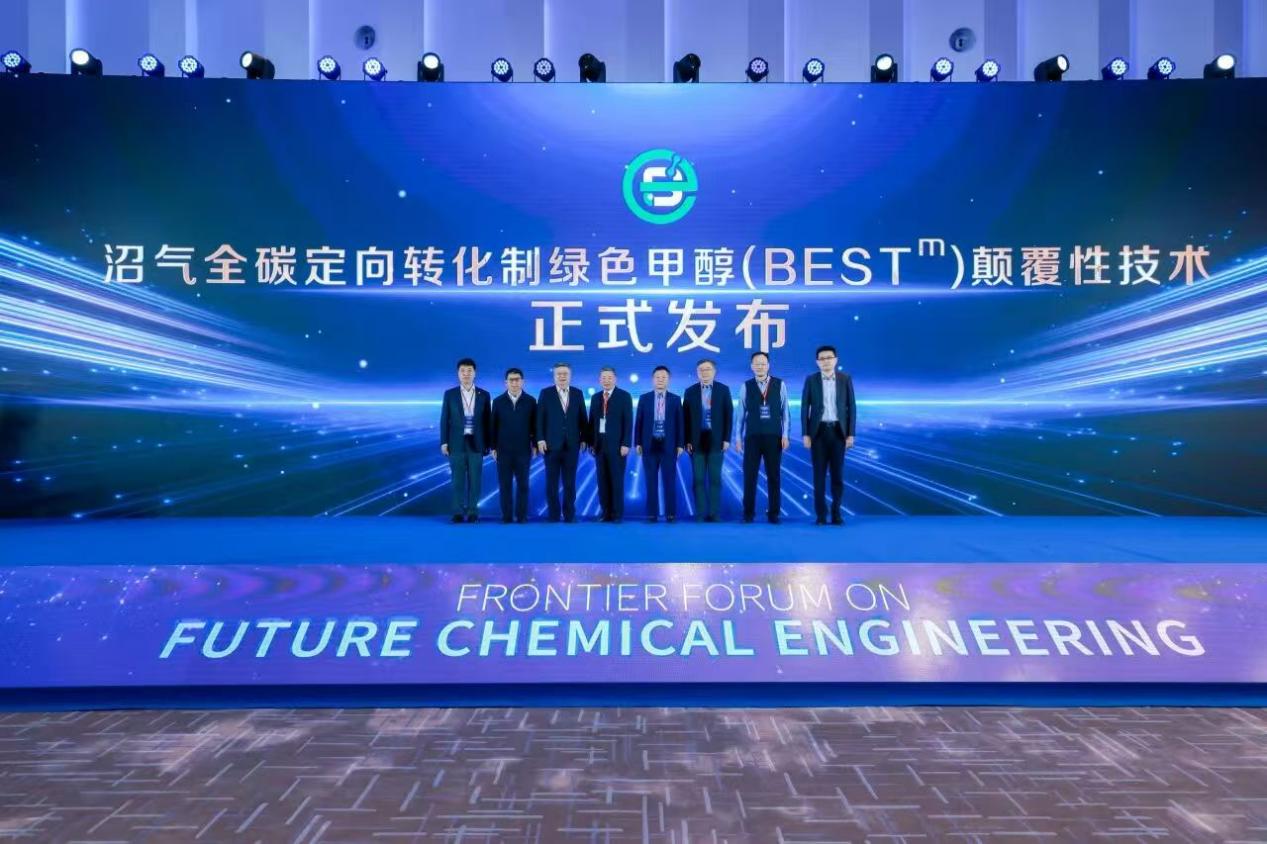
首届“未来化工前沿论坛”在沪举行 复洁科技联合发布沼气制绿色甲醇颠覆性技术
Zheng Quan Shi Bao Wang· 2025-11-30 13:40
Core Insights - The "First Future Chemical Frontier Forum (2025 3FCE)" held in Shanghai marks a significant advancement in the construction of a green energy system, supported by various institutions including East China University of Science and Technology and Shanghai Fuke Technology Co., Ltd [1] - The establishment of the "Shanghai Green Fuel Innovation Port International Think Tank" aims to provide strategic consulting and clarify industrial development paths for building a world-class green fuel hub in Shanghai [1] - The release of the "Biogas All-Carbon Directional Conversion to Green Methanol (BESTm) Disruptive Technology" is a key component of Shanghai's 2025 strategic initiative on green fuels, highlighting the potential of green methanol as a marine fuel alternative [2][4] Company Developments - Fuke Technology has shifted its strategic focus from traditional advanced environmental equipment manufacturing to core technologies for energy conservation and carbon reduction, emphasizing three main industry lines: resource utilization of wastewater and sludge, comprehensive carbon reduction services, and green clean energy [4] - The BESTm technology aims to enhance local biogas resource supply and high-value utilization, integrating anaerobic fermentation, biogas purification, gas reforming, and green methanol synthesis into a cohesive process [4] - The company is positioned to leverage recent national policies promoting green hydrogen, ammonia, and methanol, which are critical for the large-scale application of renewable energy [5] Industry Trends - The global shipping and aviation sectors are increasingly focused on emission reduction, with green methanol gaining attention as a viable alternative fuel [2][6] - Shanghai has initiated the construction of a "Green Shipping Corridor" to create a low-carbon logistics chain, aiming to establish a complete industrial ecosystem for green fuel production, storage, and shipping applications [5][6] - By 2030, Shanghai aims to achieve a "dual hundred" target for liquefied natural gas and green methanol fueling capabilities, positioning itself as a leading green fuel service center globally [6]

富祥药业(300497) - 300497富祥药业投资者关系管理信息20251130
2025-11-30 12:06
Group 1: Company Achievements and Certifications - The company’s Wei Ran protein has officially passed the National Health Commission's administrative approval, obtaining new food raw material certification, which serves as a significant milestone in its development [2][3] - The certification allows Wei Ran protein to enter the Chinese food market, establishing a "dual certification" global market framework, enhancing international competitiveness and risk resistance [3] - Wei Ran protein features a nutritional profile of "high protein, high dietary fiber, low fat, and zero cholesterol," meeting modern consumer demands for healthy diets [3] Group 2: Market and Industry Impact - The successful certification provides a replicable model for the approval and commercialization of the fungal protein industry in China, boosting industry confidence and attracting more capital and talent [3] - The development of Wei Ran protein aligns with national strategies for protein supply security and reducing reliance on imported soybeans, contributing to environmental sustainability [4] Group 3: Future Capacity and Business Strategy - The company plans to leverage its technological advantages and circular economy model to maintain industry leadership and expand both domestic and international markets [5] - Future capacity releases will focus on optimizing production processes and raw material costs, enhancing competitive advantages [5] Group 4: Business Performance and Growth Projections - The pharmaceutical manufacturing segment is expected to benefit from a 41% decrease in the price of 6-APA, alongside growing market demand for downstream products [6] - The lithium battery additive business is experiencing rapid price increases due to rising demand from energy storage and power battery sectors [7] - The company’s synthetic biology business has received approval for Wei Ran protein as a new food raw material, facilitating its commercialization and global market entry [7] Group 5: Risk Management and Investor Relations - All information disclosed by the company is based on official announcements, urging investors to make rational investment decisions and be aware of risks [8]

国开行发行90亿元绿色金融债券,欧盟将发布《工业脱碳加速器法案》立法提案
Xinda Securities· 2025-11-30 08:05
Investment Rating - The report does not provide a specific investment rating for the industry [2] Core Insights - The report highlights the issuance of 9 billion yuan green financial bonds by the China Development Bank, aimed at supporting green upgrades in infrastructure. The bonds have a 1.52% interest rate and a subscription multiple of 2.46 times. As of November 28, the total issuance of green financial bonds by the bank reached 229.5 billion yuan, with projects selected according to the "Green Financial Support Project Directory (2025 Edition)" [11][12] - The European Union plans to introduce the "Industrial Decarbonization Accelerator Act" legislative proposal in the fourth quarter of 2025, which aims to facilitate the green transition in the industrial sector and achieve climate neutrality by 2050. The act will simplify approvals, support projects, and cultivate markets to help high-energy-consuming industries overcome decarbonization challenges while ensuring European industrial competitiveness [3][16] Summary by Sections Domestic Highlights - The China Development Bank issued 9 billion yuan in green financial bonds, focusing on infrastructure green upgrades. The bonds have a 1.52% interest rate and a subscription multiple of 2.46 times. The funds will be used for green upgrades in infrastructure, low-carbon energy transition, environmental protection, and resource recycling industries, with expected annual savings of 89,000 tons of standard coal and a reduction of approximately 200,000 tons of CO2 emissions [11][12] International Highlights - The European Union will propose the "Industrial Decarbonization Accelerator Act" in late 2025, which is a key measure for promoting green transformation in the industrial sector and achieving climate neutrality by 2050. The act will simplify the approval process for decarbonization projects and energy access, ensuring the supply of clean energy and supporting carbon capture, utilization, and storage (CCUS) infrastructure [3][16] ESG Financial Products Tracking - As of November 30, 2025, China has issued 3,808 ESG bonds, with a total outstanding amount of 5.72 trillion yuan. Green bonds account for the largest share at 62.23%. In November, 172 ESG bonds were issued, raising 203.1 billion yuan, while 1,274 ESG bonds were issued in the past year, totaling 1.3953 trillion yuan [24][29] - The market has 943 existing ESG products with a total net value of 1,164.568 billion yuan, where ESG strategy products represent the largest share at 45.09%. In November, 5 ESG products were issued, totaling 4.033 billion shares [29] - There are 1,172 existing ESG bank wealth management products, with pure ESG products making up the largest share at 55.12%. In November, 139 ESG products were issued, primarily pure ESG and social responsibility products [34] Index Tracking - As of November 28, 2025, most major ESG indices outperformed the market, with the Wind All A Sustainable ESG index showing the highest increase of 2.18%. Over the past year, the Shenzhen ESG 300 index had the largest increase of 17.96% [35][36] Expert Opinions - The Boao Forum for Asia Riyadh Conference focused on economic diversification and sustainable development, emphasizing the need for strategic vision and leadership in economic transformation. The conference highlighted the role of developing countries in leading the clean energy trend and the importance of regional cooperation in response to protectionism [38][39]
记者观察|造纸行业高质量发展不容忽视 多方专家呼吁加严国家标准
Zhong Guo Jing Ying Bao· 2025-11-29 16:48
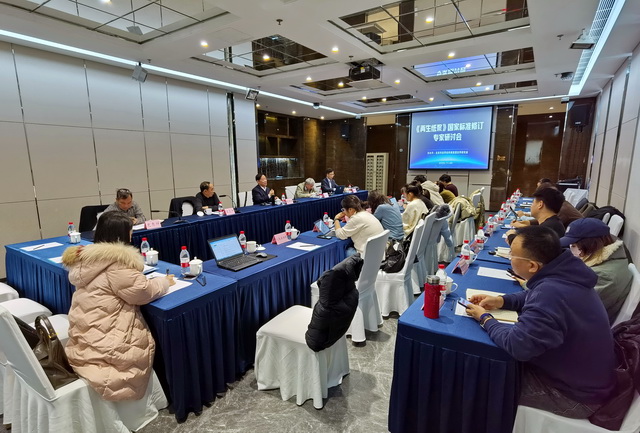
Core Viewpoint - The recent focus on the import of recycled paper pulp has led to coordinated efforts by various government departments to enhance regulatory standards and oversight, aiming to mitigate environmental risks and promote sustainable development in the paper industry [1][2]. Regulatory Developments - On October 9, the General Administration of Customs issued a notice regarding the declaration requirements for imported recycled paper pulp [1]. - On October 17, six departments jointly released guidelines to standardize the supervision of imported recycled paper pulp [1]. - The national standard revision plan for recycled paper pulp was approved on October 31, with the National Technical Committee for Paper Industry Standards responsible for the revision [1]. - A seminar on the national standard revision was held on November 14 to discuss the proposed changes [1]. Industry Challenges - The current national standards for imported recycled paper pulp are deemed inadequate, raising concerns about the risk of "foreign waste" entering the country [1][2]. - Since 2021, there have been multiple instances of customs discovering suspected solid waste being imported under the guise of recycled paper pulp [2]. Expert Insights - Experts highlighted the limitations of the dry processing method for recycled paper pulp, which fails to adequately remove contaminants and poses safety hazards [3]. - The absence of microbial testing standards in current regulations allows substandard materials to enter the market, complicating customs oversight [3]. Proposed Standards and Recommendations - The "Beijing Consensus" calls for strict enforcement of hard standards for imported recycled paper pulp, including limits on contamination and the prohibition of hazardous materials [4]. - Recommendations include specifying production methods (dry or wet) in the national standards and enhancing strength requirements to improve quality control [4]. - The consensus emphasizes the need for increased regulatory oversight and the establishment of a robust regulatory framework to protect ecological safety [4]. Industry Responsibility and Future Directions - The paper industry is urged to align with national "dual carbon" strategies and invest in green technology innovation [5]. - Companies are encouraged to adopt responsible practices, comply with laws and standards, and eliminate outdated and unsafe processing methods [5]. - The recent regulatory changes signal a strong governmental commitment to reinforcing ecological safety and promoting high-quality development in the paper industry [5].
进口再生纸浆监管引关注 业界专家提出《北京共识》
Di Yi Cai Jing· 2025-11-29 08:54
Core Viewpoint - Experts are calling for stricter regulations on the import of recycled paper pulp to prevent environmental risks and promote a green, safe, and high-quality development of the paper industry [1][4]. Group 1: Regulatory Developments - A national standard revision plan for recycled paper pulp was approved on October 31, with the Paper Industry Standardization Technical Committee responsible for organizing the revision [2]. - The General Administration of Customs issued a notice on October 9 regarding the declaration requirements for imported recycled paper pulp, followed by a joint announcement from six departments on October 17 to standardize supervision [1][2]. Group 2: Environmental Concerns - The dry processing method for recycled paper pulp has been criticized for its limited purification capabilities, leading to potential contamination and safety hazards [3]. - Since 2021, there have been multiple cases of solid waste being imported under the guise of recycled paper pulp, raising significant environmental concerns [2][3]. Group 3: Industry Standards and Recommendations - The current national standard for recycled paper pulp lacks mandatory constraints and does not adequately address biosecurity and bacterial content for imported products [3][4]. - The "Beijing Consensus" recommends strict enforcement of hard standards for imported recycled paper pulp, including limits on contamination and the requirement to specify production methods [4][6]. Group 4: Future Outlook - In 2024, China's total import of recycled paper pulp is projected to be approximately 4.14 million tons, with dry processed pulp accounting for about 3.8% of domestic pulp supply [6]. - Experts anticipate that domestic pulp production capacity will exceed 3.5 million tons by 2026-2027, reducing reliance on imports [6].
进口再生纸浆监管引关注,业界专家提出《北京共识》
Di Yi Cai Jing· 2025-11-29 08:46
Core Viewpoint - The paper industry is urged to integrate into the national "dual carbon" strategy and accelerate green technology innovation and application, while addressing issues related to the import of recycled paper pulp, including incomplete national standards and environmental risks [1][5]. Regulatory Developments - Recent discussions have focused on enhancing the supervision and standardization of imported recycled paper pulp, with multiple government departments collaborating to issue new regulations and standards [2][3]. - The announcement from the General Administration of Customs on October 9 and subsequent joint announcements from six departments aim to regulate the import of recycled paper pulp more effectively [2]. Environmental Concerns - There have been instances of domestic paper companies misusing the label of recycled paper pulp to import solid waste, raising significant environmental concerns [3]. - Experts have highlighted the inadequacies of the dry processing method for recycled paper pulp, which fails to adequately remove contaminants and poses safety risks [4]. Standardization Issues - The current national standard for recycled paper pulp (GB/T43393-2023) is criticized for lacking mandatory constraints and not adequately addressing biosecurity and bacterial content for imported products [4][5]. - The absence of microbial testing indicators in the existing standards allows low-quality materials to enter the market, complicating customs regulation [4]. Recommendations from Experts - The "Beijing Consensus" calls for strict enforcement of hard standards for imported recycled paper pulp, including limits on contamination and the prohibition of hazardous materials [5][7]. - Experts advocate for the paper industry to adopt green technologies and enhance responsibility towards environmental protection, aligning with national interests [5]. Future Outlook - According to customs statistics, the total import of recycled paper pulp in 2024 is projected to be approximately 4.14 million tons, with a significant portion produced using the dry method [7]. - The industry anticipates a shift towards increased domestic production capacity, potentially reducing reliance on imports by 2026-2027 [7].
LP周报丨150亿,绍兴老城也要“搞事”了
投中网· 2025-11-29 07:03
Core Insights - The article focuses on the investment landscape in various regions of China, highlighting the establishment of new funds and their strategic focus areas, particularly in emerging industries and technological innovation [6][7][9][12][13][14][15][17][18][19][20][21]. Fund Establishments - The Shaoxing Industrial Fund, with a total scale of 15 billion RMB, aims to support strategic industry projects and technological innovation in Shaoxing [7]. - The Wuhan Future Intelligent Venture Fund has been established with a total scale of 1 billion RMB, focusing on artificial intelligence and humanoid robotics [9]. - The Henan Lihua Angel Fund has been successfully set up with a total scale of 1.77 billion RMB, targeting investments in AI, 5G, and new energy sectors [10][11]. - The Jiangmen High-tech Guangdong Science and Technology Industrial Development Fund has been established with a total investment of 1 billion RMB, focusing on emerging industries like new energy and AI [12]. - The Xiamen Industrial M&A Equity Investment Fund has been registered with a total scale of 2 billion RMB, focusing on key industries such as new energy and semiconductor [18]. - The Jimei Specialized Fund has been established with a scale of 100 million RMB, targeting strategic emerging industries and traditional industry upgrades [19]. Strategic Focus Areas - The funds are primarily directed towards high-tech sectors such as integrated circuits, biomedicine, and advanced equipment, reflecting a strong push for technological innovation and industrial transformation [7][12][13][14]. - The collaboration between Cainiao and China Life to establish a logistics investment fund of over 1.7 billion RMB emphasizes the importance of modern logistics infrastructure in key economic regions [17]. - The establishment of the Xin Ke Industry Investment Fund, with a total scale of 5 billion RMB, aims to enhance the communication network and support the development of cutting-edge technologies like AI and quantum communication [13]. Regional Highlights - Shaoxing is recognized for its traditional industries, particularly textiles, which have evolved significantly since the 1980s [6]. - Wuhan is positioning itself as a hub for light communication technology, leveraging its strong industrial base and strategic partnerships [13]. - The Hebei Free Trade Zone is focusing on high-end manufacturing and digital economy sectors, with the establishment of the Yunfan Equity Investment Fund to fill the investment gap in these areas [20][21].