
增长

Search documents
2026年全球银行业展望
EY· 2026-02-05 04:10
Investment Rating - The report indicates a positive outlook for the global banking industry, with expectations of robust profitability and a projected return on equity (ROE) of 13.0% in 2026, up from 12.8% in 2025 [3][6]. Core Insights - The global banking sector demonstrated resilience in 2025, achieving an ROE of 12.8%, which is 0.7 percentage points higher than in 2024 and significantly above pre-pandemic levels [3]. - Despite declining interest rates, the banking industry's net interest income (NII) grew by over 5% in 2025, with expectations of surpassing 7% growth in 2026 due to effective asset-liability management [4][6]. - Fee income, particularly from investment banking and wealth management, is projected to grow by over 8% in 2026, driven by increased trading activity and a strong rebound in M&A transactions [8][11]. - Credit quality remains stable, with banks maintaining adequate provisions and a focus on managing risks associated with non-bank financial institutions [12][13]. - The industry is undergoing significant transformation, with a focus on operational efficiency and technological investment to enhance competitiveness and customer engagement [14][20]. Summary by Sections Section 1: Positive Outlook for Global Banking - The global banking industry is expected to maintain strong profitability into 2026, with an ROE forecasted to reach 13.0% [3]. Section 2: Drivers of Profit Growth - Net interest income is projected to grow by over 7% in 2026, despite anticipated declines in policy rates [4]. - Fee income from investment banking and wealth management is expected to increase by up to 19% due to a resurgence in M&A activity and strong trading revenues [8][11]. Section 3: Credit Quality and Risk Management - Credit quality is expected to remain stable, with banks emphasizing strong credit standards and risk management practices [12][13]. Section 4: Industry Transformation and Innovation - The banking sector is focusing on operational simplification and technological advancements to enhance efficiency and customer service [14][20].
贵州生态示范创建超额完成“十四五”目标,47县(市、区)获省级以上命名
Xin Lang Cai Jing· 2026-01-29 12:37
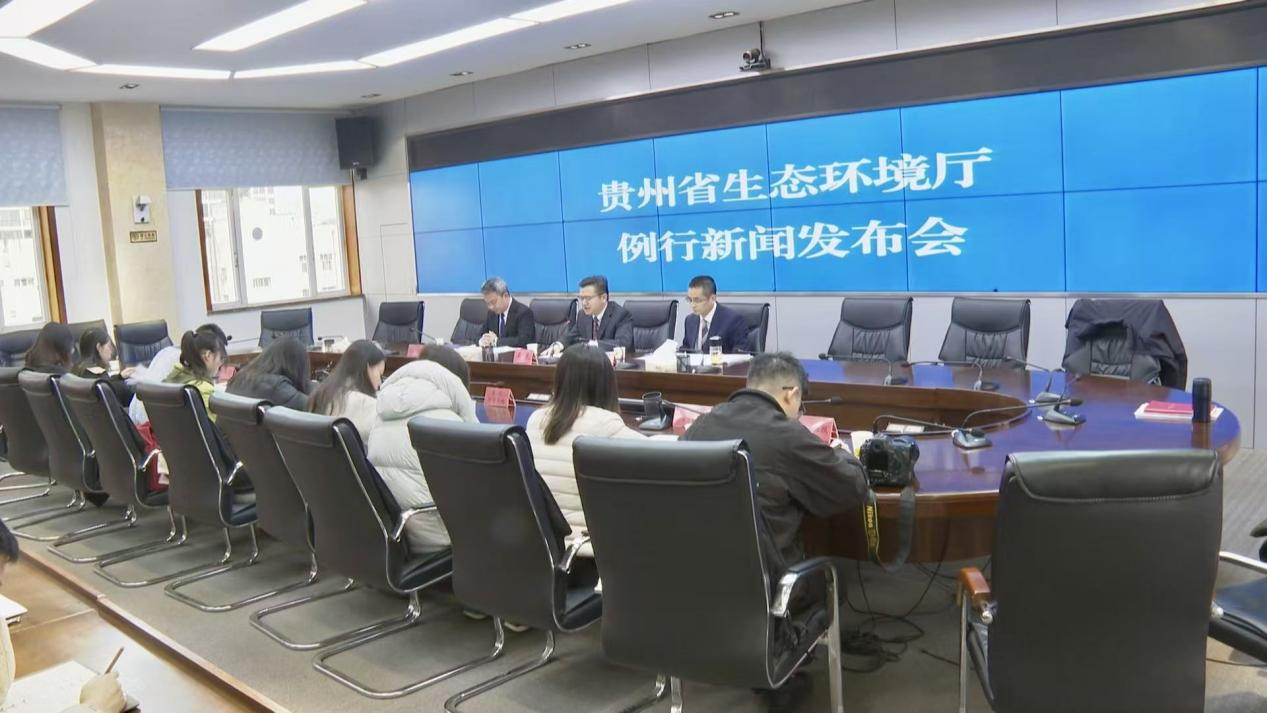
Core Viewpoint - Guizhou Province has made significant progress in ecological demonstration creation, achieving over half of its target for provincial and national level designations by the end of the 14th Five-Year Plan, showcasing its rich biodiversity on an international stage [1][3]. Group 1: Ecological Demonstration Achievements - 34 localities have received provincial ecological demonstration designations, while 27 have achieved national level recognition, covering a total of 47 counties, exceeding the target of reaching half of the counties by the end of the 14th Five-Year Plan [1]. - Seven localities have been recognized as global natural cities, highlighting the province's biodiversity advantages [1]. Group 2: Environmental Initiatives and Results - The province has focused on "carbon reduction, pollution reduction, green expansion, and growth" during the 14th Five-Year Plan, with notable achievements in carbon reduction through the exploration of ecological product value realization [3]. - Guizhou has implemented local regulations for ecological civilization, with specific regions developing green industry systems, such as the electronic information manufacturing and ecological food sectors in Baiyun District [3]. - Air quality in Jianhe County has maintained over 99% of good air quality days for three consecutive years, and drinking water source quality has reached 100% compliance [3]. Group 3: "Two Mountains" Practice and Future Plans - Since 2017, Guizhou has established 39 provincial and above "Two Mountains" practice innovation bases, demonstrating successful models of ecological and economic benefits, such as the "China Tea Sea" in Meitan County and the transformation from coal economy to tourism in Libo County [5]. - The Ministry of Ecology and Environment plans to conduct ecological demonstration creation naming every three years during the 15th Five-Year Plan, with Guizhou aiming to enhance and sustain its achievements while guiding regions to explore unique paths based on resource endowments [5].

增长是毒药
3 6 Ke· 2026-01-07 12:55
Core Viewpoint - The article argues that the traditional notion of "growth" in the fast-moving consumer goods (FMCG) industry has become a detrimental obsession, leading to systemic inefficiencies and a collapse of brand value and profitability [1][3][40]. Group 1: Understanding Growth - Growth is often equated with revenue, profit, and market size increases, but these are merely manifestations rather than the essence of growth [4][5]. - The essence of growth lies in the internal order of a company, which must be maintained to counter external chaos [9][12]. - True growth results from internal energy overflowing due to effective management and operational efficiency, rather than external pressures [14][40]. Group 2: Historical Context - The FMCG industry in China experienced a "low-entropy vacuum period" from 1990 to 2015, where external market conditions favored easy growth without the need for internal order [16][18]. - During this period, companies could achieve rapid sales increases simply by expanding production and distribution, leading to a false sense of security regarding growth [22][28]. Group 3: Current Challenges - The industry has transitioned into a phase of "excess," where the previous growth strategies are no longer effective, leading to diminishing returns on investments [31][30]. - Companies are now facing increased internal costs and inefficiencies as they attempt to maintain growth through outdated methods, resulting in a chaotic operational environment [30][32]. Group 4: New Paradigm for Growth - The article proposes a shift from a growth-centric approach to one focused on "matching," where companies must align their offerings with market demands rather than merely pursuing scale [35][38]. - Key strategies include flexible product supply, a combination of push and pull marketing strategies, and maintaining healthy relationships with distributors to avoid excess inventory [36][37]. - The focus should be on internal order and precise market matching, with growth seen as a byproduct of these efforts rather than an end goal [40].

低频选股因子周报(2025.12.05-2025.12.12):小市值、低估值因子回撤,盈利、增长因子表现相对较优-20251213
GUOTAI HAITONG SECURITIES· 2025-12-13 13:15
Core Insights - The report indicates that small-cap and value factors experienced a pullback, while high profitability and high growth factors performed relatively well [1] - The quant stock portfolio of top-performing funds achieved a weekly return of 4.43%, with a cumulative return of 52.54% for 2025 [1] Group 1: Multi-Factor Portfolio Performance - The aggressive and balanced portfolios had weekly returns of -4.10% and -3.85% respectively, underperforming the major indices [10] - For the year-to-date (YTD) 2025, the aggressive and balanced portfolios recorded cumulative returns of 69.47% and 55.27%, significantly outperforming the major indices [11] Group 2: Fund Holdings Performance - The exclusive holdings of top-performing funds yielded a weekly return of 4.43%, outperforming the total index of stock funds by 4.09% [26] - Since December 2025, these holdings have achieved a cumulative return of 7.58%, with an excess return of 6.65% [26] Group 3: Profitability, Growth, and Cash Flow Combination - The combination of profitability, growth, and cash flow achieved a weekly return of 1.12%, outperforming the CSI 300 index by 1.20% [28] - For 2025, this combination has a cumulative return of 88.82%, significantly higher than the CSI 300 index's return of 16.42% [28] Group 4: Low Valuation with Fundamental Support - The PB-profitability preferred portfolio had a weekly return of -2.64%, underperforming the CSI 300 index by 2.57% [30] - For the year-to-date 2025, this portfolio recorded a cumulative return of 19.82%, slightly outperforming the CSI 300 index [31] Group 5: Small-Cap Value and Growth Performance - The small-cap value preferred portfolio 1 had a weekly return of -2.84%, outperforming the micro-cap index by 1.85% [35] - The small-cap growth portfolio recorded a weekly return of -1.94%, outperforming the micro-cap index by 2.75% [39] Group 6: Single Factor Performance - In style factors, large-cap stocks outperformed small-cap stocks, and high-valuation stocks outperformed low-valuation stocks [42] - Technical factors showed negative excess returns across the board, with reversal and turnover factors contributing negatively [46] Group 7: Fundamental Factors - The ROE factor contributed positively, with a multi-factor return of 1.63% for the week [53] - The SUE factor also showed positive returns, indicating strong performance in fundamental analysis [53]
郭承站:聚力谱写生态环保产业新篇章
Jing Ji Ri Bao· 2025-12-01 00:57
Core Insights - The article emphasizes the importance of carbon peak and carbon neutrality as guiding principles for China's economic green development, highlighting the ecological and environmental industry's role in the 14th Five-Year Plan [1][2] Group 1: Industry Development Goals - The ecological and environmental industry is transitioning from a focus on pollution control to a systematic approach that integrates carbon reduction, pollution reduction, green expansion, and economic growth [2] - The industry has achieved significant milestones, with revenue reaching approximately 2.3 trillion yuan, supported by advancements in scale, technology, and cluster layout [1] Group 2: Innovation and Technology - High-quality development in the ecological and environmental industry requires a focus on technological innovation, aiming to shift from end-of-pipe emissions control to resource recovery and smart systems [3] - The establishment of a national environmental technology innovation center is proposed to tackle critical technologies and ensure a self-sufficient and secure supply chain [3] Group 3: Market Dynamics and Enterprise Role - Private enterprises play a crucial role in the ecological and environmental industry, accounting for over 90% of the total number of firms and generating more than 70% of innovative outcomes [4] - The article advocates for a collaborative framework between state-owned and private enterprises to enhance resource integration and innovation [4] Group 4: Policy and Planning - The article calls for an expansion of policy tools to support the ecological and environmental industry, including tax incentives and financial support, while integrating industry development into national energy conservation and environmental protection plans [4] - A comprehensive and actionable industry development plan is necessary to guide local and enterprise efforts towards sustainable growth [4] Group 5: Value Creation and Economic Benefits - The ultimate goal of the ecological and environmental industry is to address pressing environmental issues while transforming environmental governance into value creation [5] - Innovative approaches to urban ecological management and water governance are highlighted as means to achieve both ecological and economic benefits [5]
聚力谱写生态环保产业新篇章
Jing Ji Ri Bao· 2025-11-30 22:35
Core Insights - The article emphasizes the importance of carbon peak and carbon neutrality as guiding principles for China's economic green development, providing a fundamental framework for the ecological and environmental protection industry during the 14th Five-Year Plan period [1] - The ecological and environmental protection industry is positioned as a key driver for high-quality development, with significant achievements in reducing PM2.5 concentrations and increasing clean energy consumption [1] - The industry is expected to transition from single pollution control to a systematic approach that integrates carbon reduction, pollution reduction, green expansion, and economic growth [2] Group 1: Industry Development and Trends - The ecological and environmental protection industry has achieved a revenue scale of nearly 2.3 trillion yuan, supported by industry scale, technology level, and cluster layout [1] - The industry is at a historical intersection of a "golden development period" for green industries and a "deep transformation period" for traditional high-carbon industries [1] - The focus will be on technological innovation, shifting from end-of-pipe emissions control to resource recovery, smart solutions, and system integration [3] Group 2: Innovation and Market Dynamics - The article highlights the need for a complete and independent industrial technology system, emphasizing the importance of strategic adjustments in technology innovation [3] - Private enterprises play a crucial role in the ecological and environmental protection industry, accounting for over 90% of the total number of entities and contributing to more than 70% of innovation outcomes [4] - The article advocates for a collaborative development model between state-owned and private enterprises, encouraging leading companies to drive cross-sector cooperation and resource integration [4] Group 3: Policy and Planning - The article calls for the expansion of policy tools to enhance fiscal, investment, and pricing mechanisms, increasing tax incentives for the environmental protection industry [4] - It suggests the need for a high-level, comprehensive, and actionable overall industrial development plan that aligns with national energy conservation and ecological protection strategies [4] - The ultimate goal is to transform environmental governance into value creation, addressing pressing ecological issues while achieving economic benefits [5]
After A Hot Run For Gold, Will Stocks Take The Lead Again?
Forbes· 2025-10-28 16:00
Core Insights - Gold is currently experiencing a strong rally, with prices surging nearly 50% in the past year, driven by factors such as geopolitical tensions, low interest rates, and inflation concerns [2][9] - The S&P 500 has shown a 12-month total return of around 16%, which is solid compared to its historical average of 10% [2][4] - Gold serves as a hedge or insurance, while stocks are viewed as growth engines, with stocks typically recovering more quickly from downturns compared to gold's prolonged periods of inactivity [1][7] Historical Context - Historical data indicates that gold often experiences long periods of decline after reaching peaks, such as the US$ 850/oz in 1980 and US$ 1,900/oz in 2011, while the S&P 500 has long-term average annual returns of around 10% [4][5] - In instances of stock market corrections (10-20%), recovery tends to occur more rapidly than gold's extended dormancy periods [5][6] Investment Strategy - Investors acquiring gold should view it as insurance, accepting the possibility of flat returns during improving conditions, while stock investments are aimed at growth, with a historical tendency for quicker recovery [6][7] - A balanced investment strategy may involve allocating resources to both gold for protection and stocks for growth [6] Future Considerations - The performance of gold and stocks in the coming years will be influenced by inflation, interest rates, global growth, and investor sentiment [7][9] - If real interest rates remain low or negative, gold may continue to rise, but a robust global economic recovery could lead to stagnation in gold prices as investor focus shifts back to growth assets [9]

领投 Ilya 新公司,13 年净 IRR 33%,Greenoaks 的科技投资哲学
海外独角兽· 2025-10-28 12:04
Core Insights - Greenoaks focuses on identifying potential future S&P 500 companies and aims to be a long-term core partner for these firms [3][4] - The firm emphasizes the importance of "Jaw Dropping Customer Experience" (JDCE) as a key factor in creating value and driving innovation [9][10] - Greenoaks has a concentrated investment strategy, managing approximately $15 billion in assets across only 55 companies, which allows for deep collaboration with founders [2][4] Investment Philosophy - Greenoaks prioritizes exceptional customer experiences and believes that only a few founders can drive significant advancements in human civilization [9][10] - The firm rejects a matrix management approach, opting instead for deep collaboration with a select group of top founders [4][31] - In AI investments, Greenoaks adheres to fundamental business principles, focusing on customer value, competitive barriers, and market size rather than solely on technological advancements [4][39] Case Study: Coupang - Coupang, often referred to as the "Amazon of Korea," transformed its logistics to offer rapid delivery services, significantly increasing customer retention rates from 30% to 60% [11][13] - Greenoaks has invested nearly $1 billion in Coupang over ten years, participating in multiple funding rounds and holding a 3.2% stake in the company [15][20] - The founder of Coupang, Bom Kim, is noted for his intense focus and ambition, which are key traits that Greenoaks looks for in founders [16][19] Growth and Market Dynamics - Greenoaks believes that the best companies exhibit sustained high growth rates and that a small percentage of companies contribute significantly to overall market value [21][22] - The firm acknowledges that while high growth can pose risks, it is essential for long-term success, especially in technology and software sectors [23][25] - Greenoaks has successfully navigated market volatility, often investing during downturns, as seen with Coupang and Carvana [27][53] Future Investment Strategy - Greenoaks aims to maintain a focused investment approach, limiting the number of companies in its portfolio to enhance engagement and support [56] - The firm is open to exploring new markets and investment structures, having previously attempted to establish a holding company for insurance in emerging markets [58][60] - Greenoaks emphasizes the importance of building strong relationships with founders and understanding their businesses deeply to identify the best investment opportunities [32][40]


中国化学天辰公司、哈萨克斯坦ERG集团签署战略合作协议
Zhong Guo Hua Gong Bao· 2025-09-12 03:01
Core Viewpoint - The eighth meeting of the China-Kazakhstan Entrepreneur Committee resulted in a strategic cooperation agreement between China Tianchen Engineering Co., Ltd. and Kazakhstan's ERG Group, focusing on comprehensive collaboration in four key areas: carbon reduction, pollution reduction, green expansion, and growth [2][3] Group 1: Strategic Cooperation - The strategic cooperation agreement signifies a full-chain closed loop from project implementation to business expansion and strategic collaboration between Tianchen and ERG [2] - The partnership aims to create a model of economic and ecological benefits through technological innovation, systematic governance, and the implementation of ecological projects [2] Group 2: Project Highlights - Tianchen has been active in Kazakhstan since 2010, undertaking significant projects such as the AES power station and the integrated oil and chemical project, contributing to local economic and social development [3] - The 80MW flue gas power generation project is the first collaboration between Tianchen and ERG, utilizing flue gas recycling technology to save approximately 200 million standard cubic meters of natural gas annually and reduce CO2 emissions by 320,000 tons [3] - The project exemplifies energy cascading utilization and helps lower electricity costs for ERG, supporting Kazakhstan's energy conservation and emission reduction goals [3] Group 3: Future Commitment - Tianchen plans to enhance resource investment in Kazakhstan and deepen cooperation in industrial investment, project construction, resource energy, and infrastructure [3] - The company aims to contribute to Kazakhstan's economic development and strengthen the friendship between China and Kazakhstan [3]

向绿而兴 协同推进降碳减污扩绿增长
Ren Min Ri Bao· 2025-08-18 03:49
Core Viewpoint - China's modernization emphasizes harmonious coexistence between humans and nature, with significant achievements in ecological and green development under the leadership of the Communist Party of China [1][2]. Group 1: High-Quality Development and Ecological Civilization - High-quality development is the primary task for building a modern socialist country, with green and low-carbon economic development being crucial for achieving this goal [2]. - The "dual carbon" goals proposed by the central government reflect a strategic decision to balance domestic and international priorities, emphasizing the importance of carbon reduction [2][3]. - The relationship between high-quality development and high-level protection is a global challenge, with the need for a systematic approach to address both [2]. Group 2: Achievements in Ecological Protection - Since the 18th National Congress, significant progress has been made in ecological protection, with improved air quality and reduced pollution levels [4]. - The average concentration of PM2.5 in cities decreased from 46 micrograms per cubic meter in 2015 to 29.3 micrograms per cubic meter by 2024, making China one of the fastest countries in improving air quality [4]. - The proportion of surface water with good quality reached 90.4%, marking a significant improvement since 2012 [4]. Group 3: Green Transformation of Economic Development - The energy consumption growth rate averaged 3.3%, supporting an economic growth rate of over 6.1%, positioning China as one of the fastest countries in reducing energy intensity [5]. - By 2024, the share of clean energy consumption in total energy consumption rose to 28.6%, while coal's share decreased to 53.2% [5]. - The production and sales of new energy vehicles accounted for over 70% of the global market, maintaining China's leading position for ten consecutive years [5]. Group 4: Ecological Protection and Economic Value - The "Two Mountains" theory has facilitated the transformation of ecological advantages into economic benefits, with a focus on establishing a national park system and enhancing forest coverage [6][7]. - By 2024, the area of ecological protection red lines exceeded 30% of the land area, and forest coverage surpassed 25% [6]. - The establishment of ecological civilization demonstration zones and innovative practices has created pathways for ecological markets and tourism [7]. Group 5: Future Development Strategies - The focus on ecological priority, resource conservation, and green low-carbon high-quality development is essential for achieving a harmonious relationship between humans and nature [8]. - Emphasis on collaborative efforts in pollution reduction and carbon emission control is crucial for sustainable development [8][9]. - The market's role in resource allocation and the promotion of ecological product value realization are key to enhancing economic growth while protecting the environment [9].
