
粮食安全

Search documents
青海的盐,藏着中国人吃饱饭的秘密
3 6 Ke· 2025-09-27 23:42
Core Insights - Qinghai's salt lakes, particularly Chaka and Qarhan, are not only major tourist attractions but also vital to the local economy and food security, with vast mineral resources that can sustain global salt consumption for 2000 years [2][4][10]. Group 1: Salt Lake Resources - Qinghai's salt lakes contain enough salt to feed the global population of 8 billion for 2000 years, with Chaka Lake alone having a proven salt reserve of 448 million tons [4][6]. - Qarhan Salt Lake, significantly larger at 5,856 square kilometers, has a total salt reserve exceeding 60 billion tons, including 42.62 billion tons of sodium chloride [6][9]. - The mineral resources in Qarhan include 540 million tons of potassium chloride, 1.65 billion tons of magnesium chloride, and 824,600 tons of lithium, making it a critical resource for various industries [8][9]. Group 2: Impact on Food Security - The salt lakes play a crucial role in China's food security by providing essential potassium for fertilizer production, which is vital for agricultural yields [10][23]. - China relies heavily on potassium imports, with domestic production only meeting about 50% of its needs, highlighting the strategic importance of Qinghai's salt lakes [14][22]. Group 3: Economic Development and Future Prospects - The Qinghai salt lake industry is projected to become a world-class industrial base, with targets set for production value to reach 34 billion yuan by 2025 and 120 billion yuan by 2035 [32][34]. - The development of lithium extraction technologies positions Qinghai as a key player in the global renewable energy sector, particularly in battery production [28][30]. - Qinghai's salt lake resources are seen as strategic assets, with potential applications across various sectors, including agriculture, new energy materials, and defense [26][34].



9月27日晚间央视新闻联播要闻集锦
Yang Shi Xin Wen Ke Hu Duan· 2025-09-27 12:59
Group 1 - China's grain production capacity is set to stabilize at over 1.3 trillion jin during the "14th Five-Year Plan" period, with a target of reaching 1.4 trillion jin in 2024, ensuring food security for over 1.4 billion people [1][3] - Hubei and Hunan provinces are enhancing modern industrial clusters and promoting digital transformation in manufacturing to inject strong momentum into high-quality development during the "14th Five-Year Plan" [2][10] Group 2 - The Central Commission for Discipline Inspection has issued a notice to strictly implement the central eight regulations and address "four winds" during the upcoming National Day and Mid-Autumn Festival [2][9] - The United Nations Security Council did not pass a resolution to extend the Iran nuclear agreement, with Iran's foreign minister stating that the country will not yield to pressure [2][11]
美联储降息,全球粮价或将大涨,中国老百姓的米袋子受影响吗?
Sou Hu Cai Jing· 2025-09-26 16:49
Core Viewpoint - The Federal Reserve's recent interest rate cut is expected to have significant implications for global food prices, potentially leading to inflation in food costs due to increased capital flow into commodity markets [1][2][9]. Group 1: Impact of Federal Reserve's Rate Cut - The Federal Reserve lowered the federal funds rate by 25 basis points, marking its first substantial easing since 2025, which may lead to a depreciation of the dollar and increased investment in commodities, including food [1][2]. - The logic behind the rate cut suggests that lower returns on dollar assets will drive international capital towards commodities, causing prices of staple foods like wheat, corn, and rice to rise irrationally [2][9]. Group 2: Relationship Between Energy and Food Prices - Food prices are closely linked to energy costs; rising energy prices increase fertilizer and transportation costs, which ultimately contribute to higher food prices [3]. - Historical food price crises have often been driven by a combination of financial factors and rising energy prices, as seen in the 2008 global food crisis [4]. Group 3: Current Market Conditions - Current geopolitical tensions and export instability from key regions, such as the Black Sea, combined with India's rice export restrictions, have created a tight market for food [5][6]. - The recent interest rate cut by the Federal Reserve is seen as exacerbating the situation, potentially leading to a surge in global food prices [6][9]. Group 4: China's Food Security - China has a robust food security system, being the largest rice producer globally, accounting for about one-third of the world's production [11][12]. - China's grain reserve system is recognized as the largest in the world, allowing it to stabilize domestic prices even amid global market fluctuations [13]. - The country maintains a high self-sufficiency rate in staple grains, with rice and wheat self-sufficiency rates consistently above 95% [14]. Group 5: Potential Domestic Impacts - While China's food supply is secure, global price increases may still lead to indirect pressures on domestic markets, such as rising feed costs affecting livestock prices [15][22]. - The government must remain vigilant as global food price increases could stimulate domestic speculation and push up prices of related products [15][22]. Group 6: Strategic Considerations - China's food security strategy emphasizes not only ensuring staple food availability but also diversifying import channels to mitigate risks from specific countries [18]. - The country aims to modernize agriculture to enhance productivity and reduce vulnerability to climate fluctuations, which have been increasingly disruptive [19][16].

“粮食安全看山东”之东阿:推动粮食事业发展再上新台阶
Zhong Guo Fa Zhan Wang· 2025-09-26 09:06
Core Viewpoint - Dong'a County is actively enhancing grain management through legal frameworks, storage reforms, and project development to ensure food security and promote high-quality development in the grain industry [1][8]. Group 1: Legal Management of Grain - Dong'a County has implemented strict regulations following the cancellation of grain purchase qualification licenses, with 11 grain purchasing enterprises currently registered [2]. - The county has adopted innovative regulatory methods, utilizing a government service platform for transparent inspections, including a "double random, one public" approach [2]. - Enforcement efforts have been intensified, with 12 personnel deployed for comprehensive checks during the summer grain purchase period, ensuring compliance with grain purchase policies [2]. Group 2: Storage Reform - The county has improved the local grain and oil reserve management system, ensuring accurate inventory and quality standards for stored grains [4]. - A rotation mechanism for reserves has been optimized to reduce costs and enhance efficiency based on market conditions [4]. - The establishment of a post-harvest service system aims to minimize losses for farmers and increase their income through comprehensive support services [4]. Group 3: Industry Integration and Development - Dong'a County is enhancing comprehensive service levels in the grain sector by supporting the creation of integrated service models for storage, drying, and processing [5]. - The county encourages technological innovation in enterprises to improve product quality and expand the supply of high-quality grain and oil products [5]. - The "Rongshi Kang" brand has achieved national green food quality certification, significantly enhancing market competitiveness [5]. Group 4: Project Development - The county is strategically planning grain industry projects, focusing on the "Good Noodle" food industry park to drive deep processing and industry upgrades [7]. - A project advancement mechanism has been established to ensure timely implementation of key grain industry projects, with leadership accountability and resource support [7]. - The construction of the grain trade and storage logistics center is being actively coordinated to address land and funding challenges [7]. Group 5: Achievements and Future Directions - Dong'a County has made significant progress in food security through innovative practices and reforms, with ongoing efforts to explore new avenues for the development of the grain sector [8].
中国银行山东省分行:金融活水润沃土,守护乡村好“丰”景
Qi Lu Wan Bao· 2025-09-26 09:05
Core Viewpoint - The Shandong Branch of Bank of China has significantly increased its agricultural loan support, contributing to rural revitalization and food security in Shandong Province, with a focus on innovative financial products tailored for local agricultural needs [1][3][5]. Agricultural Loan Support - As of the end of August, the agricultural loan balance of Shandong Branch exceeded 170 billion yuan, with an increase of over 23 billion yuan in the current year [1]. - The bank has provided nearly 10 billion yuan in loans specifically for key agricultural sectors, with an increase of over 1.8 billion yuan since the beginning of the year [3]. Financial Services for Key Industries - The bank actively supports leading enterprises in key sectors such as grain, soybeans, and oil, providing comprehensive financial services across the entire industry chain [3]. - The introduction of the "Rudang Huinong Loan" has provided timely financial support to agricultural enterprises facing short-term liquidity issues, exemplified by a 2 million yuan credit to Shandong Shunfeng Agricultural Development Co., Ltd [4]. Innovative Financial Products - Shandong Branch has developed and promoted various financial products tailored to local agricultural characteristics, such as "Zhaoyuan Peanut Loan" and "Anqiu Ginger Loan," achieving significant results with a total of nearly 26 billion yuan in inclusive agricultural loans [6][10]. - The "Anqiu Ginger Loan" has been particularly successful, providing over 36 million yuan in credit to nearly 30 ginger industry clients within four months of its launch [8]. Customer-Centric Approach - The bank has demonstrated a proactive approach in understanding and addressing the financial needs of local agricultural businesses, as seen in the case of a ginger processing company that received 3 million yuan in loans to meet increased demand [7][11]. - The bank's efforts in providing timely financial solutions have helped local farmers improve their production conditions and product quality, contributing to the overall agricultural development in the region [11].

充足电力护航 粮食颗粒归仓——重庆黔江供电公司多举措服务粮食生产
Zhong Guo Neng Yuan Wang· 2025-09-26 08:46
Core Insights - The articles highlight the importance of stable and reliable electricity supply for ensuring food security in China, particularly in the context of rice production in Qianjiang District [1][2][6]. Group 1: Electricity Supply and Infrastructure - Qianjiang Power Supply Company is actively upgrading the rural power grid to meet the electricity demands of high-standard farmland construction, which is crucial for food production [2][3]. - From January to August, the company constructed and upgraded 72.45 kilometers of 10 kV lines and 27.91 kilometers of low-voltage lines, adding 54 transformers with a capacity of 3,080 kVA to support agricultural electricity needs [2]. Group 2: Innovative Solutions for Harvesting - The company deployed drone technology to provide high-altitude lighting for nighttime rice harvesting, ensuring that 800 acres of high-quality rice were harvested before adverse weather conditions could affect yield [4][5]. - The use of tethered lighting drones allowed for safe and efficient harvesting operations while avoiding potential hazards from nearby power lines [5]. Group 3: Quality Assurance in Grain Processing - The transition from traditional drying methods to electric drying has significantly improved the resilience and quality of agricultural products, with the company implementing a power supply plan to support this process [6][8]. - The company conducted 16 special inspections of power lines during the harvest season, addressing five equipment defects to ensure uninterrupted power supply for grain drying and processing facilities [6][7]. Group 4: Community Engagement and Support - The company initiated a "Protecting Autumn Harvest" campaign, involving service teams to conduct on-site inspections of grain drying facilities, ensuring optimal operational conditions for electrical equipment [7][8]. - The commitment to providing reliable electricity and quality service is emphasized as a means to safeguard national food security and support local agricultural production [1][8].
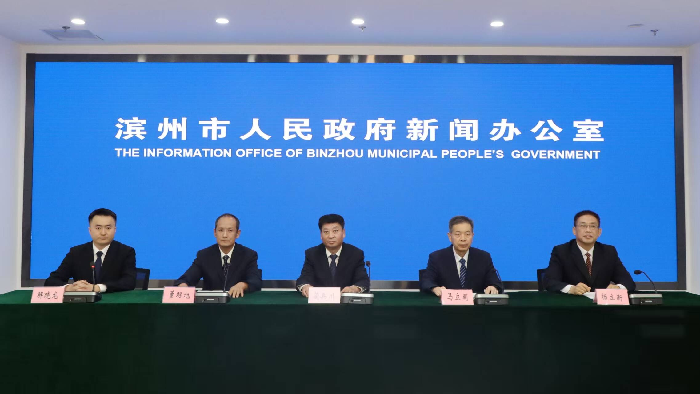
滨州粮食产业多项成绩亮眼,粮食食品产业营业收入达955亿元
Qi Lu Wan Bao Wang· 2025-09-26 08:15
Core Insights - The city has set a target for the grain and food industry to achieve a main business income of over 210 billion yuan by 2025, with a reported income of 95.5 billion yuan in the first half of the year, exceeding the target by 16.5% [3] - The city has been recognized for its reforms, with two initiatives included in national-level reform pilot programs and receiving multiple awards [1][3] Industry Performance - The grain and food industry has seen significant brand development, with 73 "Qilu Grain and Oil" products recognized, accounting for 30% of the province's total [3] - The city has successfully conducted nine external investment promotions, engaging over 20 enterprises [3][5] Technological Innovation - Four national-level grain innovation centers have conducted 53 research projects, including 29 on deep processing and 17 patent applications [4] Project Development - The city has secured 341 million yuan in project funding, ranking first in the province, with significant support for equipment updates and storage enhancement projects [5] - Several key projects have been completed, including the production of various food products, enhancing the competitiveness of the industry [6] Food Security - The grain purchase and sales market has remained stable, with 117,000 tons of wheat purchased under the minimum purchase price policy, meeting expectations [7] - The city has implemented safety measures for grain production, with all identified issues rectified [7][8] Emergency Preparedness - The emergency response system has been strengthened, with 45 enterprises designated as emergency grain supply companies [9] - The city has built a robust disaster relief material reserve, totaling 318,100 items, ensuring readiness for emergencies [9]
大禹节水预中标1.06亿农田项目 五年半研发费4.77亿布局智能农业
Chang Jiang Shang Bao· 2025-09-26 02:33
Core Viewpoint - Dayu Water-saving has achieved a significant opportunity for business expansion by winning the bid for a high-standard farmland construction project in Jinta County, which aligns with national rural revitalization strategies [1][2]. Group 1: Project Bid and Impact - Dayu Water-saving's wholly-owned subsidiary, Gansu Dayu Water-saving Group Hydropower Engineering Co., Ltd., has become the first candidate for the first bid section of the Jinta County 2025 high-standard farmland construction project, with a bid price of 106 million yuan [1]. - The project is expected to enhance the company's technical capabilities and brand influence in the high-standard farmland construction sector in Gansu Province [1][2]. - If the project proceeds smoothly, it will significantly improve Dayu Water-saving's technical standards and comprehensive solution capabilities in high-standard farmland construction, further expanding its market influence in Gansu [2]. Group 2: Financial Performance and R&D Investment - In the first half of 2025, Dayu Water-saving reported an operating income of 1.276 billion yuan, a year-on-year increase of 4.9%, while the net profit attributable to shareholders decreased by 33.24% to 12.5941 million yuan [3]. - Despite the decline in net profit, the company's gross profit margin remained stable, with an overall gross margin of 23.25%, up 0.17 percentage points year-on-year [3]. - The company has significantly increased its R&D investment, with a total of 477 million yuan spent on R&D from 2020 to the first half of 2025, focusing on smart agricultural technologies [3]. Group 3: Technological Advancements and Future Plans - Dayu Water-saving has introduced advanced drip irrigation technology to China, making it affordable for farmers, and its drip irrigation products have reached international standards [4]. - The company plans to enhance its industrial layout through external mergers and acquisitions, expanding into new business areas such as agricultural drones and unmanned equipment to further improve its competitive edge [4].

粮食安全看山东”之临清:“轴流风机压入式通风”助“粮安
Zhong Guo Fa Zhan Wang· 2025-09-25 09:35
Core Viewpoint - The introduction of the "axial flow fan pressurized ventilation" technology in Linqing City significantly enhances grain storage safety and quality while reducing energy consumption and storage losses [1][2] Group 1: Technology Overview - The traditional method of using large fans (7.5 kW) for ventilation in grain storage is inefficient due to high electricity consumption and significant moisture loss [1] - The new technology employs a 1.5 kW axial flow fan to pressurize cool air into the grain pile, effectively lowering temperature and balancing humidity [1] Group 2: Benefits of the New Technology - Energy savings are substantial, with the axial flow fan consuming only 1.5 kW, leading to a significant reduction in electricity usage [1] - The gentle airflow minimizes moisture loss and reduces storage damage, thereby preserving grain quality [1] - The operational process is simplified, saving labor and time costs, which provides an efficient solution for local grain storage [1]
粮食安全看山东”之莘县:巩固粮食安全“压舱石
Zhong Guo Fa Zhan Wang· 2025-09-25 09:32
Core Insights - Food security is a crucial foundation for national security, and grain storage facilities play a vital role in ensuring food safety [1][2][3] Group 1: Grain Storage Management - The Shandong Xincheng National Grain Reserve has implemented a standardized management system covering all aspects of grain storage, including entry and exit, storage management, safety protection, and personnel assessment [1] - The storage capacity of the reserve has increased from 15,000 tons to 60,000 tons through upgrades and the replacement of old facilities, significantly improving grain quality retention rates [1] - Investment in smart storage technologies has been made, including a seamless data connection with the provincial grain supervision cloud platform [1] Group 2: County-Level Grain Reserves - County-level grain reserves are essential for regional emergency supply, with a total reserve of 10,000 tons achieved by increasing reserves by 5,000 tons in 2018 [2] - A dynamic rotation mechanism for stored grain has been established to ensure freshness and quality, enhancing resilience against market fluctuations and natural disasters [2] Group 3: Quality Control and Agricultural Support - A specialized team conducts regular quality inspections of stored grain, maintaining loss rates below 1%, significantly lower than the industry average [3] - The reserve provides post-harvest services to farmers, helping them reduce losses by approximately 15% through quality testing and storage guidance [3] - Future efforts will focus on stringent food safety measures and enhancing the reserve's contributions to national food security [3]