科技自立自强

Search documents
创新无畏 技术“追光” “科大系”的时代担当
Shang Hai Zheng Quan Bao· 2025-12-04 19:24
Core Viewpoint - The article highlights the significant contributions of the University of Science and Technology of China (USTC) to China's technological advancement and its impact on the capital market through its alumni and their companies [3][4][9]. Group 1: Historical Context and Development - USTC was established in 1958 to meet the urgent need for advanced scientific talent in China, particularly for the "Two Bombs, One Satellite" project, attracting renowned scientists to educate students [3]. - The university has received continuous support from Anhui province, which has been crucial for its development and the promotion of high-level education and technology transfer [3][4]. Group 2: Alumni and Market Impact - USTC alumni have founded 31 publicly listed companies, with over half listed on the Sci-Tech Innovation Board, contributing significantly to the regional market [4][9]. - The average market capitalization of these companies, excluding Cambrian, is 29.5 billion yuan, with seven USTC-affiliated companies in Anhui contributing over 7.6% to the regional market capitalization [4]. Group 3: Technological Innovation and Entrepreneurship - USTC alumni are characterized by their strong technical backgrounds, often transitioning from research to entrepreneurship, exemplified by companies like iFlytek and Cambrian [4][5]. - The article emphasizes the importance of technology-driven innovation among USTC entrepreneurs, who focus on transforming scientific achievements into practical applications [4][9]. Group 4: Recent Developments and Initiatives - The "Empowerment Reform" initiated by USTC has significantly accelerated the commercialization of scientific research, resulting in a threefold increase in successful technology transfers compared to the previous five years [11][12]. - The establishment of USTC Silicon Valley aims to create a global network for innovation and entrepreneurship, facilitating the transformation of research into marketable products [14][16]. Group 5: Educational and Institutional Innovations - The USTC Business School was established to bridge the gap between technology and industry, focusing on cultivating talents who understand both technological and managerial aspects [17]. - The school aims to create a new generation of professionals who can effectively integrate technology with market needs, enhancing the university's role in societal innovation [17].


【热点评述】简析“十五五”规划建议
乘联分会· 2025-12-04 08:35
Core Viewpoint - The "14th Five-Year Plan" has entered its final countdown, with many key indicators achieved ahead of schedule, while the "15th Five-Year Plan" emphasizes high-quality development, innovation-driven growth, regional coordinated development, and green development to promote comprehensive modernization of the economy and society [6][7][12]. Group 1: Economic Development Goals - The "15th Five-Year Plan" aims to maintain economic growth at a reasonable pace, targeting a per capita GDP level of a moderately developed country by 2035, indicating the need for sustained economic growth in the near future [5][12]. Group 2: Key Strategic Tasks - The plan prioritizes building a modern industrial system and strengthening the foundation of the real economy, emphasizing self-innovation capabilities and the development of new productive forces [8][12]. - It highlights the importance of constructing a strong domestic market and expanding high-level opening-up, with the automotive industry playing a crucial role in promoting consumption and stabilizing growth [9][12]. Group 3: Regional Coordination and Green Transformation - The plan advocates for promoting regional coordinated development, with the automotive industry serving as a vivid example of this strategy in action [10][12]. - It also calls for a comprehensive green transformation of economic and social development, aligning with the "dual carbon" goals, leading to significant changes in the automotive industry [10][12]. Group 4: Outlook for Economic and Automotive Industry Development - The "15th Five-Year Plan" emphasizes qualitative improvements in economic growth, driven by increases in total factor productivity, contributions from technological innovation, and green low-carbon transitions. Domestic automobile sales are expected to exceed 35 million units during this period, with new energy vehicle penetration rates surpassing 70% [11][12].
瑞银证券孟磊:科技板块的拥挤担忧已得到缓解
Zheng Quan Shi Bao Wang· 2025-12-04 07:21
在风格配置方面,预计"成长"可能跑赢"价值","周期"有望跑赢"防御",大小盘会在明年维持一个相对 均衡的态势。战术上看好受益于中国创新火花、充足的市场流动性以及PPI跌幅收窄的行业。具体到投 资主题上,2026年建议关注科技自立自强;在"反内卷"的持续推进下优选板块;中国企业出海与全球竞 争力,以及企业盈利提速将逐步带动居民收入和销售费用提升,下半年可择时布局消费。 人民财讯12月4日电,瑞银证券中国股票策略分析师孟磊表示,日前A股市场因一些短期因素而有所回 调,但预计短线顾虑并不改变中期估值提升的趋势,明年全球科技股有望进一步上行。近期大科技的交 易占比已回落至今年均值水平以下,且融资规模有所下滑,显示科技板块交易拥挤的担忧已得到缓解。 ...
机构称科技自立自强仍是未来港股演绎的核心主线之一,恒生ETF(159920)现小幅微涨
Mei Ri Jing Ji Xin Wen· 2025-12-04 06:56
Core Viewpoint - The Hong Kong stock market shows signs of recovery after initial declines, with major indices experiencing gains, indicating a potential stabilization in market conditions [1] Market Performance - The Hang Seng Technology Index rose over 1.1% at one point, closing up 0.58%, while the Hang Seng Index and the Hang Seng China Enterprises Index increased by 0.19% and 0.38% respectively [1] - Large technology stocks exhibited mixed performance, with significant gains in robotics and pharmaceutical sectors, particularly in innovative drug concepts [1] Investment Trends - Huatai Securities suggests that the market may be nearing a "bad news fully priced in" state, as core risk factors such as trade tensions and the impact of the "takeaway war" on internet sector profitability have been sufficiently released [1] - Ping An Securities notes that southbound capital continues to flow in, with a net inflow of HKD 121.9 billion in November through the Stock Connect program [1] - Low valuation and high dividend sectors remain attractive for investment in the Hong Kong market, with a focus on technology self-reliance as a key theme for future growth [1] Notable Investment Targets - Core broad-based Hong Kong stock: Hang Seng ETF (159920) [1] - AI and platform economy: Hang Seng Technology Index ETF (513180) [1] - Focus on the development of Chinese enterprises in Hong Kong: Hang Seng China Enterprises ETF (159850) [1]
A50重大调整,两只翻倍牛股被纳入
21世纪经济报道· 2025-12-04 04:14
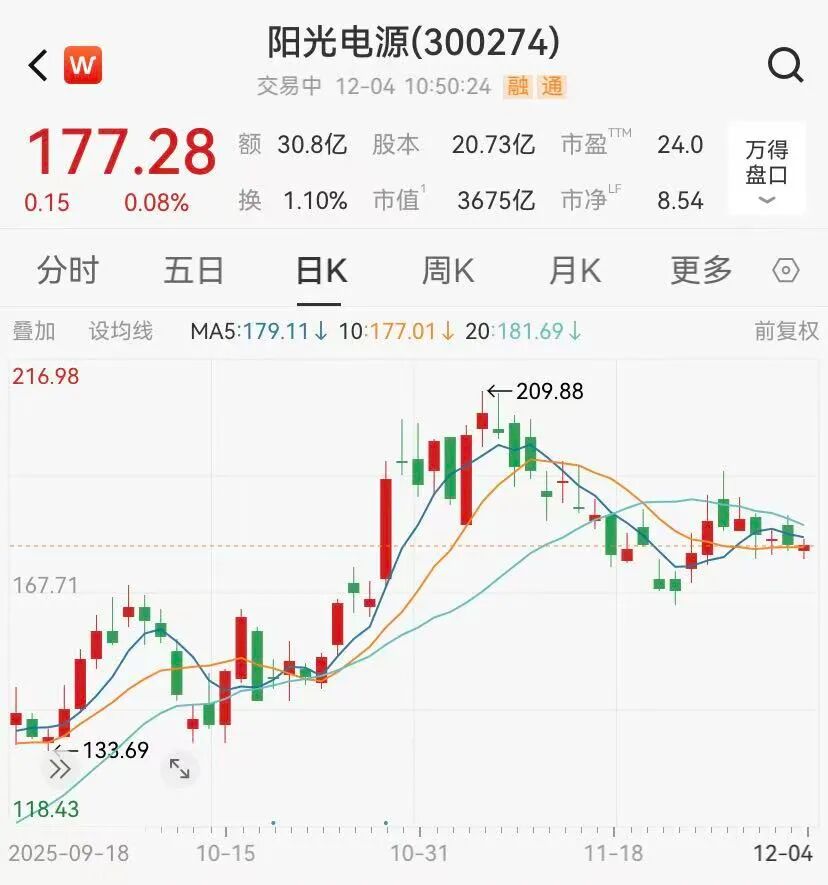
Core Insights - FTSE Russell announced changes to several indices, including the FTSE China A50 Index, which will take effect after the market closes on December 19, 2025 [1] - The newly included stocks in the FTSE China A50 Index are Luoyang Molybdenum and Sungrow Power Supply, while Jiangsu Bank and SF Holding are removed [1] - Luoyang Molybdenum reported a net profit of 5.608 billion yuan for Q3, a 96.4% year-on-year increase, driven by strong copper production and sales [1] - Sungrow Power Supply has seen its stock price increase by over 140% this year, while Luoyang Molybdenum's stock price has risen nearly 165% [1] Index Changes - FTSE Russell's selection criteria include professional analysis, field research, and past profitability, indicating that included companies are top performers in the A-share market [4] - The FTSE China A50 Index consists of the 50 largest stocks by market capitalization on the Shanghai and Shenzhen stock exchanges, serving as a key indicator for international investors [4] - The list of alternative stocks is effective immediately and will be used if any current constituents are removed before the next quarterly review [4] Market Outlook - Multiple foreign institutions are optimistic about the A-share market's performance in the coming year, with UBS forecasting an increase in overall A-share profit growth from 6% this year to 8% in 2026 [6][7] - Key investment themes for 2026 include technological self-reliance and consumer spending, with a focus on high-potential sectors amid ongoing structural changes in the economy [7] - Foreign capital inflow into the Chinese stock market reached $50.6 billion in the first ten months of 2025, significantly surpassing the total of $11.4 billion for the entire year of 2024 [7]



A50重大调整,两只翻倍牛股被纳入
2 1 Shi Ji Jing Ji Bao Dao· 2025-12-04 04:04
Core Viewpoint - FTSE Russell announced changes to the FTSE China 50 Index and related indices, effective after market close on December 19, 2025, which will impact the inclusion and exclusion of certain stocks [1][4]. Group 1: Index Changes - The FTSE China A50 Index will include Luoyang Molybdenum (603993) and Sungrow Power Supply (300274), while excluding Jiangsu Bank (600919) and SF Holding (002352) [1]. - The list of potential candidates for inclusion includes Jiangsu Bank, SF Holding, Siasun Robot & Automation (601127), Shenghong Technology (300476), and Wanhua Chemical (600309) [1]. Group 2: Company Performance - Luoyang Molybdenum reported a net profit of 5.608 billion yuan for Q3, a 96.4% year-on-year increase, attributed to strong copper production and sales, along with rising copper prices [1]. - Sungrow Power Supply has seen its stock price increase by over 140% this year, while Luoyang Molybdenum's stock has risen nearly 165%, with Luoyang Molybdenum reaching a historical high recently [1]. Group 3: Market Outlook - Foreign institutions are optimistic about the A-share market in 2024, with UBS forecasting an increase in overall A-share earnings growth from 6% this year to 8% in 2026 [5]. - Investment themes for 2026 include technological self-reliance and consumer spending, with a focus on high-potential sectors amid ongoing "anti-involution" trends [6]. - Significant foreign capital inflow into the Chinese stock market has been observed, with $50.6 billion flowing in during the first ten months of 2025, surpassing the total for 2024 [6].
毅达资本应文禄:错过人工智能,就是错过一个时代
Xin Lang Cai Jing· 2025-12-04 03:41
Core Insights - The conference theme "Towards the Future, Empowering New Life" emphasizes the need for investment strategies that adapt to changing market conditions and focus on long-term growth opportunities [1][18] Investment Opportunities - Three major investment opportunities are identified: 1. Technological self-reliance, driven by increased internal innovation in response to external pressures [3][20] 2. AI-driven industrial transformation, where companies must either successfully leverage AI or face obsolescence [3][20] 3. Mergers and acquisitions in a stock economy era, where leading companies will increasingly use M&A to enhance their supply chains and realize significant "stock value" [3][20] Market Trends - The investment landscape is undergoing structural changes, with a focus on innovation as the main driver of growth. This is evidenced by the significant rise in technology stock weights in global funds, which have increased by nearly 10 percentage points over the past five years [6][24] - The Chinese market has seen substantial advancements in technology sectors, including leadership in renewable energy and significant developments in semiconductors and AI [7][25] Entrepreneurial Focus - The essence of investment is shifting back to "investing in people," emphasizing the importance of selecting entrepreneurs who can navigate through economic cycles rather than just focusing on industries [10][28] - The ability of entrepreneurs to evolve from technical experts to comprehensive leaders is crucial for the success of their companies [11][29] Core Competencies - Investment firms must maintain a market-oriented approach and develop four core capabilities: 1. Professional return capabilities centered on DPI (Distributions to Paid-In) to meet investor expectations [14][32] 2. Comprehensive compliance and risk management integrated into all investment processes [15][32] 3. Ecosystem symbiosis capabilities to create value beyond financial investment [16][32] 4. Market adaptability to navigate changing environments and adjust strategies accordingly [16][33] Conclusion - The focus should be on identifying the 5% of key variables that can change the world, which includes innovative technologies and adaptable entrepreneurs. Investment firms must uphold their market-oriented principles to remain relevant and impactful in the evolving landscape [34][34]

破解“缺芯少魂”,中国走到哪一步了?
Xin Lang Cai Jing· 2025-12-04 02:12
Core Viewpoint - HarmonyOS is rapidly expanding its ecosystem, covering various device categories and entering a "national upgrade period," with over 27 million devices running HarmonyOS 5 and 6, growing at a rate of over 100,000 devices daily [1][8]. Group 1: Ecosystem Development - The success of an operating system largely depends on the number of applications available, and HarmonyOS has achieved compatibility with mainstream applications, becoming the world's third-largest mobile operating system [1][8]. - Despite having 5,000 common applications, HarmonyOS needs to cover more niche but essential applications, particularly for government and enterprise internal work, to establish a self-sustaining ecosystem [1][8]. - The experience of Windows Phone serves as a cautionary tale, where the lack of a "long tail" ecosystem led to its failure despite initial advantages [2][10]. Group 2: Security and Independence - The development of domestic versions of government and enterprise applications is crucial for ensuring data security and digital sovereignty, especially given the reliance on foreign operating systems [2][11]. - Recent cyberattacks highlight the urgency for enterprises to enhance their information security, necessitating a unified, secure, and efficient domestic operating system [3][11]. Group 3: Technological Advancements - HarmonyOS 5 represents a significant step towards technological independence, featuring a comprehensive security and privacy protection system [4][11]. - The distributed technology of HarmonyOS enhances cross-device collaboration, improving efficiency in enterprise applications and adapting to the demands of the AI era [5][11]. Group 4: Future Goals - The industry consensus is that achieving 100,000 applications is a critical milestone for HarmonyOS to meet diverse consumer needs, which is a key target for the next six months to a year [6][12]. - Strategies to engage government and enterprise institutions include collaborative development of benchmark applications and innovative distribution models to lower adaptation costs [12][13]. Group 5: Long-term Vision - The next five years are pivotal for building a strong technological nation, with a focus on enhancing self-reliance in technology as a primary goal of economic and social development [6][13]. - The collective efforts of developers, internet companies, and stakeholders are essential for creating a robust, autonomous ecosystem that supports a fully connected intelligent world [7][13].
平安证券(香港)港股晨报-20251204
Ping An Securities Hongkong· 2025-12-04 01:59
Market Overview - The Hong Kong stock market experienced a decline, with the Hang Seng Index closing at 23,831 points, down 145 points or 0.61% [1] - The market turnover decreased to 82.799 billion HKD, with net inflows of 484 million HKD recorded in the Hong Kong Stock Connect [1][5] - The US stock market saw gains, with the Dow Jones rising by 408.44 points or 0.86%, closing at 47,882.90 points [2] Sector Performance - In Hong Kong, local real estate, software, and 5G concept sectors faced significant declines, while gold stocks performed well [1] - The technology sector in Hong Kong saw a broad retreat, with the Hang Seng Technology Index dropping by 1.58% [1][5] - The copper price reached a historical high due to supply concerns and a weaker dollar, with a year-to-date increase of 31% [9] Investment Opportunities - The report emphasizes the attractiveness of low-valuation, high-dividend sectors in Hong Kong, particularly in technology, artificial intelligence, semiconductors, and industrial software [3] - Companies benefiting from the anticipated US Federal Reserve interest rate cuts and strong mid-term performance in the upstream non-ferrous metals sector are highlighted as potential investment opportunities [3] - The report suggests focusing on leading companies in the AI and technology sectors, which are expected to benefit from self-reliance initiatives [3] Company Highlights - Alibaba's "Qianwen" app has shown significant growth, ranking first in global AI application growth with a monthly active user growth rate of 149.03% [9][12] - China Software International (0354.HK) is noted for its strong positioning in IT services and its collaboration with Huawei, with projected revenue of 16.951 billion CNY for 2024 [10] - The report indicates that leading companies in copper mining and smelting, such as China Nonferrous Metal Mining (1258.HK) and Luoyang Molybdenum (3993.HK), are worth monitoring due to the tight supply-demand balance in the copper market [9]
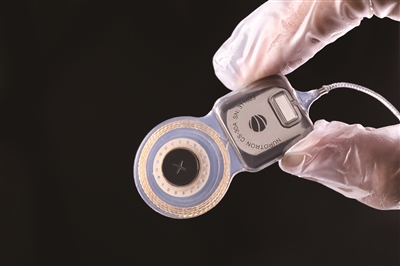
诺尔康:不断破局人工耳蜗市场
Mei Ri Shang Bao· 2025-12-03 22:19
Core Viewpoint - Norkang has developed China's first domestically produced cochlear implant, significantly reducing costs and benefiting thousands of hearing-impaired individuals. The company aims to make cochlear implants affordable for more patients through technological breakthroughs [4][8]. Product Development - Norkang's latest cochlear implant, CS-30A, is the first in China to be fully compatible with 3.0T MRI scans, addressing a long-standing issue for patients [5]. - The company has introduced an integrated speech processor, "Qingting," which combines multiple components into a single device, improving user experience and addressing traditional device limitations [6]. - Norkang has developed a unique Chinese tone recognition algorithm, C-Tone, which enhances the recognition rates for Mandarin Chinese, achieving a 13.7% improvement for single syllables and an 18.6% improvement for double syllables [6]. Market Impact - Norkang's cochlear implants have been sold in nearly 30 countries, achieving a global market share ranking of third, with over 20,000 patients benefiting from the technology [4]. - The initial pricing of Norkang's cochlear implants was set at 78,000 yuan, significantly lower than imported alternatives, which has pressured foreign competitors to reduce their prices [8]. Supply Chain and Production - Norkang's cochlear implants have achieved a 95% localization rate in production, although some raw materials are still sourced from abroad. The company is actively working to establish a domestic supply chain for these materials [9]. - The company is collaborating with Zhejiang University to overcome challenges in material production, aiming for complete domestic sourcing within the next one to two years [9]. Future Innovations - Norkang is exploring advanced products, including a new auditory brainstem stimulator designed for patients with damaged auditory nerves, which has completed 30 clinical trials and is expected to launch next year [9]. - The company emphasizes the importance of continuous innovation and aims to maintain its leadership in the neuro-electronic technology sector [11].