
全国统一大市场建设

Search documents
国家统计局:2025年9月份核心CPI同比涨幅持续扩大 PPI同比降幅继续收窄
Yang Shi Wang· 2025-10-15 01:43
9月份,消费市场运行总体平稳,居民消费价格指数(CPI)环比上涨0.1%,同比下降0.3%,扣除 食品和能源价格的核心CPI同比上涨1.0%,涨幅连续第5个月扩大。全国统一大市场建设纵深推进,市 场竞争秩序持续优化,工业生产者出厂价格指数(PPI)环比继续持平;同比下降2.3%,降幅比上月收 窄0.6个百分点。 央视网消息:国家统计局城市司首席统计师董莉娟解读2025年9月份CPI和PPI数据。 CPI同比下降0.3%,降幅比上月收窄0.1个百分点。CPI同比下降,主要是翘尾影响所致。本月CPI-0.3% 的同比变动中,翘尾影响约为-0.8个百分点,今年价格变动的新影响约为0.5个百分点。分类别看,食品 和能源价格下降。其中,食品价格下降4.4%,降幅比上月扩大0.1个百分点,影响CPI同比下降约0.83个 百分点,是影响CPI同比下降的主要因素。食品中,猪肉、鲜菜、鸡蛋和鲜果价格分别下降17.0%、 13.7%、13.5%和4.2%,合计影响CPI同比下降约0.78个百分点;牛肉和羊肉价格分别上涨4.6%和0.8%, 其中羊肉价格为连续下降44个月后首次转涨。能源价格下降2.7%,影响CPI同比下降约0.2 ...
国家统计局解读2025年9月份CPI和PPI数据
Guo Jia Tong Ji Ju· 2025-10-15 01:42
Group 1: CPI Analysis - The Consumer Price Index (CPI) increased by 0.1% month-on-month in September, reversing from a flat performance in the previous month [2] - Year-on-year, the CPI decreased by 0.3%, with the decline narrowing by 0.1 percentage points compared to the previous month [3] - Core CPI, excluding food and energy, rose by 1.0% year-on-year, marking the fifth consecutive month of growth [3] Group 2: Food and Energy Prices - Food prices increased by 0.7% month-on-month, contributing approximately 0.13 percentage points to the CPI increase, with seasonal price rises observed in fresh vegetables, eggs, fresh fruits, lamb, and beef [2] - Year-on-year, food prices fell by 4.4%, primarily driven by significant declines in pork, fresh vegetables, eggs, and fresh fruits [3] - Energy prices decreased by 2.7% year-on-year, impacting the CPI by approximately 0.20 percentage points [3] Group 3: PPI Analysis - The Producer Price Index (PPI) remained flat month-on-month for two consecutive months, with a year-on-year decline of 2.3%, narrowing by 0.6 percentage points from the previous month [4][6] - Improvements in supply-demand structures have stabilized prices in certain industries, such as coal processing and black metal smelting, which saw price increases [4] - The decline in PPI is influenced by external factors, including falling international oil prices, which affected domestic oil-related industry prices [5] Group 4: Industry-Specific Insights - The construction of a unified national market has led to a reduction in the year-on-year price decline across various industries, with notable improvements in coal processing, black metal smelting, and photovoltaic equipment manufacturing [6] - Upgrading industrial structures and releasing consumer potential have contributed to price increases in specific sectors, such as aircraft manufacturing and electronic materials [6] - The demand for quality and upgraded consumption has led to significant price increases in artisanal and ceremonial goods, as well as sports equipment [6]
以宽准入打开活力之门!立规则换提信心、拆壁垒换降成本 激活统一大市场新动能
Yang Shi Wang· 2025-10-14 06:38
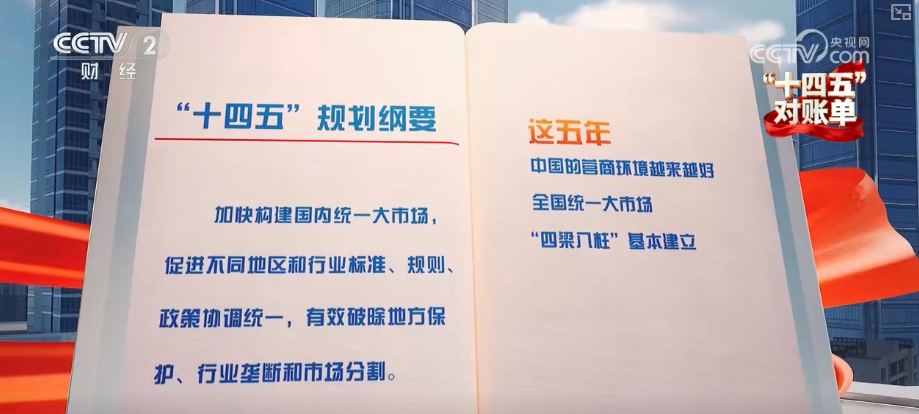
央视网消息:市场是最稀缺的资源,拥有超大规模且极具增长潜力的市场是我国发展的巨大优势。"十四五"期间,我国纵深推进全国统一大市 场建设,破除要素流通壁垒。 "十四五"规划纲要提出,加快构建国内统一大市场,促进不同地区和行业标准、规则、政策协调统一,有效破除地方保护、行业垄断和市场分 割。这五年,中国的营商环境越来越好,全国统一大市场"四梁八柱"基本建立。 目前,我国已迭代发布5版市场准入负面清单,清单事项从151项减到了106项,集中清理超4200件妨碍全国统一市场和公平竞争的规定和做 法。 "十四五"规划纲要提出,破除制约要素合理流动的堵点,矫正资源要素失衡错配,从源头上畅通国民经济循环。这五年,我国城乡要素流动更 加顺畅,城区常住人口300万以下城市的落户限制基本取消。劳动力、资本、数据等要素跨区域流动更加高效。2024年,全国数据市场交易规 模超1600亿元,同比增长30%以上。初步建成全国统一电力市场体系,市场化交易电量占全社会用电量比重已达63%。 以宽准入打开活力之门,"硬联通""软联通"协同并进。《民营经济促进法》颁布实施,民营企业数量比"十三五"末增长超40%。全社会物流成 本不断降低,202 ...

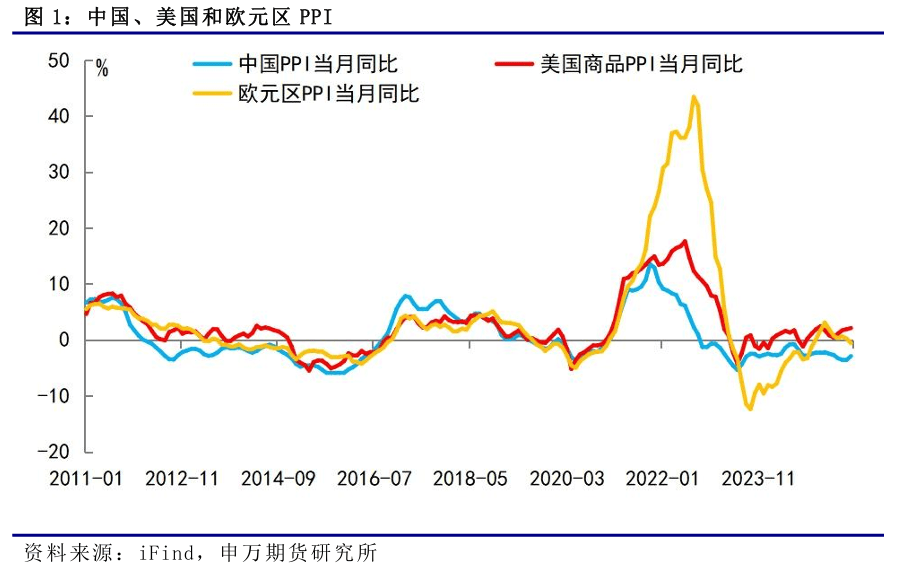
薛鹤翔:中美欧PPI为什么脱钩?
Sou Hu Cai Jing· 2025-10-14 06:31
Core Insights - The PPI trends in China, the US, and Europe have diverged significantly post-pandemic, with China experiencing low PPI, the US maintaining relatively high PPI, and Europe showing considerable volatility. This divergence is primarily attributed to differences in energy structures and demand dynamics across these regions [1][4]. Energy Structure Impact - China's PPI is highly sensitive to coal prices, which are currently low due to weak demand and expanded supply. The domestic coal production has exceeded historical levels, and the demand from traditional sectors like real estate has decreased, leading to a prolonged low PPI [8][18]. - The US has a strong energy independence, primarily relying on oil and natural gas. The PPI is less affected by energy price fluctuations compared to Europe, with stable natural gas prices and a significant impact from rising oil prices due to global supply and demand dynamics [11][13]. - Europe's PPI has been significantly influenced by volatile natural gas prices, especially following the Russia-Ukraine conflict, which led to a sharp increase in energy costs. The subsequent measures to reduce dependency on Russian gas have also contributed to PPI fluctuations [14][22]. Demand Dynamics - In China, the transition from traditional to new economic drivers is underway, with the real estate sector in a downturn. This has led to reduced demand for related products, suppressing PPI. However, new economic drivers are beginning to support a gradual recovery in PPI [2][16]. - The US has shown strong demand resilience due to substantial fiscal stimulus during the pandemic, which increased disposable income and consumer spending. Despite rising labor costs and interest rates, the PPI has only seen moderate declines [19][20]. - Europe is experiencing a mild recovery in demand post-pandemic, but high energy costs and external demand declines have previously suppressed PPI. Recent economic recovery efforts and fiscal policies are expected to support a gradual increase in PPI [15][22].
别让“政绩冲动”妨碍统一大市场
Jing Ji Ri Bao· 2025-10-11 22:18
Core Viewpoint - The article emphasizes the need to correct the short-sighted behavior of local governments that prioritize local interests over national economic integration, which hinders the construction of a unified national market [1][2]. Group 1: Issues in Local Governance - Some local governments create "policy depressions" by providing land and incentives to attract investment, while also establishing hidden barriers to protect local enterprises [1]. - There is a tendency to pursue high-tech projects without considering local capabilities, leading to redundant construction and intensified competition within industries [1]. - Short-sighted actions driven by performance pressure result in a focus on local benefits at the expense of broader economic principles, creating a vicious cycle where government subsidies distort the market [1]. Group 2: Correcting Performance Evaluation - To address the deviation in performance evaluation, it is essential to guide officials to avoid impulsive project selection and blind investments without considering risks [2]. - The current performance assessment system for officials faces challenges, such as the difficulty in setting "potential performance" indicators and implementing differentiated evaluations [2]. - There is a need to incorporate metrics like "elimination of market barriers" and "fairness in bidding" into local assessments to enhance accountability and address performance deviations [2]. Group 3: Promoting Sustainable Development - Officials are encouraged to enhance their understanding of economic development laws and to shift from competing for resources and policies to improving the business environment [3]. - There is a call for fostering a unique industrial ecosystem that benefits both local and national interests, contributing to overall economic growth [3].
央企共赢ETF(517090)盘中涨超1%,国企改革深化预期受关注
Mei Ri Jing Ji Xin Wen· 2025-10-10 05:32
Core Viewpoint - The article emphasizes the focus of state-owned enterprise (SOE) reform during the "14th Five-Year Plan" period on building a high-level socialist market economy, with key pillars including deepening SOE reform, promoting the development of the private economy, advancing the construction of a unified national market, and facilitating domestic and international dual circulation [1] Group 1: SOE Reform Focus - The direction of SOE reform will concentrate on optimizing functional positioning, enhancing R&D investment, and building innovation capabilities, as well as improving the regulatory system for state assets with Chinese characteristics [1] - Specific measures include a refined classification system for differentiated regulation of competitive, strategic, and public welfare enterprises, and the establishment of a modern corporate governance system that clarifies the responsibilities and boundaries of shareholders, boards, and management [1] Group 2: Market Mechanism and Incentives - The reform will promote market-oriented operational mechanisms, fully implement the professional manager system, and increase incentives for technology-driven enterprises by developing diversified long-term incentive tools [1] - The construction of a unified national market will enhance the supply of regulatory systems, strengthen fair and collaborative market supervision, accelerate infrastructure connectivity reforms, and promote overall regional integration reforms to optimize resource allocation and stimulate market vitality [1] Group 3: ETF and Index Overview - The Central Enterprise Win-Win ETF (517090) tracks the FTSE China SOE Open Win-Win Index (W00553), which selects state-owned enterprise securities with global layout and sustainable development characteristics to reflect the overall performance of Chinese SOEs in an open and win-win context [1] - The index components cover multiple industries and emphasize the long-term stable operating capabilities and social responsibility fulfillment of enterprises [1]

第二十七届中国国际矿业大会即将开幕,首设“矿业权转让大市场”
Xin Jing Bao· 2025-10-09 05:03
在展览内容上,本届大会亮点纷呈,多维度展现全球矿业发展活力与前沿方向。在矿业权推介板块,大 会汇聚全球资源富集区域的大量高质量矿权项目,涵盖多个亚太国家,为全球矿业投资与合作搭建高效 对接的纽带。在矿业工程机械装备展区,大会实现"全产业链覆盖",展品品类丰富且聚焦实用与创新。 新京报讯(记者张建林)2025(第二十七届)中国国际矿业大会定于10月23日至25日在天津梅江会展中 心举办。记者从中国矿业联合会获悉,截至目前,展会总占地已超5万平方米,吸引近500家国内外企业 参展,覆盖全球27个国家。 与此前不同,本届大会在规模上实现全新突破,将首次启用天津梅江会展中心全部展厅,室内外展览总 面积突破历史峰值,刷新大会创办以来的规模纪录。 除传统的矿业综合展区、国际展区及矿业工程机械装备展区外,本届大会还紧跟行业发展趋势,增设多 个特色鲜明的热点展区。例如,"矿业公司、投资、法律、咨询技术服务公司"展区、"智慧矿山场景应 用"展区等。 据了解,本届大会还将在 N4 展厅首次设立"矿业权转让大市场",主办方从数百个报名项目中筛选出 200个遍及10余个国家的寻求转让项目进行公开展示,为矿业权人创造转让合作机会,又从 ...
让民间资本愿投敢投会投
Jing Ji Ri Bao· 2025-10-03 22:09
Group 1 - Jiangsu has removed market access barriers for private enterprises, encouraging their participation in competitive infrastructure investment in nuclear power, wind power, and energy storage [1] - Hubei has released an investment project list targeting private capital, with an expected total investment of over 700 billion yuan in projects over the next three years [1] - From January to July this year, private project investment (excluding real estate development) in China grew by 3.9%, indicating strong resilience [1] Group 2 - Investment structure among industries shows significant differentiation, with private investment in accommodation and catering growing by 19.6%, infrastructure by 8.8%, culture, sports, and entertainment by 8.1%, and manufacturing by 5.0% [1] - The completion of the "two重" construction project list, amounting to 800 billion yuan, and the central budget investment of 735 billion yuan has provided strong support for private investment [1] - The shift towards service consumption is becoming a major direction for consumption upgrades, creating new investment opportunities that require active participation from private capital [1] Group 3 - China's per capita capital stock still lags behind developed countries, indicating significant investment space in infrastructure, industrial upgrades, education, healthcare, elderly care, and childcare [2] - The National Development and Reform Commission has recently introduced over 3,200 new projects to private capital, with a total investment exceeding 3 trillion yuan [2] - Optimizing the business environment and establishing a unified national market are essential to reduce institutional costs and support private enterprises [2]
王一鸣:纵深推进全国统一大市场建设的基本要求和任务|宏观经济
清华金融评论· 2025-10-03 09:39
Core Viewpoint - The construction of a unified national market is essential for leveraging China's vast market advantages, building a high-level socialist market economy, and supporting the new development pattern [2][3]. Group 1: Significance of Advancing a Unified National Market - Advancing the unified national market is a strategic measure to unleash China's enormous domestic demand potential and promote sustained economic recovery [3]. - It is necessary to enhance the unity, openness, competitiveness, and orderliness of the market system to fully realize the potential of China's super-large market [5]. - The unified national market serves as a strategic support for constructing a new development pattern, facilitating smooth circulation of goods and resources, and enhancing international competitiveness [6]. Group 2: Unified Market Basic System - The core of the unified market basic system includes unified property rights protection, market access, fair competition, and social credit systems to ensure uniformity of institutional rules nationwide [7]. - Strengthening the unified property rights protection system is crucial for the operation of the socialist market economy, particularly for non-public economic entities [7]. - Implementing a unified market access system is essential to eliminate local protectionism and market segmentation, ensuring equal access for all market entities [8]. Group 3: Unified Market Infrastructure - High-standard connectivity of market infrastructure is fundamental for the smooth flow and efficient allocation of goods and resources [10]. - Enhancing the modern logistics system and commercial circulation system is vital to reduce logistics and transaction costs, thereby improving market operation efficiency [10][11]. - The construction of a modern commercial circulation system is necessary to promote the integration of commerce and circulation, enhancing overall efficiency [11]. Group 4: Unified Government Behavior Standards - Standardizing government behavior is essential for maintaining fair competition in the market, particularly in areas like investment attraction and procurement [12]. - It is important to eliminate regulations that hinder the construction of a unified market and ensure fair competition in the bidding and procurement sectors [13][20]. Group 5: Unified Market Supervision and Law Enforcement - Establishing unified market supervision rules is crucial for creating a fair competitive market order and enhancing regulatory efficiency [14]. - Improving the effectiveness of market supervision through various methods, including big data and digital technologies, is necessary for advancing the unified national market [14][22]. Group 6: Unified Factor Resource Market - A unified factor resource market is essential for promoting the free flow and efficient allocation of production factors such as land, labor, capital, technology, and data [15]. - Developing a unified capital market and enhancing the interconnectivity of various financial infrastructures are critical for facilitating resource allocation [16]. Group 7: Expanding Domestic and International Openness - Continuous expansion of both domestic and international openness is fundamental for fostering competitive conditions in the unified national market [17]. - Promoting the integration of domestic and international markets will enhance the efficiency of resource allocation and support the new development pattern [21]. Group 8: Focus on Key Challenges - Addressing "involution" in competition, which leads to price wars rather than innovation, is essential for fostering a healthy competitive environment [19]. - Promoting the orderly exit of outdated production capacity and enhancing industry concentration are necessary for improving market efficiency [19].
牵住要素市场化改革的牛鼻子
Jing Ji Ri Bao· 2025-10-02 22:16
Core Viewpoint - The State Council has approved a pilot program for comprehensive reform of factor market-oriented allocation in ten regions, including Beijing's urban sub-center and key cities in southern Jiangsu, focusing on traditional factors like land, labor, and capital, as well as innovative factors like technology and data [1] Group 1: Market-Oriented Reform - The reform aims to break through entrenched interests and promote the construction of a unified national market, addressing local protectionism and market segmentation [1] - The initiative is seen as a crucial step in building a high-level socialist market economy, providing new momentum for high-quality economic and social development [1] Group 2: Resource Allocation and Market Efficiency - Emphasizing the importance of a large-scale market, the article advocates for a unified and competitive market system that facilitates the smooth flow of resources across regions and sectors [2] - The need to enhance the market's decisive role in resource allocation is highlighted, particularly in transforming technological factors into tangible productivity [2] Group 3: Active Market Engagement - The article stresses the importance of making the factor trading market more active and improving the price formation mechanism, which involves changing perceptions about resource limitations and the value of factors [3] - A specific example is provided with the Ningxia Hui Autonomous Region's initiative to create a comprehensive pilot for the grape and wine industry, addressing challenges in financing, circulation, and sales channels [3] Group 4: Challenges and Future Directions - The reform is acknowledged to be extensive and challenging, with a two-year pilot period aimed at overcoming systemic obstacles and accumulating experience for broader implementation [3] - Continuous exploration and detailed implementation are necessary to balance effective markets with proactive government roles, maximizing resource allocation efficiency [3]