
制度型开放

Search documents
赵忠秀:加快完善高水平对外开放体制机制
Jing Ji Ri Bao· 2025-11-20 00:40
Core Viewpoint - The article emphasizes the importance of high-level opening-up as a distinctive feature of Chinese modernization, highlighting the strategic deployment for expanding cooperation and achieving win-win outcomes in the context of global economic challenges [1][2][3]. Summary by Sections Historical Context and Achievements - Since the initiation of reform and opening-up, China has achieved significant economic growth through expanding foreign trade and investment, with a notable increase in imports and exports in the first half of the year [2]. - In 2024, the Central Economic Work Conference reiterated the need to stabilize foreign trade and investment while expanding high-level opening-up [2]. Strategic Importance of High-Level Opening-Up - High-level opening-up is seen as a necessary requirement for advancing Chinese-style modernization and enhancing international cooperation [3]. - The article discusses the challenges posed by unilateralism and protectionism globally, emphasizing the need for China to expand its openness to mitigate risks and enhance competitiveness [3]. Institutional and Regulatory Framework - The focus is on establishing a system of institutional opening-up, which includes aligning domestic regulations with international standards in areas such as rules, regulations, management, and standards [4][5]. - The article highlights the need for reforms in key areas such as digital trade, green economy, and intellectual property to enhance China's participation in international rule-making [5][6]. Expanding Open Fields - The article notes that while China's opening-up has progressed, there is still a need to broaden the scope and depth of openness, particularly in service sectors and emerging fields like digital and green economies [6][8]. - It emphasizes the importance of high-quality platforms for international cooperation, such as free trade zones, to facilitate deeper engagement with global markets [8][9]. Enhancing International Cooperation Platforms - The development of high-energy open cooperation platforms is crucial for integrating international high-standard economic rules and enhancing China's global influence [9][10]. - The article discusses the importance of aligning domestic platforms with international standards to improve competitiveness and resilience in global supply chains [10][11]. Balancing Openness and Security - The article stresses the need to balance openness with security, particularly in areas such as financial stability, supply chain security, and data protection [12][13]. - It highlights the importance of establishing a comprehensive security framework to safeguard against external risks while promoting economic growth [12][17]. Pathways and Measures for Improvement - The article outlines actionable pathways for enhancing the quality of institutional supply and optimizing the business environment to attract foreign investment [15][16]. - It emphasizes the need for continuous innovation in trade and investment practices to expand international market opportunities and improve the overall economic landscape [16][17].
苏州市委召开专题会议 范波讲话 吴庆文出席
Su Zhou Ri Bao· 2025-11-20 00:29
Group 1 - The meeting emphasized the importance of implementing the spirit of the 20th Central Committee's Fourth Plenary Session and the key instructions from General Secretary Xi Jinping regarding Jiangsu and Suzhou, aiming for high-quality development and contributing to the national and provincial development landscape [1] - The meeting discussed the implementation of the 15th Five-Year Plan, highlighting the need for precise understanding of the Central Committee's decisions and focusing on key areas to ensure a solid foundation for Suzhou's development during this period [1] Group 2 - The meeting reviewed the progress of the Yangtze River Delta integration strategy, stressing the need to align Suzhou's work with national and provincial development goals, enhance cooperation, and promote high-quality development in the region [2] - The meeting also addressed the deepening of cooperation with Singapore and expanding high-level opening-up, aiming to build a world-class high-tech park and enhance trade and investment facilitation [2]
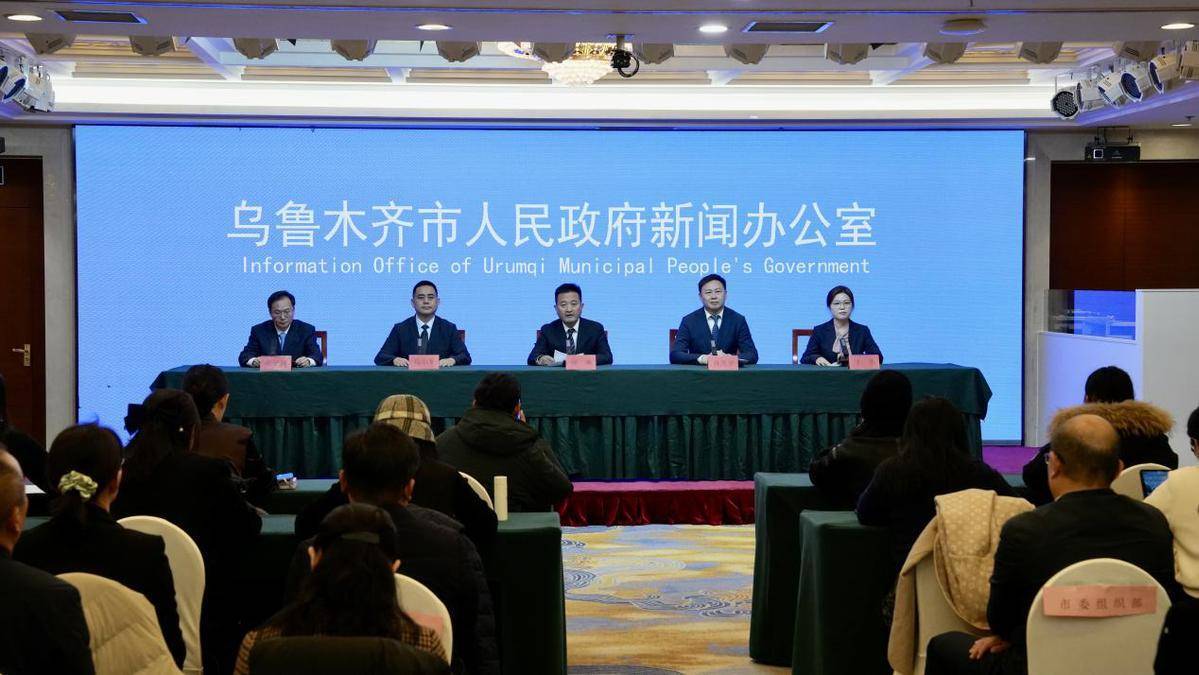
中国(新疆)自由贸易试验区乌鲁木齐片区建设两周年新闻发布会召开
Sou Hu Cai Jing· 2025-11-19 23:08
Core Insights - The Urumqi Free Trade Zone has demonstrated significant progress in its second year, enhancing trade facilitation and institutional innovation [3][6] - Urumqi has become the only city in Northwest China approved for a national cross-border trade facilitation pilot, implementing 37 measures to improve trade efficiency [3][4] Summary by Sections Institutional Innovation - The Urumqi Free Trade Zone has achieved 74 institutional innovation results, including the establishment of the first national group standard for soft-top vehicles and the launch of the first regular international freight train service to Central Asia [4] - The zone has implemented 157 out of 177 reform pilot tasks, achieving an implementation rate of 88.7%, and 238 out of 263 self-initiated reform tasks, with a 90.5% implementation rate [3] Trade Facilitation - The Urumqi Customs has introduced a "road port + local direct access" model, saving approximately 3,000 yuan per vehicle and reducing logistics time by 3 to 5 days [4] - Import customs clearance time has been reduced from 3 days to within 16 hours, and the time for exporting hazardous chemicals has been cut by over 70% [4] Economic Development - The Urumqi Free Trade Zone has established 14,821 new enterprises, with 5,540 set up in the first nine months of this year, marking a 12.8% year-on-year increase [3] - The total foreign trade import and export volume reached 84.345 billion yuan, contributing nearly 60% of the city's total foreign trade with only 1% of its area [3] Logistics and Transportation - The Urumqi International Land Port Area has launched over 9,900 China-Europe (Central Asia) freight trains, enhancing logistics efficiency [5] - The zone has opened 36 international cargo routes and 28 passenger routes, significantly improving connectivity with multiple countries [5]

利好!外资机构:看好中国资产
Zhong Guo Zheng Quan Bao· 2025-11-19 08:48
Core Viewpoint - Multiple foreign securities and fund companies have released outlook reports for 2026, indicating that the current Chinese stock market has medium to long-term allocation value driven by ample liquidity and improving profitability [1] Group 1: Market Outlook - UBS sets the MSCI China Index target for the end of 2026 at 100, representing a 14% upside from current levels [3] - Morgan Stanley raises its target for the CSI 300 Index to 4840 points by December 2026, citing moderate corporate profit growth and a more favorable external environment [3] Group 2: Investment Strategies - Foreign institutions favor sectors such as technology, internet, and high-dividend assets [4] - UBS is optimistic about technology stocks, internet stocks, and the brokerage sector, while Morgan Stanley recommends a "barbell strategy" focusing on high-quality internet and technology leaders alongside some high-dividend assets for stable cash returns [4] - Goldman Sachs has identified 50 stocks across 21 sub-industries, including 30 A-shares and 20 overseas-listed Chinese stocks, expected to outperform the market in the future [4] Group 3: Cross-Border Investment Facilitation - Foreign institutions express confidence in China's capital market due to a series of landmark opening measures aimed at enhancing cross-border investment and financing convenience [5] - The recent approval of Huafu International Asset Management Co., Ltd. as a qualified foreign investor by the China Securities Regulatory Commission (CSRC) exemplifies the expedited approval process [6] - The CSRC has introduced an optimization plan for the qualified foreign investor system, aiming to streamline the investment pre-approval process and enhance efficiency in various related procedures [6][7]


太湖潮涌聚新能 开放共赢链全球
Xin Hua Ri Bao· 2025-11-19 02:58
Group 1 - The forum held on November 18 in Wuxi attracted over 700 guests, including executives from more than 30 Fortune 500 companies, focusing on key industries like new energy and biomedicine [1] - A total of 21 high-level R&D projects were signed at the event, alongside the launch of two major industry platforms: the Jiangsu Province Biomedicine Full Industry Chain Open Innovation Alliance and the Jiangsu Province New Energy Industry Chain Hub Platform [1][6] - Jiangsu's actual foreign investment reached $103.74 billion from 2021 to 2024, with a national share of 16.4% in 2024, increasing to 18.1% in the first three quarters of this year [2] Group 2 - The Jiangsu Free Trade Zone's biomedicine open innovation development plan was approved, making it the first province in China to pilot in this field, featuring 18 policy measures and 77 specific tasks [3] - The plan aims to create a "highway" for the entire process of drug development, manufacturing, circulation, and use, with significant cost savings and faster customs clearance [3] - The presence of over 40% of Apple's core suppliers in China, with half located in Jiangsu, highlights the region's mature industrial chain [4] Group 3 - Pfizer announced the launch of the "Pfizer-Jiangsu Full Industry Chain Innovation Empowerment Plan" to deepen its involvement in Jiangsu's biomedicine sector [5] - LG Group has invested nearly $10 billion in Jiangsu, viewing it as a key base for new energy battery production, with plans for further investment in new technologies [5] - The establishment of two major industry platforms aims to enhance collaborative efficiency and international competitiveness in key sectors like power batteries and renewable energy [6] Group 4 - Eli Lilly plans to deepen local cooperation in major disease areas, having invested a total of $15 billion in its Suzhou pharmaceutical production base over the past 30 years [7]
广西领导干部“时代前沿知识”系列讲座第134讲举行陈刚主持并讲话 龙永图作专题报告 韦韬孙大伟王维平出席
Guang Xi Ri Bao· 2025-11-19 01:51
Core Insights - The report by Long Yongtu emphasizes the importance of high-level opening up for China's economic development, particularly in the context of current international economic conditions [1] - The discussion includes strategies for enhancing cooperation with ASEAN countries and leveraging opportunities from China's AI initiatives and the upgraded China-ASEAN Free Trade Area [2] Group 1: Current Economic Situation - Long Yongtu provides an analysis of both domestic and international economic conditions, highlighting the need for China to maintain strategic determination and enhance internal motivation [1] - The report discusses the significance of institutional, comprehensive, mutually beneficial, and autonomous unilateral openness [1] Group 2: Recommendations for Guangxi - The report suggests that Guangxi should firmly adhere to open development and strengthen cooperation with ASEAN countries across various fields [1] - Emphasis is placed on promoting high-quality economic and social development through high-level opening up [1] - The need for Guangxi to actively engage in AI cooperation with ASEAN countries is highlighted, aiming to create a collaborative development path [2] Group 3: Implementation and Goals - Chen Gang stresses the importance of aligning actions with the central government's scientific judgment on current international and domestic situations [2] - The focus is on planning for the 14th Five-Year Plan and ensuring the completion of annual targets to lay a solid foundation for a good start [2]
700多名中外嘉宾齐聚无锡,共商产业链供应链协同发展之道太湖潮涌聚新能 开放共赢链全球
Xin Hua Ri Bao· 2025-11-18 23:17
Core Insights - The forum held on November 18 in Wuxi focused on international cooperation in supply chains, attracting over 700 attendees, including executives from more than 30 Fortune 500 companies [1] - Key discussions revolved around the collaborative development of supply chains in critical industries such as renewable energy and biomedicine, leading to the signing of 21 high-level R&D projects [1][6] - Jiangsu province has achieved significant foreign investment, with actual foreign capital usage reaching $103.74 billion from 2021 to 2024, accounting for 16.4% of the national total in 2024 [2] Industry Developments - The establishment of the "Jiangsu Province Biomedicine Full Industry Chain Open Innovation Alliance" and the "Jiangsu Province New Energy Industry Chain Hub Platform" aims to enhance global resource connectivity and build a new industrial ecosystem [1][6] - The "Jiangsu Free Trade Zone Biomedicine Full Industry Chain Open Innovation Development Plan" has been approved, making Jiangsu the first province in China to pilot in the biomedicine sector, featuring 18 policy measures to streamline the R&D process [3] Company Engagements - GE Healthcare's Wuxi base has become the largest ultrasound equipment center globally, supporting over 460 upstream and downstream suppliers, showcasing the strength of the industrial cluster [2] - Pfizer announced the launch of the "Pfizer-Jiangsu Full Industry Chain Innovation Empowerment Plan" to deepen its involvement in Jiangsu's biomedicine sector, emphasizing local production and global market integration [5][7] - Apple’s core suppliers, over 80% of whom have factories in China, with half located in Jiangsu, highlight the region's mature industrial chain and advancements in smart manufacturing and green transformation [4]

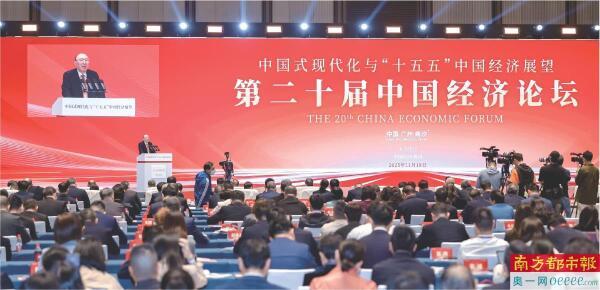
大湾区11城若能融合起来,2035年将成世界最大经济中心和科创中心
Nan Fang Du Shi Bao· 2025-11-18 23:11
Core Viewpoint - China's manufacturing industry is undergoing three major transformations under a new paradigm, focusing on self-reliance in research and development, a balanced development model, and an increased global market share, particularly in digitalization, intelligence, and new energy equipment [3][4]. Group 1: Transformations in Manufacturing - The first transformation involves achieving self-reliance in research and development, enhancing industry competitiveness through the industrialization of research outcomes and cluster innovation [3]. - The second transformation shifts the manufacturing development model from reliance on processing trade to a balanced approach that enhances self-sufficiency while maintaining high-level openness [3]. - The third transformation sees an increase in China's share of global manufacturing, especially as a leader in digitalization, intelligence, and new energy equipment [3]. Group 2: Challenges and Strategic Investments - Current challenges include high resource consumption, low profit margins, and insufficient total factor productivity [3]. - To address these challenges, China plans to increase investments in strategic emerging industries and future industries, promoting high-quality and innovative development in manufacturing [3][4]. - The focus for future productivity will be on new energy, new materials, new biomedicine, new high-end equipment, and new artificial intelligence [3]. Group 3: Digital and Green Transformation - Digital transformation can be advanced through five levels: industrial automation, ensuring information flow stability, horizontal resource planning management, promoting industrial internet development, and applying artificial intelligence in industrial systems [4]. - Green transformation will focus on five areas: source reduction, energy conservation and emission reduction, waste recycling, process reengineering, and pollution control [4]. Group 4: Development of Productive Services - From 2021 to 2024, the growth rate of productive services nationwide is projected to be 12.1% [5]. - By the end of the 14th Five-Year Plan around 2035, the goal is for productive services to account for over 35% of the economy, reaching approximately 40% by 2050 [5]. Group 5: Regional Cooperation and Economic Integration - The collaboration between Nansha and Hong Kong is seen as a complementary advantage, focusing on creating a comprehensive service platform for mainland enterprises going global [6][7]. - The emphasis is on rule alignment and creating an international business environment, facilitating cross-border professional practice and financial support for industries and technological innovation [7]. Group 6: Innovation and Talent Development - The establishment of a large-scale innovation system is crucial for developing new productivity and integrating the foundational research capabilities of the Greater Bay Area [8][9]. - Recommendations include administrative reforms, regulatory adjustments, and fostering an open system to enhance cooperation with Hong Kong and Macao [9][10]. Group 7: Technology and Economic Growth - Technology innovation is identified as a key driver for high-quality economic development, with a focus on addressing challenges posed by AI and other new technologies [17][18]. - Suggestions for maximizing the positive impact of technology innovation include increasing investment in basic research, optimizing talent cultivation, and enhancing the legal framework for innovation [19]. Group 8: Data Economy Development - The development of the data economy is highlighted, with a focus on establishing a robust data system and encouraging market participation in data transactions [20][21]. - Recommendations include government-led initiatives to create standards and safety systems in the data sector, promoting collaboration between government and enterprises [21].
河南省政府召开常务会议
He Nan Ri Bao· 2025-11-18 09:27
Core Viewpoint - The meeting led by the Governor of Henan Province focuses on enhancing the province's development through strategic initiatives in foreign trade, agricultural infrastructure, cultural heritage, and the micro-short drama industry, aligning with national policies and local conditions [1][2][3]. Group 1: Foreign Trade and Economic Development - The meeting emphasizes the need to analyze new trends and tasks in foreign trade during the 14th Five-Year Plan period, aiming to integrate with international high-standard trade rules and promote high-quality Belt and Road cooperation [2] - There is a focus on expanding the scale and optimizing the structure of foreign trade, enhancing the capabilities of free trade zones and comprehensive bonded zones, and fostering leading enterprises in the outward-oriented economy [2] - The goal is to create a first-class business environment to attract foreign investment and enhance risk prevention capabilities, thereby promoting high-quality development through elevated levels of openness [2] Group 2: Agricultural Infrastructure - The meeting discusses the importance of implementing national policies on winter-spring agricultural water conservancy and high-standard farmland construction, considering climate change's impact on agricultural production [2] - It aims to enhance agricultural disaster prevention and mitigation capabilities, ensuring food security and laying a solid foundation for building a strong agricultural province [2] Group 3: Cultural Heritage and Environmental Protection - The meeting highlights the need to protect and promote the cultural heritage of the Grand Canal, integrating ecological protection with cultural preservation [2] - It emphasizes the importance of planning and prioritizing protection while managing water resources and ecosystems effectively [2] Group 4: Micro-Short Drama Industry - The meeting addresses the development of the micro-short drama industry by leveraging Henan's historical and cultural resources, promoting collaboration across the industry chain [3] - It aims to innovate business models and enhance promotion efforts to support the healthy development of the micro-short drama sector, contributing to the province's cultural tourism strength [3]
地方积极布局 抢抓中国东盟合作升级机遇——绿色贸易、数字经济等新兴领域潜力巨大
Xin Hua Wang· 2025-11-18 02:55
Group 1 - The China-ASEAN Free Trade Area (CAFTA) upgrade is opening new avenues for regional cooperation, focusing on digital economy and green trade [1] - The signing of the CAFTA 3.0 upgrade protocol on October 28 is seen as a significant milestone for cooperation, promoting digital technology, green industry collaboration, and supply chain connectivity [1][3] - Various provinces in China, including Guangxi, Yunnan, Hainan, and Fujian, are actively preparing to align with the new rules and enhance trade connections with ASEAN [1][2] Group 2 - China has maintained its position as ASEAN's largest trading partner for 16 consecutive years, with bilateral trade expected to reach $982.3 billion in 2024, a 17-fold increase since the establishment of CAFTA [3] - In the first ten months of this year, trade between China and ASEAN totaled 6.18 trillion yuan, a 9.1% increase, accounting for 16.6% of China's total foreign trade [3] - The upgrade emphasizes a shift from traditional tariff reductions to a focus on rules, regulations, and standards, marking a transition to "institutional openness" [3][4] Group 3 - The CAFTA 3.0 upgrade protocol supports the development of small and medium-sized enterprises (SMEs) by promoting e-commerce applications and digital transformation [4] - The rapid growth of cross-border e-commerce is breaking traditional trade barriers and driving bilateral trade expansion [4][5] - The signing of the CAFTA 3.0 protocol is expected to significantly benefit the development of cross-border e-commerce, creating favorable conditions for SMEs to integrate into regional value chains [5][6]