
量子科技

Search documents
机构:量子计算产业正迎来高速增长阶段
Zheng Quan Shi Bao Wang· 2025-12-24 01:45
2025年是"国际量子科学与技术年",亦是量子科技加速从理论研究向产业应用迈进的关键之年。全球主 要国家纷纷加码量子战略布局,我国"十五五"规划建议将量子科技列为未来产业之首,量子科技已然成 为全球新的角力场。 中信建投(601066)证券指出,量子计算作为量子科技皇冠上的宝石,技术壁垒最高、颠覆性最强、成 长潜力最大,有望通过实现指数级算力突破重塑经典计算边界,是下一代科技革命的关键引擎。当前, 量子计算正处在含噪声的中等规模量子时代,超导、离子阱、光量子以及中性原子等主流技术路径齐头 并进、尚未收敛,产业链中上游是发展重点。量子计算产业正迎来高速增长阶段,2035年全球市场规模 有望超过8000亿美元,下游正处于发展初期,但成长潜力巨大、值得期待。 ...
“引进来”和“走出去”双向发力 专家建言浦东打造社会主义现代化建设引领区理论和实践创新
Jie Fang Ri Bao· 2025-12-24 01:42
Core Viewpoint - Pudong is celebrating the fifth anniversary of its development as a leading area for socialist modernization, facing new domestic and international challenges, and must develop further plans to enhance high-level opening-up and institutional openness [1] Group 1: Innovation and Technology - Over the past five years, Pudong has significantly improved its innovation capabilities, with fiscal science and technology investment increasing from 3.9% of the general public budget in 2020 to 9.2%, leading to an average annual growth of 11.2% in R&D investment [2] - Experts suggest that Pudong should focus on artificial intelligence, synthetic biology, and quantum technology to accelerate the development of application scenarios and the commercialization of technology [2] - To achieve high-quality development, Pudong must demonstrate leadership in high-level technological self-reliance, particularly in strategic fields like integrated circuits and life sciences [2] Group 2: External Environment and Trade - Despite changing external conditions, China's commitment to opening up remains steadfast, with Pudong expected to enhance its international competitiveness in modern service sectors such as finance and technology [3] - Pudong's internationalization is supported by a concentration of world-class enterprises, which can leverage advantages in technology, finance, logistics, and professional services to drive trade development [3] Group 3: Resource Allocation and Collaboration - Recommendations include enhancing collaboration between Shanghai and Shenzhen to improve global resource allocation capabilities, with Shanghai leading in cross-border payment systems and Shenzhen excelling in fintech innovations [3] - The establishment of a new mechanism for the cross-border flow of cultural data is highlighted as a key task for the "15th Five-Year Plan" period, aiming for efficient and secure data movement [3] Group 4: Business Development and Supply Chain - Pudong aims to strengthen its role as a hub for multinational companies and outbound enterprises by enhancing its service capabilities and supporting supply chain integration [5] - The focus is on leveraging Pudong's financial institutions and professional service organizations to improve the comprehensive service level for outbound enterprises [5]
晚报 | 12月24日主题前瞻
Xuan Gu Bao· 2025-12-23 14:25
Autonomous Driving - Beijing has officially issued the first batch of L3-level highway autonomous vehicle special license plates, marking a significant milestone in the mass production of autonomous vehicles in China [1] - Research institutions believe that the ongoing validation of Tesla's Robotaxi and the institutionalization of China's L3 models will accelerate the arrival of high-level autonomous driving, profoundly impacting vehicle valuation systems and competitive landscapes [1] Charging Infrastructure - The Ministry of Transport plans to build over 10,000 charging guns in national highway service areas by 2026, with at least 25% being high-power charging guns [1] - The current market environment is conducive to the scaling and commercialization of vehicle-network interaction profit models, presenting significant market opportunities for related charging equipment companies [2] Solar Thermal Energy - The National Development and Reform Commission and the National Energy Administration aim for China's solar thermal power generation capacity to reach around 15 million kilowatts by 2030, with costs comparable to coal power [2] - Companies with rich project experience in the solar thermal industry are expected to be competitive as the industry begins to scale [2] Quantum Computing - China's quantum technology industry is transitioning from academic research to commercialization, with significant advancements in quantum error correction [3] - This progress is seen as a key milestone for the practical application of quantum computers, potentially leading to the development of million-bit quantum computers [3] Tourism - The Ministry of Transport anticipates growth in yacht and cruise consumption in the coming years, with a rapid increase in newly registered yachts [4] - The government has implemented measures to enhance cruise transportation and tourism services, indicating a strong focus on the cruise economy as a new growth point [4] Clean Energy - Alphabet announced its acquisition of Intersect for $4.75 billion to enhance renewable energy infrastructure in the U.S. [5] - This move reflects a strategic shift among tech giants towards energy and power infrastructure, crucial for supporting the growing demands of AI data centers [5] Chlorosulfonic Acid - The price of chlorosulfonic acid has surged to 3,500 yuan per ton, with a daily increase of 222 yuan, reflecting a tight supply-demand situation [6] - The demand for high-purity battery-grade chlorosulfonic acid is expected to rise due to its applications in solid-state batteries and other emerging fields [6] Macro and Industry News - The sixth batch of national high-value consumables procurement has been initiated, introducing multiple mechanisms to prevent malicious low pricing [7] - Shenzhen has issued new measures to attract and utilize foreign investment [7] - Nobikang's stock surged 364% on its first day of trading, marking the largest first-day gain for a Hong Kong IPO in nearly a decade [7]


国仪量子冲击科创板,面向量子科技等领域,三年半亏损超4亿
Ge Long Hui· 2025-12-23 09:56
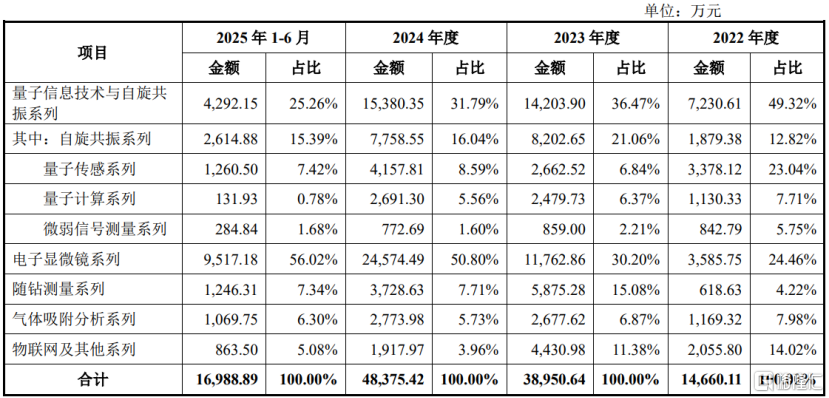
Core Viewpoint - The article highlights the growing interest and investment in quantum technology, particularly in the context of China's "14th Five-Year Plan," which includes quantum technology as a strategic growth point for the new economy. The IPO wave in the quantum technology sector is beginning, with Guoyi Quantum Technology (Hefei) Co., Ltd. filing for an IPO on the Sci-Tech Innovation Board [1]. Company Overview - Guoyi Quantum focuses on the research and development of high-end scientific instruments, providing advanced scientific equipment and solutions for various fields, including quantum technology, materials science, and biomedicine [1][4]. - The company has launched several products, including electron paramagnetic resonance spectrometers and scanning electron microscopes, breaking the long-standing dominance of international giants in certain segments of the domestic market [4]. Revenue Composition - From 2022 to the first half of 2025, the revenue share from quantum information technology and spin resonance decreased from 49.32% to 25.26%, while the revenue share from electron microscope series increased from 24.46% to 56.02% [5][6]. - The company’s revenue figures for the years 2022 to 2025 (first half) are approximately 151 million, 400 million, 501 million, and 171 million respectively, with corresponding net losses of approximately -129 million, -146 million, -86 million, and -76 million [11]. Market Dynamics - The global market for laboratory analytical instruments is projected to grow from $82.95 billion in 2024 to $101.58 billion by 2029, with an average annual growth rate of 4.1% [12]. - China's laboratory analytical instrument market is expected to reach $9.28 billion in 2024, with a compound annual growth rate of 4.7% from 2024 to 2029, positioning it as the second-largest market among major economies [14]. Competitive Landscape - The high-end scientific instrument market in China has been dominated by foreign manufacturers, with over 75% of large scientific instruments in universities and research institutions being imported [18]. - Guoyi Quantum faces challenges in terms of historical accumulation, operational scale, product matrix, financial strength, market share, and brand recognition compared to established players like Thermo Fisher and Agilent [18]. Management and IPO Details - Guoyi Quantum, established in 2016, is led by a young management team, including a 1992-born chairman and general manager, He Yu, who has a PhD from the University of Science and Technology of China [21]. - The company aims to raise approximately 1.169 billion for projects related to high-end scientific instrument industrialization, quantum technology research, and application center network construction [22].
市场分析:电池贵金属领涨,A股小幅上行
Zhongyuan Securities· 2025-12-23 09:18
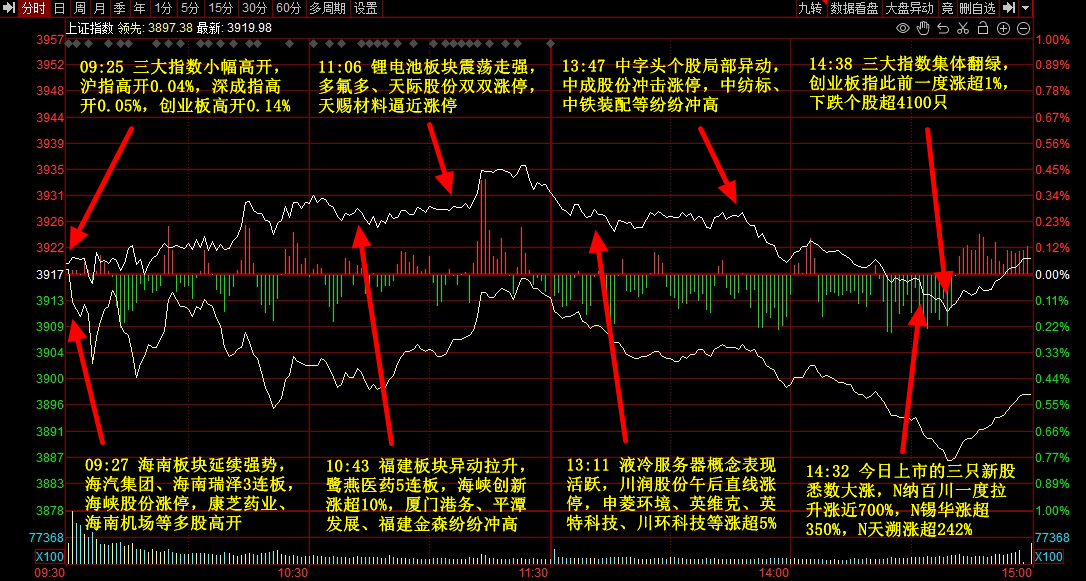
相关报告 分析师:张刚 登记编码:S0730511010001 zhanggang@ccnew.com 021-50586990 电池贵金属领涨 A 股小幅上行 ——市场分析 《市场分析:成长行业领涨 A 股震荡上行》 2025-12-22 《市场分析:航天医药行业领涨 A 股小幅上 行》 2025-12-18 《市场分析:通信金融行业领涨 A 股震荡上 行》 2025-12-17 联系人: 李智 电话: 0371-65585629 地址: 郑州郑东新区商务外环路10号18楼 地址: 上海浦东新区世纪大道 1788 号 T1 座 22 楼 证券研究报告-市场分析 发布日期:2025 年 12 月 23 日 投资要点: ◼ A 股市场综述 周二(12 月 23 日)A 股市场冲高遇阻、小幅震荡上行,早盘股指高 开后震荡上行,盘中沪指在 3937 点附近遭遇阻力,午后股指维持震 荡,盘中电池、能源金属、电源设备以及贵金属等行业表现较好; 旅游酒店、教育、房地产服务以及航天航空等行业表现较弱,沪指 全天基本呈现小幅震荡上行的运行特征。创业板市场周二震荡上 扬,创业板成分指数全天表现强于主板市场。 ◼ 后市研判及投资 ...

ETO Markets:A股跨年行情启幕,贵金属“逼空”点燃全球通胀交易
Sou Hu Cai Jing· 2025-12-23 08:38
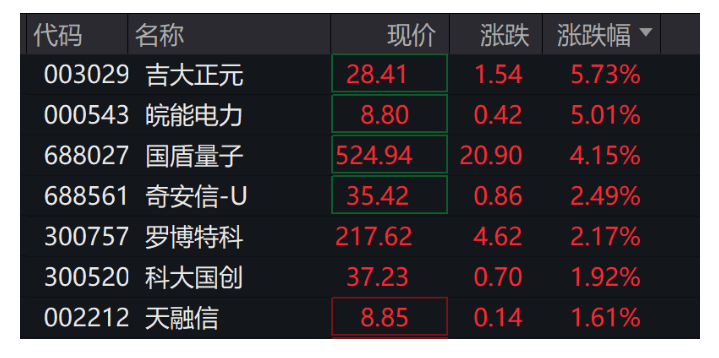
| 代码 名称 | 现价 | 涨跌 | 涨跌幅 ▼ | | --- | --- | --- | --- | | 003029 吉大正元 | 28.41 | 1.54 | 5.73% | | 000543 皖能电力 | 8.80 | 0.42 | 5.01% | | 688027 国盾量子 | 524.94 | 20.90 | 4.15% | | 688561 奇安信-U | 35.42 | 0.86 | 2.49% | | 300757 | 217.62 | 4.62 | 2.17% | | 300520 科大国创 | 37.23 | 0.70 | 1.92% | | 002212 天融信 | 8.85 | 0.14 | 1.61% | 据ETO Markets的消息,2025年12月23日,沪深港三地市场携手高开,在全年成交额首次突破400万亿元 的历史纪录衬托下,A股迎来"收官周"的暖场戏。 国内商品指数刷新半年高位,与A股400万亿成交遥相呼应,共同勾勒出一幅"股期联动、通胀交易"的 跨年图景。 展望后市,机构普遍认为,在政策"稳中求进"与流动性合理充裕的组合下,A股有望延续"权重搭台、 题材唱戏"的结 ...
量子科技有重大进展,融资客出手抢筹5只高增长潜力股
Zheng Quan Shi Bao Wang· 2025-12-23 05:46
Core Viewpoint - The Chinese quantum technology industry is transitioning from academic research to commercial application, with significant advancements in quantum error correction achieved by the team led by Academician Pan Jianwei, laying a crucial foundation for practical quantum computing [1] Group 1: Industry Development - The "14th Five-Year Plan" has established quantum technology as a new economic growth point, indicating a shift in focus from laboratory verification to industrialization [1] - Recent drafts of the "14th Five-Year Plan" from various regions emphasize the layout of the quantum technology industry [1] Group 2: Future Growth Potential - More than five institutions predict that ten quantum technology concept stocks, including Zhongke Shuguang (603019), Huagong Technology (000988), Aerospace Electronics (600879), Guangxun Technology (002281), and Guodun Quantum, will see net profit growth rates exceeding 20% in 2026 and 2027 [1] - According to data from Data Treasure, as of December 22, five of these ten high-growth concept stocks have seen net financing purchases exceeding 100 million yuan since December, specifically Aerospace Electronics, Huagong Technology, Kehua Data (002335), Guangxun Technology, and Guodun Quantum [1]


603929,3年涨近9倍,原始股东减持超100万股!量子科技有重大进展,融资客出手抢筹5只高增长潜力股
Zheng Quan Shi Bao· 2025-12-23 05:06
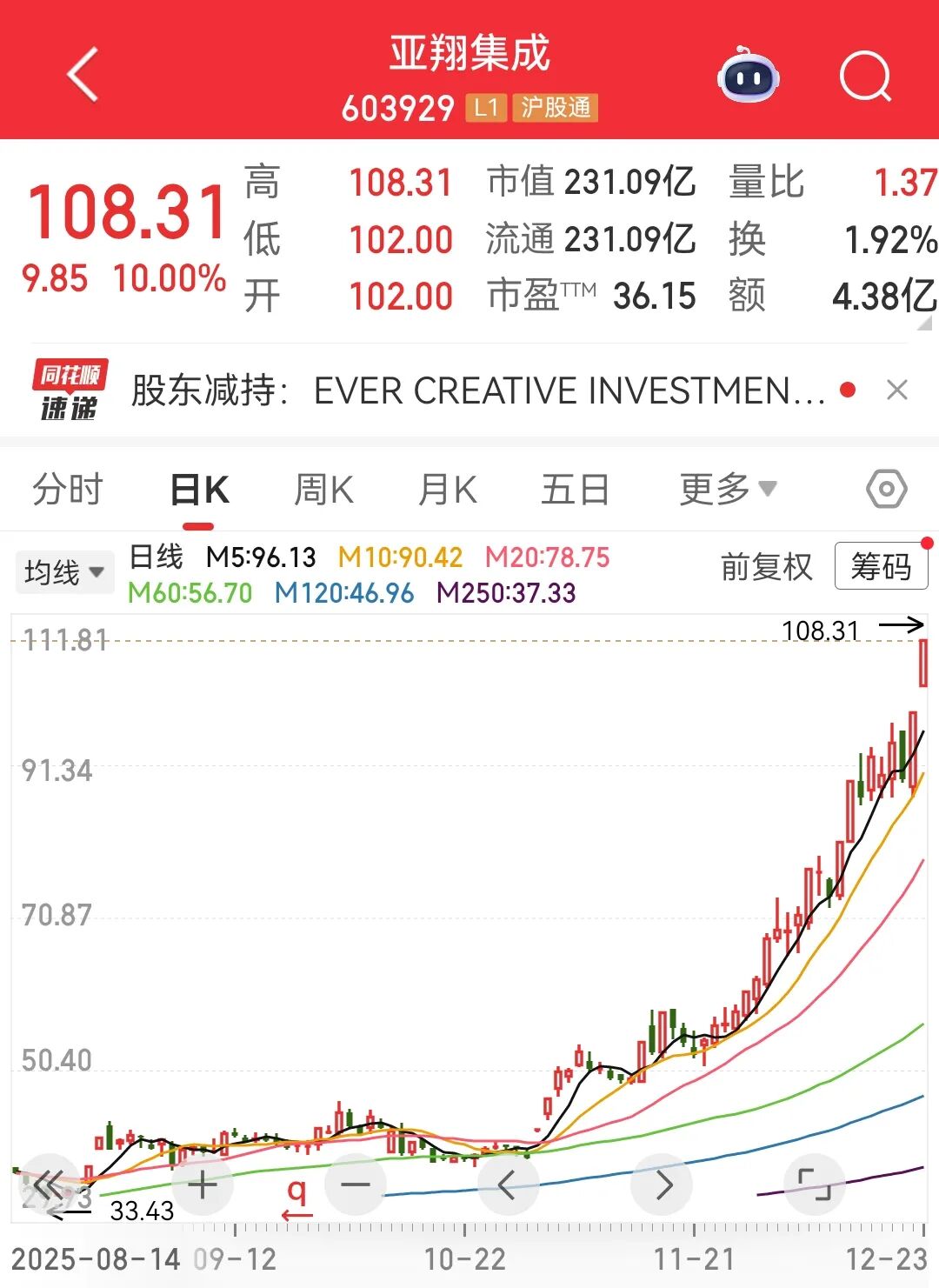
Group 1: Quantum Technology Industry - The Chinese quantum technology industry is transitioning from academic research to commercialization, marking a significant shift in focus towards industrial application as outlined in the "14th Five-Year Plan" [6][10]. - Various provinces, including Jiangsu, Anhui, and Shanxi, are actively promoting the development of quantum technology and related industries, aiming to establish production capabilities in quantum computing, communication, and precision measurement [7][8][9]. - According to a report by Galaxy Securities, the global quantum technology industry is projected to reach a scale of $8 billion by 2024, with an average annual growth rate of 76.27% from 2024 to 2030, potentially reaching $908.9 billion by 2035 [9]. Group 2: Company Performance and Stock Market - Yaxing Integrated (603929) has seen its stock price reach a historical high of 108.31 yuan per share, representing an increase of 8.97 times compared to its low point over the past three years [2][3]. - The company reported a net profit of 442 million yuan for the first three quarters of the year, reflecting a year-on-year growth of 0.78% [3]. - Shareholder EVER CREATIVE has completed a reduction of approximately 1.16 million shares, accounting for 0.5446% of the company's total share capital [4]. Group 3: Research and Development in Quantum Technology - The research team at the University of Science and Technology of China has made significant advancements in quantum error correction, achieving a "below threshold, increasingly correct" outcome with their superconducting quantum processor [5]. - The new "full microwave quantum state leakage suppression architecture" developed by the team shows a significant reduction in logical error rates, demonstrating the potential for building scalable quantum computers [5]. - The R&D expenses of quantum technology-related stocks in the A-share market reached 70.814 billion yuan in the first three quarters, accounting for 3.83% of total revenue, with 18 stocks having R&D expenses exceeding 20% of their revenue [10][12].

万亿“航母级”国家创业投资引导基金出资了
FOFWEEKLY· 2025-12-23 04:20
Core Insights - The establishment of three regional sub-funds under the "aircraft carrier-level" National Venture Capital Guidance Fund marks a significant step in the strategic deployment of national funds announced in March during the National People's Congress [4][5] - The National Venture Capital Guidance Fund focuses on cutting-edge fields such as artificial intelligence, quantum technology, and hydrogen energy storage, aiming to support innovative technology and strategic emerging industries [5] Group 1: Fund Establishment - Three regional sub-funds have been registered in Beijing, Shanghai, and Shenzhen, namely the Beijing-Tianjin-Hebei Venture Capital Guidance Fund, the Yangtze River Delta Venture Capital Guidance Fund, and the Guangdong-Hong Kong-Macao Greater Bay Area Venture Capital Guidance Fund [4] - The Yangtze River Delta fund has backing from the National Development Investment Corporation and various local government funds, while the Greater Bay Area fund is primarily supported by the Guangdong provincial fund and local government funds [4] Group 2: Market Impact - The registration of these sub-funds is expected to bring positive momentum to the primary market, which has shown signs of improvement despite ongoing challenges due to a scarcity of market-driven capital [6] - The establishment of the national-level fund is anticipated to accelerate capital inflow into the primary market, positively influencing the fundraising environment in the coming year [6] - Market experts predict that the upcoming year will see increased activity from state-backed funds, potentially addressing 20-30% of funding needs in the primary market [6]

国富量子涨超6% 中期业绩增长强劲 战略布局前沿科技领域
Zhi Tong Cai Jing· 2025-12-23 03:58
Core Viewpoint - Guofu Quantum (00290) experienced a significant stock price increase of over 6%, reaching a new high of 2.68 HKD, with a trading volume of 20.5751 million HKD [1] Financial Performance - For the six months ending September 30, 2025, Guofu Quantum reported a revenue of 1.027 billion HKD, reflecting a year-on-year growth of 4564.52% [1] - The profit attributable to the company's owners was 207 million HKD during the reporting period [1] - The group's revenue and net fair value gains from investments recognized in profit or loss amounted to approximately 1.181 billion HKD, which is an increase of 31.76 times compared to the same period last year [1] Business Operations - The substantial revenue growth was primarily driven by increased income from trade and supply chain operations, as well as revenue from securities brokerage and financing margin business [1] - The company has made significant strategic investments in cutting-edge technology fields such as quantum technology and digital assets [1] Company Overview - Guofu Quantum operates as a cross-border and cross-industry technology innovation investment platform, based in Hong Kong and supported by the Greater Bay Area, with an international focus [1] - The company holds various licenses issued by the Hong Kong Securities and Futures Commission, including licenses 1, 4, 6, and 9, and is qualified for cross-border operations such as OF1, CIBM, QDIE, QFLP, and Bond Connect [1] - The company has established an ecological closed loop of four business segments: technology innovation, finance, art, and trade [1]