
耐心资本

Search documents
戈壁创投唐启波:香港科创生态持续完善,耐心资本助力长期创新
证券时报· 2025-07-29 13:59
Core Viewpoint - The article discusses the revitalization of Hong Kong's financial market and its positive impact on the local tech innovation ecosystem, highlighting the establishment of the "Patient Capital Strategy Fund" to support long-term investments in Hong Kong's tech sector [1][2]. Group 1: Investment Landscape - Gobi Partners has invested in over 70 local Hong Kong companies since entering the market in 2016, including 8 unicorns, demonstrating a strong commitment to the region's tech ecosystem [2][4]. - The Hong Kong government has launched over HKD 10 billion in funding initiatives to support tech innovation, enhancing the conversion of university research into marketable projects [4][12]. Group 2: Patient Capital Strategy Fund - The "Patient Capital Strategy Fund" aims to attract long-term capital, particularly from sovereign funds, to support deep tech projects in areas like AI, advanced manufacturing, biotech, and green technology [5][6]. - The fund seeks to promote collaboration between academia and industry, enhancing the commercialization of research outcomes from Hong Kong's top universities [5][12]. Group 3: Advantages of Hong Kong - Hong Kong's international financial center status provides a favorable legal and regulatory environment, making it easier for tech companies to gain international investor trust and conduct cross-border business [10][11]. - The region's geographical position allows tech companies to leverage both mainland China's resources and global market access, enhancing their operational capabilities [11][12]. - The capital market in Hong Kong is more mature and internationalized compared to mainland cities, offering diverse financing options for tech companies at various stages of growth [11][13]. Group 4: Challenges and Improvements - While Hong Kong's tech financing ecosystem has some shortcomings, particularly in early-stage investments, recent government initiatives and university-led funds are improving the situation [12][13]. - The IPO market in Hong Kong has become increasingly favorable for tech companies, with reforms allowing for more flexible listing options, which has led to a significant increase in tech and biotech IPOs [13].


戈壁创投唐启波:香港科创生态持续完善,耐心资本助力长期创新
Zheng Quan Shi Bao Wang· 2025-07-29 13:08
Core Insights - The Hong Kong financial market is showing signs of recovery, injecting new vitality into the tech innovation sector [1][5] - Gobi Partners has invested in over 70 local Hong Kong companies, including 8 unicorns, and emphasizes the importance of the Greater Bay Area's development [2][3] - The establishment of the "Patient Capital Strategy Fund" aims to attract long-term capital to support Hong Kong's tech innovation projects [3][4] Investment Environment - Gobi Partners has been active in Hong Kong since 2016, focusing on local startups and benefiting from government initiatives like InnoHK and the 1+ Plan [2][6] - The recovery of the capital market has boosted entrepreneurs' confidence, leading to an increase in tech startups establishing headquarters in Hong Kong [6][7] - The influx of international capital with a long-term investment perspective is enhancing the quality of investments in Hong Kong's tech sector [6][8] Unique Advantages of Hong Kong - Hong Kong's international legal framework and tax system make it an attractive location for tech companies aiming for global markets [7][8] - The city serves as a crucial link between mainland China and international markets, leveraging its geographical position [7][8] - The capital market in Hong Kong is more mature and offers flexible financing options, including recent reforms that benefit tech companies [8][11] Challenges and Improvements - While there are challenges such as high costs and a relatively weak manufacturing base, integration with cities like Shenzhen is addressing these issues [9][10] - The financing ecosystem is evolving, with improvements in early-stage investment and government initiatives supporting tech projects [10][11] - The IPO market is becoming increasingly favorable for tech companies, with significant representation expected in 2024 [11]
最高容亏100%,深圳“大胆资本”横空出世
母基金研究中心· 2025-07-29 09:06
Core Viewpoint - Shenzhen has introduced a new guideline to promote tolerance for failure in the technology innovation sector, aiming to create a supportive environment for innovation and investment [1][3][4]. Group 1: Guidelines and Implementation - The Shenzhen Municipal Science and Technology Innovation Bureau released the "Guidelines for Tolerance of Failure in the Field of Technological Innovation" which outlines the guiding principles and basic conditions for recognizing responsible performance [1][2]. - The guidelines specify that various fiscal special funds' administrative departments are responsible for implementing the tolerance for failure and responsible performance recognition work, detailing five diligence conditions and nine exemption scenarios [2]. Group 2: Capital Strategies - Shenzhen has proposed the concept of "Bold Capital" to encourage investment in high-risk frontier technology fields, promoting a culture of "daring to try and make mistakes" [4][5]. - The South District of Shenzhen has established a strategic direct investment seed fund and angel fund with a total scale of 500 million yuan, allowing for a 100% loss on individual projects [5]. - The Futian District has introduced a risk tolerance policy for government investment funds, permitting up to 80% loss on certain projects, with some projects allowed to incur a 100% loss [6]. Group 3: National Trends - Other regions, such as Wuhan and Sichuan, are also adopting similar tolerance mechanisms for investment losses, indicating a growing trend among local governments to accept full losses in venture capital [7][8]. - The national government has emphasized the need for a sound tolerance mechanism for government investment funds, encouraging a supportive environment for innovation and risk-taking [10][11]. Group 4: Fund Development and Performance - Shenzhen aims to establish a "double ten thousand" structure by 2026, targeting a trillion-level "20+8" industry fund group and over 10,000 registered equity investment and venture capital funds [11][12]. - The city plans to create three new mother funds to enhance its existing fund system, focusing on cross-border cooperation and specialized investment [12][15]. - Shenzhen's national leadership in venture capital is reflected in its comprehensive fund ecosystem, which includes over 500 funds with a total scale exceeding 700 billion yuan, primarily directed towards strategic emerging industries [15][20]. Group 5: Innovative Measures - Shenzhen has introduced a risk compensation scheme for technology innovation seed funds, integrating insurance to mitigate risks associated with project failures [19]. - The city has also established local standards for venture capital and innovation ecosystems, showcasing its commitment to fostering a robust investment environment [17][18].

工业母机高端化进程加速 业界呼唤“耐心资本”和特色融资模式
Zhong Guo Jing Ying Bao· 2025-07-28 05:49
Core Viewpoint - The industrial mother machine industry in China is accelerating its high-end and intelligent transformation, with significant advancements in technology and products being showcased, particularly in Hubei province [1][3]. Group 1: Industry Development - Hubei province is home to five national chain enterprises and is projected to achieve an industrial mother machine revenue of approximately 50 billion yuan in 2024, ranking fifth in the country [1]. - By 2027, Hubei aims to reach an industrial mother machine revenue of 100 billion yuan, with aspirations to be among the top three in the nation by 2030 [1]. - The establishment of the National Industrial Mother Machine Innovation Research Center in Wuhan aims to create three flagship products and cultivate three world-class enterprises [3]. Group 2: Technological Innovation - The introduction of the Huazhong 10 intelligent numerical control system, which is the world's first to integrate AI chips and large models, represents a significant leap in the industry [1][4]. - The system enhances machine learning capabilities, allowing for self-optimization of processing parameters, thus improving efficiency and reliability [4]. - The industry is entering the "AI+" era, with a strong emphasis on high-quality numerical control machine tools and production lines [3]. Group 3: Financial Support and Investment - Long-term capital support is essential for the technological innovation and industrial upgrade of the industrial mother machine sector [2][5]. - The China International Engineering Consulting Corporation emphasizes the need for "patient capital" to address critical technological challenges [2]. - The National Development Bank has provided over 20 billion yuan in loans to the industrial mother machine sector since 2008, focusing on R&D and capacity building [6][7]. Group 4: Market Challenges - The industry faces challenges such as high R&D costs, long investment return periods, and reliance on imports for 70% of high-end numerical control systems [6]. - There is a pressing need for domestic high-end numerical control machines to improve market share and reduce dependency on foreign technology [6]. - The industry is characterized by a mix of "bottleneck" issues and competitive market dynamics, necessitating a focus on innovation and talent development [6].

更大力度培育壮大长期资本 推动中长期资金入市
Zheng Quan Ri Bao· 2025-07-27 15:46
Core Viewpoint - The emphasis on cultivating long-term and patient capital is crucial for supporting technological innovation and stabilizing the capital market [1][3]. Group 1: Long-term and Patient Capital - The China Securities Regulatory Commission (CSRC) highlighted the need to foster long-term and patient capital to promote medium- and long-term funds entering the market [1]. - "Patient capital" is defined as capital that possesses long-term, strategic, and forward-looking characteristics, which supports the national innovation-driven development strategy [1][2]. - The participation of private equity and venture capital funds is essential for the full-cycle growth of technology enterprises, especially in sectors with long investment cycles such as biomedicine and clean energy [2][3]. Group 2: Investment Market Dynamics - Private equity and venture capital funds have invested in 90% of companies listed on the Sci-Tech Innovation Board and the Beijing Stock Exchange, indicating their significant role in nurturing technology innovation [3]. - As of June 2025, there are 30,200 active private equity funds with a total scale of 10.95 trillion yuan, and 26,100 venture capital funds with a scale of 3.41 trillion yuan [3]. - The government investment funds, which account for over 80% of the primary market funding sources, are undergoing systematic corrections to enhance their operational efficiency [3]. Group 3: Policy Initiatives - Recent policies aim to improve the predictability of IPOs and create smoother exit channels for venture capital, including the reintroduction of the fifth set of standards for the Sci-Tech Innovation Board [3][4]. - The CSRC has implemented revised regulations for major asset restructuring, establishing mechanisms for phased payment of shares and simplified review processes [4]. - Policies have been introduced to encourage more medium- and long-term funds to enter the market, including measures targeting social security, insurance, and public funds [6][7]. Group 4: Market Structure and Investor Behavior - The introduction of long-cycle assessment mechanisms for public funds and insurance companies is expected to enhance the stability of investment behaviors [6][7]. - The potential influx of 2.9 trillion yuan from insurance capital into the market is projected, alongside a 34.21% year-on-year growth in the basic pension insurance fund's investment scale [7]. - The entry of medium- and long-term funds is anticipated to optimize the investor structure in the capital market, leading to a greater focus on the fundamentals and long-term development potential of enterprises [7].
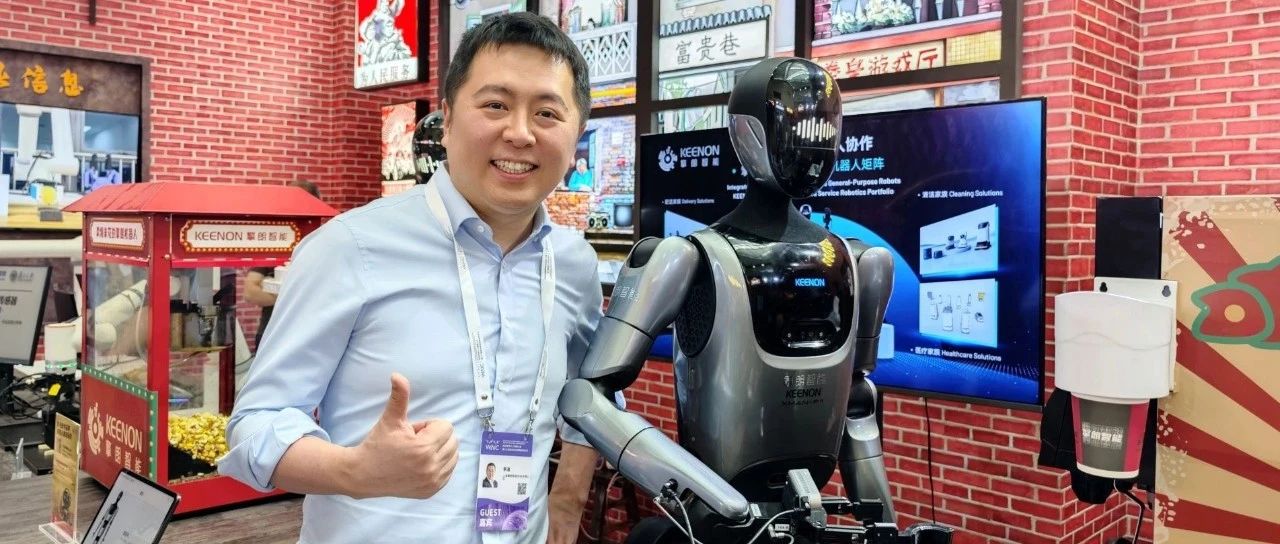
专访“小巨人”擎朗智能CEO李通:中国向智造强国迈进离不开持续科技创新|世界人工智能大会
IPO日报· 2025-07-26 13:22
Core Viewpoint - Keenon Robotics has established itself as a leader in the service robotics industry, with over 100,000 robots deployed globally, yet remains relatively unknown to the broader public [1][4]. Group 1: Company Background and Achievements - Founded in 2010, Keenon Robotics has developed a comprehensive self-research technology system and a closed-loop capability from R&D to manufacturing and implementation, making it a global leader in the service robotics sector [1][4]. - The company has successfully deployed specialized robots for delivery and cleaning across more than 60 countries and over 600 cities [1][4]. - Keenon Robotics has recently showcased its humanoid service robot XMAN-F1 at the 2025 World Artificial Intelligence Conference, highlighting its innovative advancements [2][1]. Group 2: Industry Insights and Market Position - The rapid development of China's service robotics industry is attributed to efficient supply chain operations, algorithm innovation, and a large pool of engineering talent, creating a unique industrial advantage [4][6]. - Keenon Robotics has expanded its market presence internationally, with over 50% of its sales coming from overseas markets, including regions like Dubai, Germany, and the United States [6][10]. - The company faces challenges in market education, as service robots are still a new concept in traditional industries, requiring tailored approaches to different cultural and market characteristics [6][10]. Group 3: Financial and Investment Aspects - Keenon Robotics has experienced financial challenges but secured significant funding from various investors, including SoftBank Vision Fund and Alibaba, which has allowed for long-term planning and innovation [9][10]. - The company emphasizes the importance of "patient capital" in the tech industry, advocating for investment strategies that prioritize long-term technological development over immediate financial returns [10][11]. Group 4: Future Outlook and Technological Innovation - Keenon Robotics is committed to continuous technological innovation, holding over 1,100 patents, and aims to leverage advancements in AI and robotics to enhance its product offerings [12][14]. - The market for humanoid robots in China is projected to reach approximately 8.24 billion yuan by 2025, indicating significant growth potential in the sector [14][15]. - The company is actively pursuing strategic partnerships to explore innovative applications of embodied intelligence in industrial settings, reflecting its commitment to advancing the robotics field [13][14].
陈天桥:科创投资不要沿用互联网套路
Nan Fang Du Shi Bao· 2025-07-25 10:36
Group 1 - The core viewpoint emphasizes the need for patience in capital investment within the hard technology sector, particularly in brain-computer interface (BCI) development, contrasting it with past internet investment strategies [2][4] - The brain-computer interface industry has seen rapid development, with an increase in startups and significant attention from top investors, particularly in Shanghai, which is establishing itself as a key innovation center [3][4] - Brain Tiger Technology, founded by Professor Tao Hu, has emerged as a leading company in the invasive brain-computer interface sector, receiving substantial support from local government and recognition at major events [3][5] Group 2 - Investment in hard technology should not be measured by short-term returns typical of internet investments; instead, it requires a long-term vision and stable support to navigate the lengthy cycles of technology validation and market cultivation [4] - Recent breakthroughs in real-time Chinese language decoding and motion decoding by Brain Tiger Technology have positioned it at the forefront of international technology, garnering special coverage in the academic journal Nature [5] - The company aims to build a world-class team focused on brainwave modeling and decoding algorithms, leveraging the latest AI technologies to enhance its competitive edge against other players like Neuralink [5]
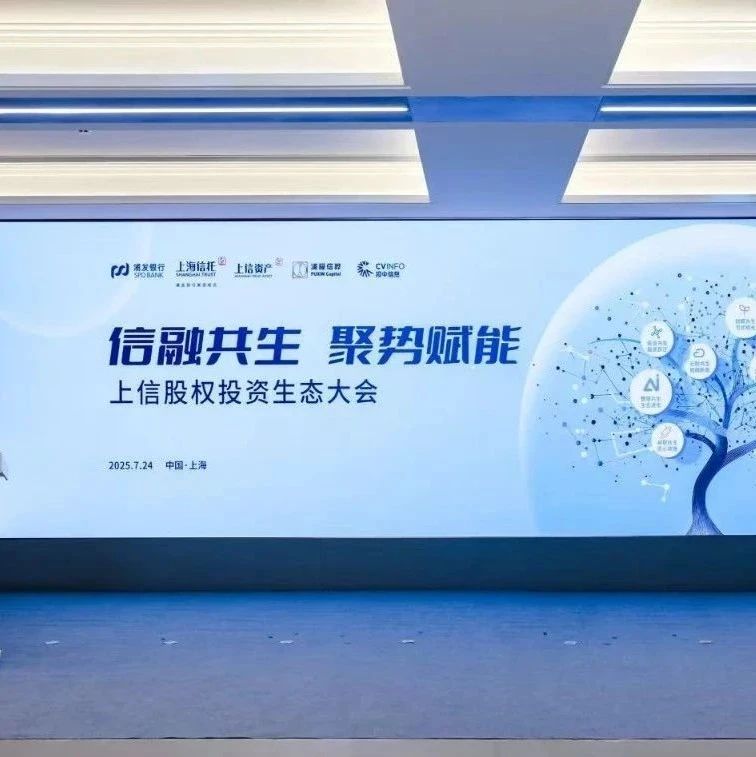
上海信托携手子公司上信资产、浦耀信晔成功举办“信融共生·聚势赋能”上信股权投资生态大会
投中网· 2025-07-25 08:33
Core Viewpoint - The conference aims to explore new paths for financial services in technology innovation, emphasizing the need for an open and collaborative industrial financial ecosystem to empower high-quality development in technology finance [2][4][36]. Strategic Planning - The conference highlighted the importance of technology innovation in reshaping global competition, with Shanghai positioned as a key player in building a globally influential technology innovation center [4]. - The strategy involves a dual approach of "institutional openness" and "scenario-based supply" to enhance Shanghai's international financial center competitiveness [4]. - State-owned capital is emphasized as a crucial element in supporting high-level technological self-reliance and innovation resource integration [6]. Ecosystem Construction - The event showcased a sand painting performance symbolizing the strategic vision of building a collaborative investment ecosystem, highlighting the historical achievements of Shanghai Trust in equity investment [15]. - The establishment of four ecological alliances aims to create a win-win framework by gathering long-term capital partners, expanding value opportunities, and driving industrial upgrades [17]. Brand Launch - Two strategic empowerment brands, "YI Family Wealth Research Institute" and "Puyao Academy," were launched to enhance the service capabilities of Shanghai Trust's ecosystem [21]. - These brands focus on providing comprehensive wealth management solutions and knowledge-sharing platforms for innovation-driven enterprises [21]. Market Insights - The conference included discussions on investment philosophies during asset downturns, emphasizing the importance of long-term capital allocation strategies [26]. - Key topics included the valuation logic of hard technology investments and the challenges of commercializing early-stage projects [28]. Entrepreneurial Perspectives - Founders from leading tech companies shared insights on advancements in AI, GPU technology, and intelligent sensing, highlighting practical applications and innovations in their respective fields [30][32][34]. - The discussions underscored the importance of bridging technology with market needs to drive successful commercialization [30][34]. Conclusion - The conference served as a significant milestone for Shanghai Trust in deepening its technology finance strategy and promoting ecosystem collaboration, aiming to enhance financial support for strategic emerging industries [36].

超1000亿元!成都未来产业基金重磅发布
Sou Hu Cai Jing· 2025-07-24 08:43
Core Viewpoint - The Chengdu Future Industry Fund, with a total scale exceeding 100 billion yuan, was launched to support the development of future industries in Chengdu [1][2]. Group 1: Fund Structure and Management - The fund is managed by Chengdu Sci-Tech Investment Group and is based on the "industrial fund" of Chengdu Industrial Investment Group and the "functional fund" of Jiaozi Financial Holdings Group [2]. - Chengdu Sci-Tech Investment Group has invested in 600 technology innovation enterprises and future projects, demonstrating its capability to manage long-term, high-risk future industry funds [2][5]. Group 2: Investment Focus and Strategy - The fund will focus on a modern industrial system categorized as "9+9+10," emphasizing areas such as humanoid robots, flying cars, intelligent perception, and next-generation mobile communications [5]. - The Future Industry Angel Fund aims to address the "market failure" faced by seed and early-stage technology companies, filling the gap left by traditional financial systems in early-stage investments [5]. - The Future Industry Venture Capital Fund will support innovative enterprises in their growth and scaling processes, facilitating their transformation from "1 to 100" [5]. Group 3: Fund Ecosystem and Growth - Chengdu Sci-Tech Investment Group has established a comprehensive fund matrix covering the entire lifecycle of enterprises, including angel, VC, PE, and acquisition funds [6][7]. - A 2 billion yuan Chengdu Angel Mother Fund was set up for early-stage investments, achieving a capital multiplication of 7.46 times within a year [7]. - The group has also formed partnerships for satellite internet industry chain funds and established the first S fund in Sichuan, with a total scale of 9.9 billion yuan, leveraging funds to support over 300 small and medium-sized technology enterprises [7]. Group 4: Future Plans - Chengdu Sci-Tech Investment Group plans to continue nurturing the technology innovation ecosystem and stimulate industrial vitality through a "patient capital" approach [8].

2025“工业母机+”百行万企产需对接活动在武汉成功举行 设立产融对接专场
Zheng Quan Ri Bao Wang· 2025-07-24 07:10
Core Viewpoint - The event "Industrial Mother Machine + Hundred Industries and Ten Thousand Enterprises Supply and Demand Matching" held in Wuhan emphasizes the importance of industrial mother machines in enhancing a country's manufacturing capabilities and technological competitiveness [1] Group 1: Event Overview - The event took place on July 23, 2025, in Wuhan, Hubei Province, focusing on integrating innovative industrial mother machine products into various industries [1] - The theme for the event was "Promoting the Development of a New Ecosystem for Application through 'Industrial Mother Machine +'" [1] Group 2: Key Technologies and Products - Seven advanced industrial mother machine technologies and products were launched, including: - "Huazhong 10" intelligent CNC system with AI capabilities by Huazhong CNC [2] - "Complex Surface Texture Laser Etching Intelligent Equipment" by Huagong Technology [2] - "High-end Composite Processing Equipment-CHX5240i" by Wuhan Heavy Machine Tool Group [2] - "KMF120 Five-axis Universal Milling and Turning Machine" by Kede CNC [2] - "Five-axis High-speed Milling and Turning Composite Processing Center JDMR800_MT" by Beijing Jingdiao Technology [2] - "New Generation High-precision Gantry Five-axis Processing Equipment GMC-wsμ" by General Technology Group [2] - "BLT-S1300 Metal Additive Manufacturing Equipment" by Xi'an Bolite Technology [2] Group 3: Financial Support and Investment - The event featured a special session on financial integration, discussing "patient capital" and unique financing models to promote technological innovation and industrial upgrades in the industrial mother machine sector [2] - The National Development Bank has issued over 20 billion yuan in loans to the industrial mother machine sector since 2008, supporting companies like Qin Chuan Machine Tool Group [3] - Various institutions shared innovative financing practices, including industry chain financing models and special R&D loans [3] Group 4: Future Directions - Representatives from leading companies like Huazhong CNC expressed commitment to long-term core technology development and industrial application in the industrial mother machine sector [3] - There is a consensus among participants on the need to strengthen collaboration among policies, capital, and enterprises to support high-quality development in China's industrial mother machine industry [4]

